A Sovereign Scottish adult human female , fighting for Scotland , women, children , disability rights leader ISP #FreedomFromFreeports #ScottishIndependance
Joined May 2013
- Tweets 17,323
- Following 1,315
- Followers 4,595
- Likes 24,829
1,089 Photos and videos










Colette Walker retweeted

“Social platforms do still give us some freedom, even though they are policed.
Marches are becoming managed, but by whom?
Could enough voices reverse that?
If we want to speak, we are going to have to think outside the box again.”
joansjigsaw.uk/2026/06/16/wh…
1
2
53
Colette Walker retweeted
“How soon, will your ‘freedom’ list disappear?
Whilst you have a power-down system instead of a power-up, like Direct Democracy , these things will only get worse.”
joansjigsaw.uk/2026/06/14/th…
1
5
4
151
Colette Walker retweeted

1
5
2
585

Jun 13
2-1 Scotland


2
3
130
Colette Walker retweeted
“Rest and Be Thankful Upgrade Still Not Agreed
Despite different options being considered for a permanent upgrade of the notoriously unstable A83 at Rest and Be Thankful, £45 million has already been spent in the last 12 years on piecemeal solutions of maintenance and landslide prevention, with no long-term strategy commenced. Drainage works, debris fences and tree-planting have been attempted, and Transport Scotland agreed in June 2023 to a mile-long tunnel to protect vehicles, but drivers are often forced onto the Old Military Road below the main carriageway when weather is bad and the danger is high.
In 2021, a business campaign group from Argyll, Kintyre, Mid Argyll and Cowal set a deadline of 2024 to resolve the landslip issues, and Forestry and Land Scotland (FLS) have planted just over 300,000 native trees, with deer fencing and shrub shelters, which are apparently taking hold. But they are no substitute for a permanent solution. Only a few years ago, a motorist was almost killed when a landslip engulfed her car, being guided to safety by police at the last minute.”
isp.scot/june-6th-june-12th-…

11
10
226
Jun 11
We all knew it was our water they were coming for next and here you have it !!
“ But somehow, all these things pale into insignificance compared to the 17 data centers that are being forced upon us. For a country seeking a low-carbon footprint, we have a funny, or not so funny way of showing it.
They will change our countryside forever in more ways than one, affecting both water supplies and electricity, guzzling both.”
joansjigsaw.uk/2026/06/11/we…
2
72
84
1,120
Colette Walker retweeted

Signed and shared
Children should be safeguarded not sexualised!
1
3
3
70
John Swinney, Stop the Sexualisation of Children! - Click here: cgo.ac/sc71uwkRD
4
7
8
331
Colette Walker retweeted

Jun 6
2/2
At the last Scottish Parliament election, nearly half of eligible voters did not vote at all, just think about that, nearly half the population surrendered the most powerful tool they possess in a democracy.
If those people had chosen to participate and support alternatives, the political landscape could have looked completely different, that is the point many have forgotten, the people are not powerless the people hold all the power.
Once every four or five years, every citizen is handed a weapon more powerful than wealth, influence or political connections, it is called a vote, yet millions have been convinced that their vote changes nothing, so they stay at home and hand power back to the very political establishment they claim to oppose.
Never forget this, the vote is your power, it is the one moment when politicians need you more than you need them, do not give that power away, do not waste it and above all, do not use it to serve the interests of career politicians or broken political parties.
Use it to serve your own interests, your family's interests and the future you want to build for your country and your children because democracy only works when the people remember that they are the masters and politicians are the servants.
3
15
26
825
Colette Walker retweeted
Jun 6
1/2
The Power You Keep Wasting or Just Give Away
Why do you vote for the political party you vote for? Take a moment and really think about it.
Is it because you support every policy they have? Is it because you trust the people leading them? Or is it because of one single issue that matters deeply to you, such as preserving the Union or achieving Scottish independence?
If it is only one issue, are you then surprised when that party gets into power and starts introducing policies you never supported, policies that may even harm you, your family, your community or your country?
Perhaps you have become so disillusioned that you have stopped voting altogether, perhaps the party you once trusted turned out not to be what you thought it was or perhaps you followed one cause so closely that you ignored everything else, only to discover that those you elected had very different priorities once they gained power.
Let me put it another way, imagine you go to a hairdresser, they use rusty scissors, make a mess of your hair, ignore what you asked for and charge you anyway, would you simply stop getting your hair cut forever or would you start looking around for another hairdresser?
Would it matter if the new hairdresser had fewer customers if they offered a better service, used proper clean tools and actually listened to what you wanted? Most people would choose the better hairdresser.
Politics is no different, the tools of politics should be honesty, integrity and principles, yet look around at the mainstream political parties. Time and again they have shown themselves willing to abandon promises, compromise principles and put the pursuit of power ahead of the people they are supposed to serve.
The question then becomes, where do we go from here? The answer is surprisingly simple.
Look beyond the mainstream parties. Many people dismiss smaller parties as "fringe" without ever examining what they stand for, yet some of these parties are proposing ideas that would fundamentally change how Scotland is governed for the better.
Take the Independence for Scotland Party (ISP) as an example, their vision is not simply independence from Westminster, it is independence from a broken, centralised political system that concentrates power in the hands of politicians rather than the people, the ISP propose a written constitution that would protect fundamental rights such as women's rights, child safeguarding and employment rights, placing those protections beyond the reach of whichever politicians happen to be in power at the time, they support direct democracy, allowing ordinary citizens to initiate official petitions and if enough support is gathered, require the holding of a national referendum on important issues, in other words, giving real power back to the people.
They also advocate a Minimum Income Guarantee, aimed at eliminating poverty while strengthening local economies. This is based on a simple reality, those on lower incomes spend money locally, supporting local businesses and communities, they do not stash millions in offshore accounts or move wealth overseas.
Helping the poorest is not just morally right, it is economically sensible, most importantly, they argue that elected representatives and civil servants should be servants of the people, not masters of them.
At this point many readers will be thinking the same thing, "If they had a chance of winning, I'd vote for them, but they're too small."
Think back to the hairdresser, would fewer customers put you off if the service was better?
This is exactly the argument that was used against the SNP throughout the 1970s, 1980s and 1990s, voters repeatedly said, "I'd vote for you if I thought you could win."
Eventually enough people realised something very simple, parties do not win first and then receive votes, they receive votes first and then begin to win.
3
19
26
915
Colette Walker retweeted

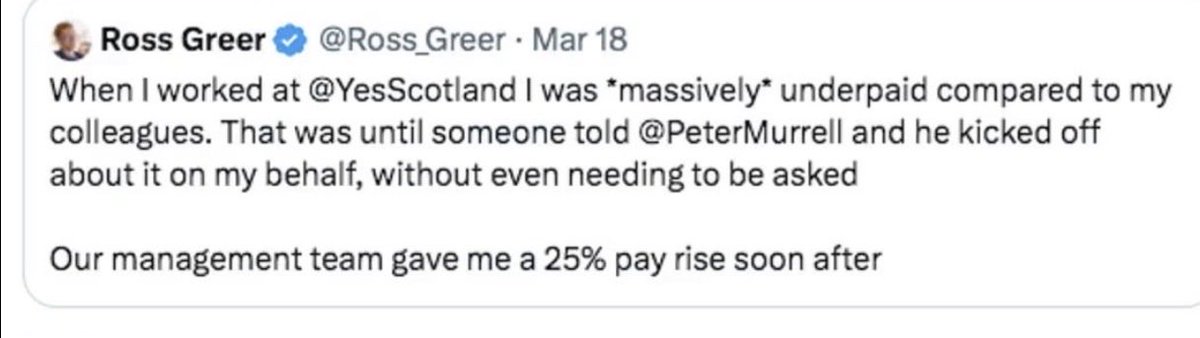
While thousands of us were giving freely of our time, energy & money to the campaign, there were those handsomely rewarded in YES HQ.🤨
Were the books opened & audited or was Murrell playing fast & loose with our cash?
Jun 8

EXC: Scottish Greens leader deletes tweet praising disgraced Peter Murrell for 25% pay hike.
dailyrecord.co.uk/news/polit…
9
112
255
9,543
Colette Walker retweeted

What a pity she didn’t have the courage to speak out at the time. But then of course there would have been consequences as those of us who did are only too well aware.

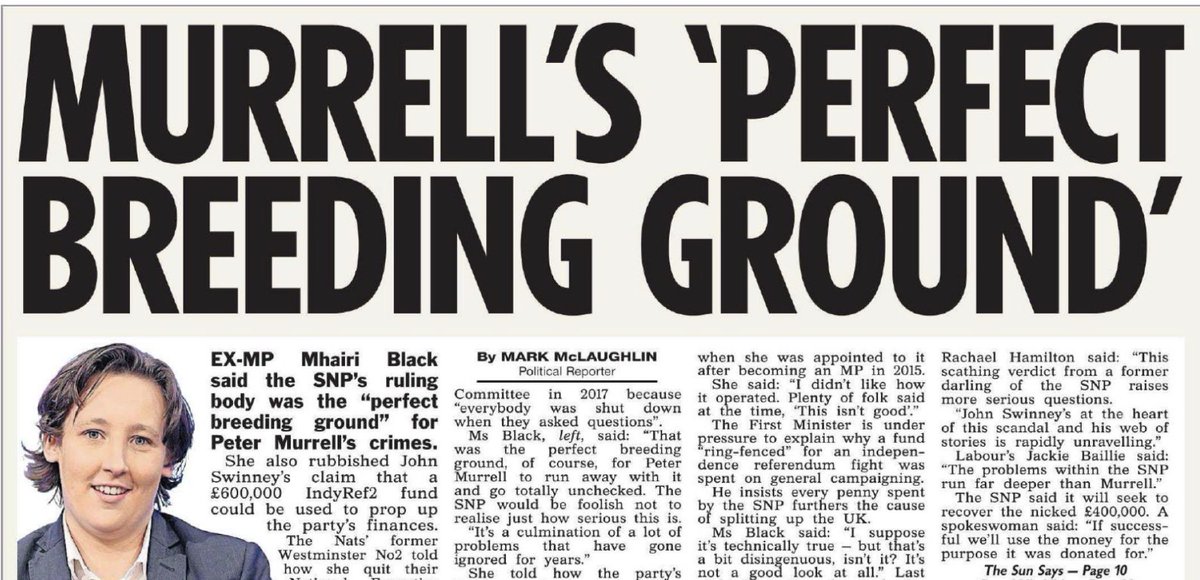
🔥 @theSNP’s “opaque” NEC was “the perfect breeding ground” for Peter Murrell’s embezzlement, the party’s former Deputy Leader at Westminster said.
@MhairiBlack also called @JohnSwinney “disingenuous” for claiming Referendum Appeal donations could prop up SNP funds
68
353
1,521
50,215
Colette Walker retweeted

Jun 6
2
2
182
Colette Walker retweeted

Jun 6
EXCLUSIVE: An interactive map has revealed that developers are proposing a rash of AI data centres right across Scotland – prompting concerns about the impact on electricity prices, communities and the environment thenational.scot/news/261724…
48
402
464
31,989
Colette Walker retweeted

Jun 7
Brilliant interview with Stu from @WingsScotland
What’s clear is however serious the crimes Murrell committed, it is entirely a straw man argument that this is the end of the matter.
The question/admission over the misuse of ring-fenced funds has not been addressed.
/2…

EXCLUSIVE: I was branded CRANK when I flagged SNP missing cash – now I’ve been vindicated after Peter Murrell was jailed thescottishsun.co.uk/news/16…
5
84
258
10,955
Colette Walker retweeted
“We cannot and should not expect other countries to do all the fighting for us when it comes to getting our country back. We need to be seen by others that we are trying to do something for ourselves, even if we keep getting knocked back! Believe it or not, getting ‘knocked back’ continually could in the long run work to our advantage as the world looks on!!”
joansjigsaw.uk/2026/06/07/we…
1
4
7
160
Colette Walker retweeted

Women of Aberdeen South – Your Voice Matters! 💪👩👧👦
Come along to the Aberdeen South By-Election Hustings hosted by Women of Scotland and hear directly from all the candidates standing in this important by-election.
Invited Candidates:
• Nurul Hoque Ali – Labour Party
• David Ballantine – Alliance for Democracy and Freedom
• Jo Hart – Reform UK
• Douglas Lumsden – Conservatives
• Jorg Shelton-Eckstein – Scottish Green Party
• Mel Sullivan – Liberal Democrats
• Richard Gordon Thomson – Scottish National Party (SNP)
This is your opportunity to ask the questions that matter most to women, mothers, families, and working women in Aberdeen South- cost of living, NHS, education, safety, childcare, jobs, and more.
Event Details: 📅 Tuesday 9th June 2026
🕕 6:00 PM – 8:00 PM (informal drinks & raffle afterwards)
📍 The Rusty Nail, 67 Rosemount Viaduct, Aberdeen, AB25 1NT
Each candidate will give a short introduction followed by open Q&A.
Free entry – all welcome!
Don’t leave your future to others. Come along, listen, question, and make your voice heard.
Tickets & info: eventbrite.co.uk/e/aberdeen-…
Together we can put women’s concerns front and centre. See you there! 🙌
#AberdeenSouth ##ByElection2026

34
45
2,916
Colette Walker retweeted

Jun 6
Where is the evidence for this assertion ?
Woven through the accounts?
Jun 5

Tomorrow's front page 📰
John Swinney says Murrell's "betrayal" will not distract from independence goal as First Minister reveals big spike in donations to SNP

12
20
43
1,262
Colette Walker retweeted
Jun 5
So tell us Holly why do you think my severely disabled grandaughter should lose her human rights and human dignity by being forced to have intimate personal care given by a man when she has a LEGAL right to same sex care? Because that is exactly what you are pushing. How dare you.
I also have a question for you, what does identifying as a woman or indeed a man actually mean?
Jun 5
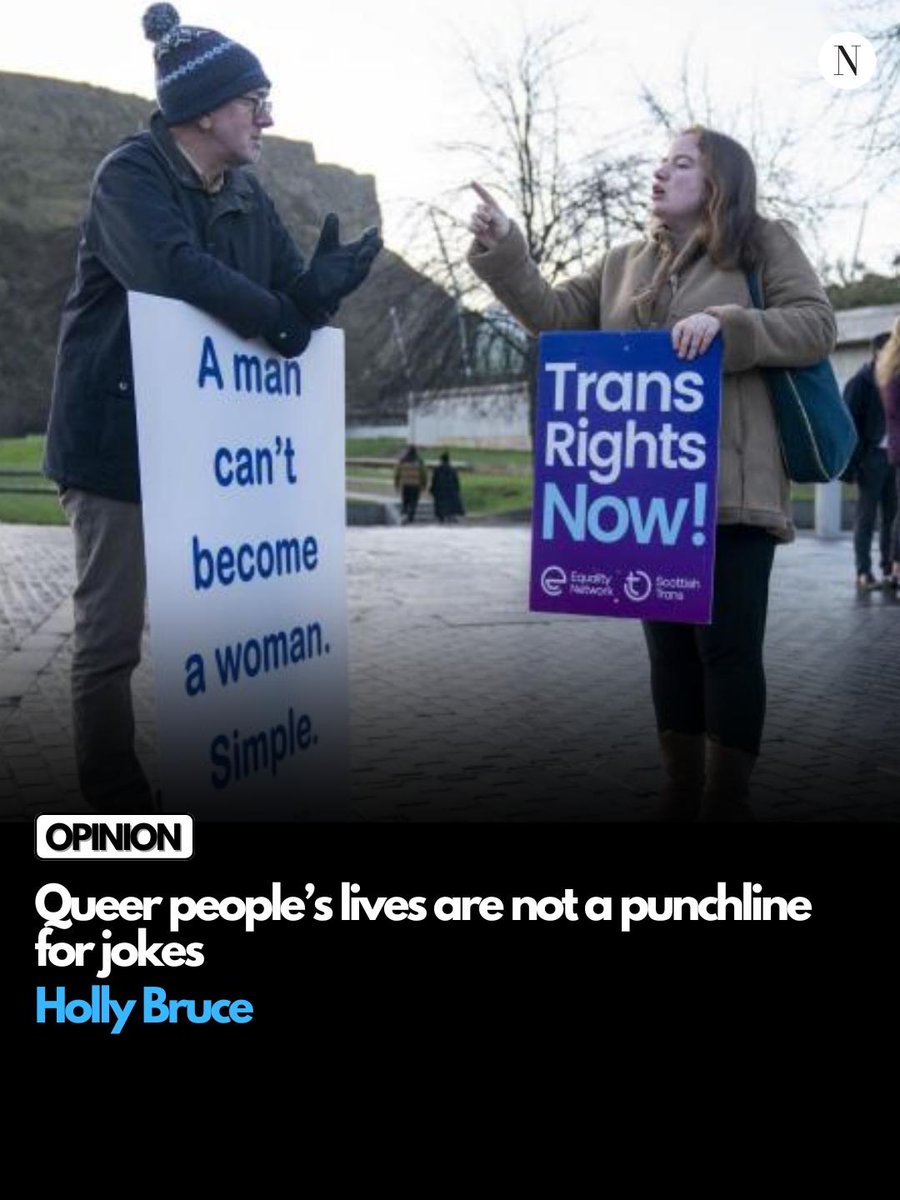
LGBT rights are human rights, and every queer person living in Scotland deserves better than being told they simply shouldn’t exist, writes Holly Bruce ✍️
7
117
436
11,403