
Joined November 2010
- Tweets 800
- Following 555
- Followers 72
- Likes 870
33 Photos and videos












Sven Eliasson retweeted

20 Jun 2024
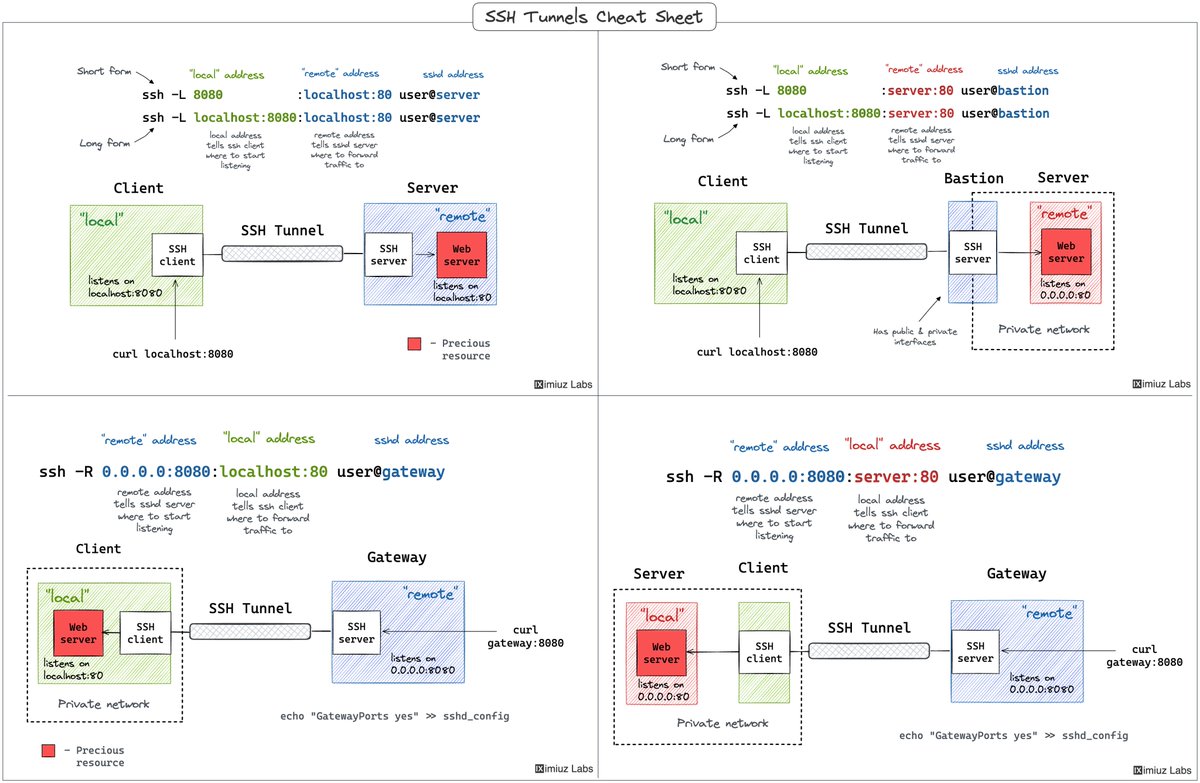
SSH is an ancient tech that is still widely used today. Learning a couple of SSH tricks might be more profitable in the long run than mastering a dozen Cloud Native tools destined to become deprecated next quarter.
The four most popular SSH Tunneling modes on a single diagram👇
3
5
66
5,432
Sven Eliasson retweeted

28 May 2024
To qualify as Science a piece of research must be correct and reproducible.
To be correct and reproducible, it must be described in sufficient details in a publication.
To be 'published' (to receive a seal of approval) the publication must be checked for correctness by reviewers.
To be reproduced, the publication must be widely available to the community and sufficiently interesting.
If you do research and don't publish, it's not Science.
Without peer review and reproducibility, chances are your methodology was flawed and you fooled yourself into thinking you did something great.
No one will ever hear about your work.
No one will pick it up and build on top of it.
No one will build new technology and products with it.
Your work will have been in vain.
You'll die bitter and forgotten.
If you never published your research but somehow developed it into a product, you might die rich.
But you'll still be a bit bitter and largely forgotten.
1,237
514
8,052
3,692,662
Sven Eliasson retweeted

5 May 2024
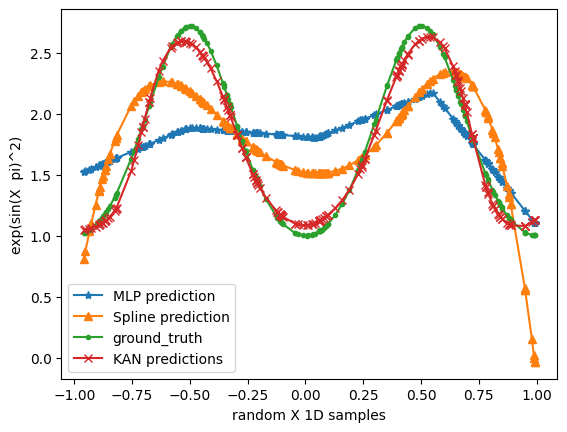
KAN: Kolmogorov–Arnold Networks is a really elegant paper. It's refreshing to see that things worked by design rather than by accident in ML. I made a small KAN experiment comparing it to MLP and spline fitting. (notebook in comments!)
27
342
2,322
329,066

Sven Eliasson retweeted

10 Apr 2024
Put this in your shell init script:
function rm () {
mv "$@" /tmp
}
Thank me later.
59
42
803
161,155
Sven Eliasson retweeted

24 Mar 2024
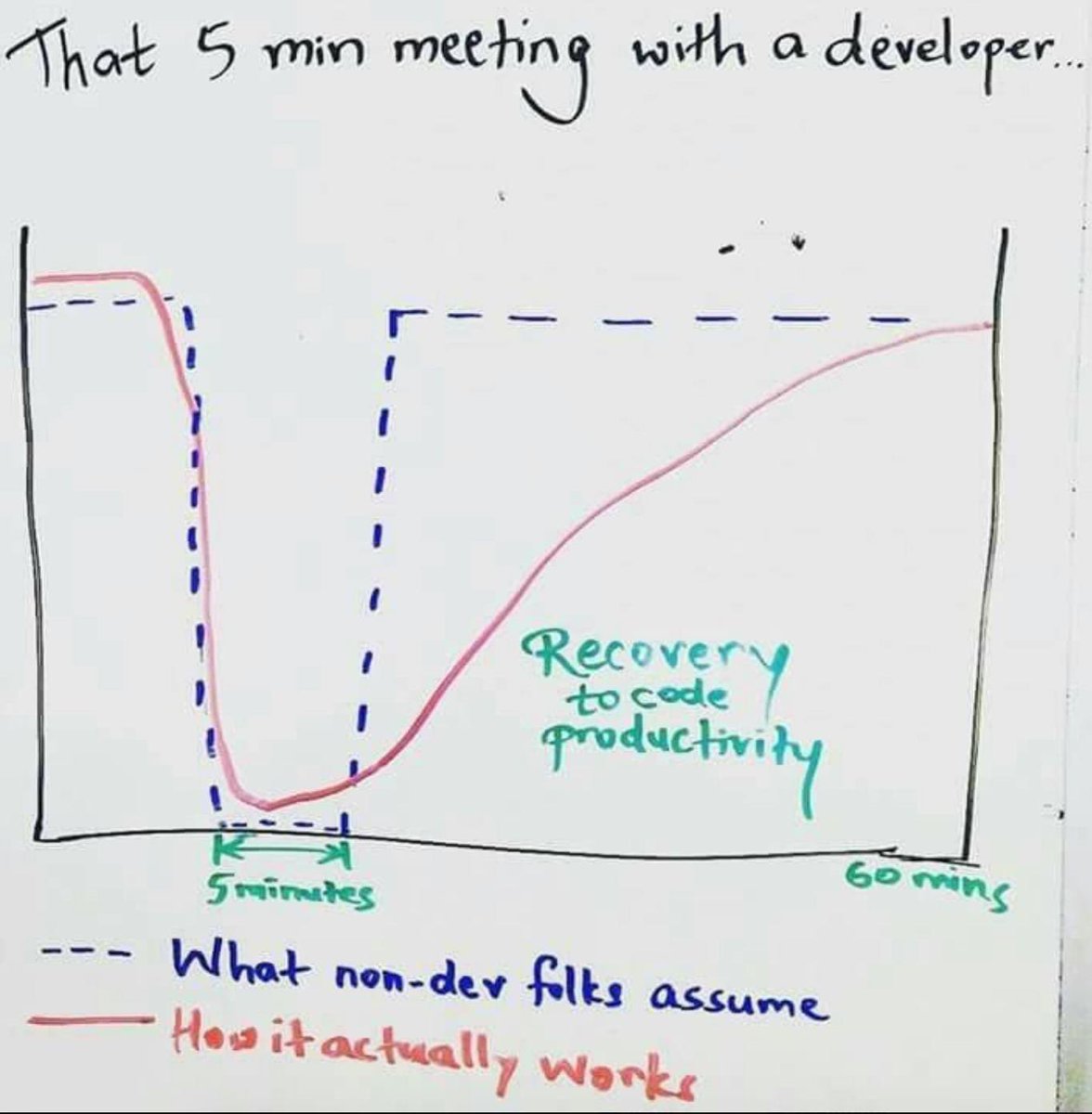
why programmers hate meetings
123
967
5,789
335,225
Sven Eliasson retweeted

16 Mar 2024
Àlex Roca Campillo (born 1991) is an athlete with cerebral palsy. He made history in March 2023 by becoming the first person in the world with a 76% disability to finish a marathon of 42.195 km.
x.com/i/status/1769015826785…
32
41
668
70,034
Sven Eliasson retweeted

5 Mar 2024
"Simplicity is prerequisite for reliability." - Edsger Dijkstra
As your setup gets more complex, it gets more fragile.
Things are more likely to break and slow you down.
Same rule applies to code and most of life really.


51
250
3,160
145,228
Sven Eliasson retweeted

5 Mar 2024
if it’s a bug worth fixing, write a test for it.
2
9
78
6,558

Sven Eliasson retweeted

22 Feb 2024
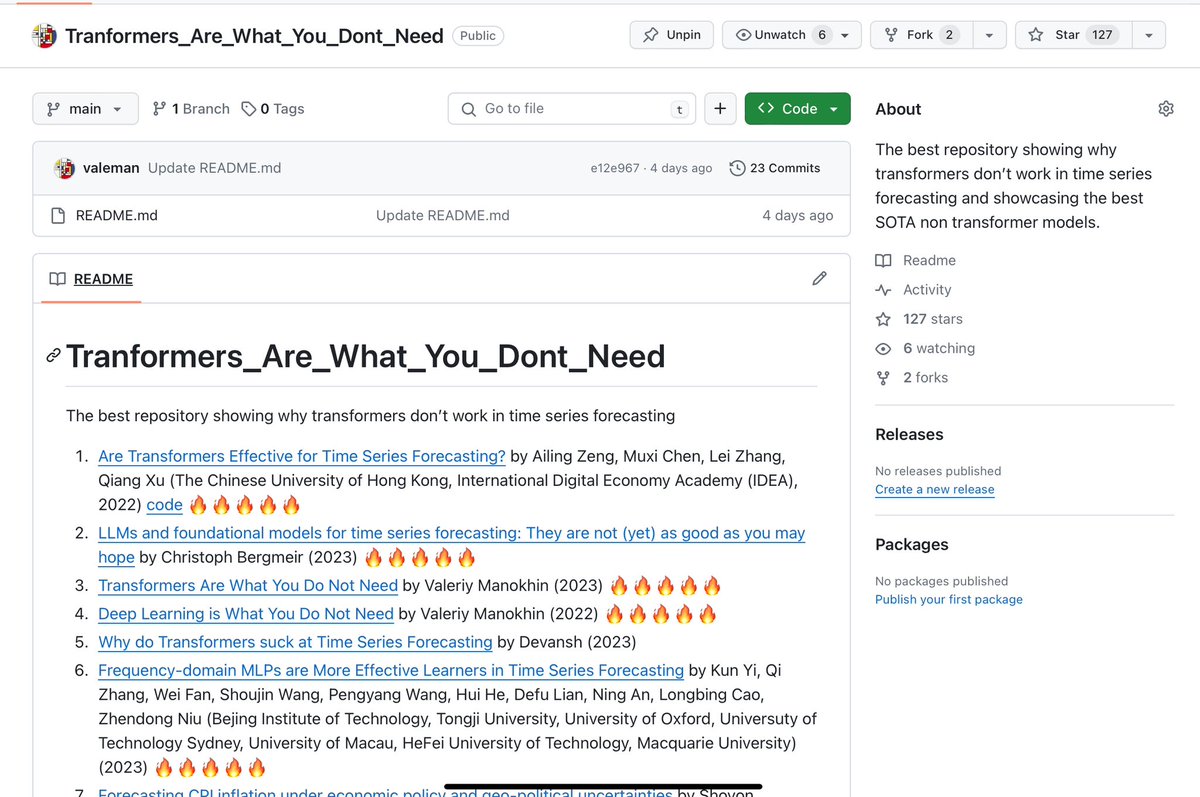
''Transformers Are What You Don't Need' is growing and more new papers have been added.
Learn why transformers are not the answer to #timeseries #forecasting, explore some of the best non-transformer methods that outperform transformers and give the repo your support and a star 🌟 ->
github.com/valeman/Transform…
#TimeSeries #Forecasting #Innovation #transformers

51
167
9,994
Sven Eliasson retweeted

22 Feb 2024
I review a LOT of React code every day. Half my job is repeatedly saying two things:
1. "This state isn't necessary. The values can be derived from other state/props."
2. "This useEffect isn't necessary. The values can be derived on each render instead."
47
78
1,089
108,222
Sven Eliasson retweeted

20 Feb 2024
Docker isn't great
but life before Docker were dark times
88
43
895
92,489
Sven Eliasson retweeted
11 Feb 2024
Unless constantly improved and maintaintained, all code eventually turns to 🍝 or 💩. Code is never “done”.
11 Feb 2024

I find it unhealthy to attach oneself to their code (or any craft, for that matter). I'm happy when I'm suggested to change or—even better—delete my code for good. I never feel any sentimental attachment or pride in what I write.
My job as a software engineer is not to write code. It's to think. Code is just a tool. Bytes on the screen to bring my thoughts to life. And I view it as that.
I've seen folks be so protective of their code it's silly. There is no pride to be had in the sole act of writing code. But there's a lot of pride and skill in being able to listen, communicate, discuss, adapt, and know when to throw away your code. That is healthy.
7
4
60
11,996
Sven Eliasson retweeted
8 Feb 2024
One of the biggest peddlers of transformers for #timeseries #forecasting doesn’t like this repo much.
Why does he hate this repo one might ask? Because it is a perfect antidote to his claims.
Meanwhile the repo keeps growing and has over 20 amazing papers and models showing that transformers are not SOTA.
#timeseries #forecasting
2
10
63
8,097

8 Feb 2024
RT @predict_addict: BOOM 💥 The competition in LLM time series space is heating up.
Lag-Llama was making rounds yesterday and some people…
68
Sven Eliasson retweeted

7 Feb 2024
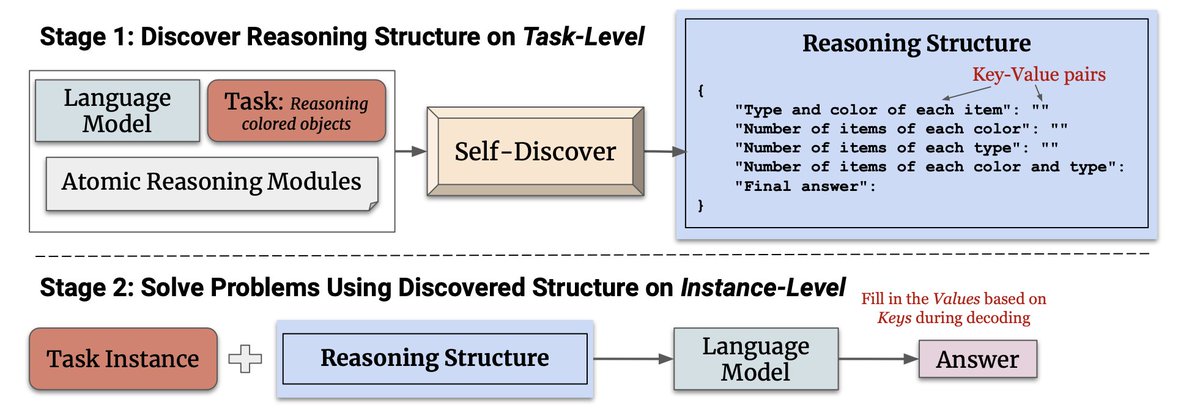
1/n The Self-Discovery That's Redefining Reasoning
The self-discover method outlined in a new paper from Google marks a significant advancement in enhancing the reasoning capabilities of large language models (LLMs). It breaks away from the limitations imposed by predefined paradigms, allowing models to create unique reasoning structures tailored to each task. This flexibility not only improves performance but also provides valuable insights into structured reasoning.
Traditionally, language models have struggled with a one-size-fits-all approach to reasoning, leading to challenges in handling diverse tasks. While methods like step-by-step prompting have shown promise, they often fall short when faced with tasks requiring alternative reasoning flows. Self-discover addresses this issue by dynamically composing reasoning building blocks, enabling models to identify relevant modules and integrate them into customizable workflows.
Moreover, this approach overcomes the rigidity of human-authored templates, which are often suboptimal for unfamiliar domains. By granting models the freedom to create bespoke scaffolding through directed composition, rather than imposing logic chains from the top down, self-discover embraces the inherent complexity of reasoning. This leads to significantly improved performance on multifaceted tasks while maintaining efficiency in inference.
Analysis further reveals that the structures generated by self-discover exhibit transferability across models, indicating universal traits. This methodology provides transparent insights into how models encode reasoning processes, resembling compositional hierarchies found in human cognition. While there may be performance plateaus in the future, self-discover represents an exploratory venture into emergent reasoning by artificial agents, transcending the constraints imposed by human boundaries.
By prioritizing student-driven synthesis of reasoning forms over predefined routines, this inquiry unlocks previously inconceivable problem-solving patterns for models. It heralds an era where we can learn as much from machines about chained cognition as they can learn from our elucidations. This illumination of structure genesis across models advances efforts to cultivate generalizable, composable thought.
8
88
356
58,262
Sven Eliasson retweeted

6 Feb 2024
Your back hurts because you have a weak core, tight hamstrings, and weak glutes.
Here are 10 exercises you can do in 10 minutes to undo hours of sitting at the desk:

101
1,249
9,508
2,588,493
Sven Eliasson retweeted

6 Feb 2024
Introducing 𝗦𝘂𝗽𝗲𝗿 𝗝𝗦𝗢𝗡 𝗠𝗼𝗱𝗲, a framework for low latency structured output generation from LLMs.
Generate JSON up to 𝟮𝟬𝘅 𝗳𝗮𝘀𝘁𝗲𝗿 from OpenAI and open source models.
❌ No need to threaten the model, tip the AI, etc ❌
Built with @derhacobian 🔧
🧵👇
35
93
880
166,141
Sven Eliasson retweeted

6 Feb 2024
Let's go! MetaVoice 1B 🔉
> 1.2B parameter model.
> Trained on 100K hours of data.
> Supports zero-shot voice cloning.
> Short & long-form synthesis.
> Emotional speech.
> Best part: Apache 2.0 licensed. 🔥
Powered by a simple yet robust architecture:
> Encodec (Multi-Band Diffusion) and GPT Encoder Transformer LM.
> DeepFilterNet to clear up MBD artefacts.
Synthesised: "Have you heard about this new TTS model called MetaVoice."
31
296
1,969
234,220