Senior Deep Learning Research Scientist at @3M Dublin. Engineer with a passion for robotics. I work on 3D mesh Transformers. All views are mine
Joined January 2016
- Tweets 649
- Following 930
- Followers 158
- Likes 1,348
42 Photos and videos



Francis Yates retweeted

11 Sep 2024
Most of these signatories have a distorted view of what is coming next with AI.
The distortion is due to their inexperience, naïveté on how difficult the next steps in AI will be, wild overestimates of their employer's lead and their ability to make fast progress, and financial incentives to hinder open source AI platforms (since almost all of them work for providers of proprietary AI systems).
As you and I know, generations after generations of AI researchers have made the same mistake: thinking that human-level AI is "just around the corner" because of some new paradigm they are working on.
They have consistently underestimated how difficult it is because they have an incentive to dismiss the limitations of their favorite paradigm as mere "engineering problems," and they can't foresee the obstacles they'll bump into before bumping onto them.
We are making progress towards human-level AI, but we're still far from it.
Some of us may have vague roadmaps for how to get there. But no one has a credible blueprint, let alone a demonstrable prototype.
Before such a prototype exists (perhaps with the learning abilities of a house cat), regulating AI R&D because of a fear of existential risk is highly premature.
There is nothing wrong with sensible legislation to regulate the *deployment* of AI application.
But legislation that hinders open research and open source AI platforms, and that makes open source AI developers liable for what people do with their code is extremely regressive.
75
129
1,164
101,109

23 Nov 2023
RT @TheBrianMcManus: I try my best to not talk about Irish politics, but getting sent things like this by my Garda friends just angers me t…
24
Francis Yates retweeted

9 Dec 2022
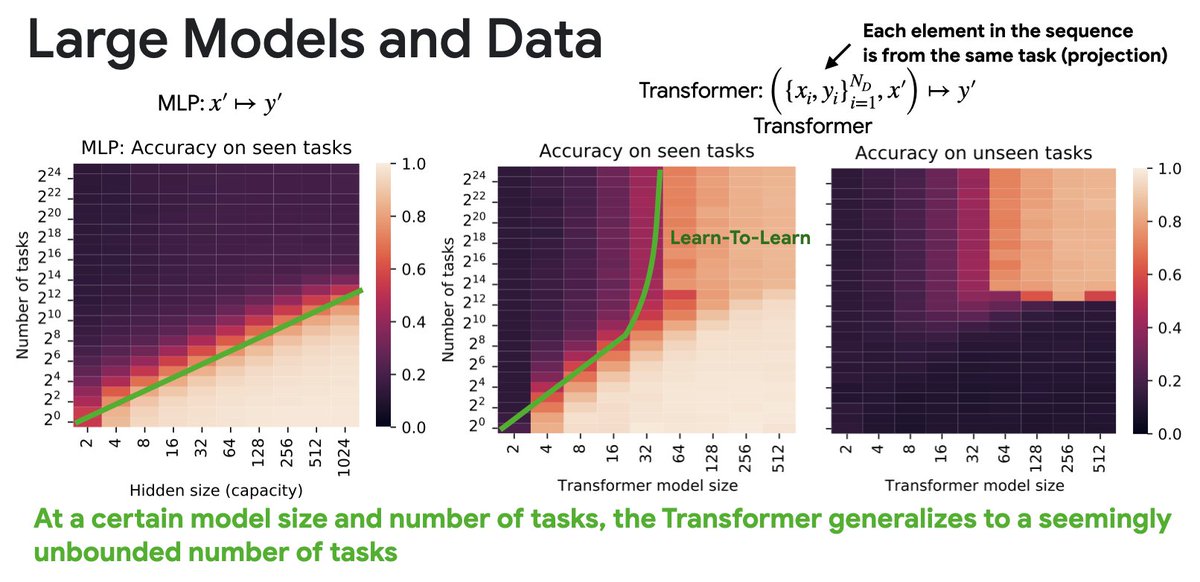
Emergent in-context learning with Transformers is exciting! But what is necessary to make neural nets implement general-purpose in-context learning? 2^14 tasks, a large model memory, and initial memorization to aid generalization.
Full paper arxiv.org/abs/2212.04458
🧵👇(1/9)
8
83
391
4 Jul 2022
Just watched a great interview with Monica Daley @birdBiomechy , super interesting.
youtube.com/watch?v=xnjeVdLH…

1
18 Jun 2022
Next week I'm going to be joining @3M as a Senior Research Scientist for AI in dental applications. Can't wait, sad to be leaving @VisualAIPeople after 4 great years.
4
Francis Yates retweeted

2 Jun 2022
One difference between experienced ML researchers with those new to the field is the amount of visualization that one does including visualizing training data, augmentations, parameters, gradients, predictions, etc. A codebase with only end metric plots almost always means bugs.
1
5
Francis Yates retweeted

8 Apr 2022
Looks to me like stage 2) argument:
x.com/woj_zaremba/status/151…
8 Apr 2022

AGI skepticism comes in three stages:
1) It’s completely impossible.
2) It’s possible, but it would be prohibitively expensive to be useful
3) I said it was a good idea all along.
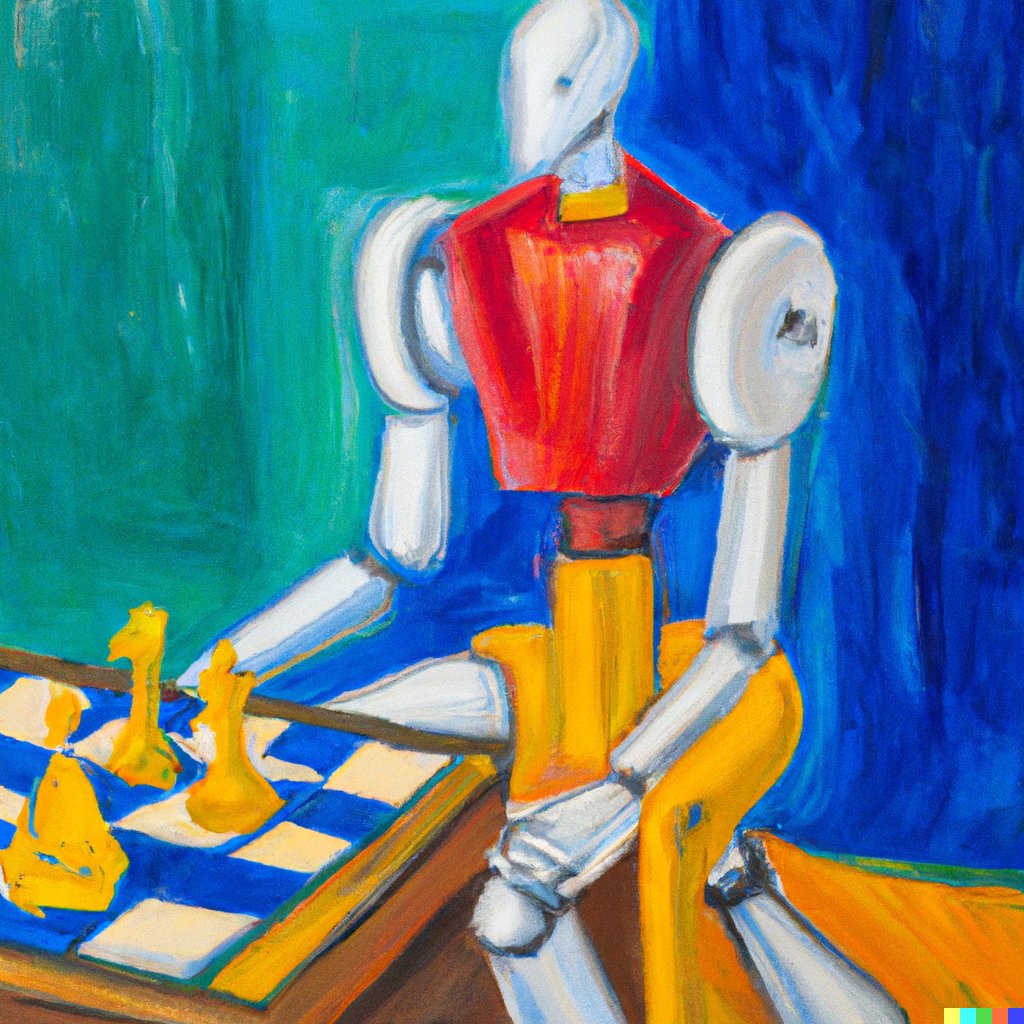
Imgs by Dall-e

2
2
16
8 Dec 2021
This is unbelievably based
7 Dec 2021

Academics: We value research quality more than quantity.
Also academics: Look! Come check out our 100 papers at top conference!
18 Nov 2021
Has anyone got any advice/links on optimizing v,v large (2gb ) TF vision models? - for inference/training
Francis Yates retweeted

14 Nov 2021
What's the differences among ...
Latent space, feature space, embedding space, representation space, latent feature, feature embedding, latent representation, embedding representation, latent embedding, and feature representation? 🤔
19
65
673
Francis Yates retweeted

2 Nov 2021
AI isn’t “hijacking” art history, it is providing the tools it needs to scale!
The first automobile was not faster than a horse and carriage, but it had the attributes that allow it to scale.
1
1
6
Francis Yates retweeted

1 Nov 2021
#COP26 has just begun while I started working in the renewable industry today.
As a welcome gift, I'd really appreciate if all the world leaders agreed to dump 30 years of work on my desk.
1
1
1
28 Oct 2021
Big fan of @ramin_m_h talk on the paper 'Liquid Neural Netwoks' about a 'new class of time-continuous recurrent neural network models'. Really good visualisation. youtube.com/watch?v=IlliqYiR…
1
Francis Yates retweeted

15 Oct 2021
Does my GAN's loss go down every day? No. But does it try its hardest to make its image quality go up over time? Also no
3
64
11 Oct 2021
The ability to wrap arbitrary python/NumPy operations within a Tensorflow graph - and save - then serve it, is a massively underrated benefit of Tensorflow. Main changes include changing from python lists to TensorArrays.
Francis Yates retweeted
13 Jul 2021
So many exciting new frontiers in ML, it's hard to give a short list, particularly in new application areas (e.g. in the physical and biological sciences).
But the Big Question is:
"How could machines learn as efficiently as humans and animals?"
This requires new paradigms.
12 Jul 2021

i want to get into ML research, what topic would you recommend?
nothing. now it is not time to get into ML research. now its time to either observe what others are doing, or to build innovative applications using established techniques, or both.
14
71
483
Francis Yates retweeted
13 Jul 2021
We do not have an answer to that question, and the gap to bridge is enormous (how can people learn to drive a car in 20h of practice?)
Decisive advances towards an answer will mark a new era in AI.
That's why I work on self-supervised learning.
It's our best shot at the moment.
8
12
182

Francis Yates retweeted

4 May 2021
The conversations around Falcon and the Winter Soldier being “too political” when it’s just detailing Black people’s existence in the US shows us that the “no politics at work” policies will reprimand Black people for just sharing our experiences & existence
5
28
203
Francis Yates retweeted

18 Mar 2021
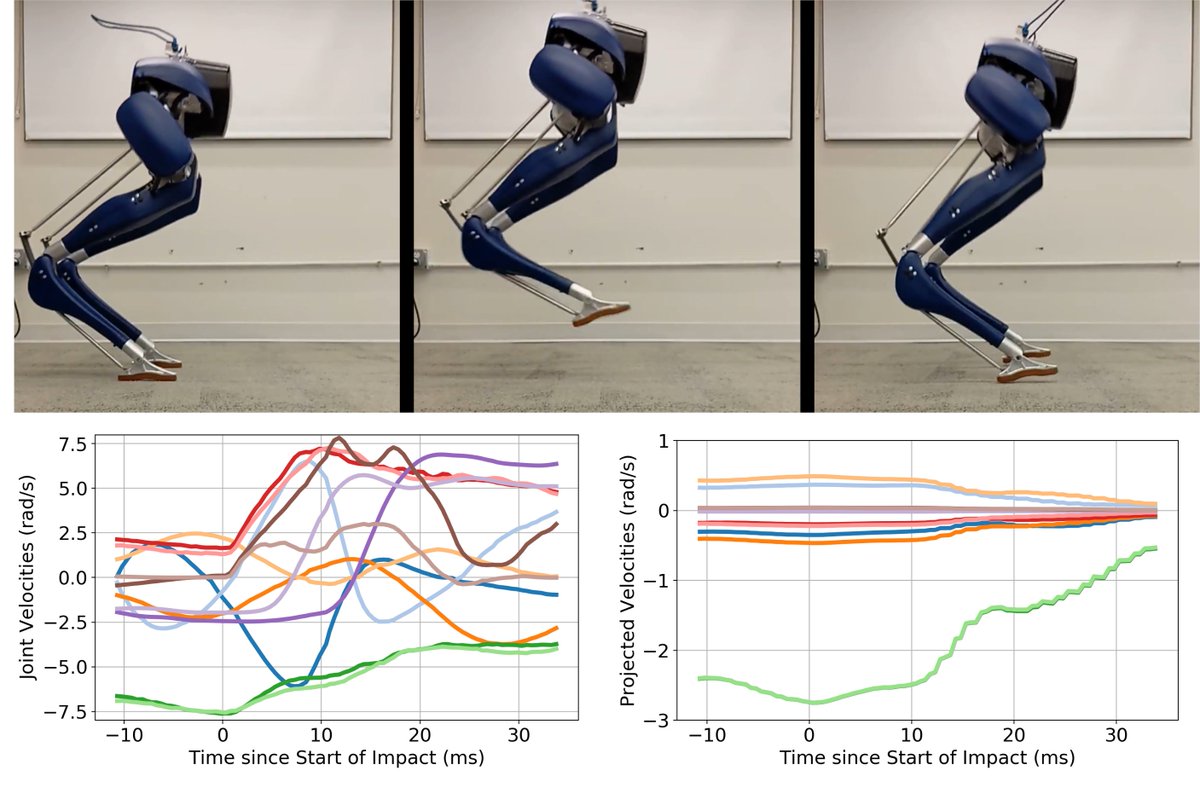
New preprint: "Impact Invariant Control with Applications to Bipedal Locomotion," by William Yang.
During impacts, robots undergo large and rapid changes in velocity. State estimation, and thus control, in these periods are incredibly difficult. (1/2)
arxiv.org/abs/2103.06907
1
11
69