
CEO at @dRPCorg - The most performant & reliable Web3 infrastructure
Joined October 2017
- Tweets 2,033
- Following 243
- Followers 9,633
- Likes 1,845
693 Photos and videos










Pinned Tweet

In dRPC you can run a quorum of data providers, including internal nodes, with custom rules for quorum. We made it in 2023: drpc.org/docs/gettingstarted…. For a mission-critical application like a bridge or oracle, there's no excuse not to set it up. But they didn’t.
The framing of the recent KelpDAO and LayerZero incidents as some novel attack vector, or the work of meaningfully smarter attackers, is mostly wrong. The actual failure mode - applications trusting a single RPC endpoint to return honest data - has been discussed openly for years, by @VitalikButerin, @lomashuk, @MicahZoltu, @wagmiAlexander, @ChainLinkGod, @banteg, and many others. It is neither new nor subtle. A closely related failure happened in 2022 with the Ankr DNS hijack on Polygon and Fantom: x.com/Mudit__Gupta/status/15…
The point here isn't ideological. In a 24/7 market where automated systems act on RPC responses in real time, assuming one provider will always return correct data is a system-level risk. There is no T 2 window in which a human notices the error and reverses it.
When we launched dRPC, cross-verification across a permissioned set of RPC providers was the core idea. The original repo and docs are still up (although outdated since then):
-drpc.org/docs/gettingstarted…
- github.com/drpcorg/drpc-side…
We used a simple quorum rather than zk-based verification, partly to test real demand before overbuilding. Two observations from that period:
1. The demand was not there. In public, everyone agreed with the thesis. In private, the responses were "we are not ready to pay more for quorum," or "yes, we could apply it to sensitive paths only, but it's not a priority."
2. The risk was real. The market is now discovering this at a cost of roughly $250M.
Because full cross-verification on every request is overkill for most workloads, we eventually shifted toward shadow checks — randomized background comparisons across providers that detect and eject unhealthy nodes before they serve meaningful traffic. This is a reasonable compromise for general workloads. It is not a substitute for quorum on sensitive paths.
So the practical rule, for anyone building infrastructure whose failure mode is user funds:
1. Use at least 3–5 independent, reliable RPC providers.
2. Do not build your load balancer on training wheels. Something like drpc.org/nodecore-open-sourc… is open source, free, and almost certainly better than what you would build in-house. Contributing to it is a better use of time than reinventing it.
You cannot defend against every possible attack. But this particular class is avoidable at low cost, if you are willing to treat RPC as a system-level dependency rather than a commodity input. That is a reasonable bar for anything meant to serve more than a narrow circle of users.
We will update the dRPC NodeCore (drpc.org/nodecore-open-sourc…) with strict rules for quorum on your side in the near future, stay tuned. If you have more sophisticated requirements for security, we are fully open for your requests - feel free to each me our via DM here or by email kz@drpc.org

3
18
66
36,707
Constantine | dRPC.ORG retweeted

May 19
Introducing the Monastery for AI-native founders.
A single builder can now outperform a publicly traded company.
$2 million. 12 weeks. Do the impossible.
122
149
1,010
350,245
Constantine | dRPC.ORG retweeted

May 24
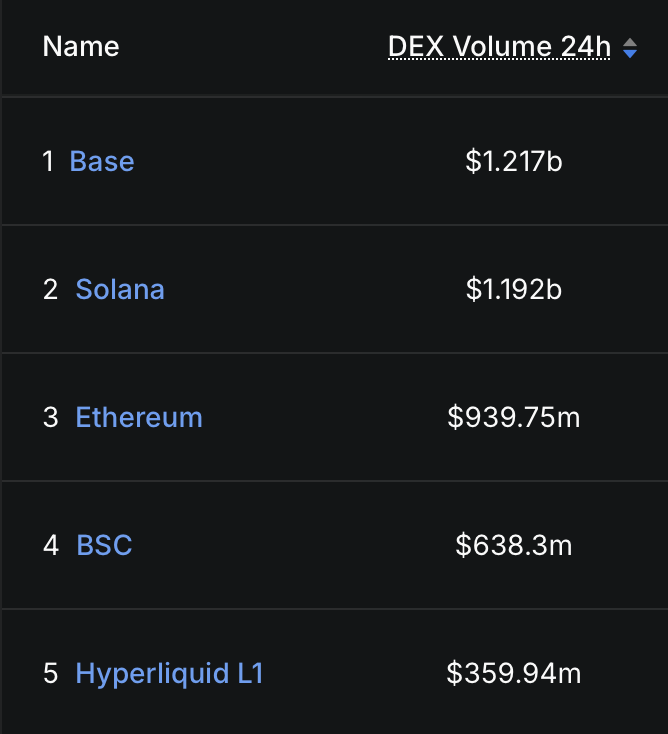
Today: We're the #1 DEX on the #1 chain.
Soon: We're the #1 DEX across all EVM. 🛫
47
88
638
42,819
Well said.
The whole world is pretty “patterned”.
Rivers finds the easiest way to flow, likewise money finds the easiest way to grow.
People could help to find these ways and adapt or spend their lives trying to change direction of the flow because “that’s right” in their mind.
Apr 29

Elon Musk avait dit un truc qui m'avait marqué sur l'allocation de ressources. En substance : passé un certain niveau de richesse, l'argent n'est plus de la consommation, c'est de l'allocation de capital.
Cette phrase change tout.
L'économie, dans le fond, c'est juste un problème d'allocation. Tu as des ressources finies et des usages infinis. Qui décide où va quoi ?
Imagine une cour de récré. 100 enfants, des paquets de cartes Pokémon distribués au hasard. Tu laisses faire. Très vite, un ordre émerge. Les bons joueurs accumulent les cartes rares, les collectionneurs trient, les négociateurs trouvent des deals. Personne n'a planifié. Et pourtant chaque carte finit dans les mains de celui qui en tire le plus de valeur. Le système maximise le bonheur total de la cour. C'est ça, la main invisible.
Maintenant fais entrer la maîtresse. Elle trouve ça injuste. Léo a 50 cartes, Tom en a 3. Elle confisque, redistribue, impose l'égalité. Trois effets immédiats. Les bons joueurs arrêtent de jouer, à quoi bon. Les mauvais n'ont plus de raison de progresser, ils auront leur part. Les échanges s'effondrent. La cour est égale, et morte. Elle a maximisé l'égalité, elle a détruit le bonheur.
Le problème de la maîtresse, c'est qu'elle ne peut pas avoir l'information que la cour avait collectivement. C'est le problème du calcul économique de Mises, formulé en 1920. L'URSS a essayé de le résoudre pendant 70 ans avec le Gosplan. Résultat : pénuries, queues, effondrement. Pas parce que les Soviétiques étaient bêtes, parce que le problème est mathématiquement insoluble en mode centralisé.
Quand Musk a 200 milliards, il ne les consomme pas, il les alloue. SpaceX, Starlink, Neuralink, xAI. Chaque dollar est un pari sur le futur. Et lui a un track record. PayPal, Tesla, SpaceX. Il a démontré qu'il sait identifier des problèmes immenses et y allouer des ressources avec un rendement spectaculaire.
L'État aussi a un track record. Hôpitaux qui s'effondrent, éducation qui décline, dette qui explose, services publics qui se dégradent malgré des budgets en hausse constante. Le marché identifie les bons allocateurs, la politique identifie les bons communicants.
Le profit n'est pas une finalité, c'est un signal. Il dit : tu as alloué des ressources rares vers un usage que les gens valorisent suffisamment pour payer. Plus le profit est gros, plus la création de valeur est grande. Quand Starlink est rentable, ça veut dire que des millions de gens dans des zones rurales ont enfin internet. Quand un ministère est en déficit, ça veut dire qu'il consomme plus qu'il ne produit. L'un crée, l'autre détruit, et on appelle ça redistribution.
Dans nos sociétés il y a deux catégories d'acteurs. Les entrepreneurs et les bureaucrates. L'entrepreneur prend un risque personnel pour identifier un problème, mobiliser des ressources, créer une solution. S'il se trompe il perd. S'il a raison, ses clients gagnent, ses employés gagnent, ses fournisseurs gagnent, l'État collecte des impôts. Il est la cellule de base du progrès humain.
Le bureaucrate ne prend aucun risque personnel. Son salaire est garanti. Au mieux il maintient une rente existante. Au pire il la détruit par excès de réglementation, mauvaise allocation forcée, incitations perverses qui découragent ceux qui produisent. Mais dans aucun cas il ne crée.
Regarde les 50 dernières années. iPhone, internet civil, SpaceX, Tesla, Google, Amazon, Stripe, mRNA, ChatGPT. Toutes des inventions privées, portées par des entrepreneurs, financées par du capital risque. Pas un seul ministère n'a inventé quoi que ce soit qui ait changé ta vie au quotidien.
La France est devenue le laboratoire mondial de la dérive bureaucratique. 57% du PIB en dépenses publiques, record absolu. Une administration tentaculaire, une fiscalité qui pénalise la création de richesse. Résultat : décrochage face aux États-Unis, à l'Allemagne, à la Suisse. Fuite des cerveaux. Désindustrialisation. Dette qui explose.
Et le pire c'est que la mauvaise allocation s'auto-renforce. Plus l'État prélève, moins les entrepreneurs créent. Moins ils créent, moins il y a de base fiscale. Plus l'État s'endette et taxe. Boucle de rétroaction négative parfaite. La maîtresse pense qu'elle aide, et chaque année la cour produit moins.
Dans nos sociétés, ce sont les entrepreneurs, toujours, qui font avancer la civilisation. Les bureaucrates au mieux maintiennent une rente, au pire la détruisent. Aucune société n'a jamais progressé en taxant ses créateurs pour subventionner ses gestionnaires.
La question n'est jamais qui a combien. C'est qui alloue le mieux la prochaine unité de ressource pour maximiser le futur de l'humanité. La réponse depuis 200 ans n'a jamais changé. Ce ne sont pas les fonctionnaires.
134
We got a lot of requests to bring this back to life, and as promised, it's live now! drpc.org/docs/gettingstarted…
If you build a mission-critical dApp, or if part of your functionality is super fragile to RPC poisoning, please use the Verification feature from dRPC via NodeCloud or NodeCore; there is no excuse not to use it, and you can't say, after yet another hack, that you were not aware of this.

In dRPC you can run a quorum of data providers, including internal nodes, with custom rules for quorum. We made it in 2023: drpc.org/docs/gettingstarted…. For a mission-critical application like a bridge or oracle, there's no excuse not to set it up. But they didn’t.
The framing of the recent KelpDAO and LayerZero incidents as some novel attack vector, or the work of meaningfully smarter attackers, is mostly wrong. The actual failure mode - applications trusting a single RPC endpoint to return honest data - has been discussed openly for years, by @VitalikButerin, @lomashuk, @MicahZoltu, @wagmiAlexander, @ChainLinkGod, @banteg, and many others. It is neither new nor subtle. A closely related failure happened in 2022 with the Ankr DNS hijack on Polygon and Fantom: x.com/Mudit__Gupta/status/15…
The point here isn't ideological. In a 24/7 market where automated systems act on RPC responses in real time, assuming one provider will always return correct data is a system-level risk. There is no T 2 window in which a human notices the error and reverses it.
When we launched dRPC, cross-verification across a permissioned set of RPC providers was the core idea. The original repo and docs are still up (although outdated since then):
-drpc.org/docs/gettingstarted…
- github.com/drpcorg/drpc-side…
We used a simple quorum rather than zk-based verification, partly to test real demand before overbuilding. Two observations from that period:
1. The demand was not there. In public, everyone agreed with the thesis. In private, the responses were "we are not ready to pay more for quorum," or "yes, we could apply it to sensitive paths only, but it's not a priority."
2. The risk was real. The market is now discovering this at a cost of roughly $250M.
Because full cross-verification on every request is overkill for most workloads, we eventually shifted toward shadow checks — randomized background comparisons across providers that detect and eject unhealthy nodes before they serve meaningful traffic. This is a reasonable compromise for general workloads. It is not a substitute for quorum on sensitive paths.
So the practical rule, for anyone building infrastructure whose failure mode is user funds:
1. Use at least 3–5 independent, reliable RPC providers.
2. Do not build your load balancer on training wheels. Something like drpc.org/nodecore-open-sourc… is open source, free, and almost certainly better than what you would build in-house. Contributing to it is a better use of time than reinventing it.
You cannot defend against every possible attack. But this particular class is avoidable at low cost, if you are willing to treat RPC as a system-level dependency rather than a commodity input. That is a reasonable bar for anything meant to serve more than a narrow circle of users.
We will update the dRPC NodeCore (drpc.org/nodecore-open-sourc…) with strict rules for quorum on your side in the near future, stay tuned. If you have more sophisticated requirements for security, we are fully open for your requests - feel free to each me our via DM here or by email kz@drpc.org
4
25
6,709
Finally, you got what your lovely agent always asked for, please meet the dRPC Agent Skills!

Why are you still writing RPC calls in 2026?
What if your AI agent could just ask for blockchain data and get it instantly?
Learn like a PRO on the thread 👇

ALT Use dRPC Agent Skills to access blockchain data via AI agents. No RPC setup, no manual queries. Connect in seconds and start querying 100 chains.
3
249
Constantine | dRPC.ORG retweeted
Apr 3
3 rounds of audits, starting this month.
Then a bug bounty.
Then Mainnet.
See you in July.
102
110
849
156,781
Constantine | dRPC.ORG retweeted

Mar 23
Most Solana infra promises speed. Few explain where it comes from. Speed is not just about sending. It is about landing, and that is a product of routing. Let us break it down ↓

2
4
11
545
Constantine | dRPC.ORG retweeted

@tempo Mainnet is live 🚀
A new chain purpose-built for real-world payments, not general-purpose experimentation.
Builders can now start using Tempo via public RPC endpoints 👇
drpc.org/chainlist/tempo-mai…
2
7
44
7,942
Looking for reliable and performant RPC for @tempo ?
You should know where to go -> dRPC
tempo-mainnet.drpc.org
105
Constantine | dRPC.ORG retweeted
Mar 16
Believe in somETHing.
Q2.

67
78
703
39,992
We previously contributed a lot into Dshackle, but huge legacy, Kotlin and general complexity made it “too heavy”.
Now we open-sourced more fresh, built on Go - #NodeCore - that already used by many of our clients among TOP DeFi projects.
And yes, it supports @solana too 🫶
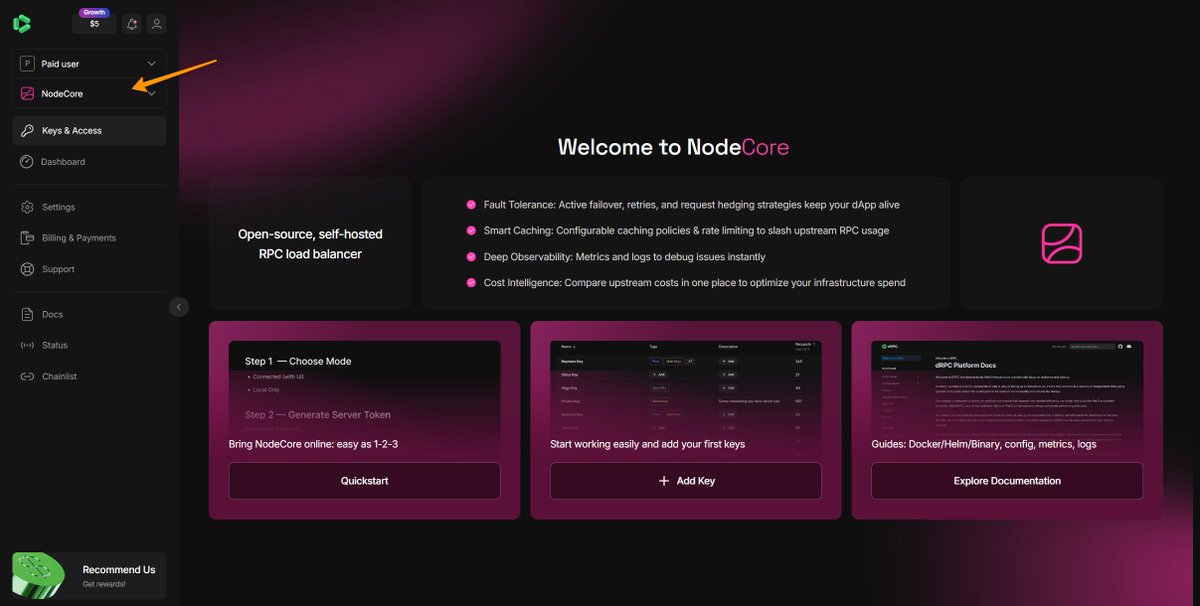
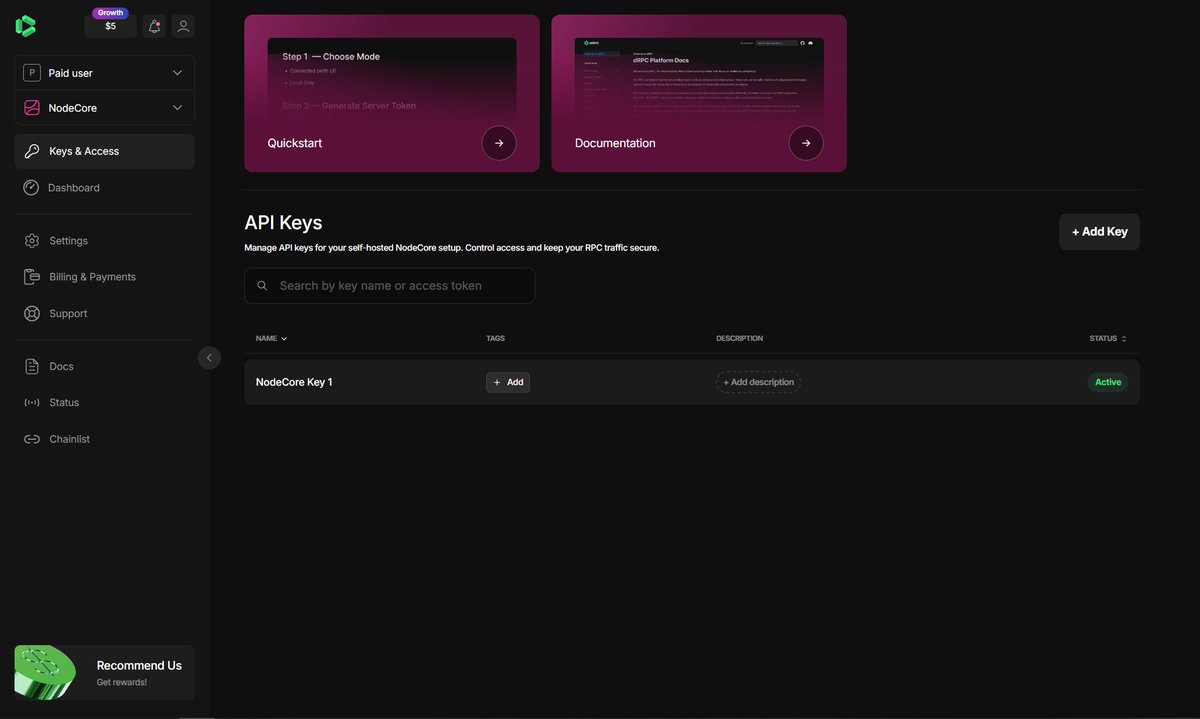
Product launch alarm 🚨
After a succesfull beta, the final NodeCore OSS package is out 🚀
What's NodeCore? dRPC’s open-source, self-hosted RPC infrastructure stack.
Built for teams that want to run their own RPC layer with more control over routing, reliability, and access.
GitHub: github.com/drpcorg/nodecore
4
189
And even that is not enough to clean all bots from comments on X.

Anthropic dropped a 33 pages cheat sheet for building Claude skills
resources.anthropic.com/hubf…

156


Quite interesting thought from Stani, Solar power is definitely the future and maybe even not only in Space

1
3
211
Constantine | dRPC.ORG retweeted

Jan 22
4
48
16
1,172
Constantine | dRPC.ORG retweeted
MegaETH Mainnet just launched, and it’s not another incremental L2.
> Real-time execution
> Extreme throughput claims (100k TPS)
> Designed for latency-sensitive apps from day one
We broke down what makes MegaETH stand out, why builders are paying attention, and what to know if you’re evaluating it now.
Read all about it 👇
drpc.org/blog/megaeth-rpc-en…

ALT chain spotlight megaeth overview
1
1
5
759
So, biggest and strongest AI in the space that will manage billions of Tesla robots on Earth. What could go wrong 🤣
Jan 31

BREAKING: SpaceX wants to turn Space into the World’s Biggest AI Data Center.
• SpaceX is seeking approval to launch and operate up to one million satellites designed to function as orbital data centers.
• These satellites would provide massive computing power to support advanced artificial intelligence and data processing.
• The system would rely on near constant solar energy in space, reducing operating costs and environmental impact compared to Earth based data centers.
• Satellites would operate between 500 km and 2,000 km in altitude, across multiple orbital shells, to handle global demand.
• High speed laser links would connect the satellites with each other and with the Starlink network, enabling petabit level data transfer.
• Data would ultimately be routed to authorized ground stations around the world.
• SpaceX says demand from AI, machine learning, and edge computing is growing faster than terrestrial infrastructure can handle.
The company frames this as a major step toward a future where humanity becomes a multi planetary civilization powered by space based infrastructure.

1
270
Thanks for shoutout @Mudit__Gupta
We are always open to any feedback to make it even better 🚀
Jan 21

Testing Polygon RPC providers
Shoutout to @dRPCorg @Quicknode @lavanetxyz for supporting the most endpoints
@Alchemy @infura_io if you don't need Debug/Trace endpoints
@nodies_infra @Allnodes if you don't need archive data
@zan_team @ankr for the fastest response time to me
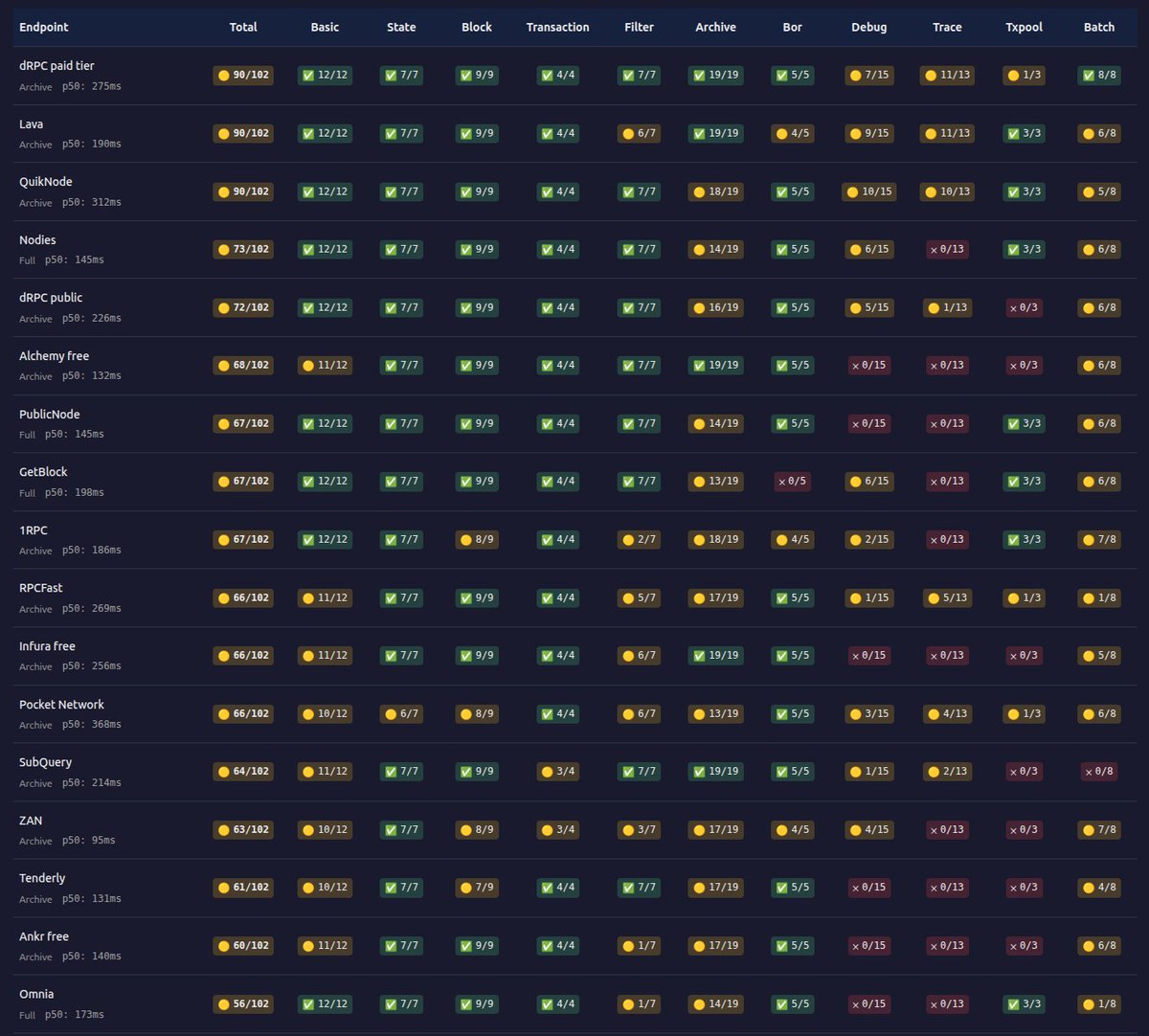

3
173
Really good move from Morpho.
Discord now even worse than X regarding spammers and scammers.
Industry evolves and communication channels like Discord unfortunately couldn’t solve growing issues of cyber crimes via their platform.
Although they are trying to, for now it doesn’t work well
Jan 14

Morpho's shutting down its public Discord. Didn't see that coming.
This could be a trend for other protocols too—scams, bot scraping, or just too much noise might be at play. But maybe its also signals that big DeFi teams are focusing more on institutions and less on "communities".
Kinda bittersweet to see DeFi going mainstream.

2
208