
Data at @the_tpa Helpful regular correspondent
Joined October 2009
- Tweets 17,414
- Following 1,105
- Followers 1,419
- Likes 25,241
1,766 Photos and videos













Pinned Tweet

30 Jun 2025
Anyone interested in the UK benefits debate should check out benefitsdata.uk
4
7
31
6,611
Lot to be said by this. The optics of losing Fable even if temporarily aren’t great - but we’re not exactly in a place to take full advantage of last year’s versions

So. The US has blocked export of @AnthropicAI's Fable 5 and Mythos 5, and the noise around it is mostly grift. I keep coming back to this because the reality is orders more boring than the outrage, and I probably won't get the views or impressions for saying it. But truth is truth.
I tested Fable earlier this week. Got it to render a poetic translation of the opening stanzas of Pushkin's Eugene Onegin, and it did an absolutely cracking job. The slightly unnerving bit is that it's super capable across domains - think of it as a research scientist who also happens to be a multi-instrumentalist. The thing can probably do biological research capable of creating biological weapons, or developing other AI models. I'm not saying that's what it's for. And Anthropic tuned it conservatively, so it rejects tasks that smell like foul play. But that raw capability is probably there.
Here's the but. For Britain to prosper economically using AI, we simply don't need models like Fable.
We don't.
We're stuck in such a deep productivity rut, mostly in SMEs outside London, that flipping out because Fable is suddenly unavailable is like someone who can't ride a bicycle creating vitriol because they were denied a license to pilot a space shuttle to Alpha Centauri.
There are metric tons of other models - proprietary ones from Anthropic themselves, @OpenAI, @GoogleDeepMind in London, the French lab @MistralAI, open weight and open source options - all capable of running 99.9% of business automation tasks, at a fraction of the cost of Fable or even Anthropic's Claude Opus 4.8, which wasn't affected anyway.
Look, if we step back from the sensationalism, the actual problem is elsewhere.
We have two of them, really.
First: we don't have enough capacity to run AI inference at scale inside Britain. That means moving electrons for every token that comes out of a model, and moving electrons requires energy that needs to be cheap. Britain's industrial electricity prices are almost 50% higher than France and Germany, about four times higher than the US and Canada. We're lagging behind even the EU.
Data centres need to run 24/7, and for a country that doesn't produce a lot of fossil fuels, the most surefire way to enable AI inference growth is nuclear - cheap, abundant, ideally co-located with the data centres. We're hopelessly behind on that.
Building reactors here requires bespoke design due to an inordinate amount of regulations. Standard reactors, not even small modular ones, are absolutely ridiculously expensive because of it. Just fixing that would uncork the supply of AI data centres and inference capacity, and yes, that would give us actual AI sovereignty - running models here, serving customers here - in case the rest of the world decides to shut off access, which they haven't done.
The second problem is where research actually gets applied. British universities crank out decent fundamental AI research. The IP just doesn't stick around. Partly policy - our spin-out equity structures discourage researchers and investors compared to the US. Partly because there's nowhere to run it at scale. You need abundant data centres and cheap, consistent backbone energy. We have neither.
I'll be straight. There's a kernel of truth in what Alex Armstrong is writing. AI sovereignty matters - we need our own steelmaking, our own food security, our own ability to make weapons without relying on external supply chains. We also need to build and run our own data centres for AI, no question. But in the short term, the opportunity for prosperity in Britain is applying existing models that have been developed elsewhere. And for that, we absolutely do not need super capable models like Fable 5.
1
1
307
Wow - so we don’t need an army then at all 🤦♂️

We need to get away from this war mindset.
Avoiding wars - as when we correctly refused to join the Iran War - is better than fighting them.
1
5
1,319

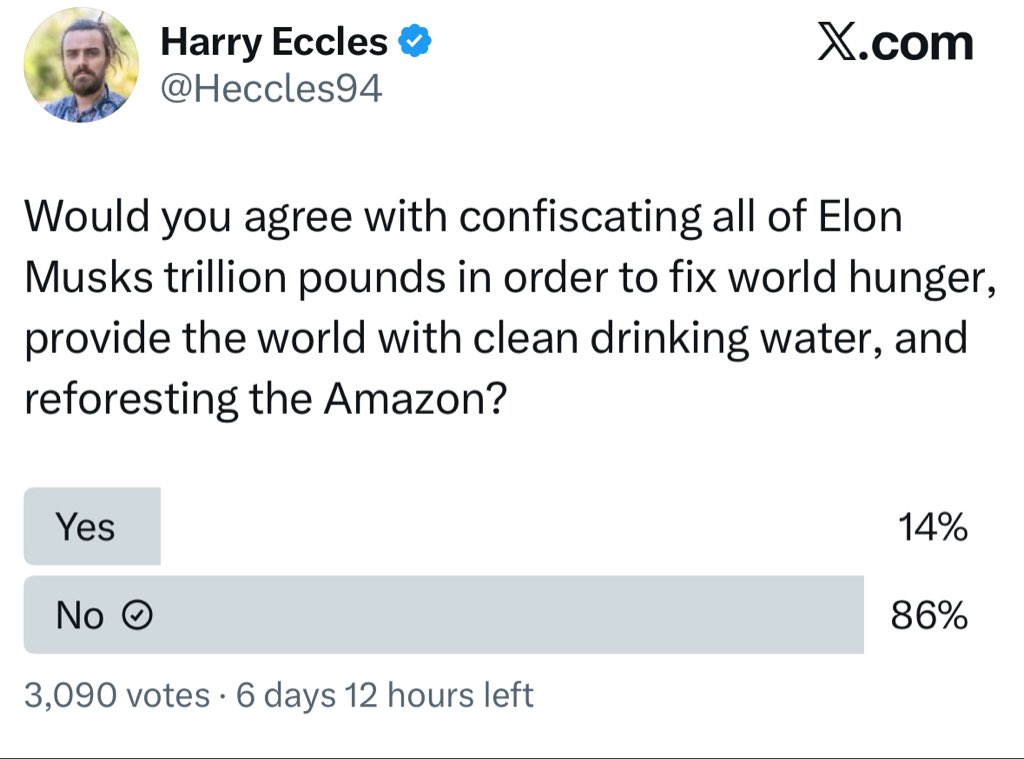
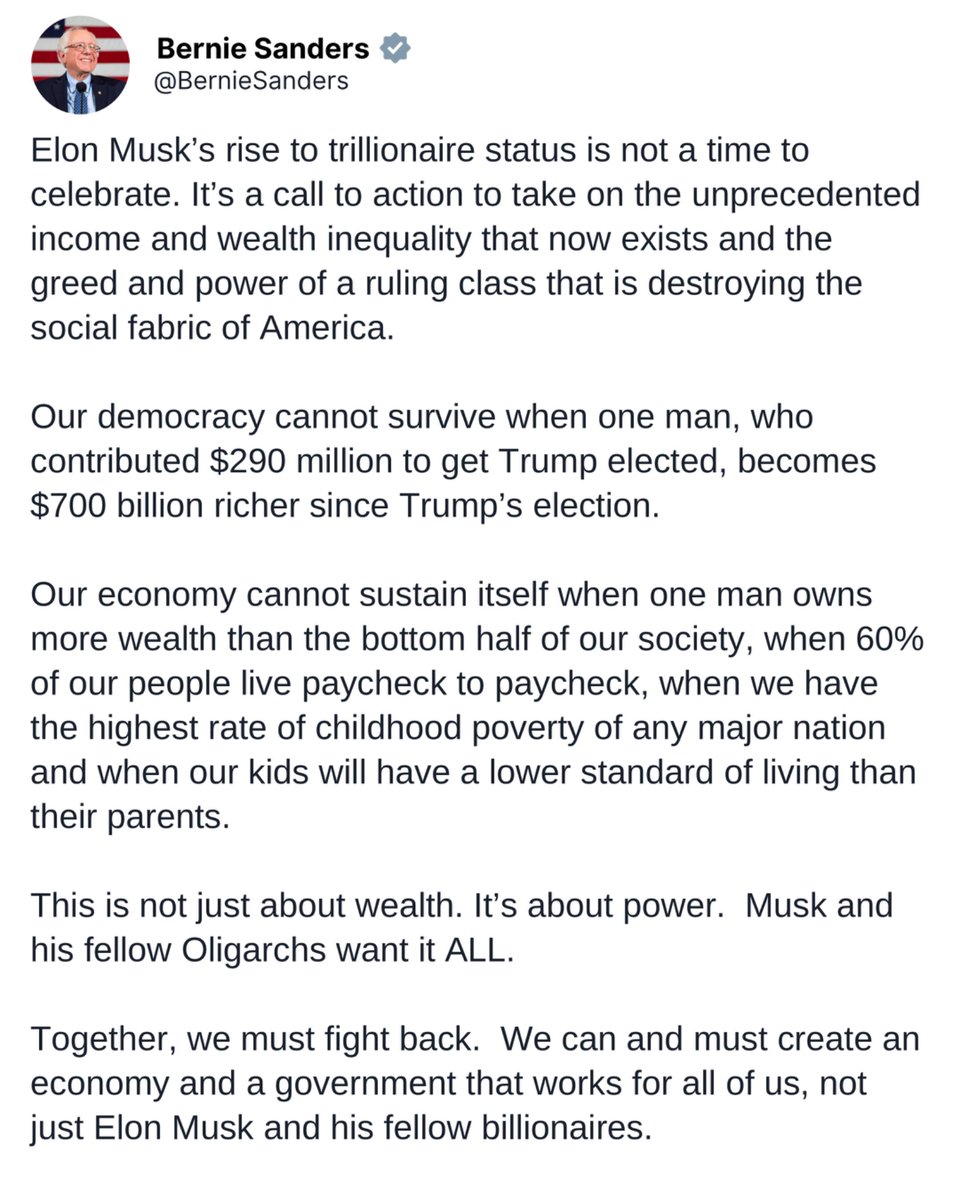
History's first trillionaire is a guy who catches rockets out of the sky with chopsticks and beams internet to every dead zone on the planet.
Same guy ships cars that drive themselves, humanoid robots for the factory floor, brain chips that let paralyzed people move a cursor with pure thought, and an AI running on a supercomputer his team stood up in months instead of years.
And the people crashing out about his net worth are doing it on the app he owns. The same app governments spent years trying to censor.
You cannot legislate a rocket into orbit.
Jun 12

1,597
10,338
63,678
1,997,470
Simon Cook retweeted

23h
This is, perversely, good news for Britain, Australia, Japan, Europe, and other countries being cut off that would once have seen themselves as close allies of the United States.
It shows us what the future may hold if AI is the strategically and economically decisive technology of the 21st century and is controlled by the US and China. It is good news because *it may be happening early enough to give us time to act.*
I think this will be rescinded pretty soon, but it’s a sign of things to come. In a future where frontier models cannot be used outside the US, our industries and economies will fall behind and American businesses may not be able to operate overseas. We won’t be able to defend ourselves militarily with defence systems built on obsolete software. Europe 2031 is a good scenario of what a future like this could mean: europe2031.ai
Some of the things we need to do are ‘no regrets’ measures we should do anyway. But some are genuinely costly and risky.
We need cheap electricity – powered by gas, coal (this is costly, coal is very bad), deregulated nuclear fission – whatever can provide *cheap, reliable, 24/7* power. This almost certainly excludes wind power, which is enormously expensive and unreliable. We need projects to be able to connect to the grid in days rather than years by paying for fast-track connections.
We need to make it incredibly easy to build data centres, with the property taxes retained locally and hypothecated for local tax cuts so there is some direct benefit for locals. This doesn’t need to be nationwide.
We need to create new regulatory regimes for innovative businesses that give them the right to hire and fire staff with ease. The difficulty and cost of firing staff is one of the main reasons Europe has fallen behind so badly. We need to create a parallel employment regime that companies and workers can opt in to: worksinprogress.co/issue/why…
Even though I think it will probably fail, I think we should probably try to create a good, non-American frontier AI lab. I am quite pessimistic about this – even extremely well-resourced, innovative software companies are struggling to do this. But the stakes are so high that not trying seems foolish.
One thing that might work in our favour is the number of brilliant AI engineers who are not US citizens, who under the current export controls do not have access to Mythos/Fable even if they live and work in the US. What happens to Demis Hassabis, Ilya Sutskever, Andrej Karpathy, and the many other Europeans, Canadians, etc who are working on AI models in Britain and America who are affected by this?
I do not think we should force our own companies to use model, because this would exacerbate their economic weakness – this lab should have to compete on an even playing field. I am deeply sceptical that this can work, but we cannot rule it out. If we do it, it has to be able to pay US salaries, operate without political constraints. worksinprogress.co/issue/how…
It is cope to tell yourself that Trump is an aberration or that these export controls are a one-off. To repeat, I think these specific controls will be lifted quickly and it will be easy to move on and forget it happened. But this is a look into a potential future. Every one of us that is not a US citizen is at risk. The standard political divides do not apply here; the question is whether you grasp the enormity of AI as a technology. We have to act!
Jun 13

The US government, citing national security authorities, has issued an export control directive to suspend all access to Fable 5 and Mythos 5 by any foreign national, whether inside or outside the United States, including foreign national Anthropic employees.
The net effect of this order is that we must abruptly disable Fable 5 and Mythos 5 for all our customers to ensure compliance.
Access to all other Claude models is not affected.
We apologize for this disruption to our customers. We believe this is a misunderstanding and are working to restore access as soon as possible.
Read our full statement: anthropic.com/news/fable-myt…
139
341
1,759
267,867
Simon Cook retweeted

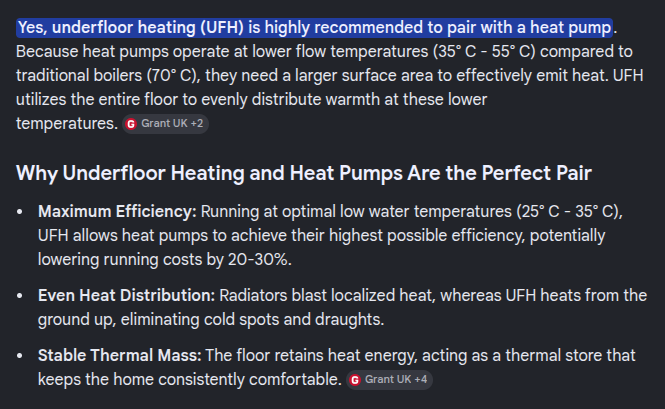
underfloor heating is the recommended heating for a heat pump
this is the ultimate proof he has absolutely no idea what he's doing
18
93
535
15,327
Jun 12
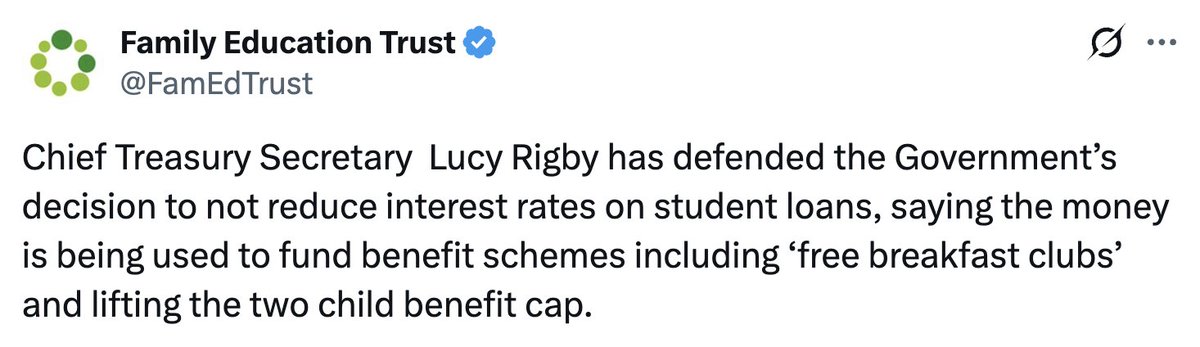
Right - because the only things the government spends money on is a) growth and b) defence
Perhaps some savings could be made in the Treasury if this is what passes for analysis
Jun 12

There are some brutal briefings about Keir Starmer in the wake of John Healey’s resignation today
This one - from a Treasury official - stands out in our splash
“As always with the prime minister, he is unable to make sound political and timely decisions
“Funding the defence investment plan requires cuts to elements of government spending vital to growth - a key issue obviously this country needs to work on
“This was flagged to No 10 in May and as usual he is a rabbit in the headlights and does not make a decision
“Prioritise growth funding or defence spending - take a decision”
thetimes.com/article/ed817bc…
49
Jun 12
Mmm let’s listen to an anonymous person pretending to be a fictional character for fiscal planning advice

Let’s put income tax up by a penny to fund defence.
And then we will see who truly cares about our country.
19
Jun 12
Perish the though that a politician might have principles

Ranvir Singh: "My first instinct yesterday when I saw the news pop up, has John Healey been speaking to Andy Burnham..?"
Caroline Flint: "He's laid the challenge for Andy Burnham as well"
And who amongst us thinks Andy Burnham can/will withstand this clamour?
1
74
Jun 12
If Ireland owes nothing to the “British war machine” maybe it should start building its own air defences
Jun 11

The Ukrainians want Ireland to close a Russian plant, providing jobs and welfare to Irish workers.
Ireland is a Neutral, Non NATO Republic. We owe nothing to the British led war machine.
Irish workers and their families come first. Despite what Zelenskys paid clowns tell you
56
Jun 11
My entry for improving data centre aesthetics

UK AI Minister @KanishkaNarayan breaks down the Best Designed Data Centre Prize and why the AI opportunity should feel aesthetic as well as economic:
"Think about the last set of industrial transitions, people built amazing bridges... that was a functional thing, but the really important thing is those bridges were beautiful as well."
"I want to make sure that in this AI transition we're building things that aren't just expanding opportunity in terms of jobs and pay, but building a new aesthetic as well".
"I want that opportunity not just to feel economic but to feel aesthetic."
1
5
491
Simon Cook retweeted

This really isn’t sustainable. It’s been less than two years since Keir Starmer won a landslide majority. Arguably no Prime Minister has done so little with so much.

Al Carns has now resigned as Armed Forces Minister
x.com/alistaircarns/status/2…
4
16
123
4,210
Jun 11
Going to need a whole new MoD at this rate
Jun 11

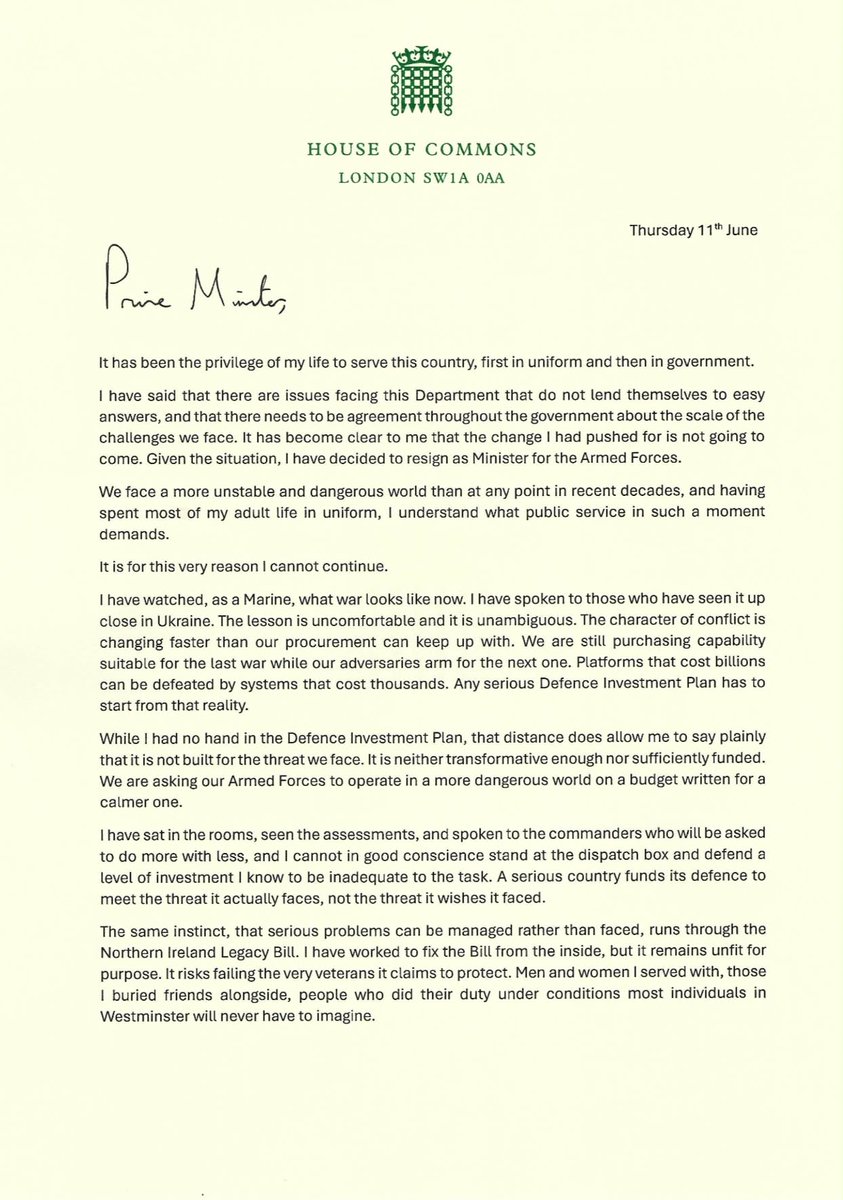
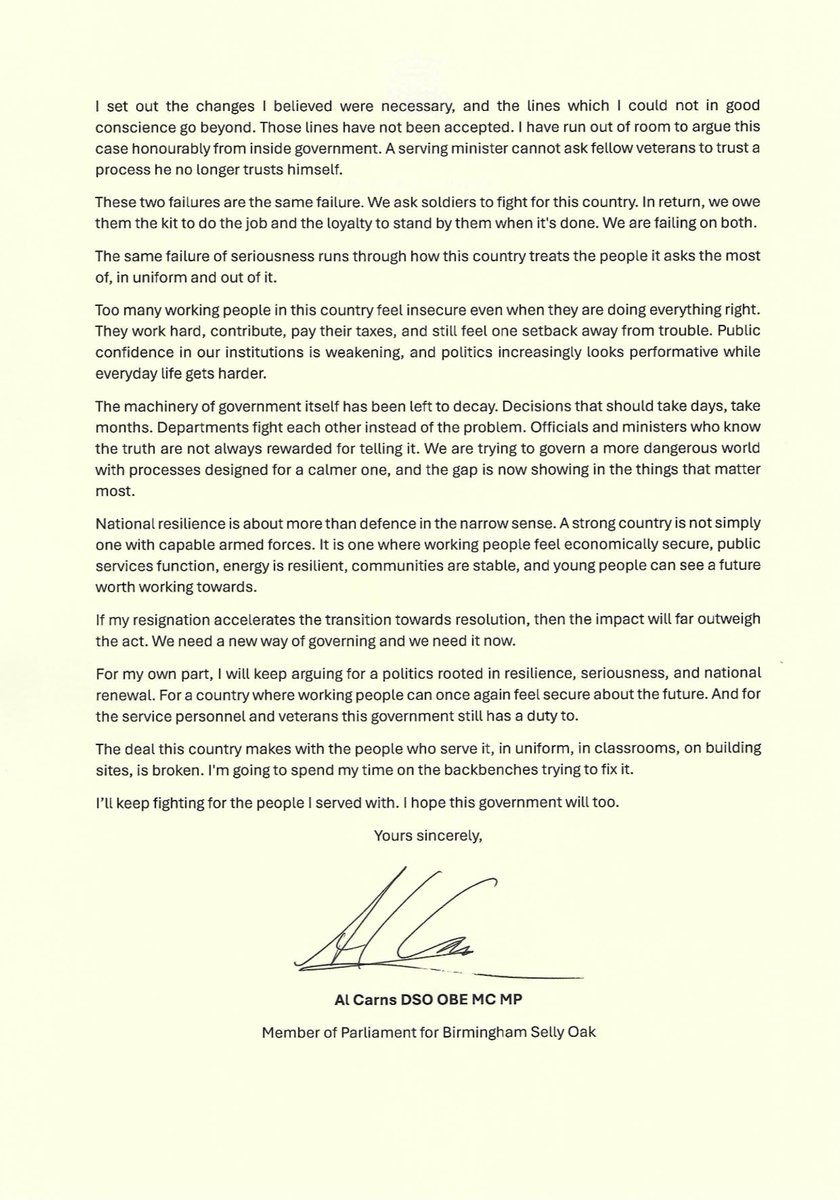
We owe those who serve the UK the kit to do the job and the loyalty to stand by them when it's done. We are failing on both.
I’ve spent my whole time in government making that case. Number 10 will not listen, so I am resigning as Minister for the Armed Forces.
Letter to the PM below.🫡🫡🫡⬇️⬇️
3
92
Simon Cook retweeted

Jun 11
This is truly pathetic. Cut the welfare freeloaders, cut the ludicrous self harm of Net Zero. This Treasury now resembles the government of the 1930s
Jun 11

TREASURY source hits back to say Chancellor "will always do what is right and needed to keep this country safe... Let's be clear on what John is asking for: cuts to schools and hospitals."
99
459
2,701
107,962
Simon Cook retweeted

Attlee defended the realm *AND* built the NHS
Jun 11

🚨 NEW: A Treasury source attacks John Healey for resigning as Defence Secretary
"Let's be clear on what John is asking for: cuts to schools and hospitals"
h/t @e_casalicchio
17
35
385
45,892
Jun 11
FFS schools and hospitals are important, but if you haven’t got national defence sorted, you may as well not bother doing anything else

HMT official: Reeves "will always do what is right and needed to keep this country safe" ... notes that she has been working with Starmer to make cuts across govt to fund DIP. Adds: "Let's be clear on what John is asking for: cuts to schools and hospitals."
81
Jun 11
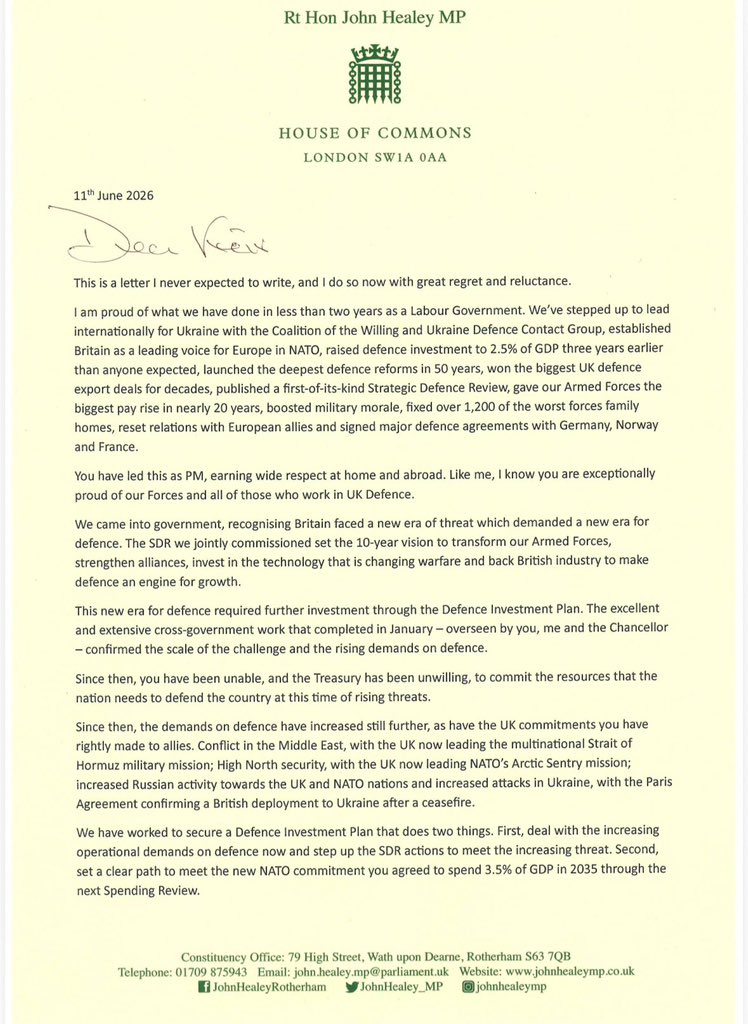
I always thought @JohnHealey_MP was one of the more honorable members of the government and now he has proved it

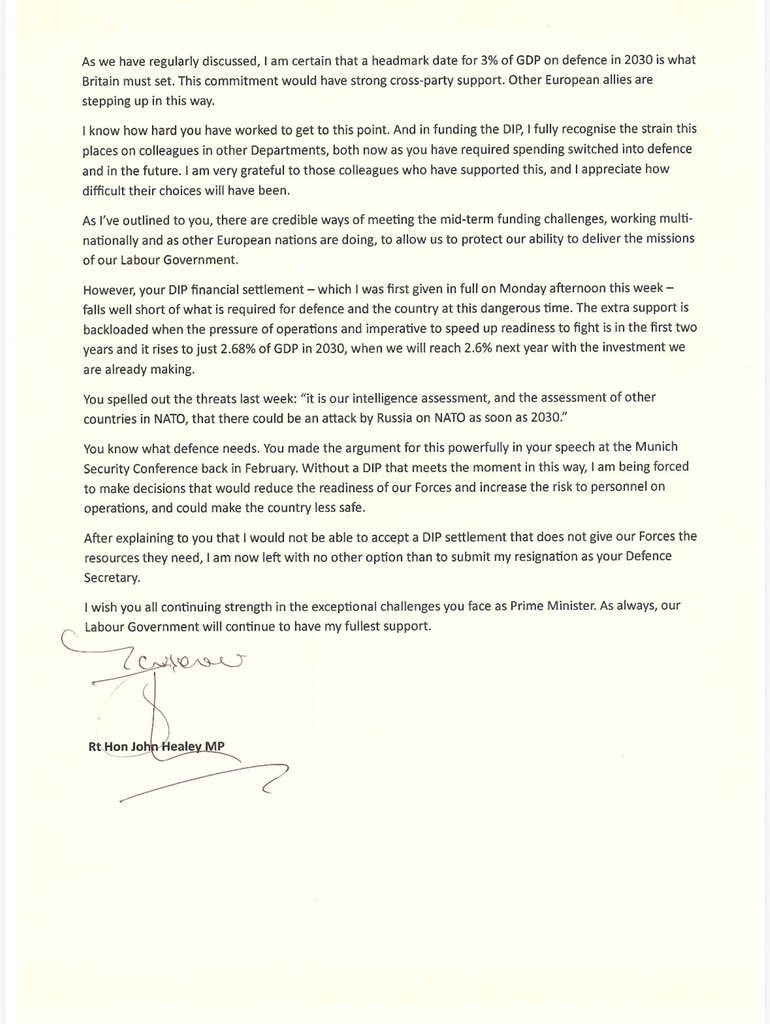
27
Jun 10
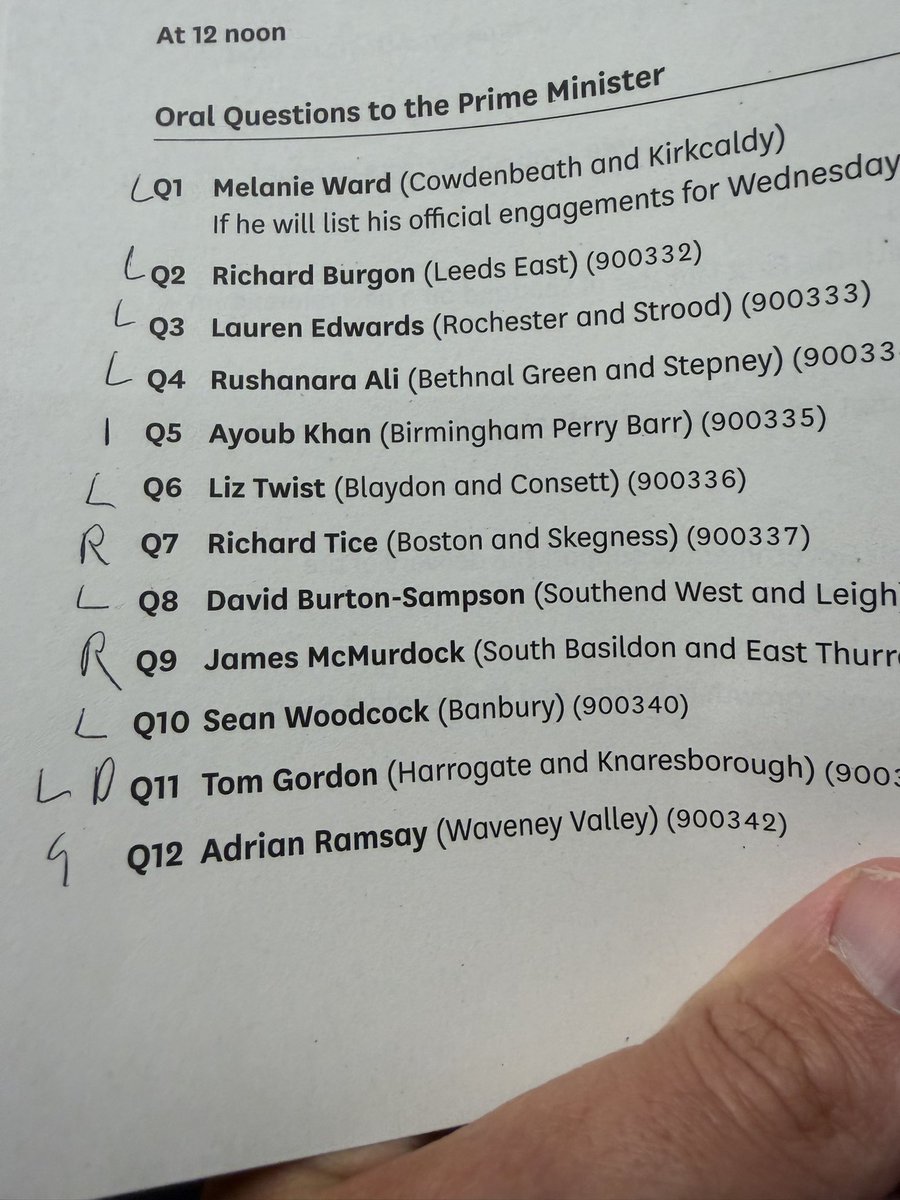
Josh has been a member of parliament for almost two years and still doesn’t understand how PMQs works. Or perhaps probability. Neither looks good
Jun 10

Whatever the public talk is of the Kemi bounce, it says all you need to know about lack of confidence in the Tory party that not a single Conservative MP is on the order paper for today’s PMQs.
Community note
MPs have to enter a ballot (known as the 'shuffle') and is run on a computer programme. This decides by random which MPs will ask questions and the order they will be asked in. The MPs are listed in the Order Paper and the Speaker calls on MPs in that order.
parliament.uk/business/commo…
1
1
6
724
Simon Cook retweeted

Jun 10
EXCL: The Green Party has received a damning audit of its workplace culture and pay to staff by Unite the Union.
A staff survey found that 47 per cent of workers for the party are struggling financially and 46 per cent believe they are underpaid.
Among the workers, 30 per cent were unsure whether they wanted to stay in their job, while 14 per cent intended to leave.
Unite also warns that ‘salaries remain considerably below market rates for comparable roles in the campaigning and political sectors’.
30
221
707
134,727