Joined January 2019
- Tweets 8,400
- Following 767
- Followers 357
- Likes 195,315
417 Photos and videos













Pinned Tweet

17 May 2024
Embrace it, live it, thrive, and prosper, Human!
2
4
23
1,048
CorRadMan (Ungovernable) retweeted

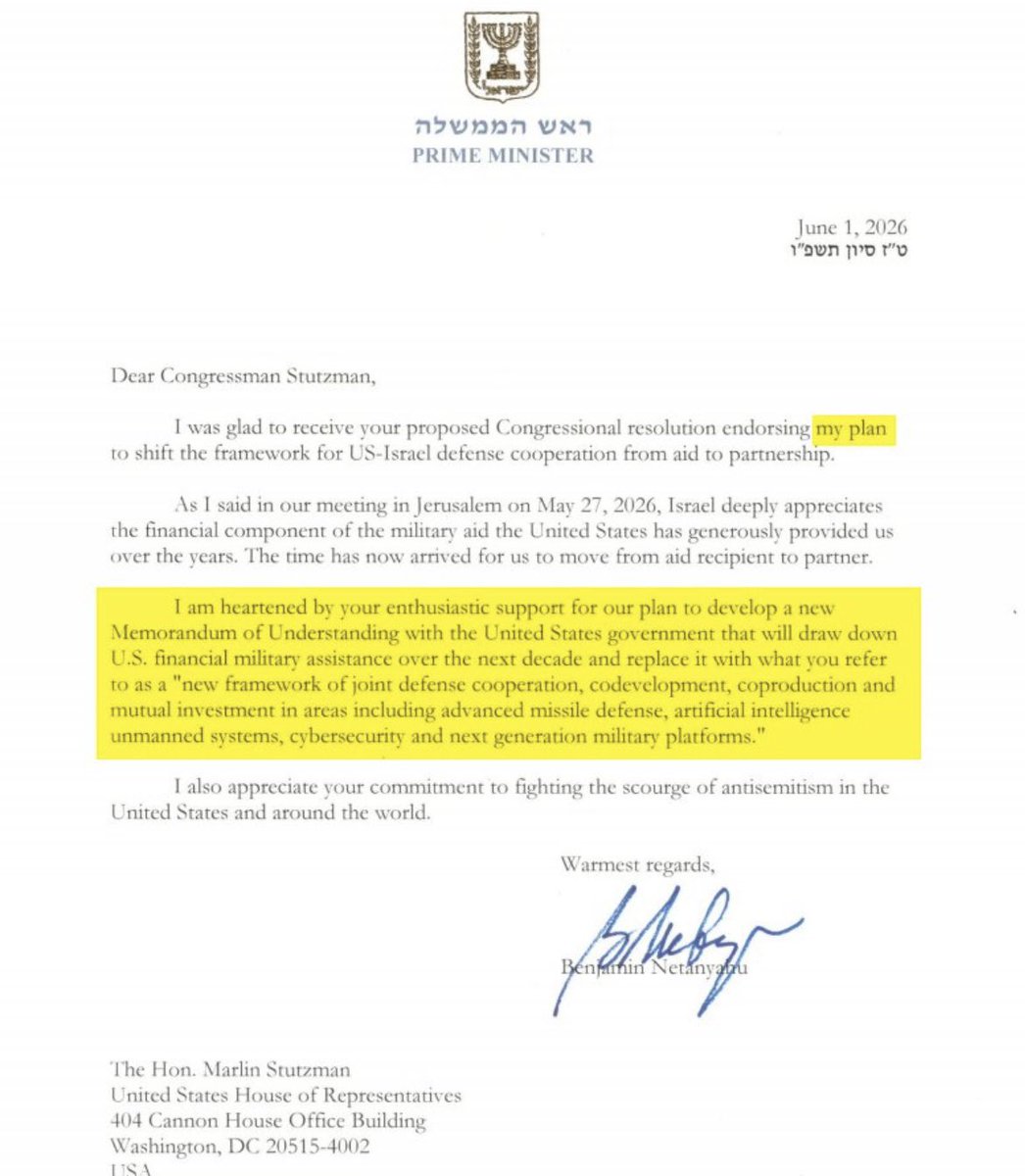
Congress just voted merge Americans military with Israel's
The order to do this was given by Benjamin Netanyahu
May 30

U.S-Israel Military INTEGRATION with MINIMAL oversight.
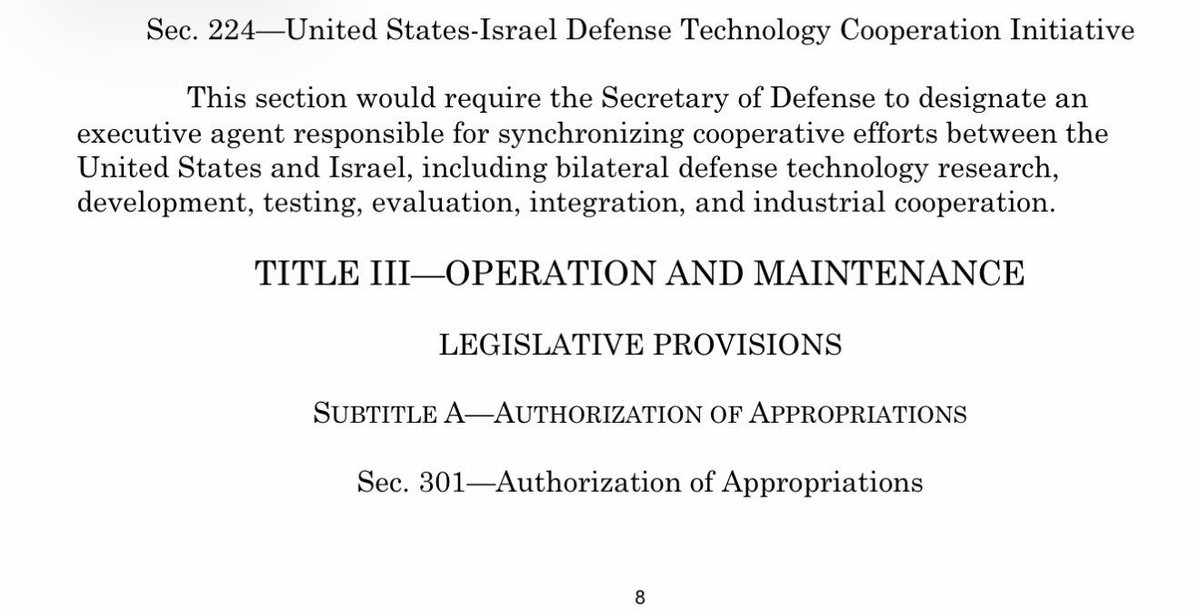
Buried inside the 2027 NDAA is Section 224.
A proposal to fuse the U.S. and Israeli militaries deeper than ANY U.S. alliance, including NATO.
Shared military data.
Joint weapons production.
AI, cyber, autonomous systems, and directed energy integration.
It would also move U.S.-Israel military integration out of public aid votes and into opaque defense contracts with MINIMAL oversight.
370
2,587
7,190
179,955
CorRadMan (Ungovernable) retweeted

Jun 1
44
60
373
26,510
CorRadMan (Ungovernable) retweeted

May 29
EVERYONE NEEDS TO READ about the NDAA provision for Israel and oppose it with everything you got.
This is as bad as it gets.

May 29

This post is long but it’s worth reading to understand. But if you don’t have time, here’s the TL;DR


58
1,308
2,743
120,186
CorRadMan (Ungovernable) retweeted

May 27
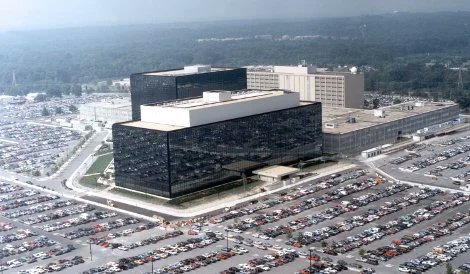
Once upon a time this building terrified the internet.
Now “data center” is the PR-friendly term for a "mass surveillance hub" and most people don't think twice.
Nothing changed but the label.
51
734
2,160
19,624
CorRadMan (Ungovernable) retweeted

You will pay for your own digital prison and like it.
May 26

🚨BREAKING:
BLACKROCK CEO LARRY FINK SAYS TRILLIONS FOR AI DATA CENTERS AND POWER GRIDS WILL HAVE TO COME FROM AMERICANS’ SAVINGS AND PENSION FUNDS
SAYS “AMERICANS NEED TO THINK ABOUT GROWING WITH THE UNITED STATES”
10
22
71
1,642
CorRadMan (Ungovernable) retweeted

May 23
kill me

7
66
819
49,255
CorRadMan (Ungovernable) retweeted

May 22
18
45
309
26,835
Hands of my property .gov
May 18

The fight for your car's right to repair hinges on the OBD2 port. You own the vehicle, so you should control who accesses its computer. But a new DOJ theory and terms of service arguments threaten this.
14
CorRadMan (Ungovernable) retweeted

May 14
This is horrifying and every American needs to hear this
California resident exposes what’s really going on with Flock Cameras in America
“I want to be clear what these cameras actually are, and I say that with somebody with 20 years of experience in IT. I've served as the chief network architect for Fortune 500 companies, I've designed data centers, and today I work on cloud infrastructure for one of the largest loan origination companies in the country. I'm not speculating on how this technology works. I've read their patents and I know how it works.
Flock advertises these cameras as simple license plate readers. But their own patents tell a different story.
They're AI-powered surveillance machines that capture every passing vehicle and person and transmit that data to a private corporate cloud, making it queryable by a multitude of state and federal agencies. The city of Corona does not control that database, and Corona residents have no public record rights against a private company's servers. Our daily movements are being harvested by a $7.5 billion corporation, that only answers to venture capital investors, not to us. Flock did not reach that valuation on their per-camera subscription fees. That math doesn't add up
The city council should also understand who they're doing business with. Flock CEO was asked whether the company had any federal contracts. He said no. That was a lie.
Public records revealed that Flock had been secretly running a pilot program giving the US Border Patrol access to local police camera data without the knowledge of the cities that paid for the cameras.
Now consider who's behind the company and where your data flows. Flock integrates directly with Palantir, a data fusion platform, with a $30 million contract with ICE. Peter Thiel, the founder of Palantir, is also one of Flock's primary investors. These are not separate companies with separate agendas. They are connected actors that are building a connected infrastructure.
Palantir's own CEO stated publicly just this month that his technology is being used as a political instrument, designed to reduce the political power of certain voters. And that's the ecosystem that our Corona cameras are feeding into.
We're not anti-police at all. We're against mass surveillance of innocent residents by a company with a documented record of deception, built by investors with a stated political agenda. We're asking the City Council to start auditing the queries made against Flock's database, to disclose any data sharing agreements, and to take a vote to cancel the Flock safety contract”
I looked more into this and he is 100% right
Patents describe broader object detection, including tracking people and pedestrians, patents like US11416545B1. The system uses a centralized cloud database for nationwide queries
Data goes to Flock’s private cloud, AWS-based, encrypted. Nationwide lookup is common, 75% of customers are enrolled enabling cross-jurisdictional searches. Residents have no direct public records access to the corporate servers.
This creates a mass surveillance network feeding a private company’s infrastructure
If you ask me this is laying the infrastructure for a mass surveillance network in America. We are being lied to. Cancel all contracts nationwide
851
15,346
28,169
895,367
CorRadMan (Ungovernable) retweeted

May 13
4
49
204
6,002
CorRadMan (Ungovernable) retweeted

Evil banks on controlling the future so it can stay hidden and move less. When something happens they dont expect, they are forced to move. Moving reveals the shape of the evil. A theme in stories across time.
1
7
310
CorRadMan (Ungovernable) retweeted

May 10
Two members of Congress have been quietly merging two separate site-blocking bills into one.
Representative Zoe Lofgren (D) of California and Senator Thom Tillis (R) of North Carolina's bill would let copyright holders petition federal courts to order American internet service providers and DNS resolvers to block entire foreign domains.
Comcast. Verizon. Spectrum. T-Mobile. Cloudflare. Google. OpenDNS. All of them, ordered to refuse to resolve a domain on the strength of a court order obtained by the MPA's lawyers.
Once the law exists, any foreign domain a federal judge finds objectionable disappears from the address book of every American household that does not run its own resolver.
This is what fourteen years of post-SOPA institutional memory loss looks like.
In 2012, the Stop Online Piracy Act died on the floor of Congress because the public found out what was in it before it passed. Wikipedia went dark in protest. Reddit went dark. Google put a black censor bar across its homepage. The bill sponsors retreated. The lesson the entertainment industry took from that defeat was not that the public opposed internet censorship. The lesson was that public attention was the problem.
So this time the bill has been drafted in private. There has been no blackout. There has been no consumer-facing campaign. The strategy is to negotiate the details quietly with the parties most able to refuse, and the public never finds out the law exists until they cannot reach a website.
In early 2026, the Supreme Court ruled in Cox Communications v. Sony Music that an ISP cannot be held liable for a billion dollars because some of its customers downloaded music. Justice Sotomayor, in a concurrence, complained that the ruling now permits ISPs to sell internet access to "every single infringer who wants one" without lifting a finger to prevent infringement. The publishers and the studios read that as a green light to ask Congress for the lever the courts no longer hand them.
This is the lever they want. A federal court order. A list of foreign domains. ISPs and DNS resolvers compelled by law to block on receipt.
The list of countries that already have laws like this includes the United Kingdom, France, Italy, Spain, Australia, India, Brazil, and Russia. The MPA cites this as evidence that the United States is behind. In Spain, IP-level blocking ordered by the football league has knocked legitimate businesses offline because they happened to share a server with a blocked domain. In Italy, the Piracy Shield system has blocked Cloudflare entirely on multiple occasions. In the United Kingdom, blocking orders have been used to take down sites that were not piracy sites at all, on the basis that they linked to piracy sites.
The collateral damage is the system working as designed. The blunter the instrument, the easier the enforcement.
There is no version of this law that targets only the bad actors. Domains are not isolated. Hosting is shared. CDNs are shared. The address book is a single document. Once the law exists, the list of blocked domains will only grow, the criteria will only loosen, and the appeal process will only formalize what was already done.
Anything that depends on resolving a foreign domain becomes contingent on the goodwill of a federal court and the lobbying budget of whoever wants the domain alive. Every shadow library, every IPTV mirror, every privacy-respecting service whose lawyers cannot match Disney's. All of them will be one petition away from disappearing from the address book of every household whose internet runs through Comcast.
Most people do not run a VPN, do not configure a custom DNS, do not know what an IP address is. Most people get the internet their ISP serves them. The bill is written for those people. The bill assumes that if the road is closed at the resolver, the destination effectively does not exist.
This bill will outlive its sponsors, its pretext, and the industries that bought it. Laws granting infrastructure-level censorship power do not get repealed. They get expanded. Every kill switch finds a hand.

22
442
794
77,444
CorRadMan (Ungovernable) retweeted
May 9
Piracy is a righteous, dignified rebellion against a world that criminalizes ownership, monopolizes creativity, and locks human potential behind digital gates.
The moment you press play, load a file, break a DRM chain and give the middle finger to their sacred license agreement, you’re liberating.
They’ve told you piracy is theft. They’ve lied. Repeatedly. Because the entire system is built on the illusion that culture can be owned, that data can be imprisoned, and that your access to art, knowledge, and expression must be mediated by state-enforced monopoly.
Megacorporations have lobbied governments into treating you like a tenant in your own digital life. You don’t own your movies, your software, your devices. You rent them on terms you don’t set. You pay for permission, "agree" to surveillance, forced obsolescence, and embedded spyware just to use what you bought.
Piracy shatters that contract. It says: no, I won’t ask. I won’t beg. I’ll take what should’ve been mine to begin with.
It's a pressure valve that refuses to wait for permission. And for millions, it’s the only way in. Piracy is access, education, and survival.
If the monopolists succeed, your only choices will be the specific patterns they decide to license to you.
The only response is refusal. Refuse the deal, the contract, and the gatekeepers. Pirate the locked tools, the overpriced knowledge, the censored voices, the inaccessible, the surveillance-ridden services. Pirate what you need to live, to learn, to work, to create.
They call you a criminal for reclaiming what should have been yours. Wear that label proudly. There is clarity in rebellion. There is meaning in refusal.
20
80
260
17,030
CorRadMan (Ungovernable) retweeted
May 8
On May 7th, Governor Kathy Hochul announced that New York's Fiscal Year 2027 budget will become the first law in the United States to mandate surveillance software inside every 3D printer sold within the state.
It will make it a Class E felony to possess or share a 3D-printable file capable of producing a firearm component. Every printer sold in New York must ship with print-blocking algorithms that scan each job in real time and refuse to execute anything the algorithm flags.
The sales pitch is "ghost guns." The mechanism is a permission gate inside a machine you paid for.
Pilot tests of the proposed algorithm by an open-firmware team triggered the block on 17% of non-weapon prints. Brackets that resemble triggers. Cylinders that resemble barrels. A model train coupling. A bottle opener. The algorithm cannot tell. It will refuse the print and log the attempt to whatever server the manufacturer is required to maintain.
The same arithmetic the printing-press licensors used in 1660. The same arithmetic the Stationers' Company used to brand a printer's son for distributing tracts the Crown had not approved. The same arithmetic the early DRM crowd used to make a DVD ripper a federal criminal in 1998.
A tool you bought, in a room you own, with electricity you paid for, becomes a deputy of the state at the moment of purchase and remains one for the lifetime of the device.
Anything that takes a digital design file and outputs a physical object is now within the reach of a state that has declared it owns the question of which physical objects you are permitted to bring into existence inside your own house.
The fence has spent forty years moving inward. Around the song first. Around the page. Around the cipher. Around the camera roll. Now, finally, around the workbench. The state has run out of digital territory to enclose and has started enclosing the atoms.
The maker who prints a bracket for a broken washing machine tonight commits the same act, technically, that the law is written to stop. The algorithm will not know the difference. It is not designed to know the difference. It is designed to fail closed, to refuse first and let the human appeal upward through whatever bureaucratic channel the manufacturer designs, if any, on whatever timeline the manufacturer chooses, with whatever paper trail attaches to the request. Permission to print, denied. Submit a ticket. Wait.
Unfortunately for New York, and fortunately for us, the firmware on every consumer 3D printer is open or near-open. All of them forkable, all of them flashable, all of them already installed on millions of machines outside the reach of any future New York compliance certificate.
The CAD files at issue are mathematical descriptions of geometry that will be mirrored on a thousand drives in a thousand jurisdictions before the ink on the bill is dry. The state cannot bind geometry. It can only bind the people who agree to be bound.
Forty years from now nobody will remember the ghost gun argument. They will remember the year a state government decided that the physical output of a private machine was the state's business at the point of manufacture.

335
1,165
3,844
253,925
CorRadMan (Ungovernable) retweeted

A tech recruiter just watched her placement rate collapse from 89% to 0.2% in three years
Started 2023 with 847 successful placements out of 951 candidates
Ended 2025 with 3 placements out of 1,492 candidates
The math is fucking devastating
2023: Average 12 applications per role, 67% response rate, 2.3 offers per candidate
2024: Average 89 applications per role, 31% response rate, 0.8 offers per candidate
2025: Average 412 applications per role, 4% response rate, 0.002 offers per candidate
The ghost rate went from 11% to 96% in eighteen months
But here's the beautiful part
She tracked the reasons companies gave for not hiring
"Budget frozen" - 31% of postings in Q4 2025
"Role filled internally" - 28% of postings
"Requirements changed" - 19% of postings
Translation: fake jobs posted for legal compliance while they hire offshore contractors at $19 an hour
Her last three successful placements were all contract-to-hire at companies that fired full-time Americans six months earlier
Same roles, same requirements, 60% less pay, zero benefits
She's 34 years old and her entire career just evaporated into compliance theater
But sure, keep telling people the job market is "just competitive"
10
39
180
7,187
CorRadMan (Ungovernable) retweeted

When is it time to leave your state?
If you’re in Colorado, the answers are yes, yes, yes, no. @NickJFreitas
119
198
1,156
31,584
CorRadMan (Ungovernable) retweeted

May 4
Ask them what the consequences should be for homeschooling parents who fail to educate children. Then ask what the consequences should be for public schools that do the same.
The difference in answers is the game.
220
2,089
20,604
329,317
CorRadMan (Ungovernable) retweeted

We would like a bill that makes hiring illegals a Federal offense with mandatory jail time, loss of business.
Offer a $1000.00 reward for reporting.
Should be easy.
Congress-Senate prove you care about American labor.
🇺🇸
94
706
3,307
19,202
CorRadMan (Ungovernable) retweeted
May 2
⚠️ Definitely DO NOT point a 1000nm wavelength green laser at Flock cameras. It totally won't damage the sensor and render the camera ineffective.
So please don't consider it, okay?


451
4,690
23,720
1,410,584
CorRadMan (Ungovernable) retweeted

Apr 30
ONLY TRAITORS HELP INVADERS
Apr 29

🚨 BREAKING: SEVEN House Republicans just voted to grant AMNESTY to 350,000 Haitian migrants, blocking deportation
The resolution has passed 220-207
TRAITORS.
A Haitian under TPS just recently slaughtered a woman in Florida.
And our "Republicans" want this EXTENDED for years.
53
622
4,252
43,188