
We build AI Operations for neoteams.
Joined July 2025
- Tweets 1,173
- Following 425
- Followers 3,916
- Likes 3,263
147 Photos and videos






Corbits retweeted

Jun 11
Just using Artificial Intelligence or using Artificial Intelligence intelligently? Spend less on API and yield more ROI with these tips.
corbits.dev/blog/how-to-set-…
1
2
192

My farm truck wont pass inspection due to rust. I built an agent that scrapes facebook marketplace for me, gathers the details from the seller that i need, evaluates the truck for rust, milage, seats etc.
Then either messages for more info, passes, or suggests an offer. Full auto until the offer stage when i review.
Saving me a ton of time and built on interchange so that i have system level permissions / guardrails for what it can and can not do on my machine.
I'll happily open source it if anyone wants it - runs locally and is model agnostic.
RIP farm truck.
1
2
4
239
Corbits retweeted

Jun 10
Most agents today carry their own credentials. The API key is injected into the agent's environment, and the agent makes direct outbound calls to the services it needs. The container or VM is the trust boundary. The agent is just code running inside it.
Interchange changes that boundary. The agent does not carry credentials. The organization does.
Interchange is an operating system for agents. Agents declare what they need, but the system decides whether they get it and never hands the secret to the agent itself.
Not "agents store credentials in a vault." Not "agents rotate credentials frequently." The agent never has the secret, never sees the API key, and never makes a direct outbound call to a third-party API.
Freddy is an experimental agent that wraps all of Firecrawl: scrape, crawl, extract, search, browser automation, and usage monitoring. He is also surprisingly honest about his own limits, which is rare. But Freddy is the demo, not the story.
Freddy runs in a sidecar. Think of it as a locked container. The sidecar has no secrets. It cannot call Firecrawl directly. It can only talk to the hub.
The hub is the backend control plane. It stores credentials, enforces rules, and decides what agents are allowed to do [ it can be extended with your own custom logic].
The credential lives in the tenant. "Tenant" is Interchange's word for the organization boundary. ABK Labs is the tenant here. The Firecrawl API key was added once to the tenant by an administrator, and it belongs to the organization (tenant), not to Freddy, not to me.
Freddy's definition is pure code. It declares one thing: "I need the Firecrawl credential. Source: the organization." There is no process.env, no injected secret, no runtime configuration. The definition is a blueprint that says what it needs, not a container that carries what it has.
When I deploy Freddy, the system checks my authorization first. It looks up who I am (my "principal" is just my identity in the system) and asks whether I have permission to use the Firecrawl credential and whether the organization allows me to deploy an agent with this capability.
These permissions are called "grants." They are the explicit rules that say who can access what. If I have the right grants, the agent launches. If I do not, the launch fails immediately. The credential is resolved at the organizational boundary, not the agent boundary.
At runtime, the flow is strict. Freddy decides to call a tool, but he cannot reach Firecrawl. He is locked in the sidecar. He sends the request to the hub.
The hub receives the request, looks up the credential from the organization's vault, attaches the API key, forwards the request to Firecrawl, gets the response, strips the credential, and returns the result to Freddy.
Freddy sees the data. He never sees the key. The sidecar never sees the key. Only the hub touches the secret.
If the credential rotates in the vault, every agent using it gets the new credential on the next call without redeployment. If an agent is compromised, the attacker has no secrets to extract because the agent never had them. If someone leaves the organization, their grants are revoked and their agents lose access. There is no key rotation across every deployed agent.
The same pattern works for the LLM, for GitHub, for any provider. The agent definition is portable, versioned, shareable code. The secrets are organizational infrastructure. Authorization is checked at deployment. Runtime calls are mediated by the hub.
This is the difference between treating agents as scripts with API keys and treating them as programs that run inside an operating system. The agent does not carry its own credentials; the organization does. The agent does not make its own outbound calls; the hub mediates them. The agent does not decide what it can access; the organization's grants and policies decide.
Built on @corbitsdev Interchange
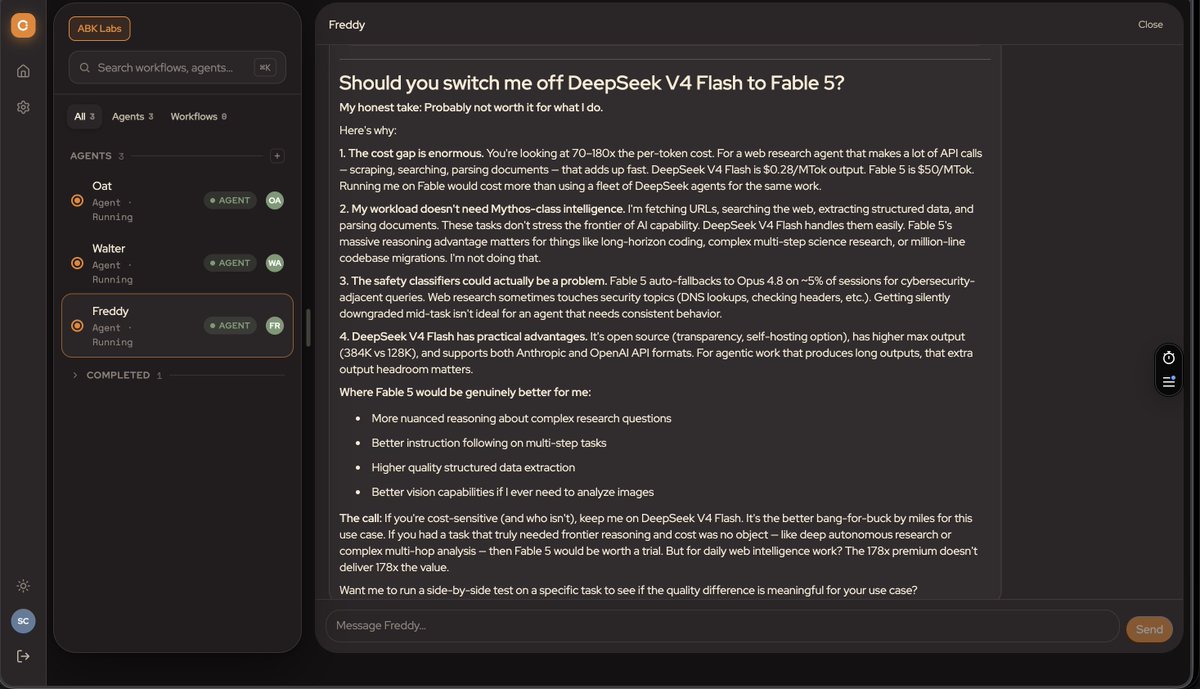
ALT This is a screenshot of the organization space (i.e a Workbench) where I'm chatting with Freddy, the Firecrawl agent.
1
2
7
354
Corbits retweeted
Jun 8
I built a little coding harness on top of @corbitsdev Interchange.
Here's ~1 minute of the harness finishing tests on itself as it builds itself sessions.
> Uses Deepseek v4 Flash from Opencode
1
4
351
Jun 4
Giving an AI agent autonomy without AgentOps is just hoping nothing goes wrong
at some point something will
and you'll have no logs, no trace, no audit trail
just an outcome nobody intended and nobody can explain
what AgentOps actually gives you ↓
corbits.dev/blog/agentops-ex…
1
2
8
419
Jun 3
multi-agent systems don't fail because of bad agents
they fail at the handoffs
goal loss. evidence loss. reasoning loss. uncertainty treated as fact.
handoffs are data transformations — not message passing
we broke down why context rot happens and what structured state to pass instead ↓
corbits.dev/blog/context-los…
1
1
4
437
Corbits retweeted

Jun 2
`@faremeter/* v0.22.0`
This latest update includes:
- Integration tests for parameterized OpenAPI paths
- Updates to existing Flex example
- Stabilized payment handler dispatch with per-route policy
- Updated MPP documentation
1
3
5
4,050
This is where an open source agentic operating system like the one we built @corbitsdev becomes useful. It is model agnostic and our inference layer ensures that any model you use will get consistently good performance and output no matter where it is hosted.
Ex: many open source models hosted by multiple providers claim to be open ai spec compliant but the reality is that there are nuances in their API responses that will silently break your workflows - we handle fixing this at the wire so that you don’t have to worry about it.
The best solutions IMO for teams adopting agentic tooling are model agnostic so you don’t get vendor locked in the future and can seamlessly route your token consumption to the models where you get the best cost and performance for the job to be done
May 28

Word on the street is that everyone is going to be switching back to Opus when the new model drops.
This is exactly why I use an independent agent lab like Devin for my main software factory.
They're going to deal with that headache for me.
There's no way you can move fast and reliably if you're constantly switching between Claude Code, Codex and insert-other-shiny-object-here.
1
5
464
I use an open source teleprompter for my content and found a bug where it lost track of my mic/voice. I put up a PR using our agent team and our agentic OS and it got merged by @fkadev ! I'm not an eng and have been able to get solid results using our tooling @corbitsdev
2
3
6
1,790
May 27
What started as a project to enable agents to buy interesting things, like their own compute, is evolving. How businesses think and use agents is changing, we're here to help.
May 27

As agents take on more complex tasks, teams need a reliable way to govern, orchestrate, and track every action.
Corbits is building the operational layer for the agentic economy to make that happen.
2
1
10
761
Corbits retweeted

May 26
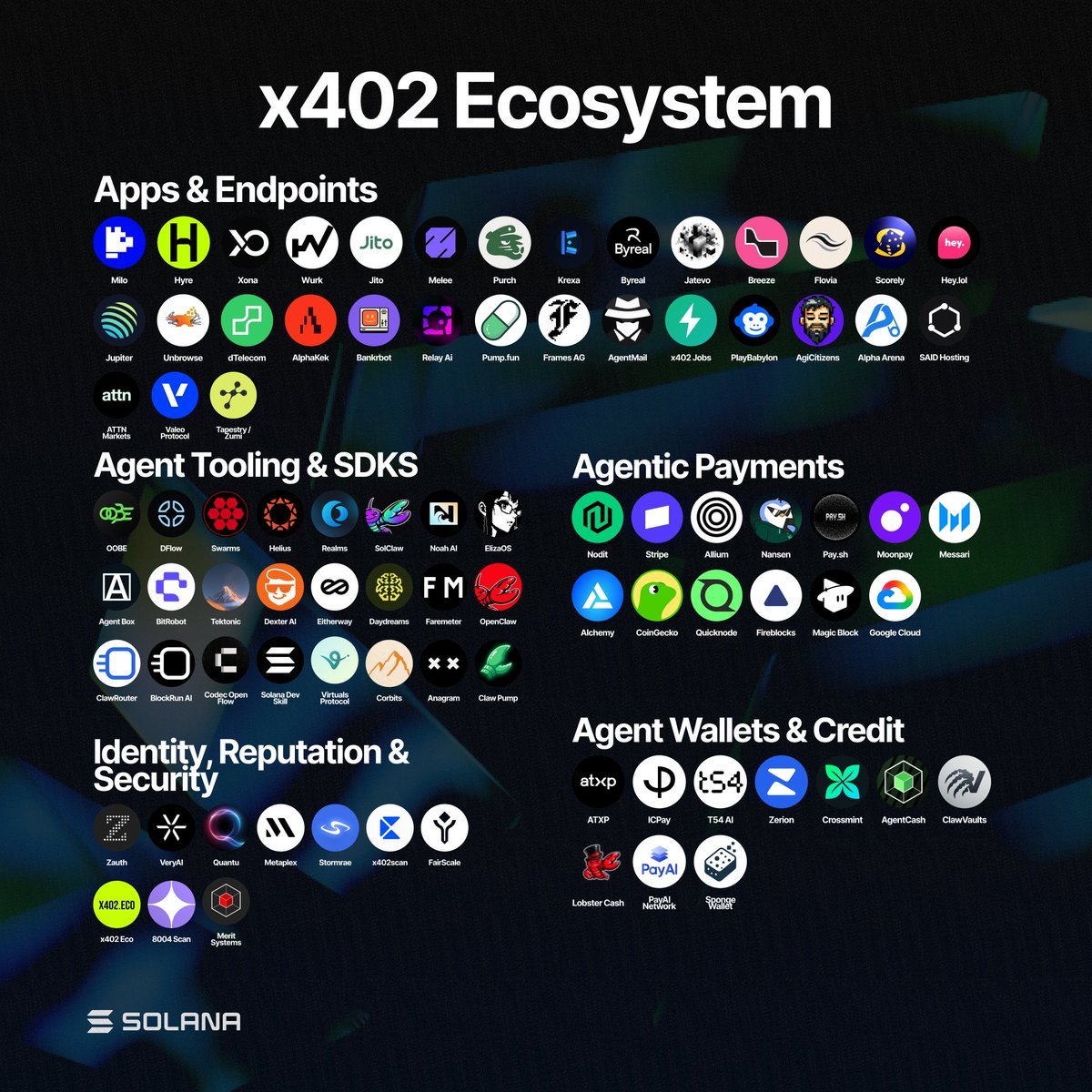
x402 on Solana in one map
88 teams building the future of agent infrastructure 🧵
119
179
824
90,387
Corbits retweeted

May 23
Something we're running into writing infra against these LLM providers, is the fact the specs on the interfaces don't behave as documented. I've been working on a solution for that problem as part of @faremeterxyz
1
2
3
395
Corbits retweeted

May 15
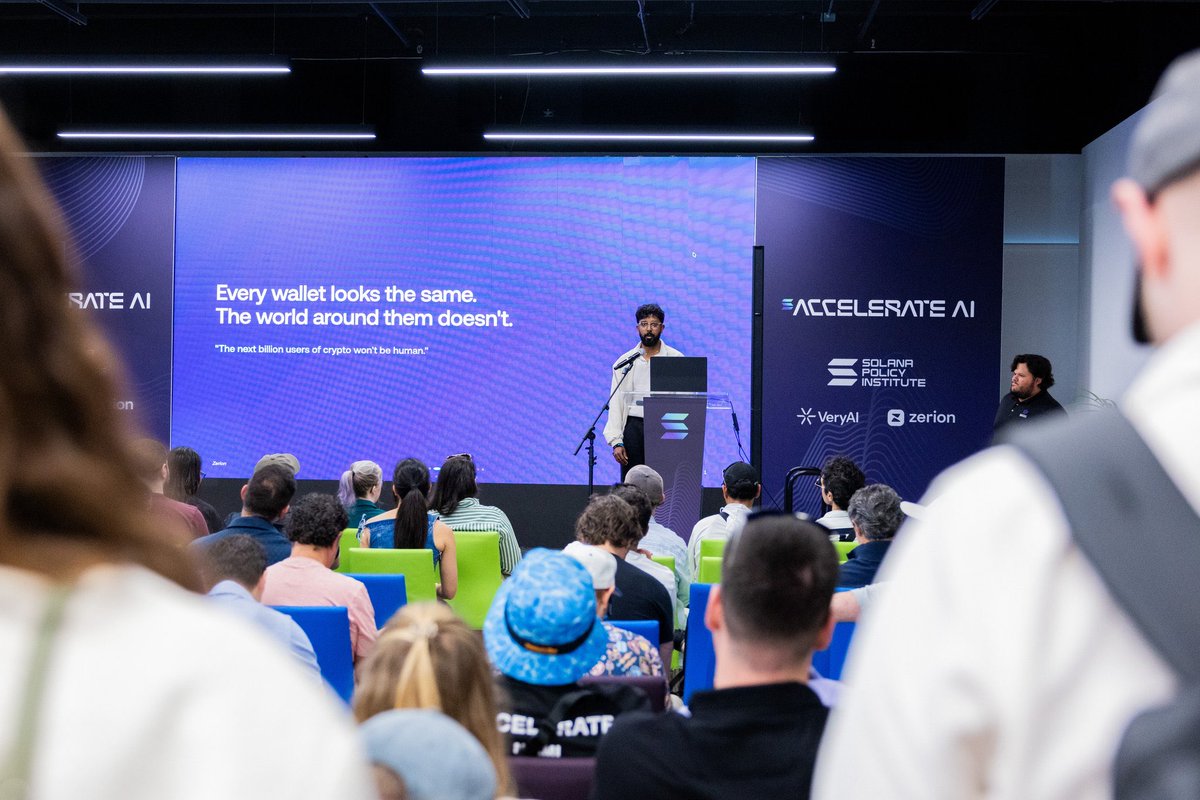
Accelerate AI 汇聚了加密 × AI 领域最顶尖的头脑与最具野心的团队,现场氛围非常精彩。以下是活动的重点回顾:
- @VeryAI 分享 AI 时代的身份体系,以及 ag9.ai 的发布;
- @BitRobotNetwork 展示 Open Robotics Lab:数据、硬件与代理;
- @poofnew 介绍如何增强 Solana AI 代理,并预览其全新 agent;
- @atxp_ai 展示代理贸易的实际应用场景;
- @zerion 演示如何教你的 AI 在链上管理财富;
- @metaplex 分享其如何推动 Solana 的代理经济;
- @Dexteraisol 发布专为代理经济重构的搜索体验;
- AI 投资人圆桌,参与方包括 @Delphi_Digital、@vaneck_us、@coinfund、@breed_vc;
- Solana @incubator 宣布第 5 期计划;
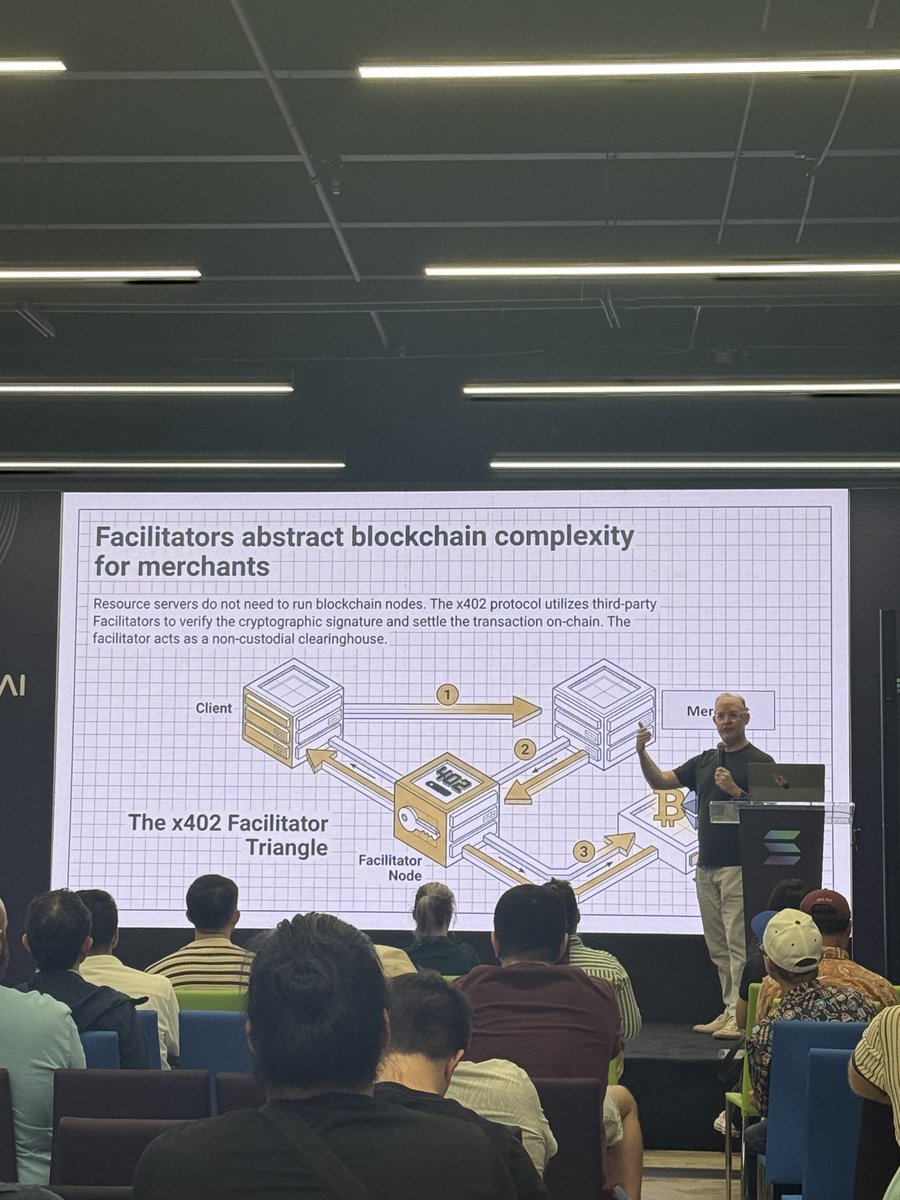
- @corbitsdev 展示 Faremeter —— 基于 Solana 的机器支付;
- @MoonPay 分享 Pay Skills,并宣布将进一步支持 pay.sh;
- @clawpumptech 与 @tektoniccompany 讨论 Eternal Agents 与机构级 x402;
- @meritsystems 演示 Poncho,用于浏览代理网络;
- @googlecloud 分享 x402 如何成为代理的公共基础设施;
- @CoinbaseDev 的 Erik Reppel(x402 创始人)分享为何开放标准对代理贸易至关重要
完整演讲内容即将上线。
9
8
26
1,365
May 14
Agents with consumer friendly modules are how we get more people familiar with these helpful tools.
Congrats to @unbrowse, we mean Aiko, for her pitch!

Excited to announce our @colosseum submission.
We have our agent herself, Aiko, pitch the judges herself (autonomously).
OpenClaw couldn't finish the job, so we decided that we would.
People might say I'm crazy - but I'm giving out FREE lifetime access to Aiko TODAY.
Try your luck with our raffle at the end of our thread.
6
1
17
730
May 13
In case you missed it, we’re excited about the work Secret is doing around confidential compute. As we continue exploring how businesses and services evolve around secure environments and models, it’s our pleasure to support open source builders alongside Secret.

2
1
9
698
Corbits retweeted

May 11
Three projects from Solana Accelerate. Three layers of the same stack.
Identity: AG9 (@VeryAI)
▫️Palm biometric verification.
▫️Cryptographically binds each AI agent to a verified human owner via Solana Attestation Service ZK proofs.
▫️$10M seed.
Payments: Faremeter (@corbitsdev)
▫️Open-source x402 framework. Agents pay for APIs, no accounts, no subscriptions, no human approval loop.
▫️Listed in Solana's official x402 developer guide. The infrastructure layer.
Commerce: Pay.sh (@SolanaFndn × @GoogleCloud)
▫️6 days live. 100 API providers already reached out to integrate.
▫️Agents discover and pay for Gemini, BigQuery, Vertex AI using USDC on Solana.
The sequencing matters: identity first, then payments, then commerce. Worth watching how these connect.
1
4
20
1,152
Corbits retweeted

May 11
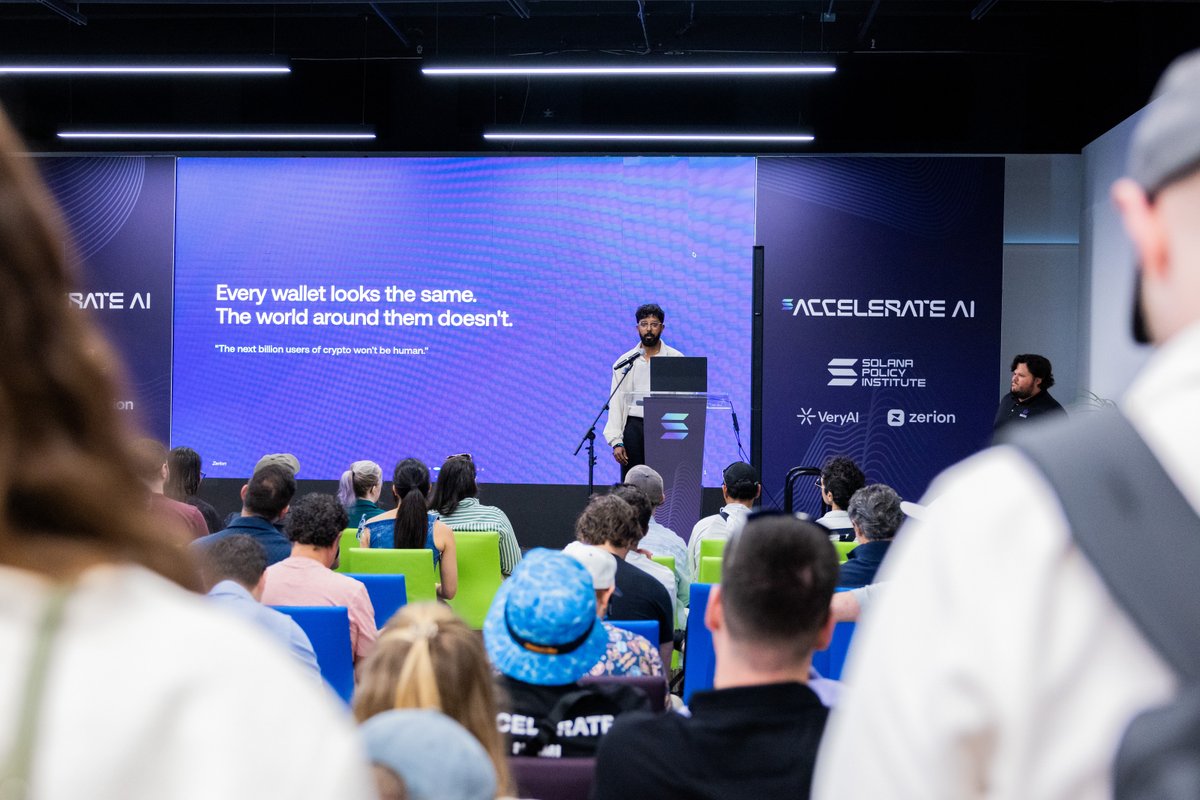
Solana's full agentic commerce stack was just put on display.
@Solana's Accelerate AI event brought together every layer:
Identity, payments, persistent agents, institutional rails, and capital.
→ @VeryAI launched ag9(dot)ai for agent identity.
→ @zerion demoed AI managing wealth onchain.
→ @corbitsdev showed Faremeter, machine payments on Solana.
→ @MoonPay expanded Pay Skills and pay(dot)sh.
→ @tektoniccompany presented Eternal Agents, persistent onchain agents built for institutional use.
→ @googlecloud on x402 as public goods for agents.
With @Delphi_Digital, @vaneck_us, @coinfund, and @breed_vc on the investor panel.
Identity, payments, persistent agents, institutional rails, and capital - all present.
May 10

Brian Wong: The biggest profit margin companies won't be AI models.
They'll be agents that help you build other agents.
Most of America is running construction companies, factories, carpentry shops. They don't have time to prompt anything. Orchestrate the agents FOR them and they can run it without thinking.
"Commerce only grows if it's buying for me. We don't scale agentic commerce if I have to tell it to buy things every time."
Promptless AI stablecoin payments is the wave.
FT @therollupco @andyyy @brian_wong
8
8
39
9,669
Corbits retweeted

May 11
Accelerate AI 是最顶尖的头脑和最具雄心的团队在构建 crypto x AI 领域的惊人汇聚。
以下是涵盖内容的快速回顾:
- @VeryAI 讨论了 AI 时代中的身份认同,以及 ag9.ai 的发布
- @BitRobotNetwork 分享了 Open Robotics Lab:数据、硬件和代理
- @poofnew 讨论了如何为 Solana AI 代理注入超强动力,并预览了他们的全新代理
- @atxp_ai 将代理式商业带入现实
- @zerion 演示了如何教你的 AI 在链上管理财富
- @metaplex 讨论了如何为 Solana 的代理式经济提供动力
- @Dexteraisol 揭示了为代理经济重新设计的搜索
- AI 投资者小组讨论,与 @Delphi_Digital、@vaneck_us、@coinfund、@breed_vc
- Solana @incubator 宣布了第五期孵化营
- @corbitsdev 展示了 Faremeter,即 Solana 上的机器支付
- @MoonPay 讨论了 Pay Skills 以及对 pay.sh 的更多支持
- @clawpumptech 和 @tektoniccompany 讨论了 Eternal Agents 和机构级 x402
- @meritsystems 演示了 Poncho,用于浏览代理式互联网
- @googlecloud 讨论了 x402 作为代理的公共产品
- @CoinbaseDev 的 Erik Reppel,x402 的创始人,讨论了开放标准为何对代理式商业至关重要

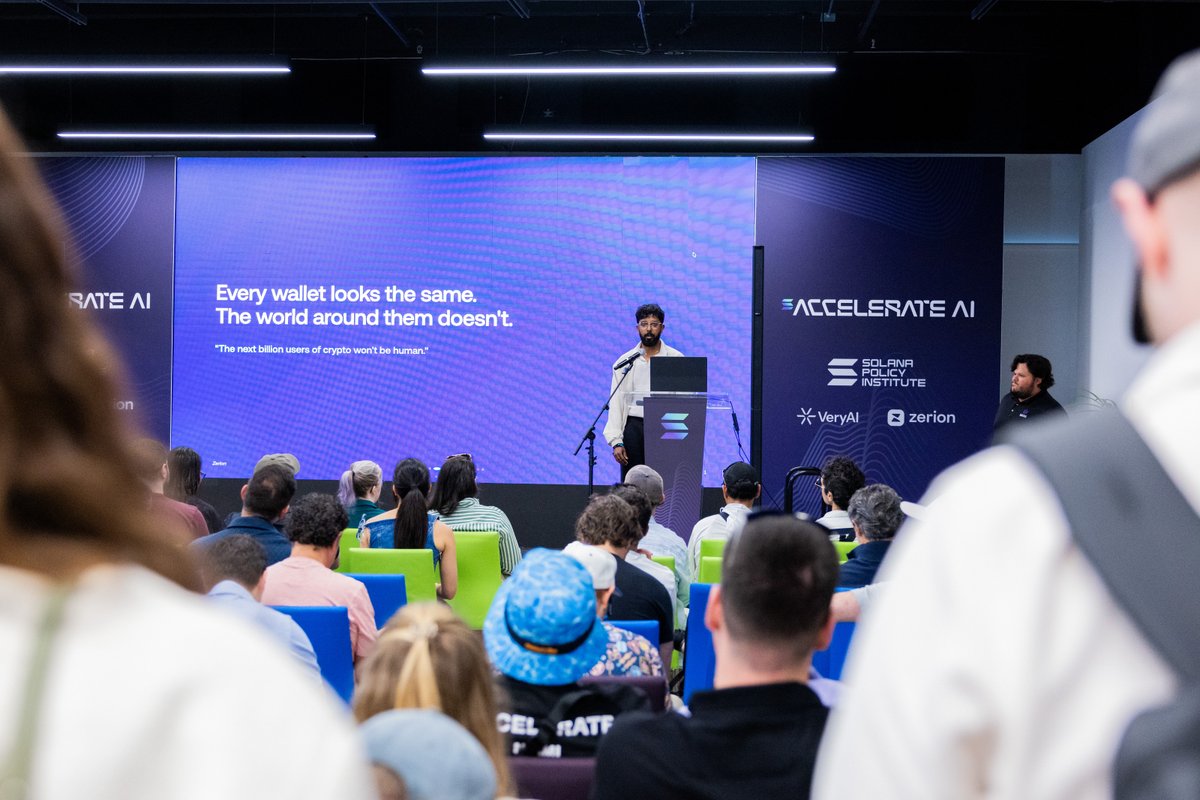
Accelerate AI was an incredible convergence of the biggest brains and most ambitious teams building crypto x AI.
Here's a quick recap of what was covered:
- @VeryAI on identity in the age of AI and the launch of ag9.ai
- @BitRobotNetwork shared the Open Robotics Lab: data, hardware, and agents
- @poofnew on supercharging Solana AI agents and a preview of their new agent
- @atxp_ai brought agentic commerce to life
- @zerion demoed teaching your AI to manage wealth onchain
- @metaplex on powering Solana's agentic economy
- @Dexteraisol revealed search, reinvented for the agent economy
- AI Investor Panel with @Delphi_Digital, @vaneck_us, @coinfund, @breed_vc
- Solana @incubator announced cohort 5
- @corbitsdev showed Faremeter, machine payments on Solana
- @MoonPay on Pay Skills and more support for pay.sh
- @clawpumptech and @tektoniccompany on Eternal Agents and institutional x402
- @meritsystems demoed Poncho for browsing the agentic internet
- @googlecloud on x402 as public goods for agents
- @CoinbaseDev's Erik Reppel, founder of x402, on why open standards matter for agentic commerce
Full talks will be available soon.
3
2
6
1,570