Trucking, Sports, Family, Fishing, Cars, Running.
Joined December 2012
- Tweets 504
- Following 686
- Followers 240
- Likes 3,746
32 Photos and videos






Mar 2
Am I the only one paying for a @Ask_Spectrum DVR that I have never used? Are these even a thing? Good luck trying to get a credit. Horrible customer service
3
375
Keith Corwin retweeted

7 Dec 2025
lol, I’ve been writing for a long time. But, there’s a lot that do well. Not a brag, I’m just passionate about particular things and our time and effort into learning.
2
1
1
46
Keith Corwin retweeted

20 Sep 2025
Ilhan spews hate every time she opens her mouth, she came here fraudulently and will hopefully be sent back to Somalia soon.
20 Sep 2025

Ilhan Omar says Charlie Kirk should be left "in the dust bin of history"
She echoed the assassin's words, claiming he "spread hate"
She refused to apologize for sharing a video that called him "Dr. Frankenstein" and said "his monster shot him through the neck"
4,156
9,436
100,800
7,896,186
20 Sep 2025
RT @ThePupOfWallSt: I’ve been combing through Stage 2 breakouts all morning, building out my radar with both the names I’ve already shared…
16
Keith Corwin retweeted
16 Feb 2025
Should I load up part 3 with 15 more charts?
15 RT will get me motivated to do it.

16 Feb 2025

Ok, who's ready for round #2 of the massive chart drop this weekend.
For this thread, we're going to focus on the Magnificant 7 all the other name on my watch list.
You'll get key levels to watch!
Here's the key to my charts
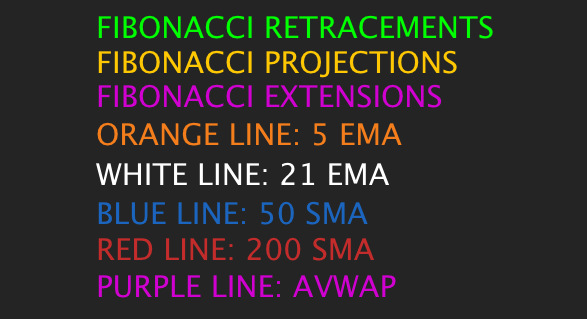
8
12
19
9,148

27 Dec 2024
RT @stocktalkweekly: 🚨NEW YEARS SALE
LESS THAN $1 PER DAY for:
- Portfolio updates
- Daily live streams
- Breaking news
- Technical & fun…
5
Keith Corwin retweeted

5 Dec 2024
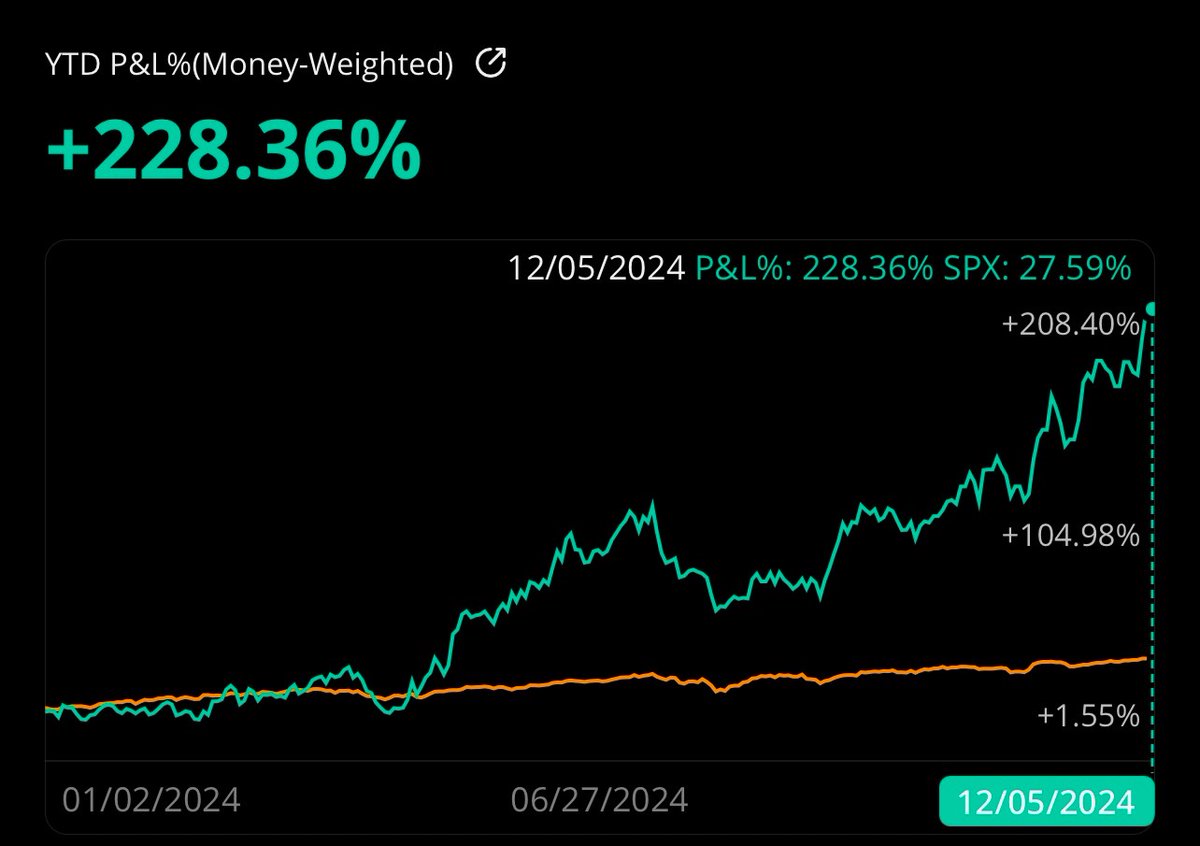
YEAR-TO-DATE PERFORMANCE: 228.36% VS. 27.59% FOR S&P-500
A lot of people have asked about my catalyst-trading process, so here is a detailed explanation of my 5-step formula for high-conviction, high-return trades:
1. IDENTIFY HIGH-IMPACT CATALYST
This can be a meaningful analyst opinion, partnership, press-release, significant insider activity, or fundamental inflection in the underlying business. It can also simply be a function of constituency within a high-momentum theme (clear-cut examples of high-momentum themes are space stocks, FinTech stocks, or nuclear stocks this year).
Identifying the significance of a catalyst requires a lot of research, trial & error, and exposure to many different types of catalysts with many different types of stocks in many different types of markets. There is no short-cut here. It takes time to develop a smart lens for differentiating catalysts.
Get quality news & research subscriptions, read analyst research in your areas of interest, learn how to scan & scroll through SEC filings in the after-hours and premarket, and learn to effectively sift through earnings calls & balance sheets for crumbs of signal. The markets are brutally competitive. If you want a consistent edge, you have to work for it.
The best way to think about catalysts is that they are simply a newly-presented cause for people to want to buy a given stock. That's it. They're an explicit reason for momentum to continue or for a stock to breakout or reverse price-action.
Too many people read a bold analyst upgrade with a huge price-target raise from a Tier 1 shop on an undercovered stock, and they commit the fatal catalyst-trading sin: They overthink. Your job is simply to identify if the catalyst is good enough to draw-in additional buyers, not if you agree with or believe every single aspect of the sell-side report or the PR.
When it comes to sell-side catalysts specifically, there are several things I look for, including, but not limited to: Tier 1 reputation, unique information (in-house surveys, channel checks, or proprietary research), citing direct meetings with management, high implied upside in the price-target, bold and/or contrarian opinions, material changes in forward estimates, and "undercovered" status either in the sense of very few analysts covering the name outright, or very few opinions/reports being issued in recent history. Developing a sixth sense for the reliability of various shops/analysts or the hallmarks of a quality report requires experience and time.
Using catalysts as a top-down trade criteria significantly improved my entry timing on trades because I wasted far less waiting for trades to work or impatiently holding during periods of consolidation.
2. CONFIRM TECHNICAL SETUP IS ACCOMMODATIVE
After deciding if the catalyst meets my criteria for significance, I always look at the chart. I'm generally looking for a technical picture that is one of the following:
A) High-momentum, which for me simply means a stock with an obviously accumulative volume profile that is riding the 9/21 EMAs
B) Confirmed breakout, which is the break over a key price level of previous resistance with a successful retest of that breakout spot
C) Impending shift in price-acton, which for me is ideally a golden-cross (50-day crossing above 200-day) or more simply a retake of the 200-day or 200-week moving average on high volume after a long period of consolidation. I usually only consider these types of setups if the paired catalyst is also an inflection or turnaround story.
I'm not looking for technical setups in the traditional line-drawer sense. I'm looking for charts that are healthy and generally accommodative for price-action stimulus from a catalyst. That's all. I believe in technical analysis, but my trade ideas are not driven by scanning charts in a vacuum. I check the daily, weekly and monthly time-frames on all stocks I consider as a means of developing additional conviction. Supportive volume profiles across all time frames give me greater confidence. I generally do not touch stocks below the daily 200MA unless the catalyst & story is *extremely compelling*.
I also almost never catch falling knives. I would rather participate in a name after it has proven the ability to technically bottom even if I have to pay more, rather than be in uncharted price territory and try to guess.
3. CHECK ACCELERANTS FOR ADDITIONAL CONVICTION
Accelerants to a trade for me can be any number of things, but the two sets of data I most frequently look to are unusual options flow and short-interest.
If a stock has unusual options flow activity, that generally means there is another "smart money" player considering the same trade in the same direction as I am. This adds conviction, mostly because I look at this data after I've decided if the stock meets both my catalyst and technical criteria. It makes me more immune to confirmation bias, or simply blindly tailing a trade just because there is money flow.
I look at short-interest on almost every stock I consider, because stocks with strong catalysts, strong charts, and high short-interest are some of the most explosive trades on the markets every single year. A narrative shift that leads to A) mass entrance of new buyers and B) mass covering of existing shorts almost always leads to parabolic price-action. It's mechanically destined to do so. These are the "obvious" trade ideas that so many people miss, because high short-interest stocks generally come with baggage (that's why people shorted them in the first place). Capturing these types of trades early can boost your P&L significantly, even if you size them modestly. My definition of "high" short interest is generally greater than 15%, although this is very rare among blue-chip names or large cap names, and so this point of analysis tends to be more useful with small and mid-cap stocks.
As I mentioned in Step #1 above, if an individual stock has a standalone catalyst but is also a constituent in a hot market theme, that theme can act as an accelerant for the trade itself, and lead to an over-reaction to the upside catalyst as theme traders concentrate their exposures to that particular name.
4. COVER INITIAL RISK AS SOON AS POSSIBLE
This means taking early profits on the trade on a portion of my position, so that I am able to reduce my risk-in and maximize my ability to participate in the continuation in the trade. When I'm trading equity, I scale out of the trade as price encounters new resistance levels to the upside. If it's a swing-trade, then I scale in lots post-significant events (basically anything that creates a large, disjointed short-term spike in price: earnings, major news, events etc.). I will also not hesitate to cut an entire equity swing trade to free up capital if the trade is stale or if I think there's a better opportunity for my capital elsewhere. This may be controversial, but I don't scale out in an objective way on my equity positions. Because equity trades tend to tie up more buying power, I consistently re-evaluate my equity trade positions and ask myself if there is a better place that capital could be allocated.
With regard to options, every single time that I have an options contract that is 100%, I sell half of the contracts. This takes all of my risk out of the trade. The screenshots I post of 1,000% trades are possible because of this risk discipline. This is not to say you should only ever sell when you're up 100%. That would be stupid. Most of your options trades won't go 100% if you're consistently profitable. You have to judge it on a trade-to-trade basis on the range of the stock, the incoming resistance levels, the magnitude of the 'early move' (what happened immediately after you entered), overbought signals, and the validity of short-term technical support. Practicing this makes riding positions substantially easier, both psychologically and monetarily. For those curious, I generally run an 85-to-15 equity-to-options split in my portfolio, sometimes higher sometimes lower -- it depends on the risk-on/risk-off sentiment in the broader market.
5. RIDE POSITION AS LONG AS MOMENTUM REMAINS INTACT
As long as the stock stays above its short-term moving averages, I tend to keep at least part of my position in the trade. (These are generally the 9 & 21EMAs for me personally, but you should make a habit of scrolling through recent price-history and seeing which moving averages the stock has proven to respect in the recent past so that you can better assess where to keep your line in the sand). As I mentioned in Step #4 above, I continually scale 1/10th or 1/5th or 1/3rd of my position at a time (depending on size and time horizon for the trade) at key resistance levels or key event marks along the way.
Far too often I see new traders exit winning trades way too early because they sell immediately when the stock first goes red. Low volume pullbacks into the short-term moving averages aren't only normal on strong stocks, they're healthy and they increase the probability of additional upside. Understanding when a stock is pulling back, but still structurally intact, is critical to securing big, multi-bagger winners that can transform your P&L. If you scalp every trade for 5%, it's very hard to significantly outperform the market. Cut your losers early, and let your winners run.
PLEASE NOTE: The above outlined steps are only my process for TRADES. Long-term positions are chosen completely differently. I select my long-term positions based on my judgement of sustainable secular trends that I think have multi-decade longevity. I pick leaders in those sectors with defendable technological moats and I am rarely "multiple-sensitive" unlike many traditional investors, because I believe it leads to a short-sightedness that causes people to miss the best opportunities. I'll do a similar post about my investing process in the future.
If you enjoyed this post, please engage & share. I hope it is helpful to new & experienced traders alike.
If you want to learn more about my process, get access to my trade ideas, and tune into our daily premarket streams, you can join our community at the link in my bio. There's tons of info out there in the market every single day, and sorting through all the potential catalysts is a laborious process. Our research team is dedicated to bringing those insights to you, along with detailed fundamental research & technical analysis. Our members can also ask myself or our team of analysts any questions they might have at any time.
185
292
2,149
874,148
Keith Corwin retweeted
16 Jun 2024
Investing Champion Oliver Kell's 10 Trading Principles
𝟭. 𝗣𝗨𝗧 𝗥𝗜𝗦𝗞 𝗙𝗜𝗥𝗦𝗧
Never give a stock more than a 3-5% stop loss. Always know your maximum loss prior to entering a trade. Make it a priority to protect your principal capital.
3
7
27
6,653
15 May 2024
Whatever you do, avoid @ZenBiz at all costs in formulating an LLC or other business... its a roll of the dice that i wish i didnt take. And now may need to start from scratch if the CS team doesnt help. BTW Customer Service is obviously overseas.
3
78
30 Dec 2022
Follow if you want actionable levels and targets for 2023. His analysis is unreal imo.
4
268
Keith Corwin retweeted

28 Dec 2022
About 3000 people, including hundreds of children, scrounge for cobalt in this broad artisanal mining zone just outside an industrial mining concession (in background). All the artisanal cobalt is sold via intermediaries to industrial mines. There is no "clean cobalt" here.

25
198
692
44,788
Keith Corwin retweeted
24 Dec 2022
To all who are asking what individuals can do - keep spreading awareness of the plight of the Congolese people who scrounge for our cobalt. Only then will there be sufficient outcry for companies to take responsibility for conditions at the bottom of their cobalt supply chains.
17
78
271
18,903