
Chinese climate and energy policy @triviumchina. Big on emerging tech. Always looking for new research and good sci-fi recs. Also at @coryjcombs@mastadon.energy
Joined August 2015
- Tweets 135
- Following 1,251
- Followers 347
- Likes 330
2 Photos and videos
Cory Combs retweeted

We assembled our 4th cohort fellows on campus @perryworldhouse for 2 days of intensive discussions about their early stage policy papers at the start of their fellowship year. Many thanks to Sarah Beran for her keynote remarks, and all the great discussants who offered feedback!




7
12
1,221

May 19
@kyleichan glad you're flagging this. For a bit more color: Coherent produces its own InP. In principle, it should be more secure than most...but it is still dependent, as far as I can tell, on Chinese indium metal (in HS code terms, unwrought indium).
May 18

Why was Coherent’s CEO part of Trump’s delegation to China?
Because they’re a top supplier of optical components for AI data centers—and China has export controls on their supply of indium phosphide (not a rare earth but a critical mineral). reuters.com/business/aerospa…
2
103
May 19
The metal is, as noted, not under dual-use export controls. But Chinese exports of the metal tanked along with those of the controlled products, as demand for the latter (now largely cut off) was evidently driving production of metal for export.
1
24
May 19
Ironically, China didn't have to name indium metal to impact it anyway -- which leaves even a top non-Chinese InP producer in a bind.
28
Cory Combs retweeted

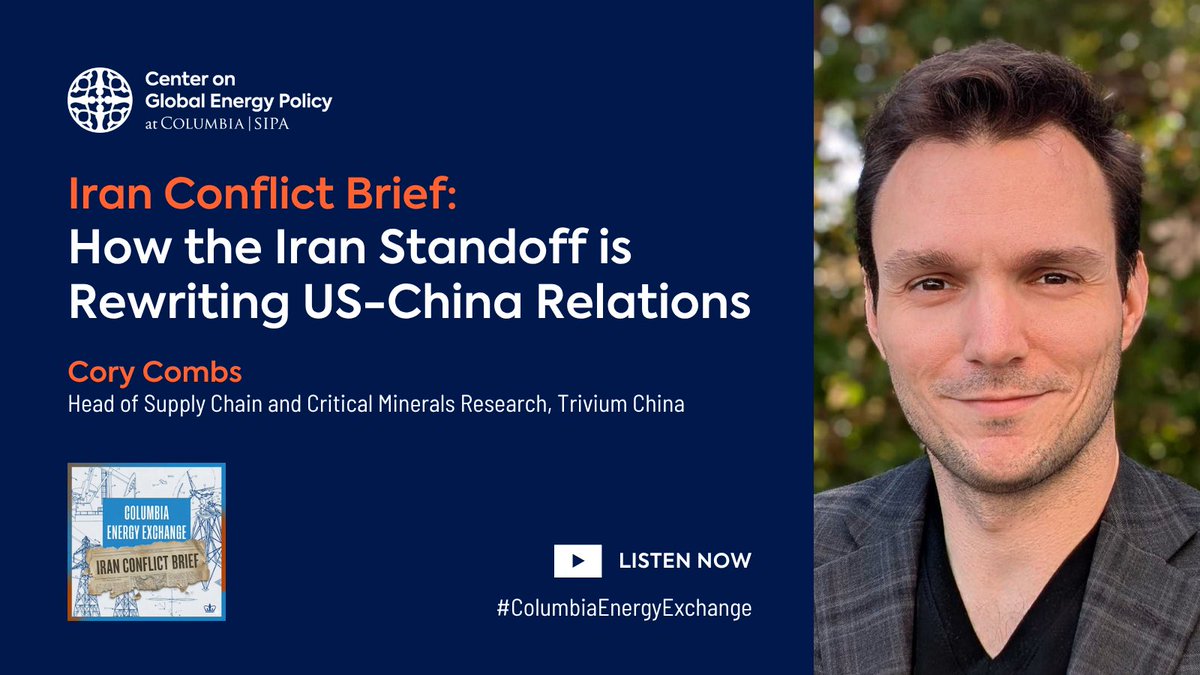
In our latest #IranConflictBrief, Daniel Sternoff sits down with @coryjcombs (@triviumchina) to break down the volatile triangular relationship between Washington, Beijing, and Tehran, and what it means for global energy security and the Strait of Hormuz.
🎧 Listen here: energypolicy.columbia.edu/ir…
3
5
473
Cory Combs retweeted

May 17
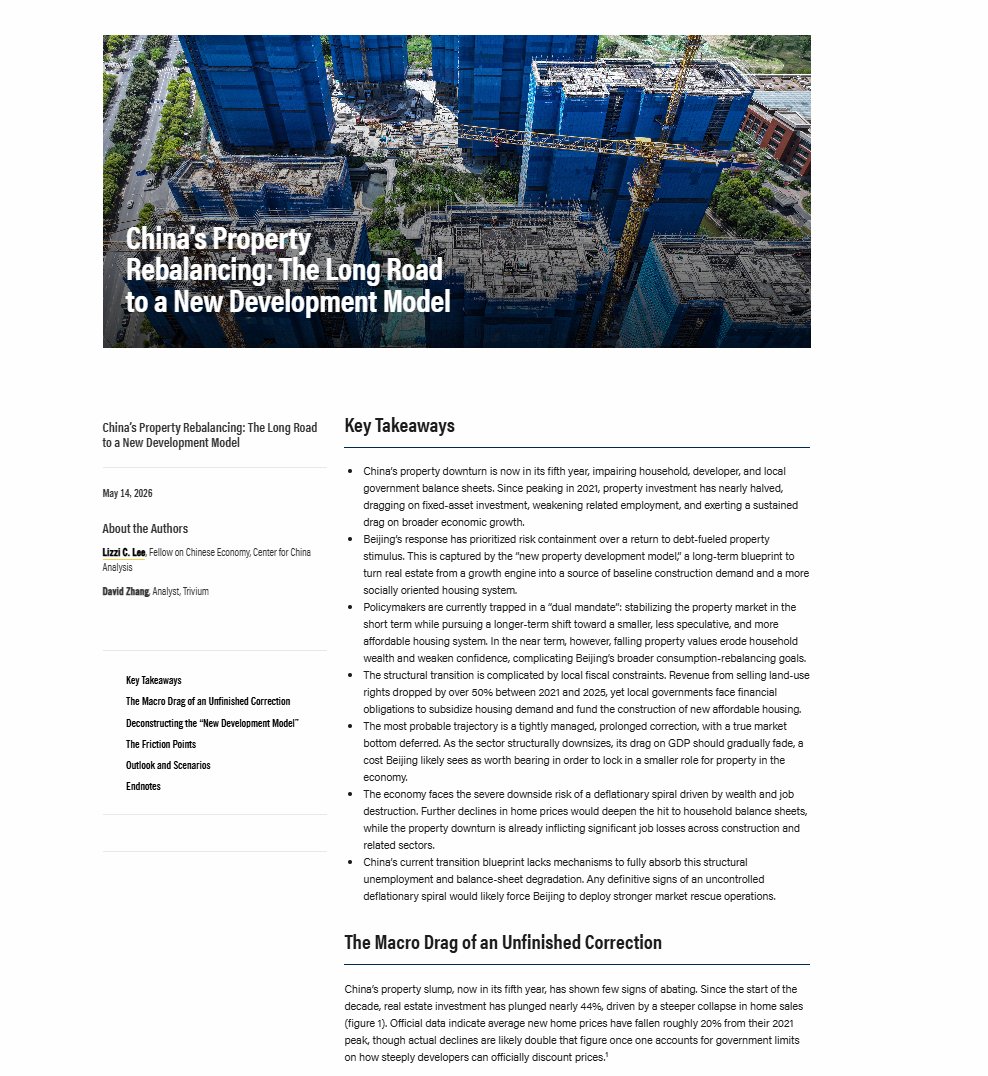
Sharing a new paper by David Zhang of @triviumchina and yours truly on China’s ongoing property market drag. Yes, it will likely bottom out this year. But yes, it is still a major, major drag on the macro. This year, property and its connected upstream downstream industries will likely drag down nominal GDP by 2 percentage points. That is significant. Exports can bridge some of the gap, but there are two critical issues: Unlike property, exports-- especially high-value exports related to AI energy demand, where China shows the clearest strength / resillience-- do not have the same pull on employment and consumption. And the sheer magnitude of the property sector cannot be written off... As Morgan Stanley report pointed out, to offset the 2 percentage point drag, nominal export growth would need to be around 15%... no easy feat!
cc @AsiaPolicy
6
17
48
8,490
Cory Combs retweeted
We are thrilled to announce the selection of our fourth fellowship cohort, sixteen truly outstanding next generation China scholars and analysts you can read more about here: global.upenn.edu/future-of-u…
Check out the full announcement at: global.upenn.edu/future-of-u…

4
17
44
23,287
Cory Combs retweeted

8 Nov 2025
This week on the Trivium China Podcast from @triviumchina, @coryjcombs is back on the show to talk about what China did and didn't agree to in the talks in Busan when it comes to REE and other strategic minerals. @andrewpolk81 hosts as always! Link below.
3
4
16
3,968
Cory Combs retweeted

11 Aug 2025
🌎 Who controls the minerals that power the future?
@annatashton (Ashton Analytics) and @coryjcombs (@triviumchina) join #PIPFellow @jessicamdicarlo (@UUtah) to unpack how China became a global leader in critical minerals.
Watch: bit.ly/4fsxaUa
1
4
564
5 Feb 2025
3/5: Bismuth (including powders, blocks, and other forms) – an alloying agent, among its other niche industrial purposes
4/5: Molybdenum (including alloys) – used in various "superalloys"
5/5: Indium (including semiconductor material InP) – key to myriad electronics
1
2
445
5 Feb 2025
We're still working through everything for clients, but I'll be posting more on the issue soon. Thoughts/questions? Be in touch.
(For industry folks: yes, these materials have more uses -- ~70 that we track internally -- but these are top econ, security, and political concerns.)
2
308
9 Dec 2024
Last week I spoke with Bloomberg @business about China's ban on select critical mineral exports to the US.
bloomberg.com/news/articles/…
Key takeaways:
1
253
9 Dec 2024
2) The ban's extra-territorial application sets a new precedent and trajectory for export controls.
- Beijing aims to prevent domestic firms from seeking loopholes, incl. re-exports via third countries.
- But it also warns US trading partners not to circumvent China's controls.
1
179
9 Dec 2024
Like other analysts, we're skeptical of Beijing's current international enforcement capabilities -- but Beijing will invest in developing them moving forward.
153
Cory Combs retweeted

22 Jul 2024
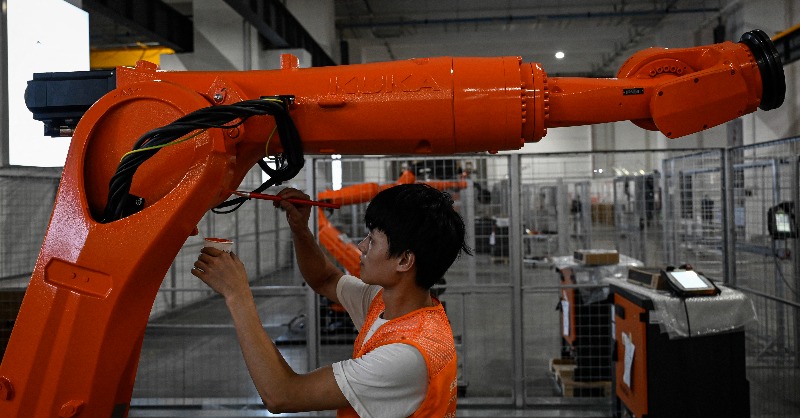
Beijing has made leading-edge, highly-efficient manufacturing capabilities a top policy priority. In this analysis, @triviumchina experts @kendraschaefer and @coryjcombs provide an in-depth overview of this emerging effort, dubbed “new industrialization.”
3
1
639
Cory Combs retweeted
17 Jun 2024
Beijing has made leading-edge, highly-efficient manufacturing capabilities a top policy priority. In this analysis, @triviumchina experts @kendraschaefer and @coryjcombs provide an in-depth overview of this emerging effort, dubbed “new industrialization.”
3
8
4,070
Cory Combs retweeted

29 Feb 2024
Cool paper alert: @coryjcombs takes a stab at predicting which critical minerals are most at risk of export controls by China, and outlines the framework he developed to make those determinations. Input on the framework very welcome! triviumchina.com/research/ga…
1
4
11
4,923
Cory Combs retweeted

1 Dec 2023
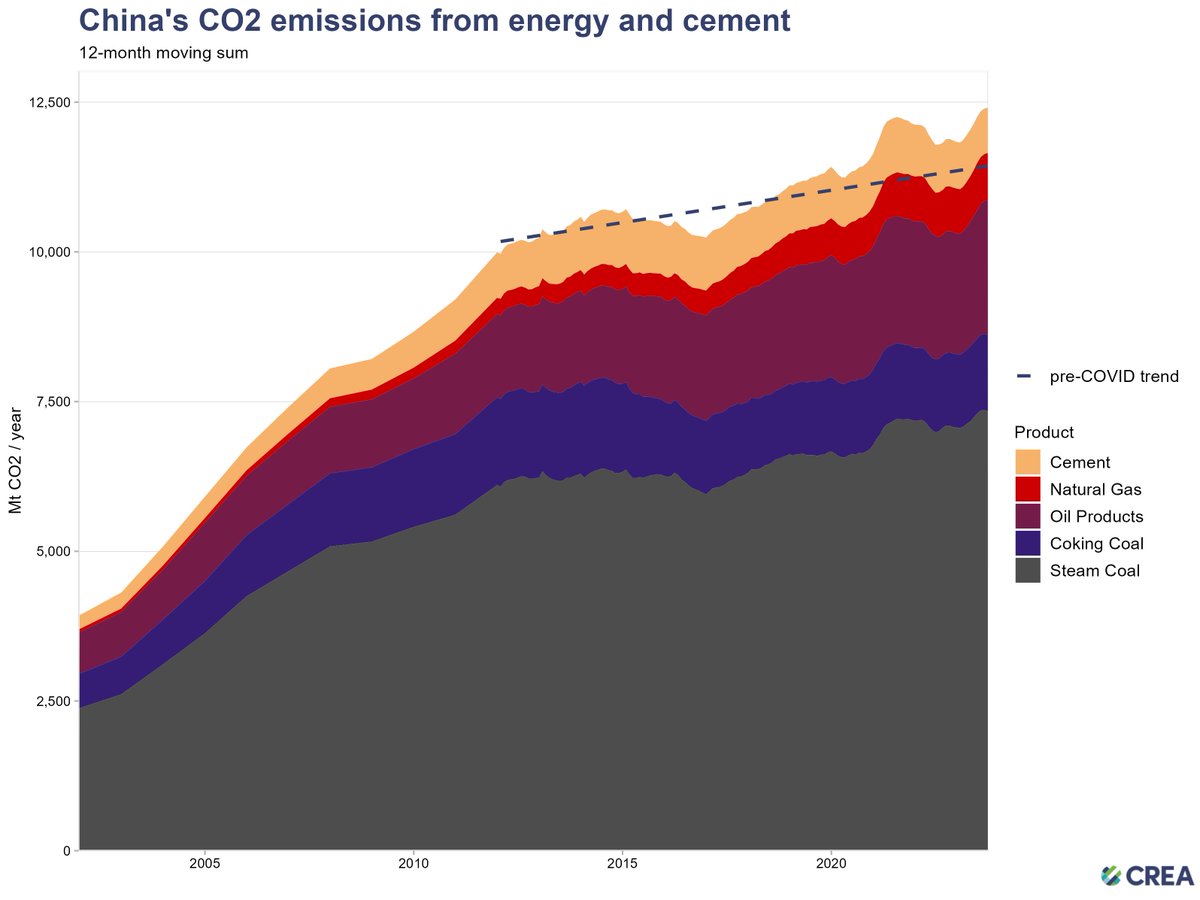
I recently published the prediction that China's CO2 emissions could peak early next year, if current rate of clean energy additions is maintained.
Many people who have followed China's emissions trajectory for some time pointed out that it seemed once before, in 2015, that emissions, or at least coal use, could have peaked:
I made this prediction myself in 2013, and it obviously turned out to be wrong. That means I won't call a peak again slightly, even under the condition that clean energy growth continues.
So: what, if anything, is different this time?
In short, the idea that China's coal use was on track to peak around 2015 was based on assuming a significant change in China's economic growth model and growth pattern. Instead of heavy industry and construction, growth was going to be driven by household consumption, services and high-tech industries. This would entail a slower rate of GDP growth, to be sure, but much more importantly, the growth would come from less coal- and energy-intensive sectors, implying a slower rate of energy demand growth in relation to GDP (lower GDP elasticity of energy demand).
Around 2013-15, this is what seemed to be happening, and also what China's leadership said was going to happen, referring to the shift as the "economic new normal经济新常态".
At the same time, clean energy was booming, rapidly catching up to energy demand growth.
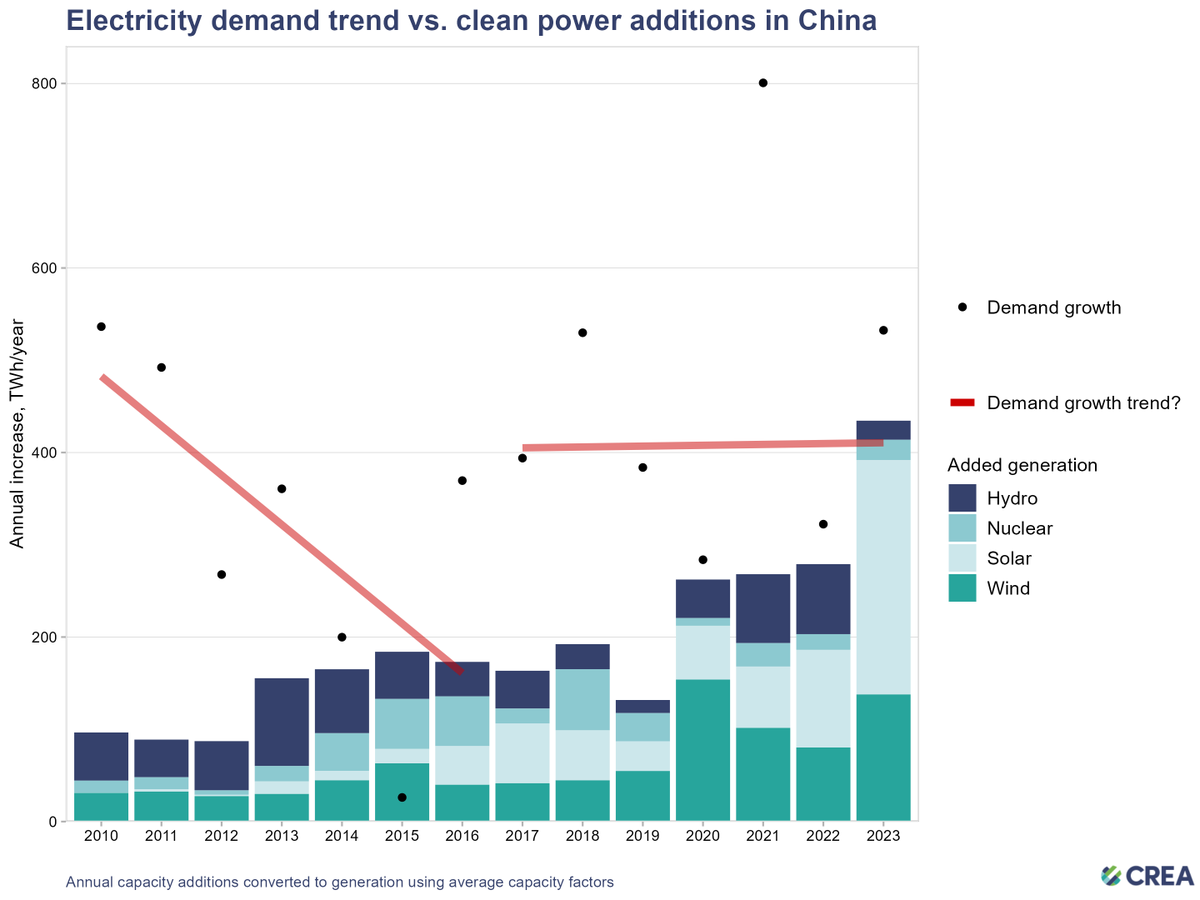
See here: up to 2015 electricity demand growth slowed while clean energy additions accelerated.
Obviously, developments from 2016 onwards didn't follow the scripts. The NDRC ran stealth stimulus in 2017-19 in response first to the domestic economic slowdown and then to Trump tariffs that revived the energy intensive growth pattern. In 2020-21, the economic policy response to COVID, promoting exports and manufacturing, led to an enormous surge in heavy industry and electricity demand. At the same time, coal interests successfully pushed for a slowdown in clean energy deployment, making space for coal power generation to grow and resolve the overcapacity situation in the "wrong" way.
Yet if you look at the first graph, while 2013-14 didn't turn out to be the peak for coal use or emissions, it did mark a breakpoint with much slower growth than in the preceding decade. Clean energy additions were maintained well above pre-2013 levels even if growth expectations didn't materialize. So the factors I identified back then turned out to be relevant, if overdone.
So what's different now? Peaking emissions this time doesn't require economic growth to slow down or to become less energy intensive. Clean energy has grown to a scale where it can cover electricity demand growth entirely. Peaking also doesn't require further growth in annually added clean energy capacity but "just" that the rate of additions already achieved in 2023 is maintained.
This doesn't make the future certain in any way. Pushback from coal interests or failure to reform the power grid to allow clean energy growth to be absorbed could derail things. Energy demand growth could go into overdrive. But currently it seems that there is more potential for energy demand growth to slow and clean energy additions to accelerate than vice versa.
In short, predicting a peak in China's emissions in 2023 is a very different proposition from 2013.
6
29
112
21,040