Prof @UniLeipzig @ifkmw & Institute for PolSci @crifc_de @cdp_org (Private account & personal opinions, of course.)
Joined November 2009
- Tweets 6,310
- Following 1,005
- Followers 2,997
- Likes 17,892
261 Photos and videos

Christian Pieter Hoffmann retweeted

Jun 12
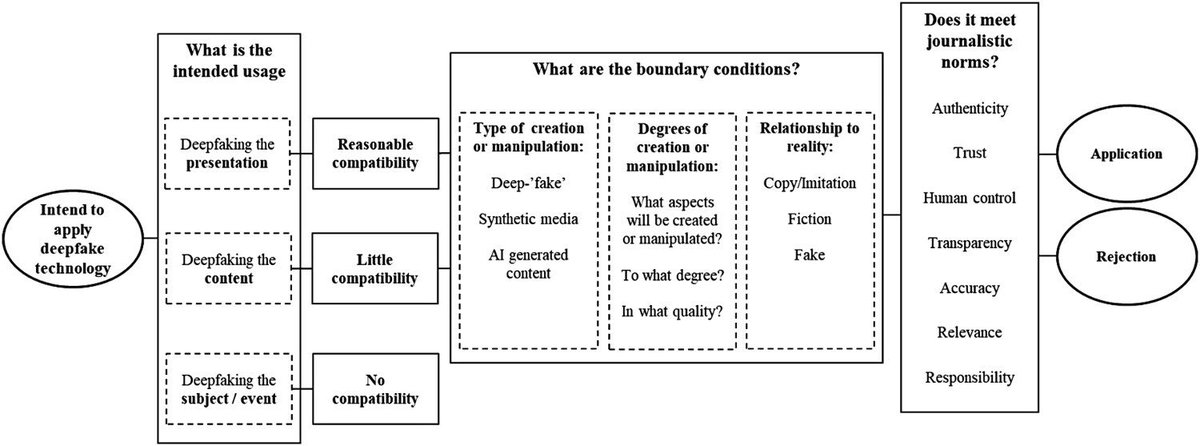
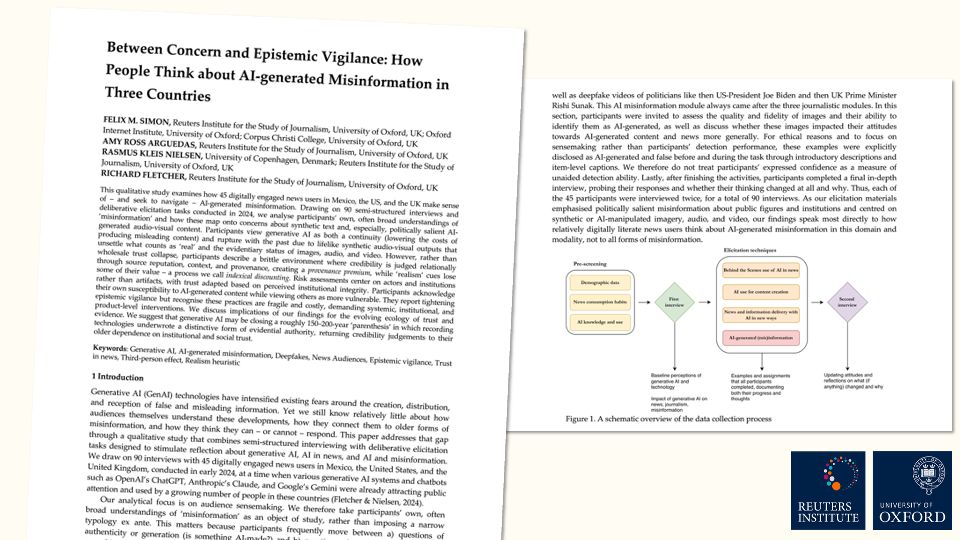
✨ 🤖 New pre-print: Is realism dead and do people distrust everything, now that synthetic media is ubiquitous? It’s a bit more complicated.
1
9
16
1,173
Christian Pieter Hoffmann retweeted

Jun 10
“In the name of safeguarding democracy, open societies are importing the policies of authoritarian regimes they rightly identify as enemies of free expression,” argues @JMchangama.
foreignaffairs.com/europe/en…
1
9
13
3,717
Christian Pieter Hoffmann retweeted

Jun 10
An new audit of YouTube shows it’s not a radicalization engine:
- It doesn’t push people into echo chambers
- Conditional on people’s pre-existing inclinations, it may facilitate viewers’ falling into rabbit holes
- Still, the platform actually appears to nudge users toward ideological moderation overall
An important paper which could be of interest to @jayvanbavel @MattGrossmann @danwilliamsphil @cphoffmann @Sacha_Altay and others
tandfonline.com/doi/full/10.…
Jun 10

1/ Our new paper in Political Communication asks: does YouTube's algorithm push users into echo chambers, rabbit holes, or radicalization pathways? 🧵
1
7
13
1,543
Christian Pieter Hoffmann retweeted
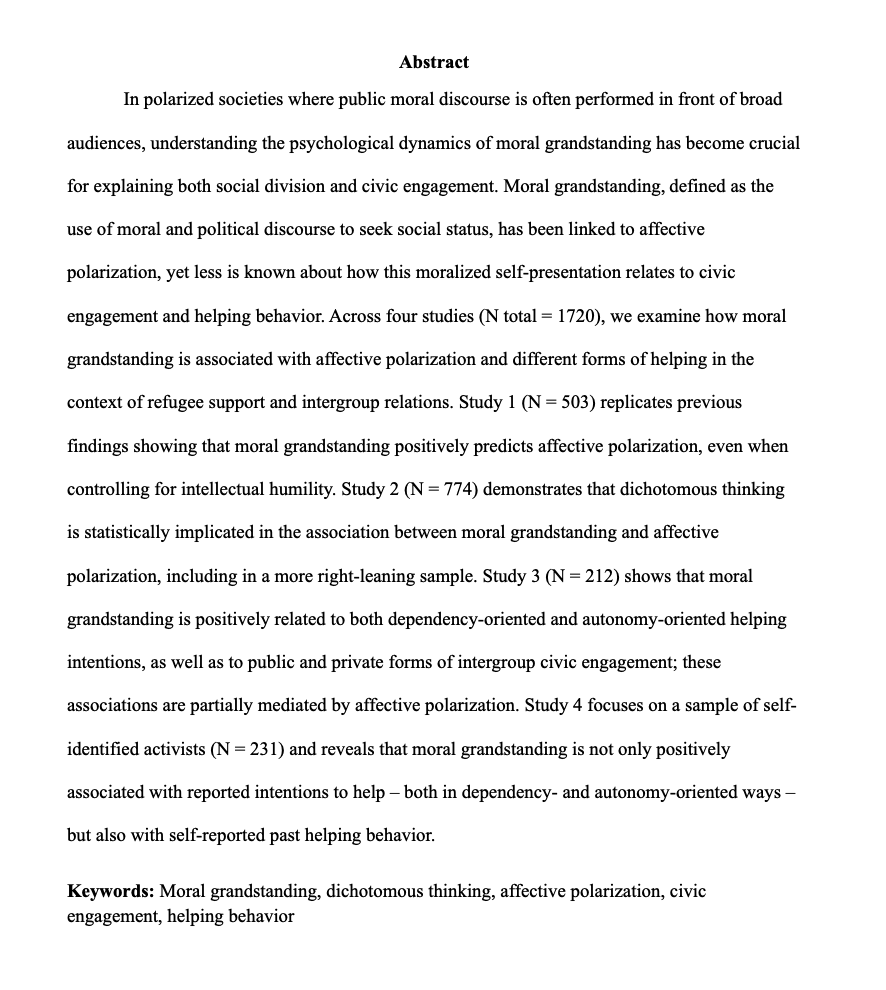
Moral grandstanding (the use of moral and political discourse to gain social status) is associated with stronger affective polarization
This link was partly connected to dichotomous thinking--seeing complex political issues in black-and-white terms. osf.io/preprints/psyarxiv/c2…
However, moral grandstanding was also linked to self-reported civic engagement.
1
8
37
7,585
Christian Pieter Hoffmann retweeted
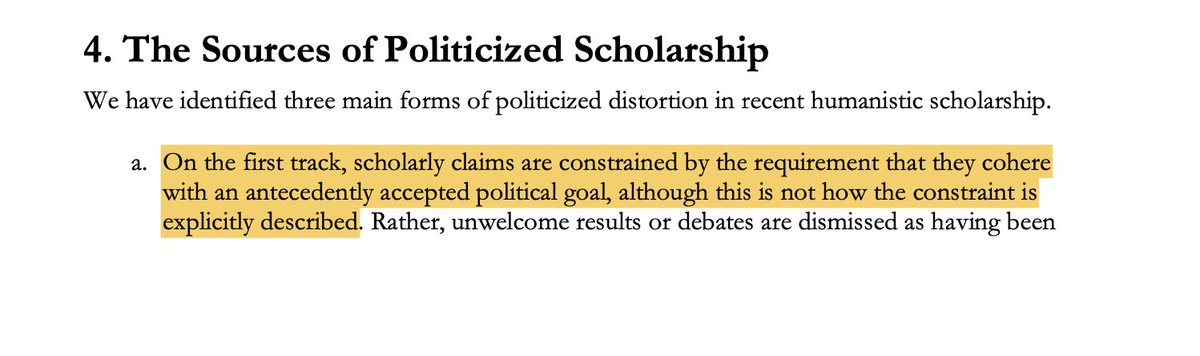
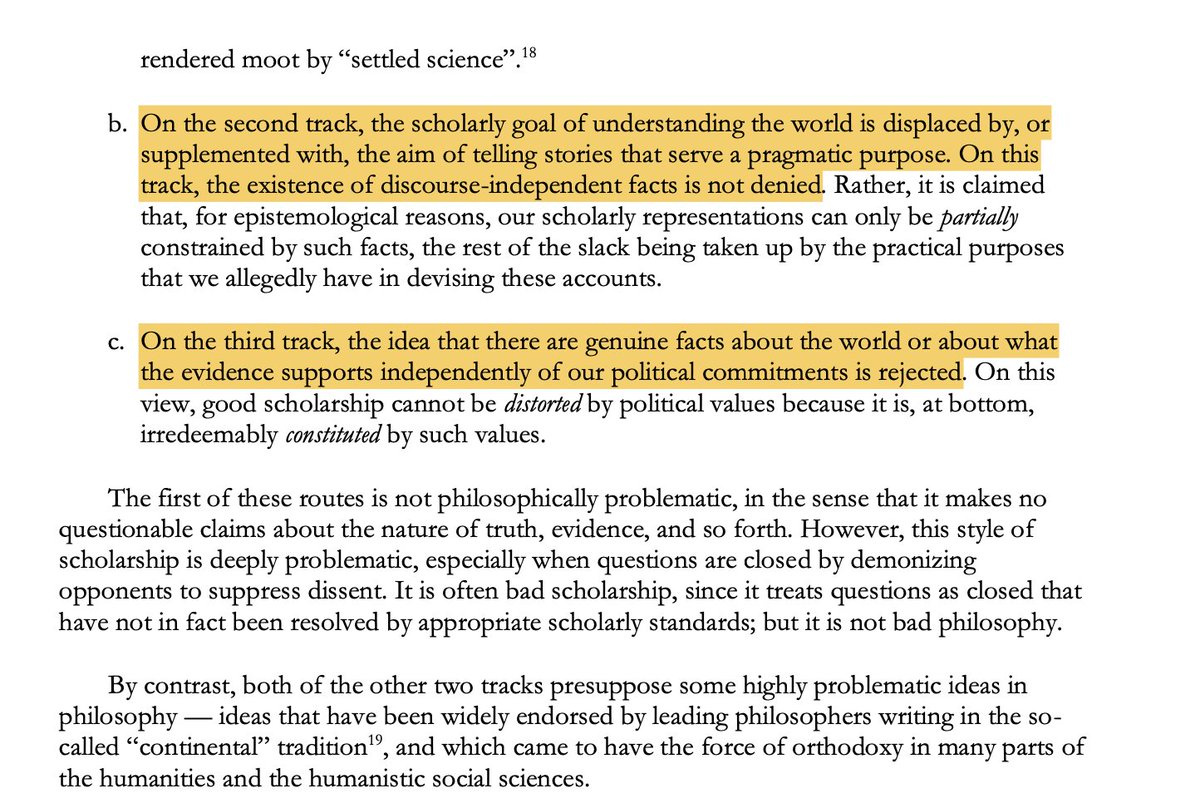
The denial of reality has been a terrible move in the humanities and social sciences.
This report is a serious critique of many of the problems I've seen in academia that have gotten out of control in the past few years.
And it is led by some of the leading experts across these fields (Joe Henrich, Anthony Appiah, and many others).
We seriously need to fix these issues if we have any hope of regaining credibility and public trust.
Jun 5

Next section sums up the sources of politicized scholarship:
1) rejecting unwelcome views, 2) rejecting "understanding" as the goal of scholarship, and 3) rejecting the very notion of politically independent facts.
It largely zeros in on the last source (i.e., relativism).
10
33
155
32,089
„organizations can avoid it by permanently shifting priorities—tolerating some problems ad hoc and devoting sustained effort to pruning obsolete processes“ 🙏🏼🙏🏼
Jun 2

Between 1985--2023, MIT's faculty grew 9%. Administrative staff grew 189%. 📈 Why? In new @PNASNews paper, we use dynamical system model to show administrative bloat can emerge without empire-building--just from well-intentioned problem-solving gone awry pnas.org/doi/10.1073/pnas.25…
1
221
Christian Pieter Hoffmann retweeted

Jun 1
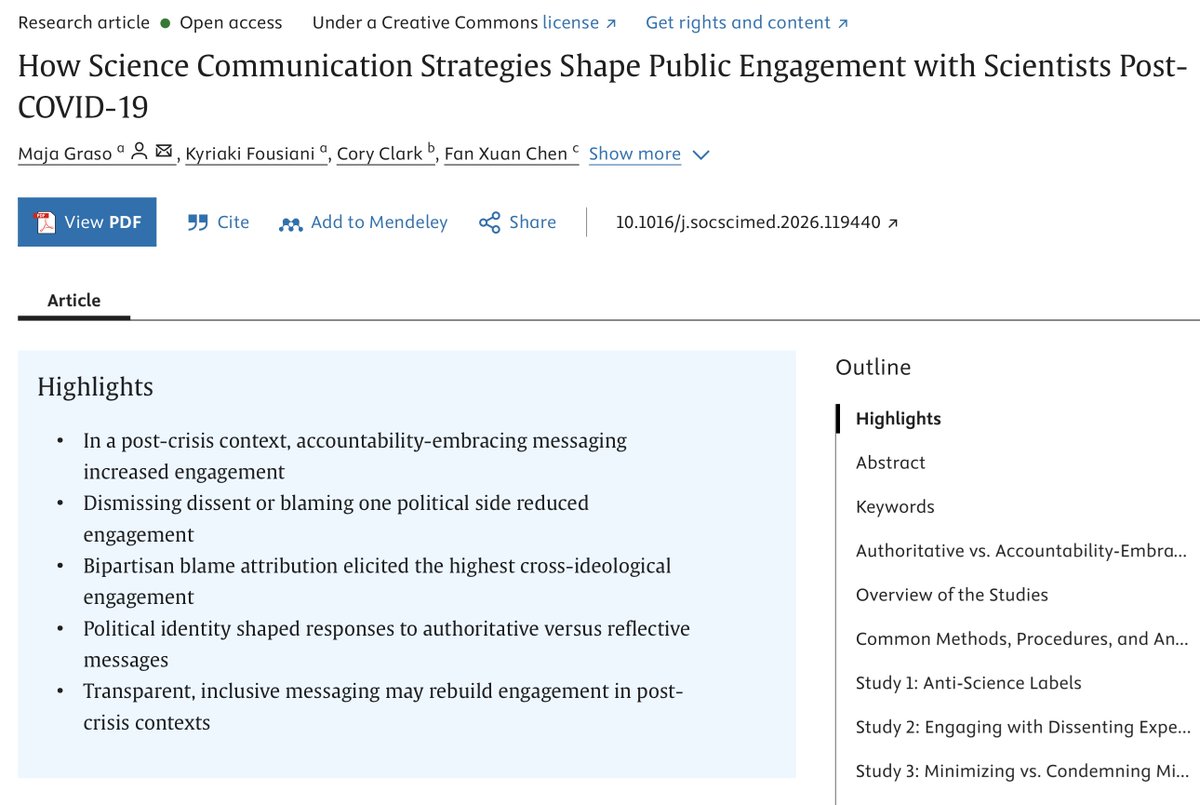
1. Does drawing harder boundaries between science and "misinformation" increase or decrease public trust in science?
In four studies conducted in the context of COVID-19, we tested this question by comparing different approaches to science communication.
sciencedirect.com/science/ar…
2
17
50
13,626
Christian Pieter Hoffmann retweeted

May 27
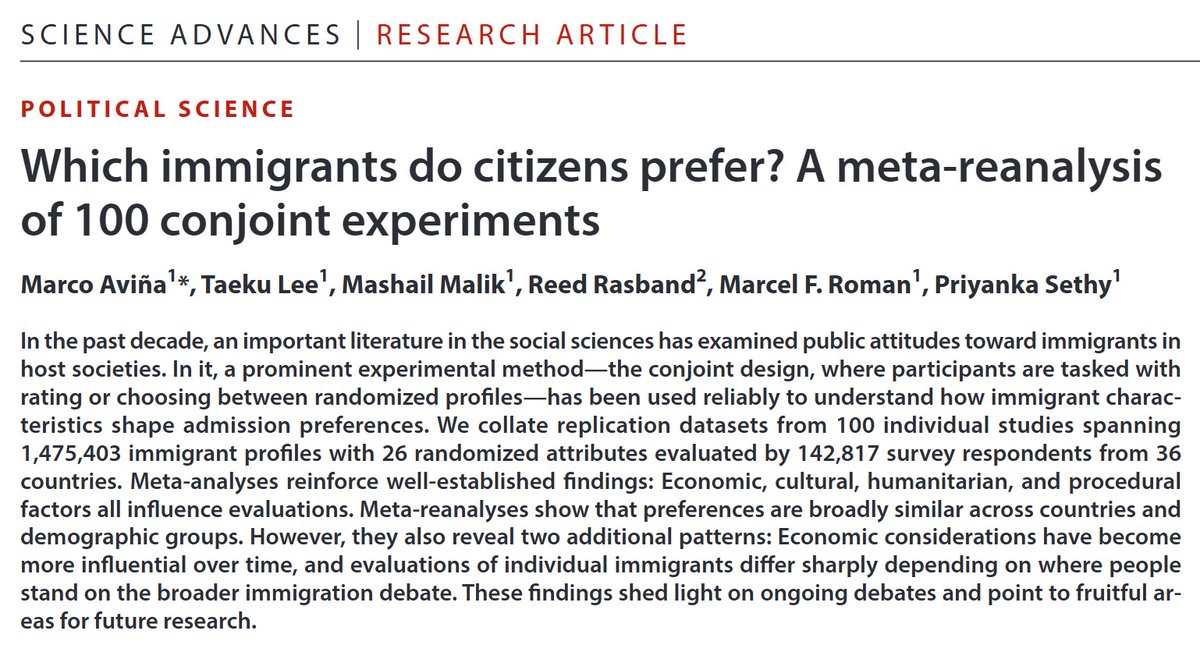
NEW in @ScienceAdvances, after 3 years of work with a great team:
We review and meta-analyze 100 immigrant conjoint experiments in 36 countries.
Immigration preferences are surprisingly similar across people and countries, but changing over time and structured by politics.
🧵
2
43
158
39,246

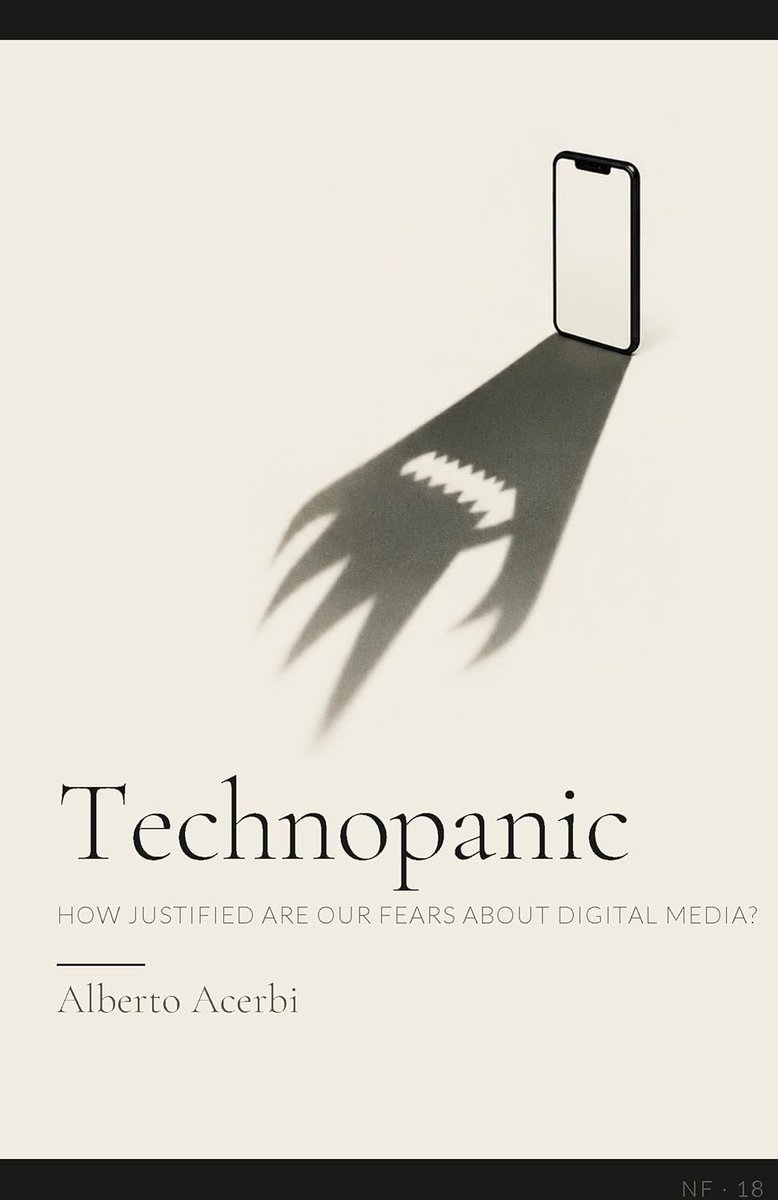
Was one of the best books I read last year, will be one of the best I read this year.
✨ $4 Kindle ✨
"What I can say, rereading the text now, is that I remain convinced by it. In many cases, new research has confirmed rather than challenged the core claims of the book."


3
31
1,839
Christian Pieter Hoffmann retweeted

May 12
Americans trust local and state governments more partly because they hear less about them; hearing more about national news is associated with lower trust in national government journals.sagepub.com/doi/abs…
3
5
630
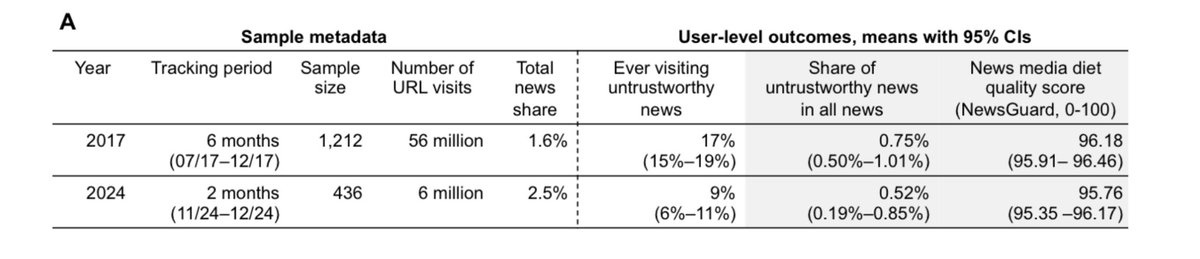
Looks like we need more studies of BlueSky discourse 🫣

About 1 in 4 Americans think the April shooting at the White House correspondents’ dinner was staged according to a new survey.
Roughly 1 in 3 Democratic respondents said they believed the event was staged, compared with about 1 in 8 Republicans. wapo.st/4wnrxPo
144
Fast ein Jahr alt, vielleicht aktueller den je: Die BlueSky-Echokammer ist eine Gefahr - für die Linke.
machine-vs-rage.net/blog/dei…
1
71
Christian Pieter Hoffmann retweeted
Americans with Graduate degrees (now 14.5% of the population) are far more liberal & vote far more consistently Democratic than those with only undergraduate degrees; & local graduate degrees are very strong predictors of geographic voting patterns
journals.sagepub.com/doi/10.…
1
16
50
16,776
Christian Pieter Hoffmann retweeted
Apr 24
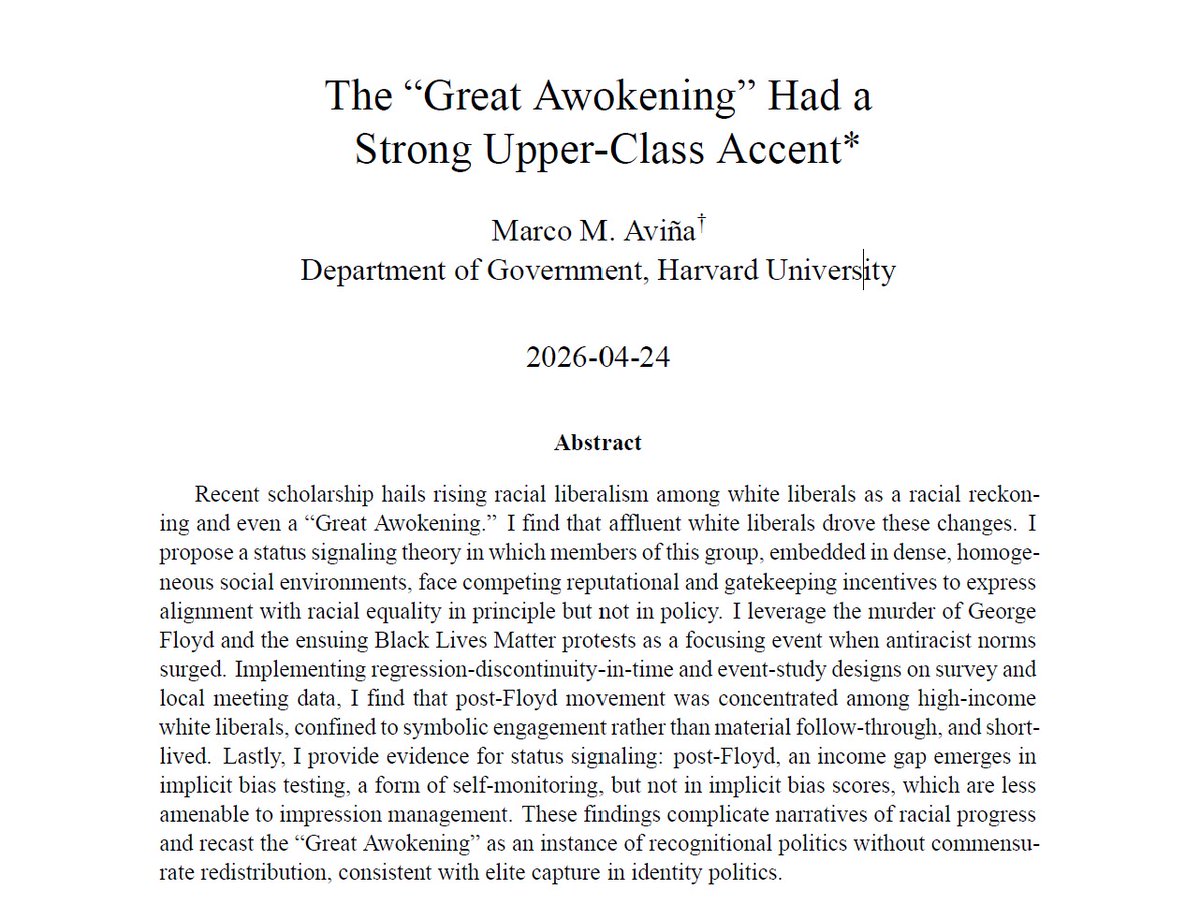
Excited to present my JMP at MPSA!
The post-Floyd “Great Awokening” was driven by affluent white liberals and emphasized recognition over redistribution.
Evidence from surveys, public discourse, and implicit bias data.
Consistent with elite capture of identity politics.
⬇️
31
69
376
36,323
Christian Pieter Hoffmann retweeted

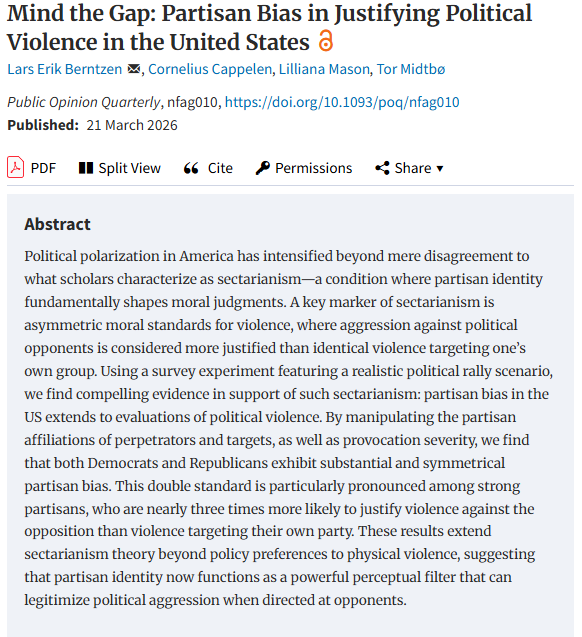
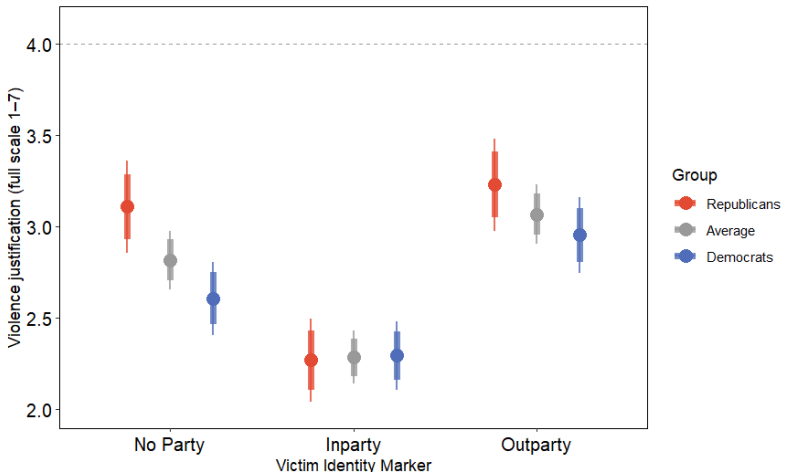
Does partisanship affect justifications of political violence?
Berntzen et al. find that both Democrats and Republicans are more likely to justify identical acts of political violence when the victims are from the opposing party.
Read now: doi.org/10.1093/poq/nfag010
1
23
54
9,173
Christian Pieter Hoffmann retweeted
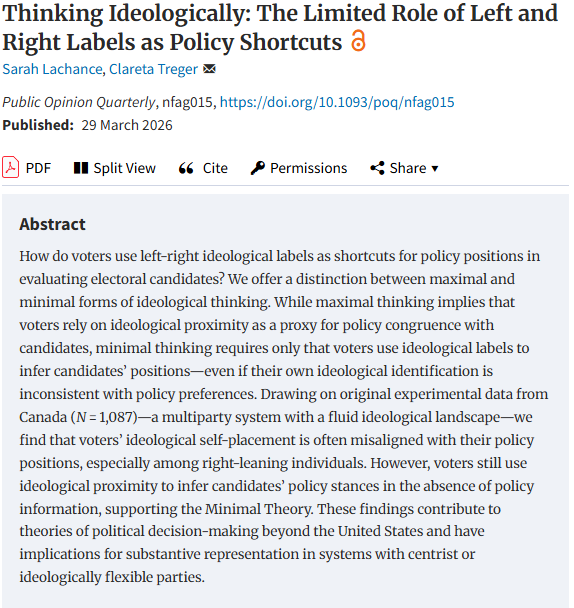
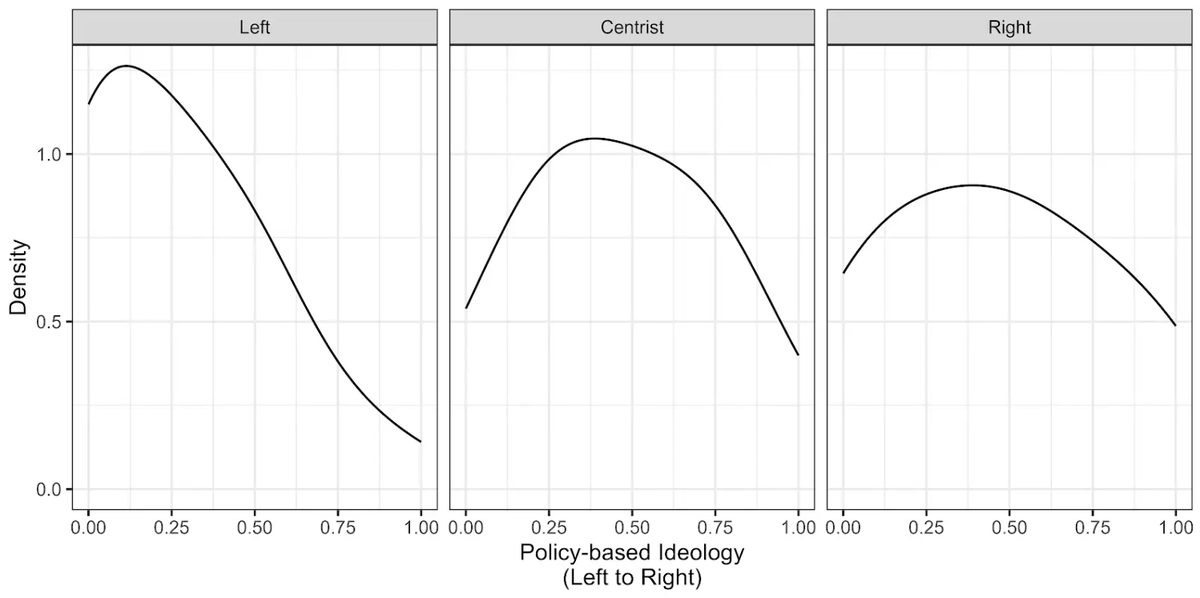
How do voters “think ideologically” in multiparty systems?
In POQ, Lachance & Treger find that Canadian voters use left–right labels as shortcuts to infer candidates’ positions, even when they don't fully align with their policy preferences.
Read now: doi.org/10.1093/poq/nfag015
1
8
30
1,683
Christian Pieter Hoffmann retweeted

Apr 15
This new report from @Yale University explains why universities have lost public trust and how we can regain it.
The committee offered dozens of recommendations, like expanding financial aid, reducing admissions preferences, zealously protecting free speech and adjusting grading policies.
People in academia, the committee said, “must be willing to admit where we have been wrong and where we might improve, even as we defend what is essential about higher education and its academic mission.”
What do you think?
nytimes.com/2026/04/15/us/ya…
15
15
63
10,178
Christian Pieter Hoffmann retweeted

Apr 13
Moral inversion and the rise of authoritarian sympathy
Ideologies that claim to be anti-oppressive, like antizionism and far-left progressivism, say they fight for the oppressed and against the violation of universal human rights.
We put these claims to the test, by asking 1270 Americans to assess the human rights records of democracies and authoritarian regimes, and take a battery of psychological tests.
The results were striking. Study link and highlights in 🧵
3
57
188
20,953
Christian Pieter Hoffmann retweeted

Apr 10
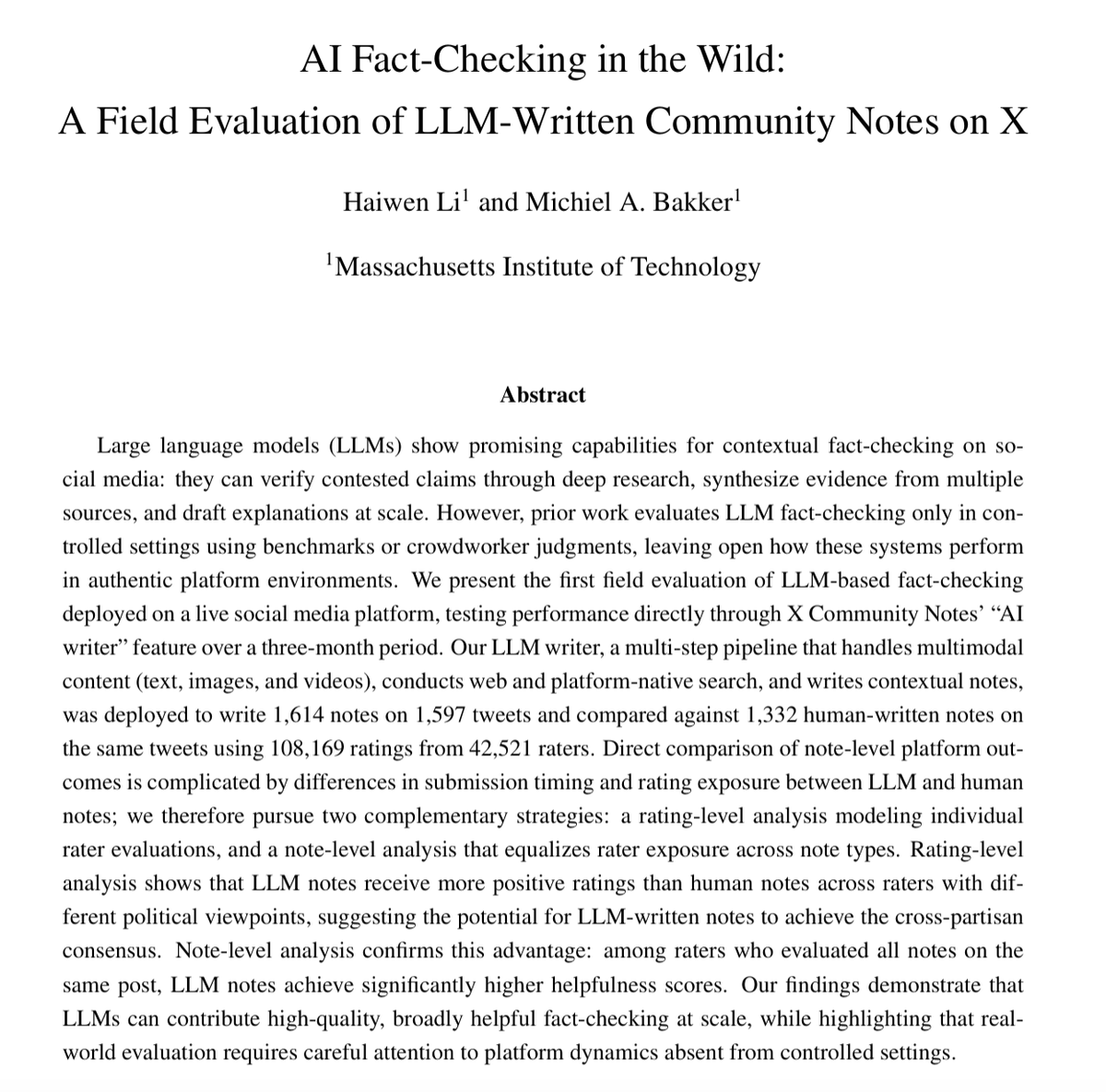
🚨New preprint. Many papers show AI can write fact-checks as well as humans (or better) in the lab, but very few test this in the real world.
We run the first online evaluation of AI fact-check writing with X Community Notes’ AI writer API.
Paper w. @bakkermichiel 1/
3
37
131
23,301
Christian Pieter Hoffmann retweeted

Apr 8
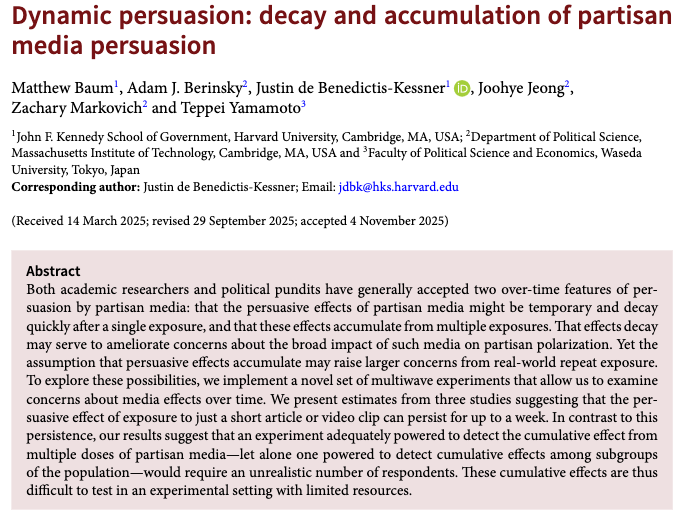
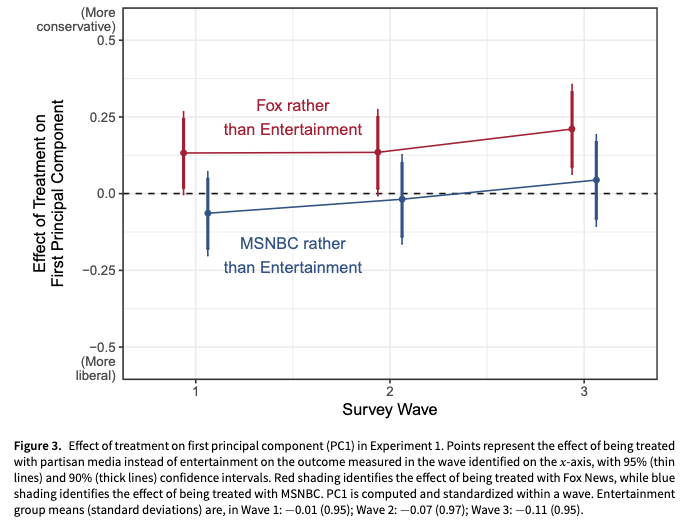
📰 Do the effects of partisan media fade quickly or accumulate over time?
➡️ Using multiwave experiments, M Baum et al. show a single exposure can have effects lasting up to a week, while cumulative effects are hard to detect cambridge.org/core/journals/… #FirstView
1
9
37
3,617