
One of the most respected analyst and market research firms. Founded 1969 and trusted for guidance by 80% of the top 10 Fortune 500 technology companies.
Joined July 2009
- Tweets 1,321
- Following 104
- Followers 2,423
- Likes 23
144 Photos and videos




Pinned Tweet

29 Apr 2021
Proven guidance based on tailored analysis, data-driven insights, and broad market understanding.
Trusted by 80% of the top 10 Fortune 500 technology companies.
creativestrategies.com
4
1
12
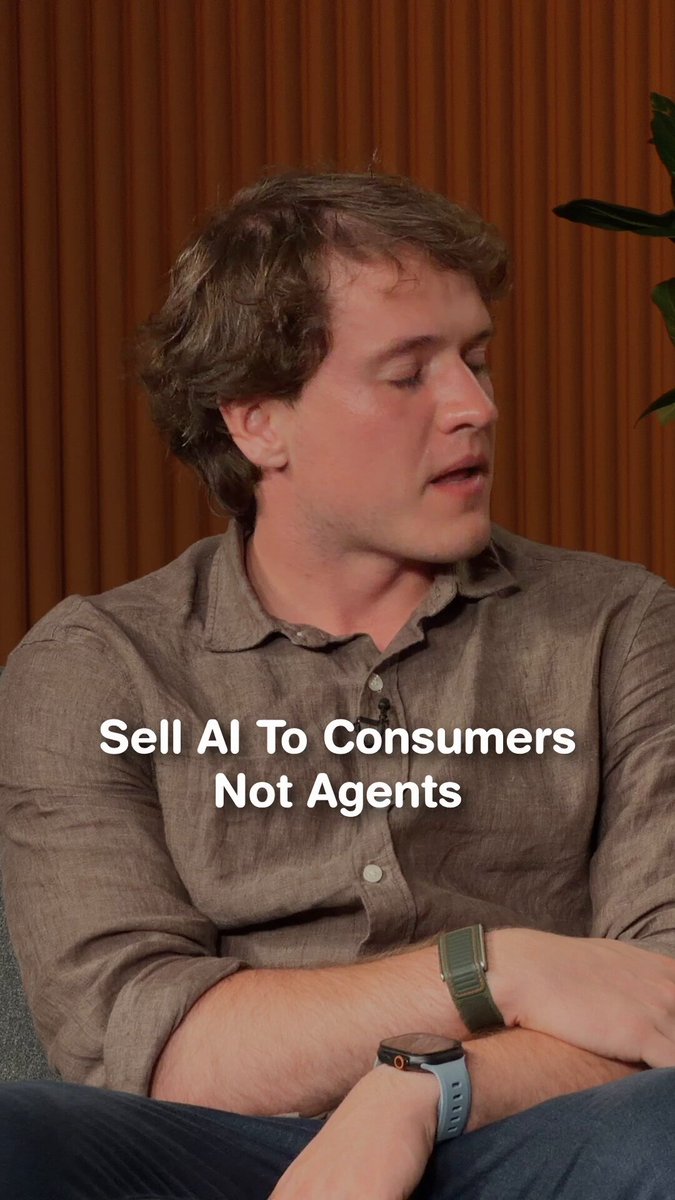
The AI industry keeps talking about agents, but most consumers just want products that work better.
@mweinbach explains why the winning strategy may not be building dedicated AI devices, but integrating intelligence into the devices people already own and understand. It's a subtle distinction, but an important one.
@Apple
4
2
12
2,565
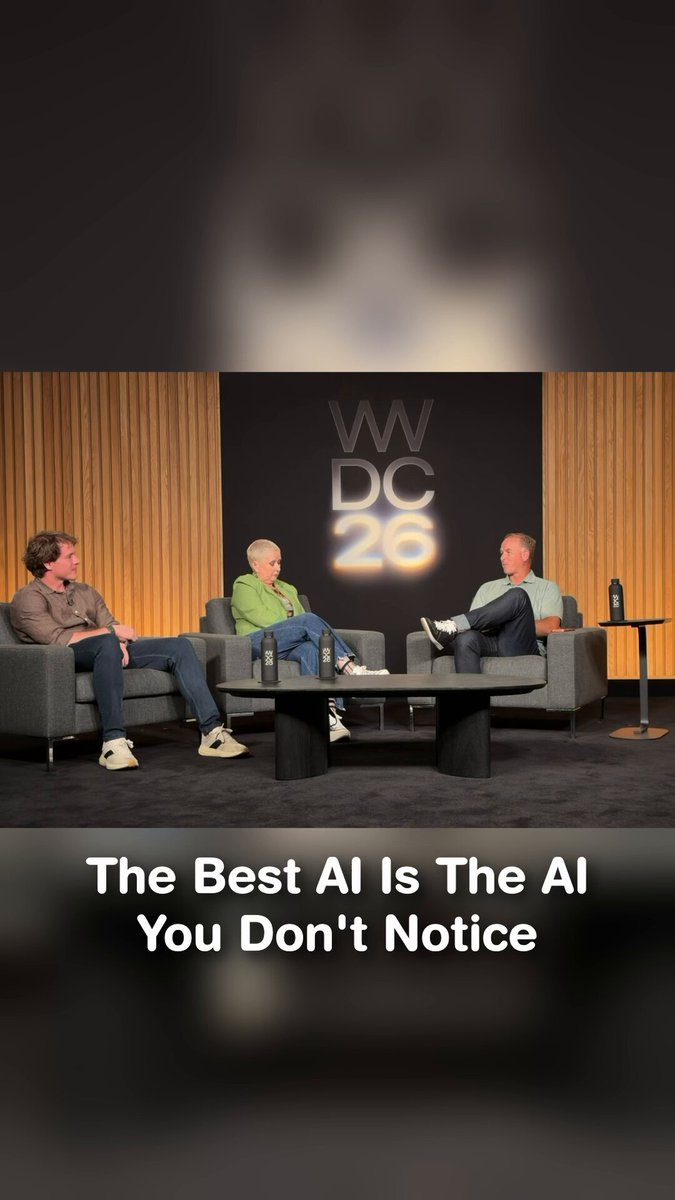
The best AI experiences don't feel like AI experiences.
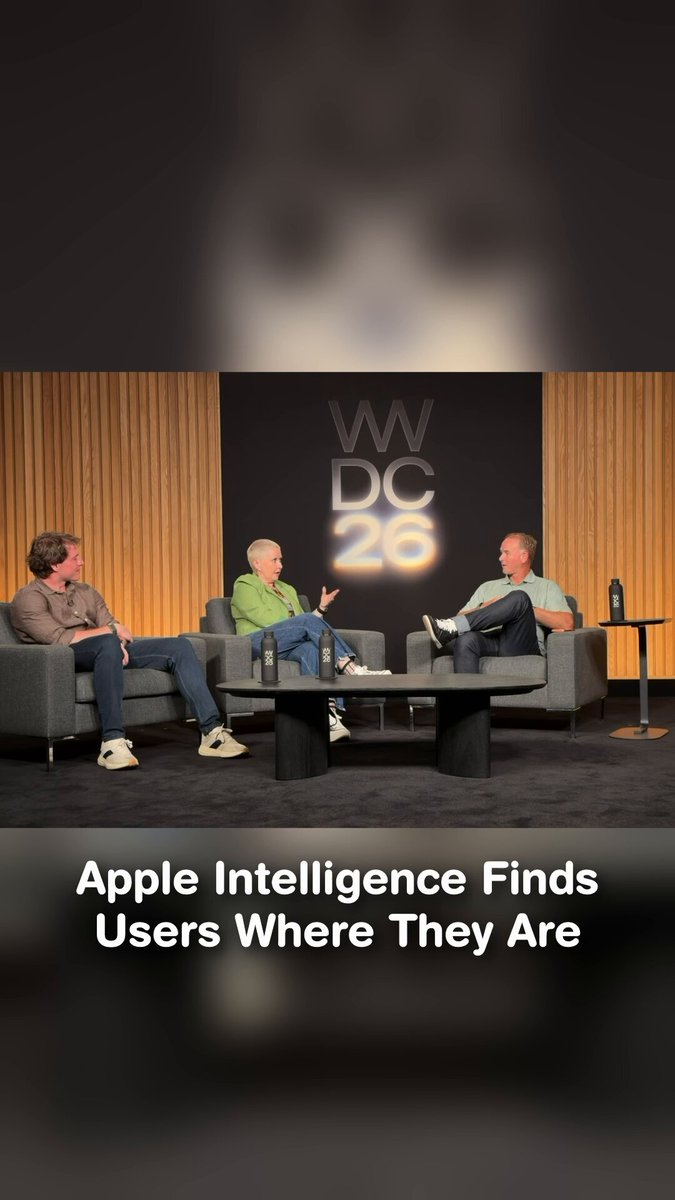
As @caro_milanesi points out, consumers who are comfortable with AI can engage with Siri directly, while everyone else can discover @Apple Intelligence naturally through the apps they already use.
That's a very different adoption strategy than asking users to change how they work.
262
Most people don't care whether it's an agent, an assistant, or a chatbot. They just want it to work
@BenBajarin explains why @Apple's AI strategy is less about showing off technology and more about making intelligence disappear into the experience itself.
That's what makes Apple's approach worth paying attention to.
1
3
8
2,129
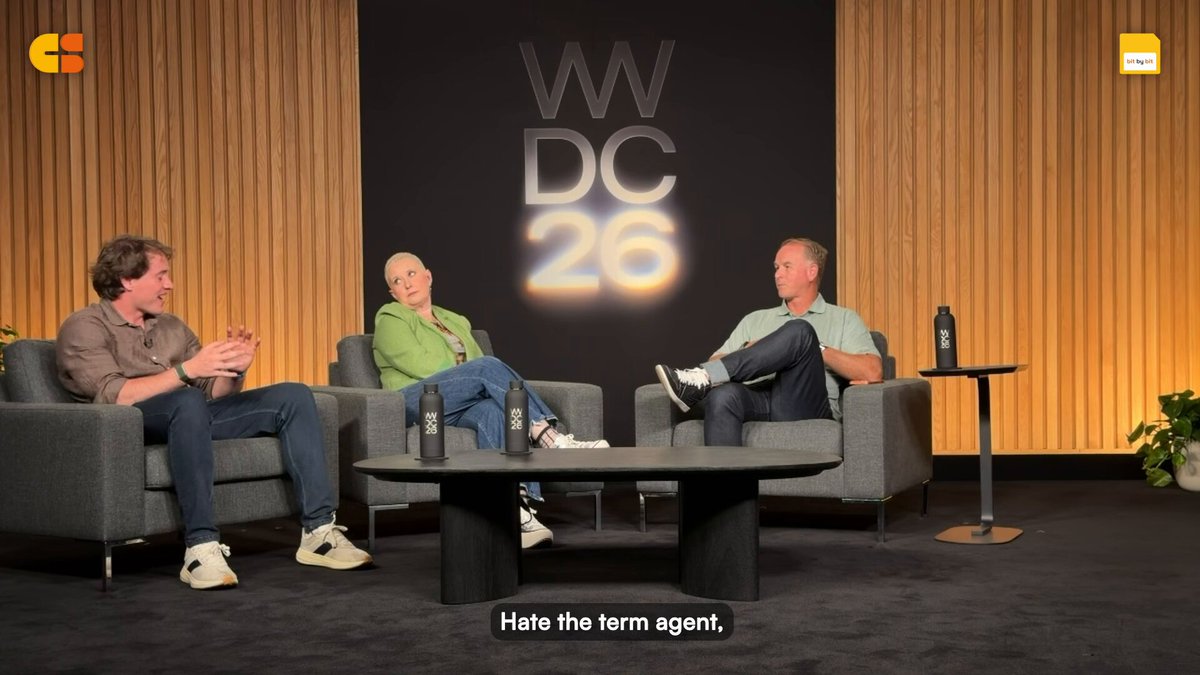
The most interesting thing @Apple announced at WWDC may have been what it didn't announce.
No moonshots. No promises of fully autonomous AI agents. No demos of a future that may or may not arrive. Instead, Apple focused on making devices work better, making Siri more useful, and bringing AI into experiences people already understand and use every day.
From Apple Park, @BenBajarin, @caro_milanesi, and @mweinbach sat down for a special episode of Bit by Bit to break down Apple's WWDC announcements, from Apple Intelligence and Siri to the company's collaboration with Google, and what any of it actually means for users.
00:13 WWDC Roundtable Kickoff
00:58 Keynote Takeaways
02:08 Performance First
02:50 Trust And Framing
05:29 Invisible Applied AI
07:56 Assistant Not Agent
12:21 Consumer Versus Enterprise
14:23 Enterprise Upside For Apple
18:25 Platform Integration Edge
19:38 Apple Intelligence AI 101
22:32 Why Reveal The Tech
26:04 Geopolitics And Rollout
29:46 Favorite New Features
33:43 Testing And Wrap Up
5
2
18
11,444
The biggest barrier to AI adoption is not the technology. It's time.
Tom Butler, Vice President of WW Commercial Portfolio and Product Management at @Lenovo explains why middle management is often where AI adoption stalls. Leaders are told to do more with less, then asked to stop, learn something new, and implement it.
On Bit by Bit: Leadership Conversations, Tom argues that the organizations seeing real progress pair top-down support with a middle layer that is actually given time off task to experiment and learn.
He calls it the slingshot: pause first, then accelerate.
@caro_milanesi
2
2
5
2,074
Culture does not scale through mandates.
Tom Butler, Vice President of WW Commercial Portfolio and Product Management at @Lenovo shares his AI Knights of the Round Table approach: a representative from every team comes together to share how they are using AI, then takes the best use cases back out to the wider organization.
As discussed on Bit by Bit: Leadership Conversations, the peer-to-peer model spreads adoption faster than any top-down directive. And the goal is not just efficiency. It is finding the net new that did not exist before AI.
@caro_milanesi
1
266
Creative Strategies, Inc retweeted

Jun 3
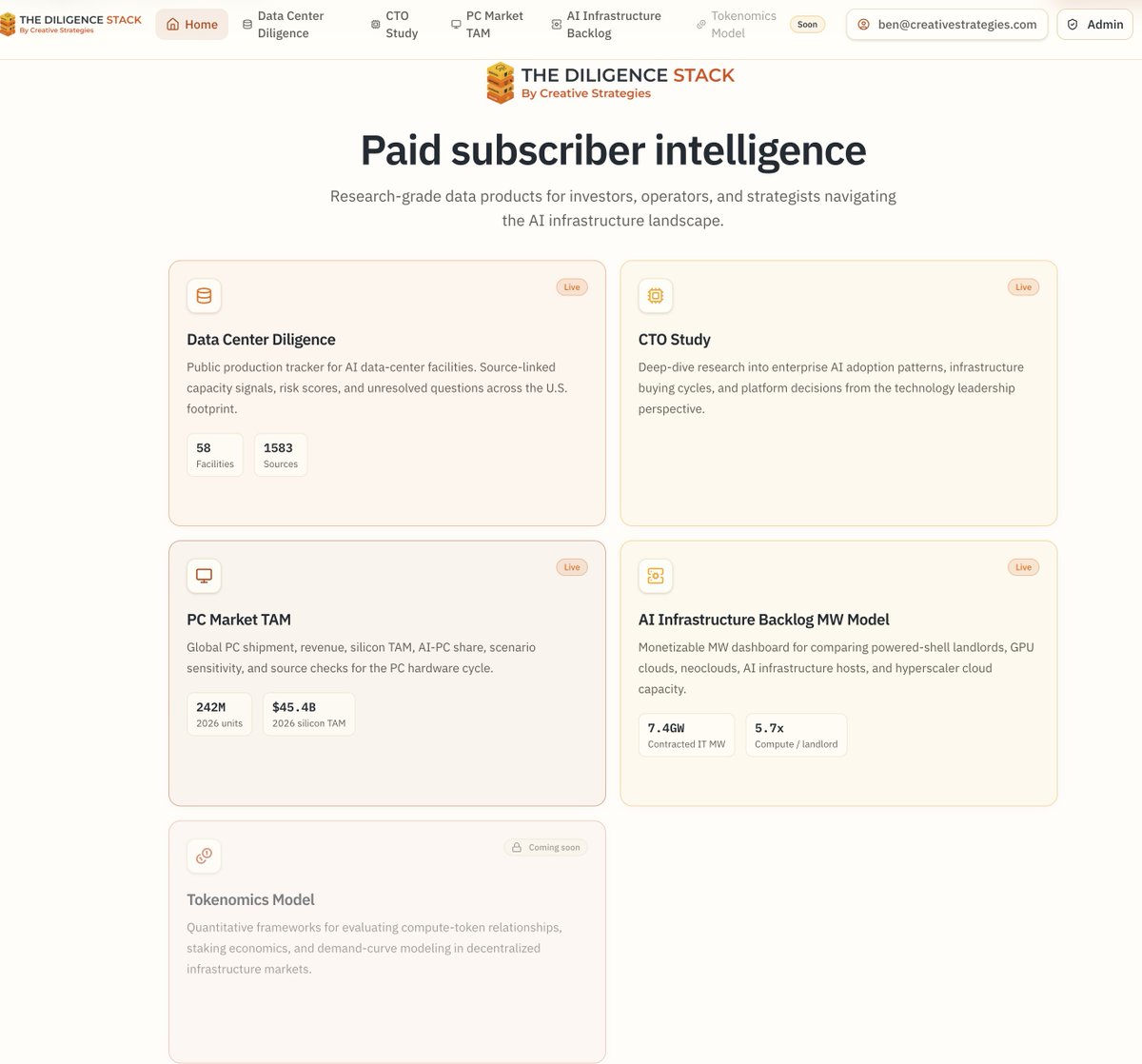
Soon @DiligenceStack subs will get our models/data to interact with.
Tons of value inbound!
4
17
15,814
Workstations are having a moment.
Tom Butler, Vice President of WW Commercial Portfolio and Product Management at @Lenovo explains why enterprises are running larger AI models locally during the test and pilot phase, then scaling to the cloud once they are ready to deploy.
As he shares on Bit by Bit: Leadership Conversations, the point is not cloud versus client. It is looking across the whole continuum of compute and putting each workload where it makes sense on cost, security, and efficiency.
@caro_milanesi
3
365
AI in the enterprise has a messaging problem.
The industry sold transformation and delivered meeting summaries.
On this episode of Bit by Bit: Leadership Conversations, Tom Butler, Vice President, WW Commercial Portfolio and Product Management at @Lenovo explains why enterprise AI adoption has stalled, and why the real shift is not about saving people time. It is about reshaping what they do with it.
We get into workflow over personas, why “no one cares” about the NPU, and his AI Knights of the Round Table approach to spreading what actually works across an organization.
00:16 PC Market Meets AI
02:41 Rollercoaster Cycles And Refresh
05:05 Workflow First Buying Shift
06:37 Different Sectors Different Speeds
08:51 Storytelling Missteps And Value
10:32 Hybrid AI Edge Versus Cloud
14:39 Security Governance Reality Check
16:40 Culture Shift Outcomes Over Devices
21:15 Middle Management Friction
24:59 Rebuilding Trust With Transparency
30:09 IT Buying Gets More Surgical
33:27 Advice And AI Knights Playbook
37:23 Closing Thoughts And Thanks
@caro_milanesi
1
1
374
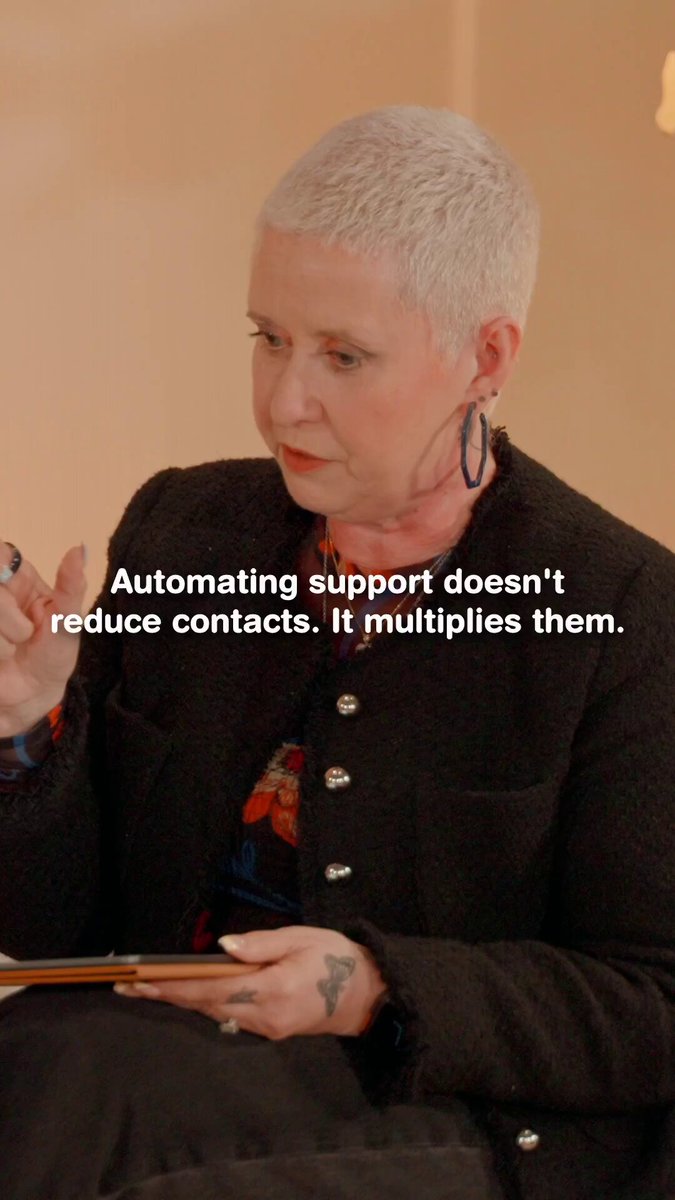
The math of “automate 70% of inquiries, cut 70% of headcount” sounds clean. It does not work.
Adrian McDermott (@amcdermo), CTO of @Zendesk, explains why companies that have tried it have learned the hard way, and what a smarter use of AI in customer service actually looks like on our latest epsiode of Bit by Bit: Leadership Conversations.
Moments that matter still require humans. The question is what you do with the rest of the time you have freed up.
@caro_milanesi
2
452
The industrial business of the future runs on agents.
Some are digital (LLMs). Some are embodied (robots). Some are humans.
The whole thing needs orchestration.
@austinsemis chatted about this and more with Nvidia's VP of Robotics and Edge AI, Deepu Talla.
Chapters:
(00:00) Why robotics is suddenly possible
(01:36) The two requirements: accuracy and integration
(04:44) No human in the loop changes everything
(05:31) The 100-meter, 10-second mark analogy
(06:25) What changed for self-driving: end-to-end and reasoning
(08:22) From self-driving goalpost to general-purpose humanoids
(10:29) Inside-out vs outside-in robots
(11:36) From specialist models to world models
(14:10) VLM, then VLA, then world models
(16:11) Rigid bodies vs soft bodies
(18:24) The four steps: data, train, simulate, deploy
(20:39) Why Nvidia doesn't build robots
(23:00) 4,000x Jetson performance in 10 years
(24:14) The three computers
(25:40) Same GPU architecture from GB300 to Jetson
(28:03) Why simulation matters (chips vs robots)
(29:39) Newton: open-source physics for robotics
(31:13) Deployment is the first step, not the last
(31:42) Why most robotics spend is on training and simulation
(33:55) Nvidia's new data-center-vs-edge reporting
(36:41) Agentic AI: fleets of physical and digital agents
(38:32) Nvidia Mega: digital twins of factories
(40:09) The 2029–2030 outlook
(41:52) The edge roadmap: Thor, Orin, and SKUs
(43:43) Why hybrid edge-cloud is the default
@NVIDIARobotics @nvidia
4
31
14,334
In the 1800s, economists expected more efficient steam engines to reduce coal consumption. The opposite happened.
Adrian McDermott (@amcdermo), CTO of @Zendesk, applies the same logic to AI-powered customer service: the more efficient you make it, the more people will use it.
That is not a problem. That is the point.
@caro_milanesi
5
270
Most businesses think their customer service volume reflects their customer demand. Adrian McDermott (@amcdermo), CTO of @Zendesk, says that is wrong.
The customers you are not hearing from are the ones who gave up, hung up, or walked away. That gap is the service debt, and AI is the first real opportunity to start paying it back.
@caro_milanesi
1
177
Customer service is one of the most underfunded parts of most businesses, even as leaders call it high stakes.
In our latest episode of Bit by Bit: Leadership Conversations, @caro_milanesi sat down with CTO Adrian McDermott (@amcdermo) at @Zendesk's Relate conference in Denver to talk about why that gap exists and what closing it actually requires. Adrian makes the case that automating service does not reduce contact volume, it grows it, because there is a backlog of customers who gave up before they ever reached you. He calls that the service debt.
They get into Jevons paradox, the economics of AI-powered service, what the job of a human agent looks like when tier zero and tier one are automated, and why the “fire 70% of your team” math does not hold up.
The conversation ends on something we do not hear enough: stop optimizing for efficiency and start designing for value.
00:12 Introductions
00:54 Saying vs Doing In Customer Service
04:12 Service Debt
07:40 Tiers of Customer Interactions
16:03 Targeting High Value Interactions
19:11 The Service "Architect"
25:15 Focusing On Value Not Simply Efficiency
30:22 Adapting To Change
37:46 Conclusion
1
1
3
334
Creative Strategies, Inc retweeted

May 5
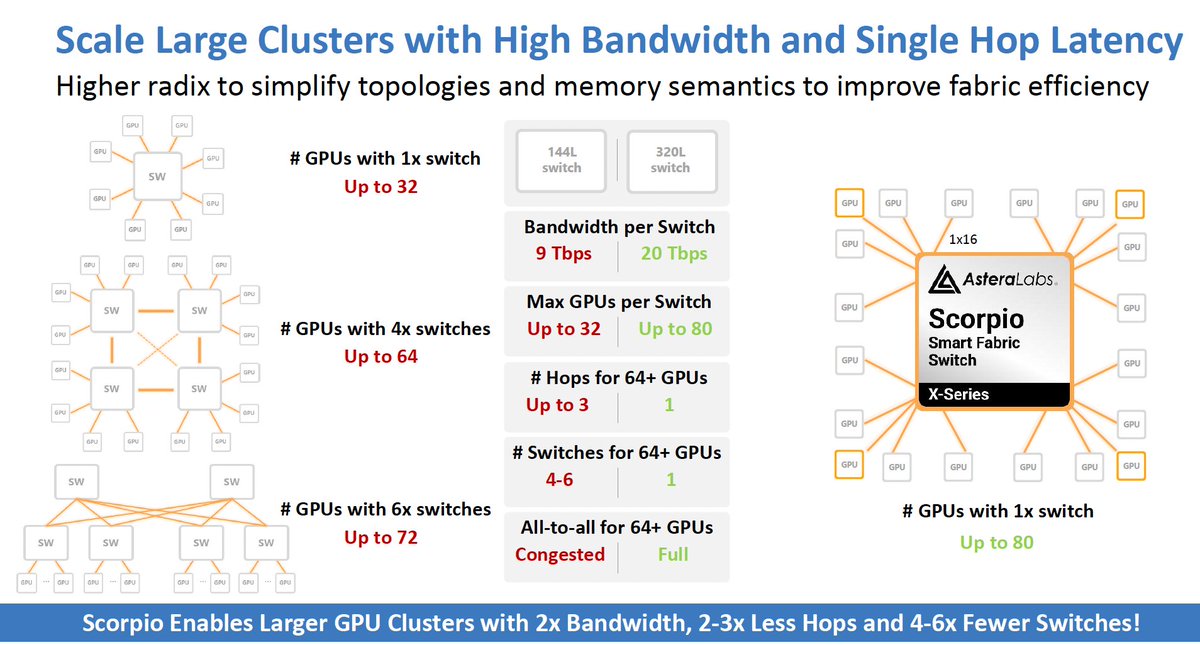
Scorpio X-Series 320-lane switch from @AsteraLabs
It has a very high radix, so it can connect more GPUs per switch
That means fewer hops, which lowers latency and improves GPU-to-GPU bandwidth
It can also reduce system cost because fewer switches are needed
$ALAB
1
6
18
5,368
Creative Strategies, Inc retweeted
May 5
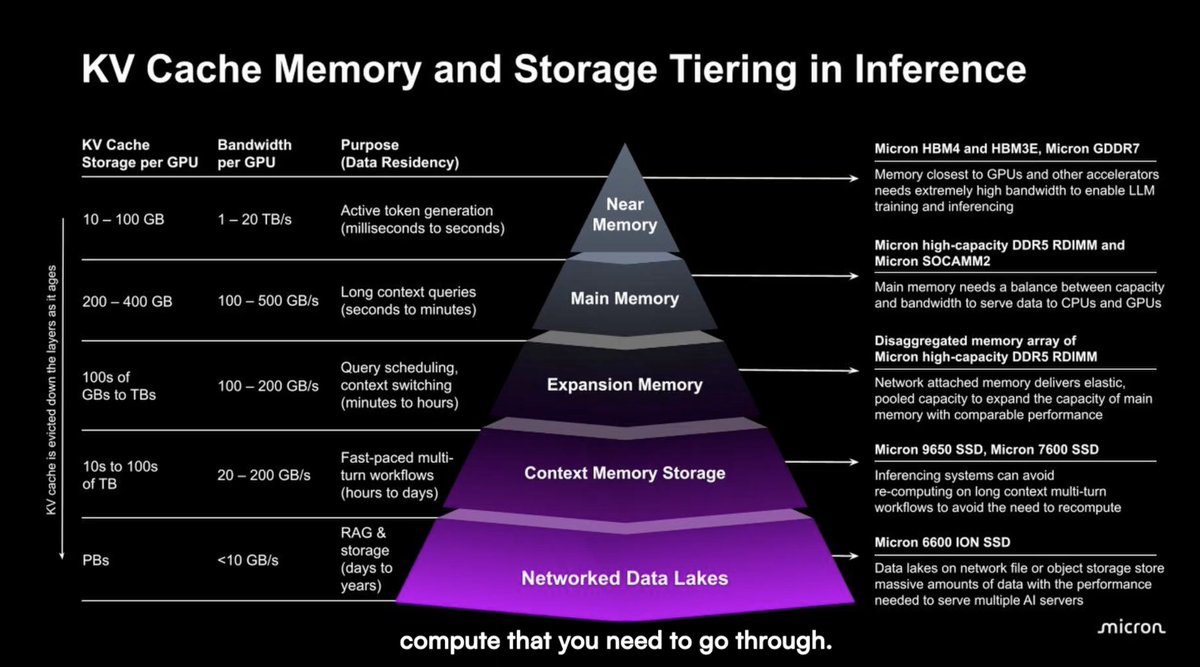
Helpful illustration to help you understand @MicronTech's portfolio today's 6600 SSD announcement.
$MU
May 5

A quarter‑petabyte density. A single SSD. This is what scaling AI infrastructure looks like.
We’re proud to announce the 245TB Micron 6600 ION SSD is now shipping — delivering a step‑change in storage efficiency. Compared to HDD‑based deployments, the 245TB Micron 6600 ION SSD enables petabyte‑scale capacity with fewer drives and racks, helping reduce power, cooling, and data center footprint.
Built with Micron’s innovative QLC NAND, the 245TB Micron 6600 ION SSD is ideally suited for hyperscale, cloud, and #AI environments where performance per rack and per watt is critical.
Learn how this milestone is redefining data center economics: bit.ly/3P0KS8c #AIStorage #IntelligenceAccelerated
4
16
112
18,315
Talking @Arm's new AGI CPU with @austinlyons and Arm EVP Mohamed Awad.
2
4
5,318
At MWC, the conversation around AI is shifting from what it can do to how personal it can become.
In this episode of Bit by Bit: Leadership Conversations, @mweinbach sits down with Chris Patrick, SVP & GM of Mobile Handsets at @Qualcomm, to unpack the biggest trends shaping mobile right now. From agentic AI and on-device personalization to new form factors and next-gen camera systems, this is a look at where smartphones are actually heading. One theme stands out: AI only becomes meaningful when it understands you.
0:14 Introduction at MWC
0:45 Device Launch Highlights (Samsung, Motorola, Honor, Xiaomi)
1:20 New Form Factors and the “Robot Phone”
2:05 On-Device AI and Personalization
3:00 Agentic AI and Multi-Step Actions
3:50 Real-World AI Use Cases (Uber, DoorDash)
4:20 Cameras, Imaging, and AI Photography
5:05 Performance, Gaming, and Full SoC Utilization
5:35 Closing Thoughts from MWC
4
6
2,767