
ex-@lightning @altangent | @summerofbitcoin '22 & '21 | 40X Hackathons 🏆 | Finalist @ETHGlobal @midl_xyz @Stacks @encodeclub @citrea_xyz @chainlink
Joined June 2021
- Tweets 172
- Following 305
- Followers 192
- Likes 5,485
54 Photos and videos



Pinned Tweet

4 May 2022
Once again excited to be a part of @summerofbitcoin 🎉. I will be contributing to #LND core this summer😍. #Layer2 #Bitcoin
Special thanks to, @guggero, and @adibitcoin for guidance and mentorship.
Congratulations to everyone who made it out this year, see you in the cohort!🥳
3
2
46

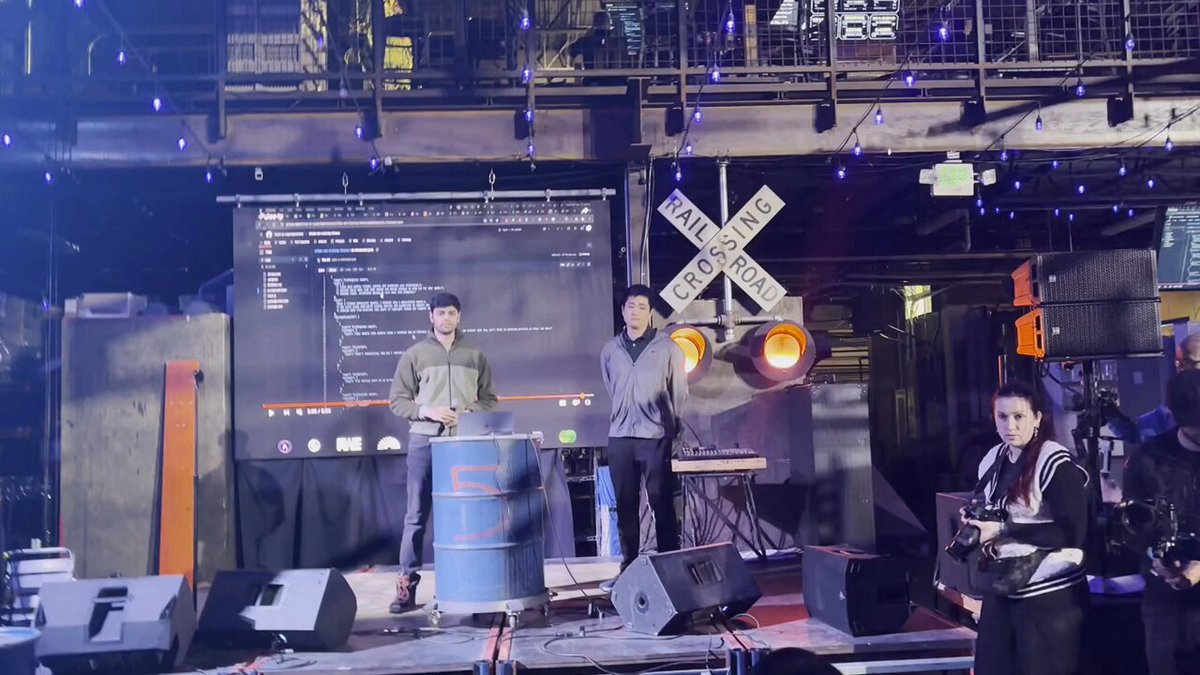
Teaser of the new & improved Paysats platform by @NickCalabs & @crypto_vib at the @coinbase x @privy_io hackathon... stay tuned for the full demo this week
1
2
178
Welcome to PaySats.
We built the fastest way to move between Bitcoin and Indonesian rupiah.
Lightning in → rupiah to your bank account.
Rupiah in → Bitcoin to your wallet.
No exchange account. No middlemen. Direct settlement. Here's what we're building and why...
1
2
3
239
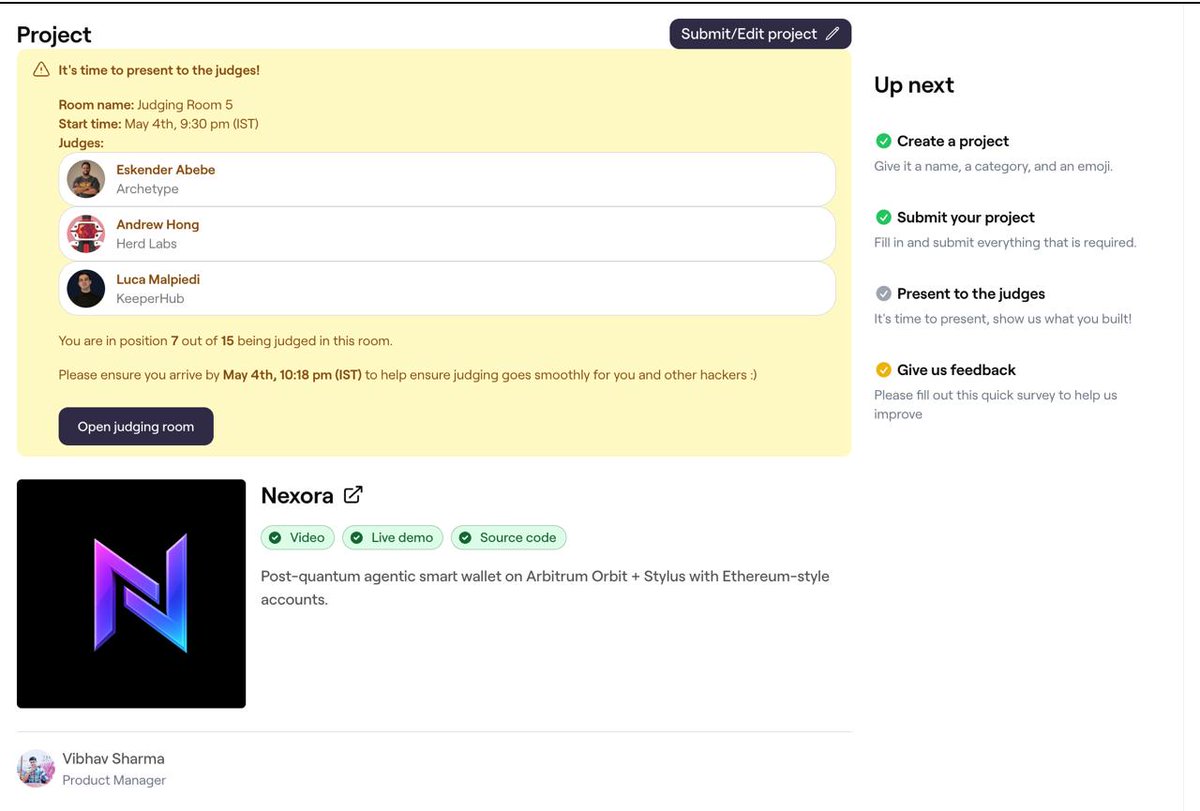
Nexora (agent x post quantum safe wallet aligned with @VitalikButerin EIP-8141) made it to the semi-finals
thanks to @ETHGlobal OpenAgents was able to pitch live to the judges, Here is the breakdown
Feb 26

Now, the quantum resistance roadmap.
Today, four things in Ethereum are quantum-vulnerable:
* consensus-layer BLS signatures
* data availability (KZG commitments proofs)
* EOA signatures (ECDSA)
* Application-layer ZK proofs (KZG or groth16)
We can tackle these step by step:
## Consensus-layer signatures
Lean consensus includes fully replacing BLS signatures with hash-based signatures (some variant of Winternitz), and using STARKs to do aggregation.
Before lean finality, we stand a good chance of getting the Lean available chain. This also involves hash-based signatures, but there are much fewer signatures (eg. 256-1024 per slot), so we do not need STARKs for aggregation.
One important thing upstream of this is choosing the hash function. This may be "Ethereum's last hash function", so it's important to choose wisely. Conventional hashes are too slow, and the most aggressive forms of Poseidon have taken hits on their security analysis recently. Likely options are:
* Poseidon2 plus extra rounds, potentially non-arithmetic layers (eg. Monolith) mixed in
* Poseidon1 (the older version of Poseidon, not vulnerable to any of the recent attacks on Poseidon2, but 2x slower)
* BLAKE3 or similar (take the most efficient conventional hash we know)
## Data availability
Today, we rely pretty heavily on KZG for erasure coding. We could move to STARKs, but this has two problems:
1. If we want to do 2D DAS, then our current setup for this relies on the "linearity" property of KZG commitments; with STARKs we don't have that. However, our current thinking is that it should be sufficient given our scale targets to just max out 1D DAS (ie. PeerDAS). Ethereum is taking a more conservative posture, it's not trying to be a high-scale data layer for the world.
2. We need proofs that erasure coded blobs are correctly constructed. KZG does this "for free". STARKs can substitute, but a STARK is ... bigger than a blob. So you need recursive starks (though there's also alternative techniques, that have their own tradeoffs). This is okay, but the logistics of this get harder if you want to support distributed blob selection.
Summary: it's manageable, but there's a lot of engineering work to do.
## EOA signatures
Here, the answer is clear: we add native AA (see eips.ethereum.org/EIPS/eip-8… ), so that we get first-class accounts that can use any signature algorithm.
However, to make this work, we also need quantum-resistant signature algorithms to actually be viable. ECDSA signature verification costs 3000 gas. Quantum-resistant signatures are ... much much larger and heavier to verify.
We know of quantum-resistant hash-based signatures that are in the ~200k gas range to verify.
We also know of lattice-based quantum-resistant signatures. Today, these are extremely inefficient to verify. However, there is work on vectorized math precompiles, that let you perform operations ( , *, %, dot product, also NTT / butterfly permutations) that are at the core of lattice math, and also STARKs. This could greatly reduce the gas cost of lattice-based signatures to a similar range, and potentially go even lower.
The long-term fix is protocol-layer recursive signature and proof aggregation, which could reduce these gas overheads to near-zero.
## Proofs
Today, a ZK-SNARK costs ~300-500k gas. A quantum-resistant STARK is more like 10m gas. The latter is unacceptable for privacy protocols, L2s, and other users of proofs.
The solution again is protocol-layer recursive signature and proof aggregation. So let's talk about what this is.
In EIP-8141, transactions have the ability to include a "validation frame", during which signature verifications and similar operations are supposed to happen. Validation frames cannot access the outside world, they can only look at their calldata and return a value, and nothing else can look at their calldata. This is designed so that it's possible to replace any validation frame (and its calldata) with a STARK that verifies it (potentially a single STARK for all the validation frames in a block).
This way, a block could "contain" a thousand validation frames, each of which contains either a 3 kB signature or even a 256 kB proof, but that 3-256 MB (and the computation needed to verify it) would never come onchain. Instead, it would all get replaced by a proof verifying that the computation is correct.
Potentially, this proving does not even need to be done by the block builder. Instead, I envision that it happens at mempool layer: every 500ms, each node could pass along the new valid transactions that it has seen, along with a proof verifying that they are all valid (including having validation frames that match their stated effects). The overhead is static: only one proof per 500ms. Here's a post where I talk about this:
ethresear.ch/t/recursive-sta…
firefly.social/post/farcaste…
2
2
131
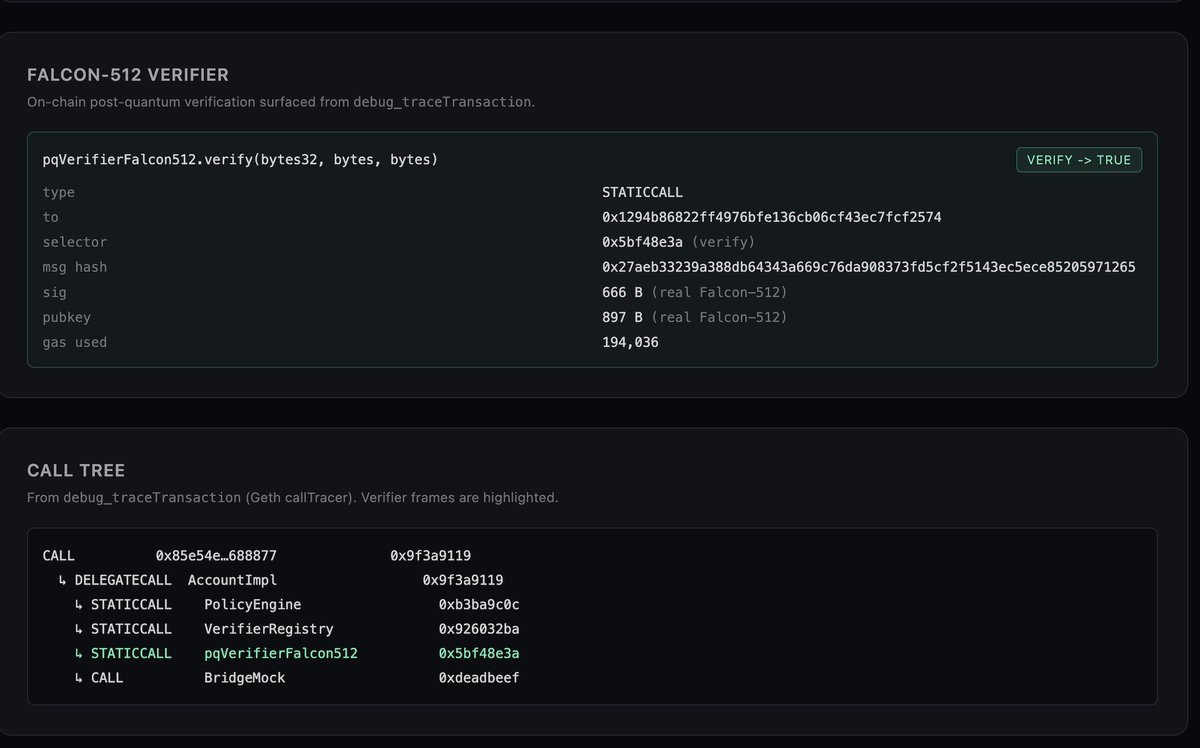
Under the hood we run a post-quantum smart-wallet stack on a custom @arbitrum Orbit L3, Stylus contracts, wallet-sdk relayer dashboard, and a agent that drives real UserOps, so agentic means measurable, traceable flows, not vibes.
1
2
64
Stack trace deep dive: txn links on @blockscout plus the dashboard tx page show the verifier in the trace.
nexorapq.in/tx/0xaf7ce812ee4…
2
55
indonesia has one number that quietly explains a lot right now: usd idr sitting near 17,335. if your savings live only in rupiah, you have effectively fallen behind
Feb 27

inflation this rapid has simply never happened, this app factors in m2, CPI, and other metrics to join them into 1 novel "Bitflation" metric bitflation.io/
1
2
160
put those pieces together a currency that keeps losing buying power, plus a population that already understands digital assets and bitcoin becomes a very straightforward hedge: a capped supply asset versus money that is constantly being diluted. access is not the obstacle anymore, and interest is clearly there. what is missing is the mental model.
1
2
76
@NickCalabs has been calling this out for a while. im just seeing the same pattern on the ground in indonesia and asking how we move people from trading for excitement to something which is more sustainable
63
there is a huge agentic finance wedge here that @WDK_tether is perfectly positioned for, especially with @btc #lightning in the mix.
wen agentic finance on @tetherwallet?
me and @NickCalabs are already cooking something.
@paoloardoino lets talk.
Apr 28

today we’re announcing grid global accounts, financial infrastructure built for platforms defining the next era of fintech.
fintech needs a new architecture. money is becoming global, instant, programmable, and increasingly operated by both humans and agents.
but platforms have been stuck between two bad options: rent the stack and give up economics, or become a bank and spend years stuck in bureaucracy before they process the first transaction.
that changes today.
grid global accounts gives platforms a full global account stack in one integration: global dollar accounts, native AI agent permissions, visa cards, instant offramps in 65 markets, cross-chain interoperability, native Bitcoin, and much more.
@lightspark handles the complexity underneath. Platforms keep the brand, the customer relationship, and the economics.
reach out for a live demo here on X or at davi@lightspark.com
1
3
215
Vibhav Sharma | paysats.exchange retweeted

Apr 20
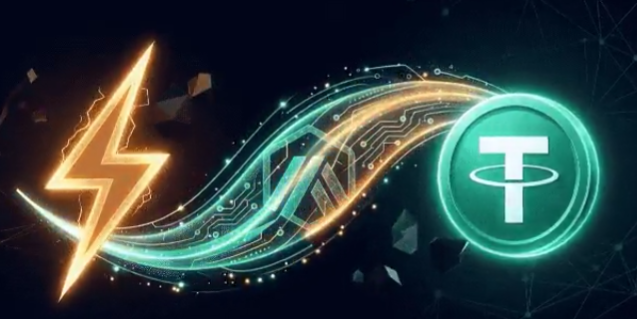
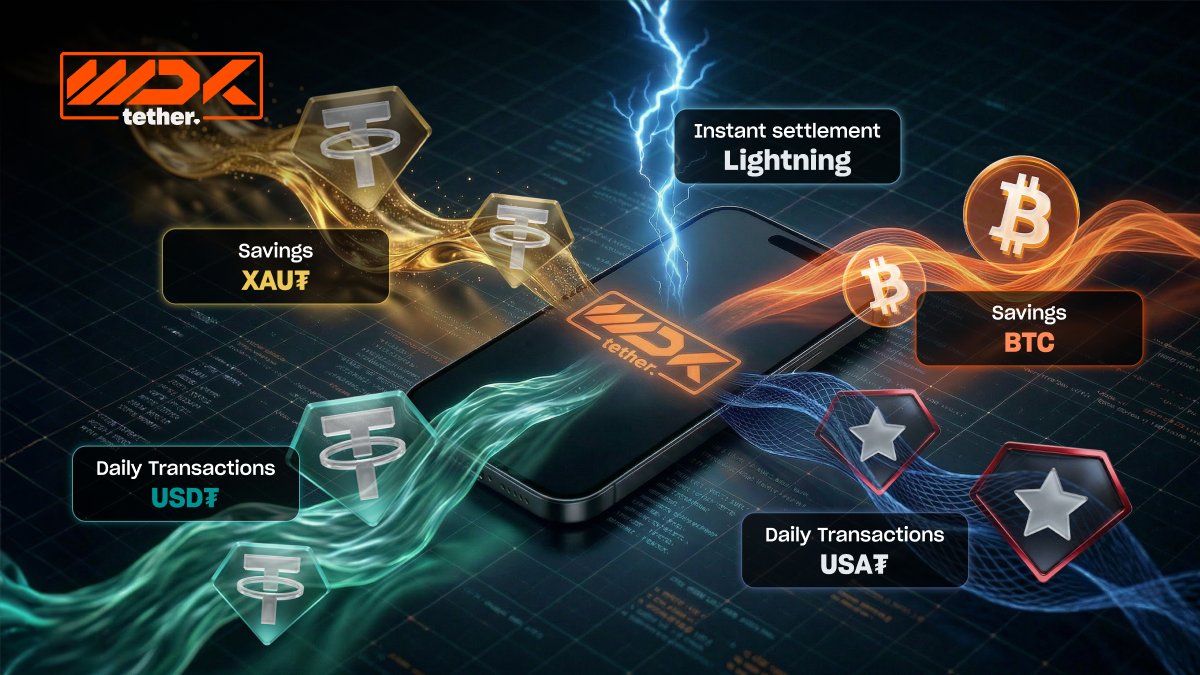
Bitcoin for savings. USDt for daily spending. Lightning for instant settlement. One seed. One API. Ship it today with WDK. → docs.wdk.tether.io
5
9
44
8,228
over the last few weeks ive been speaking with vcs and some indonesian colleagues to understand their default playbook for wealth building
the answers actually sounded very familiar to me as someone from india, but with some interesting twists and a few outliers.

there is one big pro in indonesia (tax), but even that comes with hidden friction
for context, in india any income from crypto is slapped with a flat 30% tax, plus tds, with almost no room to offset losses or expenses. it basically punishes active builders and traders the same way it treats pure degens.
1
2
99
if you are a wealthy local and you keep hearing the game is rigged, it makes sense you choose:
* gold and property for safety
* local businesses for cash flow
* minimal exposure to local stocks
1
2
50
for a lot of regular people here, crypto does not show up as "future of finance", it shows up as one more tool scammers use to take advantage of them. between ponzi style platforms, fake exchanges and high profile frauds, the default perception is understandably defensive: protect your savings first, experiment later (if ever).
that feels like the real gap to me:
not just building new financial products, but building things that are visibly safer, more transparent and more aligned with how people already think about risk so crypto and new rails stop looking like the next scam and start looking like an upgrade to the systems they already (barely) trust.
1
48