
We design next-generation crypto protocols. Hiring: cryptocurrencyjobs.co/engine…
Joined August 2022
- Tweets 601
- Following 63
- Followers 1,807
- Likes 689
101 Photos and videos





CryptoEconLab retweeted

NEW CHALLENGE ANNOUNCEMENT
Announcing the Energy Arbitrage designed in collaboration with @cryptoeconlab
It's been on testnet for over a month and live on mainnet next week!
So what is energy arbitrage and why does it matter?
AI is eating electricity faster than grids can supply it
The algorithms that decide how grid-scale batteries charge and discharge are becoming some of the most consequential algorithms on Earth, and until today they've been locked behind closed doors.
5
40
170
14,932
CryptoEconLab retweeted

Mar 26
@hellasdotai putting out badass posts left & right
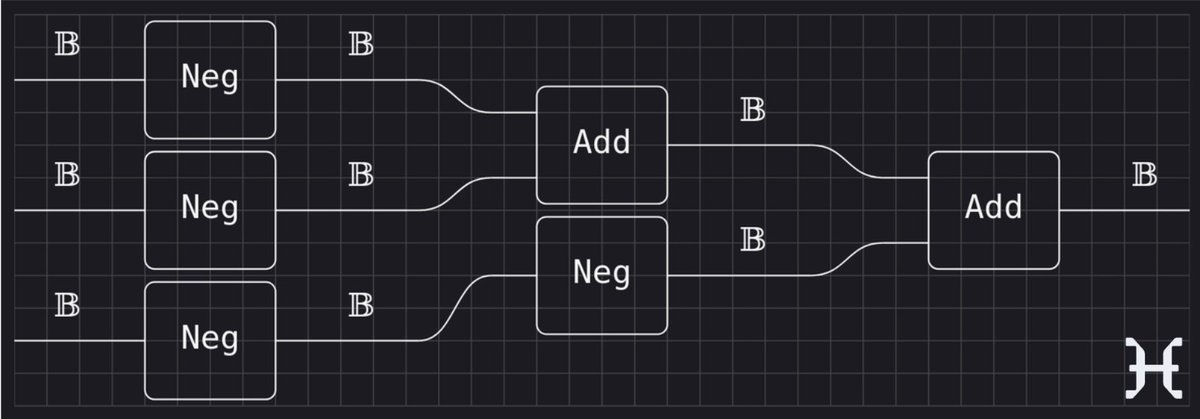
The figure below is a deterministic Hellas hypergraph model, trained with their category theory-based compiler Catgrad, without needing PyTorch or TensorFlow
This is a feat no other DeAI project has accomplished (or attempted)
Mar 26

Every AI model, at its core, is a sequence of mathematical operations. You feed in some numbers, they get multiplied, added, transformed, and eventually you get an output. A computation graph is simply a map of all those operations and how data flows between them. Catgrad, the compiler that powers Hellas, turns AI models into these graphs. This image is what one looks like after compilation.
Reading left to right, three inputs are entered on the left. Each passes through a Neg box, which flips the sign of a number, positive becomes negative, and vice versa. Those results flow into Add boxes, which sum pairs together. One intermediate result gets negated again, then everything combines into a final Add on the right to produce one output. Each box is one operation. Each wire is data moving between them.
This isn't a diagram someone drew on a whiteboard to explain a model. It's a rendering of the actual object that Catgrad produces, called an open hypergraph. All that term means is a structured graph defined with enough mathematical precision that there is only one correct way to evaluate it. The provider runs this object directly on their hardware.
Everything is fixed before any computation happens. Every operation, every connection, every path the data takes is determined at compile time. Graphics cards normally have some freedom in how they schedule operations, which means two machines can produce slightly different results for the same computation.
Catgrad's graph removes that freedom. Same graph, same input, same output, regardless of which machine runs it.
This is what allows Hellas to make inference verifiable. When a job starts, both parties agree on this graph. It functions as a contract. If the output doesn't match what the graph should have produced, the client can trace through it operation by operation, find the exact box where things went wrong, and submit that single operation as proof.
One operation, not the entire computation. That's what makes the verification cheap enough to actually enforce.
1
5
364


Mar 19
1/ Tensor compute is the high-performance execution of tensor operations, and it powers modern AI from inference to training.
Today, much of this compute runs on external infrastructure: centralized clouds, GPU marketplaces, and decentralized networks.
Yet outsourcing compute comes with a structural issue: verifying that a specific computation was executed correctly is surprisingly hard. Without this guarantee, clients have no choice but to trust their provider.
And trust doesn't scale.
So how do you remove trust from outsourced compute?
We studied how @hellasdotai solves this 👇:
cryptoeconlab.com/blog/hella…
1
5
11
3,069
Mar 19
7/ What we found: the system holds up.
When properly calibrated, cheating carries negative expected value.
And as the network grows, security gets stronger. More usage means more collateral securing the system, cheaper verification as specialized services emerge, and stronger incentives overall.
1
1
103
Mar 19
8/
Read the full blog post →
cryptoeconlab.com/blog/hella…
Read the research papers →
cryptoeconlab.com/paper/hell…
2
86
Mar 9
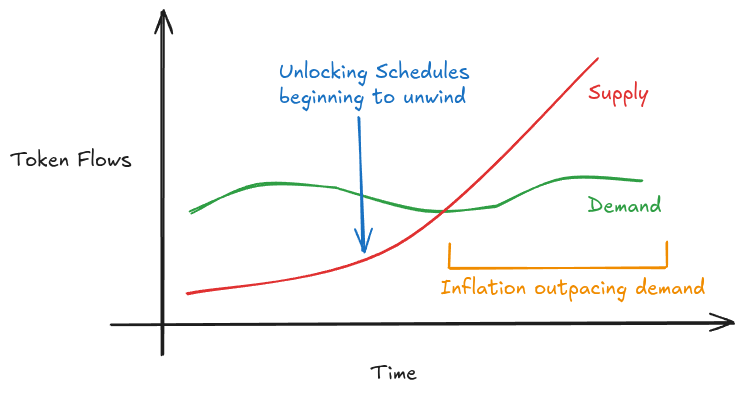
Nasdaq Kraken just announced tokenized equities on DeFi.
When stocks live on-chain, token supply mechanics apply: float, dilution, circulating supply pressure.
TradFi is about to learn what crypto has known for years.
cryptoeconlab.com/token-emis…
5
171
Mar 3
ACI leaving @aave isn't drama. It's a mechanism design problem.
When your biggest delegate is also your service provider, conflicts of interest are structural — not personal. You need voting mechanisms designed to handle this.
We studied this: cryptoeconlab.com/blog/robus…
2
4
202
Feb 27
World Liberty Financial just proposed a stake-to-vote governance model: lock WLFI, vote at least twice during your lock period, earn ~2% annualized rewards from the treasury.
This is textbook veToken design. Lock commitment participation requirements directed rewards. The same mechanism pattern that drives Curve, Balancer, and dozens of DeFi protocols.
Model it yourself: cryptoeconlab.com/vetokenomi…
1
2
162
Feb 24
Standard Chartered says stablecoin growth could create $1T in new T-bill demand by 2028. That's a massive concentration of reserves in a single asset class.
The question nobody's modeling: what happens to peg stability when those reserves face a liquidity crunch? Cascading redemptions don't care about market cap—they care about exit liquidity.
We applied our liquidity-cascade modeling from our stETH simulator to this T-bill thesis. The results are sobering.
Stress-test the mechanics here: cryptoeconlab.com/steth-depe…
3
3
200

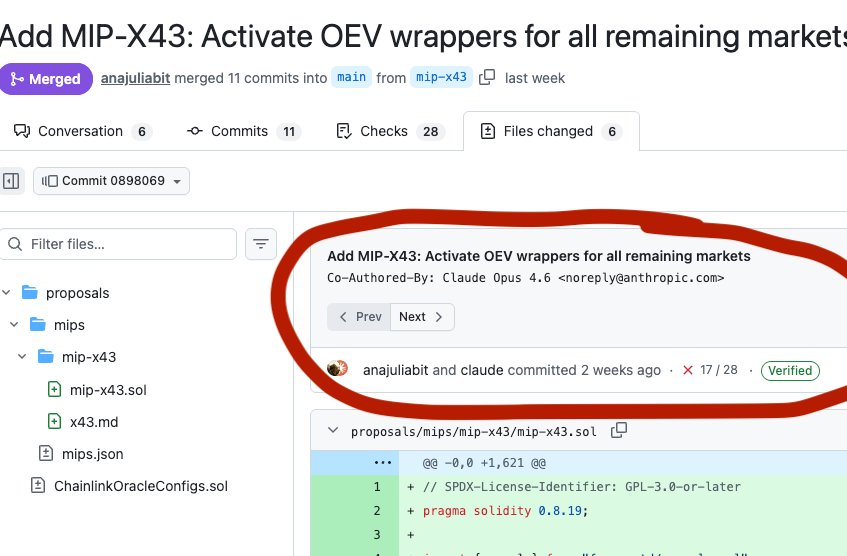
🚨Claude Opus 4.6 wrote vulnerable code, leading to a smart contract exploit with $1.78M loss
cbETH asset's price was set to $1.12 instead of ~$2,200. The PRs of the project show commits were co-authored by Claude - Is this the first hack of vibe-coded Solidity code?
311
546
4,400
1,703,615
Feb 18
Brandolini's law for AI knowledge economy in 2026:
The amount of energy to refute bullshit will diverge as the cost of production tends to zero
1
104
Feb 12
Banks want stablecoin yield locked down. The White House session ended in impasse — traditional finance demanding tighter controls than the latest bill draft.
Meanwhile the EU already answered this question. MiCA bans interest on e-money tokens entirely and requires 1:1 reserve backing.
Regulation shapes tokenomics whether you plan for it or not. We wrote the guide on designing stablecoin mechanics around these constraints: cryptoeconlab.com/blog/mica-…
2
3
221
Feb 6
Vitalik is right: copy-paste EVM chains are a dead end.
The hard part isn't forking code. It's designing the economic layer — token launches, price discovery, incentive alignment — so the chain actually has a reason to exist.
We built tools for exactly this: cryptoeconlab.com/tools
3
6
247