
🔗 Blockchain fan navigating digital frontiers, investing in crypto, holding assets, collecting NFTs, diving into DeFi, and focusing on all chains. 🌐
Joined February 2013
- Tweets 1,750
- Following 1,132
- Followers 14,145
- Likes 1,562
236 Photos and videos





Pinned Tweet

27 Dec 2025
🎥 Don't miss this video! Discover everything about @plusmorexyz.
The strategy is genius. Each PLUS token carries a guaranteed $10 value in real-world potential, with limitless upside possibilities.
Best of all, you can still enter at the ground floor!

10
1
10,690
DYNASTY retweeted

Mar 3
Agents won’t buy “the best model.” They’ll buy a performance tier at a price.
In an agentic economy, inference becomes a commodity input: interchangeable supply, measurable specs, continuous switching.
Markets set the clearing price.

8
10
40
20,095
DYNASTY retweeted

Mar 3
$300 trillion in global assets. Only 10% used as collateral.
Why? Settlement infrastructure hasn't caught up. Securities are stuck in batch processing, market cut-offs, and cross-border friction.
@CantonNetwork just proved it can move tokenized gilts across borders in real time. @The_DTCC, Euroclear, Citadel, Tradeweb, all in.
Now imagine that institutional liquidity connected to public chains. Same atomic finality. Same privacy. No new trust assumptions.
That's what Cancore is building.
Read the full breakdown 👇
coindesk.com/business/2026/0…
10
8
63
8,023
DYNASTY retweeted
Feb 17
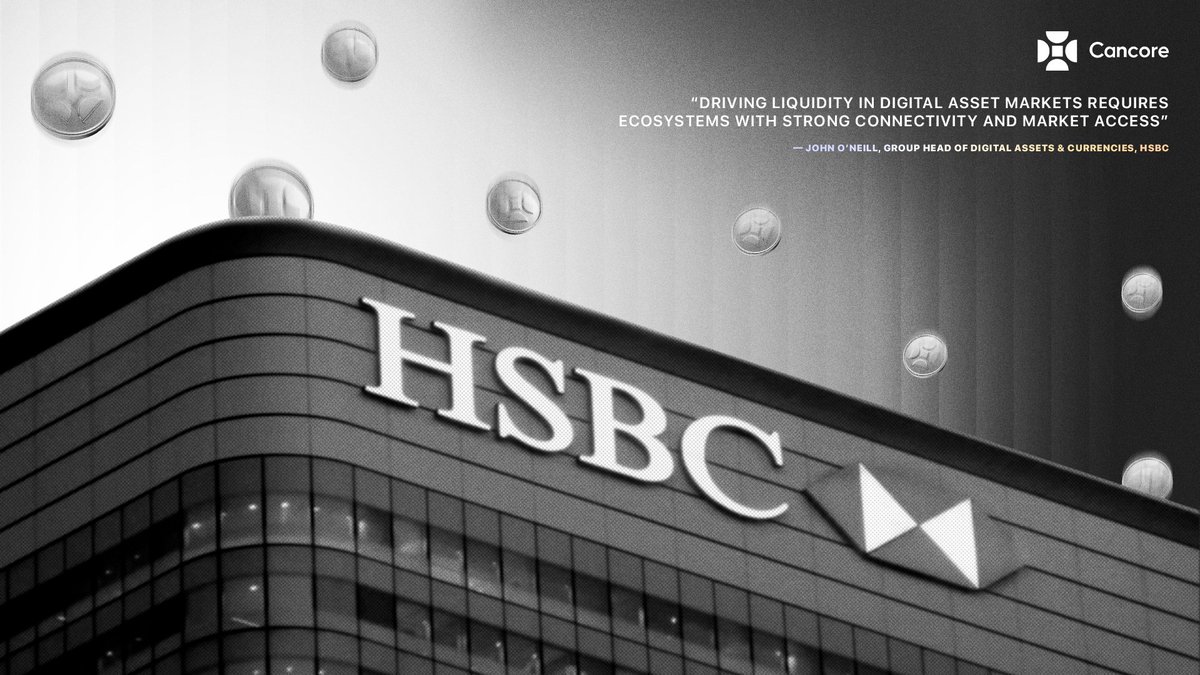
“Driving liquidity in digital asset markets requires ecosystems with strong connectivity and market access.”
– John O’Neill, Group Head of Digital Assets & Currencies, HSBC
@CantonNetwork brings regulated coordination.
Liquidity and market access sit across venues.
Cancore is building the connection layer that makes them work as one.
12
18
52
13,881
DYNASTY retweeted
Feb 13
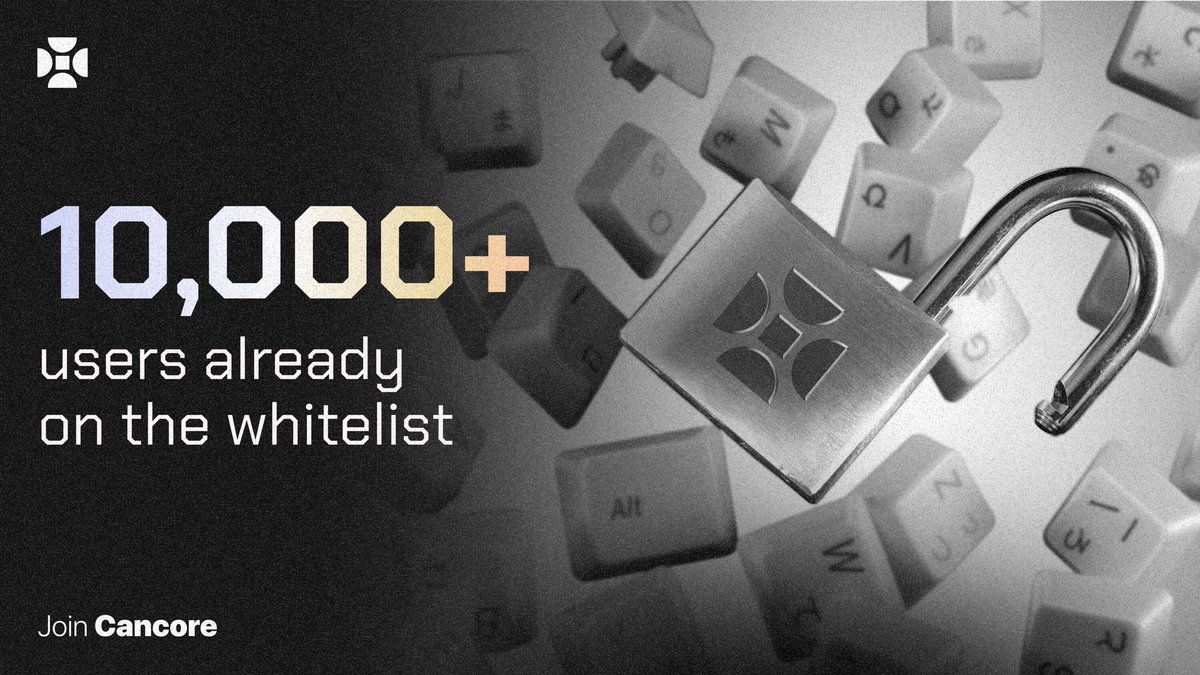
10,000 people are already on the Cancore whitelist 🤝
That’s a strong early signal – the community is forming fast and the momentum is building.
Early access will be rolled out to the whitelist first, and the next updates are coming fast.
Join → [cancore.io]
20
22
106
32,670
DYNASTY retweeted
Markets are slipping into a bit of a nail-biting moment as traders ready themselves for a big derivatives expiry event, all while keeping an eye on the all-important US inflation report. With billions in crypto options about to do their magic trick and a sprinkle of macro uncertainty swirling around, the stability of prices for leading assets is in for a quirky little test.

3
10
41
5,477
DYNASTY retweeted

Jan 27
Royaltiz is coming to @base to become the #1 consumer app.
> $15M revenue
> 200 athletes signed
> 220K users
Ready to trade your favorite stars?
8,826
6,220
8,907
155,092
Jan 9
🔥 Big Announcement!
$PLUS, brought to you by @plusmorexyz, is set to go live on MEXC with 0% trading fees on the $PLUS/USDT pair starting January 9, 2026, at 15:00 UTC!
Start your journey early—don’t get left behind!
Secure your tokens here 👉 plusmore.xyz/tge
#PLUS #MEXC #TokenLaunch 🚀
20
1
13,473
27 Dec 2025
✨ Attention, Savvy Investors! Unveiling the Ultimate Degen Goldmine @plusmorexyz!
Join the adventure with a mere $5–$10 stake and unlock extraordinary utilities valued between $10 and $150! This launch is set to be the most exhilarating and gambler-friendly event of 2025!
Claim your whitelist spot before it’s too late: plusmore.xyz
• Connect with us on Telegram: t.me/plusmorexy
12
1
10,104
DYNASTY retweeted

26 Nov 2025
$100M acquisitions today. $1B acquisitions are next.
Web3 is maturing.
Founders building real products are getting funded and acquired.
The space needs revenue-generating startups.
25 Nov 2025

According to Fortune, crypto payment infrastructure firm Paxos has acquired New York–based crypto wallet startup Fordefi in a deal valued at over $100 million. Fordefi specializes in wallet solutions designed for decentralized finance (DeFi). Following the acquisition, Fordefi will continue operating independently for now, though Paxos plans to integrate its technology into its own infrastructure over time. fortune.com/2025/11/25/paxos…
39
29
149
28,734
DYNASTY retweeted

25 Nov 2025
Nicegram is fully aligned with the direction
@durov outlined.
We are building with Telegram, expanding its vision by pushing privacy, AI, and web3 capability forward on top of the core platform.
@PwC's latest global trust survey shows that most users rank data privacy as their top expectation from digital platforms, and this demand keeps rising year over year.
25 Nov 2025
Telegram Founder Durov: Using Technology to Protect Our Digital Rights and Freedom
On October 30, at the Blockchain Life 2025 summit in Dubai, Telegram founder Pavel Durov stated that users are losing their digital freedom, with private information at risk of being misused by third parties — even in traditionally free countries where privacy and free speech are being restricted. He proposed a solution: building "decentralized AI" that belongs to the people,not to corporations or governments. Telegram is developing a blockchain-based private AI network that allows users to access common features without giving up their data. Durov emphasized that we must use technology to defend our freedom and rights.
Source:youtu.be/G56XD67Wrrs?si=D2j1…
42
46
278
17,097
DYNASTY retweeted
25 Nov 2025
JUST IN: AI infrastructure is getting a trillion-dollar upgrade.
Capital infrastructure? Still broken.
That's why Surge exists.
24 Nov 2025

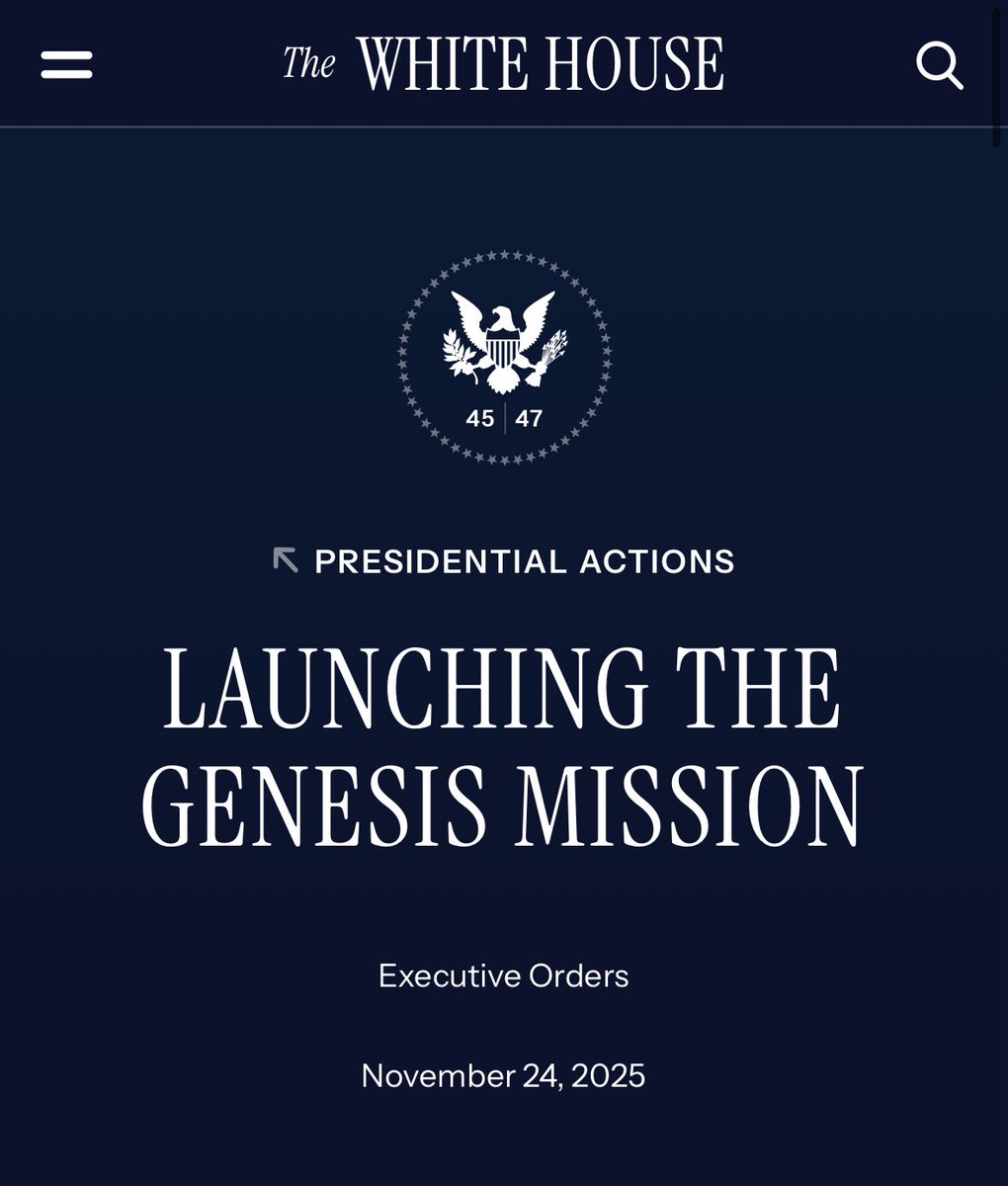
🚨The White House just launched the Genesis Mission — a Manhattan Project for AI
The Department of Energy will build a national AI platform on top of U.S. supercomputers and federal science data, train scientific foundation models, and run AI agents robotic labs to automate experiments in biotech, critical materials, nuclear fission/fusion, space, quantum, and semiconductors.
Let’s unpack what this order actually builds, and how it could rewire the AI, energy, and science landscape over the next decade:
39
35
143
17,397
DYNASTY retweeted
24 Nov 2025
216
1,454
856
180,751
DYNASTY retweeted

22 Oct 2025
Blockchain technology has undergone a remarkable transformation, witnessing a staggering 100-fold increase in its processing speed over the past five years. This phenomenal growth has enabled it to handle an impressive 3,400 transactions per second, putting it on par with industry giants like Nasdaq and Stripe. What's even more remarkable is that this feat has been achieved at a significantly lower cost, making it an attractive alternative for various applications.
This surge in speed and efficiency can be attributed to the relentless efforts of developers and innovators in the blockchain space, who have been working tirelessly to improve the technology's scalability and performance. As a result, blockchain is now poised to revolutionize the way we conduct transactions and exchange data, offering a faster, cheaper, and more secure solution than traditional systems.
The implications of this breakthrough are far-reaching, with potential applications in various industries, from finance and commerce to healthcare and beyond. As blockchain continues to evolve and mature, it's likely to have a profound impact on the way we live and work, enabling new use cases and business models that were previously unimaginable.
In this context, it's worth noting that the blockchain's ability to match the performance of established players like Nasdaq and Stripe is a testament to its growing credibility and potential. As the technology continues to advance and gain widespread adoption, it's likely to play an increasingly important role in shaping the future of various industries and aspects of our lives.

23
22
29
6,087
DYNASTY retweeted
11 Oct 2025
Oh, the tragedy isn’t just the epic, nobody-has-seen-anything-like-it crash that turned charts into rollercoaster spaghetti. That’s the headline-grabber, the kind of event that makes your grandma clutch her pearls and your cat rethink its life choices. Nope, the real tear-jerker is what happened behind the scenes — the billion-dollar puppet show.

67
24
39
23,239
DYNASTY retweeted

10 Oct 2025
Community debates are raging on X between BNB and Solana traders.
Here’s what’s happening 👇

1
4
4
394
DYNASTY retweeted
10 Oct 2025
Travelers passing through Abu Dhabi airports are now able to pay using USDC stablecoins, making it one of the first major hubs in the world to launch crypto at point-of-sale.
The rollout includes new AI-powered retail systems.

3
3
5
349
DYNASTY retweeted
10 Oct 2025
JUST IN: South Korea’s National Tax Service is expanding its crackdown on tax evasion by targeting cryptos in cold wallets, warning of home raids and hardware seizures to recover unpaid taxes.

3
3
339
DYNASTY retweeted
7 Oct 2025
BlackRock’s Bitcoin ETF, IBIT, has raked in over $244 million in annual revenue, outshining every other newcomer in the market.
Major institutional adoption is accelerating, and the stakes have never been higher.
Here’s what it means.

6
3
5
386
DYNASTY retweeted
7 Oct 2025
A US government shutdown would bring the SEC’s crypto rulemaking to a standstill, warns TD Cowen.
Policy deadlines would get blown past, and industry uncertainty could deepen.
Here’s what’s at risk for crypto in Washington.
5
3
5
352