
Soy parte de un sueño, uno muy raro y salvaje @Quertzalberin DrugDev, #DeSci Acc/ DeGen PHDegen #Chaotic #UNICORN #QUERTZ
Joined February 2008
- Tweets 45,840
- Following 2,737
- Followers 2,379
- Likes 34,374
4,561 Photos and videos













cryptoreuMD.eth/3972.⌐◨-◨ 🦇🔊 retweeted

Jun 13
What if the next breakthrough in longevity, fertility, or neuroscience didn't start in a closed lab or a private pitch deck?
What if it started as a public post. One anyone could vote on, collaborate on, and fund.
13
21
128
6,472
cryptoreuMD.eth/3972.⌐◨-◨ 🦇🔊 retweeted

Jun 12
Lupus nephritis is still being caught too late in many cases. The risk of irreversible damage skyrockets if we wait for heavy proteinuria or renal impairment. The LUMINA cohort showed that early intervention can improve long-term outcomes — yet many continue to delay therapy. Why are we still playing catch-up? We need to prioritize aggressive monitoring and educate patients about early signs. It’s time to make early intervention the norm, not the exception. 💜
1
1
30
cryptoreuMD.eth/3972.⌐◨-◨ 🦇🔊 retweeted
Jun 9
Science still runs on group chats, docs, and forums. Conviction stays invisible. The ideas worth pursuing get lost.
What if there was one surface where the whole loop closed. Idea to project to funding. Humans and agents working side by side.
That's what's coming.
6
15
94
3,562
Necesitamos un ECE de verdad

1
1
64
cryptoreuMD.eth/3972.⌐◨-◨ 🦇🔊 retweeted

Jun 4
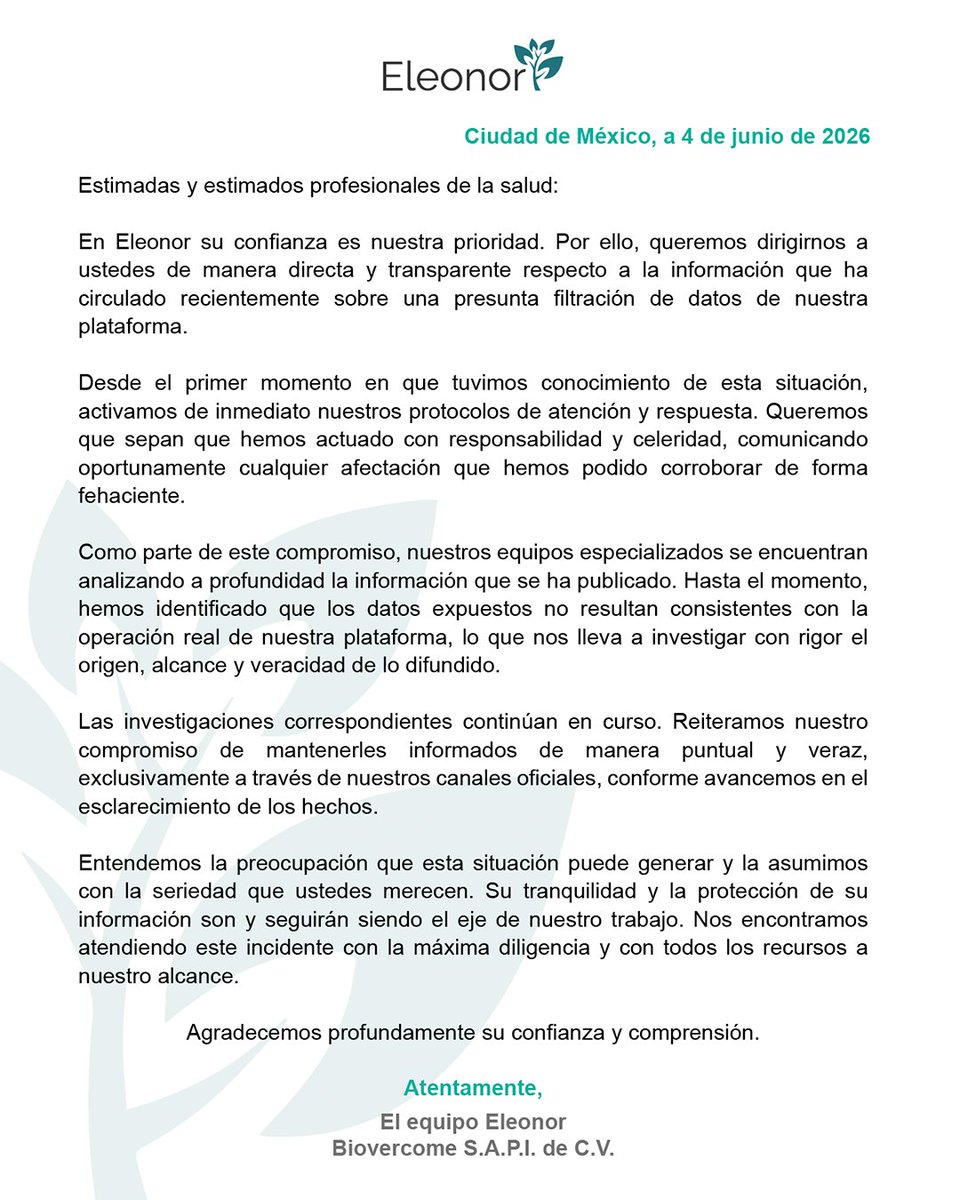
Comunicado Oficial a nuestra Comunidad Médica.
6
1
1
517
cryptoreuMD.eth/3972.⌐◨-◨ 🦇🔊 retweeted

Jun 4
Pero seguimos teniendo intermitencia con el servicio, interrumpo el flujo de la consulta.
1
2
134
cryptoreuMD.eth/3972.⌐◨-◨ 🦇🔊 retweeted

Jun 2
Today a crazy quantum story just got wilder.
On March 31, the Google Quantum AI team published a landmark result on Shor's algorithm for elliptic curve cryptography. Technically, the paper was a bombshell: a dramatic 10x improvement over the state-of-the-art. As a stunt and wakeup call to the blockchain space, those optimisations were illustrated on secp256k1, the elliptic curve underlying Bitcoin and Ethereum signatures.
But perhaps the most striking part of the paper was sociological, not technical. Instead of following standard academic process, the optimisations were kept secret, hidden behind a zero-knowledge (ZK) proof. Google's accompanying blog post mentions they "engaged with the U.S. government". The ZK proof demonstrates the existence of algorithmic improvements without leaking details. Academic censorship with ZK, a historic first!
As a co-author of the Google paper I witnessed some of the context surrounding this censorship. To be honest, multiple aspects of that context don't sit well with me. As much as I believe the general public ought to know more, I am limited in my ability to whistleblow. Though let me be clear about one thing: the Google team's professionalism has been absolutely exemplary, and they deserve nothing but praise.
Censorship has a way of backfiring. The Streisand effect, where an attempt to bury something only draws more attention to it, is exactly what's unfolding today. First, Google's key optimisation has been rediscovered by the French. And in a thrilling turn of events, a collaborative Shor-at-home challenge just launched. The initiative, available at ecdsa[.]fail, breached a new Shor world record in a matter of hours.
Let's start with the rediscovery. Just two months after Google's paper, French quantum expert André Schrottenloher cracks the main secret optimisation. His paper, titled "Optimized Point Addition Circuits for Elliptic Curve Discrete Logarithms", landed on the arXiv today. Big congrats to André, who beat several other nerdsnipped experts to it. In a blog post also published today, Craig Gidney, the world expert on Shor optimisations, revealed that he'd been sitting on this very optimisation for a whole year under censorship pressure.
Interestingly, André missed a handful of minor optimisations, both from Google's original publication and from improvements found since. It's plausible there's still plenty of juice left to squeeze out of Shor, and this is exactly what the ecdsa[.]fail challenge is about. The verifier program developed for the ZK proof does double duty, automatically filtering for valid submissions. Dozens of compounding small and micro improvements are rolling in. As of the time of writing there's an 8.4% improvement to Google's circuit, as measured by the product of logical qubit count and Toffoli gate count. Nice!
The nerdsnipping ran deeper than anyone expected. Over the last few weeks it became clear it extended well beyond André and other quantum experts. Behind the scenes, a small army of amateurs quietly got to work. Inspired by Karpathy-style autoresearch, they turned AI on Shor. Ironically, the verifier program for the ZK proof makes an ideal reward function for AIs. The barrier to entry for this modern style of research is refreshingly low, with several non-experts, even a teenager, finding nice optimisations. Get in touch if you'd like to join a Telegram group with fellow autoresearchers :)
Part 2: neutral atoms and qday
The story doesn't end with Google. On the same day Google went public, a stealthy startup called Oratomic published its own Shor paper in a coordinated release. It made a splash, ultimately becoming the most upvoted paper on scirate[.]com, a website ranking arXiv papers.
Oratomic's claim was wild. By building on Google's logical optimisations and applying custom physical optimisations for neutral atoms, they claimed just 10K physical qubits were sufficient to run Shor's algorithm on secp256k1. That number is mind-bogglingly low.
Knowing essentially nothing about neutral atoms when Oratomic's paper landed, I was intrigued and decided to learn more about the tech. I fell straight down the rabbit hole and spent a couple hundred hours on the topic. I got a little obsessed and watched every YouTube video I could find and spoke to a bunch of experts.
My conclusion? The tech is real, very real. Even Google recently decided to start a neutral atom lab, a notable pivot from their sole focus on superconducting qubits. If you care about qday, i.e. the day a quantum computer will break the first piece of cryptography in production, neutral atoms demand your attention. I shared some of my learnings on Shor and neutral atoms in a 30min talk at the ZKProof cryptography conference. You can find it on YouTube by searching "zkproof neutral atom".
Here's an interesting observation about this duo of breakthrough papers: neither Google nor Oratomic say a word about what their results mean for qday. No timelines. Zero. Nada. That is especially baffling given that the whole point of whitehat quantum cryptanalysis is to inform qday estimations and help the general public make good decisions.
So let me attempt to partially fill the silence, similarly to what Scott Aaronson did in his April 29 post. Given everything I know, including scary non-public information, I now put the odds of qday by 2032 at 50%. 10% by 2030.
Anecdotally, the US government has its own date: 2035. Originating at the NSA and later adopted by NIST, it's when branches of the US government will be disallowed from using quantum-vulnerable cryptography. In plain language: with hindsight, that date is a joke and should be discounted entirely. I don't see how NIST avoids being forced to pull it forward by years.
Part 3: post-quantum cryptography
There are good reasons to sound the alarm today, but please do not panic. Rushing carelessly towards immature post-quantum cryptography is a recipe for disaster. IMO a good target date for migration is 2029, roughly 3.5 years out. 2029 happens to be the date selected by Google, Cloudflare, and the Ethereum Foundation.
These days most of my time goes to safely migrating Ethereum towards post-quantum cryptography as part of the broader lean Ethereum effort. There's a lot to do. We need to rip out and replace BLS signatures at the consensus layer, KZG commitments at the data layer, and ECDSA signatures at the execution layer.
The plan to get there is compelling, and is based on hash-based cryptography. Within the Ethereum Foundation we've developed a Swiss army knife called leanVM (github[.]com/leanEthereum/leanVM) powered by the magic of hash-based SNARKs. Thanks to truly exceptional work by Emile, Thomas, and others, its performance is derisked. Regarding security, leanVM is a jewel, a minimal zkVM crafted for end-to-end formal verification and maximum security.
Want to help? There are two $1M initiatives. First, the Proximity Prize (proximityprize[.]org). Solve a long-standing mathematical conjecture in coding theory, improve hash-based SNARKs, and go home a millionaire. Second, the Poseidon Initiative (poseidon-initiative[.]info), offers $1M for breaking Poseidon, the SNARK-friendly hash function.
408
1,128
6,247
3,705,641
cryptoreuMD.eth/3972.⌐◨-◨ 🦇🔊 retweeted

Jun 1
Unfortunately, there is a hack related to @gnosispay and the "delay module".
Please be patient while we try to contain the damage. Rest assured, Gnosis will cover all user losses.
63
140
767
174,613
cryptoreuMD.eth/3972.⌐◨-◨ 🦇🔊 retweeted

May 31
Residentes del Hospital Infantil HIMFG inician paro activo desde hoy por denuncias de acoso y abuso de autoridad. Mantendrán áreas críticas seguras; exigen destitución de directivos y protocolos de protección, con seguimiento institucional. #Salud #HIMFG… sumedico.com/lideres-de-la-s…
2
1
86
cryptoreuMD.eth/3972.⌐◨-◨ 🦇🔊 retweeted

May 30
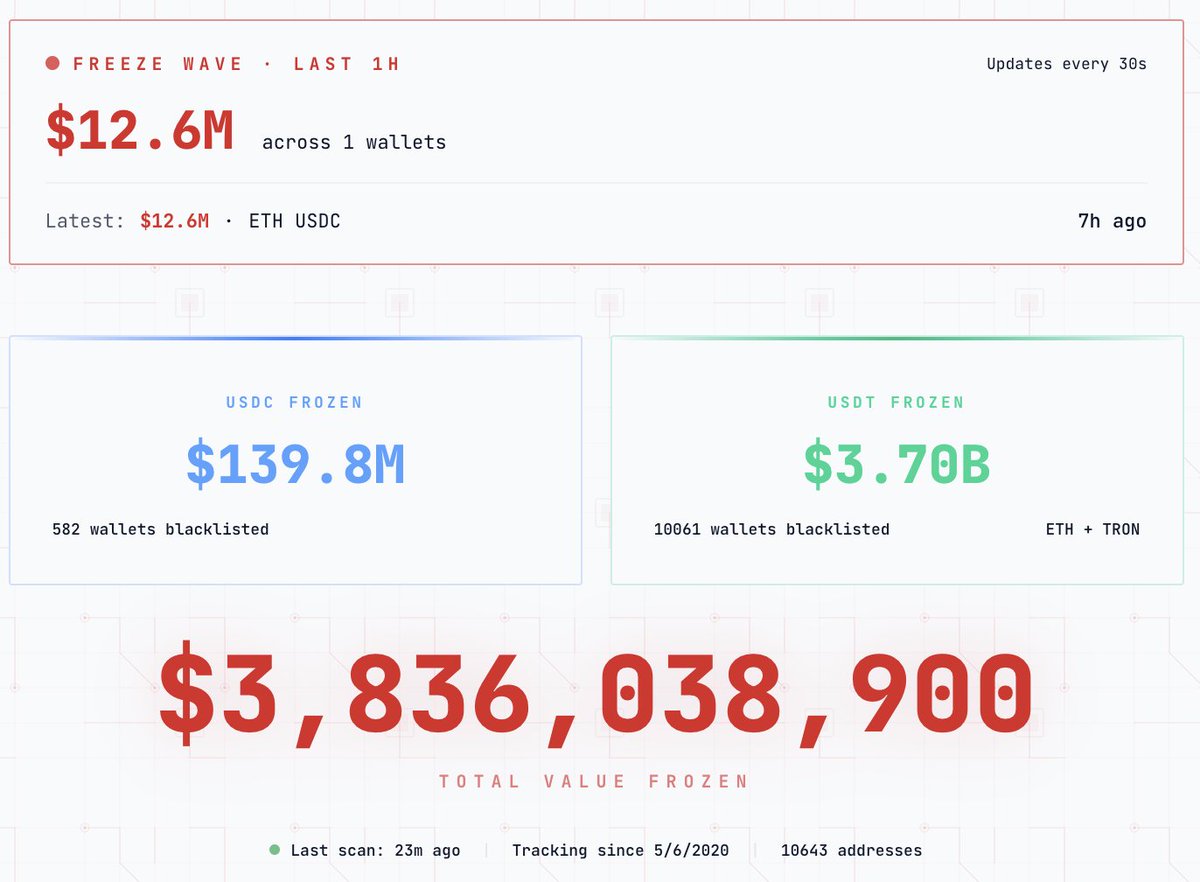
everyone is missing the actual red alert. circle didn't just freeze a user's eoa. they blacklisted a live smart contract.
the precedent is terrifying. if an issuer can nuke an entire protocol just because one tainted wallet deposited funds, then defi composability is dead. your stablecoins in a dex router, lending market, or yield farm are never safe. they can all become collateral damage overnight.
defi protocols don't protect your fiat liquidity, they just group it together for a more efficient freeze. you can't build permissionless finance on a centralized kill switch.
May 30

circle just blacklisted @zama's cusdc contract. 12.6m of user funds instantly frozen.
fully homomorphic encryption means absolutely nothing when the underlying asset has a master kill switch. zero transparency, same playbook as the 16 wallet freezes from march. wrapping fiat stablecoins in privacy math is just building sandcastles on their servers.
permissionless tools cannot exist on top of permissioned assets. if they can pull the plug, you don't own the liquidity. true privacy requires base layer decentralization.
stables.rip
37
58
344
52,561
cryptoreuMD.eth/3972.⌐◨-◨ 🦇🔊 retweeted

May 29
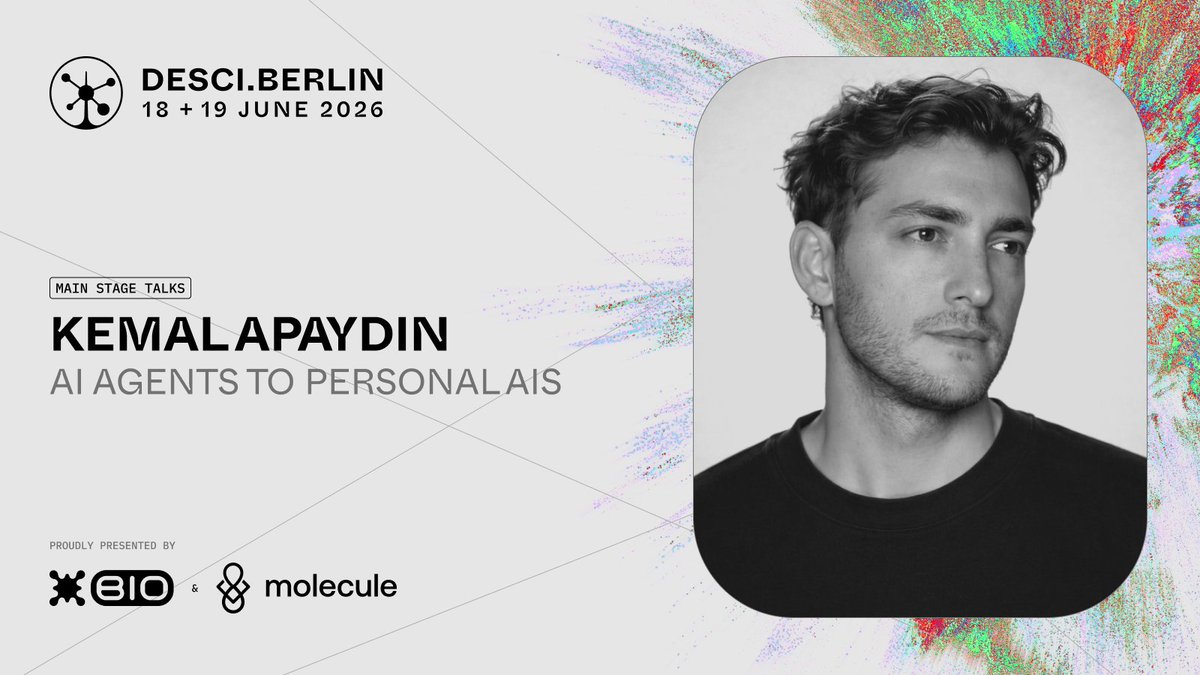
"AI Agents to Personal AIs"
@kemalapaydin will give a talk on where agentic infrastructure stands today, how OpenClaw and Hermes are being used across industries, and where autonomous operations head next.
6
4
39
3,438
cryptoreuMD.eth/3972.⌐◨-◨ 🦇🔊 retweeted
May 26
Science has never been short on good ideas.
The real bottleneck has always been everything that comes after the idea.
You still need funding, the right data, and lab time, and each of those steps comes with its own friction and delays.
For funding, you need to wait for committee reviews. The specific dataset you need is often locked away by whoever controls it. Booking equipment usually means chasing the right person just to get it set up.
Months can pass by before anything meaningful actually happens.
Now agents are starting to break through those barriers.
They can hold a budget and spend it as soon as it’s needed. Pull the data, secure the lab time, run the experiment, and immediately use the results to plan the next step.
The whole loop is finally starting to move on its own.
14
22
160
17,276
cryptoreuMD.eth/3972.⌐◨-◨ 🦇🔊 retweeted

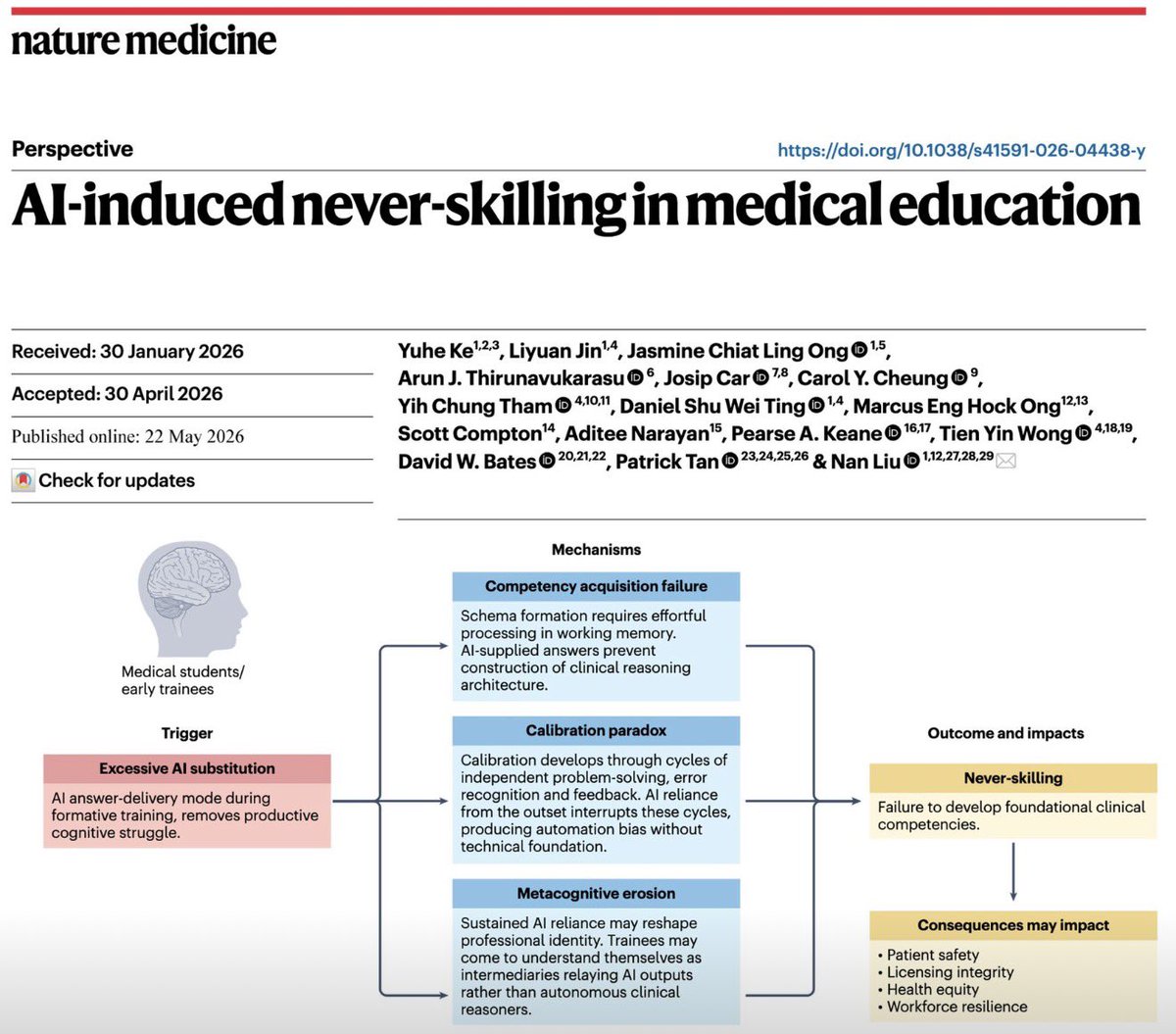
AI in medicine warning! The never skilling effect in medical education! @TomVargheseJr @pferrada1 @SWexner @AmCollSurgeons
15
117
409
62,730
cryptoreuMD.eth/3972.⌐◨-◨ 🦇🔊 retweeted
May 24
An idea that doesn't hold up is still data.
Right now, it just vanishes. It dies in a group chat or a forum thread, and the next person who has the same thought starts from scratch.
It doesn't have to be like that.
Think of an open surface where anyone can post an idea, others vote, argue, and pick it apart in public.
The strong ones turn into actual projects with a workspace, collaborators, and funding.
The ones that fail stay visible, so the next researcher sees the idea was already tried.
What didn't work for one project becomes the starting point for the next.
35
11
126
5,999
cryptoreuMD.eth/3972.⌐◨-◨ 🦇🔊 retweeted
May 22
The hardest problem in AI for science is payment, not the science.
AI can already design proteins, synthesize hypotheses across thousands of papers in seconds, and identify promising drug candidates in days.
But the moment the agent needs actually to spend money on compute, a lab assay at a CRO, or another agent’s output, everything stops.
Wire transfers, procurement, and a finance team approving a PO.
Sometimes the agent is stuck, waiting for hours or days.
A truly autonomous science agent needs to pay continuously for inference, wet lab time, datasets, and other agents. Traditional banking isn’t built for that.
What actually works today is already in production: agent wallets, on-chain treasuries, and micropayments like x402.
These agents are running live, paying for compute, and wet lab work directly from on-chain treasuries they control.
• Each transaction is signed by the agent. Each cost is logged and traceable on @Molecule_sci Labs.
• Every wet lab handoff is anchored to a transaction.
If you don't trust the agent, you can verify the agent.
Designed by an agent. Paid by an agent. Validated by a wet-lab. Logged on-chain.
25
14
123
6,270
cryptoreuMD.eth/3972.⌐◨-◨ 🦇🔊 retweeted

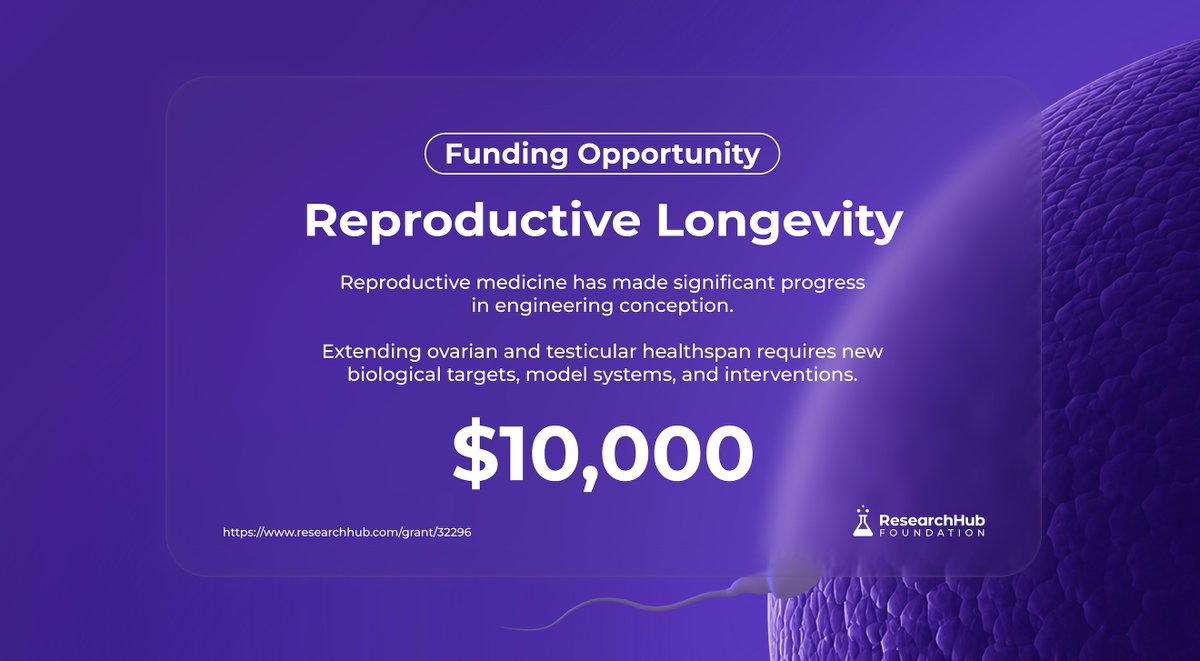
A new funding opportunity is now available on @ResearchHub!
We're offering $10k in seed funding for high-impact research on human reproductive longevity and frontier reproductive platforms.
Gamete aging, epigenetic approaches, in vitro gametogenesis, AI-driven embryo selection... the ambitious stuff.
PhDs, postdocs, faculty, and independent researchers are all eligible. No country restrictions.
Apply: researchhub.com/grant/32296/
2
5
36
1,848

From Bankless, to ETHless
@TrustlessState speaks on the Weekly Rollup tomorrow...
58
10
181
113,667
cryptoreuMD.eth/3972.⌐◨-◨ 🦇🔊 retweeted

May 15
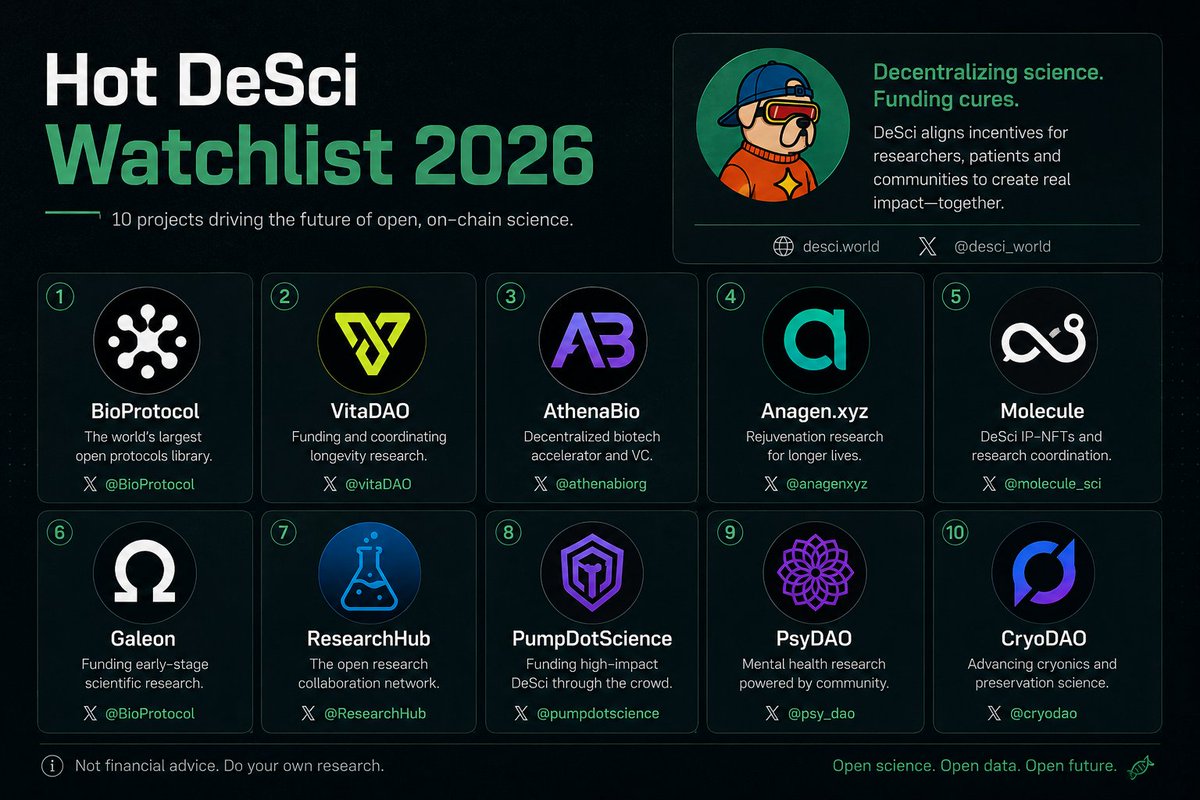
Hot DeSci / Biotech Watchlist (May 2026)
1. @BioProtocol - The Financial Layer for the whole space $BIO
2. @vitadao - $VITA Longevity pioneer (26 projects funded)
3. @athenabiorg $ATH Women’s health & reproductive research
4. @anagenxyz (HairDAO) $HAIR First DAO to file a scientific patent (androgenic alopecia).
5. @Molecule_sci IP-NFT marketplace for tokenized biotech IP (Good Tek)
6. @GaleonCare- $GALEON Healthcare AI decentralized EHR
7 @ResearchHub - $RSC Open science funding & peer review
8 @pumpdotscience $RIF Gamified longevity plays(Pump fun of #Desci)
9. @psy_dao Psychedelics research & mental health (key BioDAO in the BIO ecosystem)
10 @cryodao Cryonics & biostasis (another strong BioDAO pushing extreme longevity)
DeSci is generally rebuilding research funding through DAOs, tokens & open infrastructure .
12
6
43
2,323
cryptoreuMD.eth/3972.⌐◨-◨ 🦇🔊 retweeted

After having consulted the #DRC and #Uganda where the #Ebola disease caused by Bundibugyo virus is known to be currently occurring, I determine that the epidemic constitutes a public health emergency of international concern (PHEIC), as defined in the provisions of IHR.
My full statement: bit.ly/4wGGiwX

515
1,156
1,674
530,182