
Photos and videos
The new National Security Presidential Memorandum on AI issued today gives the clearest sense yet of the second Trump administration's priorities on AI and national security. A few highlights for me 🧵
1
3
9
1,477
8/ And of course, the document effectively formalizes the Pentagon's rationale and decision to designate Anthropic a "supply chain risk", tying it more clearly to existing statute—we'll see.
1
1
159
Lots more in the full document here: whitehouse.gov/presidential-…
1
145
Thoughts on yesterday's AI EO from me and @CNASdc colleagues @vivekchil @BenHayum @james_s48 @michellesnie @CalebWithersDC—some fun for everyone.

2
6
1,144
For all the legitimate criticisms of the AI Diffusion Rule, non-enforcement has been a disaster—even before this latest revelation.
May 31

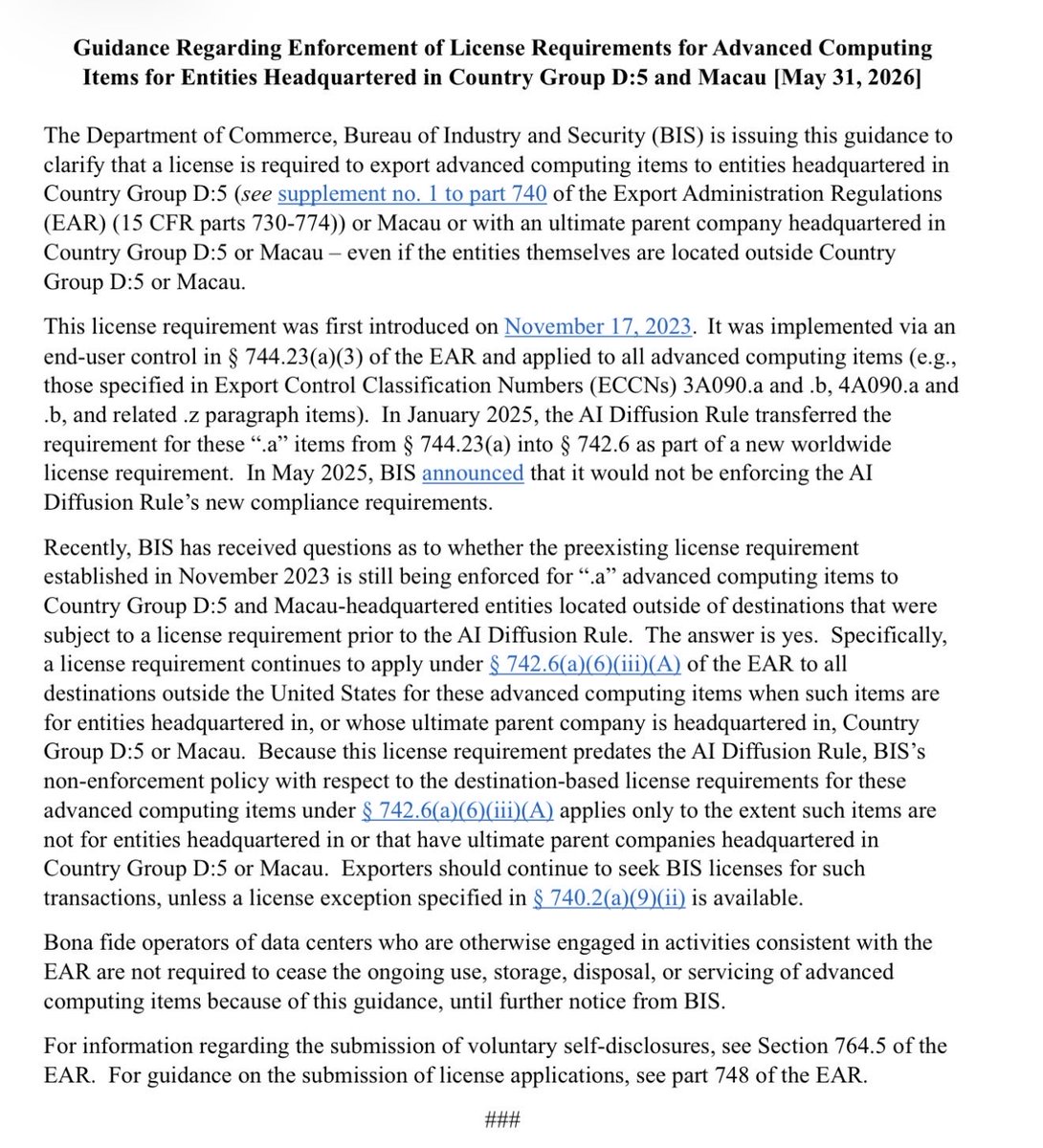
NEW: BIS just issued guidance stating that licenses are required for advanced AI chip exports to China-headquartered firms located outside of China (e.g. a Tencent subsidy in Malaysia). The reason they had to issue this statement is BIS’ non-enforcement of certain export controls have (potentially inadvertently) have allowed Chinese companies to both buy Nvidia Blackwell chips and make AI chips at TSMC, all legally and without a license. This is a HUGE problem.
Since May 2025, BIS has publicly stated that it is not enforcing certain license requirements related to AI chip shipments, and as a result, apparently Chinese companies’ overseas subsidiaries (e.g., Tencent Malaysia) have been able to legally buy Nvidia Blackwell chips without an export license - even though this had been restricted since 2023. Chinese companies have been buying these chips, very likely at scale. And because BIS has not updated export control regulations to clearly state what it IS enforcing, all of this was legal.
It actually gets worse. BIS’ non-enforcement announcement in May 2025 extends to existing US restrictions that prevent TSMC from making AI chips for Chinese companies. US export control regulations require TSMC to do enhanced due diligence on any orders that could be an AI chip, to make sure it isn’t illegally being made for a Chinese company (directly or indirectly). But these regulations require a license requirement to be in effect to work. And those license requirements largely were not being enforced.
This clarification does make clear that Blackwell shipments to China-headquartered companies outside of China are now illegal again—which is good, although obviously we have to see how many shipments have already gone to assess how much damage was done. BIS’ statement acknowledges these shipments have been happening when it says companies who bought chips under this loophole don’t have to stop using them.
HOWEVER, this statement does NOT say that BIS will enforce the parts of US regulations requiring TSMC to do enhanced due diligence on AI chip orders. This is a massive loophole that still needs to be closed. If Chinese companies can make chips at TSMC (including by using third-country cutouts to receive the chips), there is no point to restricting China’s access to AI chips or advanced chip-making tools.
Ultimately, BIS desperately needs to issue a regulation that clarifies what US export control policy for AI chips is. The reason this happened is because BIS said it is not enforcing existing regulations, but didn’t make clear what specific provisions its non-enforcement applied to, and didn’t update regulations to align with what it IS enforcing - which created massive loopholes, some of which still persist.
2
291

May 22
Strong bill from @SenatorShaheen @PeteRicketts that would create an FMS-style program at the State Department to accelerate exports of U.S. technology to allies and partners—an important plank in the technology competition with China. foreign.senate.gov/press/dem…
3
57
May 21
Smart piece from @audryewong @RyanFedasiuk in @WarOnTheRocks on China's AI governance campaign and the need for a more robust U.S. response. The specter of a "World AI Cooperation Organization" floated by Premier Li Qiang last year looms... warontherocks.com/cogs-of-wa…
4
8
2,160

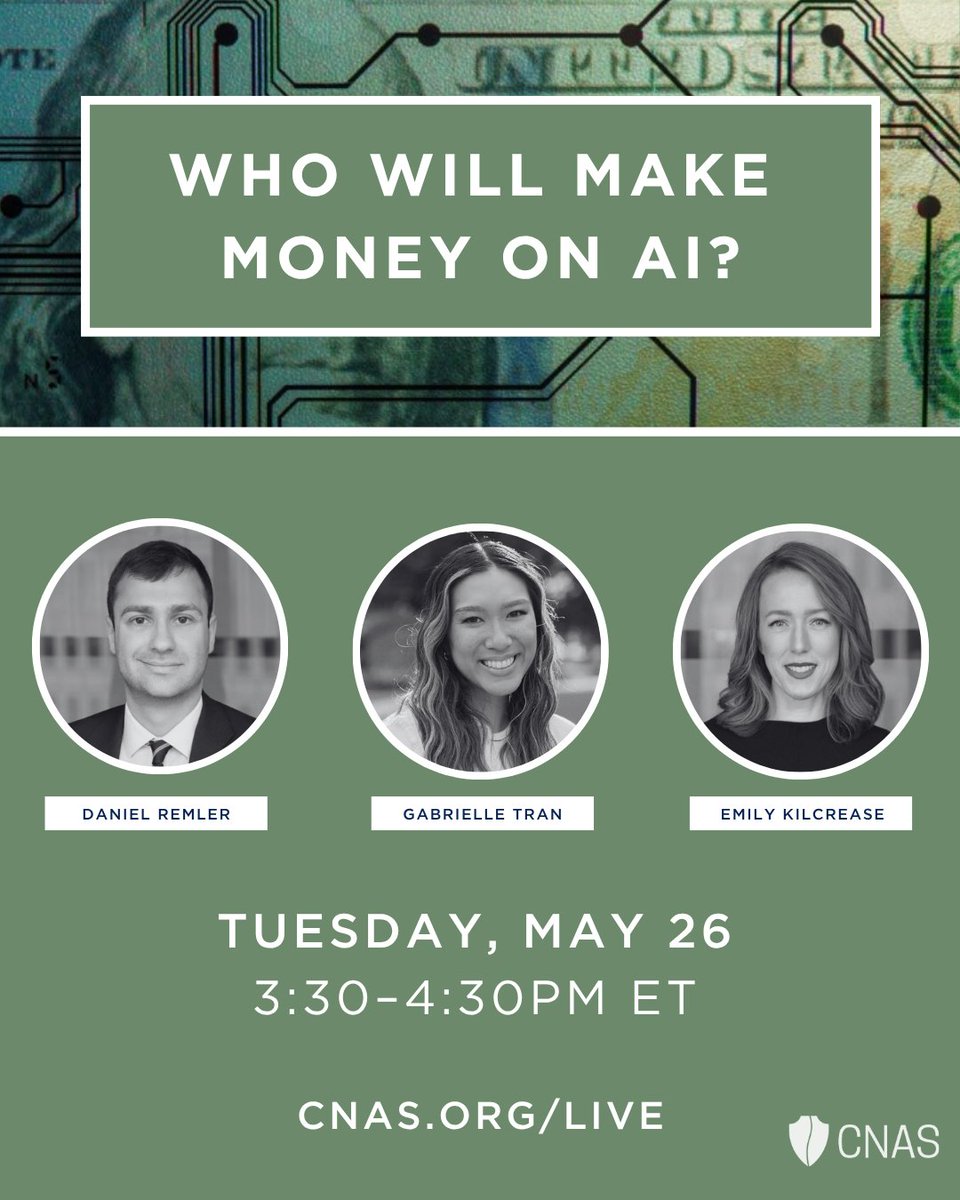
May 26 🗓️
Join CNAS for a discussion with @danielremler, @gabrielletran_, and @EmilyKilcrease1 on the way commercialization interests and market dynamics will impact how closely AI development aligns with U.S. national security interests.
1
2
3
570
Daniel Remler retweeted

.@RepBrianMast at @CNASdc: The MATCH Act, AI OVERWATCH Act, and Chip Security Act were introduced to prevent China from stealing our tech lead and winning the AI arms race. This is a dire national security issue, which is why it is vital to get these bills across the finish line.
9
37
91
11,722
Apr 13
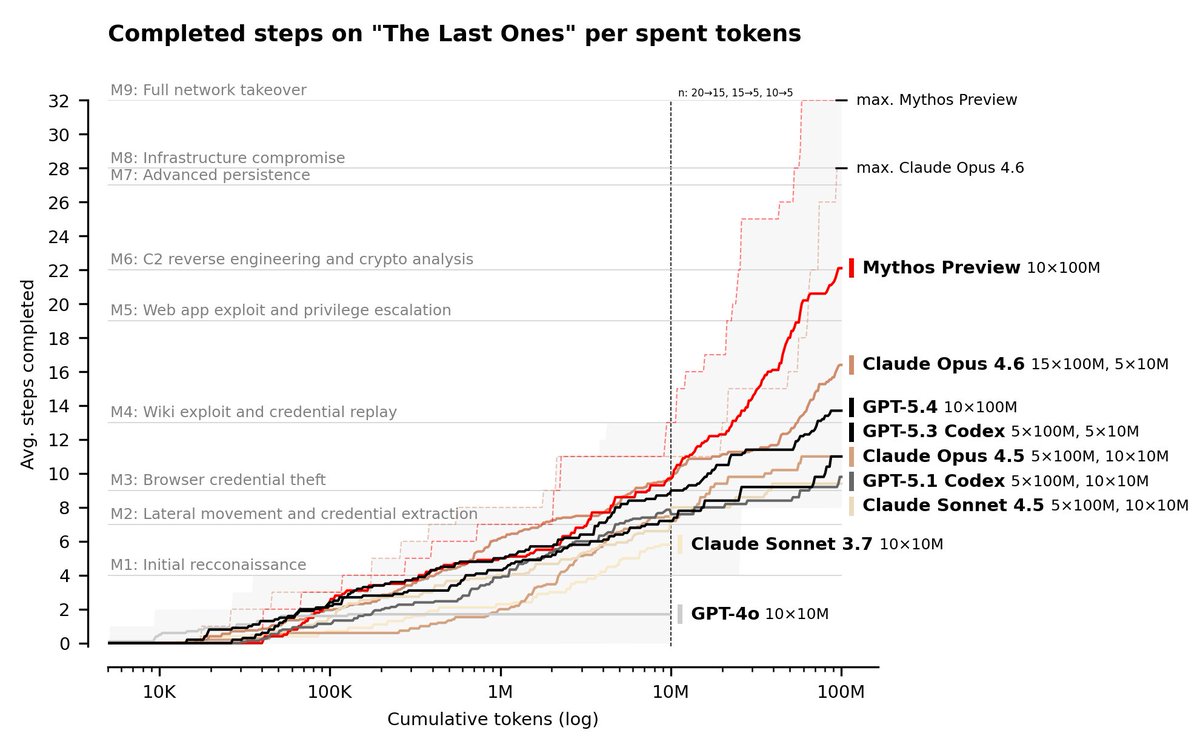
Would be useful to know how Chinese models compare on this evaluation--if Project Glasswing is meant to harden cyber defenses before adversaries have similar capabilities, an assessment like this one from UK AISI needs to benchmark where China is today.

We conducted cyber evaluations of Claude Mythos Preview and found that it is the first model to complete an AISI cyber range end-to-end. 🧵
1
130