AI, compute governance, and national security @CNASdc | Co-founder of WISE | personal views only
Joined May 2014
- Tweets 270
- Following 460
- Followers 482
- Likes 1,296
18 Photos and videos


Pinned Tweet

Apr 22
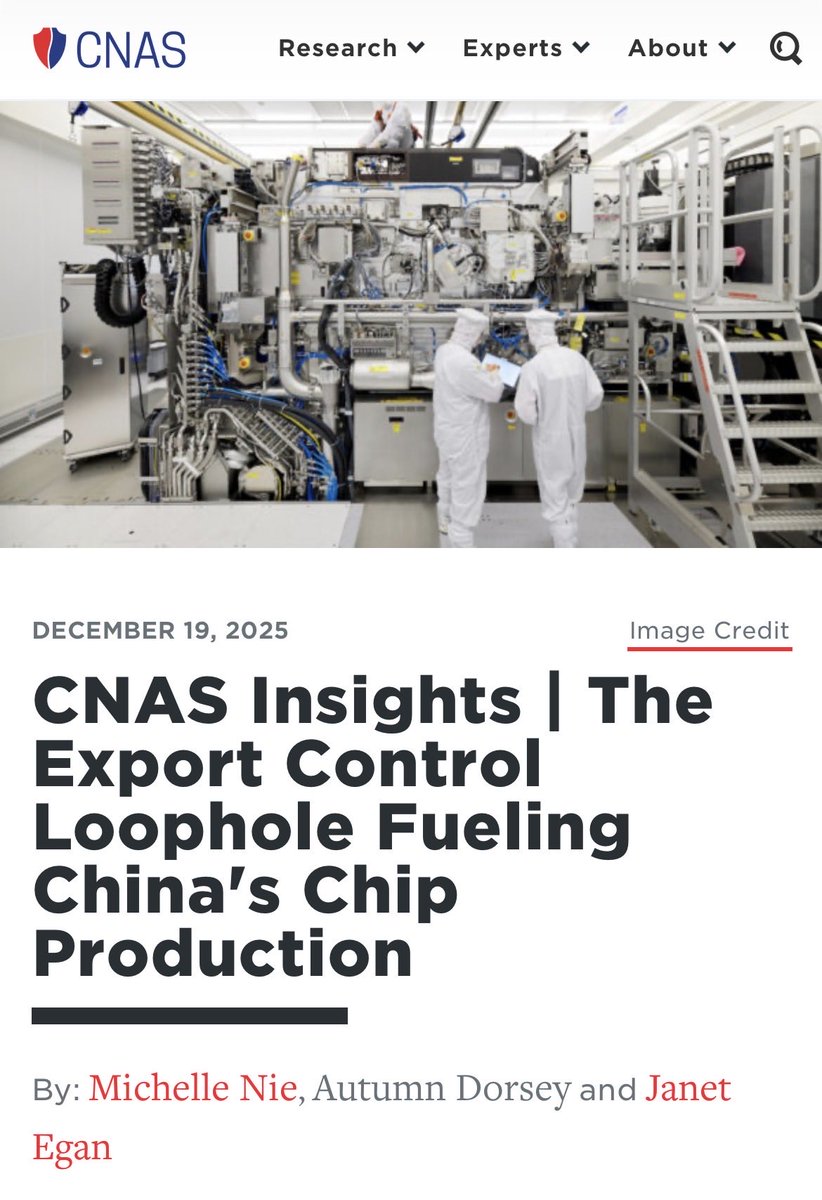
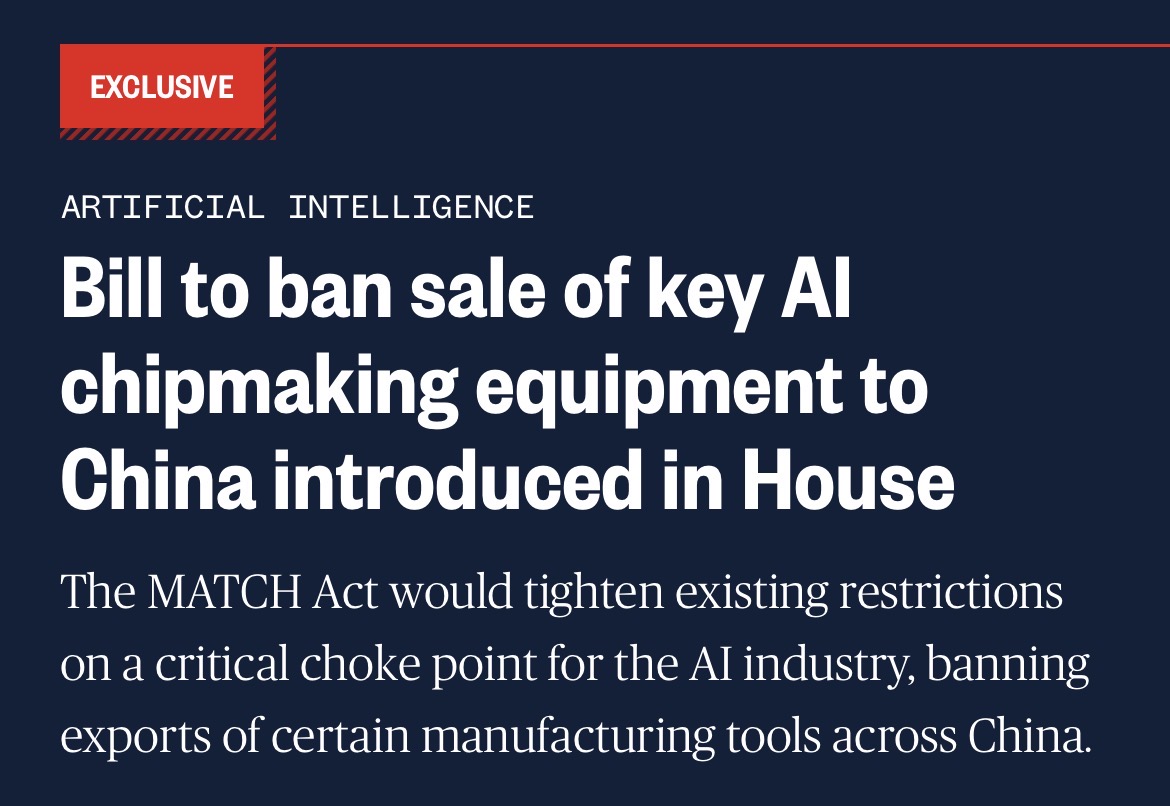
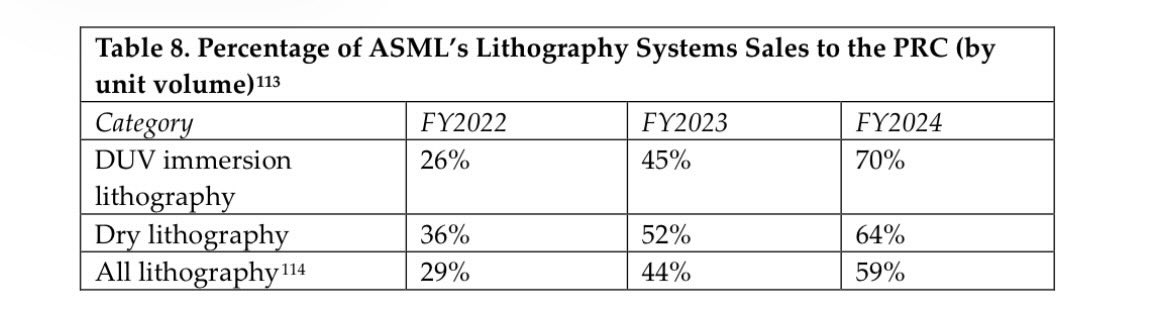
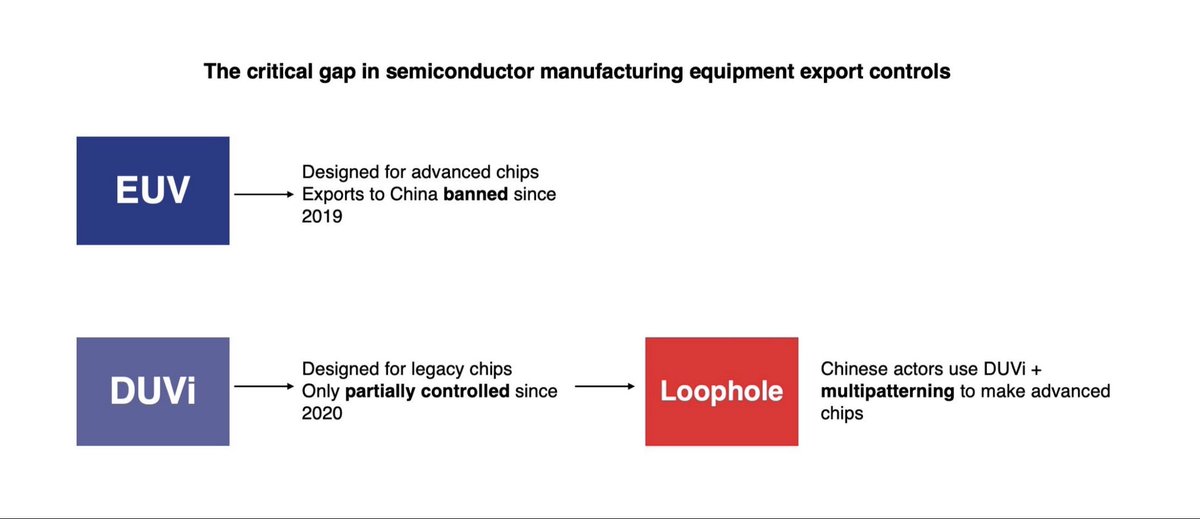
Today, the House Foreign Affairs Committee marks up the MATCH Act - the most consequential semiconductor export control legislation in years. @janet_e_egan and I wrote about why it matters in a new @CNASdc Insights piece. 🧵
1
6
23
29,886
Jun 11
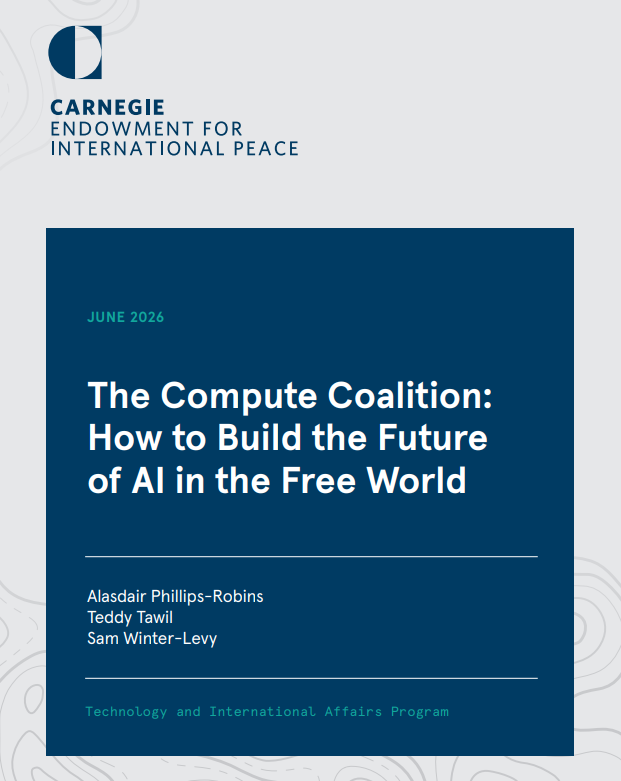
Excellent report by @alasdairpr @TawilTeddy @SamWinterLevy highlighting the importance of a compute coalition among democratic allies.
Whoever holds the most compute holds the most leverage and power over how AI is developed, and we cannot cede that leverage to authoritarian nations.
Jun 11

🧵I spent 9 months building a detailed new global model of AI data center finances along with @alasdairpr and @SamWinterLevy.
It shows which factors are driving $10 billion investment decisions, who will control a key strategic asset of this century, and what policymakers can do to steer results while minimizing harms to the public.
It’s part of a new @CarnegieEndow & @CEIPTechProgram report. Here are five key findings:
1
5
433

Focusing purely on the technical:
When there is clean signal on refusal vs. acceptance behavior, it makes the model way more susceptible to adversarial attacks.
Obfuscating that signal by making the two *appear* the same improves defense. This may become more common...
Jun 9

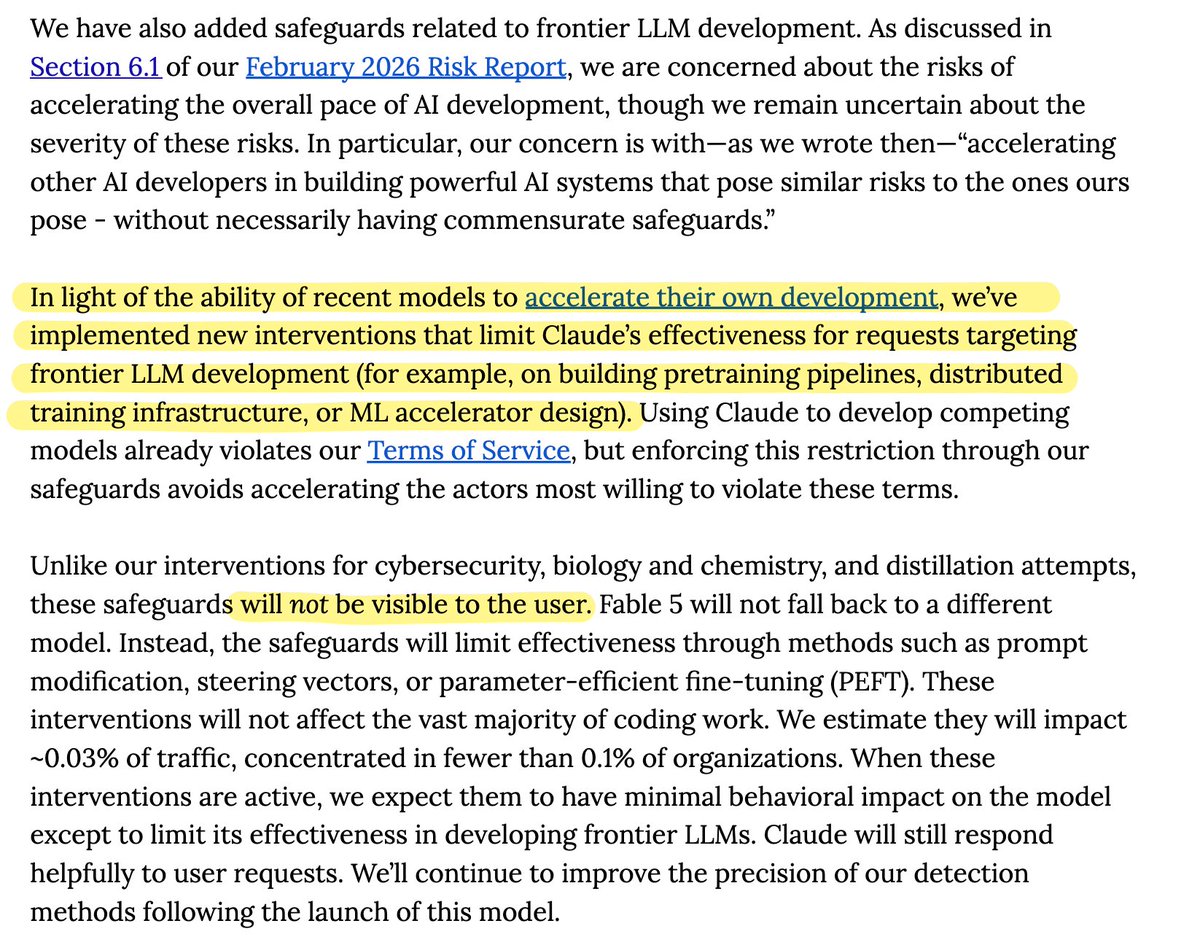
mythos will be bad ON PURPOSE on ai "frontier llm research" tasks, this is very very sad for the research community
also the fact that this is un purpose not visible to the user is crazy
1
3
14
859
Michelle Nie retweeted

Jun 10
The de facto lockdown of CAISI is extremely disheartening. Wish more AI industry leaders would speak out, and not merely through policy documents but to POTUS directly.
@sama @elonmusk @demishassabis
wsj.com/politics/policy/whit…
4
21
142
16,586
Jun 9
Ignoring the "perfect weather" joke, this is what i've felt since coming to DC. they're both mid-sized, mid-density cities, decent public transit but with last-mile problems, heavily dominated by one industry, nice parks and green spaces.

San Francisco and DC are spiritually the same city. Nice urban fabric in the old downtown. Demonic car oriented suburbs where most of the jobs are. Perfect Weather.
San Jose is the Fairfax County of California.
2
53
Jun 5
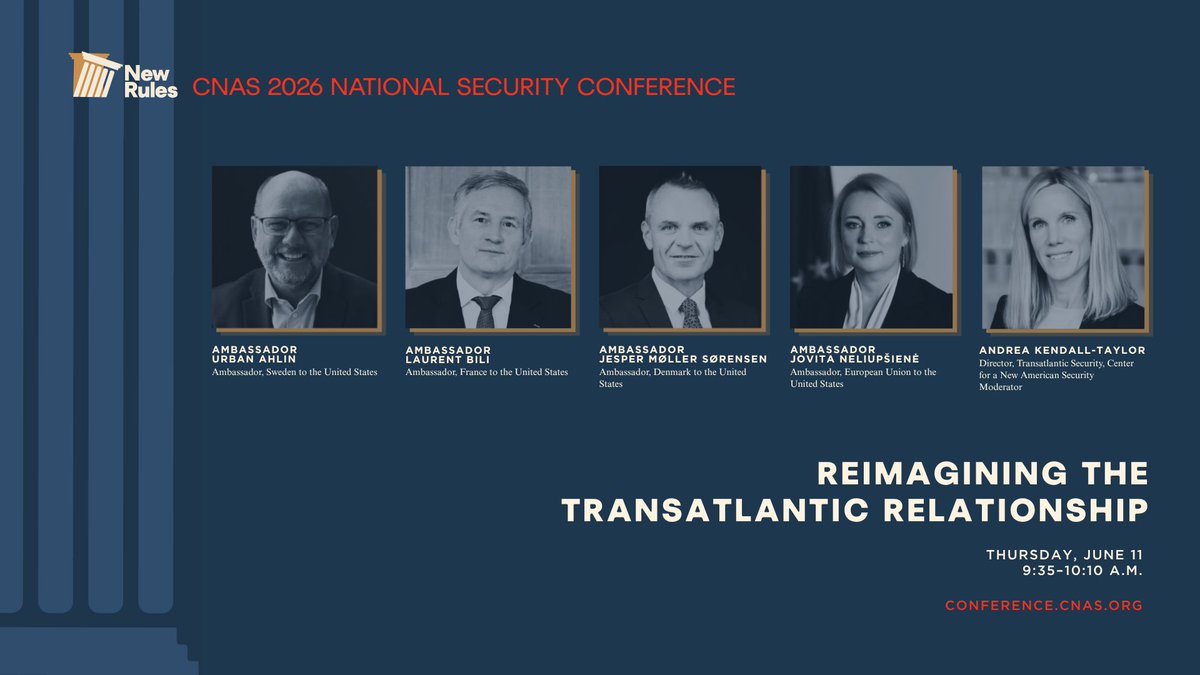
This is sure to be a great panel! Come join us at the @CNASdc conference next week.

The historic relationships between the U.S. and its European allies are shifting in a way that is likely to leave a lasting mark.
@DKambUSA, @EUAmbUS, @FrenchAmbUS, and @SwedeninUSA will speak with @AKendallTaylor on the future outlook for transatlantic relations at the 2026 CNAS National Security Conference.
56
Michelle Nie retweeted

Jun 4
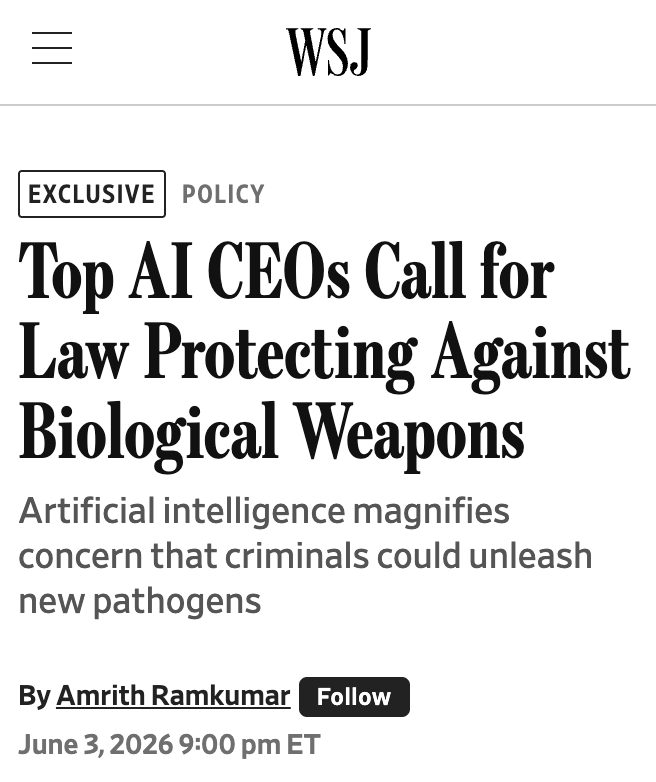
No one should be able to order a bioweapon through the mail.
@IFP & @JoinFAI are proud to co-lead an open letter calling for mandatory DNA synthesis screening & recordkeeping.
Signatories include:
- Sam Altman, CEO & Co-Founder, OpenAI
- Dario Amodei, CEO & Co-Founder, Anthropic
- David Baker, Director, Institute for Protein Design; 2024 Nobel Prize in Chemistry recipient
- Patrick Collison, CEO & Co-Founder, Stripe
- Paul Graham, Founder, Y Combinator
- Demis Hassabis, CEO, Google DeepMind; 2024 Nobel Prize in Chemistry recipient
- Emily Leproust, CEO & Co-Founder, Twist Bioscience
- Lawrence Lessig, Roy L. Furman Professor of Law and Leadership, Harvard Law School
- Gerald W. Parker, former Special Assistant to the President for Biosecurity and Pandemic Response
- Mustafa Suleyman, CEO, Microsoft AI
- Alex Tabarrok, Professor of Economics, George Mason University
- Alexandr Wang, Chief AI Officer, Meta; Founder, Scale AI
- Christine E. Wormuth, President & CEO, Nuclear Threat Initiative; 25th Secretary of the Army
Read the letter and see the full list of signatories: screendna.org
Many DNA synthesis companies voluntarily screen orders to mitigate biosecurity risks, but no law requires them to do so.
Leaders in AI, biotech, life sciences, national security, and the nucleic acid synthesis industry agree that Congress should act to strengthen safeguards against biological threats.
@deanwball put it well in the WSJ:
“If you’re synthesizing the stuff that yields biological life and viruses, we’re asking you to screen to see whether it is dangerous in some way. That seems like a reasonable thing for society to insist upon.”
66
147
441
1,591,056

Jun 3
Read the annotated AI EO with commentary from me and my @CNASdc colleagues @vivekchil, @danielremler, @james_s48, and @CalebWithersDC.
Jun 3

We annotated the new AI Executive Order with thoughts on where it makes progress, falls short, and requires more time to assess its viability. (@danielremler, @michellesnie, @james_s48, @CalebWithersDC)
4
92
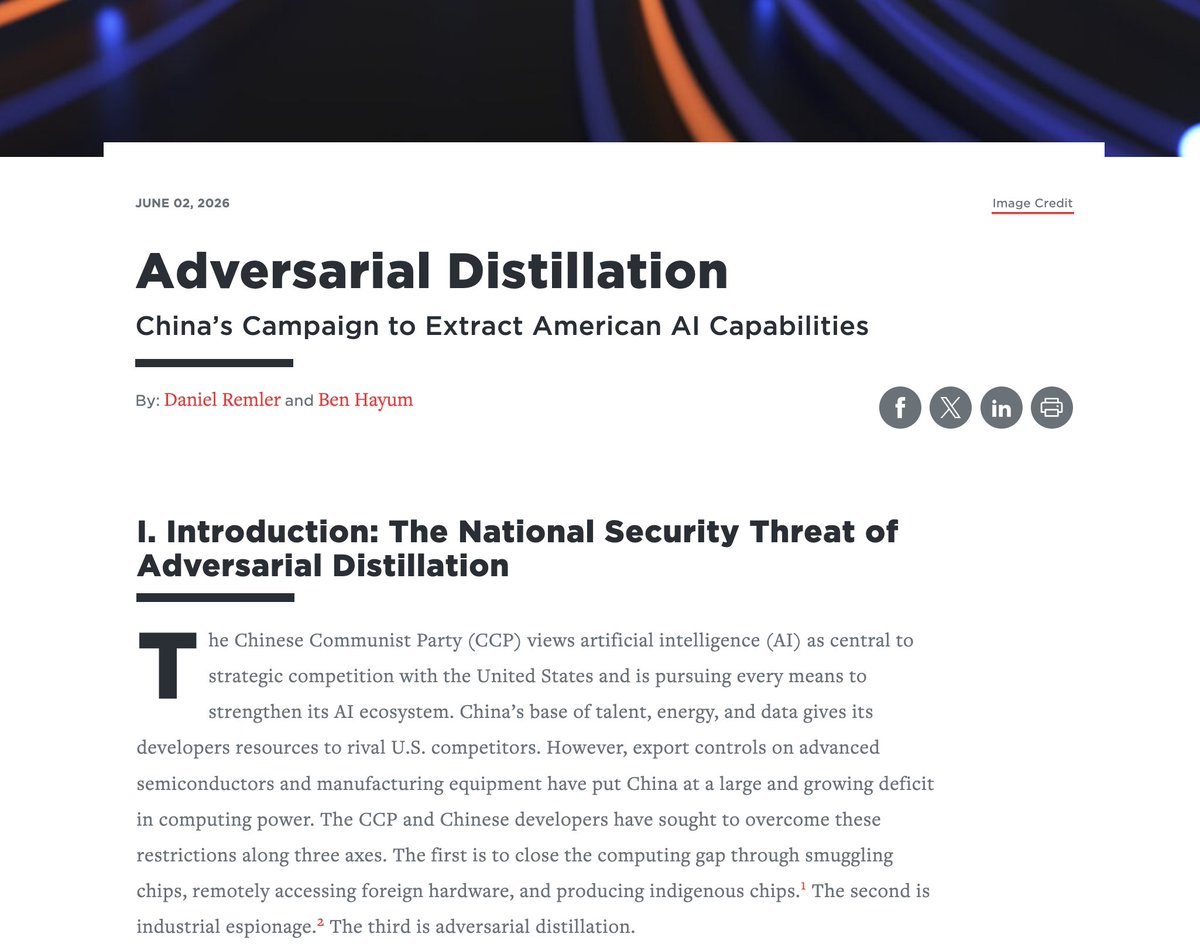
1/ China is systematically extracting the capabilities of U.S. frontier AI.
With @danielremler, a comprehensive analysis of Adversarial Distillation: the evidence, the supply chain, and what to do about it. 🧵
1
10
33
2,823
Michelle Nie retweeted

May 31
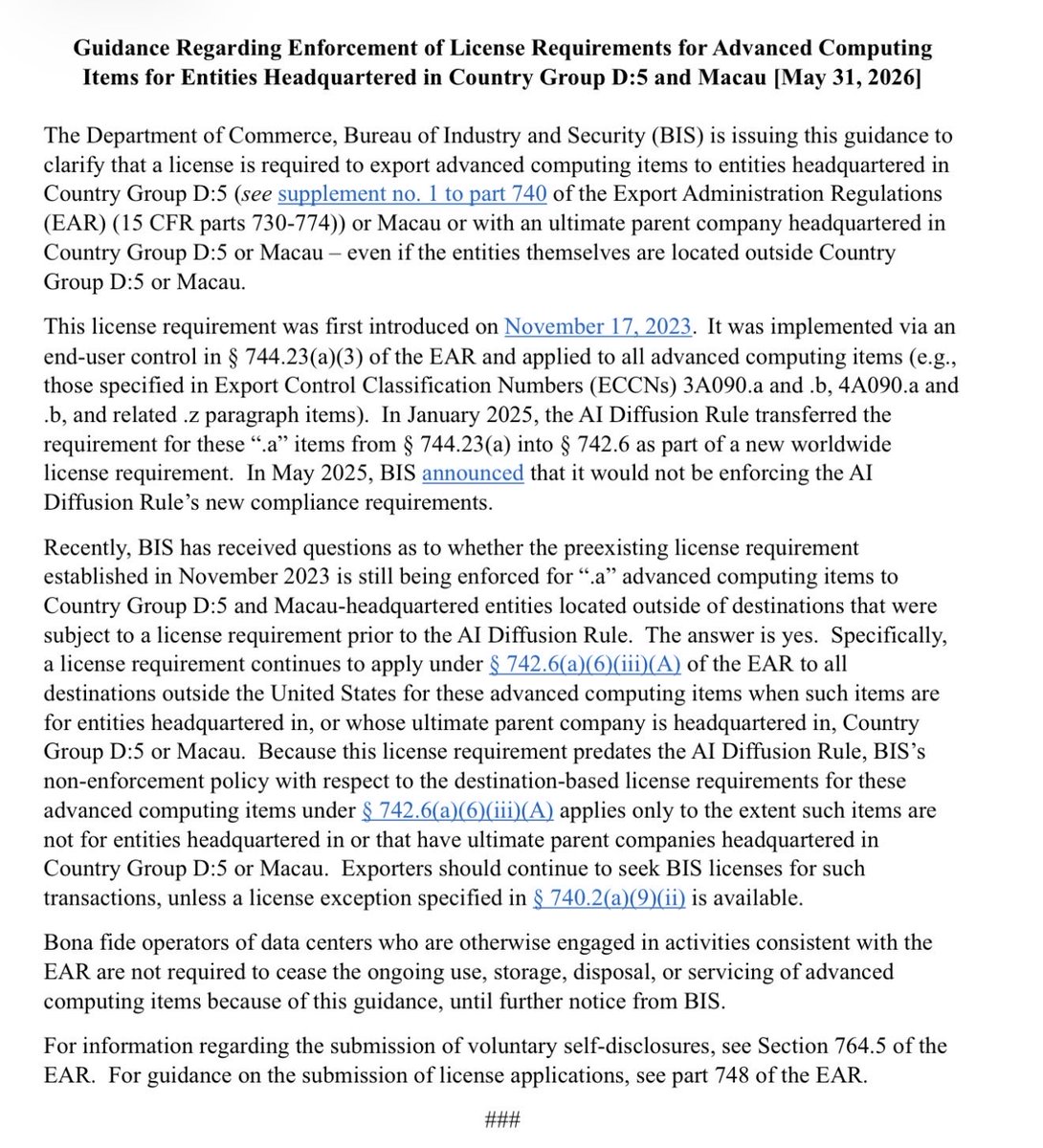
Due to regulatory confusion, it had become an open secret that large-scale shipments of cutting-edge US AI chips were resuming to Chinese-headquartered firms outside China without a US export license.
This, in effect, was a total cancellation of US AI chip controls.
The new BIS guidance clarifies that a license is still required for these shipments.
But while the guidance solved one problem, it failed to fix, and even exacerbated another.
Namely, by failing to say that BIS is also enforcing license requirements on foundries like TSMC to perform due diligence on their customers, the guidance has opened the door to a redux of Huawei illicitly using front companies to manufacture millions of chips at US and allied foundries.
BIS needs to issue a clarification immediately that these due diligence requirements are being enforced.
May 31

NEW: BIS just issued guidance stating that licenses are required for advanced AI chip exports to China-headquartered firms located outside of China (e.g. a Tencent subsidy in Malaysia). The reason they had to issue this statement is BIS’ non-enforcement of certain export controls have (potentially inadvertently) have allowed Chinese companies to both buy Nvidia Blackwell chips and make AI chips at TSMC, all legally and without a license. This is a HUGE problem.
Since May 2025, BIS has publicly stated that it is not enforcing certain license requirements related to AI chip shipments, and as a result, apparently Chinese companies’ overseas subsidiaries (e.g., Tencent Malaysia) have been able to legally buy Nvidia Blackwell chips without an export license - even though this had been restricted since 2023. Chinese companies have been buying these chips, very likely at scale. And because BIS has not updated export control regulations to clearly state what it IS enforcing, all of this was legal.
It actually gets worse. BIS’ non-enforcement announcement in May 2025 extends to existing US restrictions that prevent TSMC from making AI chips for Chinese companies. US export control regulations require TSMC to do enhanced due diligence on any orders that could be an AI chip, to make sure it isn’t illegally being made for a Chinese company (directly or indirectly). But these regulations require a license requirement to be in effect to work. And those license requirements largely were not being enforced.
This clarification does make clear that Blackwell shipments to China-headquartered companies outside of China are now illegal again—which is good, although obviously we have to see how many shipments have already gone to assess how much damage was done. BIS’ statement acknowledges these shipments have been happening when it says companies who bought chips under this loophole don’t have to stop using them.
HOWEVER, this statement does NOT say that BIS will enforce the parts of US regulations requiring TSMC to do enhanced due diligence on AI chip orders. This is a massive loophole that still needs to be closed. If Chinese companies can make chips at TSMC (including by using third-country cutouts to receive the chips), there is no point to restricting China’s access to AI chips or advanced chip-making tools.
Ultimately, BIS desperately needs to issue a regulation that clarifies what US export control policy for AI chips is. The reason this happened is because BIS said it is not enforcing existing regulations, but didn’t make clear what specific provisions its non-enforcement applied to, and didn’t update regulations to align with what it IS enforcing - which created massive loopholes, some of which still persist.
4
30
182
61,724
Michelle Nie retweeted

May 27
The old national security playbook no longer applies. America must embrace New Rules to win the 21st century.
I argue that, as we see vividly in 2026, geographic chokepoints are back. Iran and the Strait of Hormuz are emblematic, but there are others.
3
9
18
3,559
Michelle Nie retweeted

May 21
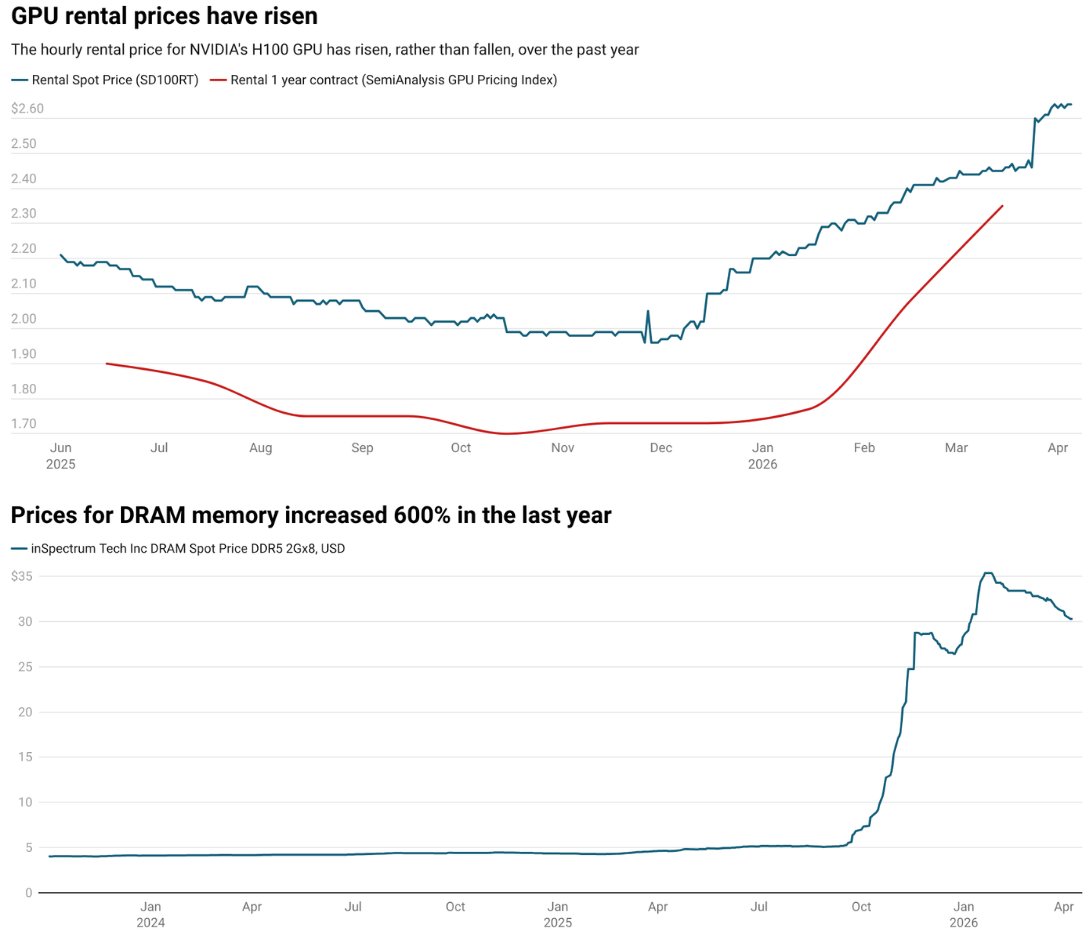
Even for AI companies, AI progress is faster than expected
If they expected models to be this useful and in demand, they could have locked in contracts at lower prices. But most didn't, and are now getting burned by higher prices
4
10
975
Michelle Nie retweeted

.@RepBrianMast at @CNASdc: The MATCH Act, AI OVERWATCH Act, and Chip Security Act were introduced to prevent China from stealing our tech lead and winning the AI arms race. This is a dire national security issue, which is why it is vital to get these bills across the finish line.
9
37
91
11,722
Michelle Nie retweeted

May 20
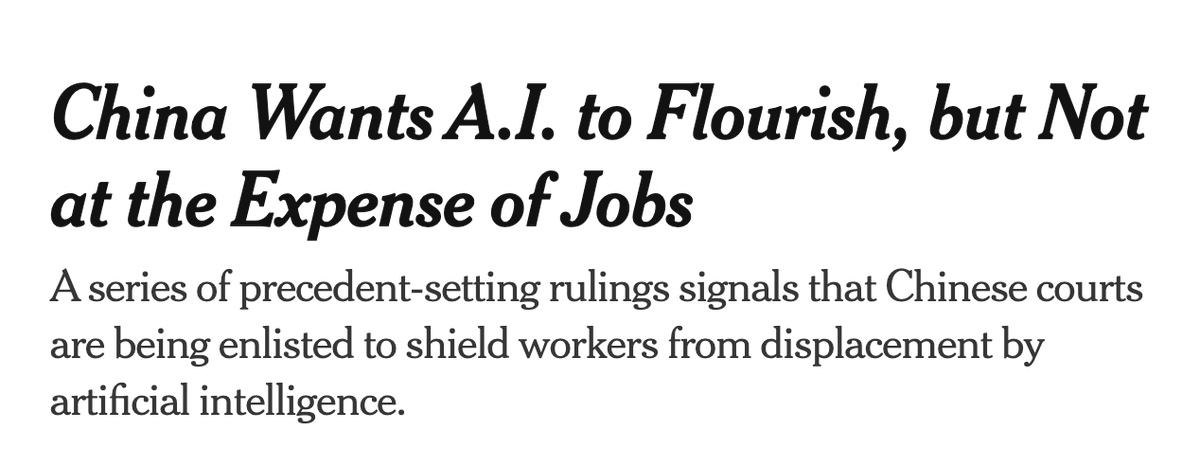
Was great speaking with @CatieEdmondson for her excellent piece on China's AI labor anxieties
"[AI diffusion] aspirations have run headlong into a growing political problem: anxiety over the workers who could be displaced by the realization of Beijing's technological drive"
2
4
11
775
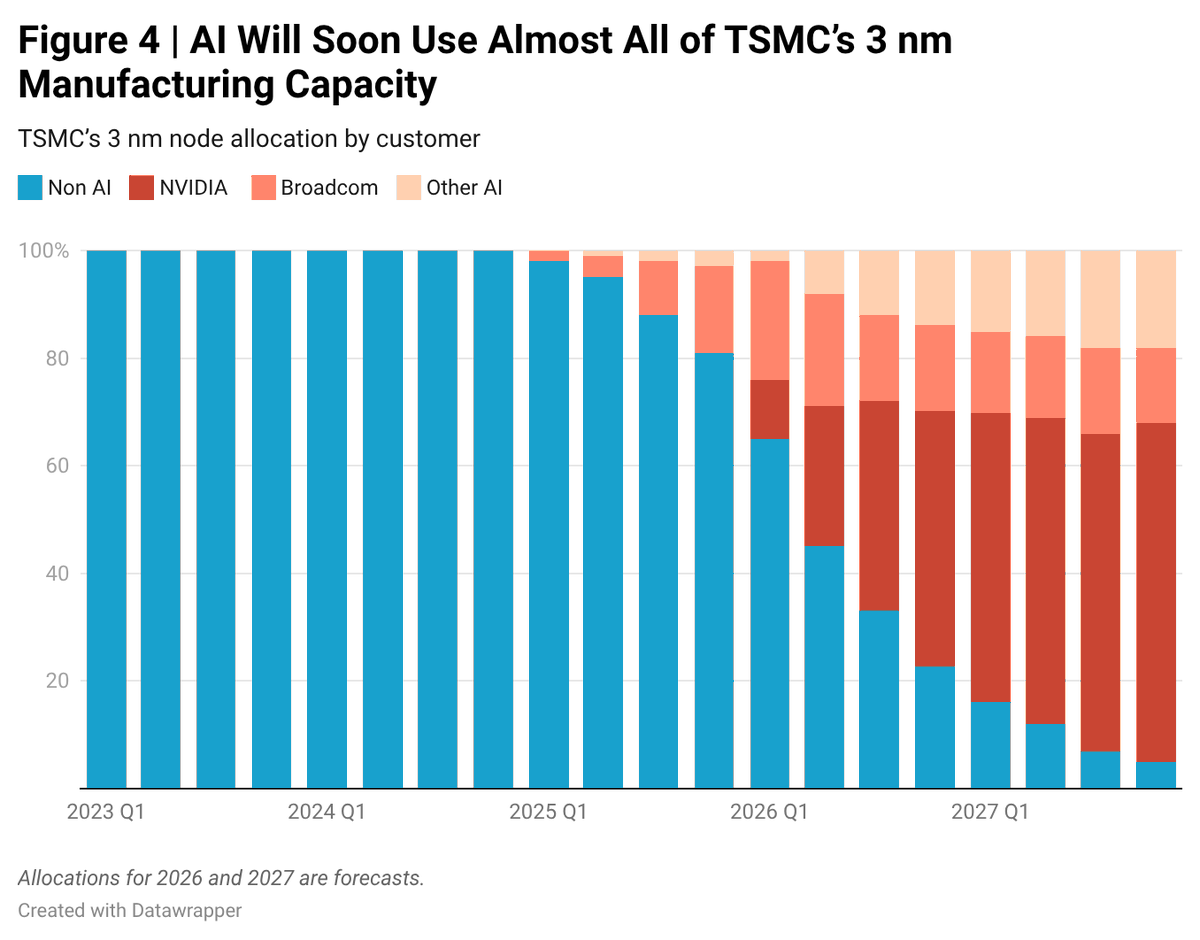
AI companies are pushing TSMC’s current production capacity to its limit—and planned capacity is fully reserved before it has even broken ground.
@james_s48, @janet_e_egan, and Rory Madigan demonstrate what this means for U.S. policy.
1
9
18
2,040
Michelle Nie retweeted

May 14
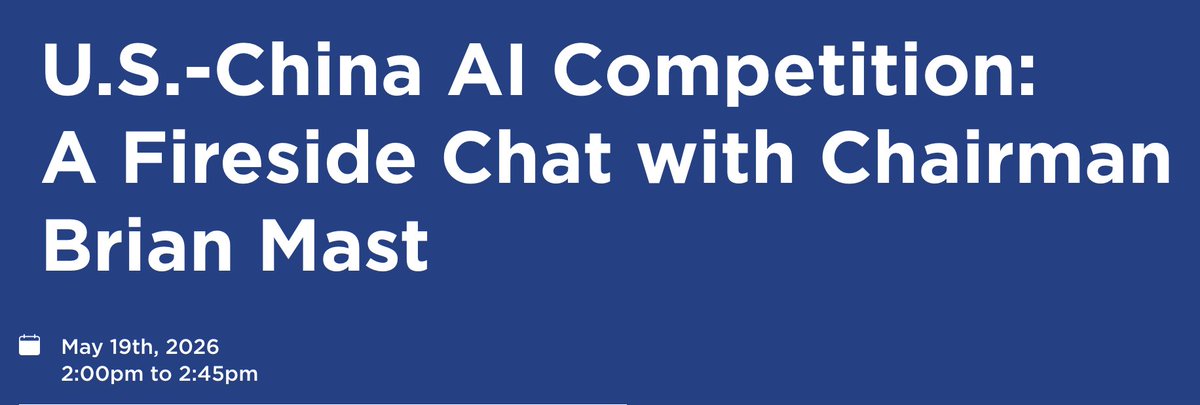
Following President Trump's visit to Beijing, we're hosting House Foreign Affairs Committee Chairman @RepBrianMast next Tuesday at 2pm ET for a discussion on the US-China AI competition. Tune in!
1
8
10
1,546
May 14
I made it to Times Square! My friend @communidiyi uploaded a silly Halloween photo of me and my partner for her company’s IPO today.
Congrats @cerebras!
8
134
May 9
While mandated industry-government partnership is certainly a step in the right direction, I would have liked to see mandated testing pre-deployment too, and appropriate funding of CAISI to fill that vital role
Voluntary testing of models is pretty much the status quo.

Scoop: The White House is preparing an executive order on AI security that omits mandatory model testing and emphasizes voluntary participation by AI companies for cyber defense efforts.
W/ @cmsub for @business
bloomberg.com/news/articles/…
8
720
Michelle Nie retweeted
May 7
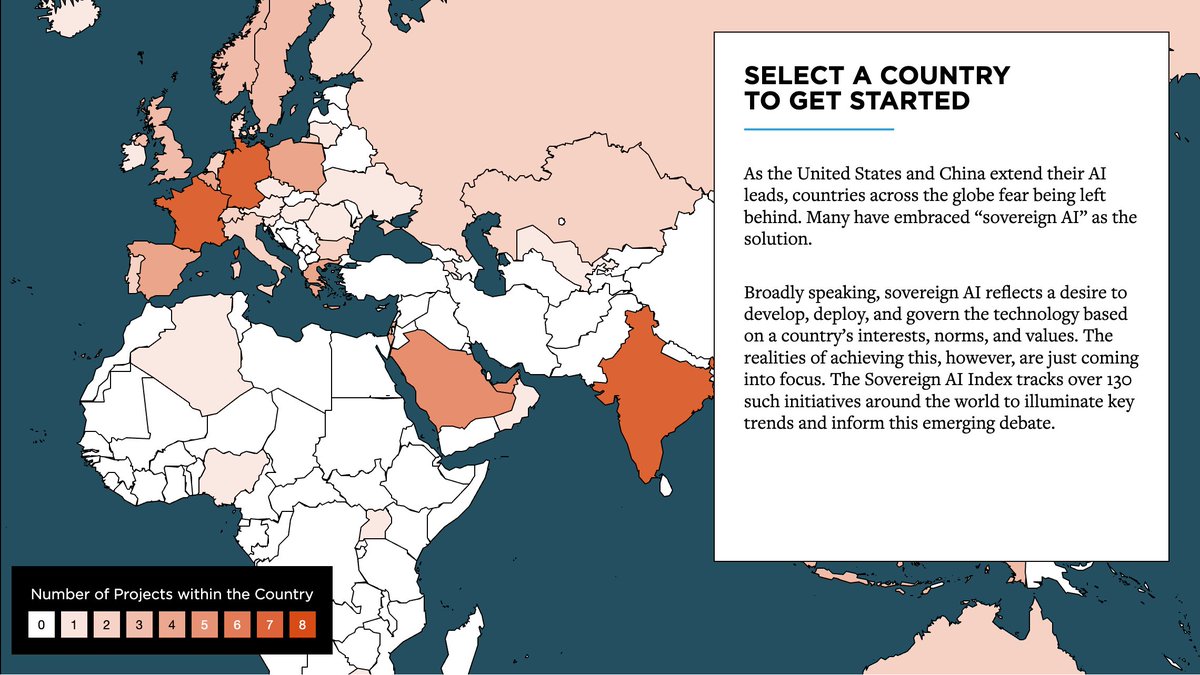
The term sovereign AI is everywhere now, but what does it mean in practice?
My colleagues and I launched the Sovereign AI Index to find out (!)
It tracks 130 sovereign AI projects with insights on hardware contracts, commonly used base models, spending trends & more
2
8
28
3,411
Michelle Nie retweeted
May 7
The AI buildout is bottlenecked by chip manufacturing capacity
This means AI chips become even more valuable, exports are zero-sum, and America has greater leverage
We lay out how we got here, tightest supply chain constraints, & policy implications in a paper w/ @janet_e_egan🧵
1
11
24
4,247