Exploring the Markets, and Extracting from the Markets.
Joined May 2017
- Tweets 589
- Following 171
- Followers 202
- Likes 29,228
14 Photos and videos



Daniel R retweeted
SUNDAY RESET
One of the hardest parts of trading is what happens when the market does something you didn’t expect.
A market that won’t pull back.
A trend that keeps going longer than seems rational.
A breakout that fails immediately.
A regime shift that makes your old playbook feel obsolete.
And the more the market diverges from what you think it “should” be doing, the more attached many traders become to their opinion.
Not because of the chart itself.
Because now something deeper is being threatened.
Your need for certainty.
Your self-worth.
Your identity.
Your need to feel right.
Your need to be seen by others as smart, disciplined, insightful.
This happens on all timeframes.
Intraday traders can get trapped fighting a move for hours because they “know” price is extended.
Swing traders can spend weeks anchored to a narrative while the market keeps delivering evidence against it.
When attachment increases, perception narrows.
Frustration can literally narrow your visual field (research shows negative emotion impacts peripheral vision and distorts the perception of spatial relationships).
Attachment also leads to confirmation bias - overemphasizing current beliefs and ignoring or minimizing new information.
You stop trading what’s actually happening and start trading your relationship to uncertainty and your need to be right.
That’s why self-awareness is such an underrated edge.
You are not just trading the market.
You are trading your own Inner Market simultaneously.
Your self-worth.
Your fear of being wrong.
Your emotional memory of prior losses.
Your need to recover quickly.
Your discomfort with uncertainty.
Your desire for validation.
etc.
All of it enters the decision-making process whether you realize it or not.
This is why two traders can look at the exact same chart and behave completely differently.
The chart is not the full story.
The operator matters....a lot.
And in many ways, the operator is the edge.
It's YOU that pushes the buy/sell button.
YOU are the most part of your edge.
The traders who evolve are usually not the ones who gather the most information.
They’re the ones willing to see themselves clearly.
The ones willing to ask:
“What am I really trading right now?”
Because when you work at that level, you stop trying to overpower old patterns with hopes, or 'promises' you make to yourself.
You begin to understand the deeper motivations driving behavior. That's the focus of my work.
And that’s often the beginning of finally moving beyond old limiting beliefs, emotional reactions, and self-sabotaging cycles.
If this post is helpful, R/T, follow, like, and BOOKMARK this post.
#tradermindset #tradingpsychology $ES_F $NQ_F
$SPY $QQQ
1
6
36
1,880
Daniel R retweeted

Apr 12
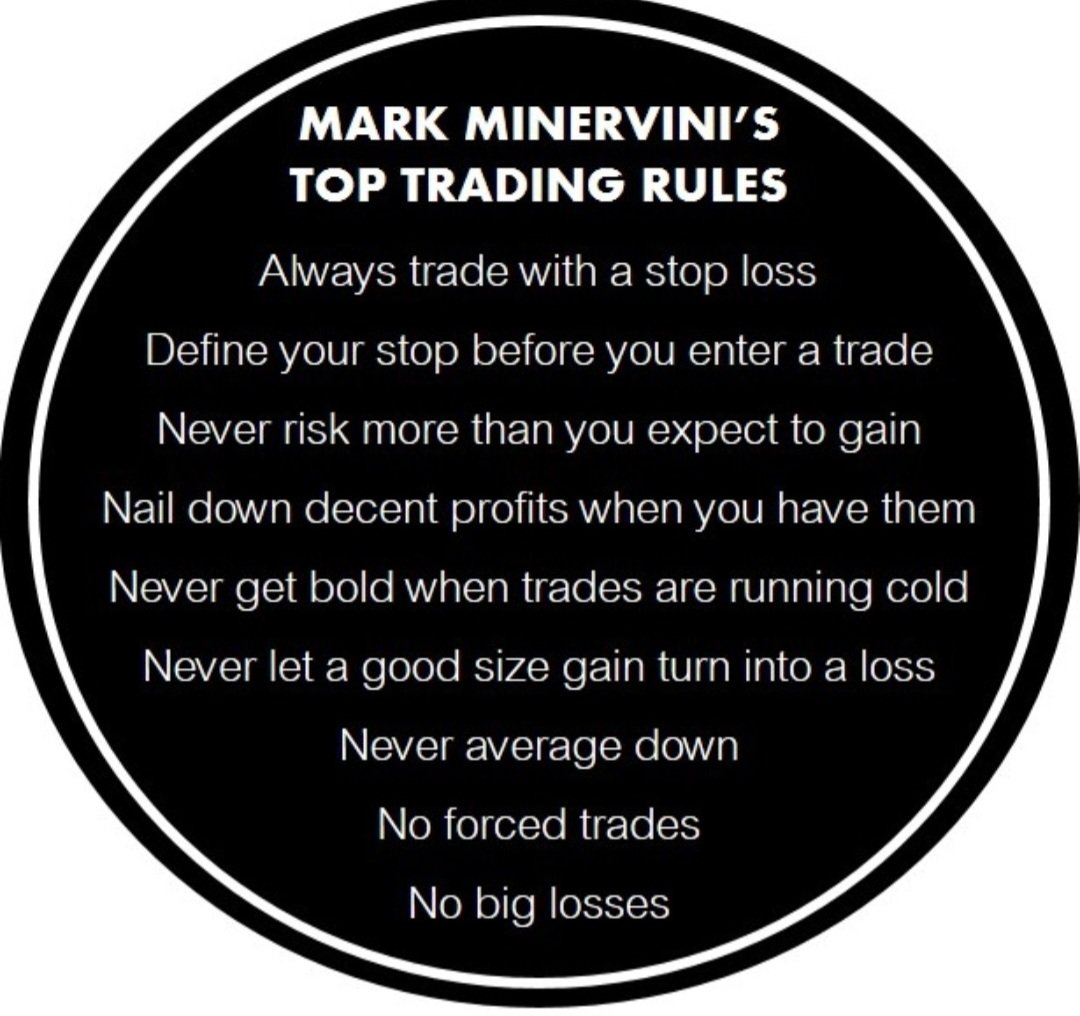
Rules I built a career and a fortune on.
26
227
1,436
131,327
Daniel R retweeted
Most traders are looking for better setups.
Very few are looking for a better fit.
And that’s one of the most underappreciated aspects of sustainable success in trading.
Because trading isn’t just about the market…
It’s about the relationship between you and the way you engage with it.
Trading, by nature, requires you to override deeply wired human tendencies:
> FOMO
> Loss aversion
> Urgency under uncertainty
> The need to be right
> The desire to avoid discomfort
Now layer on top of that:
There are dozens of markets
And within each market…
Hundreds of ways to trade.
So the real question isn’t:
“What’s the best strategy?”
It’s:
“What actually fits me?”
Your:
👉Risk tolerance
👉 Risk capacity
👉Time horizon
👉Ability to process information
👉Emotional reactivity
👉Level of self-control
All of that matters.
More than most want to admit.
But here’s where it gets distorted:
Social media.
Influencers.
Endless education.
Everyone is showing you their way.
Their "P&L".
Their timeframe.
Their style.
And without realizing it…
You start trying to trade someone else’s nervous system.
This is what I see all the time in my 1:1 work.
A trader struggling…
Not because they lack intelligence or work ethic.
But because they’re operating in a style that doesn’t fit who they are.
And when we start doing the deeper work…
Something shifts.
They might:
**Change timeframes
**Adjust holding periods
**Refine position sizing
**Sometimes even switch markets entirely
Not because they’re giving up, but because they’re finally aligning.
As a coach with 25 years plus experience, I've seenthis over and over.
Self-awareness is not the same as passion.
You can be passionate about trading fast…
And completely unsuited for it.
➡️You can be drawn to high frequency action…
➡️And lack the regulation required to execute it well.
➡️You can want a certain identity as a trader…
➡️That has nothing to do with what actually works for you.
And even when self-awareness starts to develop…
It often gets pulled off track by comparison.
“What are they trading?”
“How much are they making?”
“Am I behind?”
That noise disconnects you from your own signal.
Real self-awareness is quieter.
More honest.
Less exciting.
But far more powerful.
It asks:
🔑What kind of environment do I actually perform best in?
🔑When does my decision-making degrade?
🔑What level of risk can I truly tolerate—not just intellectually, but emotionally?
🔑Where does my edge align with my personality?
Because the goal isn’t to force yourself into a mold.
It’s to find the intersection between your edge and your nature.
That’s where sustainability lives.
That’s where consistency starts to emerge.
In the end, trading isn’t just pattern recognition on a chart.
It’s pattern recognition within yourself.
And the traders who last…
Aren’t the ones who copy the most.
✅They’re the ones who see themselves most clearly.
You don’t need a better strategy.
You need a strategy that fits the operator.
Because you’re not just trading the market.
You’re trading your own Inner Market.
If this post resonates, R/T, follow me, like, and BOOKMARK this post. #tradingmindset #tradingpsychology $ES_F $NQ_F $SPY $QQQ
3
13
69
3,758
Daniel R retweeted
Most traders say they trade for personal freedom.
The freedom to not have to work a job they don’t like.
The freedom to set their own schedule.
The freedom to answer to no one.
The freedom to determine their income.
But here’s the uncomfortable truth most never look at:
👉 Many traders end up less free than when they started.
They leave a boss…
Only to become enslaved by their P&L.
By every tick.
By the need to prove something...today.
Freedom gets confused with lack of structure.
Real freedom isn’t doing whatever you want.
➡️It’s being able to do what you said you would do,
even when fear, greed, boredom, or ego show up.
If you can’t follow your plan when you’re down for the day, you’re not free.
You’re emotionally leveraged.
If your mood depends on your last trade, you’re not free.
You’ve outsourced your nervous system to the market.
If you override risk rules because “this one feels different,” that’s not freedom.
That’s compulsion wearing a freedom costume.
True trading freedom looks boring from the outside.
• Fixed risk
• Defined stops
• Walking away when conditions aren’t there
• Accepting missed trades
• Accepting small losses without needing revenge
• Letting profits come without squeezing them for validation
That kind of freedom requires self-mastery, not just market skill.
Most traders don’t fail because they lack intelligence or strategy.
They fail because their Inner Market is running the show.
👉Unresolved pressure to prove worth.
👉Fear of future regret.
👉Old survival patterns around money and success.
Those don’t disappear when you quit your job.
They follow you into the charts.
Here’s where skilled 1:1 coaching changes the game:
Not surface-level mindset hacks.
Not generic advice you forget under pressure.
But precise work on how you actually show up in real time.
• Identifying your specific emotional patterns at the point of execution
• Building real-time awareness of your Inner Market
• Training your nervous system to tolerate uncertainty, not react to it
• Installing structure that you can actually follow when it matters
• Separating self-worth from P&L at a felt level...not just intellectually
Because insight alone doesn’t create freedom.
Embodied self-regulation does.
With the right coaching, traders don’t just “learn more”…
They stop using the market to regulate how they feel.
They stop negotiating with their rules.
They stop needing the next trade to fix the last one.
And that’s when consistency starts to emerge.
Here’s the paradox:
> Structure is what creates freedom.
> Boundaries are what create choice.
> Risk management is what creates psychological space.
When your downside is truly contained, your mind can breathe.
Your perception sharpens.
Your execution stabilizes.
That’s freedom.
Not the absence of rules...
but rules that protect you from the parts of you
that hijack the wheel under pressure.
The market doesn’t take your freedom.
It reveals where you never actually had it.
And that’s not a flaw.
It’s an invitation.
If this post resonates, R/T, follow me, like, and BOOKMARK this post.
#tradermindset #tradingpsychology $ES_F $NQ_F $SPY $QQQ
2
9
49
2,413
Daniel R retweeted
Real transformation isn’t quick.
And it’s definitely not easy.
It’s not repeating a better thought.
It’s facing the one you’re trying to avoid.
The fear of not being good enough.
The vulnerability of being wrong.
The shame of losing.
The exposure of being seen by others, and by yourself.
This is the real work:
➡️Deep honesty instead of surface positivity
➡️Self-truth instead of self-protection
➡️Real-time self-awareness in the middle of risk
➡️Allowing discomfort instead of trying to escape it
Not fixing the feeling...but understanding it.
And it's why skilled 1:1 coaching is so effective.
Because every impulsive trade, every deviation from your plan, is an attempt to avoid something internal.
And this is where most traders get stuck.
Because this type of work doesn’t sound as appealing as what gets sold as "transformation" :
> Quick confidence.
> Effortless discipline.
> “Just reprogram your mindset.”
But the truth?
➡️You don’t outperform your self-awareness.
Unrealistic affirmations preserve ego identity.
Because unexamined fear doesn’t disappear, it waits… then resurfaces under pressure.
The market will expose it
Self-awareness disrupts it.
And that’s what actually creates sustainable improvement.
If this resonates, follow, like, r/t, BOOKMARK this post. #tradingmindset #traderperformance #tradingpsychology $ES_F $NQ_F $QQQ $SPY
1
4
34
1,394
Daniel R retweeted
A MUST READ FOR TRADERS - long but worth it
One of the hardest things in trading isn’t being right.
It’s consistently doing the right thing.
And that’s not simply a "discipline problem".
It’s neurochemistry psychology working against you.
One example from neuroscience...
Impulsive trades often create bigger dopamine spikes than disciplined ones.
Why?
What neuroscientists call Reward Prediction Error.
Surprise rewards from impulsive behavior produce larger dopamine surges, making the behavior more likely to repeat.
Now layer in variable reinforcement... the same mechanism that makes slot machines addictive.
Most impulse trades lose. But the occasional winner rewires your brain far more powerfully than the losses.
Your ego then seals the deal:
“See? It worked.
➡️No.... it was a reinforced compulsion
Markets are dangerous because:
• Bad process can pay
• Good process can lose
• Feedback is often immediate
Your brain often learns the wrong lesson.
✅The solution is counterintuitive:
✔️Stop celebrating wins.
✔️Start rewarding disciplined execution regardless of outcome
Did you follow your plan, size correctly, respect risk?
That’s the win... regardless of P&L.
Rewiring doesn’t happen once. It happens through repetition.
✅Reward discipline often enough, and the brain begins to crave it.
✅Withhold reward from impulse, and the old habit weakens
Consistency isn’t simply willpower.
It’s training your nervous system to want the right reward.
If this resonates, follow, like, r/t, BOOKMARK this post. And comeback to re-read it...regularly.
#tradingmindset #traderperformance #tradingpsychology $ES_F $NQ_F $QQQ $SPY
1
15
119
5,383
Daniel R retweeted
Most traders focus on outcomes.
But the real edge is how you show up.
Self-awareness.
Presence.
Intentionality.
Notice your urges.
Feel the emotions.
Execute your plan anyway.
When those become part of your process, your trading stabilizes, regardless of any trade outcome.
1
2
28
1,250
Daniel R retweeted

Mar 4
Most trading mistakes aren’t technical. They’re emotional: revenge, fear, greed, boredom, ego.
14
6
90
3,622
Daniel R retweeted
OVERTRADING ISN"T ABOUT GREED:
It’s about emotional relief.
Too many trades.
Too much size.
Too much leverage.
Sometimes it follows losses... an attempt to get it back and feel okay again.
Sometimes it happens while winning... because it never feels like enough.
Same root.
Your self-worth is tangled with your P&L.
👉You’re trading to feel validated.
👉To feel competent.
👉To avoid the deeper fear of shame and inadequacy
Instead of focusing on making money this week, what would happen if you made it a primary process goal to sit with discomfort and NOT trade for emotional relief?
Heres' what most struggling traders don’t realize:
The best traders feel the same emotions - FOMO, fear, urgency, doubt.
They’re not special.
They’re trained.
✅They’ve learned to tolerate the normal emotional load of trading without acting out their emotions.
This is a core part of my work with high-achieving clients:
✅Helping them build the capacity to stay with discomfort…so execution isn’t driven by the need for emotional relief.
Make it a primary goal process this week
They don’t trade to feel better. They trade well...despite not feeling better. That’s the real edge.
Instead of focusing on making money this week, make your goal to sit with discomfort and NOT trade for emotional relief.
If you can do that, you'll be pleasantly surprised with your P&L by Friday.
If this resonates, R/T, BOOKMARK, like, & follow.
#tradingmindset #traderperformance #tradingpsychology $ES_F $NQ_F $SPY $QQQ
3
8
35
2,301
Daniel R retweeted

Feb 10
Most people quit right before things start working.
But if they understood this one thing, they'd keep going 👇🏻
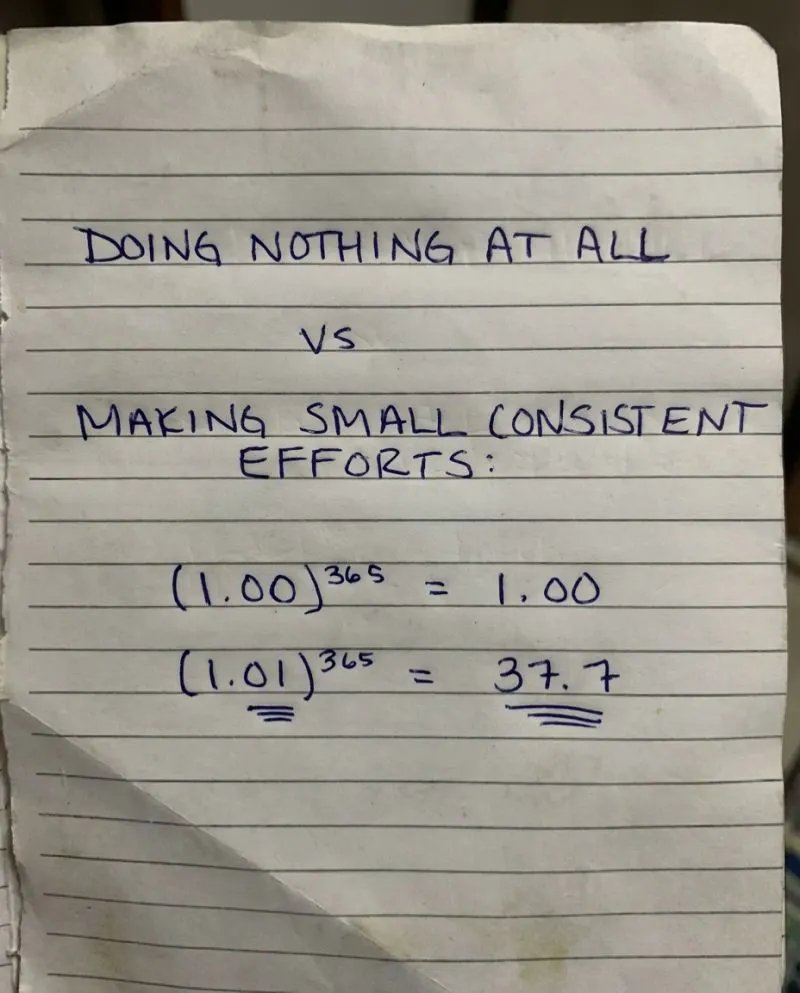
All the growth happens through compound efforts.
Progress rarely announces itself.
There’s no signal that says, “This is the day it compounds.”
So people stop.
They stop because it feels slow.
Because the effort feels ordinary.
Because nothing obvious is changing yet.
What they miss is that growth usually happens
below the surface first.
The work you repeat quietly
is shaping your baseline.
Your thinking.
Your standards.
You don’t notice it while you’re in it.
You notice it later, when things feel easier than they used to.
That’s the effect of compounding.
It doesn’t reward intensity.
It rewards persistence.
A few ideas worth keeping close:
1/ Stay consistent when things feel flat
→ Momentum often builds after boredom, not excitement.
2/ Make progress measurable in actions
→ Track what you do, not what you hope for.
3/ Reduce friction wherever you can
→ The easier a habit is, the longer it survives.
4/ Think in months, not moments
→ Growth needs time to reveal itself.
5/ Protect your patience
→ Most people quit too early to benefit.
The biggest changes don’t come from dramatic moves.
They come from staying longer than feels necessary.
What’s one small action you’re committing to this week?
24
16
90
11,865
Daniel R retweeted

29 Nov 2025
Why Traders Get Hooked on Dopamine Loops:
Trading is unique in that feedback is immediate, public/known (in P&L), and financially consequential.
The volatile schedule of reinforcement mirrors intermittent variable reward systems, the most neurologically addictive pattern known to psychology...found in casinos, social media, and, yes, the markets.
Dopamine is not released when you get a reward...it’s released in anticipation of one.
(While getting my doctorate, I didn't realize how much my love of neuroscience would eventually inform my work)
In trading, every time you place a trade, your brain engages a prediction:
“This will/should work.”
➡️If the outcome exceeds your expectations, dopamine surges.
➡️If it falls short, even if the result is still profitable, dopamine levels may drop.
Neuroscience calls the discrepancy 'reward prediction error', and it forms the core of neurochemical reinforcement learning in the brain.
In practical terms:
👉Winning more than expected = Positive prediction error → Dopamine surge → Reinforces that behavior
👉Winning less or losing = Negative prediction error → Dopamine drop → Creates frustration, hesitation, or revenge trading
This loop literally wires the brain over time. Traders can become addicted not to money itself, but to the emotional high of positive prediction errors.
Likewise, they can spiral when chasing the "corrective dopamine high" that never comes.
The implication?
Even highly disciplined professionals can become dopamine-compromised.
They may:
👉Take impulsive trades to “get back” to their high
👉Overweigh recent outcomes over long-term edge
👉Feel depleted after losses, missed opptys, leaving $ on the table... due to a dopamine dip.
Learning to tame the loop or re-wire the system, is a focus in my work.
Know thyself = Self-awareness = Your best edge
If this resonates, follow, like, r/t, BOOKMARK this post
#tradermindset #tradingpsychology $ES_F $NQ_F $SPY $QQQ
4
10
82
6,825
Daniel R retweeted

9 Nov 2025
How to be consistently profitable in trading
6
181
920
20,415
Daniel R retweeted

8 Nov 2025
Consistent traders trust their process because they have experience.
Struggling traders trust their emotions because they lack experience.
18
14
209
8,914
Daniel R retweeted
8 Nov 2025
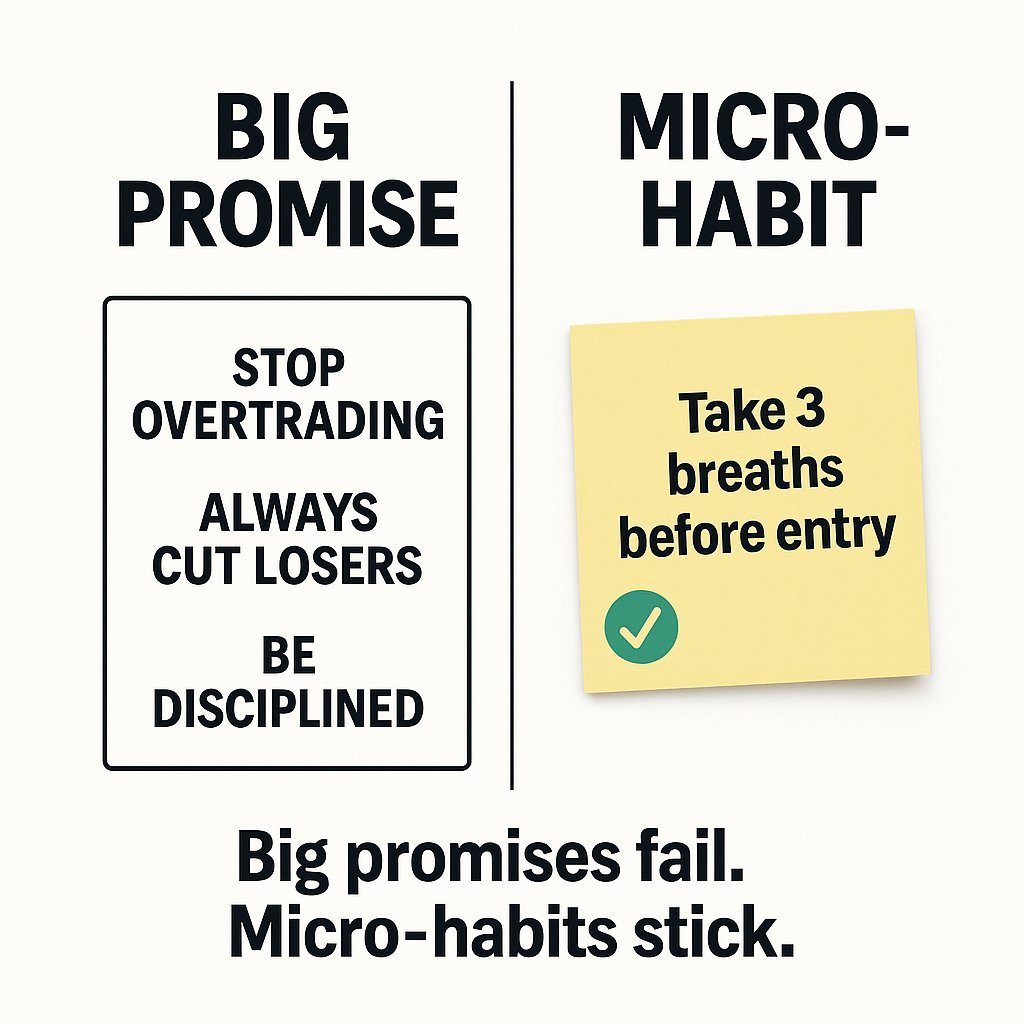
Most traders try to fix bad habits with a big promise:
👉“I’ll stop overtrading.”
👉"I’ll always cut losers.”
👉“I’ll be more disciplined.”
Sounds good… but it usually fails.
Why?
Because sweeping promises are built on willpower. And willpower burns out - especially under P&L or market stress.
What actually works is building micro-habits.
Tiny, repeatable actions that wire your nervous system and mindset to trade better.
Examples I’ve seen work for clients:
✅ Rewarding yourself for following your plan
✅Pausing to take 3 slow breaths before every entry
✅Writing 2 sentences about your emotional state before you enter
These micro-habits don’t feel dramatic. But stack them & do them consistently, and they rewire your behavior.
Over time, they produce the “discipline” traders try to promise themselves.
Stop chasing the big promise. Start with the micro-habit.
That’s how small wins compound into lasting change.
#tradermindset #tradingpsychology $ES_F $NQ_F $SPY $QQQ
1
4
33
1,274

29 Oct 2025
RT @AlphaMind101: Trading is not for the soft-hearted, the ill-disciplined, the impulsive gambler, the weak-willed, the fantasist, the lost…
23
Daniel R retweeted

21 Oct 2025
Just give a few seconds to think about who you are up against when you trade.
In effect, you are competing against the rest of the market.
There will be many people like you—hundreds of thousands, probably millions in total—including some with less experience and many more with greater expertise.
But it doesn't stop there; that is the retail army. There is also the professional side: full-time professional Prop Traders, Hedge Fund Titans, Investors, Asset Managers, and the world's top Investment Bank traders.
Some will be like you, trading against the market, but others will be on the opposite side, making the market. - They have capital, know-how, knowledge, technology, research, data, experience, power, and an edge. YOU are up against these entities.
You might get lucky—randomness often plays a part—but in the long run, randomness evens out. You may find yourself riding a bandwagon that many of the older, wiser traders are avoiding or even puzzled by, choosing to stay out of it. This is something experience has taught them. So yes, you may have seemed like a genius for a while, but bandwagons—except for one or two very lucky or highly astute exceptions—do not constitute a strategy.
So, yes, this is who you are up against—daily, weekly, monthly. And not individually, but collectively.
These players are looking to take your money, your pot, your earnings. They are waiting for you to make an error, to slip up, to spiral out of control, to go on tilt. They want to own you and what you have. They need you to screw up—to overcommit, hesitate, doubt yourself, blink, lose confidence and faith. They need you to bring your ego into it, so your process gets compromised. They need to abandon sound principles of risk management. They need you to undersize and defer when you have an opportunity, it lets them off the hook.
Your sub-par behaviour ensures that some of the what you have goes to them, and what they hold that you might want, isn’t leaving their grasp.
Every day you enter the market therefore you need to be at your very best—present, focused, ready, with purpose and clarity.
You need to know your intent, what you want to do, and how you're going to do it. Then, you must follow through—resolutely, consistently, robustly—each and every day, every second.
If you're not right for it, fit for it, ready for it, or up for it—don’t go in. Step back, step away, take a rest or pause. Because any weakness, and ‘THEY’ will pounce.
Think of it like a sports match: if you have an injury, an illness, or just aren’t in the right frame of mind, you don’t play. If you do, you’ll almost certainly get smashed and may even worsen your injury, illness, or situation—compounding the damage further.
Trading is not just a game; it’s life. Take it seriously. Treat it seriously. Be prepared. And more than anything, know what you are doing and how you are going to do it. The predators are hunting, waiting to take you apart.
Have fun!!!!
12
26
145
7,748
Daniel R retweeted
27 Sep 2025
I posted a slightly updated version to my family & friends Facebbok page. Here it is:
My Secret to Success
Most people are very opinionated (I certainly am). They think they know the answers to far more than they actually do. In reality, their opinions are fueled not by true confidence, but by ego and insecurity. Ironically, this often makes them appear very confident on the surface.
But here’s the truth: most people are not super successful because they lack the most important ingredient of growth—humility. They don’t have the willingness to admit they might be wrong, or the openness to learn from someone better. Many aren’t even open to the possibility that they may be wrong. I'm not talking about trying kale or something trivial, i
I'm talking about challenging your strongest beliefs that you feel so certain about.
Ask yourself these questions:
If you’re so smart, why aren’t you rich?
Why haven’t you invented something that changes people’s lives?
Why don’t people follow you, respect you, or look to you for guidance?
Why aren’t you happy, fulfilled, or living with purpose?
Why haven’t you achieved something truly great that few are able to accomplish?
Why don’t you have the most amazing life?
The answer is simple: you’re not that smart! And until you admit that, you’ll never become that smart.
Your mind is already full. Your cup is overflowing, leaving little room for new knowledge and perspectives. You’re uncoachable.
The first step to becoming great is to admit that you suck.
The second step is to believe that you could be great.
The third step is to find somebody who is great and willing to teach you.
The fourth step is to shut your mouth—and listen.
That’s the formula. Everything else comes after. There is no growth in what you already know. And if what you already know was so valuable, then you would already be a huge success.
My greatest personal strength—and the secret to my success—is my willingness to truly be a lifelong student and to never stop seeking the truth from those who know more than me. I love learning, and I never want to be someone who doesn’t need to learn.
I’ve climbed huge mountains and I’ve achieved things that few have been able to achieve. But I never once believed I’m smart enough to stop learning, and I never once believed that I was so smart that I couldn’t learn from even a bum in the street.
I’m always listening and looking for lessons. I maintain a high level of curiosity, even when I firmly disagree. Because growth is in the unknown. Growth is in the things you don’t understand. And often, when we think we fully understand something, we don’t. We are just comprehending through our own lens, with confirmation bias playing a major role in our conclusions.
The mind is like a book—it’s only good when it’s open.
This principle was taught to me by the kindest, most beautiful person I have ever known, my Mom. God rest her wonderful soul. 😇🙏
27 Sep 2025

Most people are opinionated. They think they know the answers to everything. But in reality, their opinions are fueled not by true confidence—but by ego and insecurity. Ironically, this often makes them appear very confident on the surface.
But here’s the truth: most people are not successful because they lack the most important ingredient of growth—humility. They don’t have the willingness to admit they might be wrong or the openness to learn from someone better.
Ask yourself these questions:
If you’re so smart, why aren’t you rich?
Why haven’t you invented something that changes people’s lives?
Why don’t people follow you, respect you, or look to you for guidance?
Why aren’t you happy, fulfilled, or living with purpose?
Why haven’t you achieved something truly great?
Why don't you have the most amazing life?
The answer is simple: you’re not that smart. And until you admit that, you’ll never become that smart. Your mind is already full. Your cup is overflowingwith little room for new knowledge. You’re uncoachable.
The first step to becoming great is to admit that you suck.
The second step is to believe that you could be great.
The third step is to find somebody who is great and willing to teach you.
The fourth step is to shut your mouth—and listen.
That’s the formula. Everything else comes after.
My greatest personal strength and the secret to my success is my willingness to truly be a lifelong student and to never stop seeking the truth from those who know more than me. I love learning, and I never want to be someone who doesn't need to learn.
45
115
941
133,929
20 Aug 2025
RT @AlphaMind101: Trading is a Performance Activity, and you as a trader need to think the way top Performers think!
👀Totally immersed in…
18
Daniel R retweeted

12 Jul 2025
You were told to remove emotion and trade like a robot.
You were told more trades = more money.
You were lied to.
Today we learned what real edge actually looks like: 🧵
30
72
441
100,195