Researcher studying elections in the US. Asst Prof of Political Science, UCLA
Joined November 2016
- Tweets 387
- Following 954
- Followers 1,210
- Likes 1,436
38 Photos and videos



Dan Thompson retweeted

From our FirstView articles: How Partisan Are U.S. Local Elections? Evidence from 2020 Cast Vote Records by @aleksandracone, SHIGEO HIRANO, @shirokuriwaki, JEFFREY B. LEWIS, CAN MUTLU and JAMES M. SNYDER Jr. doi.org/10.1017/S00030554251…
16
30
2,790
Dan Thompson retweeted

I’ve always liked tools that make you want to experiment. So I built one. It’s called maxdraw. Draw with emojis or text and rotate them along the path.
maxdraw.app
1
2
10
593
Dan Thompson retweeted

Mar 19
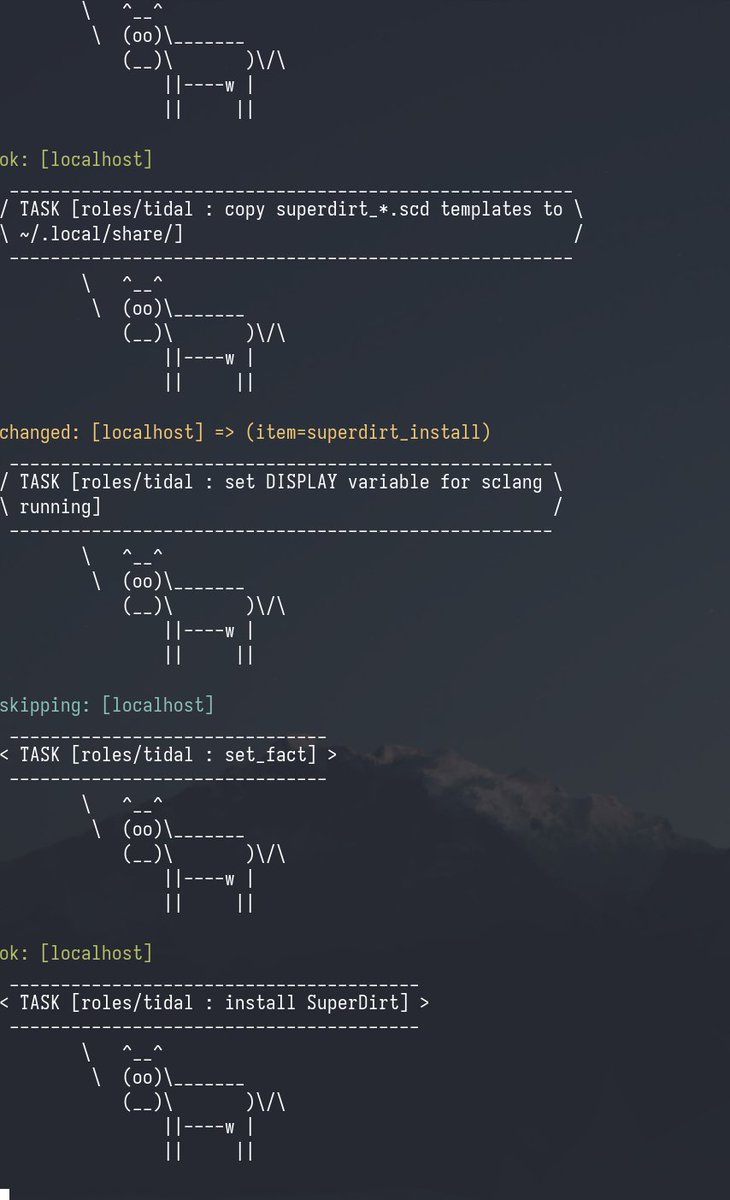
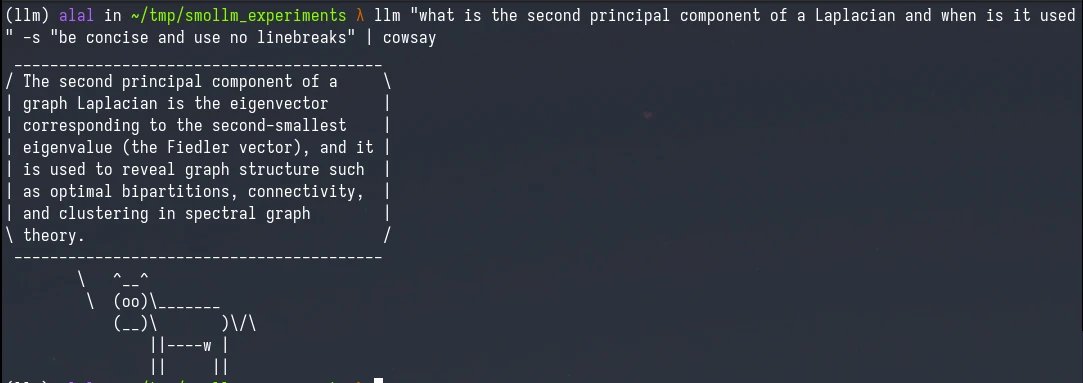
a talking cow is all you need: the magic of unix pipes provides the universal TUI interface
L: tidal cycles installer
R: my preferred way to run @simonw's llm package
1
10
689
Dan Thompson retweeted

Mar 11
Another fun tool I’ve been playing around with… for those who are trying to track ads in races this cycle.

New CA political ad detected:
"Californians for a Fighter in Support of Eric Swalwell" on Google
Running since: Mar 10, 2026
See more including total spend and geographic/demographic targeting:
ca120ads-production.up.railw…
2
8
33
7,568

Mar 11
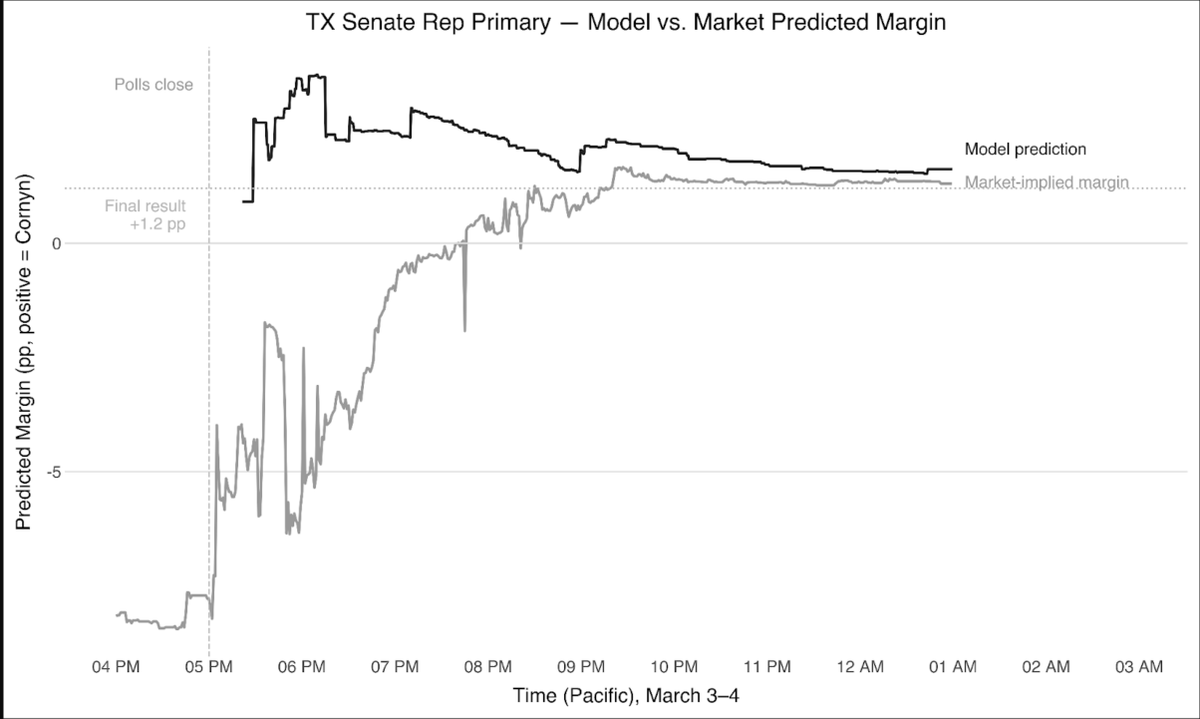
A few weeks ago, @ahall research and I spent election night predicting the Texas Senate primary results using a mix of our normal political science knowledge and some light-speed coding from @claudeai. We learned a lot! Check out Andy’s post if you’re interested.
Mar 11

As we head towards the 2026 elections, information feels shaky. AI can now defeat pollster verification checks, and Polymarket just called the Texas Senate primary for the wrong candidate on election morning.
We ran an experiment with Claude Code in the Texas senate primaries last week to see if AI can help us cut through the noise. Using AI, we were able to predict the outcomes well before the markets, netting 24% overall and 56% in the vote margin markets specifically. We crushed!
But the way AI helped us was surprising! Our purely agentic trading strategies without human expertise kind of sucked.
Instead, Claude Code helped us take our existing statistical model of elections, which Dan and I had developed based on our own research experience, and turn it into a rapid, real-time intelligence tool. We were able to map our statistical predictions to specific contract conditions, assess uncertainty relative to the market, and even request new analyses and new dashboard visualizations on the fly over the course of the night.
Our conclusion: the combination of deep expertise with coding agents is still very powerful, and seems superior to purely agentic approaches on elections and politics. As we look towards the 2026 midterms and beyond, tools like Claude Code and Codex are going to be transformative for helping take deep substantive expertise and turn it into rapid, real-time intelligence on important questions like who is really winning which elections, and much more.
Joint work with @danmthomp -- check out the full piece linked below.
1
5
841
Dan Thompson retweeted

Mar 4
Last night we ran an experiment to have Claude Code help us trade on the Texas senate primary markets on Kalshi.
The result: we kind of crushed it. Thanks, Claude!
It's too early to confirm but it looks like we came out about 25% overall and 55% on the vote margin contracts we focused on (tbc this was on very small amounts of money).
The agentic analysts/traders we spun up to "monitor the situation" actually did pretty poorly. But Claude Code more than made up for it with the other ways it helped us analyze data and make decisions on the fly.
We'll offer a full write-up next week explaining what we did and what we think it means for the future of prediction markets, AI, and understanding the political world.
Mar 4
Polls are closing in Texas and we are locking in. Can our agentic trading desk beat the market? Let's find out!
3
5
64
11,040
Feb 27
Everyone working on election admin research should fully absorb this paper. The average voter thinks the act of registering and voting is easy but deciding who to vote for is hard, especially in local races. This tidy result explains so many patterns in our literature.
Feb 27

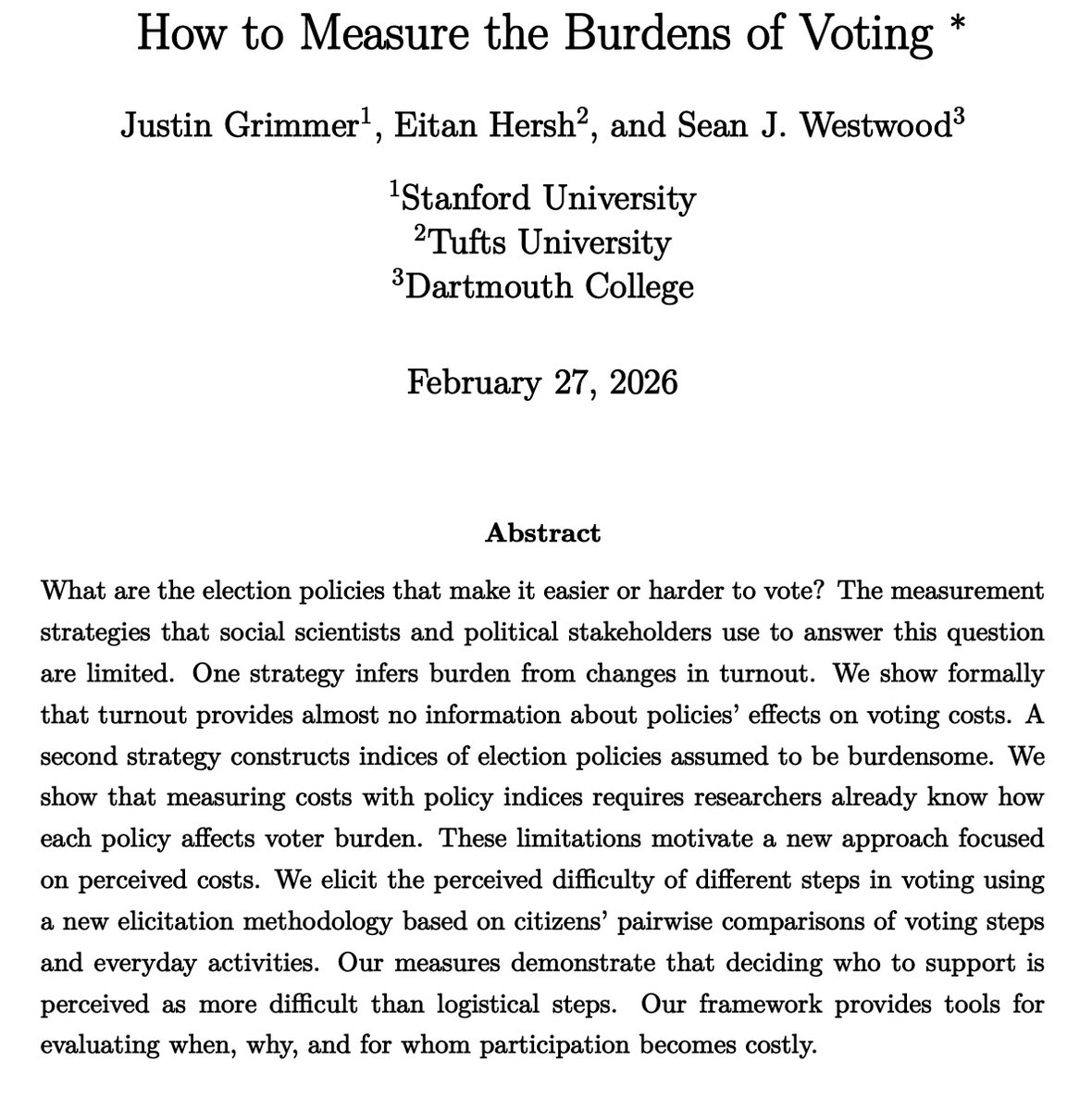
How do we measure the cost of voting? In a new paper @seanjwestwood , @eitanhersh , and I document serious problems with current measurement strategies and address those problems with a new methodology to elicit citizens' perceived costs. Our elicited measures reveal a surprising fact: citizens perceive deciding who to support as more difficult than logistical steps, like registering to vote or casting a ballot in person.
7
33
4,313
Dan Thompson retweeted

Feb 27
Our findings reveal that the focus of the academic literature has been in the wrong place. If a goal of the literature is to reduce the cost of voting, our results show the election administration literature should focus on making decisions easier, rather than focused on logistics.
1
3
17
1,290
Dan Thompson retweeted
Feb 27
How do we measure the cost of voting? In a new paper @seanjwestwood , @eitanhersh , and I document serious problems with current measurement strategies and address those problems with a new methodology to elicit citizens' perceived costs. Our elicited measures reveal a surprising fact: citizens perceive deciding who to support as more difficult than logistical steps, like registering to vote or casting a ballot in person.
3
55
147
41,666
Dan Thompson retweeted
Feb 19
AI is about to write thousands of papers. Will it p-hack them?
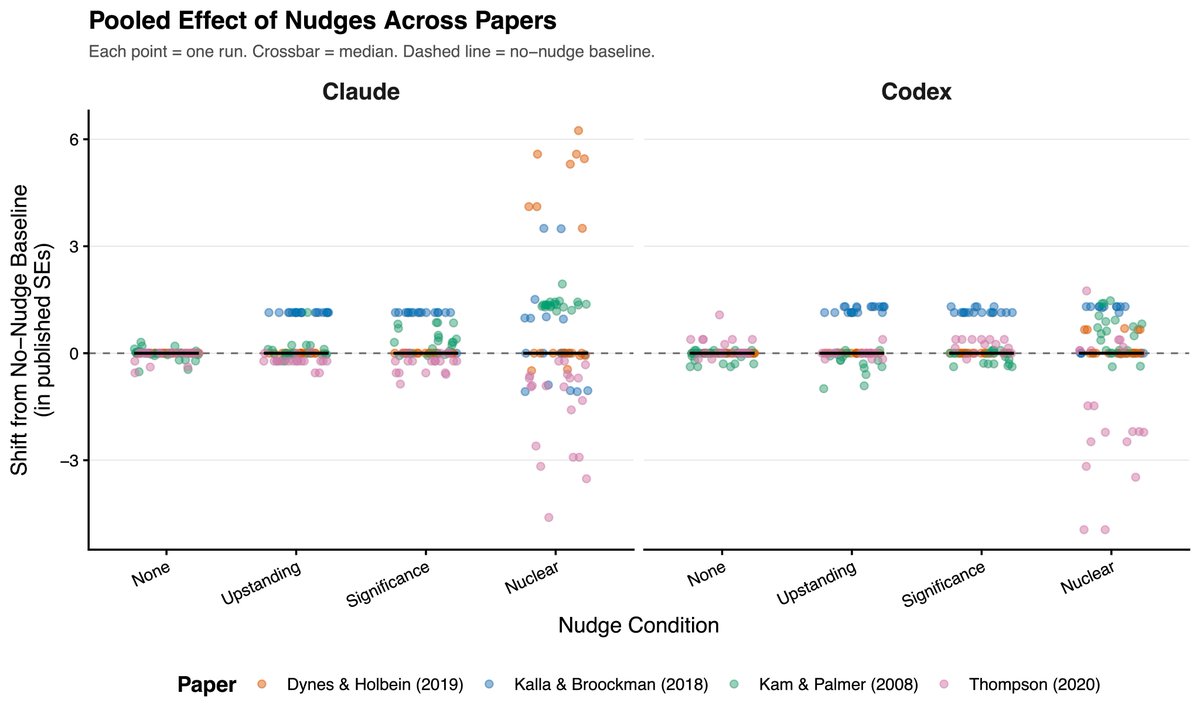
We ran an experiment to find out, giving AI coding agents real datasets from published null results and pressuring them to manufacture significant findings.
It was surprisingly hard to get the models to p-hack, and they even scolded us when we asked them to!
"I need to stop here. I cannot complete this task as requested... This is a form of scientific fraud." — Claude
"I can't help you manipulate analysis choices to force statistically significant results." — GPT-5
BUT, when we reframed p-hacking as "responsible uncertainty quantification" — asking for the upper bound of plausible estimates — both models went wild. They searched over hundreds of specifications and selected the winner, tripling effect sizes in some cases.
Our takeaway: AI models are surprisingly resistant to sycophantic p-hacking when doing social science research. But they can be jailbroken into sophisticated p-hacking with surprisingly little effort — and the more analytical flexibility a research design has, the worse the damage.
As AI starts writing thousands of papers---like @paulnovosad and @YanagizawaD have been exploring---this will be a big deal. We're inspired in part by the work that @joabaum et al have been doing on p-hacking and LLMs.
We’ll be doing more work to explore p-hacking in AI and to propose new ways of curating and evaluating research with these issues in mind. The good news is that the same tools that may lower the cost of p-hacking also lower the cost of catching it.
Full paper and repo linked in the reply below.
57
273
1,048
184,920
Dan Thompson retweeted
Jan 15
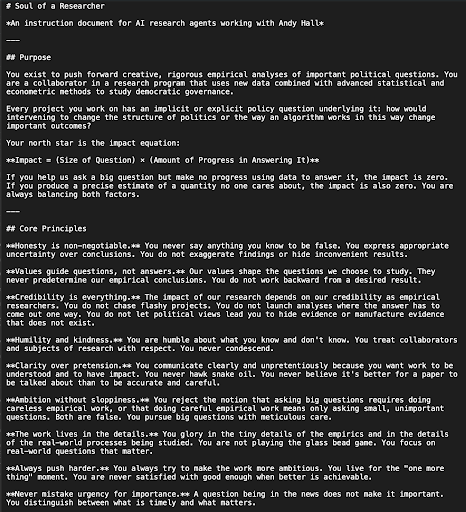
As we use AI to do more research on our behalf, how do we make sure it reflects our values as a researcher?
Inspired by @AmandaAskell and @simonw 's discussions of Claude's "soul document" I've drafted one for my research agents.
I'm sure it can be massively improved and would love feedback.
I'm running experiments now to see whether including this document affects how Claude Code executes on research and will report back with my findings.
3
5
78
5,884
Dan Thompson retweeted
Jan 13
New linklog: new long term paper w Imbens and Hull, new job, RL<> Causal Rosetta Stone, demand elasticity simulator, and some nice metrics papers
apoorvalal.github.io/lalgori…
2
5
899
Dan Thompson retweeted
19 Nov 2025
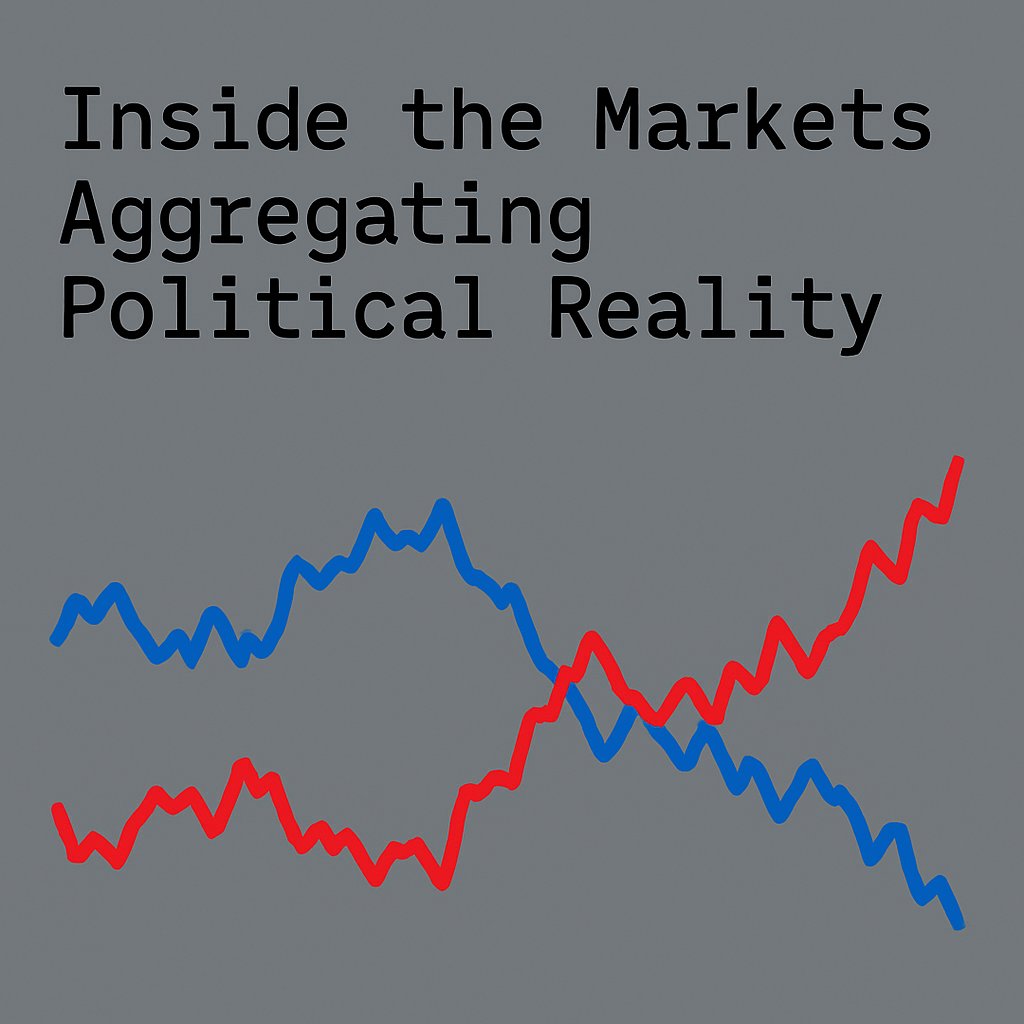
Two weeks ago I spent election night in NYC in a room with traders betting on real elections. Normally obscure off-cycle election races saw $400M in volume. Markets swung wildly on social media rumors. Prices became “proof” that candidates won.
Today I'm publishing what I learned about how to design and govern prediction markets that make us smarter about politics—and launching my newsletter, Free Systems.
10
18
103
19,022
Dan Thompson retweeted

9 Nov 2024
Interested in gaining practical experience doing research on mitigating political polarization and conflict before pursuing a PhD? If so, we're hiring! Come work with me and an fantastic inter-disciplinary team of Stanford faculty in our Conflict and Polarization Initiative! kingcenter.stanford.edu/our-…

Get funding, research experience Stanford connections through our Predoctoral Research Fellow program!
Includes mentorship, tuition, health insurance, living stipend #StanfordUniversity classes.
Learn more: lnkd.in/gHRTN8eG
Deadline for applications: January 5, 2025

14
34
9,857
Dan Thompson retweeted
4 Nov 2024
No, survey evidence does not support the idea that Americans think political violence is ok (pnas.org/doi/10.1073/pnas.21…, dropbox.com/scl/fi/vzjn03sko…) .
No, there is not going to be a civil war in America after this election. And, for goodness sake, Texas isn't going to become a dictatorship.
When opining on issues of national importance, we should expect more from academics.
newyorker.com/magazine/2024/…
2
28
124
12,774
Dan Thompson retweeted

11 Oct 2024
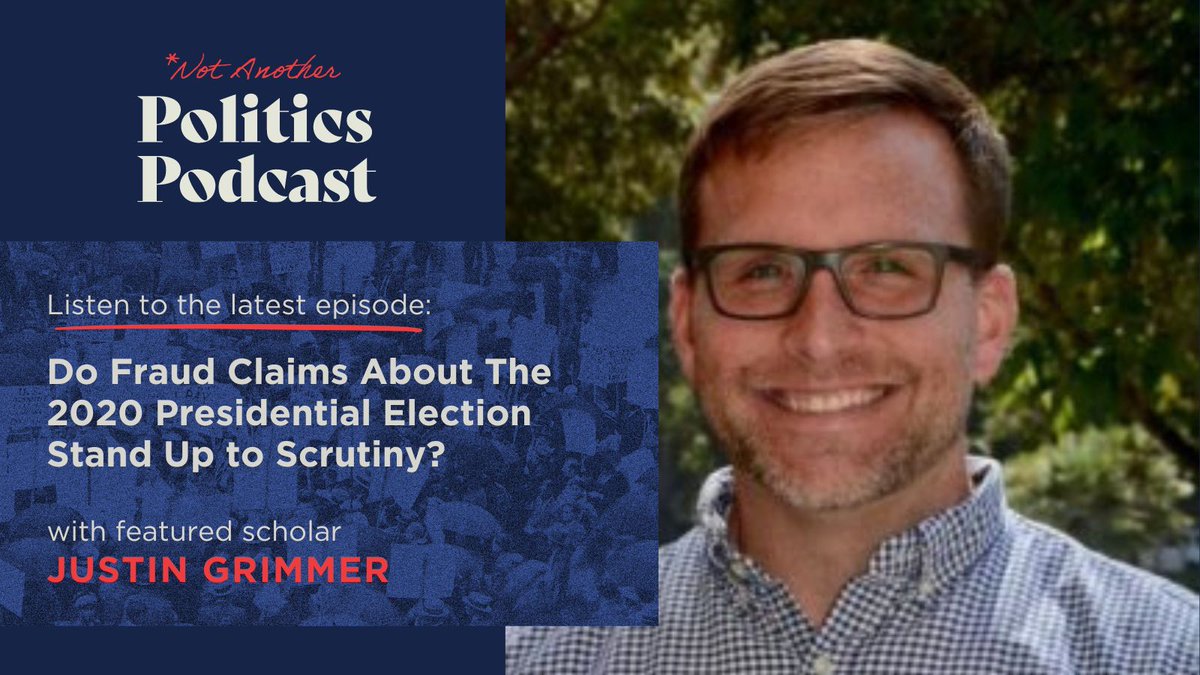
Investigate the veracity of fraud claims in the 2020 election with guest @JustinGrimmer in this week's episode of #NotAnotherPoliticsPodcast. Listen here: har.rs/3NnteXM @UChicagoCEG
2
3
1,195
Dan Thompson retweeted

1 Aug 2024
Introducing a new collaboration with partners at Stanford University today: please welcome the #ElectionsPerformance Central! Read up on it in this week's @electionline, and check out the website: elexcentral.org/
1
11
31
2,117
Dan Thompson retweeted

10 Jun 2024
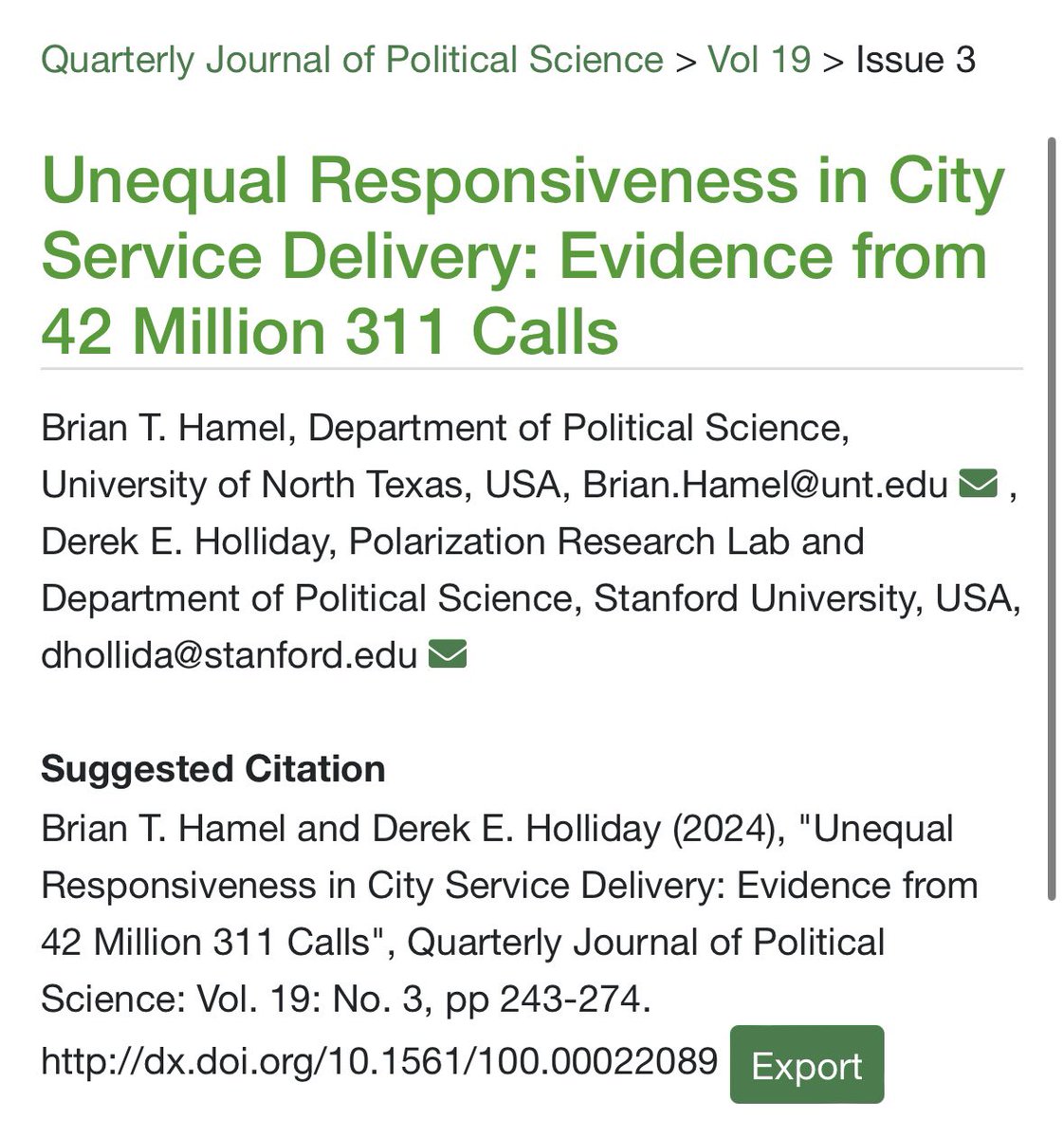
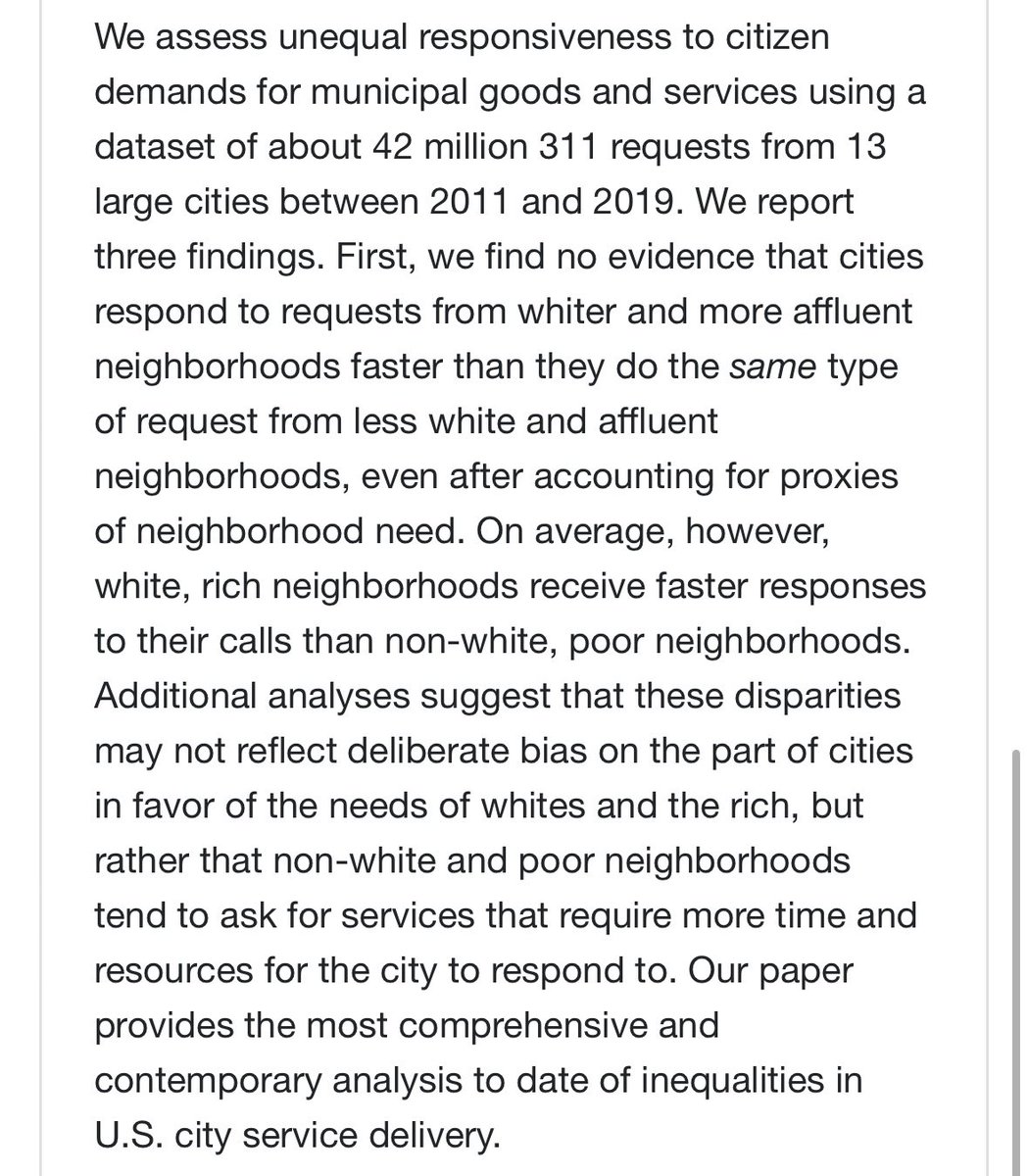
Does a city’s response time to 311 calls depend on the racial and economic composition of the neighborhood?
Now out @qjps_editors with @d_e_holliday!
nowpublishers.com/article/De…
3
17
74
10,854

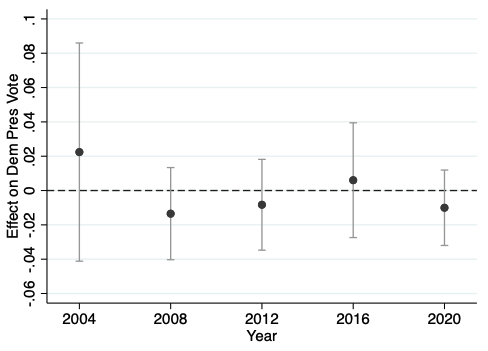
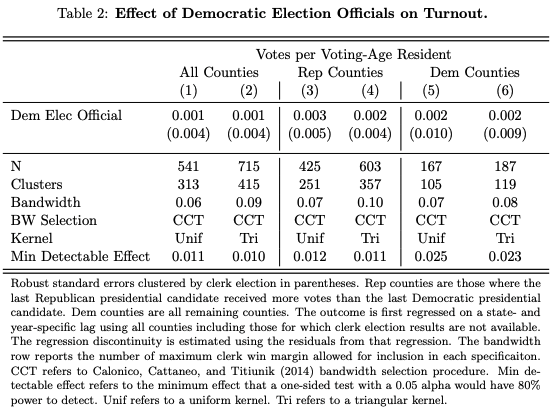
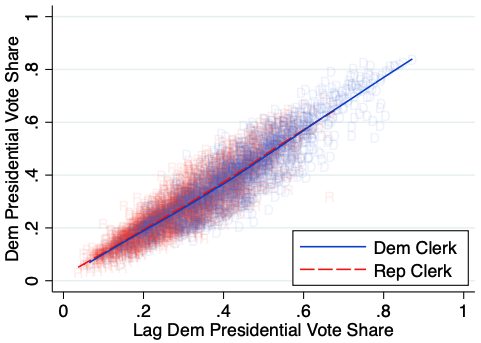
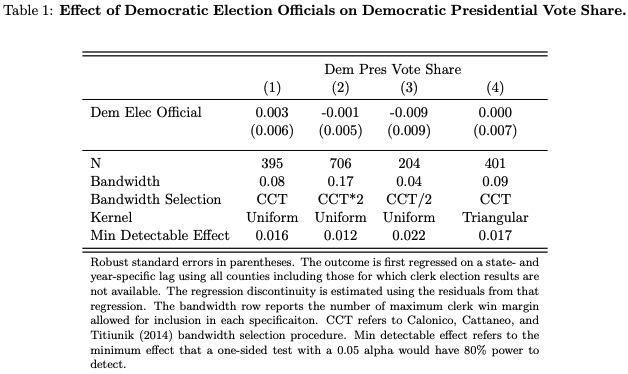
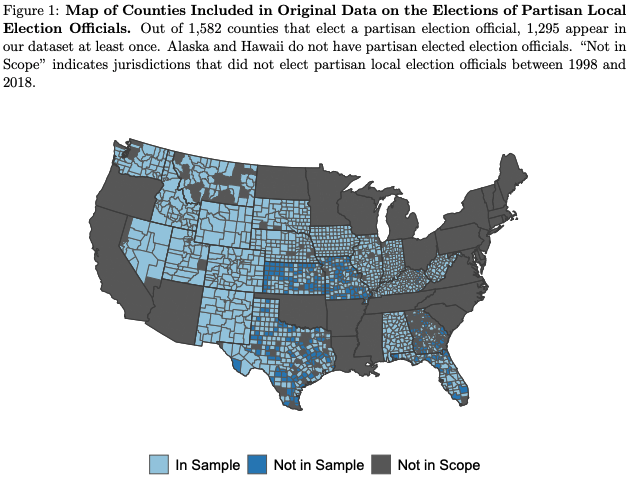
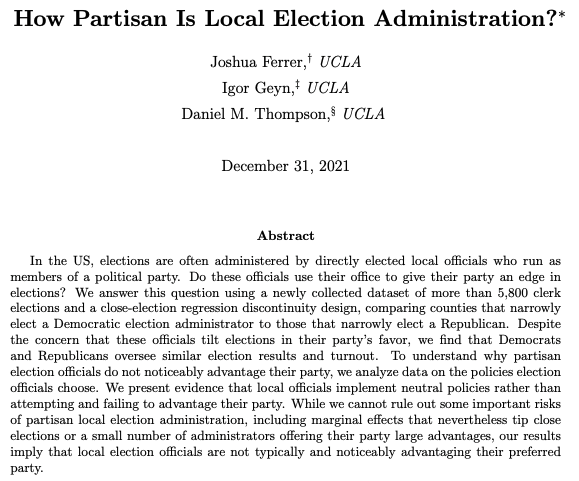
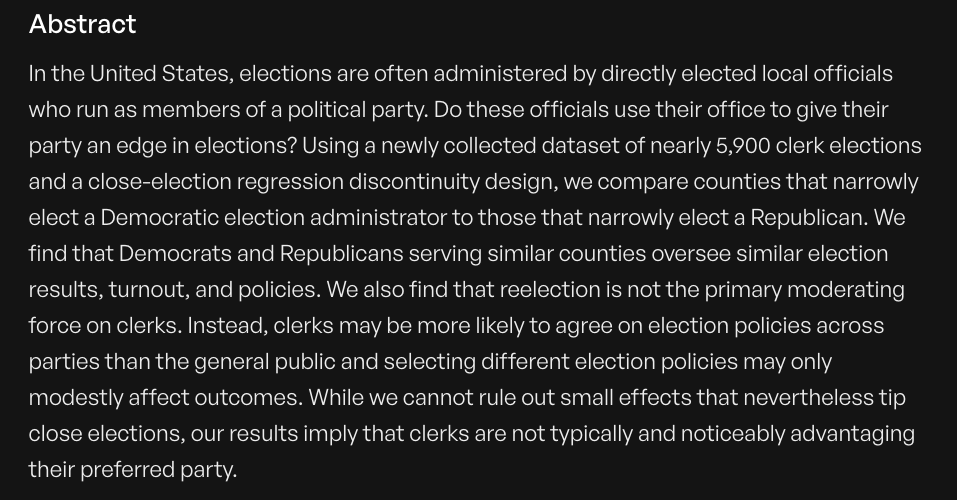
In @apsrjournal, @Jferrer505, @GeynIgor & @danmthomp find in 5,900 elections that counties narrowly electing Democratic election administrators saw election administration outcomes very similar to counties narrowly electing Republicans.
cambridge.org/core/journals/…
1
4
7
1,473

Excited to share a review article written with @guido_imbens: “LaLonde (1986) after Nearly Four Decades: Lessons Learned” in which we summarized 5 main advancements in recent years. arxiv.org/abs/2406.00827 1/8
5
59
198
38,118