
Founding Partner & CEO @LEV_Capital. Doer not advisor. Reserve in public is more efficacious than argumentation. - John Adams
Joined November 2012
- Tweets 1,393
- Following 436
- Followers 1,845
- Likes 2,205
80 Photos and videos

















17 May 2024
A great man. Christian. Father. Leader. Friend.
17 May 2024

Adam Soldati steps down as Purdue diving coach, Olympic champ David Boudia takes over jconline.com/story/sports/co…
2
487
4 May 2024
I’m so proud of the foundations our team has laid. Now we climb.
4 May 2024

We began expanding geographically 9 months ago in 3 business lines: Skydive, Autoglass and Tool & Die. Our team is on pace to double in 12 months. Help others climb.
1
5
823
Daryl Starr retweeted

27 Mar 2024
Most investors underestimate the frequency of moats and overestimate their size.
They assume large companies have moats and small companies don’t.
6
14
96
26,033
Daryl Starr retweeted

2 Mar 2024
Who are the experts / have experience in bringing a brand to a new city? Own Perfection Closets in Chicago and bringing it to Minneapolis and then other cities. What are the areas to focus on - SEO? Paid? Radio? Print? TV?
Who should I be talking to here?
Any retweets are appreciated
5
2
9
3,885
11 Jan 2024
Next week I speak to a group of business owners about my experience investing. My plan? Run through my blunders. Hope there’s time for questions.
8
523
17 Nov 2023
Make a decision. Get to work. Need help? Hire a contractor. Have the work scoped even tighter? Will it remain recurring? Hire an employee.
2
179
23 Sep 2023
This session @girdley led @HoldCoConf was on point. Help people see what you’re about —and what’s in it for them— from the first interaction.
22 Sep 2023

If your job posting is so boring that you’d never apply, rewrite it.
Or make the job more exciting.
Or both.
That’s how you attract real A-players.
—
I have friends that are like “know anyone for this role?”
I read the description and tell them:
“No. That job sounds awful. Not just me but every person in the world.
Today, hiring is marketing and then selling.
But many do it like it’s still 1975.
—
Most of fixing job postings is not that hard:
• Fun job title
• Exciting growth opportunities
• Emotional words in the listing
• Talk about the candidate; less about your company
• Tie it to an inspiring mission
• Clearly indicate you value people
• Throw in a video of you selling the role company
—
The best thing I heard at @HoldCoConf this week:
Many companies now don’t let HR edit the job descriptions written by hiring managers.
Some didn’t even let HR talk to candidates at all.
Genius.
6
925
Daryl Starr retweeted

17 Jul 2023
Because we buy smaller companies at Decada, we often get ourselves into businesses that lack operating maturity. We have to go build it.
But as a small business holding company, if we buy too many companies with low operating maturity at one time, we’re in for a world of chaos.
So each quarter we sit down and grade each of our companies on a 1-5 scale. The aggregate score across our 5 companies often reflects how stable or tumultuous things are in our portfolio — so this score that tells us when we’re ready to make our next acquisition.
We aim for a 3.0 aggregate score. Today we’re at a 2.2. We have progress to make internally, so we’re not actively looking for acquisitions externally.
Here’s a short thread on how our Operating Company Maturity Scale works. I’ll share why we developed it, how we use it to set expectations with our operating leadership teams, and what we do to raise our score.
To start, a lack of operating maturity can look like:
- Undocumented processes
- A new or less experienced leadership team
- Pen/paper systems
- Significant key person risk
- Unpredictable financials
- Low culture / eNPS scores
- A constant barrage of fires…
Sometimes in small business you feel like you’re a sneeze away from everything breaking. We work to solve that and build in more durability.
Long term, the pathway to realizing our mission at Decada Group is to guide our companies down 2 paths:
Financial Growth. This is self explanatory. By driving earnings, we’re able to hire great people, expand the business, and realize our mission.
Improved Operating Maturity. By improving maturity, we build durability, redundancy, and autonomy into each of our companies.
This sets a clear expectation for our operating leadership: strong earnings are great. But if it requires a lot of hand-holding or duck tape to keep the machine together, we still have work to do.
In other words, we care about more than just raw EBITDA results. We have to get there the right way.
EBITDA is easy to measure. But the other part felt squishy and subjective. So ~6 months ago we created a rubric to bring in some objectivity and to make it a scoreboard.
The maturity scale helps set another important expectation: how much involvement to expect from us.
Great leaders want autonomy. They want to be left alone to succeed.
So if you’re operating in the 4.0 - 5.0 territory, we’re out of your hair. Think of us as a board of directors, available to approve budgets and big decisions. But we trust you with the rest.
If you’re operating in the <2.0 range, expect us at your side in the trenches, running meetings, assisting with hiring, and implementing systems and software.
Here’s how our Operating Company Maturity Scale works.
We have 8 pillars of operating maturity:
- Durability of Growth
- Team & Culture
- Operator Leadership
- Operational Maturity
- Management Team Maturity
- Leadership Redundancy
- Financial Predictability
- Financial Position
They’re imperfect, but get us there directionally and I’m sure they will evolve with time.
We grade each pillar on this 1-5 scale:
1 - Nonexistent. Business does not demonstrate this competency in any capacity.
2 - Basic. Business demonstrates this competency only to a very small extent.
3 - Intermediate. Business demonstrates this competency - but does not apply it consistently, needing regular support.
4 - Advanced. Business demonstrates this competency regularly and is proficient in dealing with it, needing little support.
5 - Master. Business is a master in this competency and applies it at the highest level. A role model for others.
Each quarter we sit down to grade our businesses across each of the 8 pillars. The average across the 8 pillars sets the overall score for the company.
As a 2.5 year old holding company with mostly new acquisitions being led by mostly new leadership teams, the score is increasing each quarter. When a key person departs, the score tends to drop.
The average of all 5 companies creates an aggregate score for Decada. When we acquire a company, the company's score starts low. That’s fine, it’s part of the process.
Because we only buy businesses we plan to own for multiple decades, it’s worth it to us to burn down EBITDA to make one-time investments in time and capital to get the business on a successful multi-decade trajectory.
We call that our carwash (name stolen, with gratitude, from @chenholdco) and see our involvement in the <3.0 range as a one-time investment to build long-term sustainability.
The long-term goal is to assist our companies in getting in the 4.0 - 5.0 range, which looks like:
- An exceptional, seasoned CEO with industry experience and a vision for the next 3-5 years.
- A strong, experienced leadership team.
- A strong balance sheet.
- Strong redundancy across key people and process
- Great results across the board.
We view this as a decade journey. One foot in front of the other.
16 Jul 2023

Heard something super interesting and profound that I am implementing across our holdings.
@chasemurdock was on a podcast a few months ago and discussed the (paraphrasing) 'Operating Maturity' of each business.
Each quarter he and his partner score each OpCo 1-5 on maturity basis re: their involvement.
5 = Decada (Chase group) is effectively a board of directors
1 = Decada is in the trenches on the front line with the operator
Their goal is to raise each OpCo a level of maturity, and they won't acquire new companies until the aggregate score is above 3.0
@chasemurdock - did I have this right? and what is 2, 3, 4 ratings?
31
31
266
188,849
Daryl Starr retweeted

27 Jun 2023
Building a credible sales development function can greatly reduce the hunger for more business acquisitions in order to fuel growth.
And when applied to a new acquisition, can be rocket fuel.
3
2
28
6,231
Daryl Starr retweeted

2 Jun 2023
We’ve finally felt the impact of no controller/CFO, and I have to admit the results weren’t what we expected …
@joshuamschultz ripped out all of our ERP’s, completely redid the processes/training & team went through first monthly closing
Ended up closing May last night at 8pm 🤯
Goal is 3 days w/ banks, payroll, credit cards, etc needed before we can close, just happened to all hit first day this month. Used to be a 2-3 week process to get anywhere near the data and insights we can now get in real time
Oh, and he also fully integrated the largest acquisition we’ve ever done in a month plus swapped out all of our corporate cards for a new vendor
First principles folks
20
1
106
175,037
2 Jun 2023
We use both @LEV_Capital
Messed up by skipping KPI’s and going straight to OKR’s first. Need both.
This is a good overview.
31 May 2023

Most companies confuse OKRs & KPIs.
They get nowhere and it costs them millions.
Give me 3 minutes and I'll explain (in plain English):
• What they are
• When to use which one
• How to use BOTH to accelerate growth
Let's dive in:
1
2
2,091
29 Nov 2022
2
5
Daryl Starr retweeted

17 Nov 2022
Controversial Take:
I am happy inflation is here.
Now is the time to fix our manufacturing problem at home! There is a lot at stake.
Here is what I mean...
4
4
57
16 Nov 2022
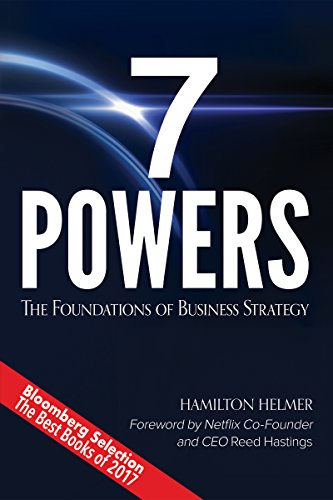
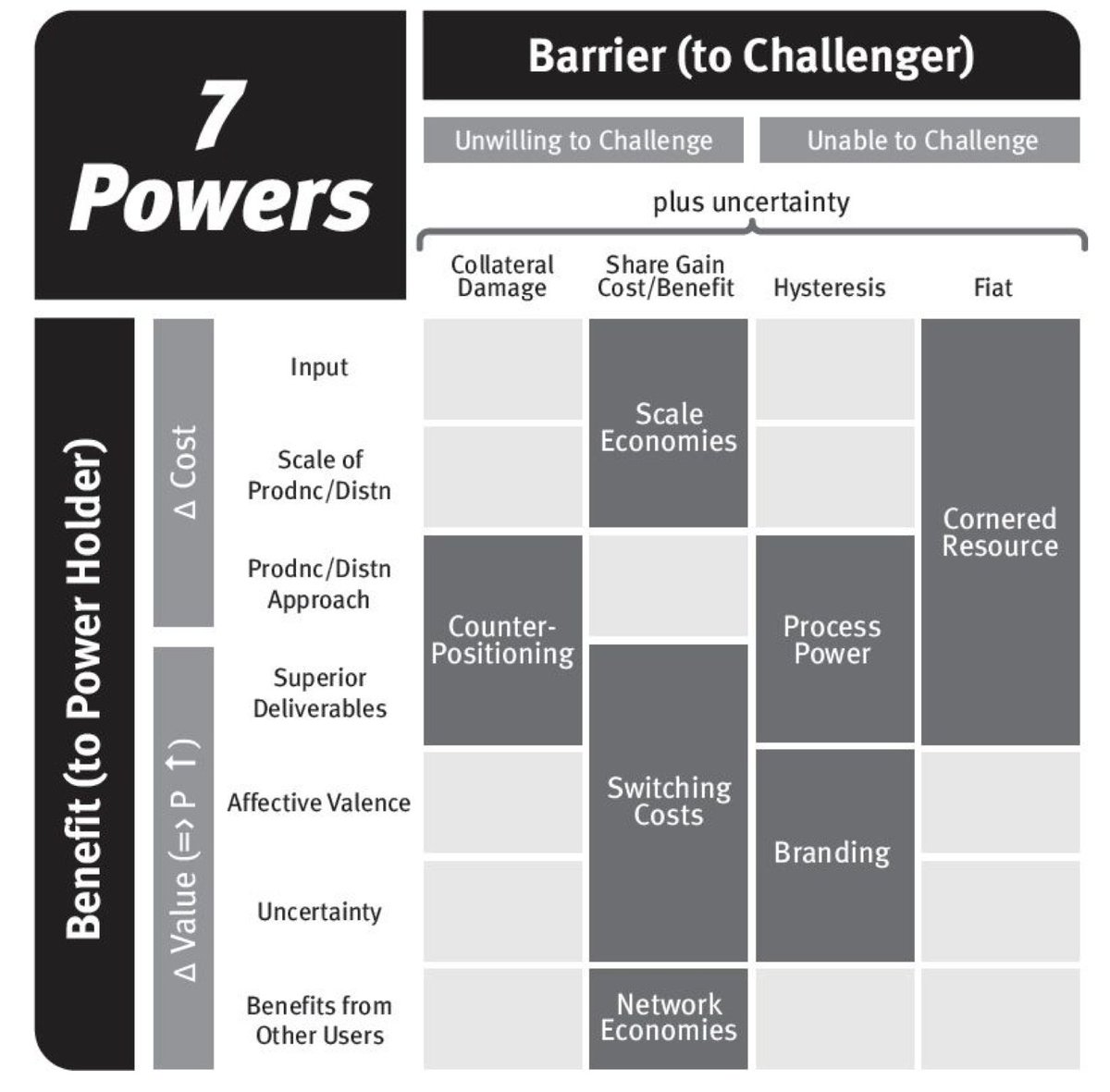
I read this after this tweet. 11 pages dog-eared. Truly fantastic mental models on various competitive barriers.
22 Oct 2022
I didn't make these 7 moats up.
They come from my all-time favorite book on the subject.
If you haven't read it, you should.
One of the best business books of all time!
4
15 Nov 2022
Business advice I’d give my younger self:
1) If you’re on the wrong course, cut your losses. Get on the right course.
2) Focus on your economic edge. Get tighter.
3) Get partners who are aligned.
4) Expand geographically.
3
17
15 Nov 2022
And don’t be so prideful.
Most of my errors are the result of thinning too highly of myself. The ramifications last much longer than the errors themselves.
5
9 Nov 2022
Hey, hive mind!
Where can I find historical annual reports of The Gillette Company?
1
2
9 Nov 2022
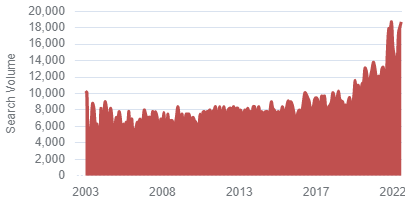
The silver tsunami will be surfed just fine. Youngest generation is big. And getting bolder.

1