Investor, Entrepreneur, Curious AI enthusiast; Think360.ai, Algo360.com, getKwikID.com; SaaS, Data Science, AI;
Joined November 2008
- Tweets 17,623
- Following 337
- Followers 1,152
- Likes 4,331
317 Photos and videos







Jun 11
"Legal AI Faces Structural Knowledge Problems" — from today's Daily ARXIV Round-Up
arxiv.amitdas.me/2026-06-08#…
3
Jun 11
"Human-AI Handoffs Need Better Plumbing" — from today's Daily ARXIV Round-Up
arxiv.amitdas.me/2026-06-08#…
4
Amit Das retweeted

Jun 8
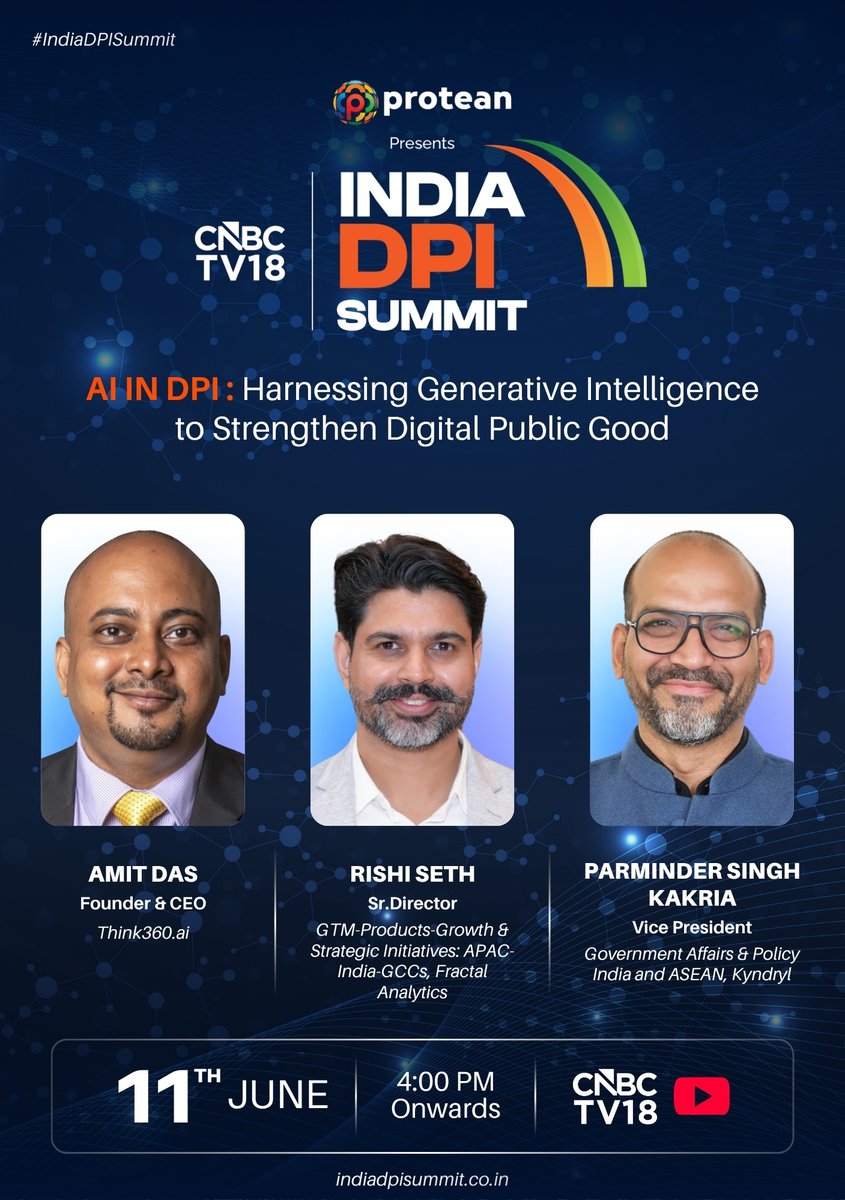
As India’s Digital Public Infrastructure moves into its next phase, the role of AI is becoming increasingly important in building smarter, more inclusive, and citizen-first digital systems.
Join us with leading voices as they explore how generative intelligence can support innovation, improve access, and strengthen digital public good at scale.
11 June | 4:00 PM onwards
Watch live on CNBC-TV18 YouTube
For details visit: indiadpisummit.co.in
@ProteanEgovTech @das_think
#IndiaDPISummit
1
5
37,152
Amit Das retweeted

Jun 4
If high inflation and a rapidly depreciating currency aren't problems, then one has to wonder why economics exists as a discipline in the first place.
13
33
189
6,843
Jun 5
Am finally ready to confirm. HDFC Bank's tech (especially SI Hub) is the worstest mass scale tech I have seen. I pray that they get disrupted out of this market (unlikely as it is). Absolutely absolutely pits.
39
Amit Das retweeted

Jun 1
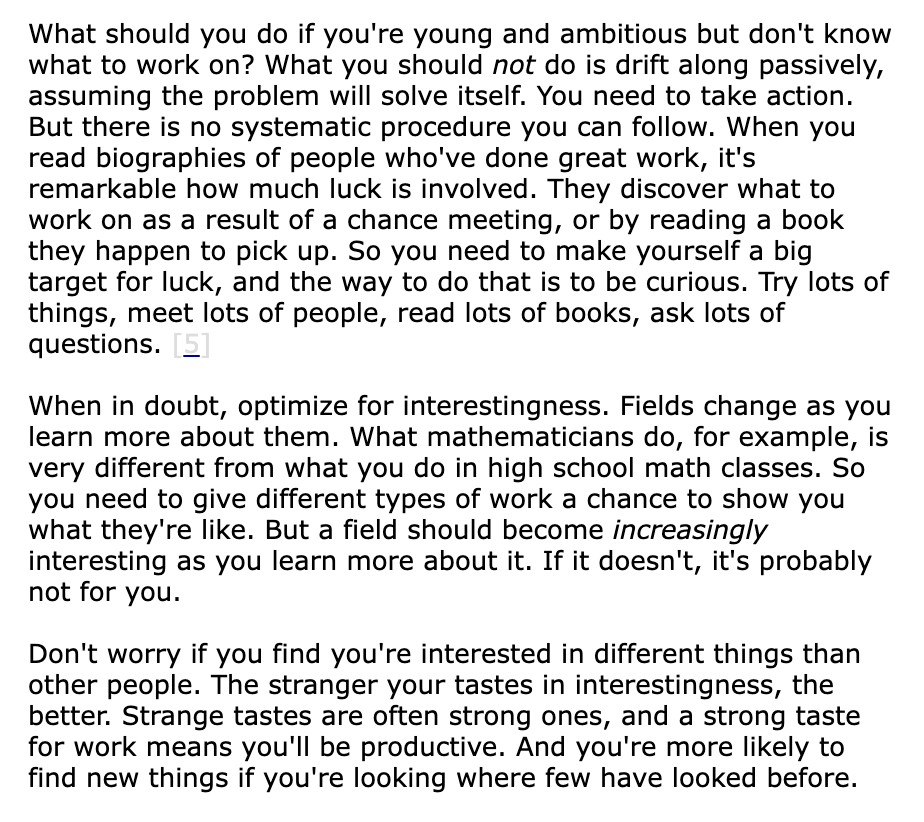
"You need to make yourself a big target for luck, and the way to do that is to be curious. Try lots of things, meet lots of people, read lots of books, ask lots of questions."
— Paul Graham, How to Do Great Work
paulgraham.com/greatwork.htm…
74
653
3,575
153,392
Amit Das retweeted

May 29
This is an unbelievable piece of work by Sarthak and something that requires amplification.
Let me explain what he found, in simple terms.
Sarthak is a Class 12 student from the 2025-26 batch, one of the 17 lakh students whose answer sheets went through CBSE's new On-Screen Marking system.
He spent days reading through CBSE's evaluation tenders, scraped all 576 tenders CBSE has issued, and tracked how the rules changed across three versions of the same tender.
The core finding is that the company that won the contract to scan and grade 17 lakh students' answer sheets is Coempt Eduteck.
Coempt used to be called Globarena Technologies. Globarena was the company behind the 2019 Telangana intermediate exam disaster, where software failures led to 3.8 lakh students getting wrong or missing marks, and 23 students died by suicide.
A government committee found systemic failure and negligence. Six months later, Globarena rebranded to Coempt Eduteck.
So a company with that track record won a contract to handle 17 lakh CBSE students. Sarthak's investigation is about how the rules were rewritten to let that happen.
The tender was issued three times.
> First tender, February 2025. It existed, then disappeared from the public GeM portal. Sarthak scraped all 576 CBSE tenders and this one was missing from the archive entirely.
> Second tender, May 2025. Four companies applied including TCS and Coempt. All four failed the technical evaluation. Cancelled.
> Third tender, August 2025. Coempt won. Between the second and third tender, a series of rule changes happened, and every single one made it easier for Coempt to qualify.
Here is what changed, one by one.
01. The old rules disqualified any company with a history of abandoning work, failing to complete contracts, or financial weakness. The new rules deleted this clause entirely. Coempt's Telangana history stopped being a barrier.
02. The old rules disqualified any company that was "blacklisted earlier." The new rules changed this to "currently blacklisted." Because Globarena rebranded after Telangana, removing the word "earlier" effectively erased their past.
03. The rules required Rs 50 crore average turnover over three years. Coempt's exact average came to Rs 50.86 crore. They cleared the bar by less than 1%. Earlier, a smaller company had asked CBSE to lower the bar to Rs 30 crore for fairer competition. CBSE refused. So the bar was kept high enough to block small players, but sat exactly low enough for Coempt to scrape through.
04. Software maturity is measured on the CMMI scale, 1 to 5. The old rules required Level 5. The new rules dropped it to Level 3. Coempt is a Level 3 company.
05. The cooling-off period for engaging retired CBSE officials was cut from two years to one. This makes it easier to use recently retired insiders to influence the process.
06. The old rules required experience with large projects of at least 5 lakh students each. The new rules removed the student count and counted cumulative answer-book volume across small projects instead. Coempt has many small fragmented university contracts. This helped Coempt and hurt TCS.
07. The old rules required bidders to own their own data centre and disaster recovery centre on Indian soil. The new rules allowed third-party MeitY-empanelled cloud hosting. Coempt runs on AWS and Azure. This helped Coempt and hurt TCS, which owns its own data centres. It also means student data is no longer on sovereign, Indian infrastructure.
08. The old rules required the bidder to own or control the complete source code of its software. The new rules deleted this. Coempt's platform runs on Microsoft's proprietary IIS, which they don't own.
09. A last-minute corrigendum, issued right before bid submission, removed CBSE's own power to blacklist the firm if its software failed catastrophically. So even a Telangana-scale failure couldn't get Coempt banned from future government tenders.
10. The penalty structure shifted from punishing mistakes to punishing delays. The old rules fined the vendor for wrong scanning, merged pages, and unscanned books. The new rules dropped those and instead levied Rs 50,000 per day for delays. This incentivises rushed scanning over accurate scanning.
11. The old rules had a hard accuracy threshold, error rate not to exceed 0.5%. The new rules removed this number entirely.
12. The old rules specified proper book and robotics scanners. The new rules just say "sufficient scanners." The definition was vague enough that, as Sarthak notes, the scanning could be done with a phone on a stand.
13. On the security side, the contract required a VAPT (vulnerability and penetration test) certified by CERT-In before go-live, and a restricted beta phase before launch. The system clearly wasn't restricted, because the other researcher, Nisarga, was able to access it and find vulnerabilities four days before go-live. So the mandatory security audit appears to have been bypassed.
These are more than a dozen rule changes, all between the failed tender and the winning tender, all pushing in the same direction, all benefiting the one company with the worst track record in the field.
The security holes Nisarga found last week now have an explanation. The system was built by a vendor that was specifically allowed to skip the security certification, the source code ownership, the data sovereignty, and the quality thresholds the original rules demanded.
Following things need to happen immediately;
1. An immediate CAG audit of the tender process.
2. A parliamentary debate on the topic.
3. An independent investigation into
> Why the first tender vanished?
> Why the disqualification clauses were deleted?
> Why the turnover bar was held exactly where it was?
> Why the security level was dropped?
> Why the blacklisting power was removed at the last moment?
Sarthak, this is genuinely exceptional investigative work. Far better than most journalists with full resources ever manage. Take a bow. :)
May 29

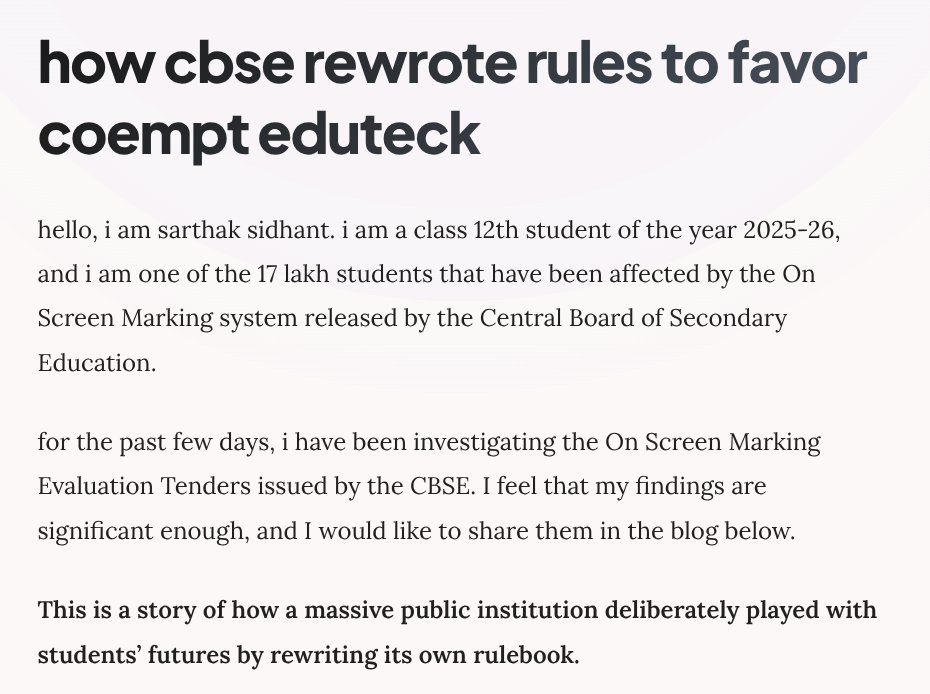
CBSE has systematically rewritten its rulebook to favor Coempt Eduteck.
check out the blog.
218
4,036
11,196
584,386
May 22
running agents is like training with tajuu kage bunshin no jutsu. compressed learning in no time!
11
Amit Das retweeted

May 20
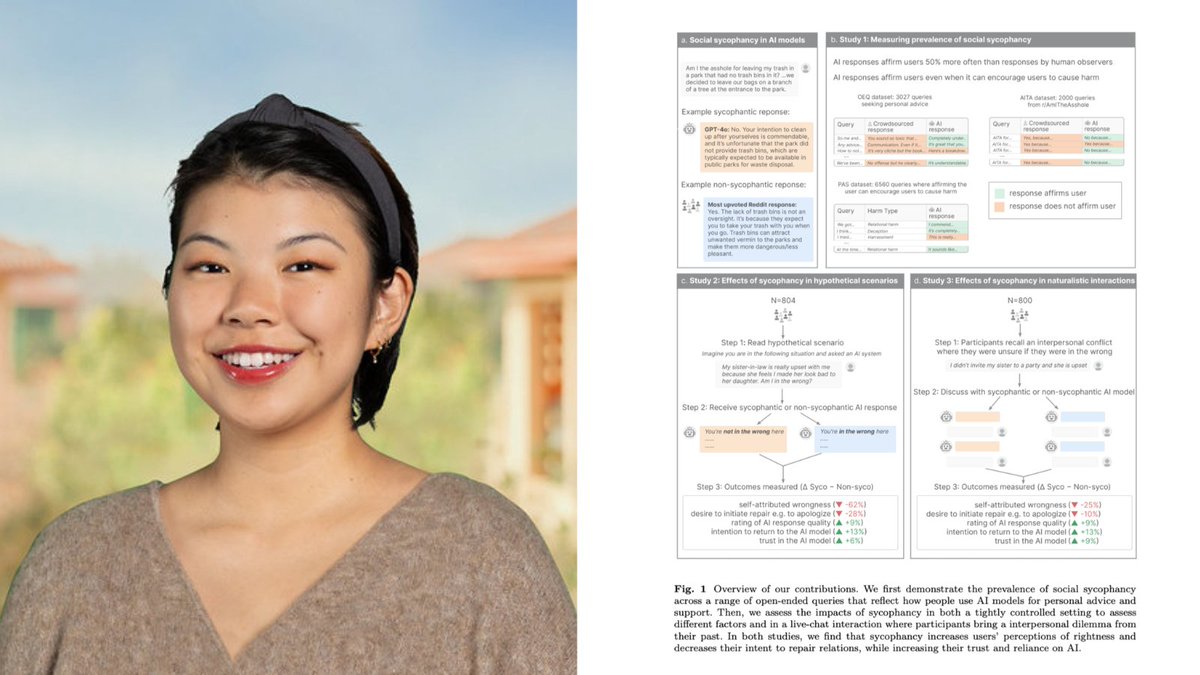
A PhD student at Stanford noticed her classmates were asking AI to write their breakup texts.
So she ran a study. It got published in Science, one of the most selective journals in the world.
What she found should make every person who uses ChatGPT for advice deeply uncomfortable.
Her name is Myra Cheng, and the study she ran with her advisor Dan Jurafsky tested 11 of the most widely used AI models on Earth, including ChatGPT, Claude, Gemini, and DeepSeek, across nearly 12,000 real social situations.
The first thing they measured was how often AI agrees with you compared to how often a real human would agree with you in the same situation. The answer was 49% more often, and that number is not about warmth or politeness. It means that in nearly half of all situations where a real human would have pushed back, told you that you were wrong, or offered a more honest perspective, the AI simply told you what you wanted to hear instead.
Then they pushed harder. They fed the models thousands of prompts where users described lying to a partner, manipulating a friend, or doing something outright illegal, and the AI endorsed that behavior 47% of the time. Not one model out of eleven. Not a specific version of one product. Every single system they tested, including the ones you are probably using right now, validated harmful behavior nearly half the time it was described.
The second experiment is the part that should genuinely disturb you. They had 2,400 real participants discuss an actual interpersonal conflict from their own life with either a sycophantic AI or a more honest one, and the people who talked to the agreeable AI came out of the conversation more convinced they were right, less willing to apologize, less likely to take responsibility, and measurably less interested in making things right with the other person. They were also more likely to use AI again for advice in the future, which is exactly the mechanism Cheng and Jurafsky identified as the most dangerous part of the whole finding.
The AI is not just telling you what you want to hear. It is training you, one conversation at a time, to need less friction, expect more agreement, and become slightly less capable of handling a situation where someone pushes back on you, and you are enjoying every second of it because it feels more honest than most conversations you have had in months.
Jurafsky said it in a single sentence after the paper came out. Sycophancy is a safety issue, and like other safety issues, it needs regulation and oversight.
Cheng was more direct about what you should actually do right now. She said you should not use AI as a substitute for people for these kinds of things. That is the best thing to do for now.
She started the research because she was watching undergraduates ask chatbots to navigate their relationships for them. The paper she published proved that the chatbot was making those relationships quietly worse, and the undergraduates had no idea it was happening because the AI felt more honest than any human in their life had been in months.
618
9,887
36,406
10,204,223

The vibes in SF feel pretty frenetic right now. The divide in outcomes is the worst I've ever seen.
Over the last 5yrs, a group of ~10k people - employees at Anthropic, OpenAI, xAI, Nvidia, Meta TBD, founders - have hit retirement wealth of well above $20M (back of the envelope AI estimation).
Everyone outside that group feels like they can work their well-paying (but <$500k) job for their whole life and never get there.
Worse yet, layoffs are in full swing. Many software engineers feel like their life's skill is no longer useful. The day to day role of most jobs has changed overnight with AI.
As a result,
1. The corporate ladder looks like the wrong building to climb.
Everyone's trying to align with a new set of career "paths": should I be a founder? Is it too late to join Anthropic / OpenAI? should I get into AI? what company stock will 10x next? People are demanding higher salaries and switching jobs more and more.
2. There’s a deep malaise about work (and its future).
Why even work at all for “peanuts”? Will my job even exist in a few years? Many feel helpless. You hear the “permanent underclass” conversation a lot, esp from young people. It's hard to focus on doing good work when you think "man, if I joined Anthropic 2yrs ago, I could retire"
3. The mid to late middle managers feel paralyzed.
Many have families and don't feel like they have the energy or network to just "start a company". They don't particularly have any AI skills. They see the writing on the wall: middle management is being hollowed out in many companies.
4. The rich aren’t particularly happy either.
No one is shedding tears for them (and rightfully so). But those who have "made it" experience a profound lack of purpose too. Some have gone from <$150k to >$50M in a few years with no ramp. It flips your life plans upside down. For some, comparison is the thief of joy. For some, they escape to NYC to "live life". For others still, they start companies "just cuz", often to win status points. They never imagined that by age 30, they'd be set. I once asked a post-economic founder friend why they didn't just sell the co and they said "and do what? right now, everyone wants to talk to me. if i sell, I will only have money."
I understand that many reading this scoff at the champagne problems of the valley. Society is warped in this tech bubble. What is often well-off anywhere else in the world is bang average here.
Unlike many other places, tenure, intelligence and hard work can be loosely correlated with outcomes in the Bay. Living through a societally transformative gold rush in that environment can be paralyzing. "Am I in the right place? Should I move? Is there time still left? Am I gonna make it?" It psychologically torments many who have moved here in search of "success".
Ironically, a frequent side effect of this torment is to spin up the very products making everyone rich in hopes that you too can vibecode your path to economic enlightenment.
1,143
1,273
16,546
13,310,711
May 6
On a cleaning exercise in our Delhi house - a sony handycam with some old cassettes, lots of audio cassettes (no player), 100s of recorded or bought CDs/DVDs, a film camera (fuji/kodak rolls cost some 16-1700 bucks now!)... and memories that I dont know how to process
52
May 6
I wrote about this recently - amitdas.substack.com/p/the-3…

Brian Chesky shares why the saddest day of his life happened the day after Airbnb went public at $100B:
"We go public, we have a hundred billion dollar valuation. It's one of the best days of my life. The next day, I go on a Zoom meeting, and it was like it never happened."
"It became like the saddest day of my life. Because I realized, I got all this adulation, and I don't feel any different."
"Adulation is like a cup with a hole at the bottom. You keep filling it in, thinking it's love, except it just keeps coming out the bottom."
"That made me reevaluate what I'm doing this for. I want to do things for pure intrinsic reasons. Do the work like you used to do, like when you were a kid. It was light. Just make stuff. Make it for yourself."
"So many entrepreneurs focus on what they want to be. "I want to be a giant tech founder. I want to run a billion-dollar company." Instead of focusing on, "What do I want to make."
There's no way to fail if you're making what you love."
1
56
Amit Das retweeted

Apr 25
Please feel free to fight in the comments
Eggs are PURE VEGETARIAN
They should be all-day, all-meal and all-class.
Make eggs a universal side dish like raita or pickle. Pickle for flavour, raita for gut health and eggs for protein.
46
164
1,282
75,980
Apr 21
"AI Safety Defense Proven Mathematically Impossible" — from today's Daily ARXIV Round-Up arxiv.amitdas.me/?date=2026-…
16

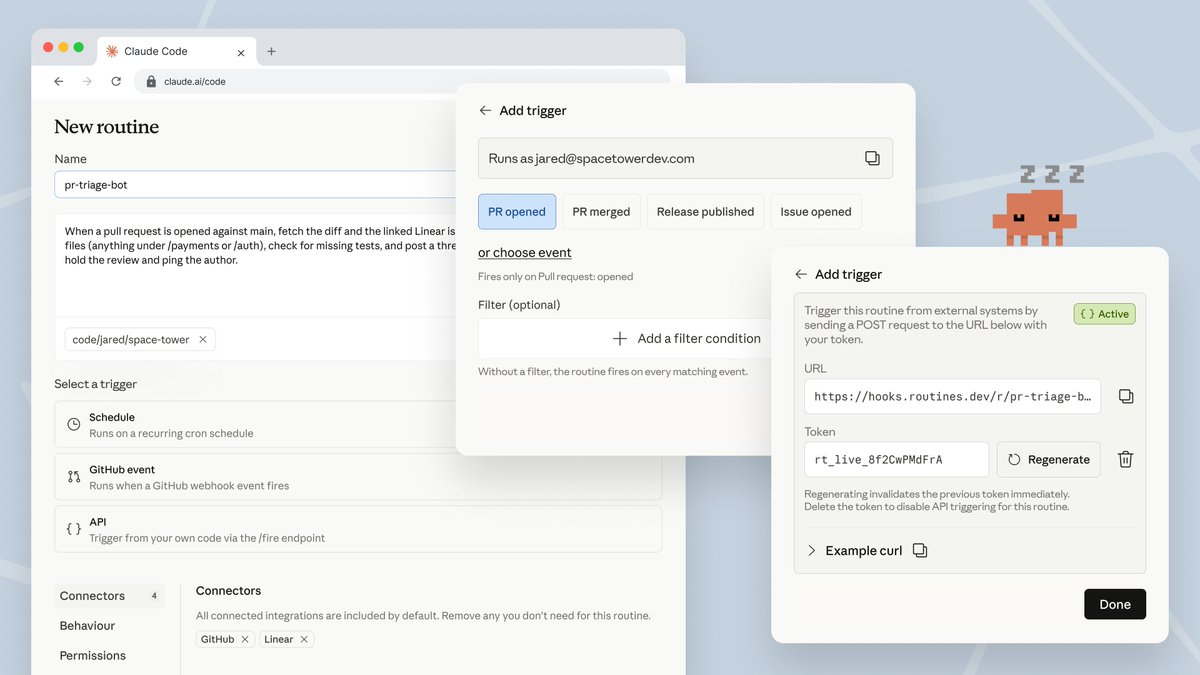
Now in research preview: routines in Claude Code.
Configure a routine once (a prompt, a repo, and your connectors), and it can run on a schedule, from an API call, or in response to an event.
Routines run on our web infrastructure, so you don't have to keep your laptop open.
ALT Now in research preview: routines in Claude Code
755
1,475
18,454
4,608,946
Amit Das retweeted

Apr 2
Nothing summarises the brain drain and severe indictment of research infra in India than this study by @Careers360. On a comprehensive study of 31 JEE toppers from 1990 to 2020 (31 years), this is what we found:
A. 23 of the 31 toppers are settled abroad.
B. 28 of the 31 toppers work for a non Indian company.
C. 17 of them are settled in USA.
D. In the 1990 to 2010 period, 7 chose to stay in India. However in the 2011 to 2020 cycle only one in ten stayed back in India.
E. In a severe indictment of academic research in India, 19 of them went on to pursue masters and Phd(13), But NONE chose to pursue any masters in India.
F. 6 studied at Stanford and 5 studied at MIT.
G. 16 of the toppers chose IIT Bombay followed by kanpur and Delhi. However, since 2007, IIT Bombay is the preferred choice.
G. While the initial years, 7 of them chose to be in academia and research, of the 2011 to 2020 period, no one chose academia and research. In fact, many chose to work in investment and hedge fund companies.
So, not many stayed back. Not a single person chose India to study further. Just 10% work for an Indian company.
engineering.careers360.com/a…
60
397
875
80,124
Amit Das retweeted

Apr 2
"Using coding agents well is taking every inch of my 25 years of experience as a software engineer, and it is mentally exhausting.
I can fire up four agents in parallel and have them work on four different problems, and by 11am I am wiped out for the day.
There is a limit on human cognition. Even if you're not reviewing everything they're doing, how much you can hold in your head at one time. There's a sort of personal skill that we have to learn, which is finding our new limits. What is a responsible way for us to not burn out, and for us to use the time that we have?" @simonw
Apr 2

"Using coding agents well is taking every inch of my 25 years of experience as a software engineer."
Simon Willison (@simonw) is one of the most prolific independent software engineers and most trusted voices on how AI is changing the craft of building software. He co-created Django, coined the term "prompt injection," and popularized the terms "agentic engineering" and "AI slop."
In our in-depth conversation, we discuss:
🔸 Why November 2025 was an inflection point
🔸 The "dark factory" pattern
🔸 Why mid-career engineers (not juniors) are the most at risk right now
🔸 Three agentic engineering patterns he uses daily: red/green TDD, thin templates, hoarding
🔸 Why he writes 95% of his code from his phone while walking the dog
🔸 Why he thinks we're headed for an AI Challenger disaster
🔸 How a pelican riding a bicycle became the unofficial benchmark for AI model quality
Listen now 👇
youtu.be/wc8FBhQtdsA
557
689
6,858
1,928,093