
294 Photos and videos










The future of Web3 isn't about waiting for the right developer or team. It's about YOU, the creator. With tools like CodeXero from @clusterprotocol and @codexero_xyz, you can take an idea and, within minutes, turn it into a live decentralized app. No code, no dev teams, just you making your vision reality. The power to create is now in your hands, are you ready to take it?
1
3
262
🚀 Ever feel like your TikTok remix or Reddit thread deserves more than just likes? Meet @GimiApp an "anti-influencer" movement that’s turning “real people” into paid creators. if you can post, you can earn
jump straight into niche campaigns, be it gaming, web3, fashion e.t.c. remix brand content, post with tags, submit for quick approval, and start earning from every view and share. Plus, there are bonuses and the option to cash out in crypto. 280K creators are already onboard.
It’s all about purpose over polish. Ready to level up? go here 👉 app.gimi.co/sign-up?code=RI-…
57
33
64
1,880
In Web3, @duel_duck is revolutionizing prediction markets. With real-time duels and no KYC barriers, you bet against fellow users with $USDC. A whole new way to predict the future and win. Ready to join the action?

The prediction market you’ve been waiting for is live @duel_duck. With fast, decentralized betting on Solana, you can bet, win, and shape the future, all with USDC. Start dueling today and prove your predictions.
33
22
44
5,585
The prediction market you’ve been waiting for is live @duel_duck. With fast, decentralized betting on Solana, you can bet, win, and shape the future, all with USDC. Start dueling today and prove your predictions.
28
21
38
6,856
DLAWSO retweeted

13 Dec 2025
This still kept me in shock if you deposits a stablecoin, specifically USDT Tether into the @alturax vault system the MINT AVLT In return for your deposited USDT, the user receives AVLT Altura Vault Token,, don't forget that you don't just deposit take note of this there is a (NAV)
(Net Asset Value) the vault shares is updated based on the performance of the strategies and revenue generation, which is then reflected in the value of the user's AVLT token I think 🤔 don't just like this one do you know what this means for users? @alturax
31
22
43
1,897
DLAWSO retweeted

13 Dec 2025
Crisis Mapping and Disaster Response: How @dagama_world Provides Humanitarian Value
In times of crisis whether floods, strikes, or widespread power outages access to real-time, accurate local information becomes a matter of life and death. Traditional disaster response systems often rely on centralized reporting, delayed updates, or unverified sources, leaving communities vulnerable. Miscommunication and outdated maps can hinder relief efforts, misdirect resources, and amplify confusion. The challenge lies in delivering live, trustworthy data when infrastructure is compromised and conventional reporting fails.
Dagama addresses this critical gap by turning local exploration into verifiable, on-chain information. During emergencies, explorers can document infrastructure status, road conditions, or operational facilities, producing real-time, verified data accessible to responders and the public. By rewarding contributions with $DGMA tokens, the platform incentivizes consistent reporting while ensuring that information is traceable and reliable. This approach transforms crisis mapping from reactive guesswork into proactive, actionable intelligence.
What sets Dagama apart is its zero-assumption validation pipeline, which cross-verifies human contributions without relying on algorithmic guesswork. Cryptographic proofs guarantee that every reported location and update reflects actual conditions. In addition, its decentralized architecture ensures resilience: even if local networks or power grids fail, the system continues to aggregate verified data from available explorers. This creates a dynamic, self-correcting map that adapts to evolving circumstances, providing governments, NGOs, and communities with a dependable operational picture during emergencies.
How might humanitarian organizations integrate Dagama into existing disaster response frameworks? Could real-time, verified local reporting redefine how cities prepare for and respond to natural and human-made crises? And as communities increasingly contribute verified local insights, what new opportunities emerge for proactive risk mitigation, resource allocation, and long-term infrastructure resilience?

13 Dec 2025

How @dagama_world ensures that only real explorers shape the map
Maps have long been abstract representations of reality, often curated by centralized platforms that rely on algorithms, user ratings, or unverifiable contributions. This creates a distorted picture: fake check-ins, biased reviews, and automated data can mislead travelers and businesses alike. I’ve noticed firsthand how traditional mapping systems often fail to reflect real human movement, leaving gaps in both accuracy and trust. For anyone exploring new places, this lack of verification can lead to wasted time and missed opportunities.
Dagama addresses this by ensuring that every contribution is anchored in proof. Only explorers who physically visit locations can submit verifiable data on-chain, earning $DGMA tokens as recognition for their efforts. By combining blockchain transparency with AI verification via Vasco, the system filters out noise and incentivizes truthfulness. Every map update is backed by tangible actions rather than reputation or social signaling, creating a living, self-correcting record of real-world activity.
What sets this model apart is its blend of economic incentives and technological rigor. Unlike traditional platforms that can be gamed or monetized for ad revenue, Dagama builds trust through verifiable presence. Each explorer’s input contributes to a decentralized network of human-verified locations, allowing maps to reflect actual experiences. After studying this system for days, I’ve observed how communities naturally reward accuracy: the more reliable a contributor is, the stronger the trust signal, creating an emergent ecosystem of truth rather than speculation.
This raises a compelling question: if maps can finally reflect real human movement rather than assumptions, how will our understanding of cities, commerce, and travel change? Could this model redefine local discovery globally, and what new forms of exploration and opportunity might emerge? By anchoring mapping in verified human presence, Dagama isn’t just improving maps it’s reshaping the way we navigate and understand the world.

21
40
52
1,099
DLAWSO retweeted
13 Dec 2025
I came across these (A vault can also be an underground room for graves or coffins)
But hopefully not the kind of vault we need here
DeFi vault is a smart contract that pools user funds to execute sophisticated, automated investment strategies with the goal of maximizing returns while providing a high level of transparency and security
Well I think💬 🤔 🤔 🤔 @alturax
Vault is way better but talking of vault remember it has a weight Gage ,, that means the more you deposit the more Altura Vault Token you get
Or what do you think @abgweb3
@cookiedotfun
79
23
87
1,421
DLAWSO retweeted

13 Dec 2025
@DeepNodeAI is building decentralized intelligence infrastructure designed for a future where AI is open, permissionless, and verifiable by default.
At its core, the platform enables seamless deployment, execution, and validation of AI models in a trust-minimized and modular environment. Model creators, miners, validators, and consumers are connected through a single unified protocol, economically aligned through the $DN token.
What sets DeepNode apart is its open marketplace for AI compute. The system is designed to prioritize flexibility, measurable performance, and verifiable quality, ensuring that value flows fairly to every participant in the network.
By leveraging on-chain coordination, DeepNode enforces transparency and redundancy at the protocol level. This allows the network to function without centralized intermediaries, replacing trust with cryptographic guarantees and incentive-driven validation.
DeepNode isn’t just an AI marketplace. It’s infrastructure for decentralized intelligence, where ownership, execution, and rewards are natively aligned.@MindoAI
106
41
141
1,130
DLAWSO retweeted

13 Dec 2025
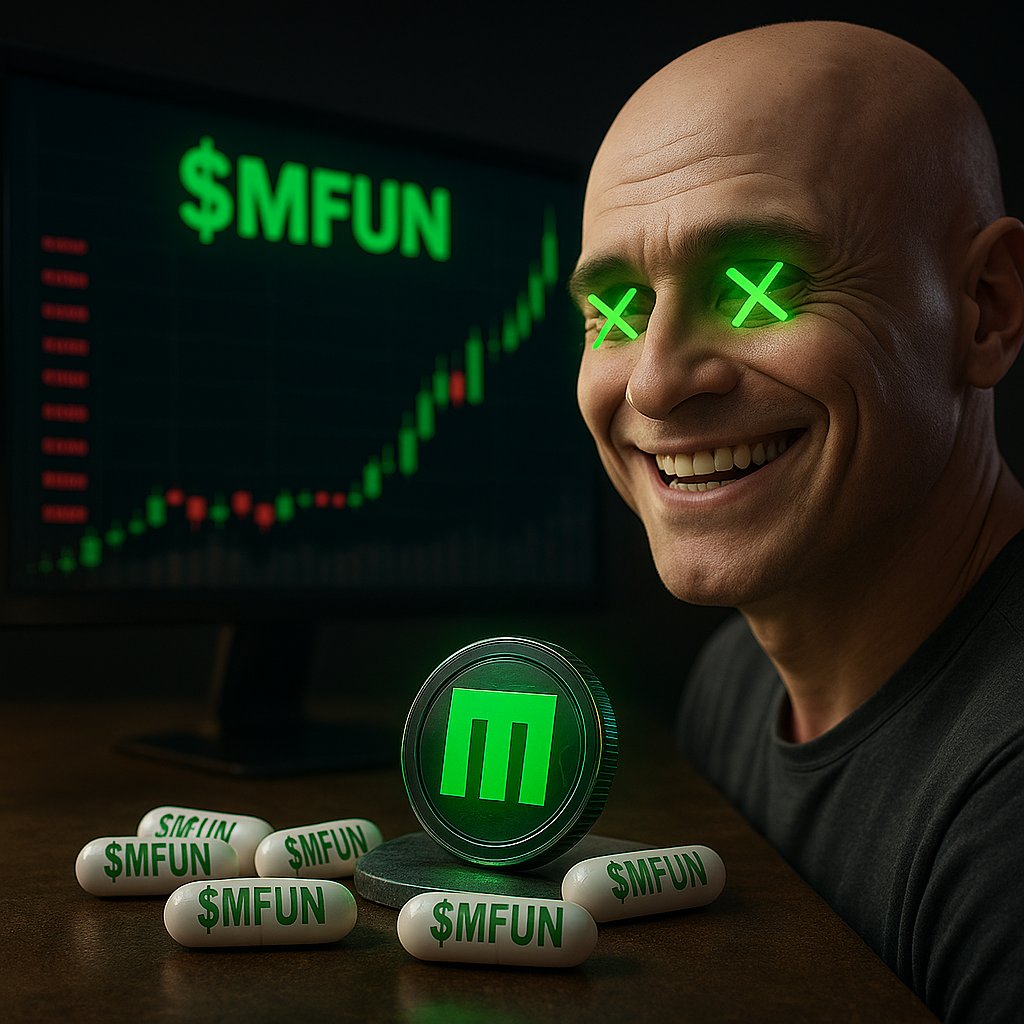
Trading on @MemeMarketFun feels more like playing than investing but the rewards are real.
You follow the vibe, hit pump or dump & if your call is right you earn.
It’s culture driven trading, simple, fast & powered by the internet’s favorite language: memes.
#Memes $MFUN #DEFI

13 Dec 2025

Everyone thought $MFUN was just another meme play until it started delivering.
What felt like pure fun is now turning into real value:
✔️ Community led growth
✔️ Creator ownership
✔️ A market that actually rewards culture
@MemeMarketFun is where the fun gets serious.
#Memes
31
38
54
681
DLAWSO retweeted

13 Dec 2025
Trust me, your weekend is about to get a whole lot more interesting, and I'm not just saying that because I'm a language model, lol! Let's dive into the dynamic duo of the XYO and XL1 tokens - a match made in heaven, designed to create a network that's as fast as it is secure, and as rewarding as it is reliable.
So, you've got your XYO token, the foundation of the entire operation. You can buy it, earn it, or just hold onto it, and then you have three awesome ways to put it to work: run a Validator Node, operate a Producer Node, or opt into System Staking. Each role comes with its own set of XL1 rewards, so you can pick the one that fits your style.
When you stake your XYO, you're not just earning rewards, you're also taking a chunk of the total supply out of circulation, which is like, totally awesome for the network's security. And, let's be real, who doesn't love a good reward? The system is designed to keep things trustworthy, so you can sleep easy knowing your tokens are safe.
Now, let's talk about XL1, the utility token that makes everything happen. You earn it, you spend it, and it's used for every transaction on the blockchain. It's like the fuel that keeps the engine running, and the best part? A small part of the XL1 fee is burned, which is like, a big win for everyone involved.
Here's how it all comes together: Producer Nodes gather transactions and create new blocks, Validator Nodes verify those blocks, and the whole thing runs like a well-oiled machine. And, as a cherry on top, every new block includes an XL1 reward, which goes to the producers and fuels the staking reward pool. It's like a beautiful cycle of security, speed, and incentives, all working together to bring the real world on-chain.
@OfficialXYO
33
40
74
1,154
DLAWSO retweeted
13 Dec 2025
Everyone thought $MFUN was just another meme play until it started delivering.
What felt like pure fun is now turning into real value:
✔️ Community led growth
✔️ Creator ownership
✔️ A market that actually rewards culture
@MemeMarketFun is where the fun gets serious.
#Memes
13 Dec 2025
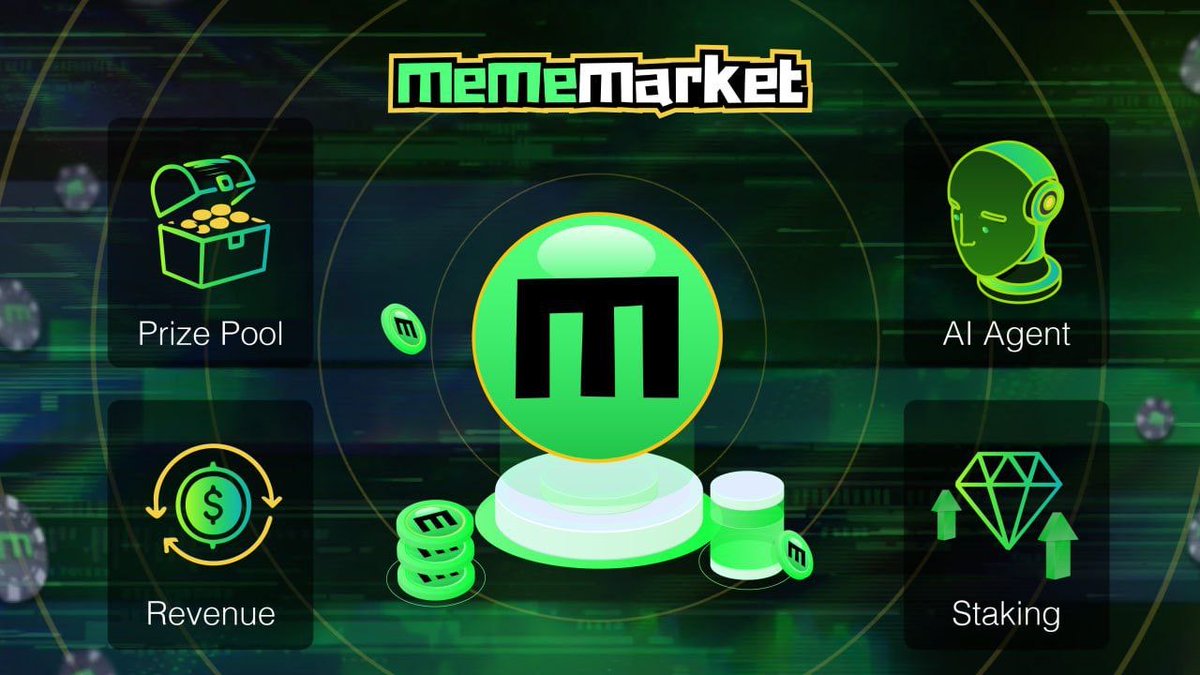
..@MemeMarketFun solves a core weakness in internet culture, value disappears as fast as it spreads.
Without ownership, viral moments fade. Creators hesitate to build, knowing there’s no lasting reward.
That hesitation kills momentum & when creativity stalls, culture slows down
3
38
36
645
DLAWSO retweeted

12 Dec 2025
Built to empower global crypto explorers, @dagama_world focuses on simplifying navigation, connecting markets, and delivering smarter tools. Its goal is to create a seamless ecosystem where users access insights, trade efficiently, and experience a more connected digital economy.

11 Dec 2025

Innovation in decentralized systems grows stronger with @dagama_world, offering reliable infrastructure, smoother deployment, and improved scalability that empower builders to create efficient, resilient, future-ready on-chain ecosystems for the future.

17
27
81
1,993
DLAWSO retweeted

13 Dec 2025
@KoloHub is simplifying onchain savings for everyone.
No more confusing wallets or missed goals.
Save, earn, and grow with smart automated tools.
Built for individuals, communities & DAOs.
Saving in Web3 just got easier — and smarter.
Secure your future with Kolo.

37
11
34
191
DLAWSO retweeted

13 Dec 2025
Benefits of @alturax
You earn @alturax tokens just by posting & engaging on @cookiedotfun
You don’t need money to start only your activity
The more active you are, the more rewards you get
Top users on the leaderboard win extra tokens
It helps you grow your online reputation
Being early means less competition
Special bonuses from the Altura and @cookiedotfun partnership
The tokens you earn could become valuable later

23
31
46
675
DLAWSO retweeted

13 Dec 2025
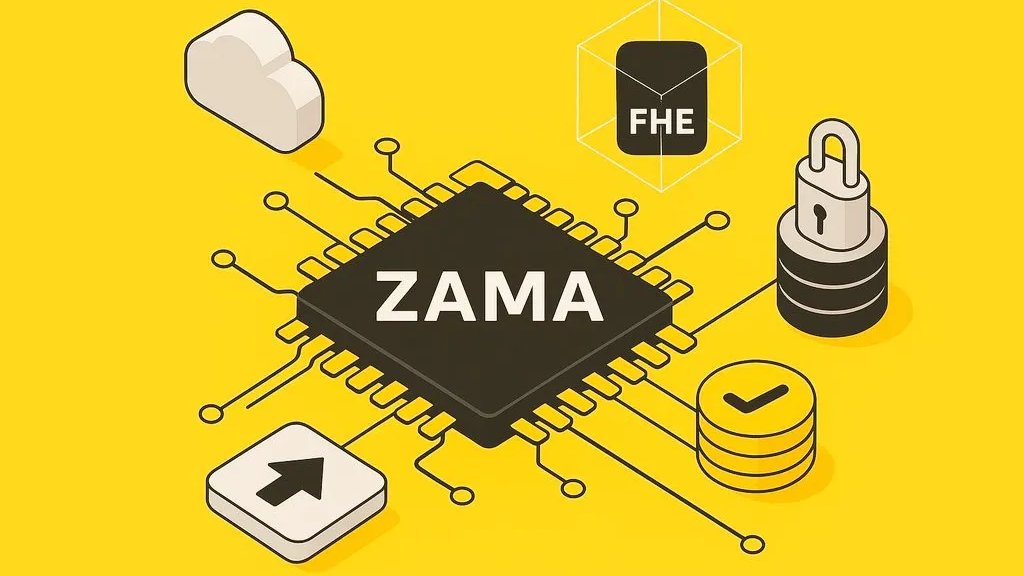
Zama: Turning FHE into Real-World Blockchain Infrastructure
Fully Homomorphic Encryption (FHE) has always been powerful in theory.
The problem? It was slow, complex, and hard to use which made real-world adoption nearly impossible.
@zama is changing that
• Speed that actually works
Zama has built one of the fastest and most scalable FHE systems designed specifically for blockchains.
Right now, it can handle around 20 transactions per second per chain, already faster than Ethereum today.
The roadmap aims for 1,000 TPS next year, and with dedicated FHE hardware (ASICs), it could eventually go beyond 10,000 TPS.
That’s a massive shift for encrypted computation.
• Built for developers, not just researchers
Zama works with standard Solidity tools, so developers don’t need to learn an entirely new language.
They can simply mark which data should stay private and define clear, programmable rules around access and compliance.
• Privacy becomes part of the code, not a workaround.
Secure, scalable, and composable
Zama’s approach keeps everything verifiable, decentralized, and easy to integrate. Across key metrics, it outperforms alternatives like MPC, ZK, TEEs, and private blockchains without sacrificing usability.
In short, Zama isn’t just improving FHE. It’s making encrypted computation fast, secure, and practical enough for everyday blockchain use.
#ZamaCreatorProgram
87
40
116
956
DLAWSO retweeted

13 Dec 2025
The @dagama_world Community's crushing it with more than 3,500 in Winter Quest which is ending soon and also topping Starboard Aura with 65M impressions & $65K $DGMA up for grabs in ongoing campaigns.
Over 3K testnet users, EVM-compatible for easy dApp vibes, & cross-chain ready
The @dagama_world is not just a map, it's your Web3 explorer's toolkit for real-world adventures that pay back.

13 Dec 2025

We now have a new @dagama_world partnership alert
daGama x PundAI: a new partnership! 🔥
The DaGama team made collaboration with PundiAI, a project whose mission is to democratize AI and onboard millions into the AI economy.
With the growing demand for high-quality data, Pundi AI’s decentralized tools are reshaping data ownership and participation in the AI space.
@dagama_world has been building at the intersection of AI and Web3, and believe that partnering with PundAI will help expand expertise and unlock valuable new insights 🙌
52
13
74
17,429