
1,964 Photos and videos









deBridge retweeted

Jun 12
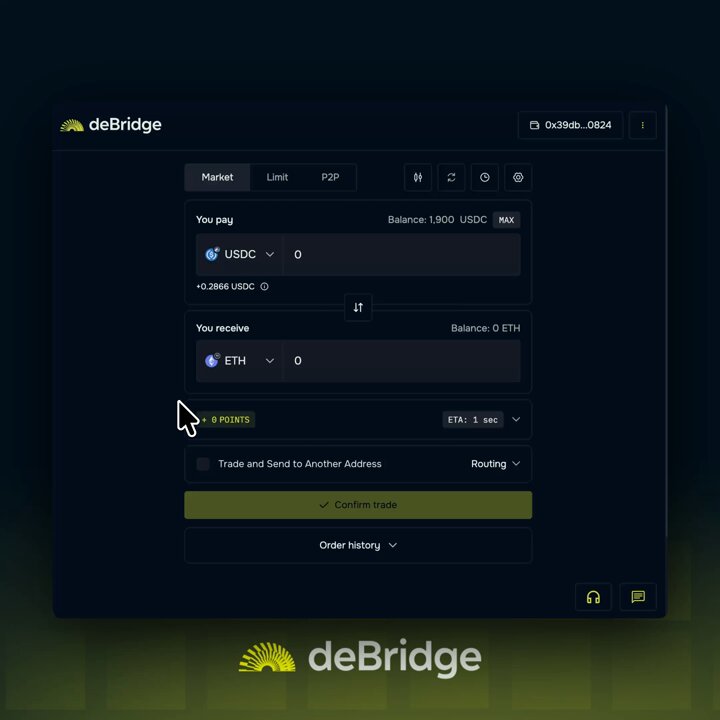
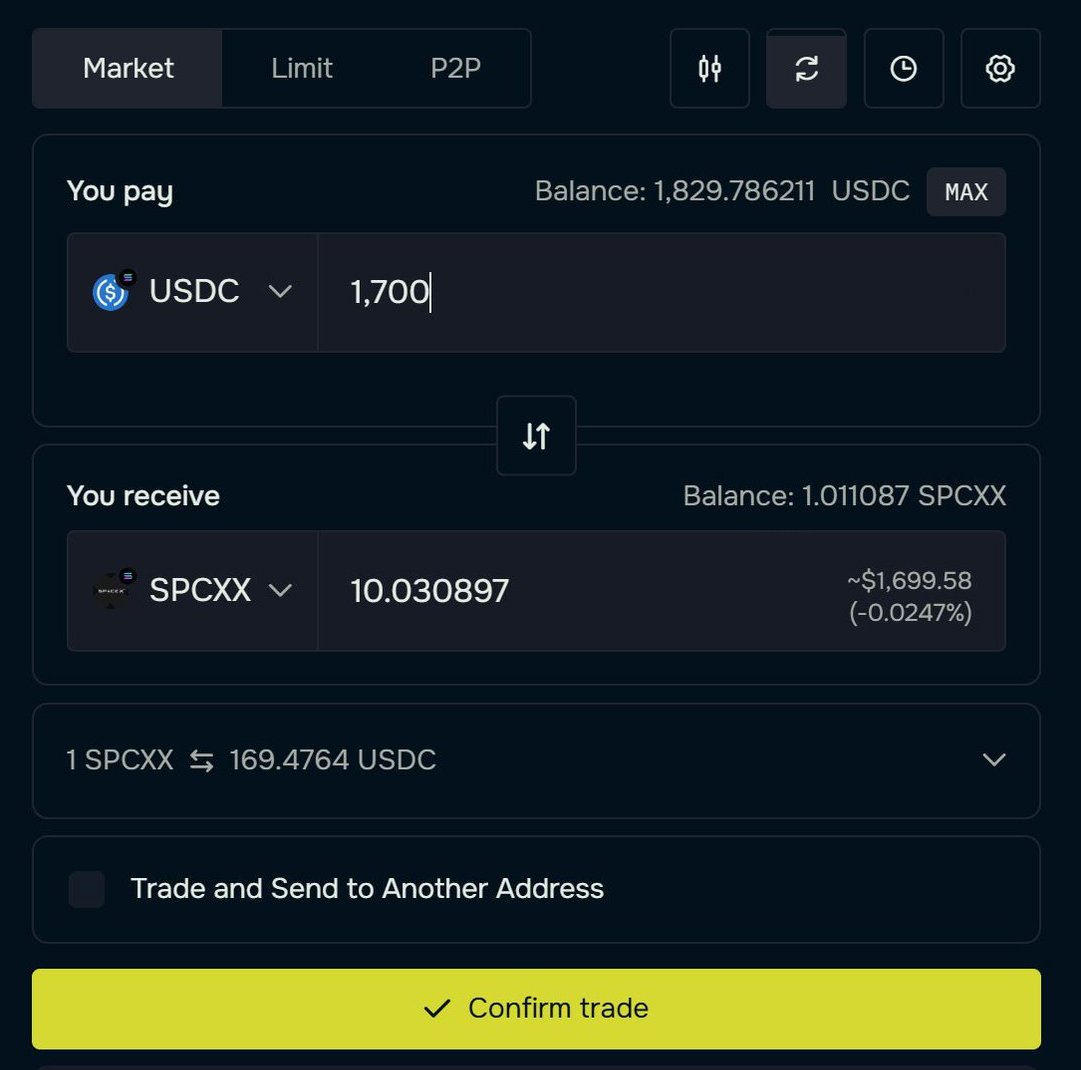
If you're trading SPCX on perps, use Hyperliquid
If you're trading SPCX on spot, use deBridge
It's that simple
25
4
67
2,853
deBridge retweeted

Jun 12
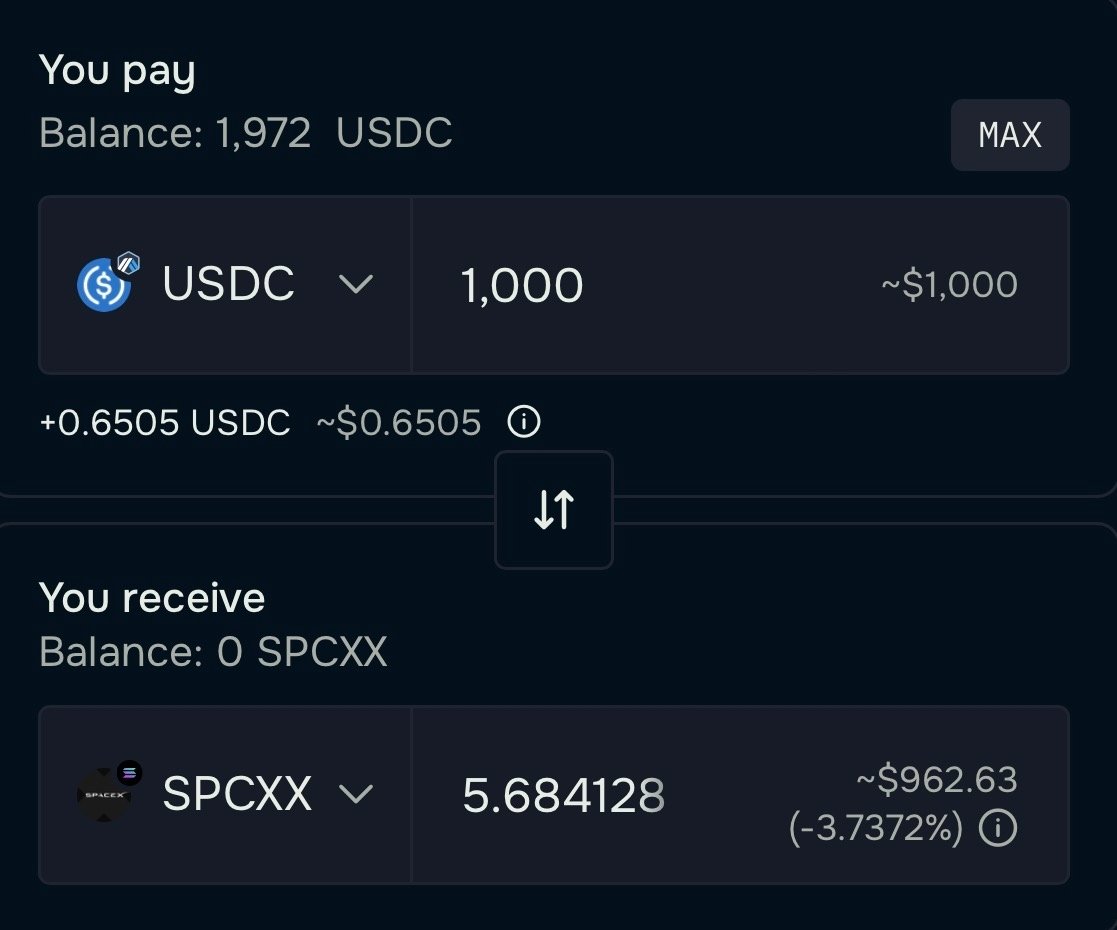
SpaceX is live on deBridge
The future of space, now tradable 24/7 across chains:
- Solana
- Ethereum
- BNB Chain, and more
10
2
34
1,838
deBridge retweeted

Jun 11
My favorite part of this work is watching clunky cross-chain workarounds shed their complexity and settle into one primitive that's clean for users and engineers alike
That's what we've been heads-down on at deBridge lately, and we'll have something to show soon...
Jun 9

I've talked to various fintech founders.
They're all saying the same thing.
Their users don't want to perform steps. They don't hold gas. They don't want to think about the underlying infrastructure or execution details. A fragmented user experience is no longer acceptable.
The only valid model has become: "It just works."
Last week at @money2020, I saw firsthand how fast the conversation has evolved from "Should we touch this?" to "Which stablecoins, on which chains, with whose infra?"
Nobody questions crypto payments anymore. They are starting to become an integral part of our daily lives. The only question left is which settlement and execution rails they'll actually run on.
Those rails must elevate user experience to a new standard:
- Instant payments
- Trustless by design
- Agentic AI compatibility
- Frictionless, permissionless access
- Predictable execution and performance
The onchain layer has to become invisible, absorbing all the complexities.
That's the future @deBridge is building toward.
Real-world adoption has decoupled from market sentiment. While some focus on price action - banks, fintechs, PSPs, and big tech are racing to stitch those fragmented systems into borderless experiences that meet user expectations.
We're not in the early adopter stage anymore. We're the early majority.
Onchain markets will be the default. At @deBridge, we're building systems that absorb complexity so teams can focus on what they love: building products for the audience, and users can enjoy experiences that feel as open and seamless as the internet.
Time to accelerate.
1
1
11
982
deBridge retweeted
Jun 11
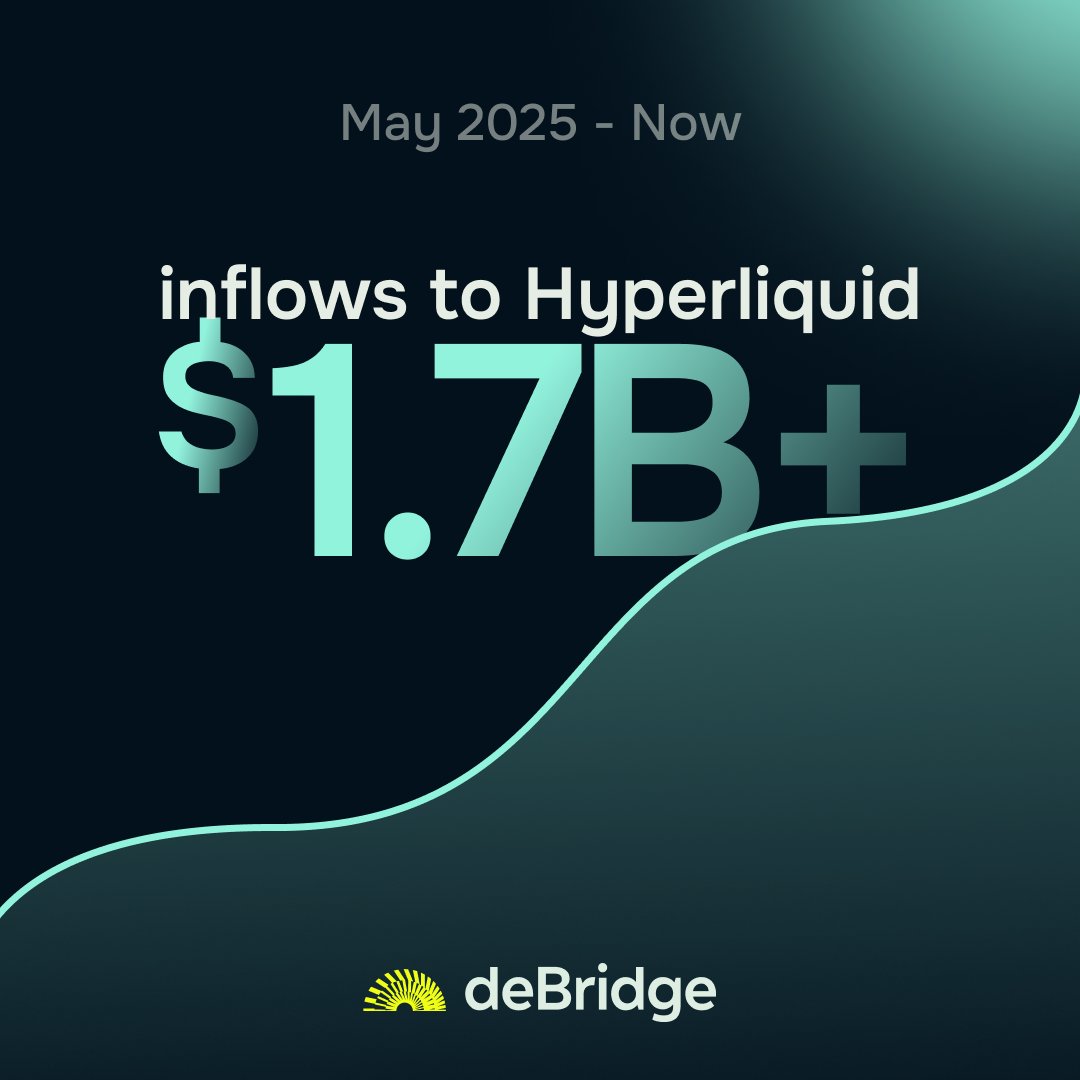
Hyperliquid has captured a massive chunk of perps mindshare in <2 years
but the real hypergrowth phase hasn't even started
once deposits and withdrawals go gasless, everyone will rush to claim their slice of the pie
17
11
120
8,718
deBridge retweeted

Jun 9
I've talked to various fintech founders.
They're all saying the same thing.
Their users don't want to perform steps. They don't hold gas. They don't want to think about the underlying infrastructure or execution details. A fragmented user experience is no longer acceptable.
The only valid model has become: "It just works."
Last week at @money2020, I saw firsthand how fast the conversation has evolved from "Should we touch this?" to "Which stablecoins, on which chains, with whose infra?"
Nobody questions crypto payments anymore. They are starting to become an integral part of our daily lives. The only question left is which settlement and execution rails they'll actually run on.
Those rails must elevate user experience to a new standard:
- Instant payments
- Trustless by design
- Agentic AI compatibility
- Frictionless, permissionless access
- Predictable execution and performance
The onchain layer has to become invisible, absorbing all the complexities.
That's the future @deBridge is building toward.
Real-world adoption has decoupled from market sentiment. While some focus on price action - banks, fintechs, PSPs, and big tech are racing to stitch those fragmented systems into borderless experiences that meet user expectations.
We're not in the early adopter stage anymore. We're the early majority.
Onchain markets will be the default. At @deBridge, we're building systems that absorb complexity so teams can focus on what they love: building products for the audience, and users can enjoy experiences that feel as open and seamless as the internet.
Time to accelerate.
5
4
23
8,350
deBridge retweeted

Jun 8
💎 크립토 수능문제
"디브릿지는 브릿지니까 다른 체인으로 이동할 때만 쓰는 거 아닌가요?"
아뇨, 최근 3개월 동일체인 스왑만 $750M / 45만 건 이상 기록했어요.
팀들이 @debridge API로 동일체인 스왑을 붙이는 이유는?
① 크로스체인 동일체인이 API 하나면 되서
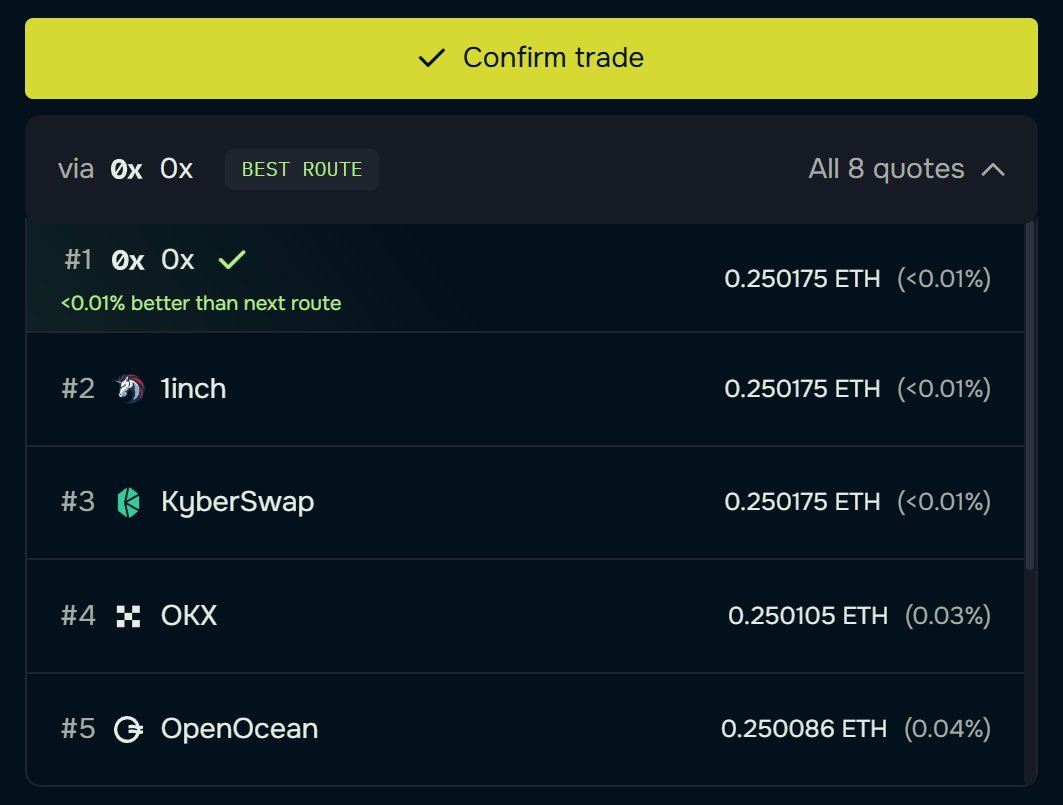
② 1inch, Jupiter, OKX 등 동시 조회 후 최적가 자동 실행
③ 유저가 가스비 신경 안 써도 돼서
④ 위 전부 다
정답은 24시간 후 공개합니다.
댓글에 정답 남겨주시면 추첨으로 한 분께 디브릿지 티셔츠를 보내드립니다 🎁
Jun 3

how deBridge helps you get the best price across all onchain markets, every time
31
9
52
4,303
deBridge retweeted
Jun 6
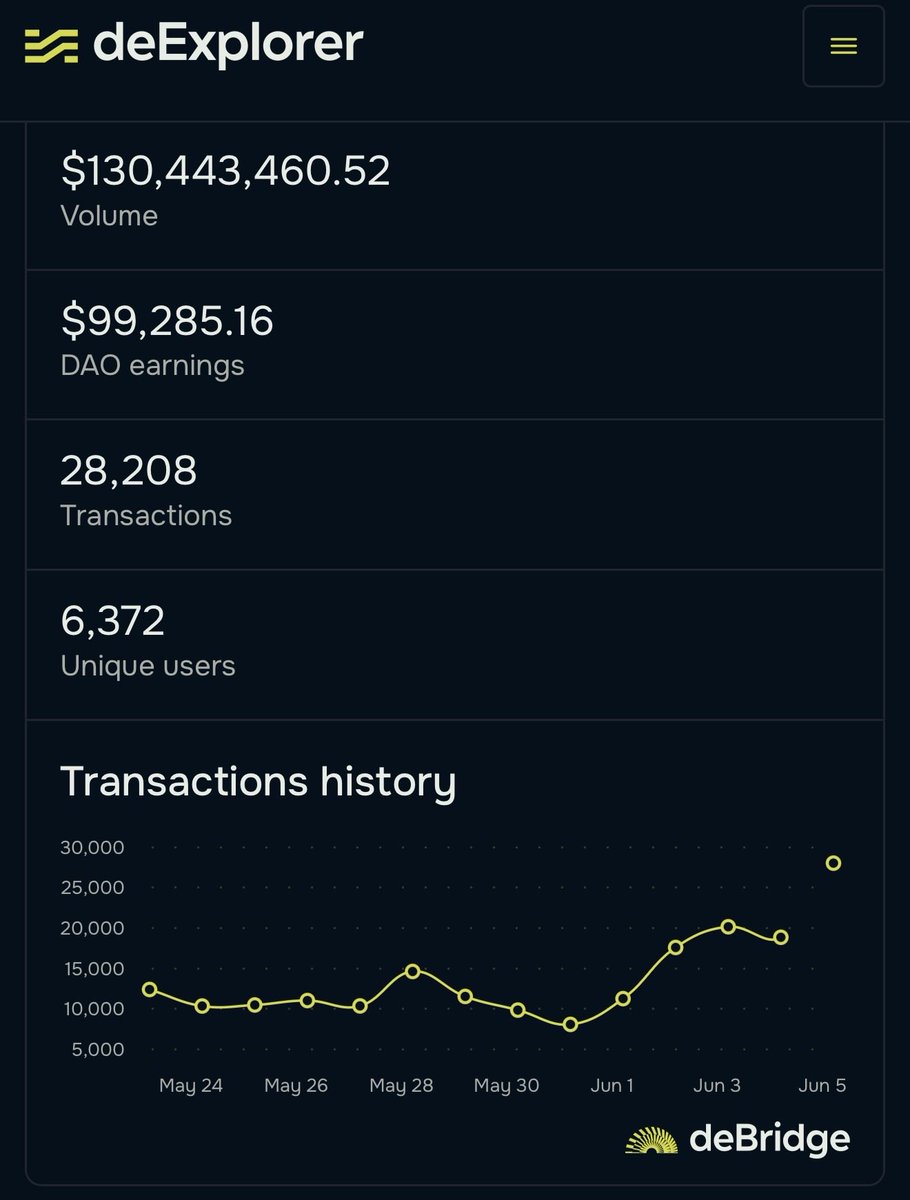
Traders vote with their volume. $130M processed on deBridge this Friday.
8
3
28
1,943

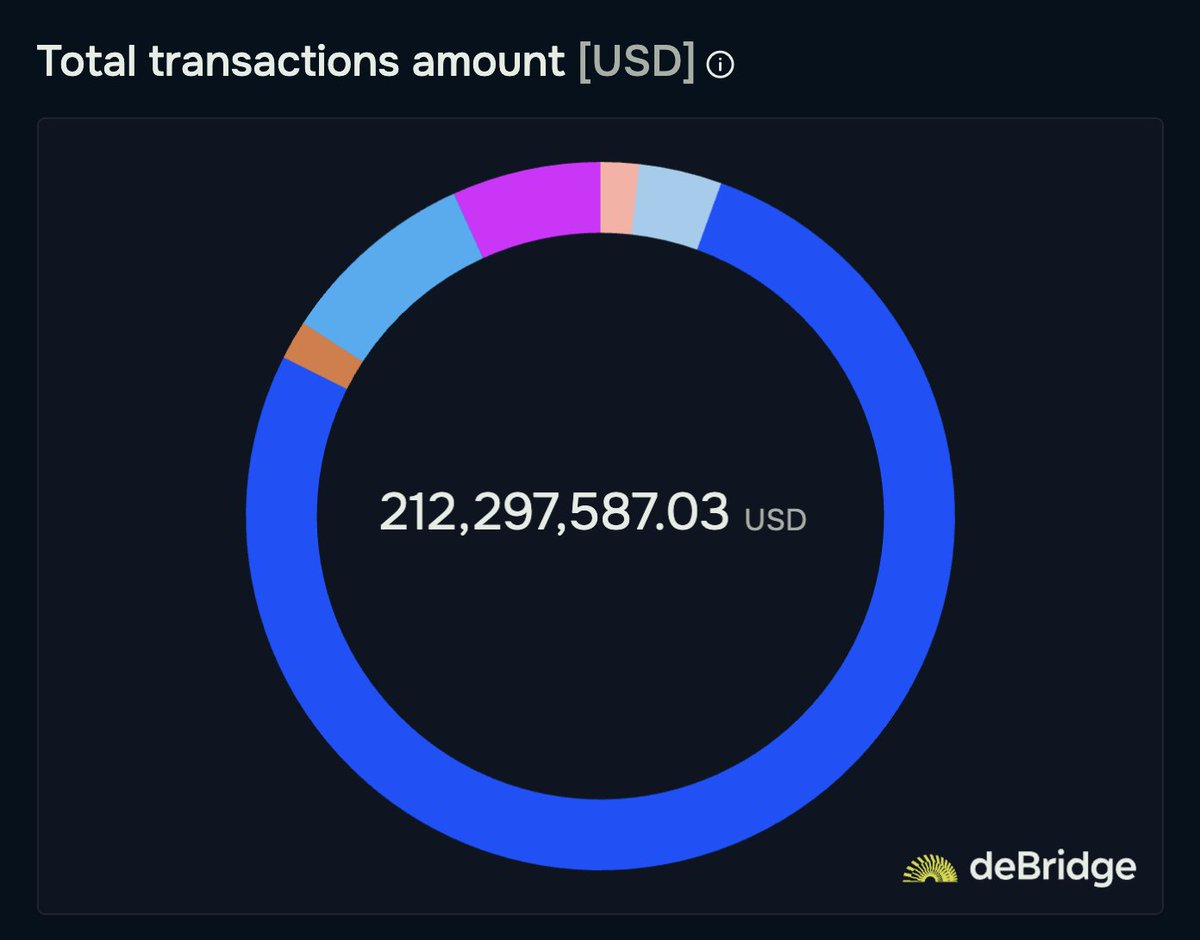
$212,000,000 in just three days
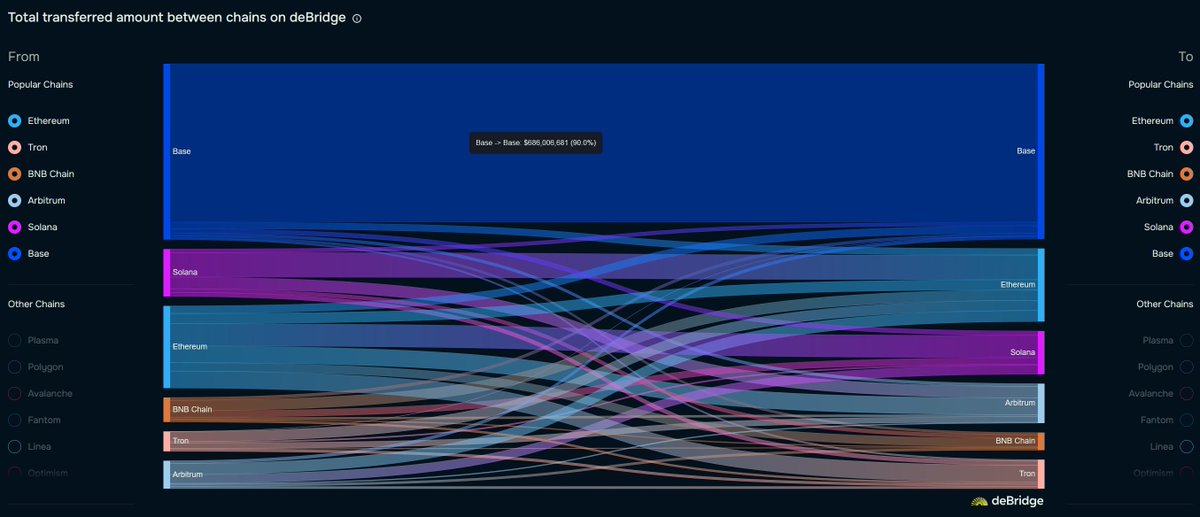
In a world where chain maxis are disappearing, bridge volume and users are growing as traders/investors go where the money flows at any given time
I know more and more people using @debridge and it is the one place I recommend to bridge funds if you want to do it fast and in a few clicks
It is interesting since a year ago people said bridges would die and become useless but we're not seeing any of that...the ones that died did so from being exploited or from bad opsec
8
1
28
5,795
deBridge retweeted
Jun 8
The expectations for onchain UX is evolving and we're seeing that first hand with our partners.
With @debridge, apps are now able to cater towards a much bigger audience
Jun 3
how deBridge helps you get the best price across all onchain markets, every time
1
8
1,372
deBridge retweeted
Jun 5
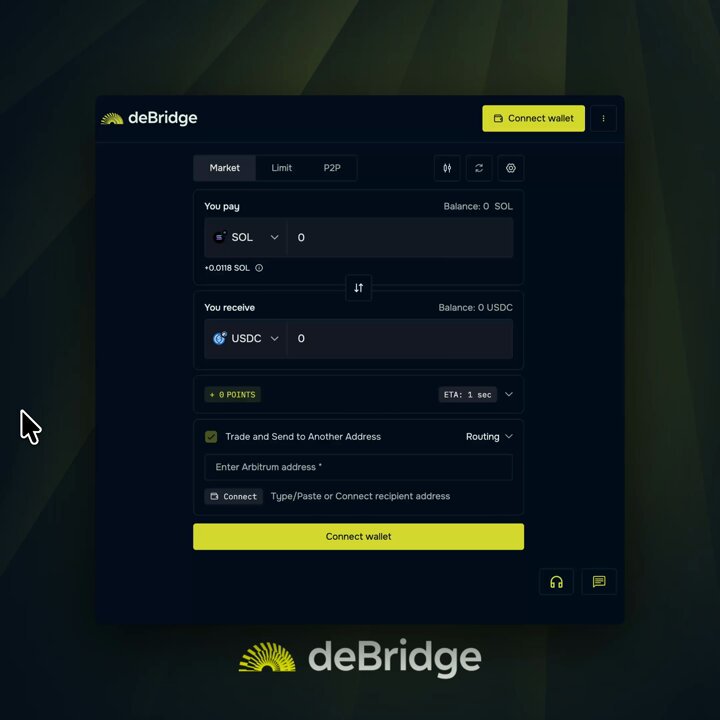
Did you know that when both tokens are on the same chain, @debridge works as an aggregator?
It queries multiple liquidity sources, compares quotes, simulates how each one would actually execute rather than just display a quote, and picks the one that delivers the best output.
Jun 3
how deBridge helps you get the best price across all onchain markets, every time
1
2
18
1,657
deBridge retweeted
Jun 5
Most of you know deBridge as a bridge
We’re a swap meta-aggregator
To always get you the best price, we aggregate aggregators across 19 chains: 1inch, Jupiter, OKX, etc.
Just use deBridge

Jun 3
how deBridge helps you get the best price across all onchain markets, every time
17
1
59
2,029
deBridge retweeted

Jun 5
我承认我狭隘了。
deBridge远不止是跨链桥。
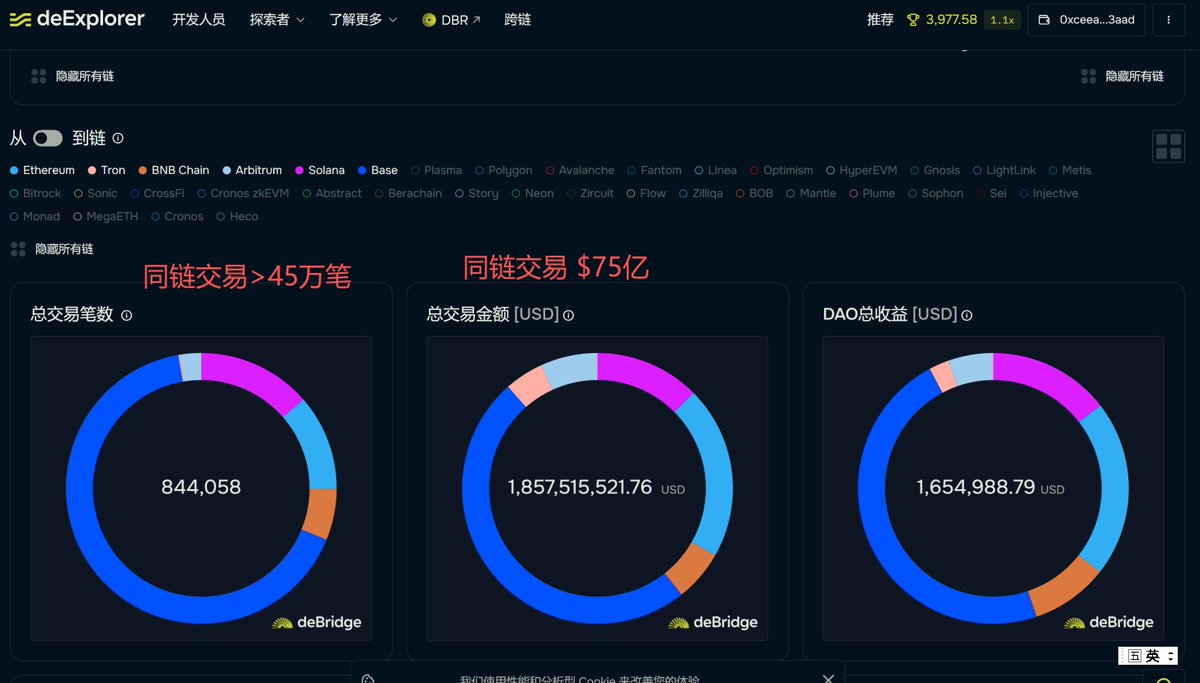
近3个月的同链交易量高达7.5亿美元,占总交易量($18.575亿)的40.38%。
同链交易超过45万笔,超过总交易数量(844058)的53%。
是什么原因,让这7.5亿美金选择使用这个跨链协议执行同链swap交易呢?
这个视频给出了答案,deBridge程序会检查多个聚合器,然后选择最优路径执行用户交易。
所以deBridge=跨链桥 swap,并且拥有强大的智能路由功能!
以后蜂兄就准备只用deBridge一个应用,既用来同链交易,也用来跨链兑换。
强烈建议 @debridge 改名,叫HyperBridge,超越桥、超级桥。
甚至还想了一个一语双关的Slogan:
HyperBridge Conneting #HyperLiquid 😜
Jun 3
how deBridge helps you get the best price across all onchain markets, every time
65
1
53
10,388

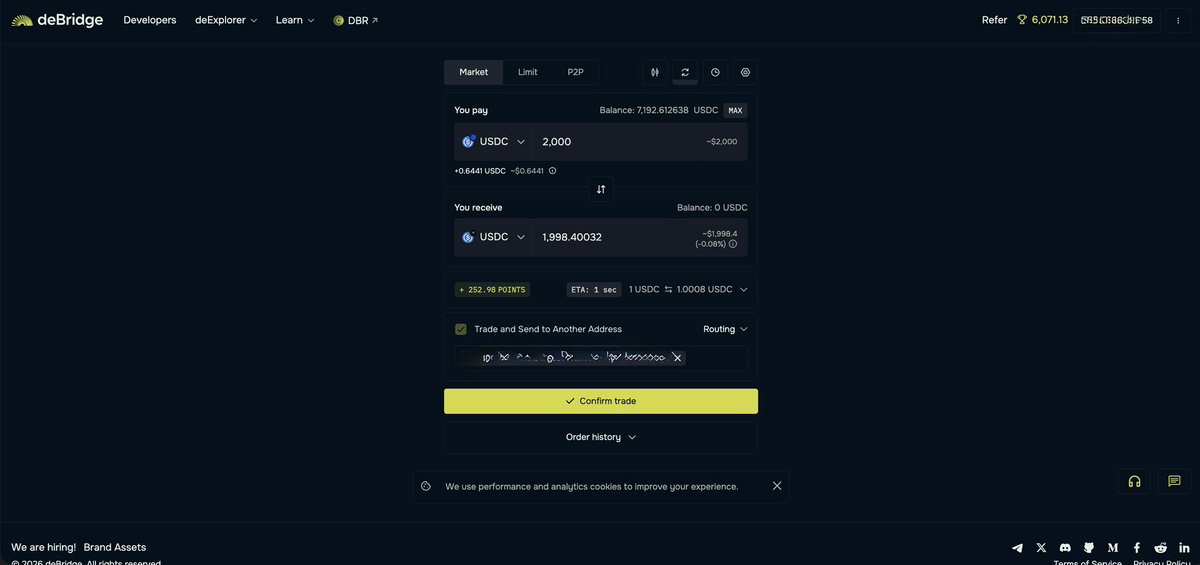
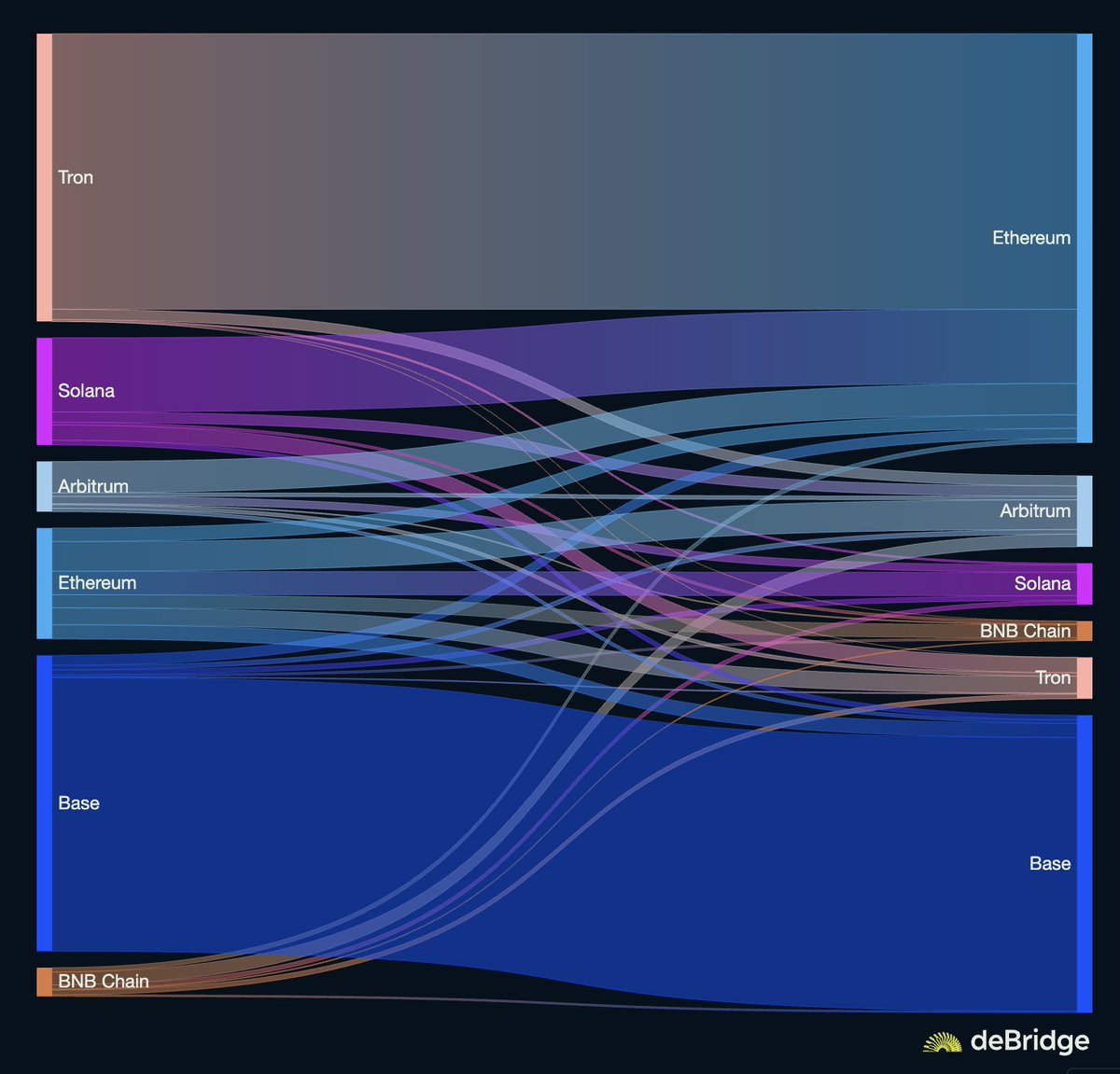
From ETH, SOL, and HYPE to Gold, Silver, and Apple
$1.9B has moved through deBridge in the last 90 days
You move more when you always get the best price onchain
Jun 3
how deBridge helps you get the best price across all onchain markets, every time
2
16
1,396
deBridge retweeted
Jun 4
One of the biggest pain points in DeFi compared to tradfi execution venues is that the price you're quoted and the price you actually get are almost never the same.
Most swap venues just give you a projection of your trade, but not the actual min amount you’re going to receive. It just describes the route you’ll take under conditions that may no longer exist by the time your transaction lands.
Which means the number you see on the screen and the amount that hits your wallet are not the same. If this is happening every single time you’re swapping/trading, that difference is going to add up to a lot. Not even mentioning the impact this has on the professional market participants you see in mature and developed capital markets (HFTs, algos, etc) who rely on accurate execution!
We fixed this on deBridge. Instead of returning an optimistic estimate, we tuned the API to follow this:
- Check routes across multiple aggregators like 1inch, 0x, OKX, Jupiter, and more
- Reconcile them against live market conditions
- Simulate the route before any transaction is built
The quote displayed on the UI reflects a price based on what deBridge can actually execute at that same time. Alongside, the quotes carry a freshness expectation, with signing and submission occurring within ~30 seconds.
Slippage works the same way. Most apps set it once and forget it, which breaks the moment the market moves. We made it adaptive based on real-time conditions and route simulations to protect our users from adverse market effects.
So with deBridge, you actually get the best price on samechain swaps too – the exact amount quoted and no less🤌
Jun 3
how deBridge helps you get the best price across all onchain markets, every time
2
4
20
1,847
deBridge retweeted

Jun 4
When people with low conviction leave, the opportunity doesn't disappear
It just concentrates with people with higher conviction
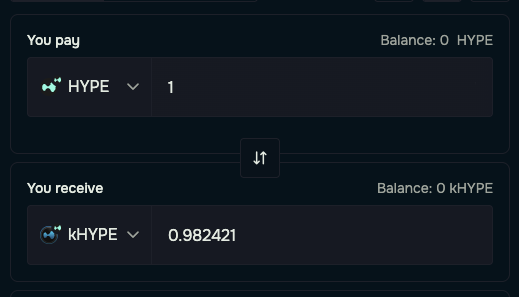
On a completely unrelated note, anyone can stake their HYPE for kHYPE using deBridge
Jun 3
how deBridge helps you get the best price across all onchain markets, every time
3
1
15
2,128
deBridge retweeted

What if you could execute complex DeFi actions across multiple chains just by saying what you want?
One Intent. Many Actions. One Outcome.
Powered by deBridge MCP 📸
9
11
28
1,256
deBridge retweeted

Jun 3
how deBridge helps you get the best price across all onchain markets, every time
6
1
54
32,457
deBridge retweeted

Jun 3
“Connecting what was never meant to be separated”
148
4
247
5,999