
Joined October 2007
- Tweets 28,406
- Following 871
- Followers 1,916
- Likes 1,417
944 Photos and videos
















🧡 deimidis 💚 retweeted

May 26
A post about Pope Leo XIV's encyclical on AI. Why the Pope is right, but perhaps not right enough.
Artificial intelligence is reshaping the world in front of our eyes: how we communicate, how we access information, how we work, how income and status are distributed among us, and soon how we fight and kill each other. Yet the public conversation about AI remains stuck on the minutiae of competition between labs, or on a false dichotomy between AI as a “stochastic parrot” with no real capabilities and AI as an alien superintelligence poised to take command of humanity.
The more important questions are about what we want from AI, and whether our current mindset, institutions, and control mechanisms are equal to the task of steering it toward our welfare.
It is refreshing, then, that a bold and powerful voice has weighed into this debate: Pope Leo XIV. As an economist who has long argued that technology is a matter of choice rather than fate, I find Leo’s intervention welcome and, on most points, on target. But on the most consequential question of what AI should actually be designed to do, Leo stops short.
Secular readers may bristle at the encyclical’s opening invocation of the Tower of Babel. They would be mistaken to stop reading there. Leo goes much further than most pundits, journalists and policymakers in the United States by recognizing that what happens to AI, and hence to humanity, is a under our control. There are multiple possible paths for AI, and which one we take will have sweeping consequences. He is also ahead of many commentators when he writes forcefully and unequivocally that “technology is never neutral, because it takes on the characteristics of those who devise, finance, regulate, and use it.”
These were the central themes of the book I wrote with Simon Johnson, Power and Progress: Our Thousand-Year Struggle over Technology and Prosperity. It is heartening to hear them taken up by a voice with Leo's reach.
The Pope is also right to question the current trajectory of AI in warfare and law enforcement. What was taboo only a few years ago – AI-driven mass surveillance, algorithms selecting targets for killing – has become routine. Many in Silicon Valley are now calling openly for a new military-algorithmic complex centered on AI as an instrument of American hard power. Leo captures something deep and too often ignored: “Any technology that facilitates attacks without seeing the face of human beings lowers the moral threshold of conflict.”
His call for the “disarmament of AI” follows directly from these observations. As he explains, disarming AI means “freeing it from the mentality of ‘armed’ competition, which today is not limited simply to the military context, but is also an economic and cognitive phenomenon.” His moral clarity in stating that “there is no algorithm that can make war morally acceptable” should be a warning to technologists rushing to design new weapons of mass destruction.
Underneath these specific concerns lies a more fundamental claim: that what is technically feasible is not the same as what is good for humanity, and that the difference depends on who controls the technology and what ideology and interests guide them.
Leo edges toward what I take to be the most important point about AI's future when he observes that “while AI promises to boost productivity by taking over mundane tasks, it frequently forces workers to adapt to the speed and demands of machines, rather than designing machines to work with those who work.”
But here he does not go far enough. He stops short of questioning the prevailing design philosophy of AI itself: a philosophy centered on mimicking human capabilities and automating human tasks, with the ultimate goal of artificial general intelligence (AGI) that can do everything a person can.
This philosophy rests on a mistake. It assumes that artificial intelligence and humanintelligence are fundamentally similar, and therefore machines should naturally take over whatever humans currently do. Yet these intelligences are fundamentally different.
Humans are “one-shot” learners. We form hypotheses from a few examples, mentally simulate possibilities, and refine our understanding through a social process of trial and error. This is how children learn language - imitating a few words, generalizing, and adjusting based on how others respond. We are not, however, very good at absorbing massive volumes of information or sifting through unstructured data for relevant patterns.
AI models are almost the opposite. They thrive on enormous training sets and excel at pattern recognition at scale. But they have, as yet, no genuine creativity, no real-world embodiment, and no capacity for trial-and-error learning grounded in interaction with the physical and social world.
When two things are different – you shouldn’t, and typically you couldn’t – use one to mimic the other. If you did, you would end up with suboptimal, disappointing results. It would have been a colossal mistake, and the Chicago Bulls’s legendary coach Phil Jackson would have gone down in the annals of basketball as one of the worst coaches in history, if he decided in the 1990s that because Michael Jordan was the better player, Jordan should mimic everything that Scottie Pippen and Dennis Rodman were doing in the team. The team went from championship to championship because these players worked together and complemented each other.
The same applies to AI and human skills.
The more productive path is complementarity – using AI to do what humans cannot, so that humans can do what they do best. An electrician aided by AI diagnostics, a nurse supported by AI in interpreting symptoms, a teacher using AI to personalize instruction for each student; these are the contours of a different AI future, one that raises rather than displaces human capability.
Optimists and industry insiders will respond that automation-first AI can still benefit everyone, provided redistributive policy keeps pace. But this argument has a poor track record. Forty years of digital automation have already concentrated gains at the top, hollowed out middle-skill work, and produced disappointing aggregate productivity growth. There is little reason to expect that an even more powerful round of automation, deployed by even more concentrated firms, will end differently. We can and must demand a different design.
The global stakes from the future of AI are even larger than those we can see around us in the United States. For the developing world, where billions still depend on the prospect of decent jobs as a path out of poverty, an automation-centric AI agenda is not merely suboptimal. It is simply transferring to foreclose the most important route to broad-based prosperity.
The biggest failing of today's AI industry is its refusal to recognize any of this. It is guided instead by an ideology of control (the industry’s own over humanity) and by a conviction that machines are uniformly better than humans.
As Leo rightly notes, this failure is enabled by the fact that a handful of companies now command the future of AI.
What we need is a combination of moral clarity and a serious, society-wide debate about what AI can do and what we want it to do. That debate must move beyond exhortation toward concrete choices: antitrust action against the dominant platforms, public investment in human-complementary AI, regulation of surveillance and autonomous weapons, and meaningful rights for workers and citizens over the data on which these systems are built.
The Pope's intervention makes such a debate a little more likely today than it was before.
It is now up to the rest of us to carry it further than he was willing to go.
40
333
945
136,826
🧡 deimidis 💚 retweeted

May 3
Lo que no se dice sobre Palantir:
1) Peter Thiel llega a la Argentina para sostener a Javier Gerardo Milei cuya imagen negativa crece como la inflación alimentaria y la canasta básica para no ser pobre en CABA.
2) Palantir está asociada al Pentágono y la CIA.
3) Después de mostrarse en Buenos Aires con el presidente, Santiago Caputo y Pablo Quirno, Peter Thiel estuvo en Chile con la ultraderecha. 4) Se trata de un proyecto de Defensa y Control de EE UU sobre el Sur de América Latina en una avanzada imperialista. Las fotos de buques de guerra en el Atlántico Sur lo demuestran. Fue por decisión del Poder Ejecutivo sin pasar por el Congreso. Los comunicados de la embajada de EU en Buenos Aires fueron, al menos, confusos. El Atlántico Sur y su plataforma continental más las 200 millas exclusivas forman parte de la soberanía nacional de la República Argentina desde el puerto hasta Tierra del Fuego, Antártida y Malvinas. Lo que debe hacer Argentina es asegurar su territorio sin injerencia extranjera de una potencia interesada en nuestros recursos naturales y energéticos.
5) Las declaraciones de un vivillo del gobierno sobre IA, empleos, trabajo y régimen esclavista sin derechos, también confirman los deseos de Palantir en su manifiesto. Porque aclaremos esto: Luis Caputo y Federico Sturzenegger están haciendo su negocio dentro del gobierno. No son anarquistas capitalistas. Son saqueadores. Proyectan sobrevivir a Milei y a su hermana Karina Elizabeth y tienen sus ahorros fuera del país.
6) El principal objetivo de Palantir es hacer dinero con la Seguridad, la Defensa y la Inteligencia de Argentina. Pero su segundo interés es lograr cambiar la cultura desde la IA y la manipulación masiva de las emociones y el sentido con los algoritmos y las plataformas digitales. En el país cae el consumo de carne vacuna pero hay más de un teléfono móvil por habitante. Ahí apuntan Peter Thiel y Alex Karp para sostener a Javier Gerardo Milei y su grupo de desquiciados.
7) La oposición debe tomar notas de la llegada de Palantir al país. No es una broma. La compañía tiene un software utilizado por el ICE y por el Ejército de Israel en Gaza y el Líbano. Peter Thiel y Alex Karp tienen una empresa que ayuda a asesinar civiles inocentes (niños, niñas, mujeres, ancianos y periodistas) en nombre de "la libertad" occidental. Milei estaba en Israel cuando llegó Thiel.
Eso tampoco puede ser analizado como una casualidad.
8) La deriva mesiánica del presidente de Argentina es peligrosa. Su alianza con lo peor de la ultraderecha israelí implica un implantación de facto de valores que no tienen nada que ver con la democracia republicana desde 1983. Para Palantir (o sea para el Pentágono) es importante que los Milei sigan destruyendo la Argentina y su modelo nuclear y soberano con ciencia propia. Hay que pedirle a Manuel Adorni los contratos con EU y no las tarjetas de crédito de Nucleoeléctrica con el payaso caro de Demian Reidel. Que dicho sea de paso ambos nunca explicaron sus roles en el lanzamiento de $LIBRA.
29
534
835
26,224
🧡 deimidis 💚 retweeted

Apr 30
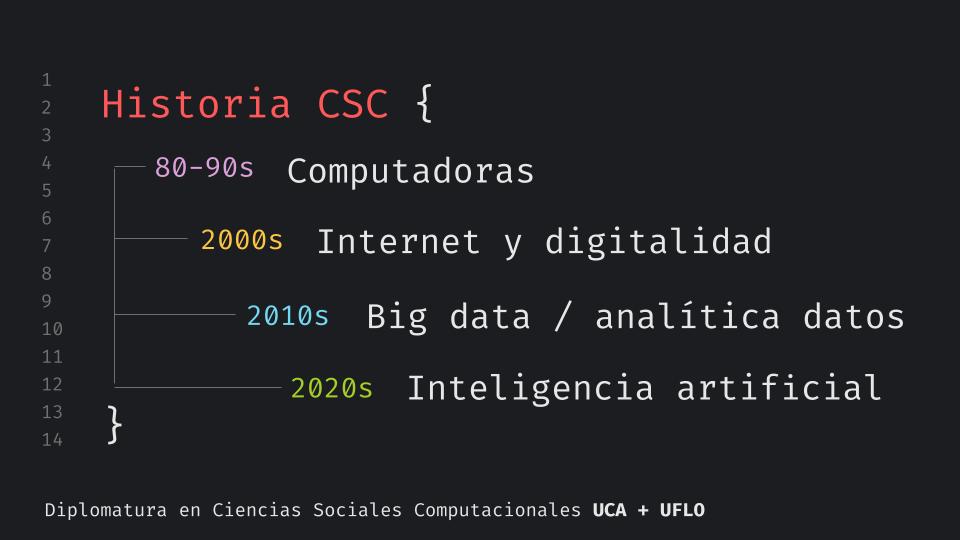
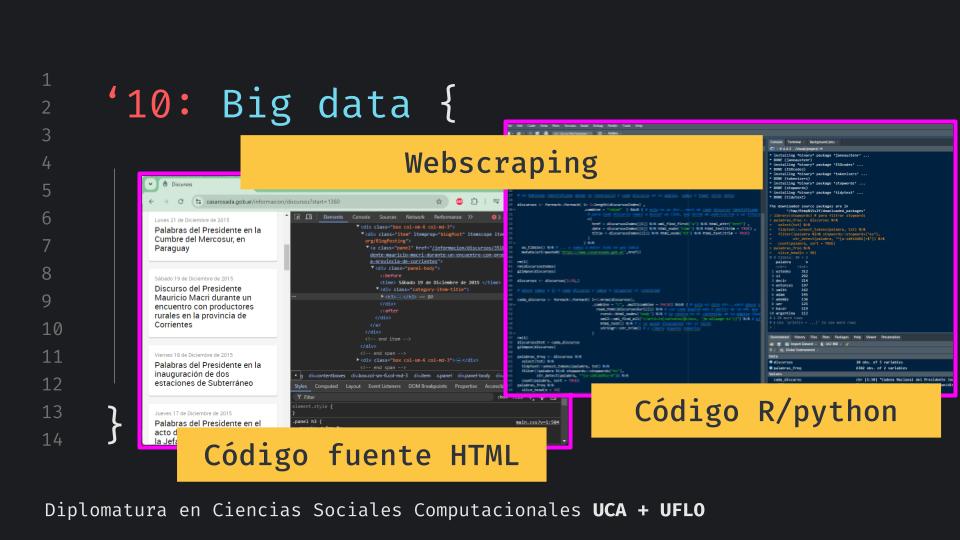
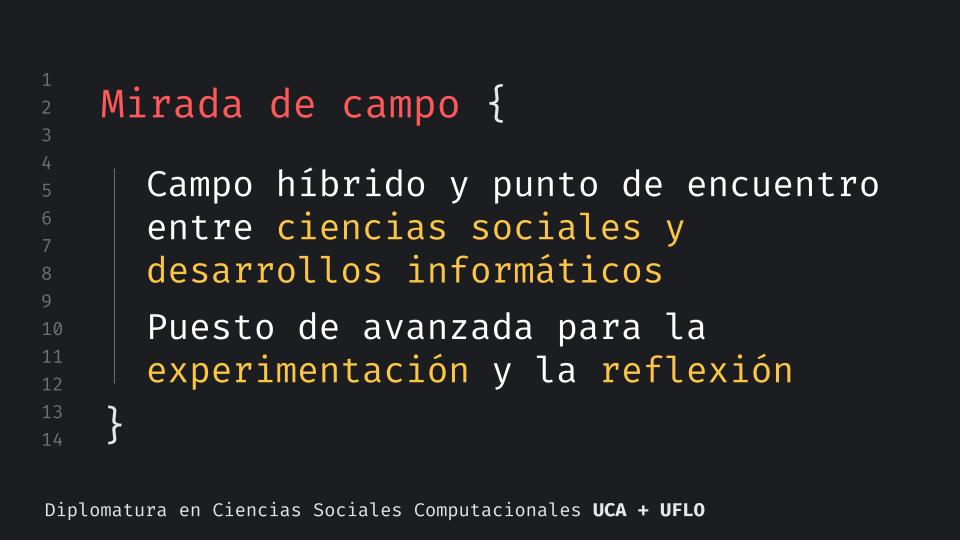
Hoy tenemos una clase abierta sobre Ciencias Sociales Computacionales y quiero compartirles algunos materiales y slides que vamos charlar.
Hoy jueves 30/4 7p AR!
Link clase: uca-edu-ar.zoom.us/meeting/r…
Materiales: recursossociologicos.ar/csc-…

1
31
159
6,635
🧡 deimidis 💚 retweeted

📌Nuevo artículo sobre escritura acompañada con IA
🙋🏻♀️Junto a Florentina Guaita y Clarisa Vittoni nos preguntamos si existen otros modos de intercambio con las máquinas que se alejen del formato conversacional.
Van algunos núcleos que concentraron nuestra reflexión 🧵

2
13
53
5,319
🧡 deimidis 💚 retweeted

Apr 20
🛑 A design flaw in Anthropic’s MCP allows remote command execution on AI systems.
150M downloads affected as unsafe STDIO defaults expose 7,000 services, including tools like LangChain and Flowise.
Anthropic calls the behavior “expected,” leaving the risk across the AI supply chain.
🔗 Read → thehackernews.com/2026/04/an…

41
190
623
181,747
🧡 deimidis 💚 retweeted

Apr 14
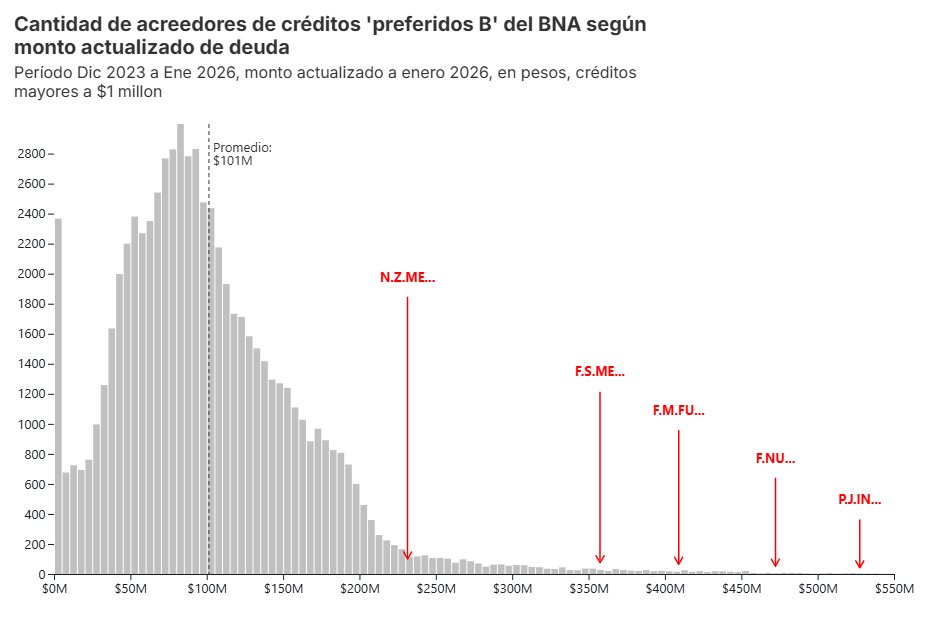
Me quedó pendiente este gráfico sobre los "hijos de vecino" que fueron a pedir un prestamo y se los dieron.
4
116
369
11,935
🧡 deimidis 💚 retweeted
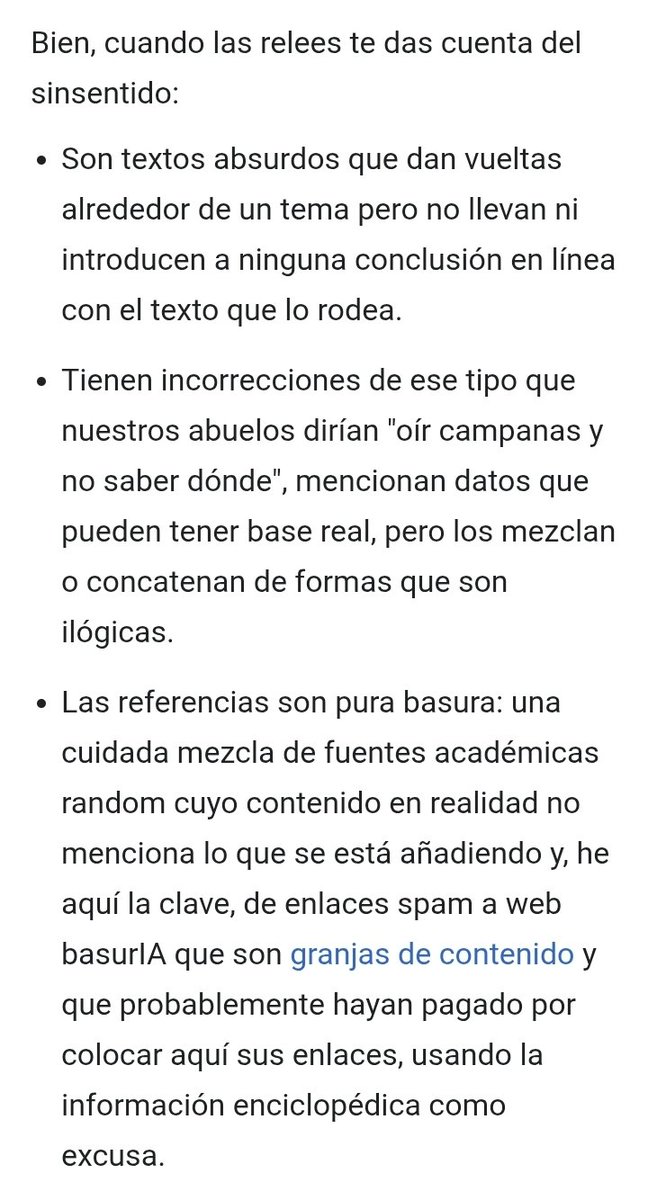
🤖El síndrome de la página en negro: textos escritos con IA sin propósito ni objetivos claros, páginas llenas de tinta (negra). Un problema para lectores, editores y, claro, para el profesorado también.
Obviamente el problema no es la IA. Es, en realidad, escribir cualquier cosa sin objetivos ni ideas claras sobre qué decir, cómo, cuándo y por qué. La delegación cognitiva absoluta.
Aquí un ejemplo desde Wikipedia 👇🏼
es.wikipedia.org/wiki/Wikipe…
2
23
73
3,879
🧡 deimidis 💚 retweeted

Ya está disponible para descarga gratuita el libro Mitos y representaciones de la Inteligencia Artificial.
Una obra colectiva de más de 30 capítulos que reúne discusiones actuales sobre la IA desde una perspectiva social, crítica e interdisciplinaria.
🔗 repositorio.uflo.edu.ar/hand…

1
85
205
8,815
🧡 deimidis 💚 retweeted

De una ecografía a la imagen de un bebé que todavía no nació. IA generativa, datos sensibles, falta de consentimiento y modelos de negocio que empujan su uso sin pausa.
✍️ @deimidis
🔗 dhytecno.ar/ansiedad-artific…
4
5
1,739

Mar 23
Ojalá el imbécil que pensó este tweet y el que lo aprobó pierdan el trabajo rápido.
2
47
🧡 deimidis 💚 retweeted
Mar 16
Dice @madorni que los datos de sus consumos de tarjeta son privados y no hay forma de obtenerlos de forma legal.
Sin embargo, el @BancoCentral_AR publica la situación crediticia mensual.
Acá hicimos un explorador para ver fácilmente dichos gastos/deudas de funcionarios:
75
1,440
3,936
207,668
🧡 deimidis 💚 retweeted

Mar 14
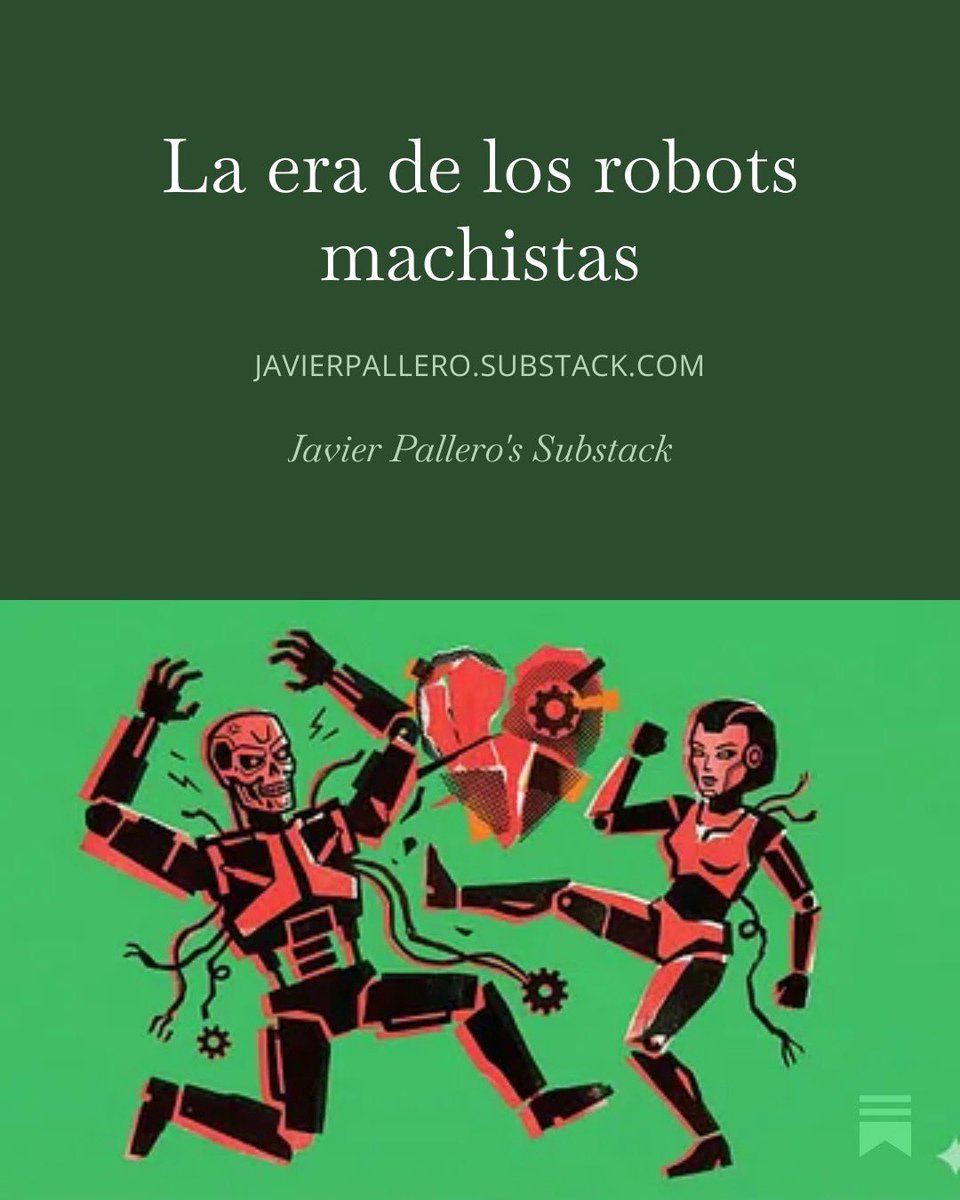
“El propio Karp lo dijo en Davos en enero: “La IA va a destruir los empleos en humanidades.”
Esto no es casualidad. Hay una pregunta que vale la pena hacerse: ¿por qué la IA prioriza sustituir trabajo intelectual antes que trabajo manual o doméstico, donde el beneficio social sería más directamente perceptible?
Tendremos robots abogados antes que robots capaces de ayudar a un viejo a ir al baño. Tendremos IA que redacta contratos antes que tecnología que alivie el trabajo de cuidado. Ese trabajo feminizado, invisible, no remunerado o mal pago que sostiene sociedades enteras. La respuesta tiene que ver con quién financia el desarrollo, para qué y contra quién compite. Y Karp acaba de decirlo en voz alta.”
Artículo completo en link en respuestas
63
576
1,829
56,334
🧡 deimidis 💚 retweeted

Un “error de selección de objetivo”.
Saben qué IA se usó para el ataque?
Sí, Claude. Esa que ahora les parece tan ética y copada.
Mar 11

Breaking News: The U.S. was responsible for a missile strike on an Iranian school, an ongoing military investigation found. The inquiry said the strike — which Iranian officials said killed at least 175 people — was the result of a targeting mistake. nyti.ms/47G2uw2
1
9
25
1,062
🧡 deimidis 💚 retweeted

Mar 4
La DAIA despide con honores a un tipo que estuvo preso por el encubrimiento del atentado a la AMIA. Después van a impulsar un juicio a uno que dibujó un mapa de Palestina y van a decir que luchan contra el antisemitismo. Qué horror.
Mar 4

La DAIA reconoce al Dr. Mariano Cúneo Libarona, ex ministro de Justicia de la Nación, quien durante su gestión, impulsó la Ley de Juicio en ausencia, una herramienta vital destinada a que los responsables del terrorismo se sometan a la justicia.
La entidad representativa de la comunidad judía destaca su trabajo y compromiso con la memoria, la verdad, la justicia y la lucha contra el antisemitismo .
Finalmente, la DAIA valora su aporte al fortalecimiento del Estado de Israel y a su desarrollo.
27
996
5,188
84,666
🧡 deimidis 💚 retweeted
DIOS un día de paz pido nomás

1
17
722
Feb 26
Los de ESPN internacional recién se dan cuenta, con Argentinos Jrs, que es injusto que el que va al repechaje se quede sin competencia internacional por el resto del año.
1
59
Feb 8
Está idiotez de querer mostrar "humanos/as" a los presidentes es insufrible.

#Sociedad | A través de sus redes sociales, el presidente Rodrigo Paz presentó a su mascota, Pirlo.
2
61
🧡 deimidis 💚 retweeted

El Gobierno llama a dueños de medios para blindar la reforma laboral y ofrenda el Estatuto del Periodista. Los citó Bullrich el miércoles en Senado. El proyecto deroga el estatuto que protege a los periodistas de los despidos arbitrarios. En @eldestapeweb.
eldestapeweb.com/politica/re…
7
207
260
14,546
31 Dec 2025
Me preocupa que @Sietecase le crea a los vendedores de humo que invita. Casualmente, todos te dicen cosas como "Muchas grandes ciudades" sin mencionar una sola, así no podés ir a buscar datos.
1
1
65