
Software Engineer at Startup • System Design • Microservices • AI Infrastructure | Creating real-world content for devs
Joined February 2018
- Tweets 21,266
- Following 894
- Followers 5,312
- Likes 30,882
1,779 Photos and videos













Pinned Tweet

Jun 13
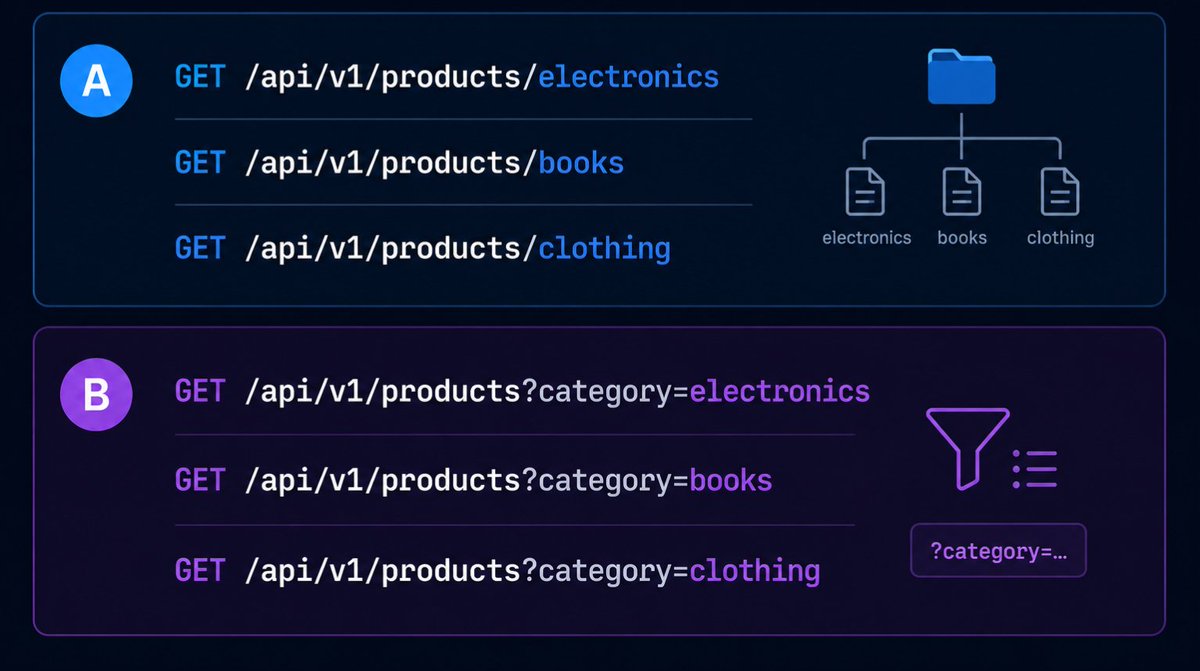
Backend Interview Question:
Which API design scales better?
What's your choice?
192
54
1,825
513,167
Ritesh Roushan retweeted
Most people answer:
A) Database
That's usually wrong.
The first thing that fails is often the cache.
Here's why 👇
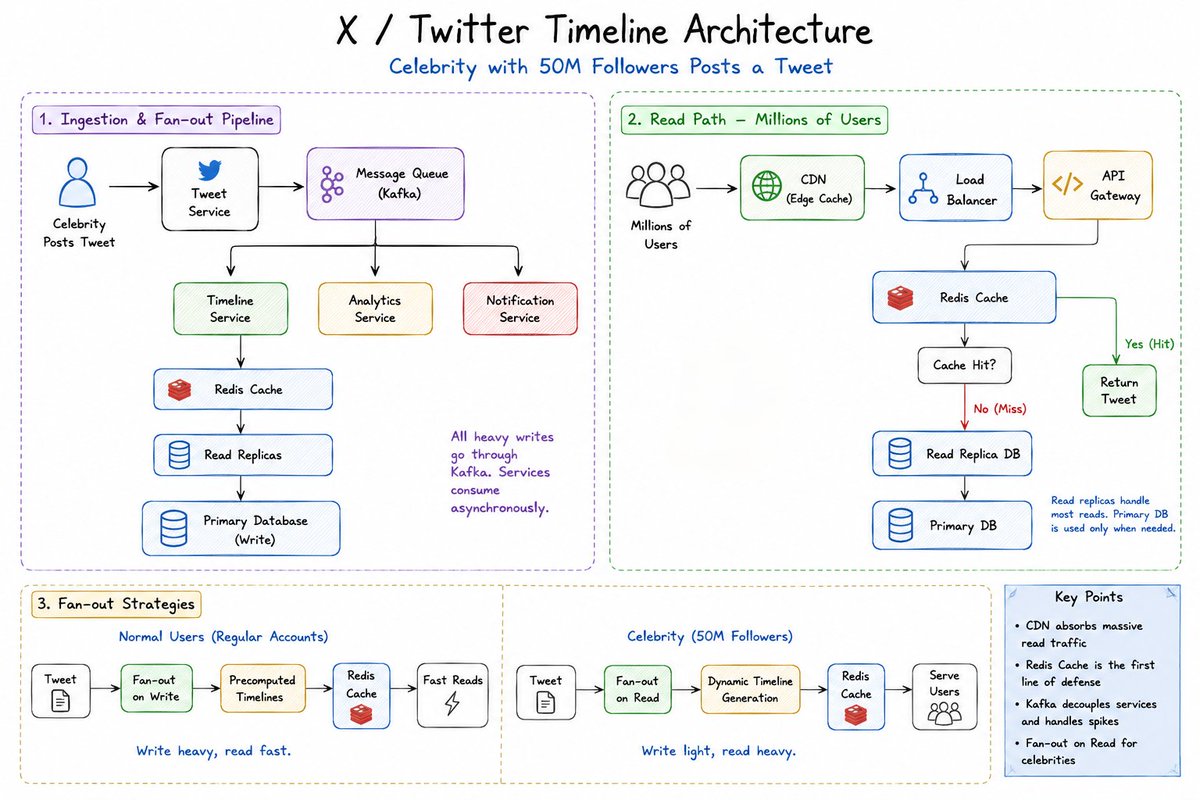
1. Celebrity posts a tweet
50M followers.
Millions immediately refresh.
Everyone requests the same tweet.
2. Cache Miss Storm
If the tweet isn't cached yet:
Millions of requests hit Redis simultaneously.
This is called a cache stampede.
Suddenly:
• Redis CPU spikes
• Network saturation increases
• Database gets hammered
3. Database Becomes the Next Victim
After cache misses:
- Millions of requests fall back to the database.
- Now the database becomes overloaded.
- Not because it's slow.
Because the cache stopped protecting it.
4. How X/Twitter Handles This
Request Flow:
User
↓
CDN
↓
Load Balancer
↓
API Gateway
↓
Redis Cache
↓
Database
Most reads never reach the database.
5. Celebrity Problem
Normal users:
- Fan-out on Write
- Tweet gets pushed to follower timelines.
- Fast reads.
Celebrity users:
- Fan-out on Read
- Store the tweet once.
- Generate timelines dynamically.
Otherwise you'd write tens of millions of timeline entries.
6. Protection Layers
• Redis caching
• CDN edge caching
• Request coalescing
• Rate limiting
• Read replicas
• Queue-based timeline generation
Production lesson:
The database isn't usually the first thing that fails.
The system fails when too many requests bypass the cache.
Protect the cache.
The cache protects everything else.

System Design Interview Question:
A celebrity with 50M followers posts a tweet.
Within seconds:
• Millions open the app
• Millions refresh feeds
• Millions request the same content
What fails first?
A) Database
B) Cache
C) API Servers
D) Message Queue
And how would you prevent it?
Explain your architecture 👇
22
3
29
341
Most people answer:
A) Database
That's usually wrong.
The first thing that fails is often the cache.
Here's why 👇
1. Celebrity posts a tweet
50M followers.
Millions immediately refresh.
Everyone requests the same tweet.
2. Cache Miss Storm
If the tweet isn't cached yet:
Millions of requests hit Redis simultaneously.
This is called a cache stampede.
Suddenly:
• Redis CPU spikes
• Network saturation increases
• Database gets hammered
3. Database Becomes the Next Victim
After cache misses:
- Millions of requests fall back to the database.
- Now the database becomes overloaded.
- Not because it's slow.
Because the cache stopped protecting it.
4. How X/Twitter Handles This
Request Flow:
User
↓
CDN
↓
Load Balancer
↓
API Gateway
↓
Redis Cache
↓
Database
Most reads never reach the database.
5. Celebrity Problem
Normal users:
- Fan-out on Write
- Tweet gets pushed to follower timelines.
- Fast reads.
Celebrity users:
- Fan-out on Read
- Store the tweet once.
- Generate timelines dynamically.
Otherwise you'd write tens of millions of timeline entries.
6. Protection Layers
• Redis caching
• CDN edge caching
• Request coalescing
• Rate limiting
• Read replicas
• Queue-based timeline generation
Production lesson:
The database isn't usually the first thing that fails.
The system fails when too many requests bypass the cache.
Protect the cache.
The cache protects everything else.
System Design Interview Question:
A celebrity with 50M followers posts a tweet.
Within seconds:
• Millions open the app
• Millions refresh feeds
• Millions request the same content
What fails first?
A) Database
B) Cache
C) API Servers
D) Message Queue
And how would you prevent it?
Explain your architecture 👇
22
3
29
341
Read this for cache strategy in detail
devxritesh.medium.com/cachin…
2
61
Ritesh Roushan retweeted
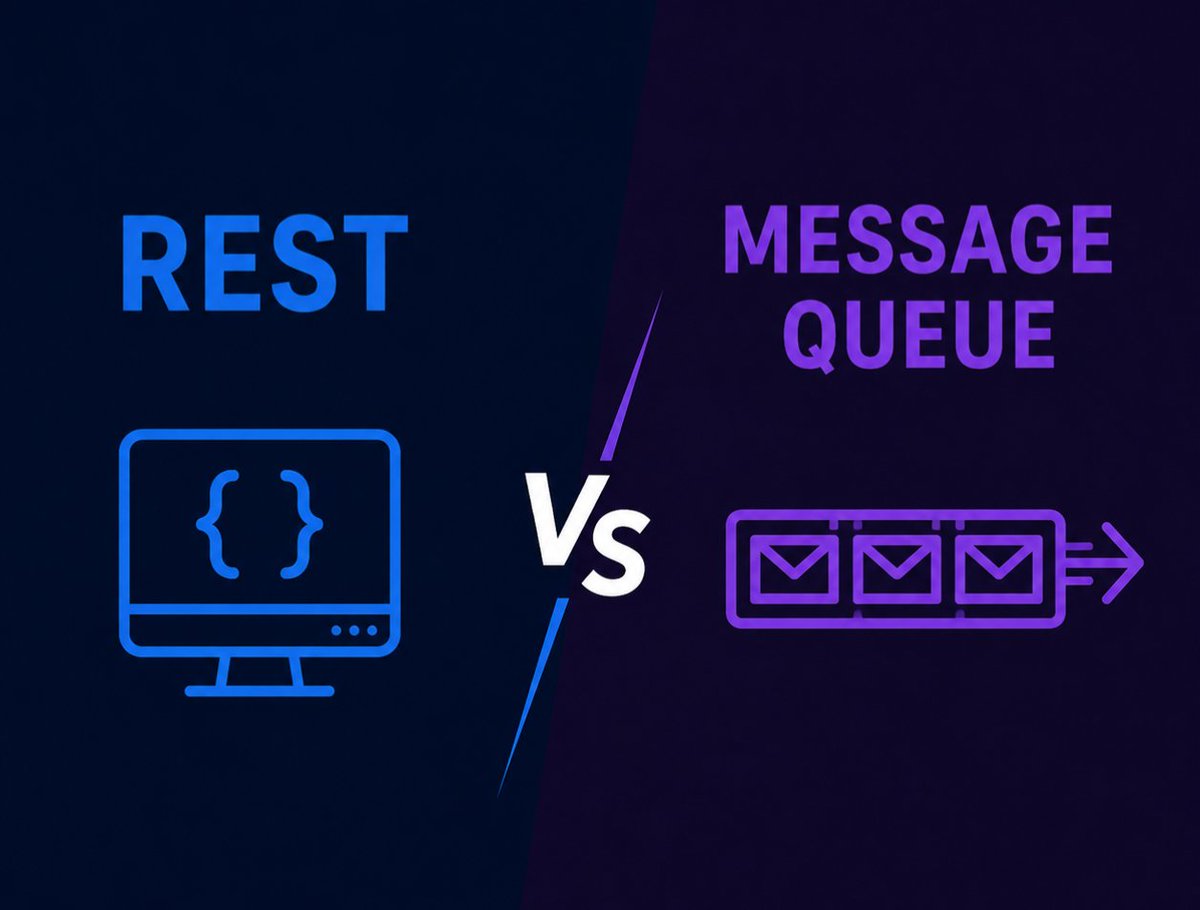
System Design Question:
You're designing Uber.
A ride is completed.
You need to update:
• Billing
• Driver Earnings
• Notifications
• Analytics
What's your first choice?
A) REST
B) Message Queue
Explain your reasoning 👇
57
3
73
1,355
Ritesh Roushan retweeted
Builders & Developers 👇
What are you building right now?
Drop your product link one line about what it does.
I’ll check it out and give you honest feedback.
The community can too.
No sugarcoating,
Real opinions only.
Let’s help each other improve.
Share below 🔥
47
1
49
1,497
Ritesh Roushan retweeted
System Design Interview Question:
A celebrity with 50M followers posts a tweet.
Within seconds:
• Millions open the app
• Millions refresh feeds
• Millions request the same content
What fails first?
A) Database
B) Cache
C) API Servers
D) Message Queue
And how would you prevent it?
Explain your architecture 👇
45
9
117
55,555
Jun 13
Backend Interview Question:
Which API design scales better?
What's your choice?
192
54
1,825
513,167
System Design Interview Question:
A celebrity with 50M followers posts a tweet.
Within seconds:
• Millions open the app
• Millions refresh feeds
• Millions request the same content
What fails first?
A) Database
B) Cache
C) API Servers
D) Message Queue
And how would you prevent it?
Explain your architecture 👇
5
42,852
System Design Interview Question:
A celebrity with 50M followers posts a tweet.
Within seconds:
• Millions open the app
• Millions refresh feeds
• Millions request the same content
What fails first?
A) Database
B) Cache
C) API Servers
D) Message Queue
And how would you prevent it?
Explain your architecture 👇
2
1,516
Ritesh Roushan retweeted
Jun 13
Who's gonna first achieved AGI?




91
4
143
105,885
Jun 13
May 30
System Design Series - Finale 🎉
First, a big thank you.
4 months ago, Started sharing
Tech content from my learning and work experience.
In mid March, I started this series with just over 1000 followers.
Today, as we close Week 10,
we’ve crossed 4,700 followers 🚀
What started as a simple idea, sharing one
System Design topic every day turned into something much bigger.
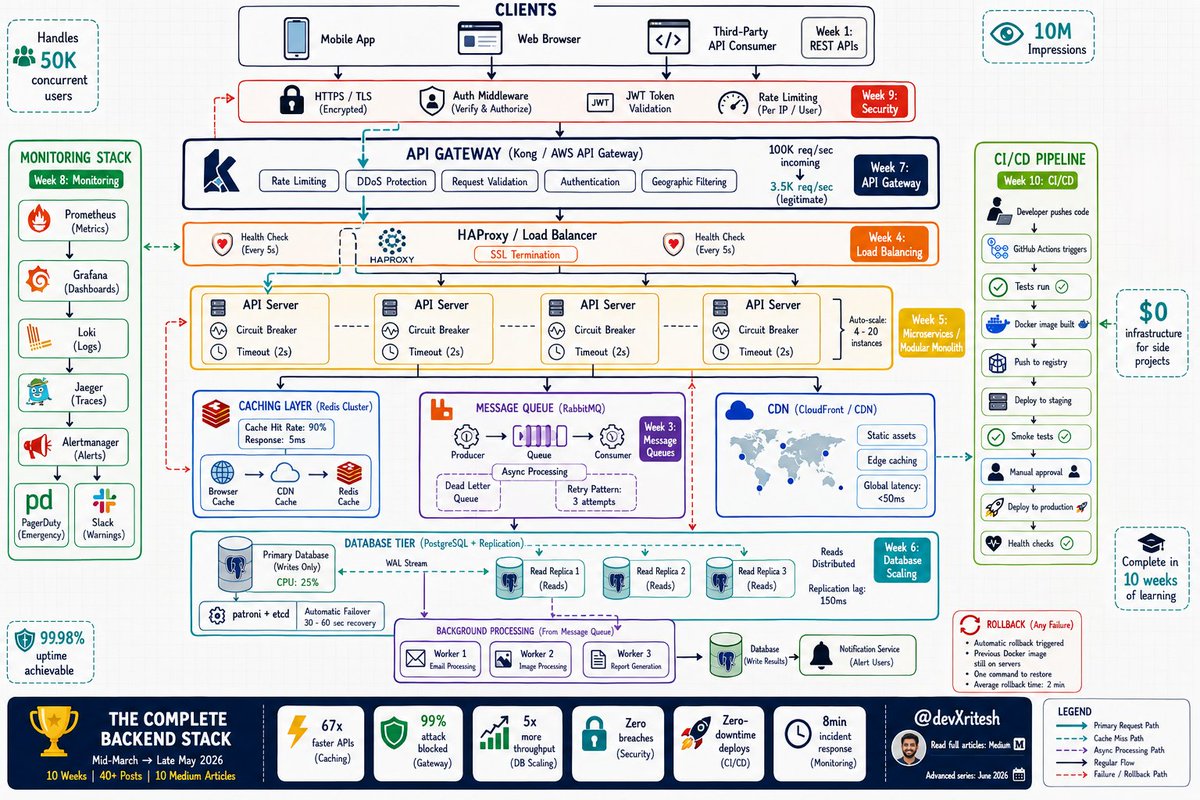
10 weeks. 10 topics. 40 posts.
One complete Backend System Design series Production Ready.
Here’s everything we covered the foundation every backend engineer needs:
Week 1: APIs & Databases — REST, SQL vs NoSQL, indexes, pagination
Week 2: Caching — Redis, cache invalidation, CDN, multi-layer caching
Week 3: Message Queues — RabbitMQ, async processing, retry patterns
Week 4: Load Balancing — Algorithms, horizontal scaling, stateless design
Week 5: Microservices — Monolith vs microservices vs modular monolith
Week 6: Database Scaling — Read replicas, replication lag, failover with Patroni
Week 7: API Gateway & Rate Limiting — DDoS protection, circuit breakers, strategies
Week 8: Monitoring & Observability — Metrics, logs, traces, alerting
Week 9: Security — OWASP, authentication, encryption, common vulnerabilities
Week 10: CI/CD & Deployment — GitHub Actions, Docker, deployment strategies
Every topic has a full deep-dive article on Medium 📝
Check the Highlights section on my profile for all Post in one place and Bio Link for medium deep dive articles.
Thank you for every reply, bookmark, and follow.
10 weeks.
Completed.
#SystemDesign #Backend
1
1
30
79,866
Jun 13
1
1
7
81,895
Ritesh Roushan retweeted
Jun 13
Backend Interview Question:
Which API design scales better?
What's your choice?
192
54
1,825
513,167
Jun 13
Good morning and Happy Saturday ☀️
I've been inconsistent over the last 2–3 weeks.
Life happens.
But starting today, I'm getting back to what I enjoy most:
➜ Backend Development
➜ System Design
➜ Software Engineering
➜ AI & Building Products
Expect more interview questions, real-world engineering lessons, and production insights.
Let's make the next few months count.
Thanks for being here.
39
1
50
1,142
Jun 12
Your life can change dramatically in a year
One skill.
One opportunity.
One decision.
One person.
That's why writing yourself off too early is a mistake.
A lot can happen in 12 months.
12
1
28
594
Ritesh Roushan retweeted
Jun 12
Wells Fargo SDE-1 interview experience
Interview Process (3 Rounds)
📌 Round 1: Recruiter Screening
• Current role & responsibilities
• Tech stack discussion
• Why switch?
• Notice period & availability
Focus: Communication, confidence, and how clearly you explain your work.
📌 Round 2: Java Resume Deep Dive
Questions asked:
• Explain OOP concepts with real-world examples
• Polymorphism vs Inheritance
• Encapsulation use cases
• Checked vs Unchecked Exceptions
• List vs Set vs Map
• ArrayList vs LinkedList
• How does HashMap work?
• Projects mentioned in resume
Focus: Fundamentals practical understanding, not textbook definitions.
📌 Round 3: Advanced Java DSA SQL
Java:
• Multithreading concepts
• Exception handling in production systems
• Collections internals
• HashMap collision handling
DSA:
Maximum Subarray Sum
→ Expected: Kadane's Algorithm
SEND MORE = MONEY
→ Backtracking approach
→ Constraint handling & logical reasoning
SQL:
Find employees having the minimum salary in each department.
Example:
SELECT department_id, employee_id, salary
FROM Employees e
WHERE salary = (
SELECT MIN(salary)
FROM Employees
WHERE department_id = e.department_id
);
Key takeaway:
Wells Fargo seems to focus heavily on:
✓ Java fundamentals
✓ DSA patterns
✓ SQL basics
✓ Resume projects
✓ Communication & problem explanation
Many candidates spend months grinding hard LeetCode problems, but interviews like this show that strong fundamentals and clear thinking often matter more.
(Source: LeetCode Discuss)
31
5
72
2,576