
System Design isn't about memorizing architectures.
It's about understanding trade-offs.
Monolith or microservices?
SQL or NoSQL?
Cache or database?
Consistency or availability?
The best engineers know why they choose, not just what they choose. ⚙️🚀
#SystemDesign
1
2

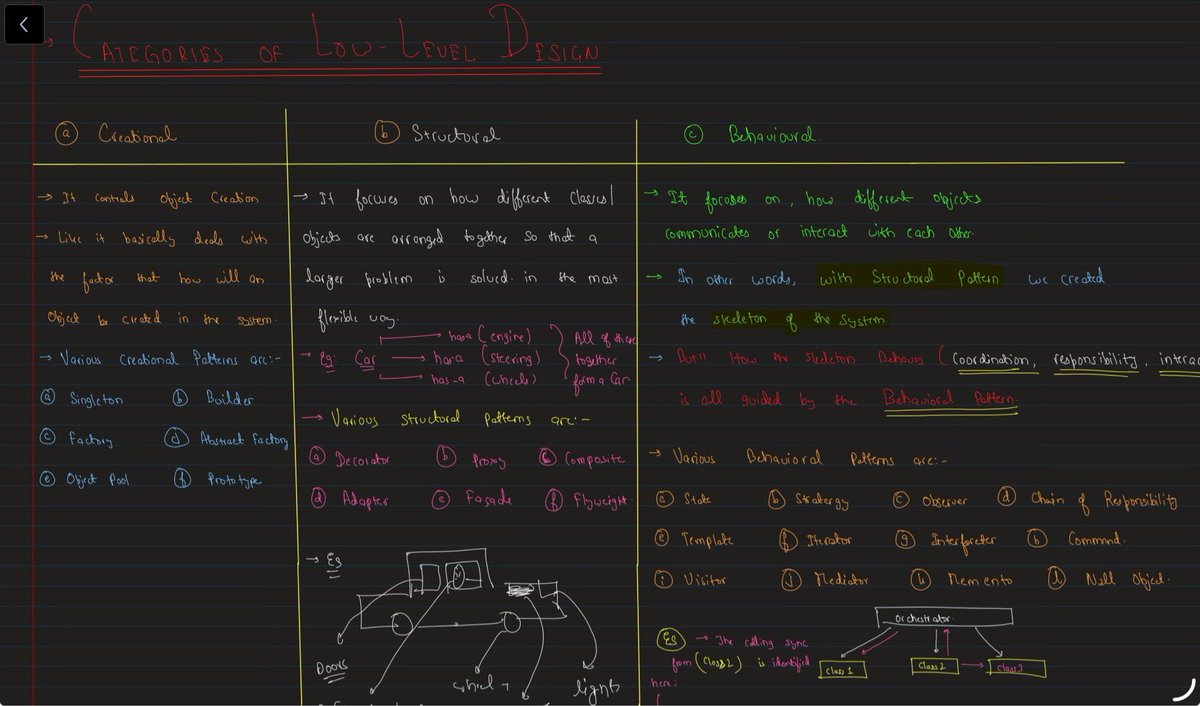
Learning design patterns became easier once I stopped asking “What does this pattern do?” and started asking “What problem category does it solve?”
Creational. Structural. Behavioral.
That single shift made the process much more intuitive.
#LLD #DesignPatterns #SystemDesign
1
1

Hypervisors aren't just scheduling workloads anymore—they're enforcing policy. The governance layer just moved into the virtualization stack. Most orgs are still operating like it didn't change. #SystemDesign #CloudArch #Infrastructure
rack2cloud.com/hypervisor-po…

POV: One microservice fails.
The rest of the system:
🫡 "Guess I'll fail too."
Welcome to cascading failures. 😂
#Microservices #SystemDesign #Backend #Programming #SoftwareDeveloper #DevHumor #TechMemes
7

It's continuing to operate when failure happens.
That's what keeps the internet running 24/7.
#DataCenters #CloudComputing #Infrastructure #SystemDesign #Tech #Servers #Reliability #Networking
6

Helm is an exceptional tool for template abstraction, but it has a historical bottleneck: if a chart author forgot to expose a specific parameter inside the values.yaml file, you were stuck modifying the source code manually or maintaining a fragile fork.
The Modern Architectural Solution: Helm Post-Rendering.
Introduced in Helm 3.1 to decouple packaging definitions from custom mutations, post-rendering allows you to hook into the Helm lifecycle seamlessly:
🔹 The Standard Render: Helm runs your parameters through its Go-template engine, rendering the manifests completely into standard raw Kubernetes YAML.
🔹 The Interception Hook: Instead of sending that data stream directly to the api-server, Helm passes the raw YAML into an executable script or binary defined by your --post-renderer flag.
🔹 The Custom Mutation: The external tool (frequently a lightweight kustomize patch overlay) processes the full YAML stream, injects your custom security labels, network constraints, or compliance patches, and outputs the updated stream back to Helm to complete the cluster deployment.
Stop hacking open upstream charts. Wrap them cleanly using post-rendering workflows!
#K8sArchitecture #SystemDesign #HelmCharts
39

I've documented everything step by step here 👇
blog.realdev.club/building-a…
Next up: implementing the in-memory order book and matching engine
#buildinpublic #typescript #redis #systemdesign #crypto
2
18

The Global Structure Network Limited is redefining how consumers build capability, establishing the architecture through which their everyday decisions translate directly into long‑term economic value.
theglobalstructurenetwork.co…
#SustainableFinance #InstitutionalCapital #HealthAsInfrastructure #LongTermValue #DemographicTrends #CocaColaCompany #CocaCola #Coke #CocaColaBrand #CocaColaNews #CocaColaZeroSugar #CokeZero #ShareACoke #TasteTheFeeling #RealMagic #OpenHappiness #CokeCreations #CokeStudio #CokeSummer #WorldWithoutWaste #SustainablePackaging #CircularEconomy #WaterStewardship #RecyclingInnovation #ESGLeadership #SupplyChainInnovation #FoodAndBeverageIndustry #ManufacturingExcellence #DigitalTransformation #AIinFMCG #GlobalBrands #CapabilityInfrastructure #SystemDesign #InstitutionalResilience #SocietalInfrastructure #MacroResilience
1
The Global Structure Network Limited is redefining how consumers build capability, establishing the architecture through which their everyday decisions translate directly into long‑term economic value.
theglobalstructurenetwork.co…
#AIinFinance, #FinancialInnovation, #RegTech, #SustainableFinance, #ESGInvesting, #FutureOfFinance #GlobalEconomy
#centralbanking #monetarypolicy #financialstability #economicoutlook #inflation #interestrates
#economicupdate #forecast #bankingsystem #economics
#inflationtrends #currencies #forex #marketupdate #interestrates #inflationtrends #economicoutlook
#monetarypolicy #financialpredictions #ratereview
#CapabilityInfrastructure #SystemDesign #StructuralEconomics #InstitutionalResilience #GovernanceArchitecture #PublicValueSystems #LongRunCapability #SocietalInfrastructure
1

Instead, validate at the HTTP entry boundary:
- Reject bad inputs immediately with a `400 Bad Request`.
- Ensure every job in the queue is structurally correct.
- Save database queries and worker CPU cycles.
#BuildInPublic #Golang #SystemDesign #Backend
2
16

Day 29/100
#SystemDesign
✅ CAP Theorem
• Consistency (C)
• Availability (A)
• Partition Tolerance (P)
Key system properties:
Latency – how fast a request is served
Throughput – how many requests a system can handle
#100DaysofCode #learn
github.com/vaishali86c/Syste…
1
14
151

Most engineers burn their salary by trusting AI to write production code.
The AI writes the code. The human still has to validate it.
kubaik.github.io/survive-ai-…
#FutureTech #AI #ArtificialIntelligence #SystemDesign
What broke first when you tried this?
3

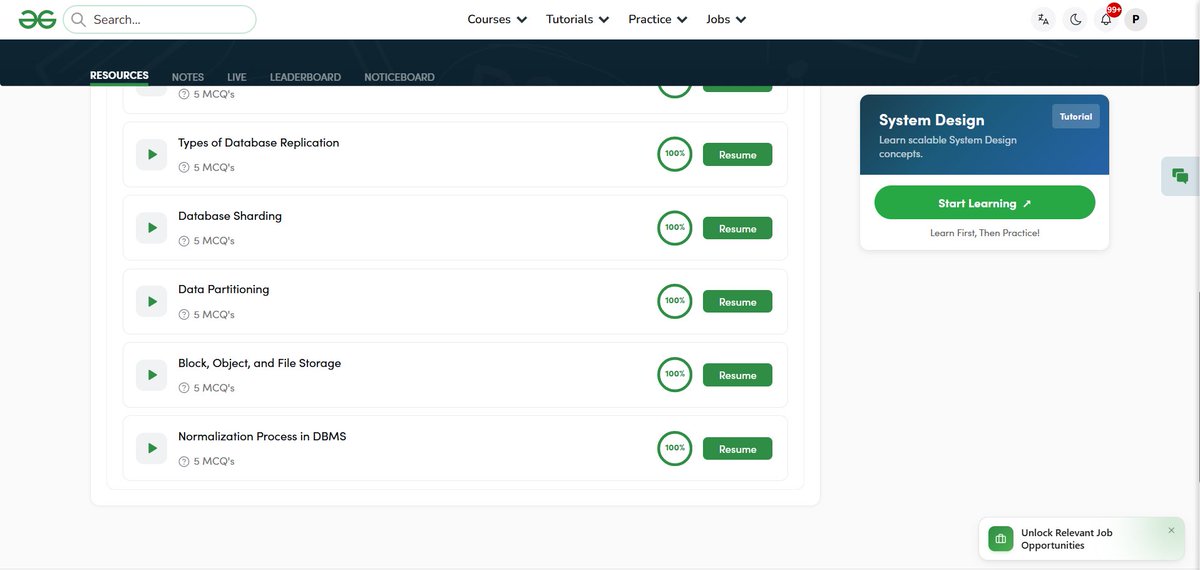
Day 25 of the GeeksforGeeks #summerskillup challenge
Today, I learned about Database Normalization and how it helps reduce data redundancy while improving data consistency and organization in databases.
#summerskillup #skillupwithgfg #SystemDesign #DBMS #DatabaseNormalization
1

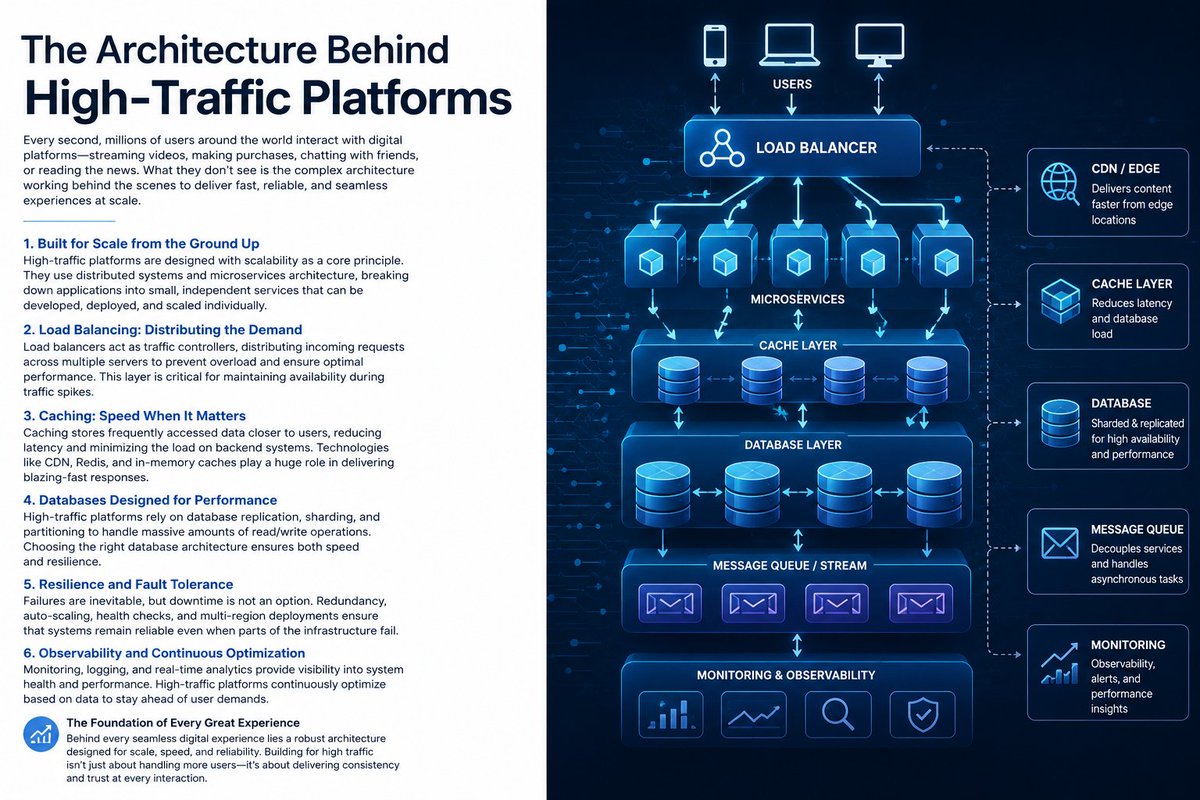
How do platforms like Netflix, Amazon, and Facebook serve millions of users without downtime?
The answer lies in scalable architecture: load balancing, microservices, caching, distributed databases, and event-driven systems. Read more 👇
amtechco-llc.com/en/blog/the…
#SystemDesign
6

Key takeaway: SSI provides a powerful model for maintaining consistency in distributed systems but requires careful consideration of workload patterns and system architecture. Choose wisely to balance consistency and performance! #SystemDesign

Message queues don’t magically decouple services. Here’s what Kafka changes, what it hides, and why “async” can still fail hard.
#systemdesign #kafka #operatingsystems
Read the full article below 👇
hackernoon.com/kafka-wont-sa…
1
40

If America were ever to fail…it’d be from within
open.substack.com/pub/indiep…
#America #China #EU #infrastructure #Security #SupplyChain #Politics #Postbinary #SystemDesign #AdamWhitney
#Socialism is #Dead
@FBIDirectorKash @realDonaldTrump @WhiteHouse @SecRubio @DeptofWar @elonmusk

7

**AWS IAM in 2026: The Biggest Security Risk Isn't Your Network. It's Your Permissions.**
Most cloud breaches don't begin with a zero-day.
They begin with an access key.
An over-privileged role.
A permission nobody remembered existed.
Yet many organizations still treat IAM as a setup task instead of a continuously engineered system.
**DEEP ARCHITECT LENS**
Least privilege breaks at scale because permissions only move in one direction: they accumulate.
Across dozens of AWS accounts, thousands of roles, CI/CD pipelines, Kubernetes workloads, agents, and third-party integrations, IAM becomes a distributed systems problem.
The winning architecture is surprisingly consistent:
Federated identity.
Short-lived credentials.
Role assumption everywhere.
Org-wide SCP guardrails.
Permission boundaries.
Continuous access analysis.
Infrastructure-as-code.
The critical shift is moving from detective controls to preventive controls.
An alert after privilege escalation is an incident.
An SCP that makes escalation impossible is architecture.
**CEO / CTO / BOARDROOM LENS**
Identity failures create the highest leverage failures in cloud environments.
One leaked key.
One shared admin role.
One forgotten permission.
And years of security investment become irrelevant.
The business impact is not limited to security.
It affects compliance, customer trust, audit readiness, operational resilience, and regulatory exposure.
A mature IAM program reduces blast radius before an attacker ever arrives.
**MARKET SHIFT**
From:
Managing users and permissions.
To:
Engineering identity as a governed platform capability.
**WHAT ACTUALLY WORKS IN PRODUCTION**
Centralized SSO.
Zero standing admin.
OIDC-based CI/CD.
IRSA and workload identities.
Automated permission right-sizing from real usage.
Continuous Access Analyzer reviews.
Mandatory permission boundaries.
IAM managed as reviewed code.
**WHERE MOST TEAMS FAIL**
Long-lived access keys.
Shared administrator accounts.
Console-edited IAM.
Annual permission audits.
Copying AdministratorAccess to "unblock delivery."
Detection-first security instead of prevention-first architecture.
**ADOPTING STRATEGY**
Eliminate static credentials.
Federate every human identity.
Move workloads to role assumption.
Enforce SCP guardrails.
Automate permission pruning.
Measure blast radius, not policy count.
**FINAL INSIGHT**
In modern cloud platforms, identity is the perimeter.
The organizations that master IAM don't just reduce risk.
They make entire classes of breaches structurally impossible.
#AWS #CloudSecurity #IAM #PlatformEngineering #EnterpriseArchitecture #ZeroTrust #CyberSecurity #DevSecOps #CloudArchitecture #SecurityEngineering #InfrastructureAsCode #SystemDesign
appscale.blog/en/blog/iam-ha…
23

Just found a great resource for learning distributed systems.
Link - builddistributedsystem.com/
#DistributedSystems #SystemDesign #SoftwareEngineering #Backend #Architecture
1
2
**NIS2 Is Not a Compliance Framework. It's a Production Architecture Test for 2026.**
Most executives think NIS2 is about policies.
Most auditors know it's about evidence.
Most attackers hope it's neither.
That's the problem.
When a major incident hits, regulators don't ask for your security strategy deck.
They ask for proof.
**DEEP ARCHITECT LENS**
NIS2 fundamentally changes how cloud platforms must be engineered.
The directive is not prescribing tools.
It's prescribing operational outcomes.
Identity controls.
Encryption.
Supply-chain security.
Incident response.
Business continuity.
Centralized logging.
Recovery testing.
What matters is not whether these controls exist.
What matters is whether they are observable, auditable, and provable under pressure.
The real architecture pattern is a governed control plane:
IAM MFA least privilege.
KMS-backed encryption.
Zero-trust segmentation.
Immutable logging.
Automated incident workflows.
Cross-region recovery.
Vendor-risk governance.
The critical engineering challenge isn't prevention.
It's building a detection-to-report pipeline that survives a real incident.
**CEO / CTO / BOARDROOM LENS**
NIS2 introduces something many regulations avoided:
Executive accountability.
This is no longer a security-team problem.
It is a board-level operational risk.
Revenue disruption.
Regulatory exposure.
Customer trust erosion.
Personal management liability.
The cost of compliance is engineering effort.
The cost of non-compliance is business disruption under regulatory scrutiny.
**MARKET SHIFT**
From:
Security as a project.
To:
Resilience as a continuously measured platform capability.
**WHAT ACTUALLY WORKS IN PRODUCTION**
Policy-as-code.
Continuous compliance scanning.
Centralized immutable audit trails.
Automated alert-to-notification workflows.
Shared control frameworks across NIS2, GDPR, DORA, and the EU AI Act.
One control set.
Multiple compliance outcomes.
**WHERE MOST TEAMS FAIL**
Treating NIS2 as legal paperwork.
Building controls per application instead of per platform.
Missing the 24-hour reporting pipeline.
Ignoring supply-chain risk.
Running audits against documents instead of evidence.
**ADOPTING STRATEGY**
Design the landing zone first.
Embed controls once.
Automate evidence collection.
Test reporting before the incident happens.
**FINAL INSIGHT**
The next generation of compliance will not be won by better documentation.
It will be won by architectures that can prove resilience when everything goes wrong.
#NIS2 #CyberSecurityArchitecture #CloudArchitecture #PlatformEngineering #ZeroTrust #SecurityEngineering #EnterpriseArchitecture #CloudSecurity #DigitalResilience #Governance #RiskManagement #SystemDesign
appscale.blog/en/blog/nis2-d…
16