
Engineering
Joined March 2018
- Tweets 4,093
- Following 2,602
- Followers 2,152
- Likes 9,436
81 Photos and videos



Dev Enock retweeted

Jun 13
3
6
16
557
Dev Enock retweeted

15 years of software engineering, condensed to help you build and scale. 💻🚀
Here are 3 ways I can help you leverage tech today:
1️⃣ Build & Ship Software: Turn your ideas into robust, production-ready apps.
2️⃣ Websites & E-commerce: Establish a high-converting digital storefront.
3️⃣ Automation & AI Agents: Put your business on autopilot and save hours of manual work.
Whether you want to learn the skill or need it built for your business - let’s talk.
📱 Call/WhatsApp: 0727206415
🌐 Let’s build the future together. #BuildInPublic #TechKe
1
33
69
2,217
Dev Enock retweeted
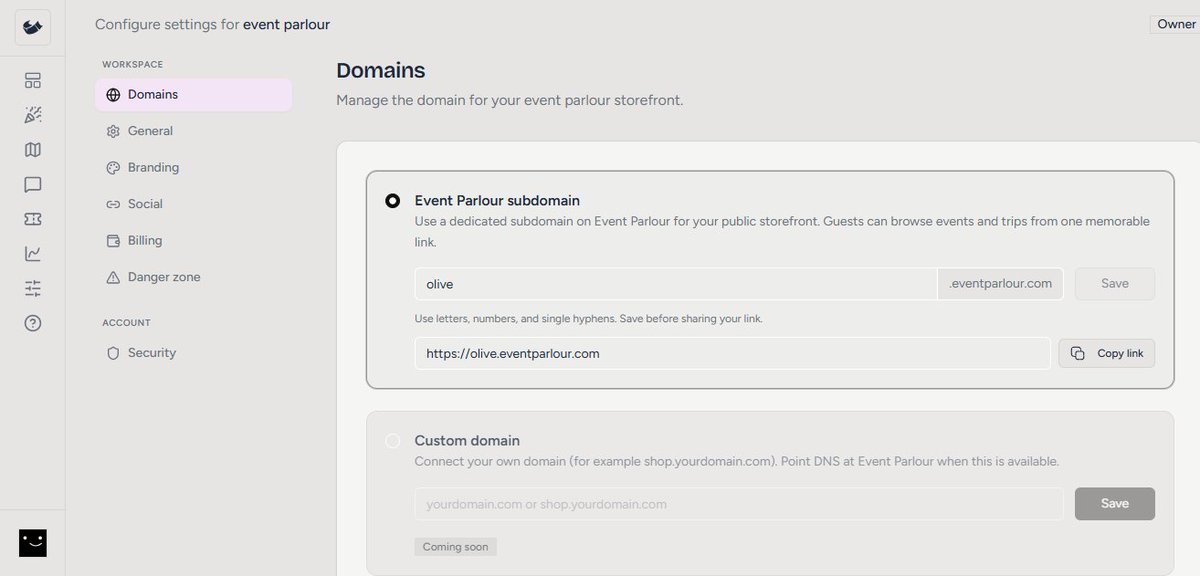
storefronts links are supported bring your domain is coming to @event_parlour my storefront example - olive.eventparlour.com

changelogs -
app.eventparlour.com/changel…
cc @StanleyMasinde_ how is the changelogs any misses , this is my first project implementing changelogs
1
5
16
588
Dev Enock retweeted

May 21
Guys I’m open to collaboration (paid) BTW. I’m not sure how this open schedule will last so HMU fast.
2
16
60
4,211
Dev Enock retweeted
I am looking for an opportunity as a software engineer:
My tech stack is :
Node.js/Nestjs
Python
Javascript
TypeScript
tools:
docker
git/github
Backend:
Express
FastAPI
Ruby on Rails
Database:
PostgreSQL
MongoDB
Mysql
Other technologies:
Redis, TypeORM, Prisma, Next.js, React and Tailwind CSS
So If you are looking for a software engineer please DM me. 📞 254727206415
Thank you for your attention !!
24
171
497
21,726
Dev Enock retweeted

Apr 20
Betting backends are usually a mess—so I built a better one.
A multi-tenant engine in Go 1.26.
100k users | <200ms latency
K-Sorted IDs & Atomic Wallets
M-Pesa/Tax Engine integrated
Sovereign Minimalism
Clean. Fast. Production-ready.
github.com/nutcas3/lets-bet
36
174
588
81,043
Dev Enock retweeted

I am looking for someone with good frontend skills for a TW React Next.js for an opensource project. You will work on wiring it with a rust backend. This is a good chance for someone who is junior but meticulous and willing to accept something small on the side. No vibe coders.
43
25
257
14,188
Dev Enock retweeted

Jan 29
Not only are MCPs awesome, but ours has access to comprehensive query insights data.
Super powerful for investigating query performance.
Just ask it "what are the slowest queries in my database" and get ripping!
Jan 29

Today we're launching the PlanetScale hosted MCP server.
Use your favorite AI agent to explore your data, identify slow queries, and improve database performance.
1
3
120
10,854
Dev Enock retweeted
Jan 22
B-tree database lookups are way slower without a memory cache in place a good replacement policy for OLTP.
MySQL uses a segmented LRU whereas Postgres uses a clock-sweep algorithm. Both good choices for different reasons.
9
115
1,230
51,661
Dev Enock retweeted

Jan 22
In Kafka, we have topics. Producers send data to a topic, and consumers pull data from it.
Each topic has multiple partitions. You might have heard your team lead say that we can simply increase the partition count to make our cluster more scalable.
There is no ordering guarantee across partitions for a topic, but messages within a partition are ordered.
This can be confusing initially, but think of consumer groups as subscribers: each group has multiple consumers pulling data from a topic, and the group maintains its own offset for that topic.
Check out the pinned post on my profile to understand this in detail!
10
24
243
17,048
Dev Enock retweeted
Jan 21
As a Backend Engineer in 2026 aiming for Staff, please learn:
1. One language deeply (Go/Rust/Java)
Not “I can write APIs”, but runtime model, memory, concurrency, profiling, GC behavior (if any), and how to read stack traces like a native.
2. Data modeling and storage fundamentals
Relational modeling, constraints, isolation levels, indexes, query plans, locks, deadlocks, migrations, backup/restore, partitioning. Most “scaling” problems are schema query shape problems.
3. Distributed systems basics that actually show up in prod
Consistency vs availability, timeouts, retries, idempotency, backpressure, message ordering, leader election, clock skew, eventual consistency, and what happens during partial failures.
4. API design and contracts
Versioning, pagination, filtering, error models, idempotency keys, rate limits, backwards compatibility, and how to avoid breaking mobile clients for months.
5. Performance and capacity engineering
Latency budgets (p50/p95/p99), tail latency causes, load testing, queueing theory intuition, connection pools, CPU vs IO bound, and capacity planning with real numbers.
6. Reliability engineering
SLOs/SLIs, incident response, postmortems, alerting that does not spam, error budgets, graceful degradation, feature flags, circuit breakers, bulkheads.
7. Observability like a pro
Structured logs, metrics, tracing, correlation ids, RED/USE metrics, sampling strategies, and how to debug “it is slow sometimes” without just guessing.
8. Security fundamentals
AuthN/AuthZ, least privilege, secrets management, token expiry, OWASP basics, SSRF, injection, secure defaults, audit logs, threat modeling for your own services.
9. Messaging and async systems
Kafka/Rabbit/SQS semantics, at-least-once vs exactly-once (and why “exactly once” is mostly a marketing term), consumer groups, retries, DLQs, replay, dedupe.
10. Caching with correctness
Cache invalidation strategies, TTLs, stampede protection, read-through/write-through, negative caching, and when caching makes bugs harder than latency.
11. Infrastructure literacy
Linux basics, networking (DNS, TCP, TLS), containers, k8s concepts, autoscaling, deployment strategies (blue/green, canary), and what your cloud bill is really paying for.
12. System design, but with tradeoffs
Designing is picking pain. Learn to write down constraints, failure modes, data growth, and operational cost. Staff is judged on tradeoffs, not diagrams.
13. Codebase leadership
Design docs, RFCs, review quality, mentorship, aligning teams, reducing complexity, owning a subsystem end-to-end, making boring systems that do not wake people at 2am.
14. Pick ONE domain to go deep
Payments, search, streaming, identity, infra, data platform, etc. Staff engineers are “the person for a hard area”, not generic API writers.
Stop hopping stacks every month. Pick a lane, build proof of reliability, and become the person people call when prod is on fire. That is Staff.
62
507
4,915
548,037
Dev Enock retweeted
Jan 21
You're probably sick of me saying "B-tree" but these impact SO MUCH of database performance. They're used all over the place in Postgres, MySQL, and SQLite.
This week I broke down B-tree lookups and how the page cache makes lookups faster.
38
348
3,979
186,869
Dev Enock retweeted

Jan 7
- Go backend
- SQLite or Postgres database
- vanilla JS frontend
- Claude Code
Everything else is just a distraction that keeps you from shipping.
178
71
1,960
147,053
Dev Enock retweeted

24 Jul 2025
Are you a vendor ready to take your business to the next level, WeddingSafi is here to do just that. Get a professional website, showcase your stunning portfolio and stand from the crowd. Sign up today on weddingsafi.com !!#weddingvendors #weddingplanningmadeeasy
4
4
435

14 Jul 2025
One question that I constantly ask myself is: How can I quickly learn skills?
1
185
3 Jul 2025
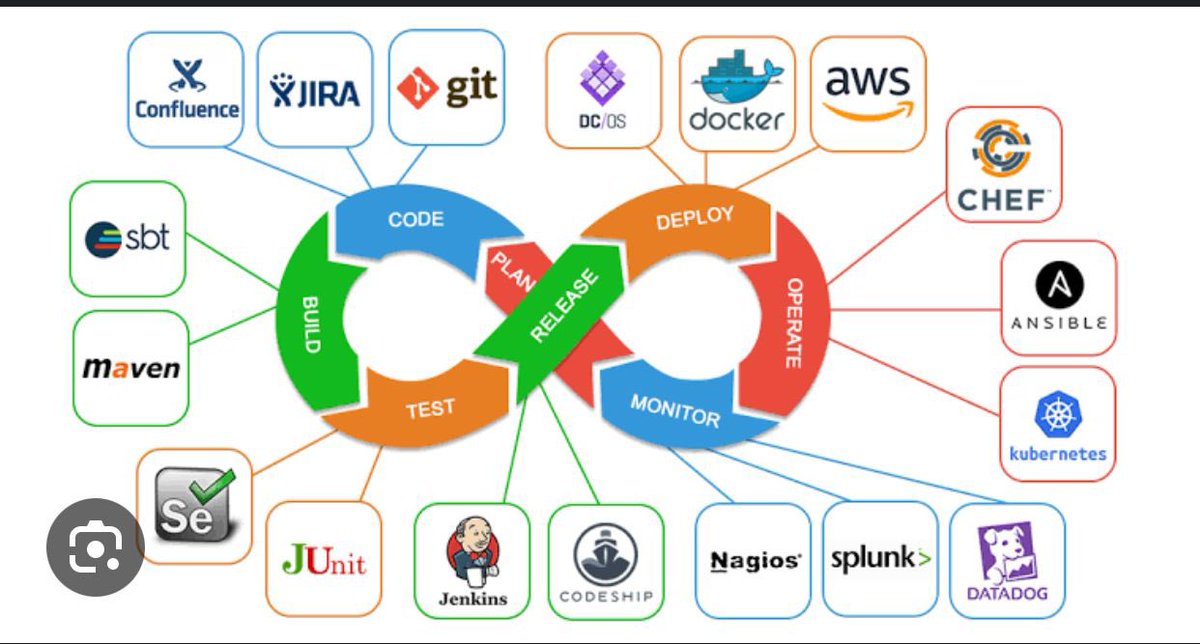
You can't avoid learning Linux if you want to grow your cloud and DevOps career.
2
4
290
1 Jul 2025
Working as a backend engineer gave me a smooth transition into Cloud and DevOps engineering. Having visibility on deployment pipelines, configuring the AWS servers, working with Nginx all made it easier.
1
1
12
617
1 Jul 2025
If you are thinking of being a DevOps engineer, first invest your time in learning Linux. Not just the basic stuff, but you really need to understand how it works beyond the "ls" command.
1
7
377
4 Jun 2025
Kubernetes is the most interesting technology I have ever worked with at scale. Fully immersed in Cloud Native development.
7
374