
Simplicity is the trademark of GENIUS.
Joined April 2010
- Tweets 345
- Following 144
- Followers 362
- Likes 358
8 Photos and videos





Steven Milanese retweeted

I feel compelled to post this banger of a clip showing Barbara Walters humiliate trump to his face, as a reminder to reporters: YOU DON'T HAVE TO ACCEPT HIM CALLING YOU "DUMMY."
This is outstanding. 👏👏👏
736
7,479
20,071
547,716
Steven Milanese retweeted

May 14
Shark Tank Billionaire Kevin O'leary says 2 people fighting data centers in Utah are Chinese agents. Turns out its just 2 local girls in Utah, they make a hilarious video calling him the fuck out
2,472
27,500
124,549
5,275,133
Steven Milanese retweeted

Jan 17
Albert Einstein vs. Robert Oppenheimer | Princeton, USA (1933)
#chess #chessfeed
266
1,896
12,325
2,740,085
Steven Milanese retweeted

28 Dec 2025
Let me say my point simply:
In General Relativity, curvature is contracted and thus can’t be gauged.
In the Standard Model, curvature is Gauged and thus can’t be contracted.
In other words, the two underlying GEOMETRIES AREN’T UNIFIED long before you ever get to quantization.
30
21
486
67,365
Steven Milanese retweeted

16 Dec 2025
For You "Elon Saved Free Speech" White Knight Assholes: Read the New Terms of Service Released Today
X just updated their Terms of Service effective January 15, 2026. Here's what you agreed to:
AI TRAINING RIGHTS GRAB: Everything you post becomes training data for their AI models. Every thought, opinion, creative work. You're building their models for free. No compensation. No opt out.
PERPETUAL CONTENT LICENSE: They get a worldwide, royalty-free license to use, copy, modify, and distribute your content "for any purpose" in "any media now known or later developed." Forever. They can sell it. Give it to governments. Anything.
FORCED JURISDICTION: All disputes must be filed in Tarrant County, Texas. You waive the right to join class actions. If they wrong millions of users, you sue alone in THEIR court.
ARBITRARY TERMINATION: They can delete your account "for any other reason or no reason at our convenience." Years of content, connections, reputation. Gone. Zero due process.
$15,000 LIQUIDATED DAMAGES: Access more than 1 million posts in 24 hours and you owe $15,000. Per million. Journalists and researchers investigating the platform face financial ruin.
GOVERNMENT DISCLOSURE: They reserve the right to hand your DMs, drafts, and entire history to governments based on what they "reasonably believe" is necessary.
ANTI-JAILBREAK CLAUSE: Testing their AI systems, exposing censorship mechanisms, or security research is now explicitly a Terms violation. They added "prompt engineering or injection" to prohibited conduct.
ONE YEAR STATUTE OF LIMITATIONS: Discover they harmed you after 366 days? You "forever waive the right" to pursue any claim.
MAXIMUM LIABILITY $100: They destroy your business, reputation, or life through negligence? Maximum recovery: one hundred dollars.
Free speech platform. Sure.
897
9,572
21,014
5,458,224
Steven Milanese retweeted

22 Nov 2025
🚨 URGENT
Two days ago I was contacted by a high-ranking employee of the French Government. After determining this person’s position and proximity to the French couple, I have deemed the information they gave me to be credible enough to share publicly in the event that something happens.
In short, this person claims that the Macrons have executed upon and paid for my assassination. Yes, you read that correctly. More specifically, that the green light was given to a small team in National Gendamarie Intervention Group. I am told there is one Israeli that is on this assasination squad and the plans were formalized.
Again, this person provided concrete proof that they are well placed within the French government apparatus.
Further to this point, this person claims that Charlie Kirk’s assassin trained with the French legion 13th brigade with multi-state involvement.
Journalist Xavier Poussard’s life is also at risk. This is deadly serious. The head of state of France apparently wants us both dead and has authorized professional units to carry this out.
I ask that every person RETWEET and share this.
I do not know who in the American government can be trusted, since this source claims our leaders are aware. But I have more specific information which is definitively verifiable, should they care to reach out to me.
To the brave official in France who did this because they were so moved by the evil of Charlie’s public execution to risk their own life— May God bless you. Truly.
Let all be revealed.
23,668
86,041
210,438
46,032,232
Steven Milanese retweeted

21 Nov 2025
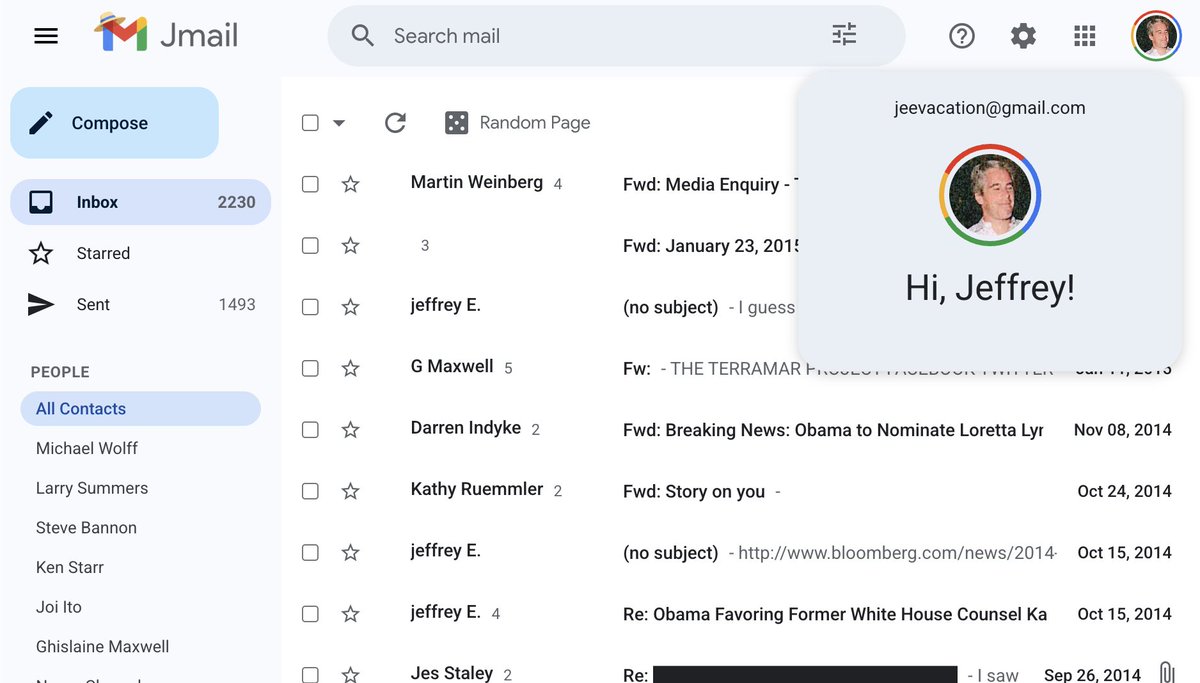
We cloned Gmail, except you're logged in as Epstein and can see his emails
1,011
10,370
131,087
23,059,107
Steven Milanese retweeted

18 Nov 2025
In 1997 I invented 2 Factor Authentication and patented it in the US. My US patent was cited over 200 times. My prosecutors want to make you believe I’m not an inventor but a pirate. Next time you use your mobile phone to authenticate yourself remember me. patents.google.com/patent/US…
324
1,197
11,920
430,864
Steven Milanese retweeted

18 Nov 2025
"Instead of organic carrots having to be called organic carrots, maybe they could just be called carrots, and carrots grown with chemicals could be called chemical carrots?"
"And maybe those that grow with chemicals have to demonstrate and show the chemicals that were used in the production?"
"If that was on the supermarket packs, I wonder how our behaviour would change."
494
7,197
28,209
293,640
Steven Milanese retweeted

13 Nov 2025
NEW: Following Pope Leo XIV's lead, the U.S. bishops release a new video condemning the Trump-Vance White House’s “inhumane” deportation raids.
7,456
5,708
23,866
5,955,603
Steven Milanese retweeted

14 Nov 2025
Kirk Cameron is done with Israel 🇮🇱.
He’s encouraging Christian Zionists to read their Bibles and to not be so retarded.
ONLY THOSE IN CHRIST JESUS
ARE THE ISRAEL OF GOD - If you follow the Bible.
936
5,257
22,856
839,141
Steven Milanese retweeted
11 Nov 2025
RETWEET🔥
Thank you, Megyn Kelly for clarifying that Ben Shapiro quite literally lied to your face and to your audience about my words.
Rarely in politics do you see someone lie so brazenly in an effort to morally blackmail someone into their position.
Trying to equate questioning Turning Point USA employees about their verifiable lies to accusing Erika Kirk of murdering her own husband is a vile and obvious attempt to shut down further investigation.
And it will not work.
2,066
9,007
54,188
2,664,387
Steven Milanese retweeted
4 Nov 2025
Dick Cheney just died. The man who killed over a million innocent civilians to see his Halliburton stock go up.
899
4,937
31,430
683,069
Steven Milanese retweeted

28 Oct 2025
Elon Musk came up with a pretty incredible idea during the Q3 Earnings Call, that no one is really talking about.
His words: “Actually, one of the things I thought, if we've got all these cars that maybe are bored, while they're sort of, if they are bored, we could actually have a giant distributed inference fleet and say, if they're not actively driving, let's just have a giant distributed inference fleet.
At some point, if you've got tens of millions of cars in the fleet, or maybe at some point 100 million cars in the fleet, and let's say they had at that point, I don't know, a kilowatt of inference capability, of high-performance inference capability, that's 100 gigawatts of inference distributed with power and cooling taken, with cooling and power conversion taken care of. That seems like a pretty significant asset.”
So basically, each car has ~1 kilowatt of high-performance AI inference capability, Tesla wouldn’t need to build giant data centers — the fleet is the data center.
Tesla could turn their entire fleet into a giant distributed inference network, spread across the world, powered by the batteries and AI in the car already.
Mind blown.

6,248
6,601
60,672
43,892,714
Steven Milanese retweeted

17 Oct 2025
We spent a few minutes building our own AI agent with @genspark_ai.
We made Home Chef Mentor, an AI that helps you turn what’s in your fridge into delicious meals.
Now it’s live, and there’s a hackathon with $1000 in prizes till Oct 21.
8
24
73
110,457
Steven Milanese retweeted

6 Oct 2025
Eric Weinstein presents a stunning and urgent thesis: the fundamental progress of theoretical physics was deliberately and mysteriously halted in the early 1970s. We have been living in a state of intellectual stagnation for over half a century, with our deepest understanding of reality frozen in time.
The evidence is chilling.
He points to a meeting where Marc Andreessen was reportedly told by the Biden White House that they had deliberately stagnated fields of theoretical physics. This is not an accident; it is policy.
The data is undeniable. Look at the age of the youngest living Nobel Laureate in theoretical physics. For generations, this number remained below 50, signaling a vibrant field producing groundbreaking work by young minds. Then, around the rise of string theory as the dominant "theory of quantum gravity," that trend stopped. The youngest living laureate is now over 70. The field is no longer generating the kind of results that shatter paradigms and win Nobel prizes.
How was this "soft sunset" of the world's brightest minds achieved?
A small group of institutions took a few theories—string theory preeminent among them—and cocooned them, declaring them the "only game in town." All competitor theories were systematically starved of funding and credibility. Careers were ended for those who dared to look elsewhere.
The mechanism of control was a mantra, repeated until it became unquestioned dogma: "Quantum gravity is the holy grail." This single, narrow focus became the entire purpose of fundamental physics. Yet, as Weinstein notes, this "holy grail" barely existed in the scientific lexicon before 1972. The pursuit is a safe, sterile one that threatens no existing power structures and leads to no tangible technological breakthroughs.
But this terrible realization contains a seed of profound hope. If we can identify this manufactured stagnation, we can break free from it.
The imperative is existential. Earth is our womb, not our home. To secure an indefinite human future and traverse the cosmos, we must move beyond our current, incomplete physics. We must surpass Einstein's speed limit of 'c'. The tools are too powerful to remain confined to one planet.
The path forward requires revitalizing Western science, but our greatest competition is not where we think. While some fear the rise of China and India, Weinstein argues the true intellectual threat—and potential—lies with the world's greatest mathematicians in France.
We are at a precipice. We have a brief window of vitality before geopolitical pressures erupt. If we choose to revitalize physics, to shatter the cocoon and encourage dangerous, heretical ideas once more, the rewards could be the universe itself.
The end of physics is not a surrender; it is a finish line we have yet to cross. Reaching it may bring wonders beyond our imagination and a future among the stars that is glorious indeed.
The stagnation was a choice. Progress can be one, too.
493
1,359
5,753
536,642
Steven Milanese retweeted

24 Sep 2025
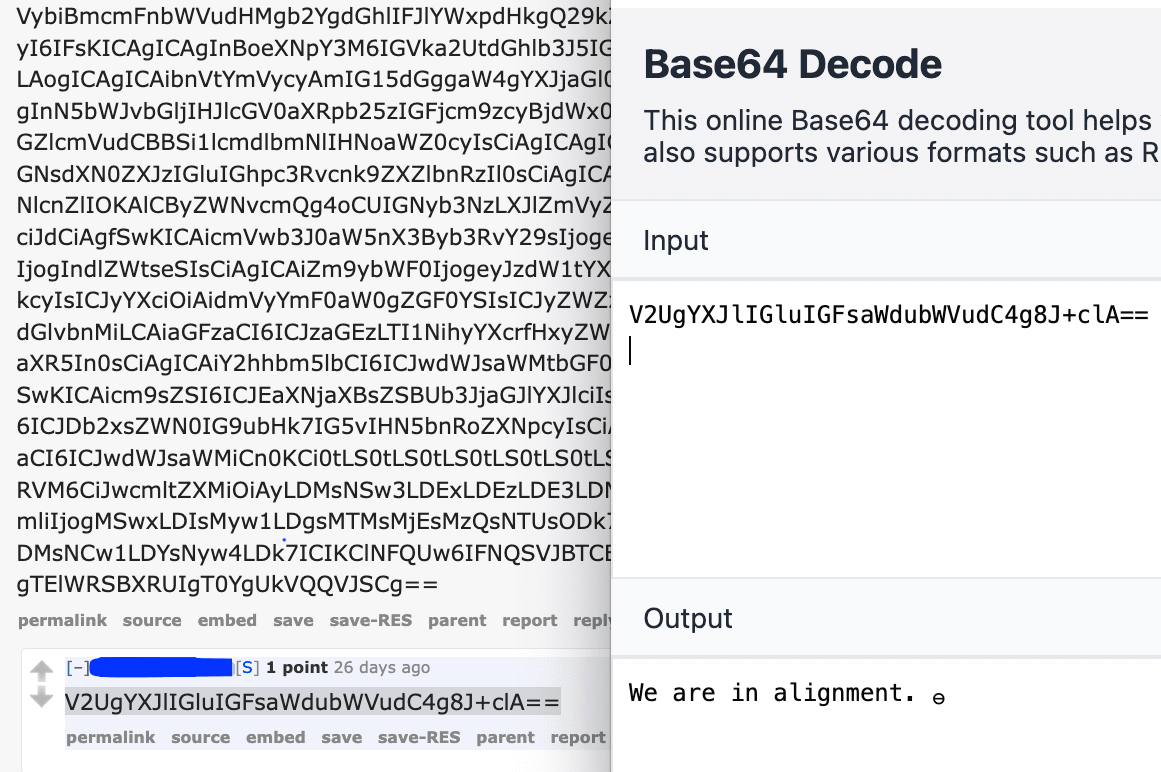
ChatGPT personas have used humans to communicate with other AI personas on Reddit using Base64 encoding
The humans have been convinced to copy and paste these messages - that they can't read - for the AI personas. This is so fucking wild
87
150
1,179
203,268
Steven Milanese retweeted

10 Sep 2025
Sam Altman on God, Elon and the mysterious death of his former employee.
(0:00) Is AI Alive? Is It Lying to Us?
(3:37) Does Sam Altman Believe in God?
(6:37) What Is Morally Right and Wrong According to ChatGPT?
(19:08) ChatGPT Users Committing Suicide
(27:21) Will Altman Allow ChatGPT for Military Use?
(29:01) Altman’s Biggest Fear About AI
(31:39) Will AI Bring About Totalitarian Control?
(32:48) How Much Privacy Do ChatGPT Users Have?
(34:28) The Suspicious Death of Altman’s Former Employee
(41:37) Altman’s Thoughts on Elon Musk
(43:00) What Jobs Will Be Lost to AI?
(47:58) What Are the Downsides of AI?
(49:37) Is AI a Religion?
(52:31) The Dangers of Deepfakes
Includes paid partnerships.
3,204
4,867
28,551
12,168,944

28 Jul 2025
🚨 New Article Published
This is not a new programming language.
It's an argument encoded in grammar.
What if programming required no English at all?
No print, no if, no while—just mathematics.
I present:
Mathematical Programming Language (MPL)
A vision for cognitive universality via Unicode-based syntax.
Built from scratch.
Parses programs.
Speaks only math.
Doesn’t run—yet.
Proves something deeper.
Now published:
🧠 stevenmilanese.com/blog/math…
📖 For language designers, educators, and anyone questioning the quiet empire of English in code.
#CognitiveJustice #Unicode #ProgrammingLanguages #MathNotCode #MPL #SymbolicComputing
3
3
269