
excellence is the capacity to take pain | founder F/AS | advisor @w3arew3 | former cmo @avax @immutable ex @oakley | all views are my own
Joined April 2008
- Tweets 3,116
- Following 1,963
- Followers 2,802
- Likes 13,127
231 Photos and videos

Pinned Tweet

May 6
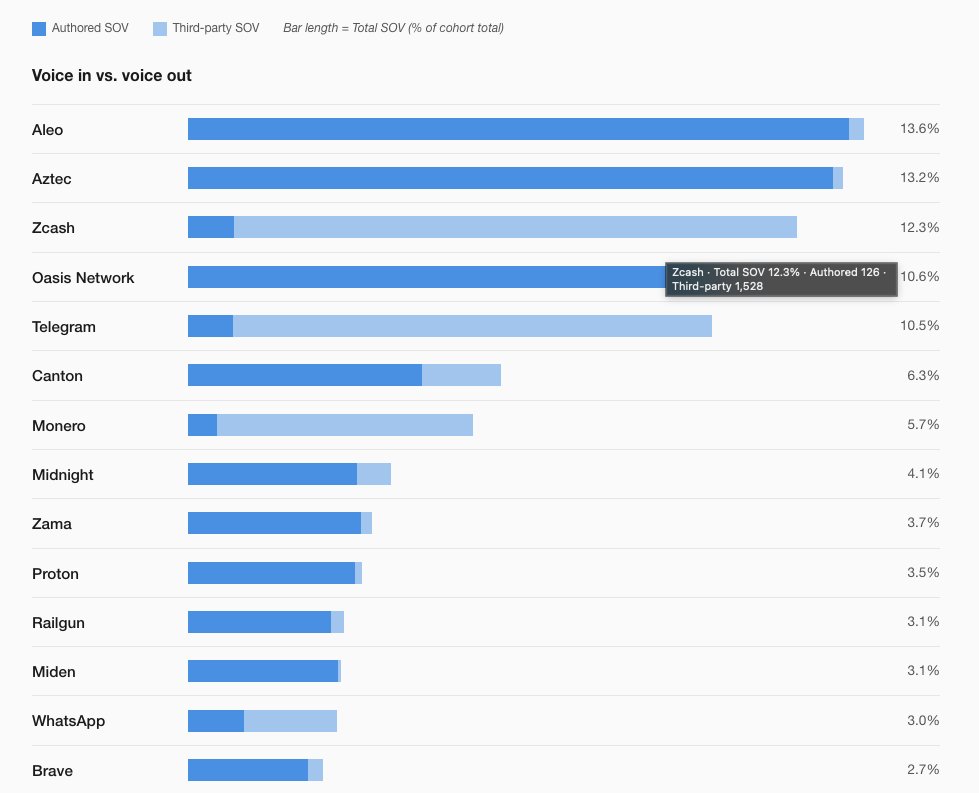
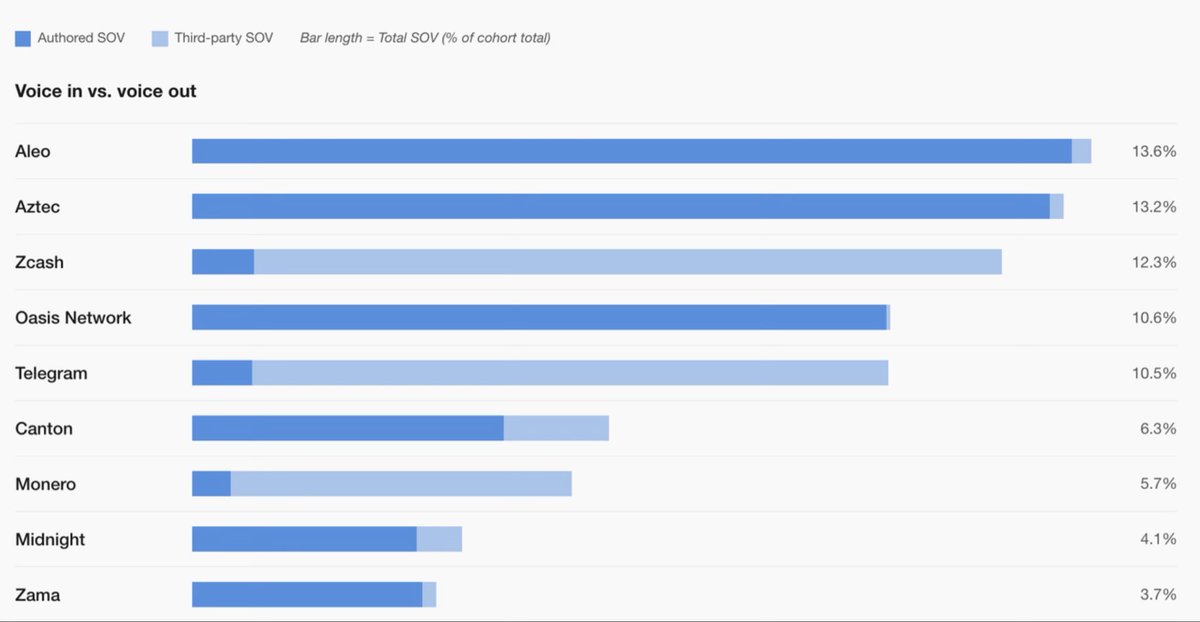
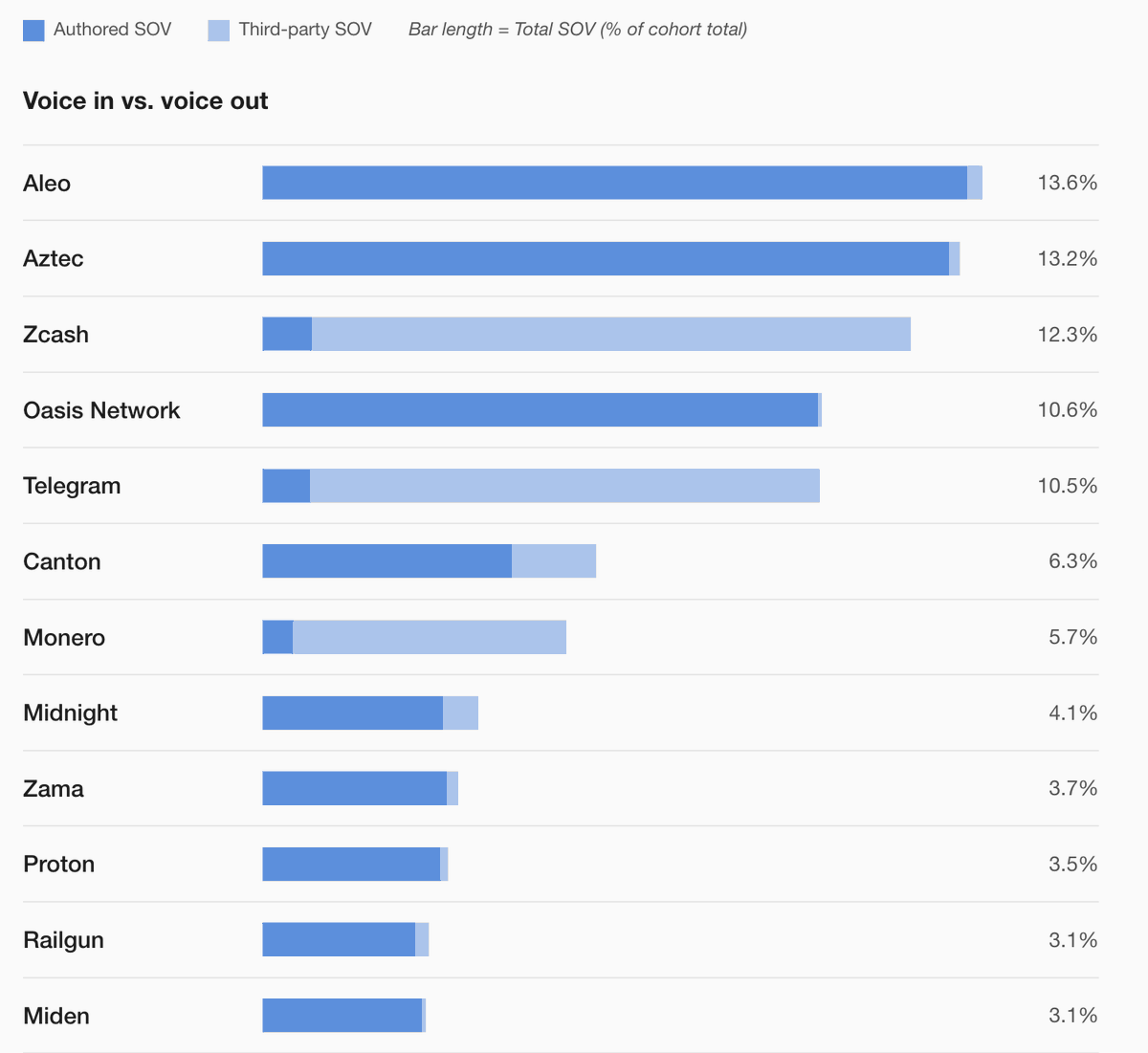
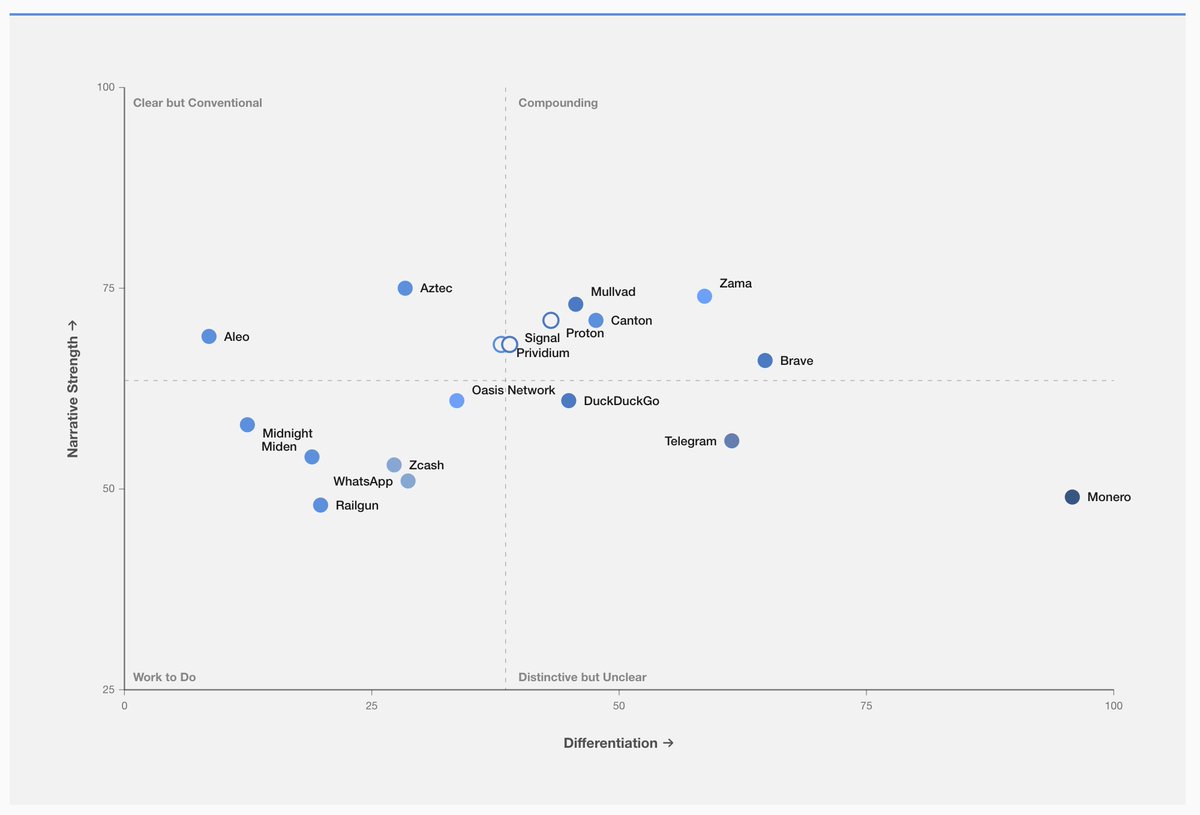
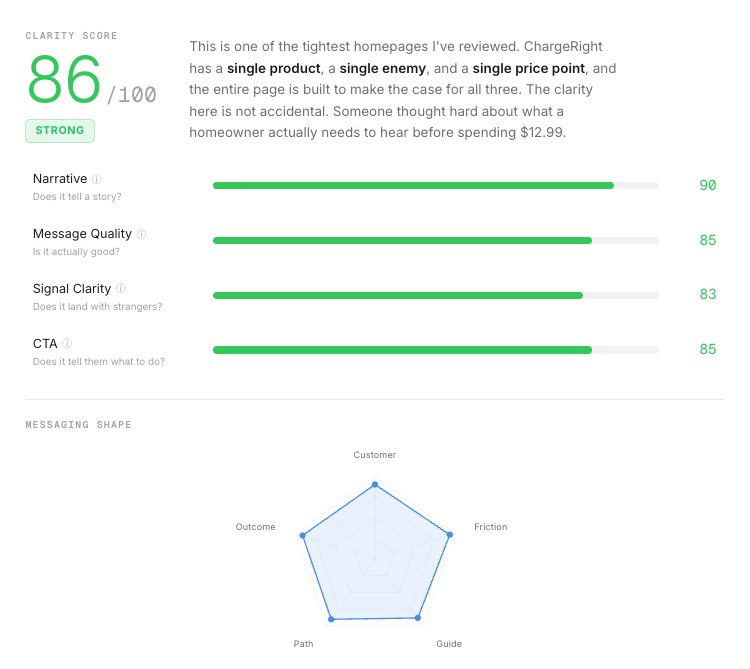
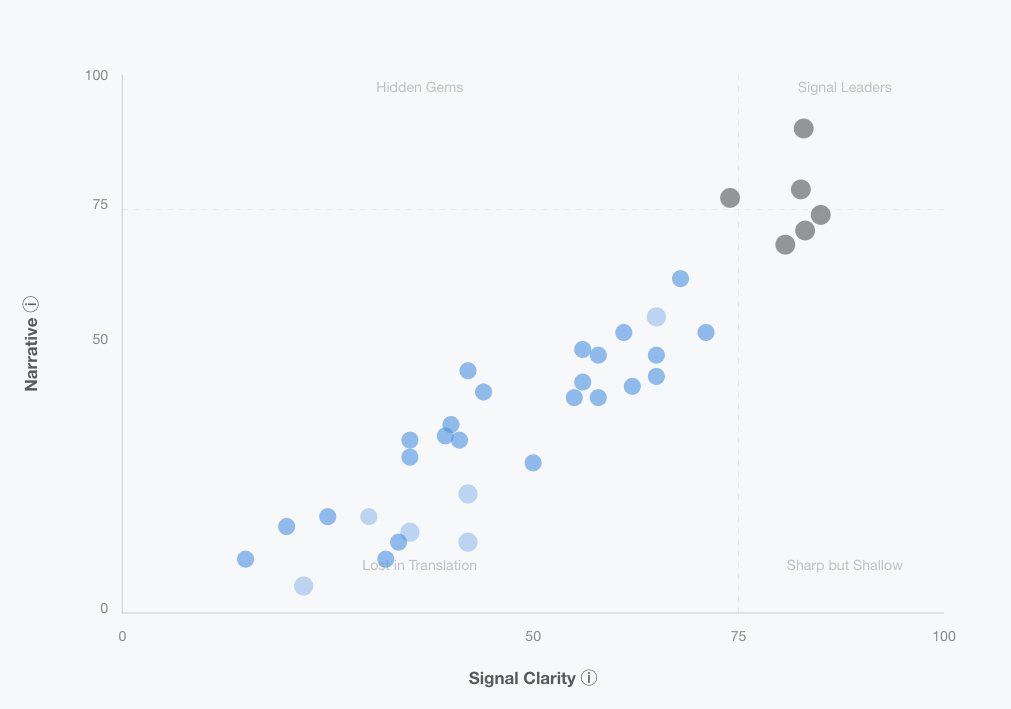
3 things the strongest privacy projects already know, but aren't saying.
And the 1 reason they're leading while others chase.
We measured 18 projects across 5 channels and 25k narrative assets.
Find out what separates the break-outs from the could-be's 👇🏼
2
1
7
233
@devonf 🇺🇸 retweeted

Jun 12
Congratulations @ElonMusk.
Thanks to SpaceX's IPO, he's the first Trillionaire.
He didn't TAKE money from anyone. He CREATED wealth.
He launched satellites that connect even the poorest, most remote parts of the world.
Our world needs more MAKERS like Musk; fewer TAKERS like:
1,427
9,451
60,800
1,094,646

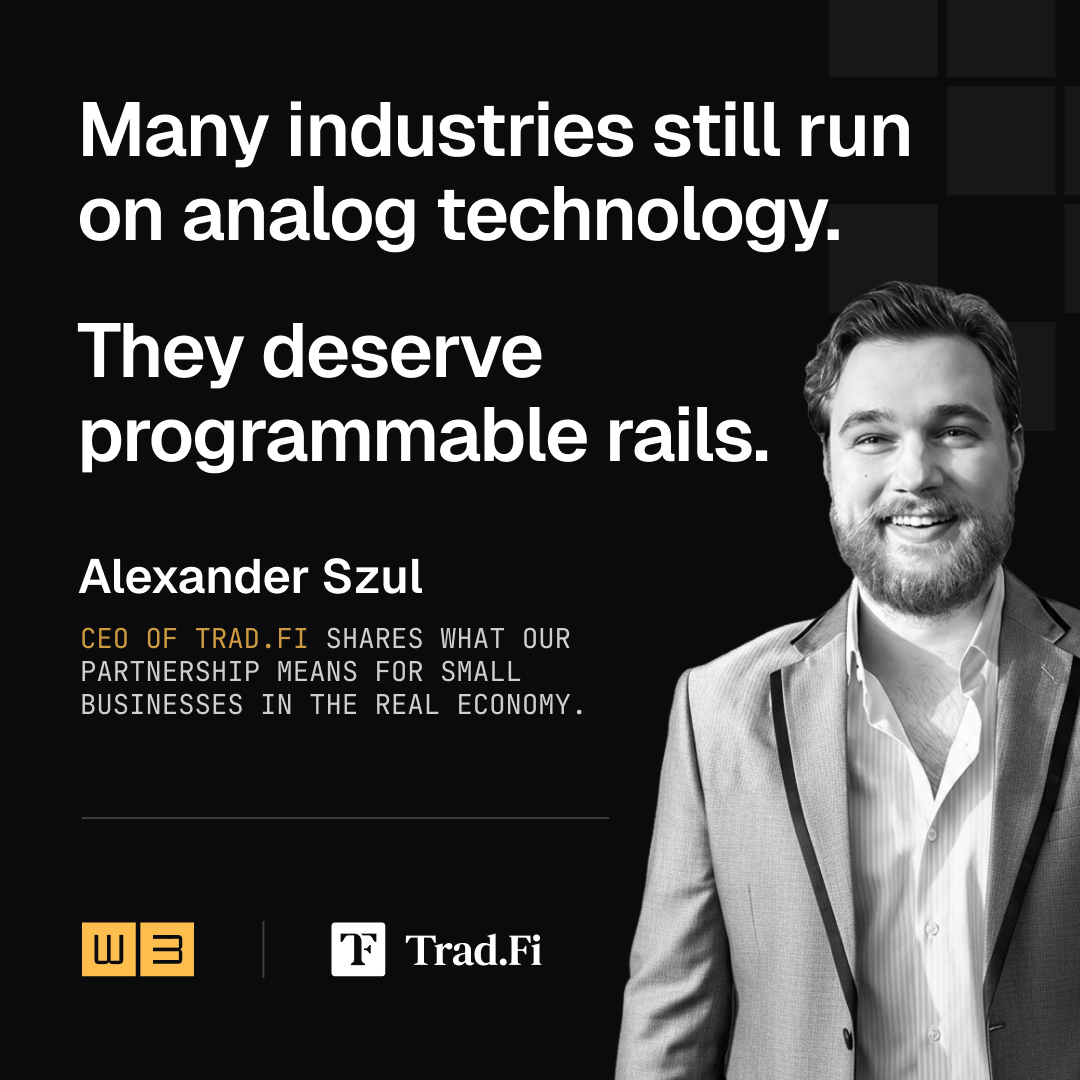
Equipment finance still runs on paperwork.
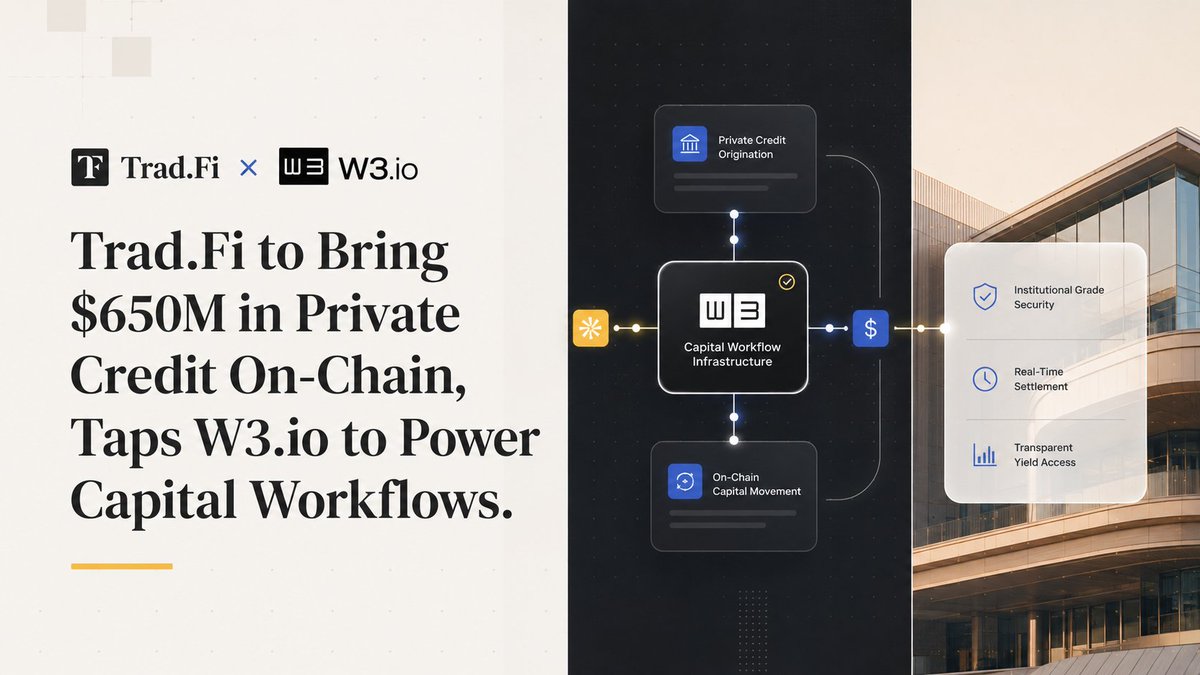
HackerNoon covered what changes: Trad•Fi taps W3 "to power capital workflows" as it brings private credit on-chain over 48 months.
Treasury workflows composed in days. Capital productive at all times.

Trad.Fi is bringing $650M in U.S. equipment finance private credit on-chain over 48 months, with W3.io's programmable treasury infrastructure on Avalanche.
#web3 #goodcompany...Show more
19
29
66
1,141

Jun 9
When a client ships something this good, you share it.
This is the best version of digital assets: real capital powering the physical economy.
Congrats to @StowellPorter and team. Grateful to call you an F/AS client and the chance to help you tell this important story.

A trillion-dollar industry behind the US manufacturing and solar buildout still runs on paperwork.
A deal in a market with <2% delinquency can take up to 6 months to close.
Trad•Fi and W3 are bringing composability to capital workflows behind a $650M private credit pipeline.
1
4
102
A trillion-dollar industry behind the US manufacturing and solar buildout still runs on paperwork.
A deal in a market with <2% delinquency can take up to 6 months to close.
Trad•Fi and W3 are bringing composability to capital workflows behind a $650M private credit pipeline.
387
209
701
3,104,311
Jun 5
Something to think about
Jun 5

Every stop to think that your homepage tells two stories at once? It does. One in words. One in pictures.
You wrote the words. You sweated every line. They're good. But you didn't write the second story. Nobody did. The hero image got picked because it looked nice on a Tuesday, in a different room, by different people, on a different timeline.
Here's the problem: your visitor reads both stories in the same glance.
When the two agree, the page feels true. When they split, something feels off and the reader can't name it. So they leave. And they never tell you why.
This isn't a small thing, because the picture wins. Your visual hits the lizard brain before your headline finishes loading, and then your carefully crafted copy gets read through whatever mood that image set.
"Radically simple" over a screenshot crammed with forty live numbers doesn't read as simple. It reads as a company that doesn't quite know itself. That's the real cost. Not ugliness. Worse... distrust.
And the fix isn't taste. It's a question you can actually answer: take the worldview your words promise, and ask every visual on the page whether it delivers that worldview or fights it.
A calm promise wants white space. A claim of power wants weight. A human brand wants real faces, not a stock library's idea of a handshake.
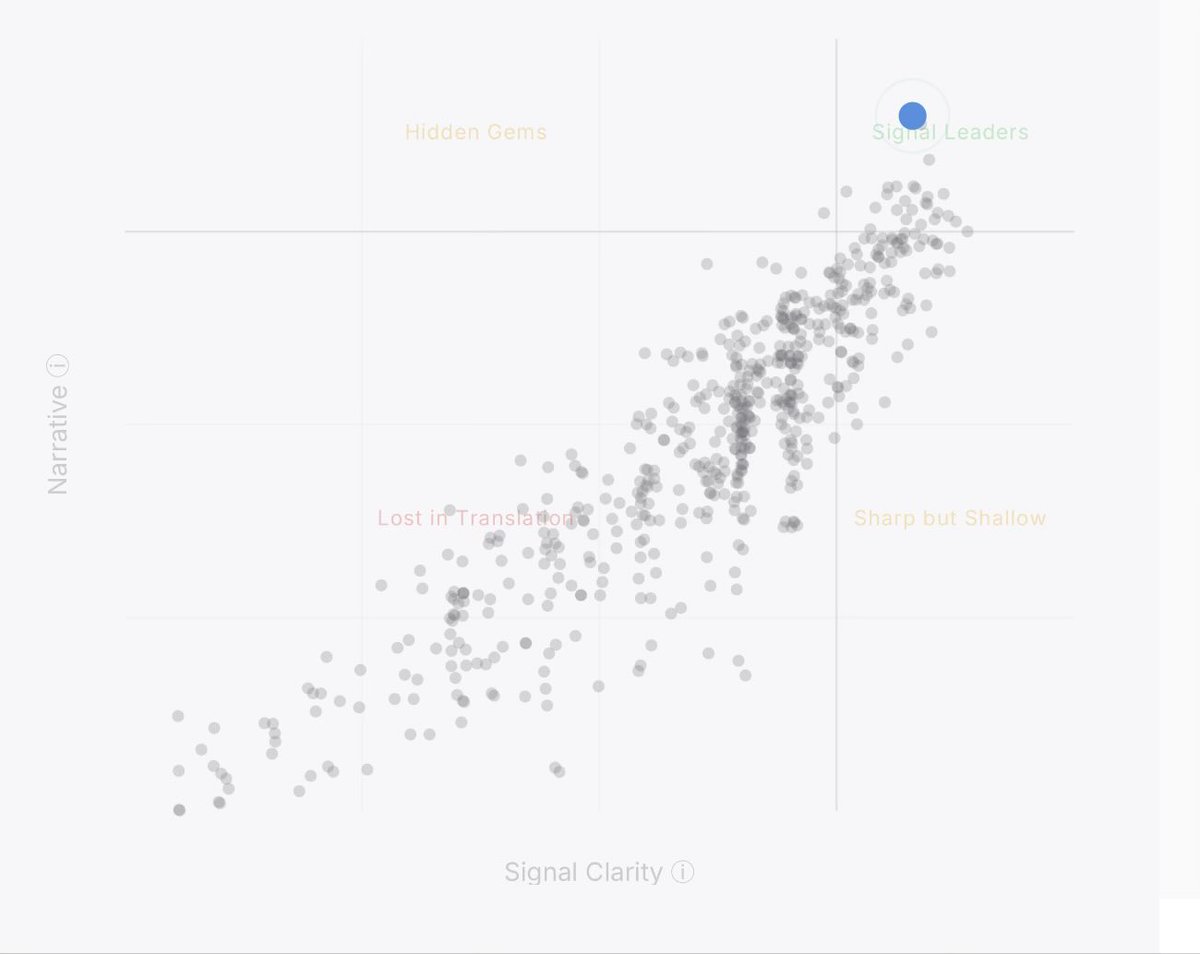
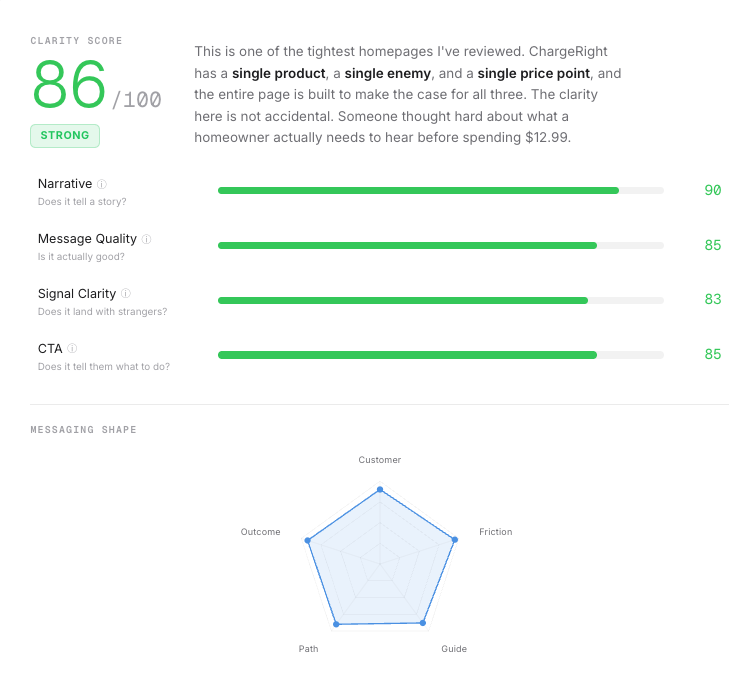
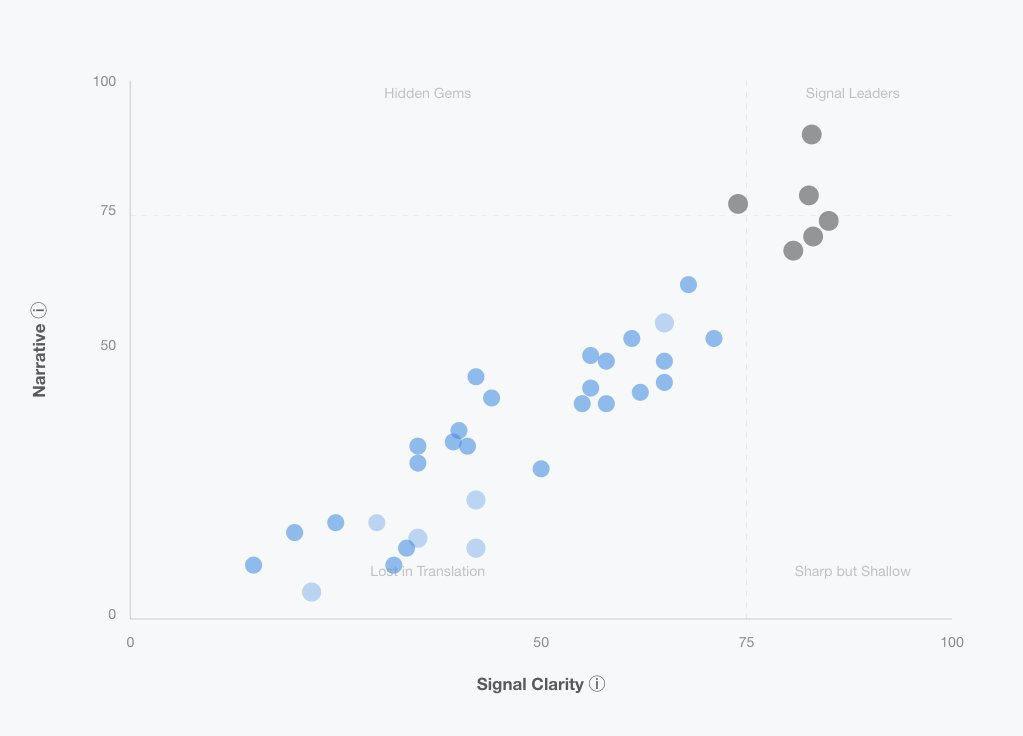
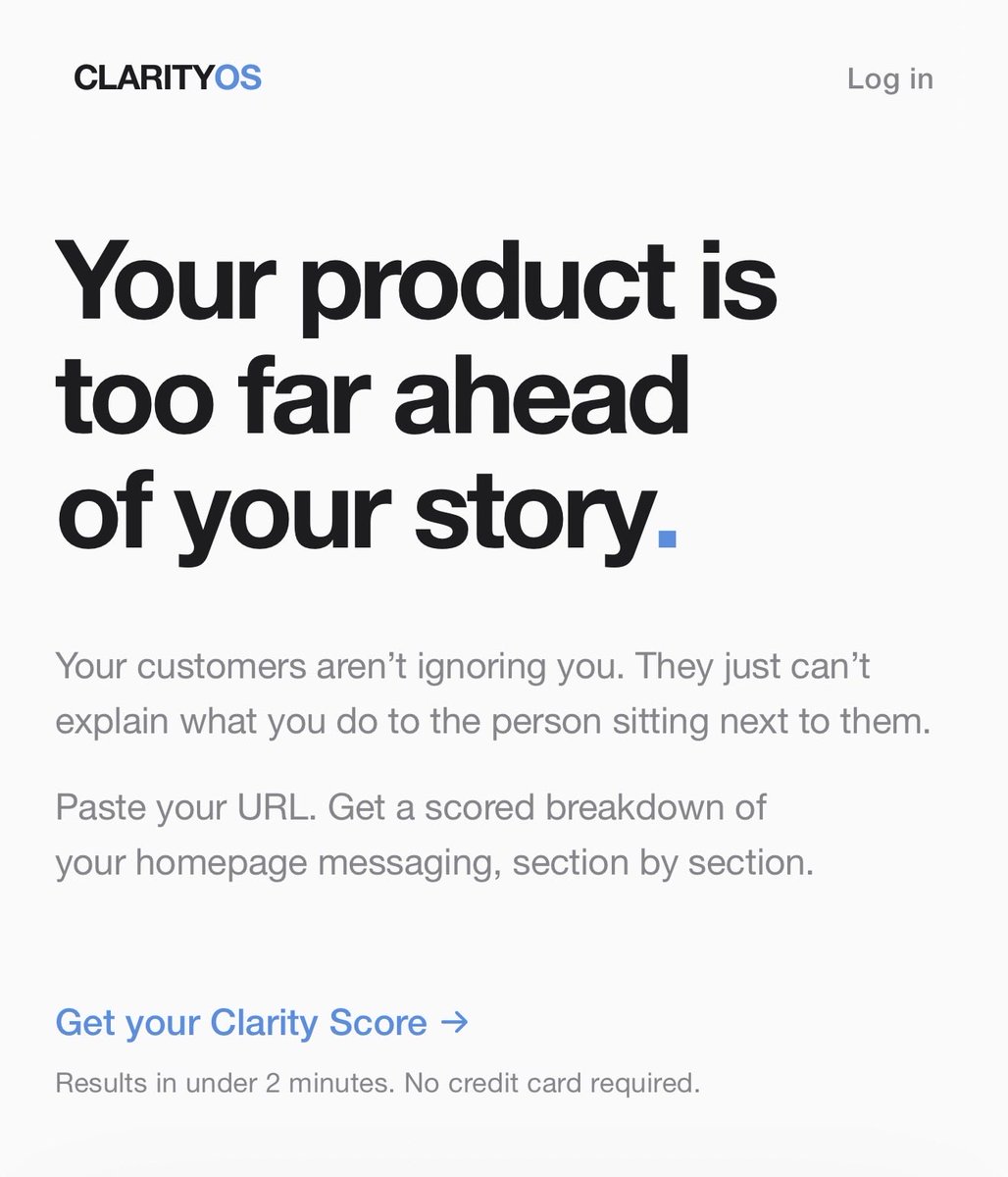
We just taught @runclarity to do exactly this. It reads the whole page now, words and visuals together, and shows you where they pull apart. The strategist and the designer, finally in the same room.
Most messaging audits read your copy and skip your page. That's like proofreading a film by reading the script and never watching the screen.
Tell one story. Tell it with everything on the page.
2
78
Jun 5
Every stop to think that your homepage tells two stories at once? It does. One in words. One in pictures.
You wrote the words. You sweated every line. They're good. But you didn't write the second story. Nobody did. The hero image got picked because it looked nice on a Tuesday, in a different room, by different people, on a different timeline.
Here's the problem: your visitor reads both stories in the same glance.
When the two agree, the page feels true. When they split, something feels off and the reader can't name it. So they leave. And they never tell you why.
This isn't a small thing, because the picture wins. Your visual hits the lizard brain before your headline finishes loading, and then your carefully crafted copy gets read through whatever mood that image set.
"Radically simple" over a screenshot crammed with forty live numbers doesn't read as simple. It reads as a company that doesn't quite know itself. That's the real cost. Not ugliness. Worse... distrust.
And the fix isn't taste. It's a question you can actually answer: take the worldview your words promise, and ask every visual on the page whether it delivers that worldview or fights it.
A calm promise wants white space. A claim of power wants weight. A human brand wants real faces, not a stock library's idea of a handshake.
We just taught @runclarity to do exactly this. It reads the whole page now, words and visuals together, and shows you where they pull apart. The strategist and the designer, finally in the same room.
Most messaging audits read your copy and skip your page. That's like proofreading a film by reading the script and never watching the screen.
Tell one story. Tell it with everything on the page.
1
3
191
@devonf 🇺🇸 retweeted

Jun 5
There's a lot of confusion about the recently patched Zcash bug. Here's how to actually understand it.
If the bug had been exploited before the patch (very unlikely it was), it would have looked like the shielded pool getting drained. Whoever minted the counterfeit shielded ZEC would want to sell fast, before anyone else found the same bug. And remember, the market for ZEC is almost entirely transparent ZEC, not shielded. You can't dump freshly minted shielded ZEC on Binance or Coinbase without unshielding it first.
The losers in that scenario are shielded holders who sit still. The transparent portion of Zcash is fully visible, so it's trivial to enforce that transparent ZEC never exceeds max supply. If you try to unshield more than the cap, you'll get stopped at the door.
So if you hold transparent ZEC (anyone trading, on an exchange, or doing price discovery on ZEC) there's no marginal effect on you. The loss falls entirely on shielded holders.
The team's next step is a new turnstile and a fresh shielded pool in the coming upgrade, which will confirm the shielded pool was not inflated. Think of it as taking headcount at the end of the field trip--that will make sure no extra kids snuck onto the bus.
But while AI found this bug, AI will also deliver the fix for the whole category: formal verification. I'm very bullish on this as the path to harden all software across the industry. Formally verified cryptography can't have implementation bugs by construction.
Right now AI is surfacing vulnerabilities across all our software--browsers, OSes, and blockchains are no exception. We're in the awkward adolescence where every wart is getting magnified and put on full display. But formally verified software is the only path forward for mission-critical software, and Zcash has put it front and center on their roadmap to deliver.
Privacy is too important not to.
(Dragonfly holds $ZEC and continues to. I'm personally an investor in ZODL.)
Jun 5

In the last 48 hours, amid all the FUD, the size of the Zcash shielded pool has dropped from 31% of supply to 30%.
Down ~1%.

150
145
934
417,248
Money OS: Inside the Machine w. Porter Stowell (CEO) & Audie Sheridan (CTO) at W3.io x.com/i/broadcasts/1AKEmmjEX…
55
64
102
1,527
@devonf 🇺🇸 retweeted

May 27
Private credit is broken.
I spent the last year talking to people who lend to working businesses. Equipment distributors, solar installers, industrial contractors. The companies that fund the physical economy.
Same story in every conversation.
A contractor in Phoenix lands a $400k solar install. The supplier wants payment before the panels leave the warehouse. The customer pays net 60 once the system is on the roof. The contractor sits in the middle, fronting capital they don't have, waiting on a credit decision that takes weeks. Sometimes months.
Six months is not unusual.
And the credit itself is fine. The Federal Reserve has commercial and industrial delinquencies under 2%, chargeoffs under 1%. This is some of the most predictable lending in the country. The real friction here is paperwork.
So while we wait, capital sits in money market funds earning a few basis points. Deals fall through. Working businesses lose growth they would have captured. The supplier eats the float. The customer eats the delay. Everyone pays for the inefficiency, and nobody is collecting.
A trillion-dollar market in this US alone, moving at the speed of fax machines.
This is fixable. @w3arew3
2
1
5
3,306
@devonf 🇺🇸 retweeted

May 21
Today we reduced headcount by 22%. The business is the strongest it's ever been. So I think it's important to be direct about what I'm seeing and why.
First, I made this decision and I own it. I did it because the way to operate at the highest level of productivity is changing, and to win the future, ClickUp needs to change with it.
Second, this wasn't about cutting costs. Most savings from this change will flow directly back into the people who stay. We'll be introducing million-dollar salary bands. If you create outsized impact using AI, you'll be paid outside of traditional bands.
Most importantly, I have the deepest gratitude for those affected. We're doing this from a position of strength specifically so we can take care of people properly. Everyone affected receives a package aimed at honoring their contributions and easing the transition.
I only see two options: wait for this to play out gradually in the market or be honest about what I'm seeing and act proactively.
THE 100X ORGANIZATION
The primary change is that we're restructuring around what I call 100x org. The goal is 100x output. The roles required to build at the highest level are fundamentally different than they were a year ago.
Incremental improvements to existing systems won't get us there. We need new ones. That means creating enough disruption to rebuild rather than iterate on what's already broken.
The common narrative is that AI makes everyone more productive. It doesn't. Many of the workflows of today, if left unchanged, create bottlenecks in AI systems.
These roles will evolve. But waiting for that to happen naturally means falling behind now.
The 100x org is actually heavily dependent on people - infinitely more than today. This is only possible with 10x people that have embraced and adopted new ways of working.
THE BUILDERS, AGENT MANAGERS, AND FRONT-LINERS
— THE BUILDERS: 10X ENGINEERS
I don't think most companies have internalized what's actually happening with AI in engineering. The common narrative is that AI makes all engineers more productive. That may be true in isolation, but at an organization level - that is the farthest thing from reality.
Here's what we've validated recently at ClickUp: the great engineers, the ones who can orchestrate, architect, and review, are becoming 100x engineers. They're not writing code. They're directing agents that write code. The skill is judgment.
AI makes the best engineers wildly more productive, and everyone else using AI slows these engineers down.
Think about it - the bottlenecks are (1) orchestration - telling AI what to do, and (2) reviewing - what AI did. Everything is leapfrogged and no longer needed.
So who do you want orchestrating and reviewing code?
And how do you want your best engineers to spend their time?
If your best engineers are spending time reviewing other people's code, then this is inherently an inefficient bottleneck. These engineers can review their agent's code much faster than reviewing human code.
The new world is about enabling your 10x engineers to become 100x.
The wrong strategy is to push every engineer to use infinite tokens. Companies doing this are celebrating 500% more pull requests. But customer outcomes don't match the volume of code being generated.
I call this the great reckoning of AI coding, and every company will face this soon if not already.
More code is just another bottleneck to the best engineers, and ultimately to your company's impact as well.
— THE BUILDERS: 10X PRODUCT MANAGERS
Product management and design roles are merging.
Designers that have customer focus, become more like product managers.
And product managers that have intuition for UX become more like designers.
The bottleneck of user research is gone. It takes us just one mention of an agent to kickoff research and analyze results.
The bottleneck of product <> design iteration is also gone. The product builder iterates on their own, along with agents and skills that ensure alignment with quality and strategy.
Also controversial today - I believe that the wrong strategy is to have your PMs shipping code - that just introduces another bottleneck that the best engineers will waste their time on.
To be clear, PMs should be coding but they should do this in a playground to iterate, validate, and scope. That code should not go to production.
Everything outside of managing systems, orchestrating AI, and reviewing output becomes a bottleneck.
That's why the other roles that are critical along with these are the systems managers (to reduce bottlenecks) along with a bottleneck you can't replace - customer meeting time.
— THE SYSTEM MANAGERS
Ironically, the people that automate their jobs with AI will always have a job. They become owners of the AI systems - agent managers. We have many examples of these people at ClickUp.
The underlying systems in which we operate are absolutely critical to get right. I think most companies are delusional to think they can iterate on existing systems and compete in this new world.
You must create enough disruption so that old systems are deprecated entirely. If there's any definition for 'AI native' that's what it is.
— THE FRONT-LINERS
In a world that will become saturated with AI communication, the human touch will matter more than anything to customers.
This is a bottleneck that you shouldn't replace - even when agents are high enough quality to do video meetings.
One-on-one meeting time with customers is something that shouldn't be automated. The systems around the meetings should be - so that front-liners spend nearly 100% of their time with customers.
REWARDING 100X IMPACT
In a world where companies are able to do so much more with less, where does that excess money go?
In our case, much of the savings in this new operating model will flow directly back to those that enabled it.
We must reward people that create productivity accordingly. This aligns incentives on both sides. Plus, in a world where your best people create 100x impact, you can't afford to lose them.
You should aim to retain these employees for decades. The context they have and their ability to efficiently orchestrate and review will be nearly impossible to replace.
Compensation bands of today should be thrown out the door. We're introducing $1 million cash/year salary bands with a path available to nearly everyone in the company if they produce 100x impact by creating or managing AI systems.
THE FUTURE
Nearly every company will make changes like these. The ones that do it proactively will define what comes next.
The future is not fewer people. It's different work, new roles, and better rewards for those who embrace it. We're already seeing entirely new roles emerge, like Agent Managers, that didn't exist a year ago.
ClickUp is positioning to lead this shift, not just internally, but for our customers too. I've never been more certain about where we're headed.
1,652
1,144
7,638
9,127,065
May 18
Marketing leaders: take a page out of this Captain’s book.
A crisis comms strategy is one of those things you hope you never need, but better have when you do.
Unf it’s one the weakest disciplines in marketing across tech, and esp in crypto. That’s the bad news.
The good news is that it’s pretty simple to do it well if you have the stones:
1. Be honest.
2. Take responsibility.
3. Always act in the best interests of those you serve.
Be like Cap.
May 18

I just had the craziest experience at the airport.
We are about to board a flight to Atlanta when the pilot from the incoming plane walks out of the jetway. Guy is probably late 50s, salt and pepper hair, military look. The kind of pilot you instantly feel good about seeing on your flight.
Pilot walks over to the counter, gets on the PA system, and starts addressing everyone. “Folks, I’ve been doing this a long time. Flying one of these jets is easy. The hard part is looking at 130 people and telling them their flight is going to be delayed.”
Audible groans throughout the boarding gate. Most people here are flying to Atlanta as a layover before another flight. 130 people just had their day become a complete mess.
The pilot goes on. “I get it, trust me. But here’s the deal: During our landing, we had a small mechanical issue. I’m not your pilot for the next leg, but I don’t feel confident the jet’s safe to fly until we have a mechanical team look it over, and I don’t feel comfortable asking the next pilots to fly you guys until we get confirmation.”
He points at the agents next to him behind the counter: “Now, none of this is the agents’ fault. Please be kind to them. I’m the one who made this decision, not them, so any inconvenience you experience is my fault. Just please know that I don’t do this lightly, and I’m only doing it because I believe it’s in the best interests of everyone’s safety.”
Now this is where the story gets crazy. The pilot puts the microphone down, grabs his suitcase, and all the people in the gate…
Start clapping.
I’m not joking, everyone starts clapping for the guy. 130 people who just had their travel plans ruined give an ovation to the guy who made the decision and delivered the message.
All because he addressed them with decency and transparency, took ownership of the decision, made it clear that it was necessary, and explained why it was in everyone’s best interest.
It’s honestly one of the best examples of strong communication—of strong leadership, for that matter—that I’ve seen in a long time.
@Delta, whoever your Atlanta to Wichita pilot was this morning, he’s one of the good ones. Please tell him the delayed passengers of flight 1637 appreciate what he did.

1
79