Transport Innovations and Society. DLR 🇩🇪 Formerly: TU Delft 🇳🇱 UC Berkeley 🇺🇸 Upatras, NTUA 🇬🇷. Own views.
Joined October 2011
- Tweets 966
- Following 404
- Followers 463
- Likes 2,298
67 Photos and videos



23 Oct 2024
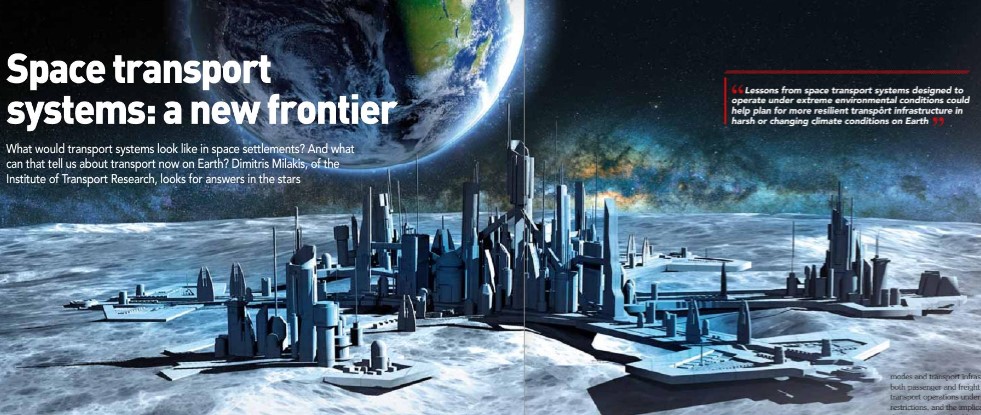
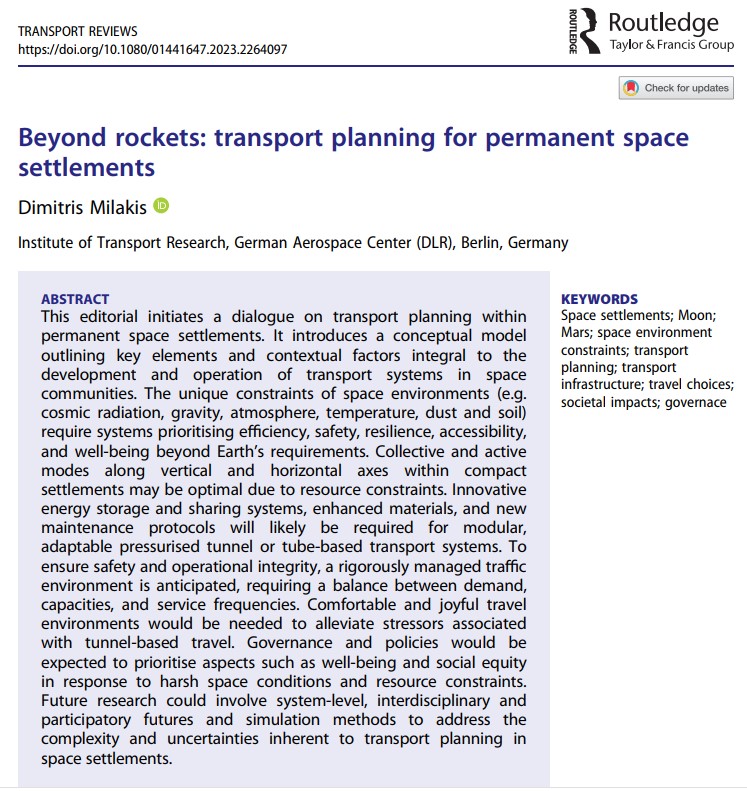
Glad to share my latest article on #space transport systems as a new frontier for #transportplanning, available via @ITS_Int_News! digital.itsinternational.com… (pp.38-41)
1
183
Dimitris Milakis retweeted

28 Aug 2024
"The illusion of the shared electric automated mobility transition" by @dimilakis and Dennis Seibert — Read it on @ResearchGate: researchgate.net/publication…
1
1
3
266
8 Aug 2024
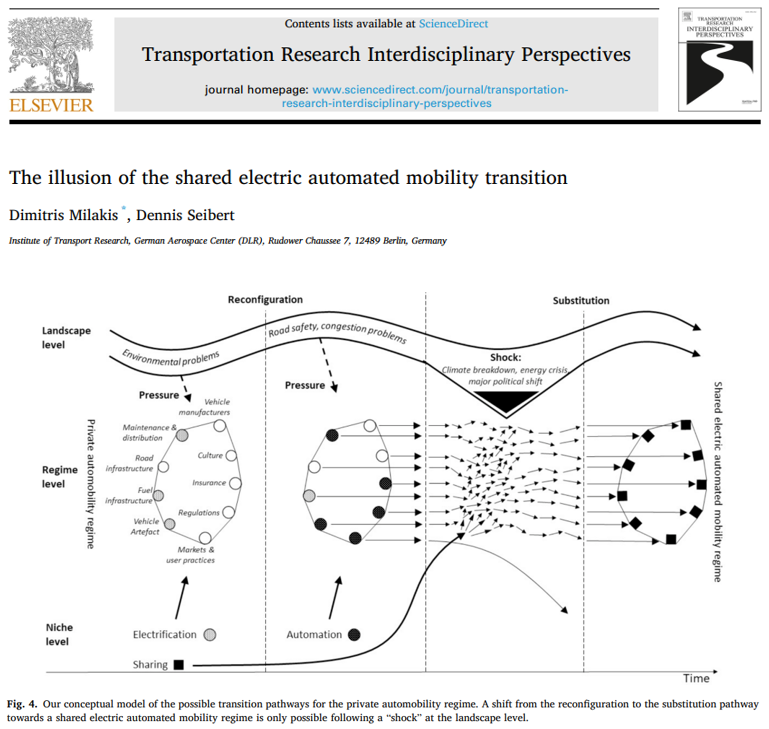
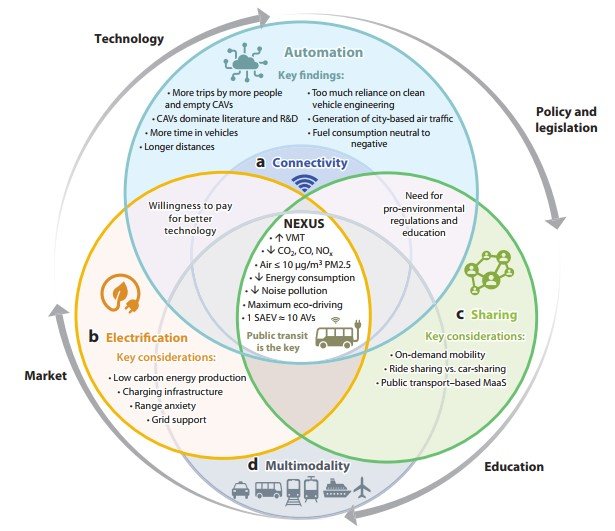
In our new article with Dennis Seibert, we argue that the transition from internal combustion engine automobility will favour privately-owned electric AVs over shared AVs, unless significant landscape “shock” occur. 1/7
1
3
3
616
8 Aug 2024
Consequently, the socioeconomic benefits of the so-called “three revolutions of automobility” will likely be diminished. 6/7
1
72
8 Aug 2024
Next question: What such a policy “shock” would entail? To be continued... 7/7
Open Access: sciencedirect.com/science/ar…
66
Dimitris Milakis retweeted

15 Jun 2024
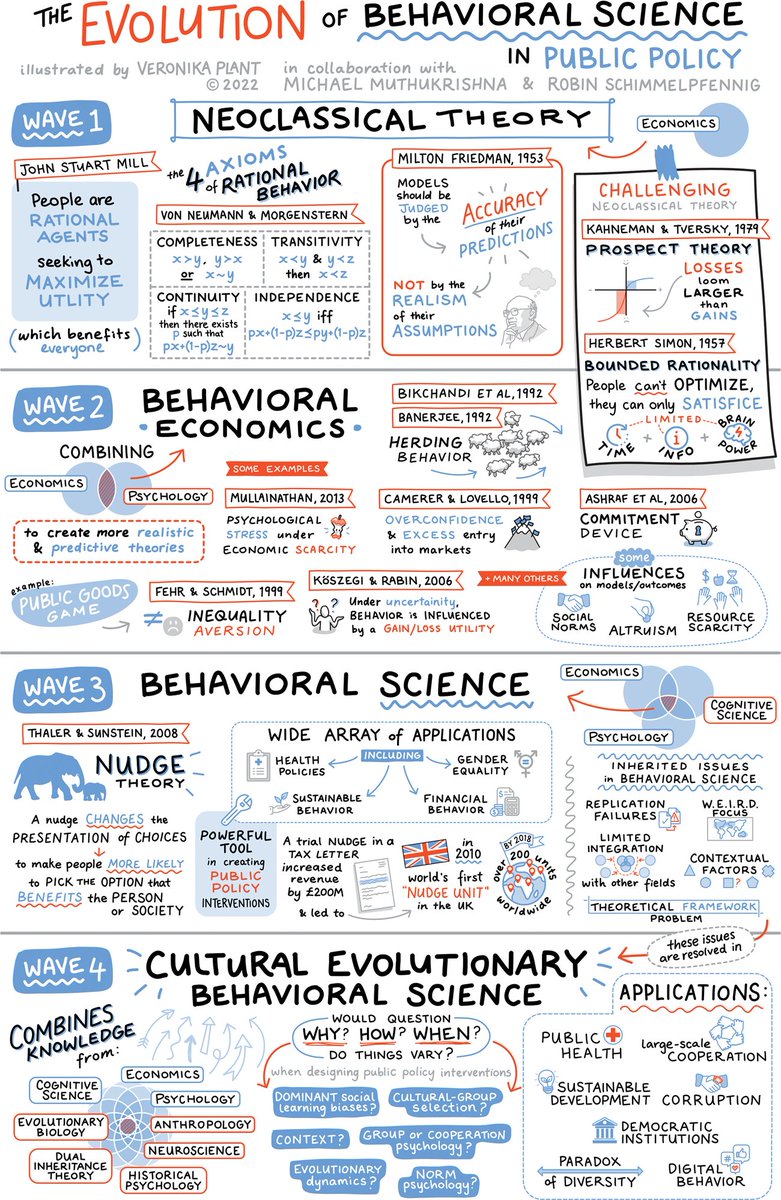
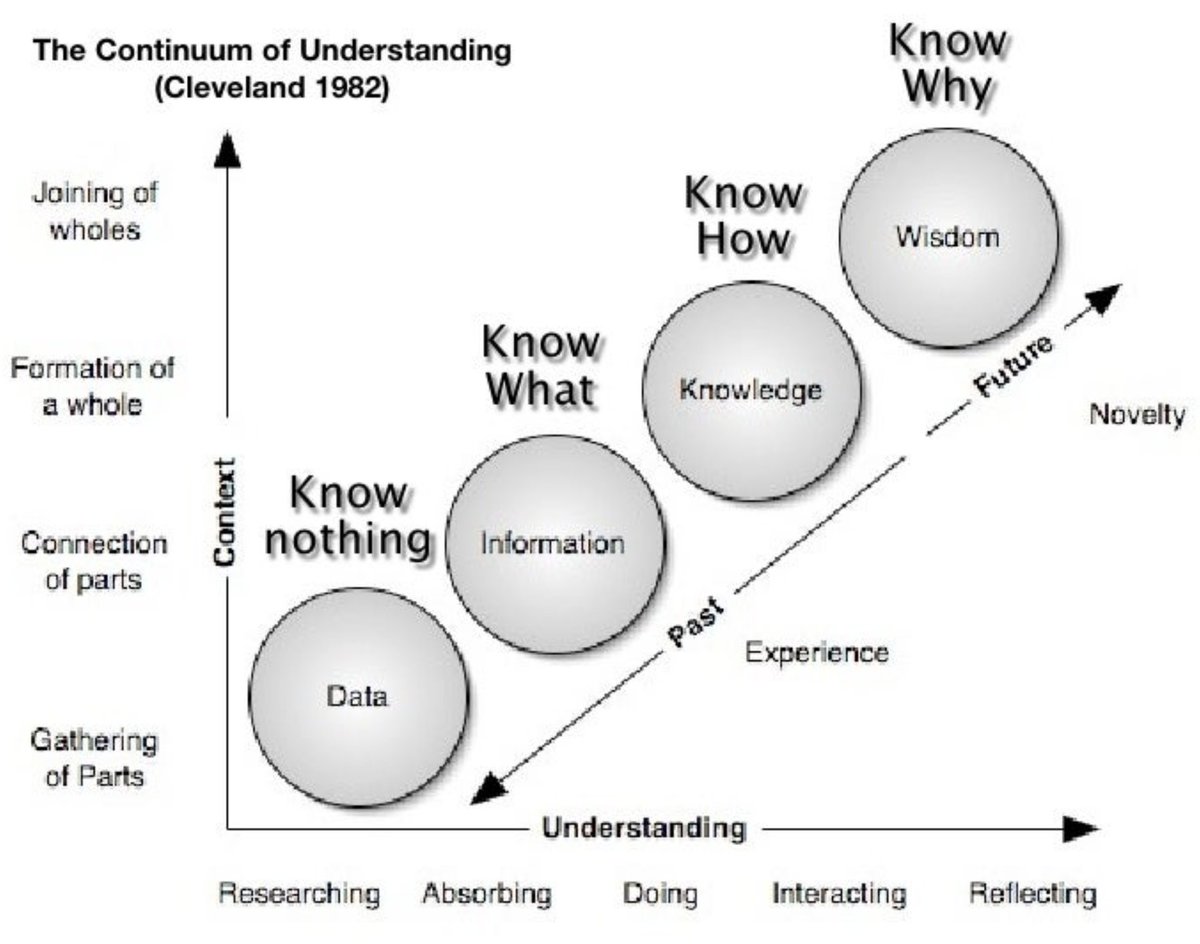
The evolution of our understanding
36
1,732
7,268
1,256,757
14 Jun 2024
Sooner or later, science must answer the "why" questions after "what" and "how". It is the only way to develop robust theory and become socially relevant. A nice paper on the evolution from neoclassical theory to cultural evolutionary behavioural science. cambridge.org/core/journals/…
74
17 May 2024
I was expecting worse outcomes for epistemic justice, especially in a field like Geo-engineering. However, a key experts attitude observed in this study is 'pro-partnership' with society. Good news...
sciencedirect.com/science/ar…
96
17 May 2024
Air taxis: limited intention to use and only as “limousine-like” dial-a-ride. No surprises here...
sciencedirect.com/science/ar…
98
Dimitris Milakis retweeted

8 Feb 2024
🎉Congratulations to @MRyghaug and co-authors for winning the 2024 Moshe Givoni Prize for their paper "A Social Sciences and Humanities research agenda for transport and mobility in Europe: key themes and 100 research questions”
The paper is available OA:
tandfonline.com/journals/ttr…
3
13
1,335
Dimitris Milakis retweeted

11 Jan 2024
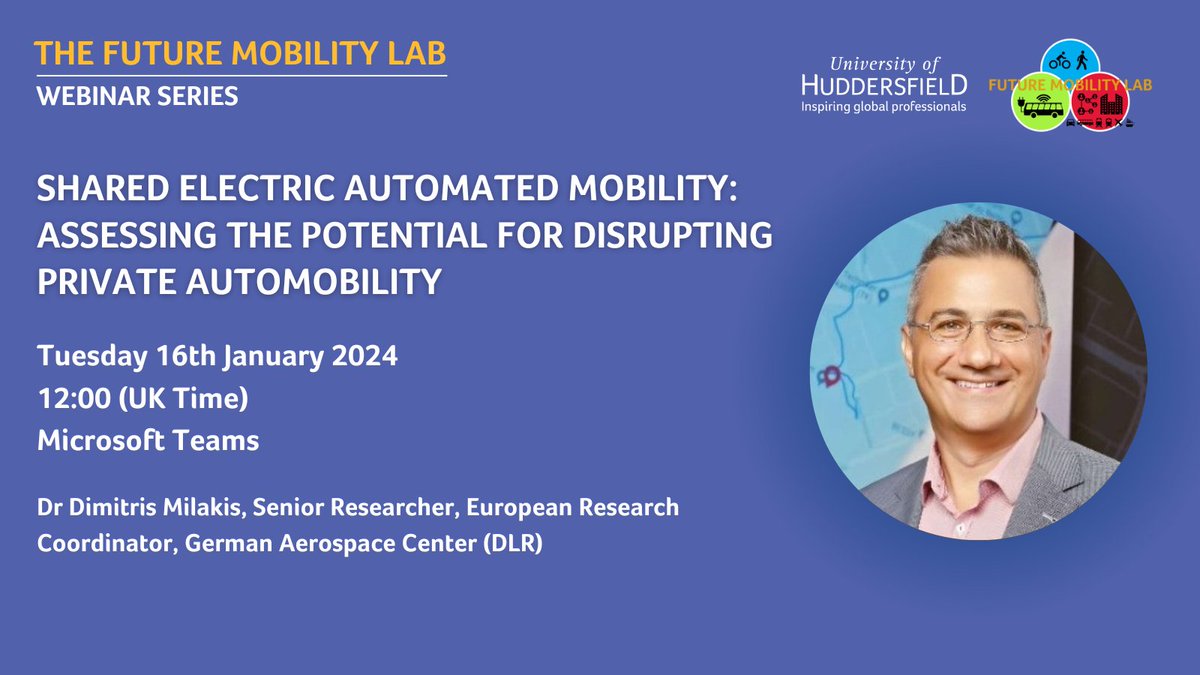
📢 UPCOMING EVENT 📢
📅 16th January 2024
Join us for the 10th #FutureMobilityLab Webinar with
@dimilakis, Senior Researcher and European Research Coordinator at the Institute of Transport Research at the German Aerospace Center✈️
Tickets👉hud.ac/q70
#Transport
1
1
211
Dimitris Milakis retweeted

7 Jan 2024
There is an ongoing discussion involving Harvard and MIT, two institutions where I spent plenty of time during the past 20 years. I first came to Harvard as a visiting PhD student in 2005, then joined the Kennedy School as a postdoc in 2008, and in 2010 I joined the MIT faculty, where I was until 2019. Personally, I don’t have much to add to the current discussion (eg about DEI, plagiarism, etc.) except some notes on the social context of Cambridge, Massachusetts. Because like all drama, what we are seeing today is unfolding on a social backdrop that may be difficult to understand. After all, I know for a fact that most Americans do not know how society works in and around these institutions. For most, even people from the north and south shores of Massachusetts, Harvard and MIT are mythical places that we hear mentioned in sitcoms and movies. And while the reality is different, it is still interesting. They are a reflection of a segment of society, not only of the United States but of the world, as these institutions are effective at attracting global elites.
I will first start with a few positive notes from the 2000s. I remember vividly being thrown head-first into a tough-love environment. If you brought a half-baked idea to a professor or colleague they would destroy it, and kick you while you are down. You had to learn to change your mind, defend yourself, or go home crying. At that time I hated it, but in hindsight, I’ve come to appreciate it. That’s how I learned to think and write, and also, came to understand that the best you can get as a junior scholar from a senior scholar is unvarnished feedback because the other option is for them to simply ignore you.
You need to keep in mind that academia is a game of social acceptance since all hiring, funding, and publication decisions come from secret peer recommendations. In many institutions, what that leads to is not excellence, but clubbiness. People form implicit support groups with others with whom they agree to approve each other’s work. These challenge-free environments lead to a lot of half-baked work that is usually ignored by the larger academic community. That was not how these institutions were in the mid-2000s. They were tough pressure cookers that did not care about you or your feelings. They cared about whether you really had something important to say, and could figure out how to say it and show it. It was tough, but the focus was on the quality of the work. And that is why their prestige is well deserved. There is a lot of great work and great people in them. Brilliant people pushing themselves and their teams to the limit, and in the process, generating new knowledge, technologies, and scientific leaders.
But there is also an underbelly to this society. A society that is not immune to prestige and its addiction. People always went to these institutions looking for prestige. But over the last few decades, the prestige machine was supercharged with social media, displacing in part the culture of excellence. And this brings me to some of the saddest stories.
I remember a colleague and friend who joined the MIT faculty in the mid-2010s. He came from abroad with his wife who had to quit her job to move there. And he was killing it in academic terms. But still, he was not happy. During a Saturday lunch, he explained to me why. He told me that when they socialized people would turn around and start talking to someone else as soon as his wife told them that she was in between jobs. That behavior was wearing them out. People in Cambridge were not there to make friends. I know this is a cliché, but I remember being told those same exact words by a senior colleague who made a habit of walking past me without acknowledging me every morning after I said hello, even though his office was a few doors away. My friend eventually left Cambridge as well.
I also remember one of the most bizarre parties I’ve ever attended. I don’t know how else to call it other than a well-organized “braggathon.” About 200 people were invited to the house of a person who had made a fortune in finance. After everyone arrived, we were brought to a large library where one of the hosts got the party going. He started calling people, who would respond with their prepared pitches. “Hey Jennifer, I know you are revolutionizing the cancer industry..” and Jennifer would deliver her pitch. “And that reminds me of Brandon, who is doing amazing work on aerospace,” and Brandon would jump into action. That went on for about 2 hours. It is a strange prestige-driven society that is hard to fathom from the outside.
And eventually, you get used to it. Because prestige is a powerful drug, a master of puppets that can take over your life. When you are affiliated to those institutions you get treated like royalty around the world. Saying you are a professor there provides a strong 'in' with the elites of the world. Many people don’t know how to evaluate ideas, so they rely on where these ideas come from. Prestige shapes the world. But there is another side to that coin. The crudest example of prestige addiction is the blighted and chronically addicted, those who at MIT are called lifers. These are people who joined the institute as an undergraduate, and 30 years later, continue doing odd jobs for a big professor because they understand that being low in the ranks of the castle is better than trying to survive outside its walls. They are in some ways, the most loyal members of the institutions, knowing that there is a parade of visitors that will give them for ten minutes the respect they otherwise never get inside.
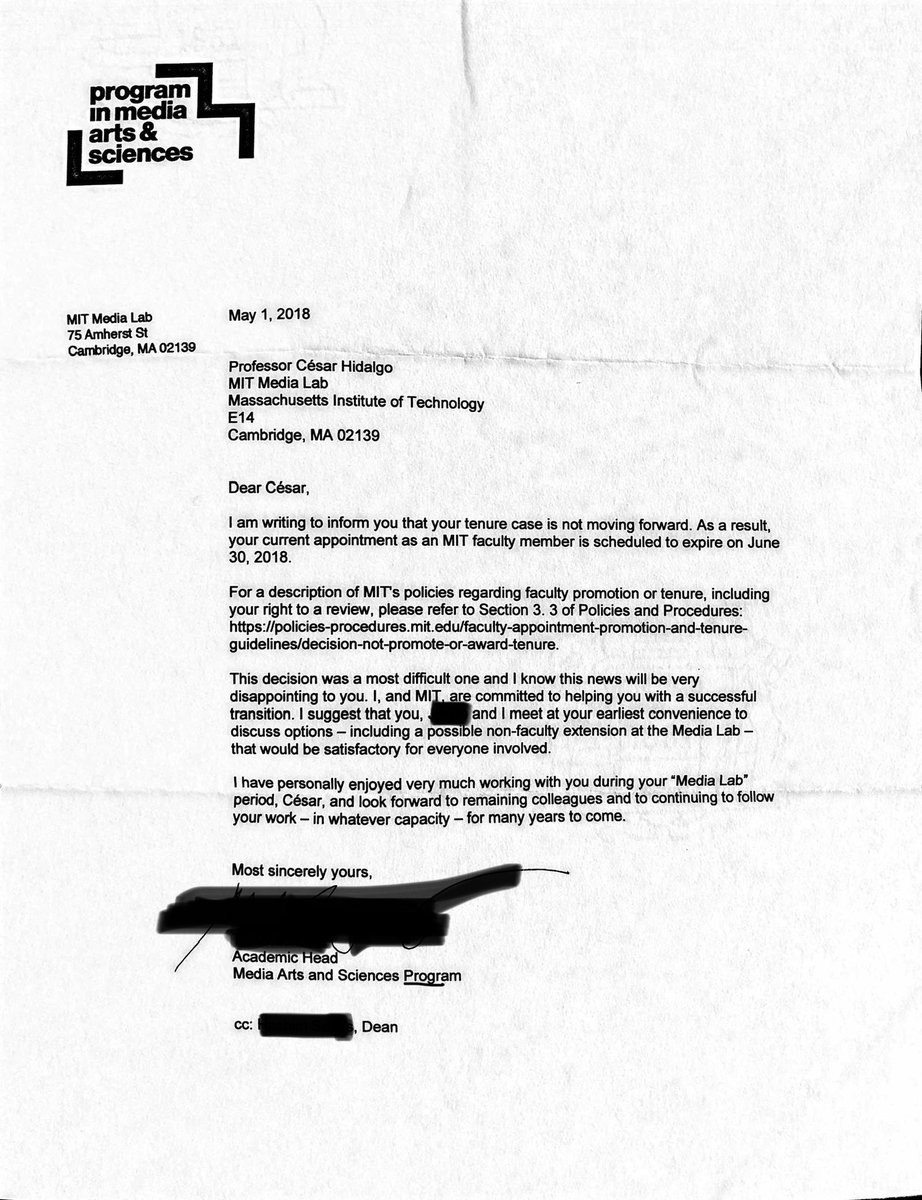
The north bank of the river Charles is a peculiar place. A place with many stories, that because of this prestige addiction, will never see the light of day. Today I can talk because I have been sober for a few years, after not being granted tenure at MIT (link to this story below). I uprooted my life and moved to Europe during covid, where I have been playing a different game: helping build research institutions instead of climbing them. And I do appreciate my time in Cambridge. It helped me become a better thinker, writer, and scientist. It also opened my eyes to the world. But I know many colleagues who will never share their stories as long as they keep a weak link to these institutions. Quitting the prestige drug is difficult. Still, slowly but surely, the drama will keep on trickling as the cracks in the levy continue to spread. There is certainly a Morning Show-type drama series or movie waiting to be made about Cambridge MA, if only screenwriters were not so focused on New York and California.
twitter.com/cesifoti/status/…
17 Feb 2022

Want to read an insane tenure denial story? I was denied tenure at MIT in 2018. I was the only Hispanic faculty at my department, had 13k citations, 2 books, & papers in Nature, Science, & PNAS. I was never given a reason & the only letter I got told me to check the website./1🧵
90
363
2,118
695,227
Dimitris Milakis retweeted

17 Nov 2023
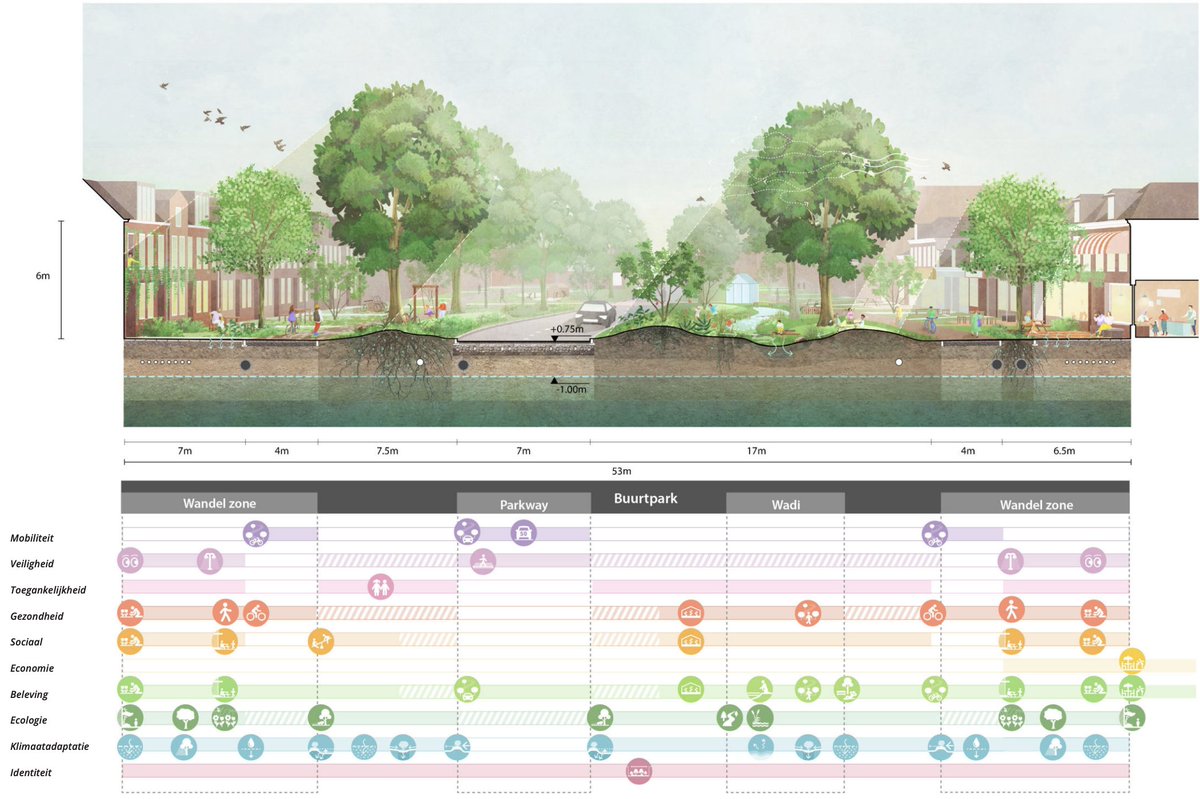
[🚨JOIN US🚨] The next 3.5 years we will work with 8 European cities 🇪🇺 to understand and actively create more #JustStreets.
Do you want to contribute to that?
Apply for the #PostDoc position: vacatures.uva.nl/UvA/job/Pos…
3
19
65
19,142
13 Oct 2023
Top-down (street) experiments may, at best, promote isolated high quality public spaces, prioritizing the visions of resourceful local actors, in a post-politics & austerity planning context. Eventually not challenging the automobility regime. Nice paper: journals.sagepub.com/doi/10.…
1
7
508