
Joined March 2009
- Tweets 13,252
- Following 3,120
- Followers 58,701
- Likes 30,894
2,086 Photos and videos










Pinned Tweet

6 Nov 2025
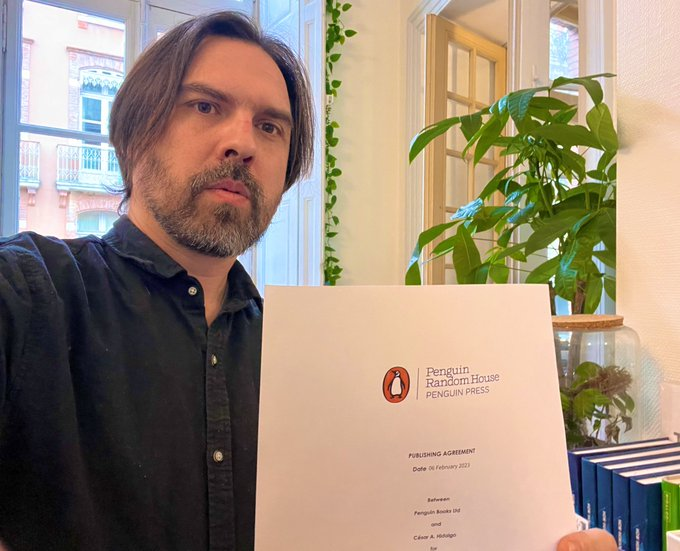
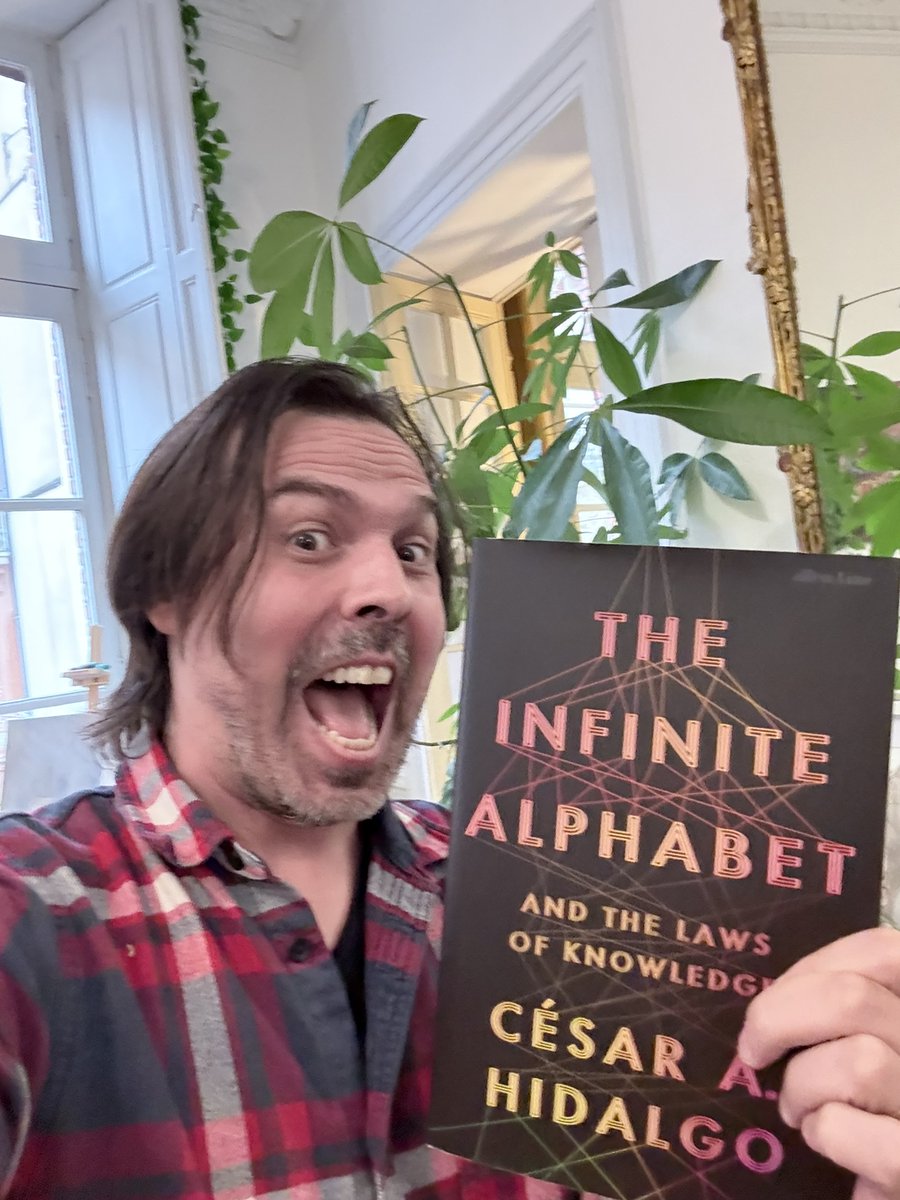
How it started/How it's going.
The Infinite Alphabet is out today, globally on Kindle and across bookstores in the UK.
If you are curious about the history of learning curves, disruptive innovation, knowledge diffusion, and economic complexity, this book is for you.
If you are curious about the development of entrepreneurship in Beijing, how Vespa's were born from helicopters, and how a 21-year old started a manufacturing revolution in the US, this book is for you.
It took me years to collect these stories and I hope you enjoy learning from them as much as I did.
Many thanks to the excellent team at @penguinrandom to help turn years of research into a fun and dynamic book.
Get your copy, gift one to a friend, or help me spread the word :-).
I'll be posting snippets, events, and more in the coming days.
24
47
363
49,923
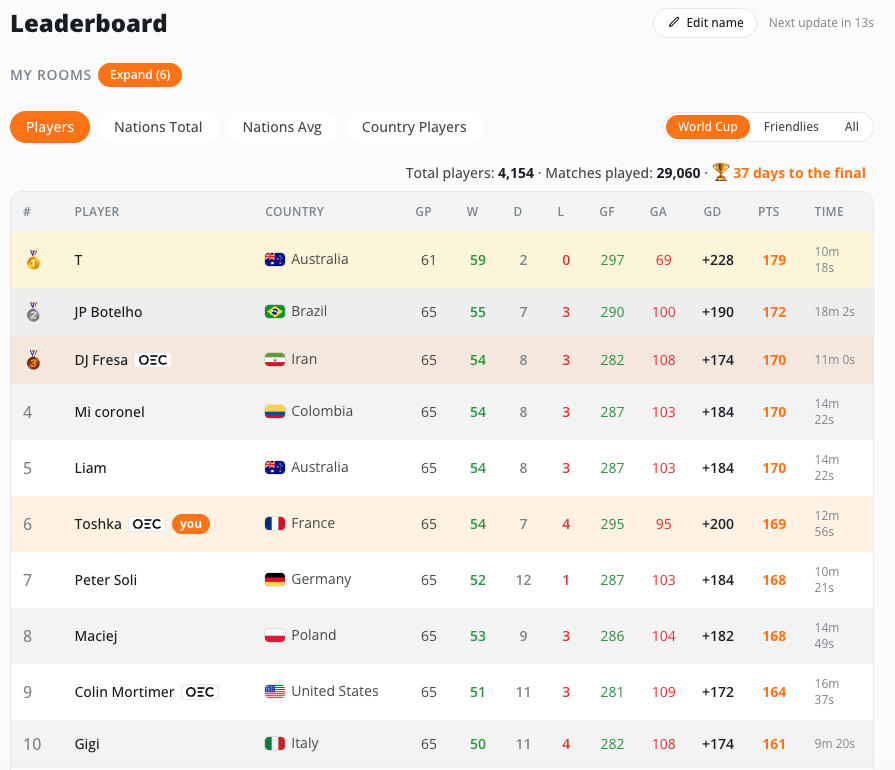
This is the top 10 right now of the World Trade Cup, with thousands of players and nearly 30k matches. Notice the player who is number 1 now has still not played all of the 65 matches in the first round.
1
1
877
Jun 13
The debate on that other peaceful app that people left for because X was to toxic 😂
14
1,208
Jun 13
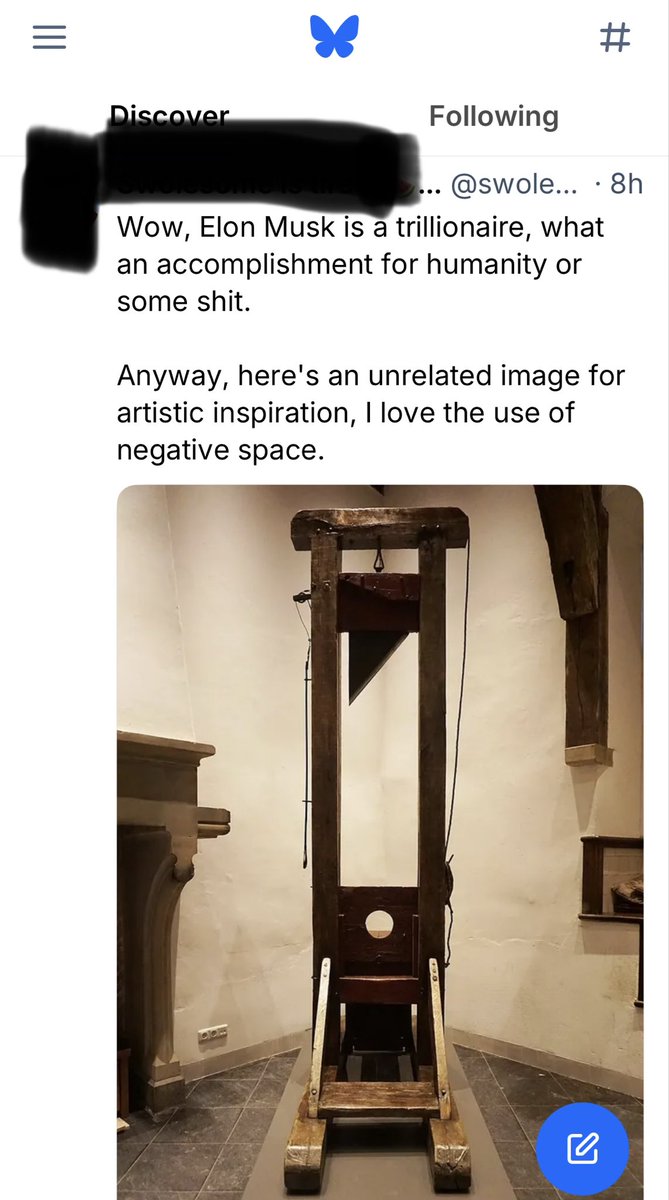
Now that everyone is thinking in trillions, here are some numbers to put $1T in context.
One trillion dollars would fund roughly:
50 days of the U.S. federal government
1 year of U.S. federal interest payments on the national debt
90 days of Chinese government spending
5 months of German government spending
6 months of French government spending
And that is under heroic assumptions: that the wealth could be taxed, sold, or transferred without crashing the value.
In fact, if the wealth of the 10 richest Americans were converted into U.S. government spending, it would last about 152 days.
If the wealth of the top 100 billionaires on Forbes were confiscated and converted into government spending, it would fund the U.S. federal government for only a bit more than one year.
And then it would be gone.
The US federal government already spends about 7 trillion a year, states and local governments spend a combined 3 to 4 trillion more.
So don’t be naive. The world’s problems recur, but fortunes are a one-time thing. If someone tells you that the next trillion will solve the problems that were unsolved by the first ten, then they either didn’t do the math, or have a different goal in mind.
4
8
23
2,696
Jun 11
It has only been a week since we launched the World Trade Cup and over 3,000 players have joined and played nearly 25,000 matches.
Join the nerdiest World Cup themed game of the year at:
worldcup.oec.world
1
3
1,051
César A. Hidalgo retweeted

Jun 10
16
71
271
52,609
César A. Hidalgo retweeted

Jun 10
BREAKING: SpaceX's IPO is expected to create 4,000 new millionaires, including some cafeteria workers whose compensation packages include employee stock options, per Bloomberg.
565
999
16,562
8,675,695
César A. Hidalgo retweeted

Jun 8
A country where it takes two years to register a business and two days to bribe your way around it doesn't have a corruption problem.
It has a regulation problem.
16
61
511
10,645
César A. Hidalgo retweeted
Jun 7
Here is a great story about some recent Finnish billionaires, as told in The New Geography of Innovation, by Mehran Gul:
(Long quote).
“In the winter of 2000 when Mikko Kodisoja wanted to hire someone to help run his company, Sumea, a game developer based in Helsinki, Finland, he offered the job to Ilkka Paananen, a twenty-two-year-old student at the Helsinki University of Technology.
The most attractive aspect of Ilkka’s candidacy was that he was the only one willing to take the job. “These guys hadn’t raised any money so they couldn’t even afford to pay me anything,” Ilkka recalls. “They didn’t have too many candidates and I was probably the only one and that’s why they picked me.”
Sumea’s founders were creative types who were really into making games, but they didn’t care much for all the other mundane stuff that goes into running a company. So they brought in Ilkka, a business student, to take care of all that housekeeping. “And then they thought that, well, for you to have any kind of credibility as a kind of representative of the company you need a credible title and so they decided to call me the CEO,” Ilkka tells me. “I’d never had a real job besides traineeships and some summer jobs and of course I had absolutely no idea what I was doing.”
Sumea would go on to be a moderately successful company. In 2004 it was bought by Trip Hawkins, an industry legend who practically kicked off the home gaming industry when he founded Electronic Arts in the 1980s.
After the acquisition Mikko and Ilkka paired up again to launch another gaming company where things could be exactly how they wanted them to be: “the best people who would form the best teams which would then eventually create the best games.” They called the company Supercell. Supercell, which started with fifteen people packed in a snug thirty-five-square-meter room, got off to a rocky start. Its first game, Gunshine, didn’t get much traction and was scrapped within months. The second, Hay Day, did well. The third, Clash of Clans, released in August 2012, changed mobile gaming forever. Clash of Clans, a strategy game in which the player assumes the role of a village chief building out their own village while waging war on every other village, became the highest-grossing game in the US within three months of its launch.
Within a year it was the most profitable game in the world. From idea to launch, Clash of Clans was developed in six months. More than a decade later it’s still going strong. It’s been downloaded over half a billion times and has brought in over $10 billion in lifetime revenue. How does that stack up against other hits coming out of the wider entertainment industry, like movies, books, and music?
The Clash of Clans franchise has made more money than the top three highest-grossing movies ever—Avatar, Avengers: Endgame, and Avatar: Way of the Water—combined. It has made more money than all the Harry Potter books, combined. It has made more money than Taylor Swift, The Rolling Stones, U2, and Coldplay, combined.
In 2016, Supercell was acquired by the Chinese tech giant Tencent in a deal that valued the company at over $10 billion, making it the first European tech company of the internet era to cross an eleven-digit valuation. Supercell employs fewer than four hundred people, making it the most valuable company per employee in the world. The Finnish company’s runaway success has turned Ilkka, the student who became CEO because no one else wanted the job, into a billionaire.
Supercell was started in part with a €400,000 loan from the Finnish government without which, Ilkka says, the company wouldn’t exist. That investment has paid off massively. The Helsinki-based company is the single-largest corporate taxpayer in Finland, the biggest global success to come from the frosty reaches of this tiny Nordic country since Nokia. Supercell alone pays back multiples of all the money invested by the Finnish government in every startup ever.”
5
5
28
4,358
Jun 7
In a world with no billionaires, we would all be poorer, not richer.
532
93
1,205
275,253
Jun 7
A few people seem to be missing the point of the statement.
For the statement to be true, billionaires don’t need to be the creators of wealth. They can be the outcome of the right ecosystem and the statement will still hold.
The statement is true if the conditions that allow wealth creation for economies in general are correlated with the conditions that contribute to the emergence of billionaires (so in richer societies you see both, fewer poor people and more very wealthy ones).
38
3
36
8,547
Jun 7
Here is a great story about some recent Finnish billionaires, as told in The New Geography of Innovation, by Mehran Gul:
(Long quote).
“In the winter of 2000 when Mikko Kodisoja wanted to hire someone to help run his company, Sumea, a game developer based in Helsinki, Finland, he offered the job to Ilkka Paananen, a twenty-two-year-old student at the Helsinki University of Technology.
The most attractive aspect of Ilkka’s candidacy was that he was the only one willing to take the job. “These guys hadn’t raised any money so they couldn’t even afford to pay me anything,” Ilkka recalls. “They didn’t have too many candidates and I was probably the only one and that’s why they picked me.”
Sumea’s founders were creative types who were really into making games, but they didn’t care much for all the other mundane stuff that goes into running a company. So they brought in Ilkka, a business student, to take care of all that housekeeping. “And then they thought that, well, for you to have any kind of credibility as a kind of representative of the company you need a credible title and so they decided to call me the CEO,” Ilkka tells me. “I’d never had a real job besides traineeships and some summer jobs and of course I had absolutely no idea what I was doing.”
Sumea would go on to be a moderately successful company. In 2004 it was bought by Trip Hawkins, an industry legend who practically kicked off the home gaming industry when he founded Electronic Arts in the 1980s.
After the acquisition Mikko and Ilkka paired up again to launch another gaming company where things could be exactly how they wanted them to be: “the best people who would form the best teams which would then eventually create the best games.” They called the company Supercell. Supercell, which started with fifteen people packed in a snug thirty-five-square-meter room, got off to a rocky start. Its first game, Gunshine, didn’t get much traction and was scrapped within months. The second, Hay Day, did well. The third, Clash of Clans, released in August 2012, changed mobile gaming forever. Clash of Clans, a strategy game in which the player assumes the role of a village chief building out their own village while waging war on every other village, became the highest-grossing game in the US within three months of its launch.
Within a year it was the most profitable game in the world. From idea to launch, Clash of Clans was developed in six months. More than a decade later it’s still going strong. It’s been downloaded over half a billion times and has brought in over $10 billion in lifetime revenue. How does that stack up against other hits coming out of the wider entertainment industry, like movies, books, and music?
The Clash of Clans franchise has made more money than the top three highest-grossing movies ever—Avatar, Avengers: Endgame, and Avatar: Way of the Water—combined. It has made more money than all the Harry Potter books, combined. It has made more money than Taylor Swift, The Rolling Stones, U2, and Coldplay, combined.
In 2016, Supercell was acquired by the Chinese tech giant Tencent in a deal that valued the company at over $10 billion, making it the first European tech company of the internet era to cross an eleven-digit valuation. Supercell employs fewer than four hundred people, making it the most valuable company per employee in the world. The Finnish company’s runaway success has turned Ilkka, the student who became CEO because no one else wanted the job, into a billionaire.
Supercell was started in part with a €400,000 loan from the Finnish government without which, Ilkka says, the company wouldn’t exist. That investment has paid off massively. The Helsinki-based company is the single-largest corporate taxpayer in Finland, the biggest global success to come from the frosty reaches of this tiny Nordic country since Nokia. Supercell alone pays back multiples of all the money invested by the Finnish government in every startup ever.”
5
5
28
4,358
Jun 7
“
Supercell is as much a product of its environment as it is a creation of its founders. If it takes a village to raise a child, it takes a city to raise a company. Without good schools, quality healthcare, safe streets, and strong social security nets, Ilkka says, a company like his would not exist. “We are proud of our Finnish roots,” he tells me. “We feel that in Finland we have a social system and a community which has enabled us to be successful.”
It is a great book by the way.
goodreads.com/en/book/show/1…
1
9
934
César A. Hidalgo retweeted

30 Dec 2023
De-growth is the ultimate bourgeois ideology, dreamed up by spoiled kids in developed countries who would close the door behind them, oblivious to the fate of billions in the left tail of the global income distribution whose only hope to make it out of poverty is growth.
88
754
3,772
439,705
Jun 6
One of the things we enjoy a lot in Toulouse are the weekend brocantes.
The first weekend of every month these antique fairs are a perfect place to go for a walk and look for hidden treasures.
You also get amazing houseware (porcelain, not ceramic) at great prices.
Since each vendor always locates in the same spot, you get to know them over time. Especially if you’ve become a customer of then.
1
15
2,223
Jun 4
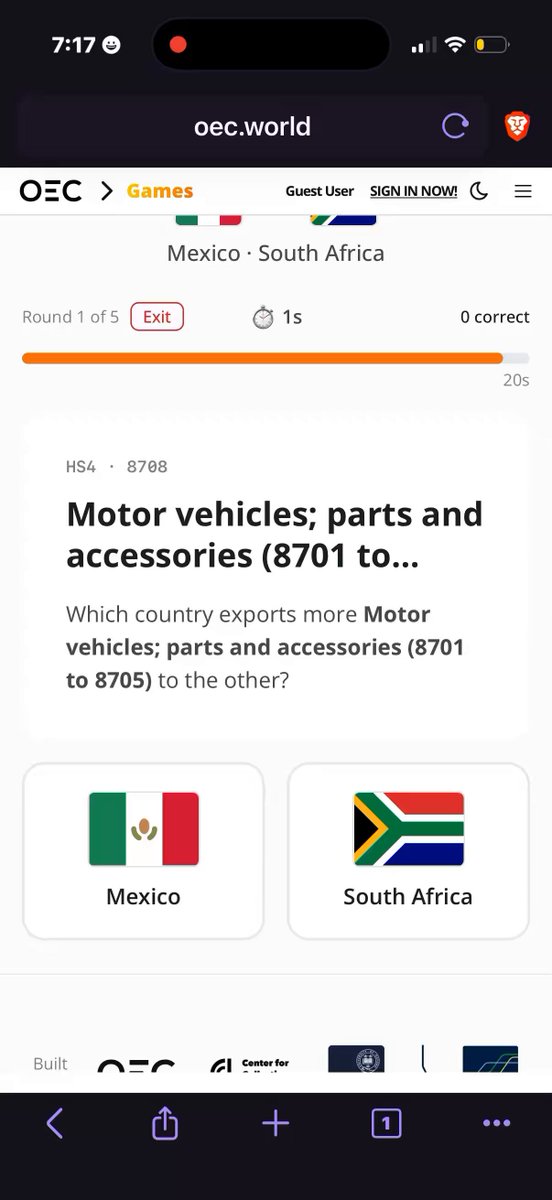
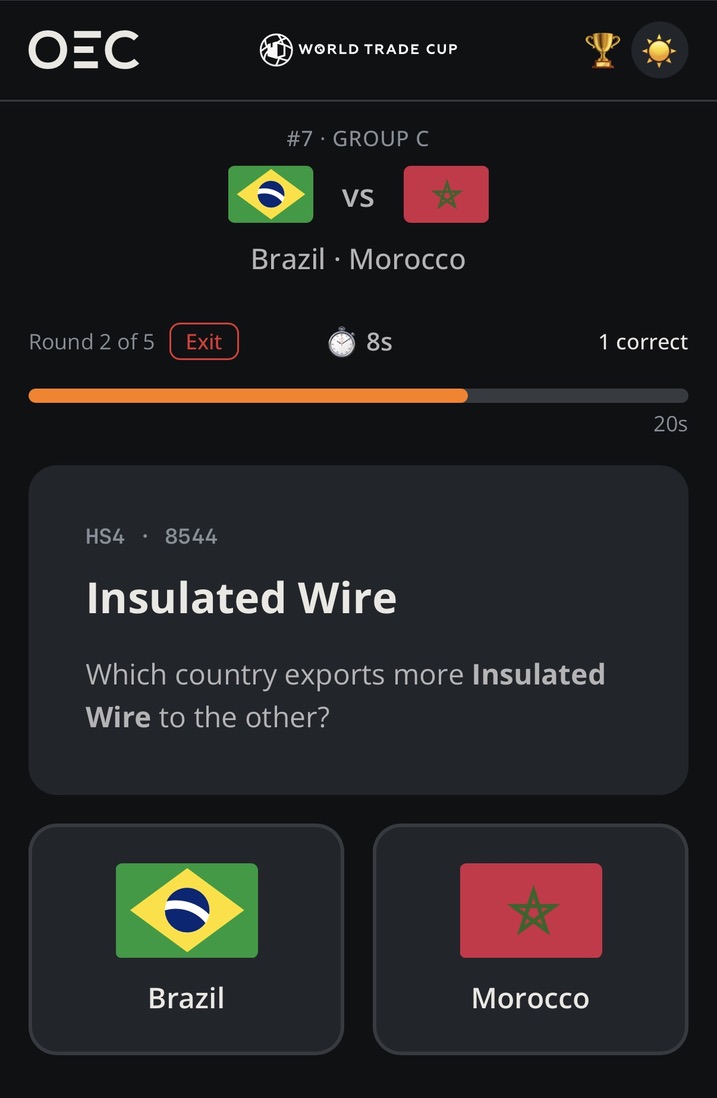
From the creators of Tradle & Pick 5 comes the best game combining trade data with the World Cup:
The World Trade Cup!! 🏆
Play every game in the World Cup, using your knowledge of trade to win.
3 point for each win
1 for ties
0 for loses
Create a private room to compete with friends or compete with the world in the global leaderboard.
Play now at
worldcup.oec.world
From the @OECtoday and @datawheel team in collaboration with @LearningCCL & @TIDE_Oxford.
6
10
69
681,971
César A. Hidalgo retweeted

Jun 4
“This knowledge could not travel just because of the idea or blueprints or any of these other things that we think can transmit knowledge.
People in the US knew that it was an important technology and that it was a lucrative business. They were trying to reproduce it but until someone that had worked intimately for 6 years in one of those mills in the UK arrived into the US, that industry could not take a foothold on America.
And funnily enough the same thing that happened in the Midlands started happening around Rhode Island, the mills started to now spread a few miles up and down Pawtucket where Slater Mill is originally placed.
So it's a great example of the fact that knowledge doesn't travel in words or in books, it travels in brains.” César Hidalgo
@cesifoti
duncancj.com
3
5
1,216
Jun 3
🤦♂️

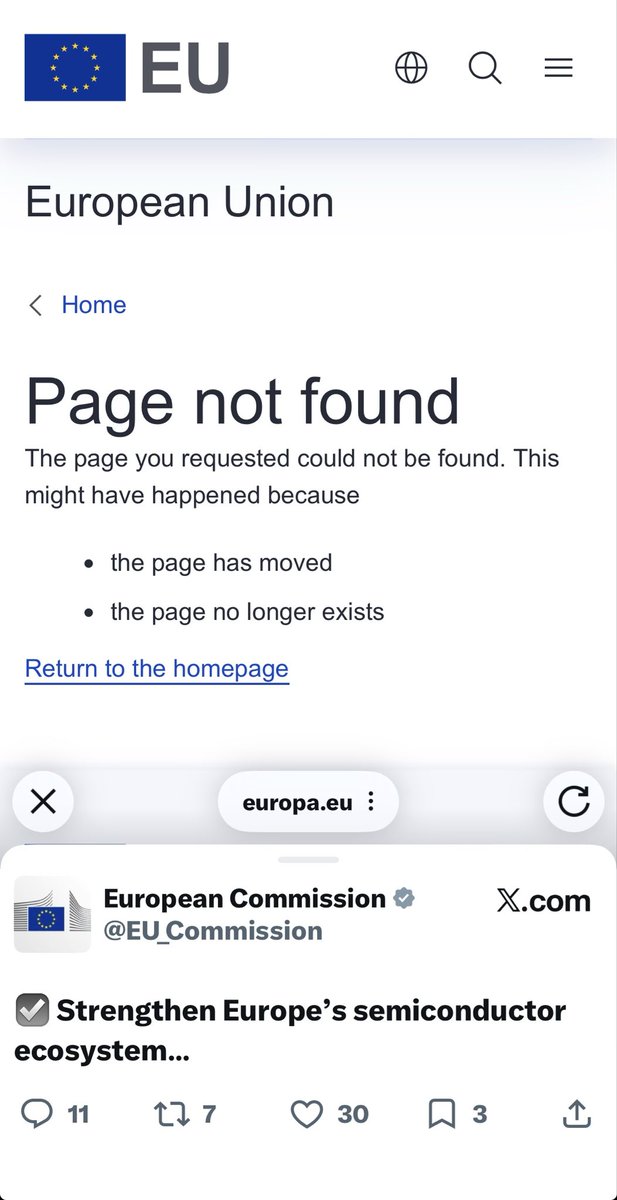
Your digital future is made in Europe. 🇪🇺
We are building a stronger European tech ecosystem, reducing reliance on critical technologies from outside the EU.
Our new Technological Sovereignty plan will help to change that ↓

ALT A split-screen graphic. The left half is white with the text "Other tech". The right half is blue with a pattern of small stars, the text "EU Tech", and a European Commission’s logo in the bottom corner. In the centre, a flat-style illustration of a man pushes against the vertical dividing line, moving it towards the left.
2
15
2,151

César A. Hidalgo retweeted

Jun 1
Sturzenegger acaba de publicar la reglamentación de la Ley de Modernización Laboral de Argentina. No es un cambio menor. Es el desmontaje de un sistema diseñado para proteger sindicatos, no trabajadores.
Durante décadas Argentina tuvo convenios colectivos firmados hace más de 50 años por partes que ya no existen. Cláusulas que obligaban a empresas a pagar aportes a cámaras a las que ni siquiera estaban afiliadas. Licencias médicas sin trazabilidad. Un registro de construcción duplicado y burocrático. Todo pensado para que mover un dedo costara más que quedarse quieto.
Lo que cambia ahora es simple pero profundo. Los convenios vencidos pierden sus cláusulas obligacionales. Si un sindicato no representa a la mayoría real de los trabajadores de una empresa, los propios empleados pueden organizarse y pedir representación directa. Las licencias médicas pasan a receta digital. Los recibos de sueldo muestran lo que el empleador paga de verdad. Las empresas de servicios eventuales dejan de necesitar requisitos imposibles para operar fuera de Buenos Aires.
Yo creé empresas en Argentina y en España. Conozco las dos burocracias. En España el Estatuto de los Trabajadores tiene problemas parecidos: convenios sectoriales que no reflejan la realidad de cada empresa, rigidez para contratar y despedir, costes ocultos que nadie entiende hasta que llega la primera nómina. La diferencia es que Milei se atrevió a cambiarlo. En España ni se intenta.
El resultado ya se ve. YPF en máximos históricos. El FMI proyecta crecimiento del 3,5% para Argentina en 2026. La inflación baja del 25%. Las exportaciones pesqueras crecieron 32% en el primer cuatrimestre. No es magia. Es lo que pasa cuando dejas de castigar al que produce.
Europa mira esto con una mezcla de curiosidad y desprecio. Error. Lo que está haciendo Argentina con su mercado laboral es exactamente lo que España necesita y no se atreve a hacer.
18
342
1,273
35,360