
248 Photos and videos
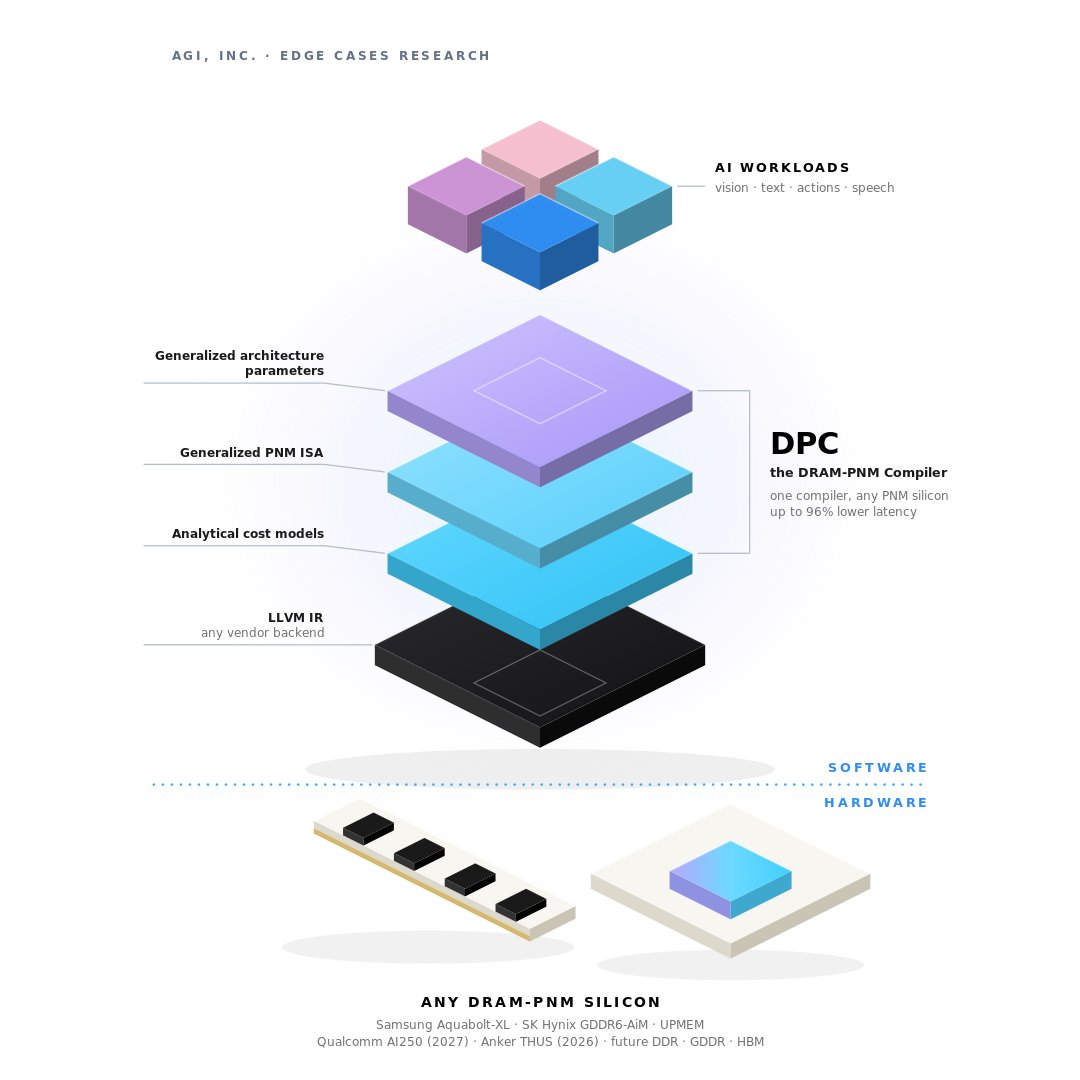







Up to 96% lower AI inference latency on @Samsung's and @SKhynix's chips, with zero hardware changes. All of it came from the compiler.
That's new research from @AdamA7741, who built it during his PhD with Prof. Aviral Shrivastava at MPS Lab at @ASU and is now on our on-device team.
AI chips spend a surprising amount of their time and power moving data around, not doing compute. The industry's most promising fix is processing-near-memory (PNM): compute right where the data sits. @Qualcomm, @Samsung, @AnkerOfficial and @SKhynix are all building these chips. First ones ships this year.
But hardware is only half the story. You also need a compiler, the software that translates an AI model into instructions the chip can run. Today every PNM compiler is tuned by hand for one chip and one task. Change either, and performance collapses.
Adam's compiler, DPC, goes after exactly that: one compiler that works across any of these chips. It beat both vendors' own hand-tuned compilers on the architectures they were built for.
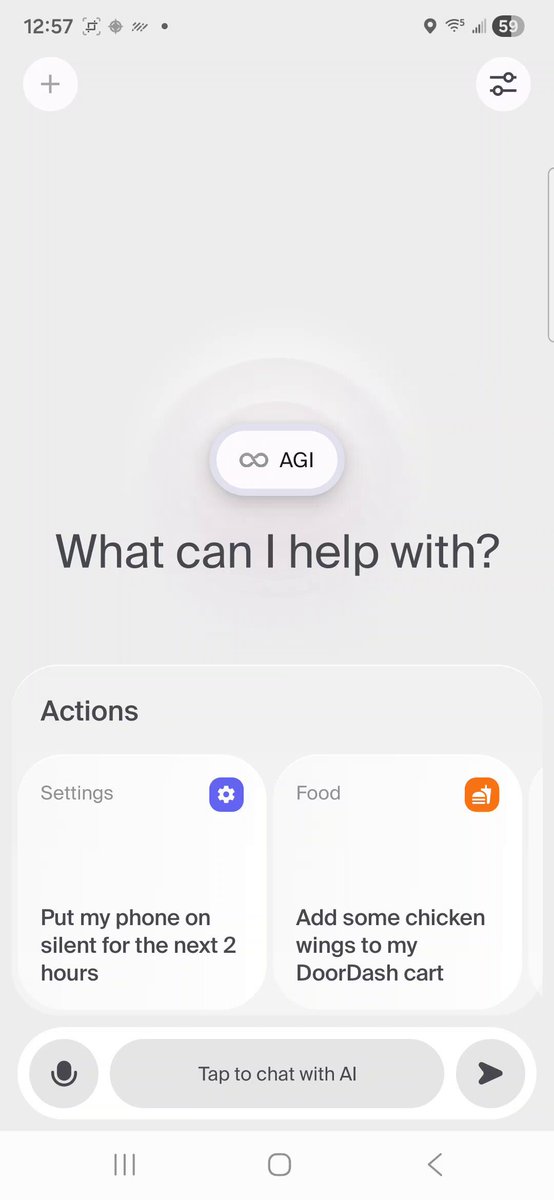
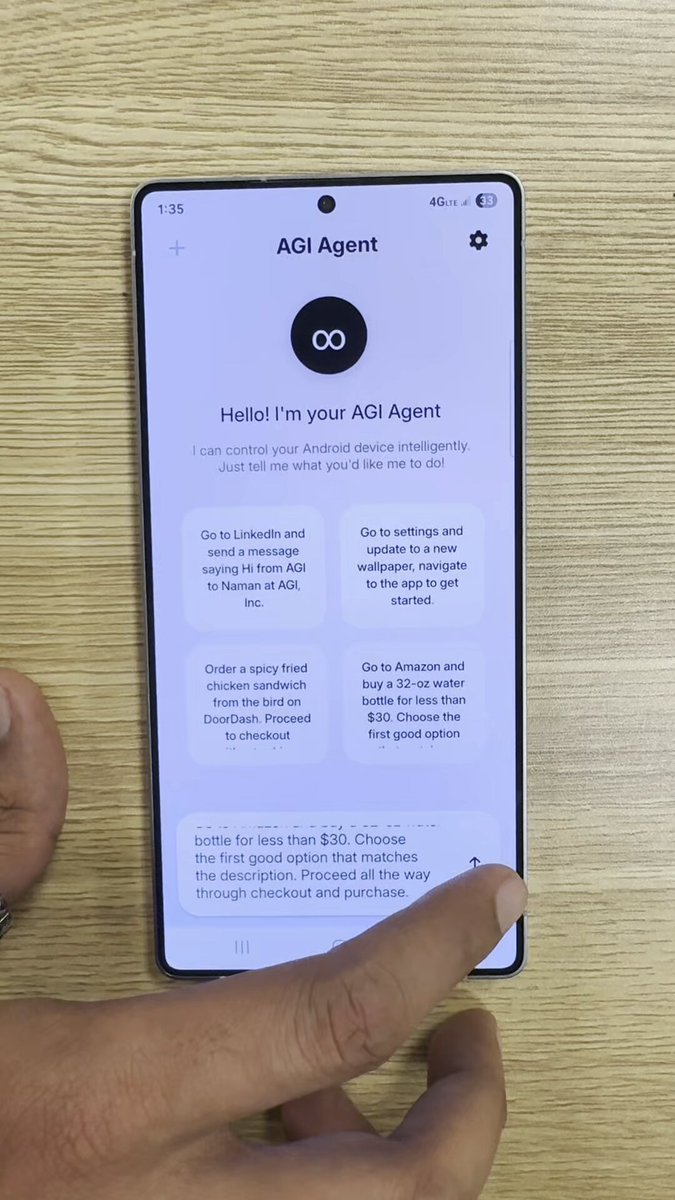
We’re building off this approach at @agi_inc. Our agents run on phones, cars, and wearables, and on small devices memory and moving data are the main constraints.
So we optimize the model's workload and memory use first, because those gains transfer from chip to chip. Cost models decide how the model maps to each device. Hardware-specific tuning comes last.
Same playbook as DPC, running on today's silicon. It's how our models run well across very different chips, and they can run on a phone locally handling tasks most people assume would need a desktop.
The silicon is coming. The software is the race.
3
8
34
3,008
Full writeup, with the benchmarks and where we think edge compute goes from here: theagi.company/blog/processi…
4
1,299
Spent Tuesday watching @Google I/O thinking about a question. If you build on @Android, what just changed for you?
Short answer: your screen belongs to Gemini now.
After this week, Google owns the AI, the operating system, the browser, the app store, and a phone that competes with every device you ship. The data your users generate trains the same model.
If you build hardware on that stack, your device starts to look like a user acquisition channel for Gemini. The screen you fought to win belongs to whoever Gemini decides to surface. Your users belong to whoever trains on their data.
Android used to be open source. That was the antitrust defense. In practice, the GMS and Play Store is the lock-in. Ship Google's version of Android or lose the Play Store, and without it you do not have a viable phone.
We have seen this play before: @Microsoft and Internet Explorer on @Windows, Google and @googlechrome on Android. Each time, the platform's interface layer became its distribution moat and the pattern repeats. The stakes are bigger now, because an assistant is a deeper relationship to the user than the browser.
Every OEM and silicon partner we talk to wants the ability to choose what AI runs on their device, and the right to keep user data on the device. None of that exists by default in what shipped this week. So they will find it elsewhere.
The initial point of Android was optionality for the user. That is what we are keeping alive.
On-device action AI. Any screen. Any app. Any OS?
More soon.
5
2
12
805
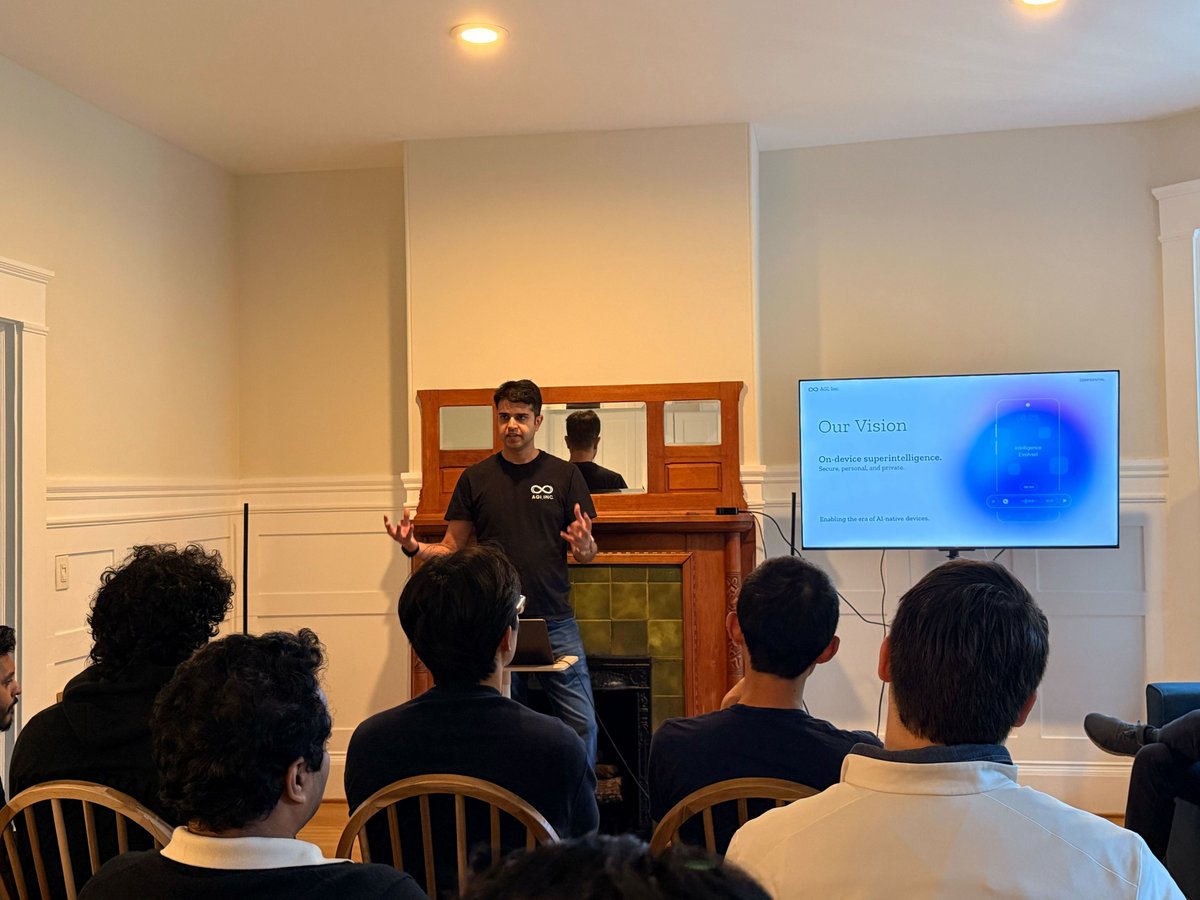
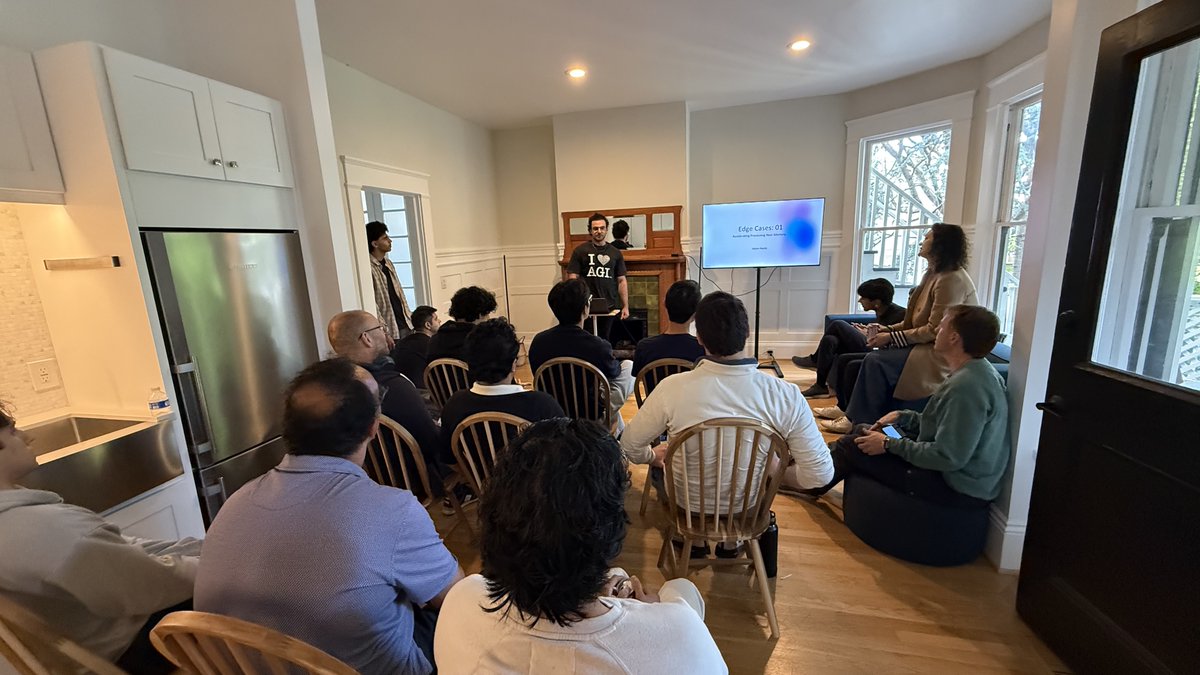
We started running monthly research sessions at the @agi_inc office.
First one was last Friday on PNM compilation.
If you do on-device research and want to come present, apply here: form.typeform.com/to/AZDHOWg…
or rsvp to attend the next one on May 15: luma.com/ny79q2ow

Last Friday we had 12 researchers at the office for the first of our monthly on-device research sessions.
Topic: Processing Near Memory.
One of our researchers presented PhD thesis work on automated compilation for in-memory processing units. PNM hardware has been moving fast. UPMEM is shipping, Samsung HBM-PIM is in production, but every team building on top still has to do partitioning and data movement by hand. That's the part keeping PNM from going mainstream.
We keep the group small and bring in researchers actively working in the area. Topic changes month to month.
Next session signup and a separate application to present your own work below.
1
5
770
If you want to build proactive agents on real hardware, come build with us today.
We’re co-hosting the Proactive Agent Build Day at @agihouse_org
Ambient agents. persistent memory. accessibility. @EvenRealities G2 smart glasses.
i’ll be speaking alongside @richminer (Android co-founder), Will Wang (@EvenRealities CEO), @TobinSouth (@AnthropicAI /@Stanford ), @melissapan (@Berkeley SKY, ex-Google), @hamudinaanaa (@PortalDotAI)
$1K G2 glasses per track winner (whole team)
4
5
45
7,947
Join here: app.agihouse.org/events/proa…
1
4
568
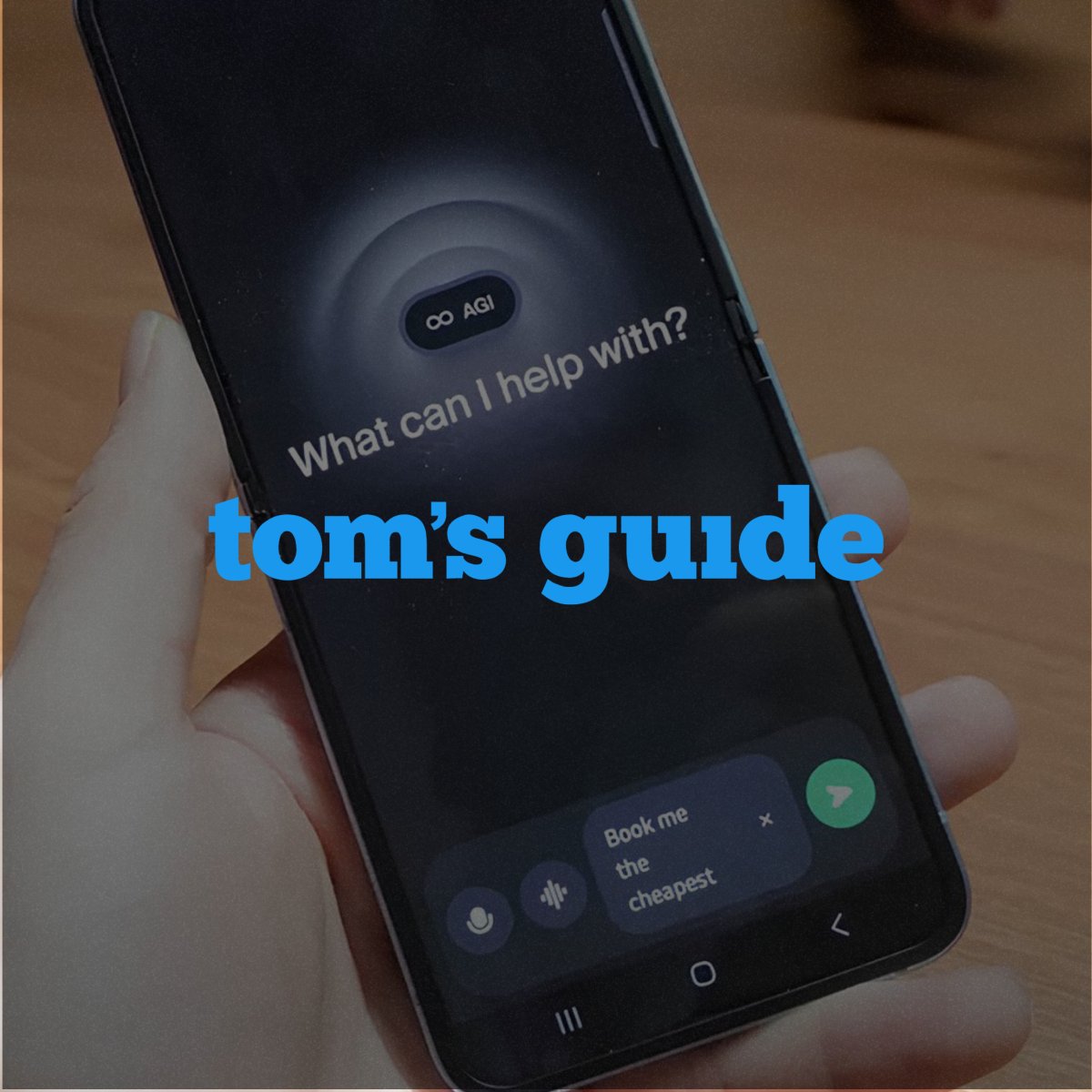
"The phone's real interface layer is AI, not apps" - this is the thesis behind everything we're building.
@tomsguide got the early look
@tomsguide just called our Android app "the future of Siri in iOS 27"
Their managing editor watched our AI look at the screen, understand the interface, and book a ride in 15 seconds. No APIs. No cloud. The model sees what you see and taps what you'd tap.
This is what on-device agents actually look like when they work.
8
1,107
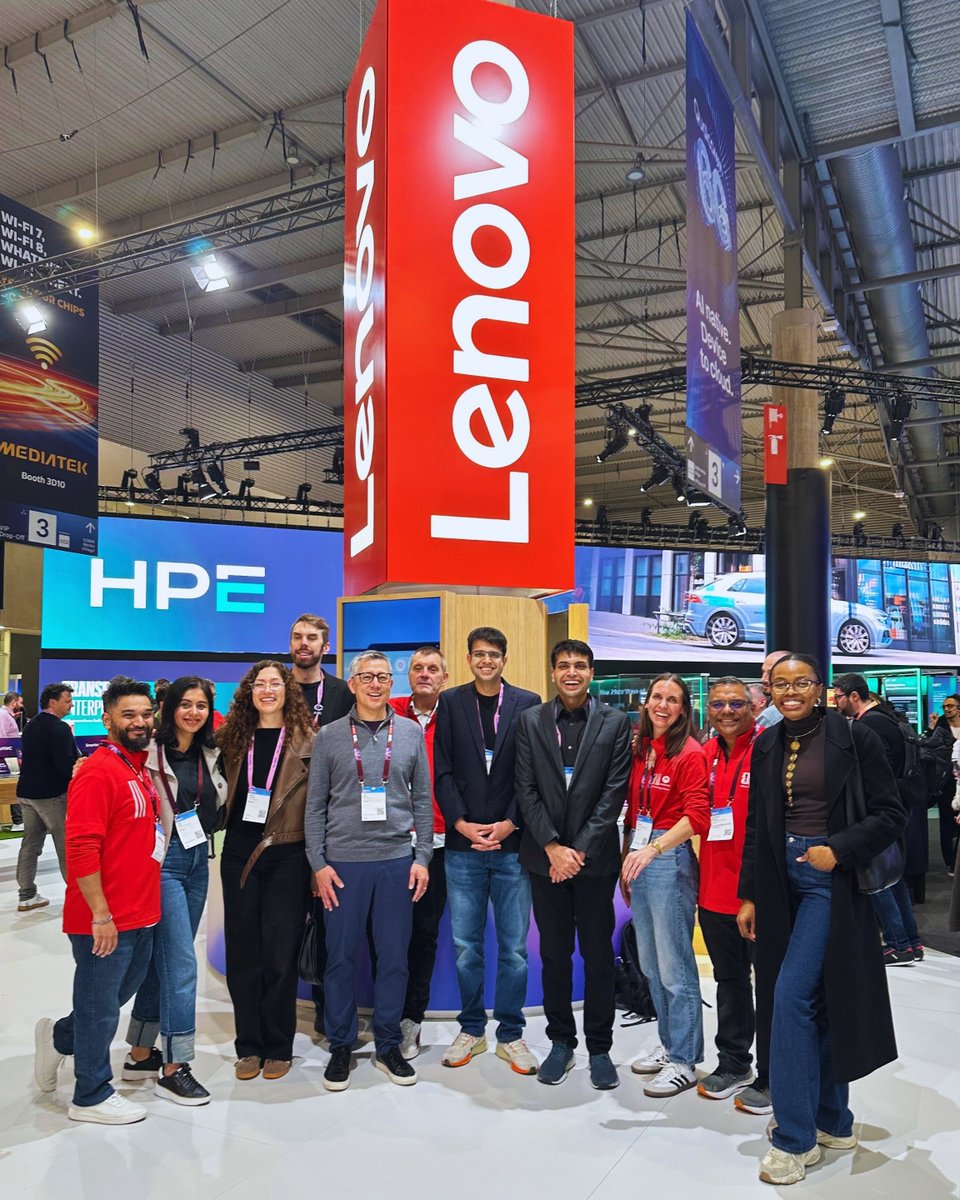
We believe the future of intelligence is decentralized.
Tonight we're opening the new @agi_inc office in SF with a dinner, gathering chipmakers, OEM partners, and investors to discuss what happens when inference moves on-device. Computer-use is already here. Mobile and hardware are next.
This one's full. More coming.
Founders, investors, platform execs building at the edge - DM me
6
1
99
10,345



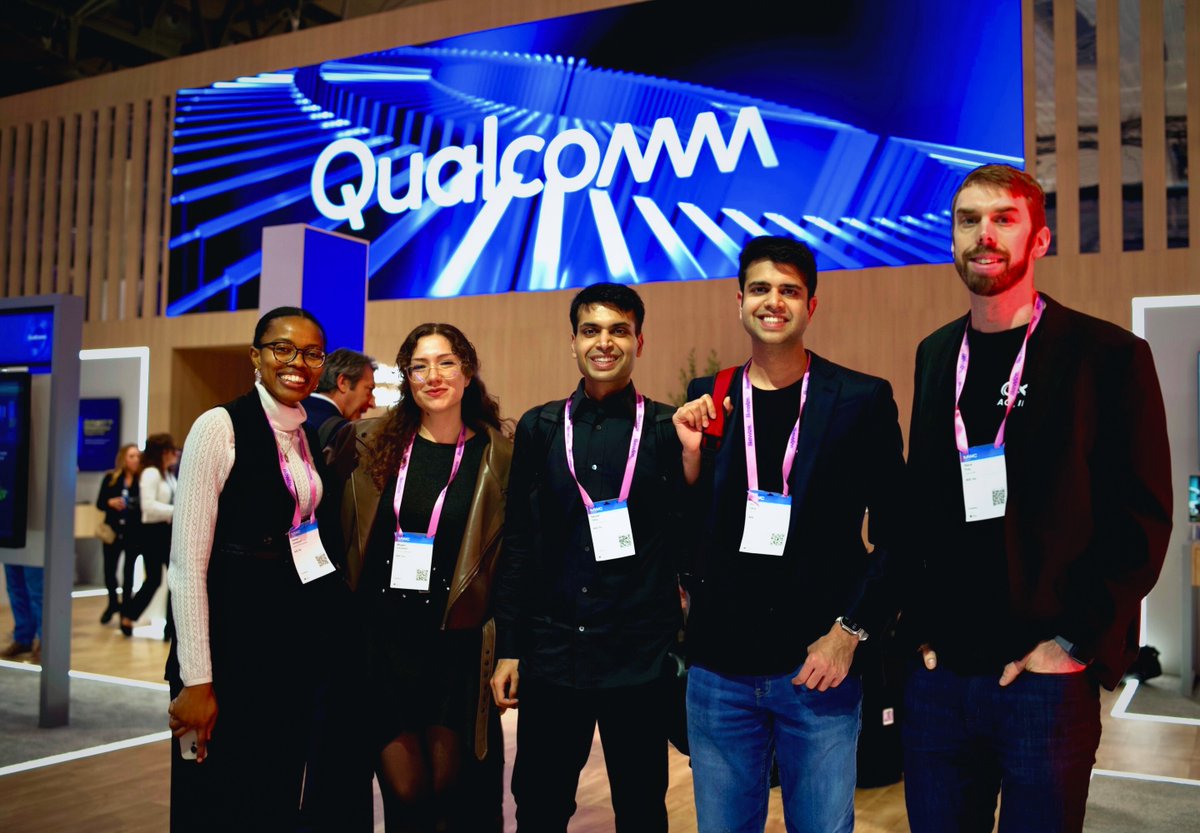
Most AI companies rent intelligence from the cloud.
We're building it into the device.
@agi_inc is collaborating with @Qualcomm to bring our agent stack to Snapdragon®-powered devices, an agent that sees your screen, understands context, and acts across any app. On-device. No cloud. No APIs.
See it live at #MWC26 in Barcelona, Qualcomm booth, Hall 3 - 3E10
6
6
53
10,641

If you’re building at the frontier of on-device AI, you should be part of this discussion.
Tomorrow, a handpicked group of researchers, founding engineers, and technical leaders pushing edge compute forward will gather for a private dinner in SF.
A few seats just opened up.
RSVP in comments.
8
4
73
5,905
Div Garg retweeted

Feb 15
welp, it was fun while it lasted folks
182
1,045
19,787
824,908
We built the world’s first AI that can actually use your phone.
Think Siri that actually works, fully on-device (booking flights, managing your calendar, sending messages, all done without you lifting a finger). We’re showing it off tonight at @southpkcommons Demo Night.
@divgarg (founder & CEO, @agi_inc) will be there with live demos.
If you’re building in AI or want to see what’s next, this is the conversation you need to be part of.
Get in early: agi.app
RSVP in comments.
9
14
77
8,545
Div Garg retweeted

Feb 11
:taps the sign:
x.com/jasoncwarner/status/17…
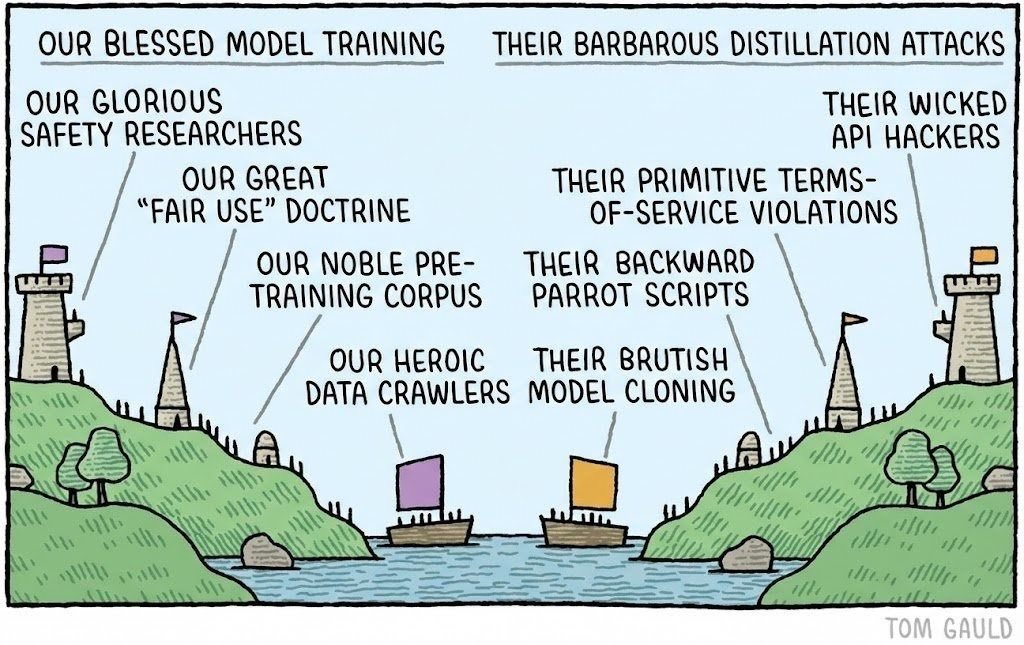
This isn't about Cursor, so forget the name used. This is about what is happening in the world. Cursor, as I understand it, is finetuning chinese models so at least they realize what I'm about to say.
Let's walk through this so we fully understand it.
In the '90s a bunch of tech companies built out the internet. Those tech companies became critical infrastructure and were massively rewarded for it and became new tech giants. That infrastructure allowed a whole new type of company to exist, companies like Amazon and Google and eventually Facebook. And for companies like Microsoft to make a transition if they could see the future (folks like IBM and Oracle didn't see the future).
In the '00s, those same companies built out new critical infrastructure called hyperscaler clouds which enabled a whole new generation of company to exist. Those hyperscalers became the most valuable companies in the world bc they controlled the most valuable commoditized asset on the planet at the time. And the new companies they enabled, the likes of AirBnB, Uber, GitHub, Shopify etc, became great companies in their own right...but nothing like the scale of AWS, Azure, GCP etc.
Now it's happening again. Intelligence is becoming the new critical infrastructure upon which every company on the planet will build. It is enabling new types of companies to exist that couldn't before. And like the previous transitions, companies that see this transition can create and capture value in bold new ways.
Right now it's down to a handful of companies. Google is the only full stack player: They have dirt, datacenters campuses, TPUs, GCP, and Gemini. By default, they lap the Amazon and Microsoft (don't get me started on Microsoft's continued fumbles here). They are 100% fully vertically integrated. When they got good at building Gemini, it all fell together for them for the next two decades.
OpenAI, Anthropic (best independent lab on the planet and only investable frontier lab IMO), and perhaps xAI round out the frontier capable players. Poolside, Chinese labs (with Poolside, the most efficient labs in the world...see notes at bottom), and (perhaps) SSI will eventually become frontier capable. Those round out the list.
Three things matter for the next decade:
1. Energy Infrastructure
2. Compute Infrastructure
3. Intelligence Infrastructure
Most things after those are rounding errors.
1 2 = powered datacenter campuses
3 = frontier model providers or domain specific model providers
1 2 3 = full vertical integration
At Poolside we have a saying which is "Everything collapses into the model" which means that eventually all things we think of as valuable become part of the models (and agents*) that get produced.
*Note: first party agents from model providers will *always* be better than third party agents that come from non-model providers. This is simply a reality that modern agents and models are trained together. This really really means a large company producing an agent without backing of it's own model is especially vulnerable.
Another way to think of it is that the surface area available to applications is exactly equal to the current capability gaps of this generation models. Each time models become more capable, they eat up more surface area available to third party applications *that are simply arbitraging the current model generation capability gap*.
This doesn't mean third party apps aren't valuable, but it does mean if the only value third party apps have is the current capability gaps of models, those third party apps have diminishing value.
This is not debatable in 2026. It arguably wasn't debatable when I wrote the post a full two years ago either, except people are really bad at living in an exponential. You know who isn't bad at living in an exponential? Jensen. Nvidia gets exactly what is happening while wall street futzes around with "capex buildout costs", Jensen knows exactly where every gigawatt in the world is going because he knows the future. Do you think you are smarter than Jensen? I know I'm not.
How should non-model companies (and companies who are incapable of building models) behave in this moment?
It's simple but not easy:
Get good at building smaller but still capable models that push *your value prop*. Do not cede your ground to third party model providers hoping you can hold on and survive, you won't be able to with the fullness of time. The tech is just too powerful.
If you are a company with a mid double digit billions market cap and above and you are not making models, you are default long-tail dying right now. It is your job to figure out how you don't die.
"But Jason, what about data as a moat?"
Data is valuable but if your *only* valuable asset is data, you are fighting a multi-pronged war. And if this is true it is even more paramount that you get good at training your own models. My god, this makes the whole thing more existential for you!
"But Jason, it costs so much to build models! How can one compete with how much money the model providers raised?"
Here's real dirty little secret of the AI industry. That's not real. epoch.ai/data-insights/opena…
OpenAI 2024 compute spend above ^^. It cost them roughly $500m to build frontier model in 2024. But they spend $4.5b on RnD, which means, clusters for their researchers. The dirty little secret of the AI industry is there is no such thing as a gigawatt training cluster, there is no such thing as networking a million GPUs to train a model. The cost to train frontier AI is people with knowledge, a system capable of experimenting to find and iterate on model recipes, and $500m to train the final recipe. The first two are the hard part. The third one is just cost of doing business.
And we wrote extensively about Poolside's way of building models which allows Poolside to do things that frontier labs do but at a fraction of the cost and fraction of the time. We call it the Model Factory and it's part of our secret weapons (along with our proprietary RL research): poolside.ai/blog/introducing…
Every single company worth double digit billions not getting good at training their own model is the modern equivalent of saying "I can't possibly run a database as good as Oracle therefore I shouldn't try and just pay Oracle to do it" or "It costs too much for me to have engineers build and maintain our software, I'll just pay Accenture and Microsoft to do it".
How many of us would build our forever homes (our companies) on two year leased back land (api call to model provider where we pass all our data to them)? I prefer to own the ground my home is built on.
Get good at building your company specific models or look back in 10 years and realize you IBMed yourself.

Remember when people said Cursor would win AI because "the model doesn’t matter, the product is where the money is"?
Turns out that was completely wrong.
27
12
341
77,341