
Married,mother and grandmother....
Joined March 2011
- Tweets 57,401
- Following 2,249
- Followers 2,255
- Likes 767,402
68 Photos and videos















Jennifer Evans🇪🇺🏴🕷 retweeted
Sir, I do not understand your apparent ability to predict not only the outcome of a by election, but also the thoughts and feelings of Labour members and party activists across the country.
You are a Conservative politician and, with respect, probably the last person Labour members would consult on the internal politics of the Labour Party.
Rather than speculating about Labour, perhaps your time would be better spent reflecting on the record of your own party. The Conservative Party's years in government left behind a catalogue of failures, from economic instability and declining public services to the chaos of Brexit and a collapse in public trust.
History will judge your leadership and the Conservative Party's record. If you wish to comment on politics, perhaps explain why your party has become increasingly irrelevant to so many voters and why it continues to struggle to reconnect with the country it once claimed to represent.
3
21
77
568
Jennifer Evans🇪🇺🏴🕷 retweeted

The right wing media have no plans to congratulate Burnham on becoming PM. They just want him there so they can destroy him and the Labour Party more quickly than Keir Starmer. So bloody obvious.
7
33
139
1,100
Jennifer Evans🇪🇺🏴🕷 retweeted
Gwynoro on Burnham, the by election. His level of self importance and a number of U turns in such a short period of time
6
16
55
1,515
Jennifer Evans🇪🇺🏴🕷 retweeted

I’d really like to see Keir Starmer stay as PM, for him to defy those in the Westminster media bubble who smirk and grim whenever they ask about the PM’s future.
Their smugness is insufferable.

“We are working day and night to elect Andy as the MP for Makerfield. I'll be cheering him on.”
The Makerfield by-election is “the fight of our lives”, says science and technology secretary Liz Kendall.
@LeicesterLiz | @StigAbell
4
9
59
605

RT @LaindonFEMINIST: I am Team Starmer. And I can’t help it but if Burnham loses Makerfield I will not be unhappy. In fact I think I’ll be…
38
RT @Hepworthclare: This has to be the most arrogant presumption to emerge from the Simons/Burnham fiasco being played out in Makerfield.
Wh…
91
Jennifer Evans🇪🇺🏴🕷 retweeted

Do you love seeing the mutual respect shown to Keir Starmer by world leaders?🤔
Repost after voting please.
97%
Yes
3%
No
101 votes • 1 day
5
161
80
2,303
Jennifer Evans🇪🇺🏴🕷 retweeted

Jun 15
This.
The whole Burnham project is outrageous. His MO shows no respect for Keir, for due process. His arrogance knows no bounds. He's in his own little bubble, which the media have chosen to inflate - "most popular politician in the UK" - &must have the hide of a rhinoceros
Jun 15

First and foremost, Andy Burnham has no right to make spending commitments, policy announcements or promises on behalf of the Labour Party. If he wishes to lead the party, there is a process for that. He can challenge Sir Keir Starmer for the leadership and put his case before the membership. Beyond that, any prospective leader would either have to govern within the existing manifesto on which Labour was elected or seek a fresh mandate from the British people at a General Election.
Let us also be absolutely clear what that would mean. If Andy Burnham were to replace Sir Keir Starmer and take Labour in a significantly different direction, I believe Labour would lose support immediately. Many Labour voters supported the party because of the programme put before the country under Sir Keir Starmer. Equally, many members have no desire to see the party lurch into another internal civil war over ideology and leadership.
The assumption that Labour members are simply waiting for Andy Burnham to arrive and take over is, in my view, completely false. Substantial numbers of members would walk away from the project altogether, while many voters who returned to Labour under Starmer would question whether the party they voted for still existed. The result would be division, instability and, potentially, the loss of government itself.
What I find preposterous is the assumption that Andy Burnham somehow has a right of succession. He does not. He has stood for the leadership before and lost. Twice. He has spent years in Greater Manchester, where he has built a successful mayoral career, and there is nothing wrong with that. However, being Mayor of Greater Manchester does not automatically qualify someone to become Prime Minister, nor does it place him at the front of the queue for the Labour leadership.
Leadership is earned. It is not bestowed by journalists, commentators or political factions seeking their preferred candidate.
The more fundamental problem is that those promoting Andy Burnham rarely explain how any of his proposals would actually be funded. It is easy to promise more spending, more investment and more commitments. The difficult part is explaining where the money comes from. Britain does not have a magic money tree. Every commitment must be paid for, every promise costed and every spending decision balanced against competing priorities.
What Sir Keir Starmer inherited was a country damaged by fourteen years of Conservative government, economic instability and the consequences of Brexit, which remains one of the most economically damaging decisions modern Britain has taken. Nobody serious expected those problems to be fixed overnight. Government is a process, not an event.
Yet despite that reality, there are some in the media who appear determined to give Andy Burnham a free pass. If they genuinely believe he is the answer, then they should start asking the difficult questions now. What would he do differently? How would he pay for it? Which fiscal rules would he keep and which would he abandon?
There is little point promoting a candidate while avoiding scrutiny of the very policies they claim would improve the country.
If Andy Burnham wants to be Prime Minister, let him make the case. Let him publish a fully costed programme. Let him explain how it would work in practice. Until then, all we are hearing are promises, and promises without a plan are not a serious alternative government.
13
57
439
Jennifer Evans🇪🇺🏴🕷 retweeted
While Labour may have its problems, the Conservative Party continues its descent into political irrelevance.
Its leader, Kemi Badenoch, appears unable to recognise that the party is failing on almost every measure that matters. Election after election has demonstrated the same reality. The Conservative brand remains badly damaged and has yet to reconnect with large sections of the electorate.
The truth is that the Conservatives are still paying the price for their years in government. Economic instability, collapsing public trust and the consequences of Brexit continue to cast a long shadow over the party.
Many within politics understand that the Conservatives will eventually have to return to the centre right if they are to become electorally competitive again. The problem is that they remain trapped between their traditional supporters and the forces they helped unleash.
That is why so much of today's Conservative politics appears to be looking backwards rather than forwards.
So please spare us the lectures. The public delivered their verdict. When a political party loses credibility on the scale the Conservatives have, people eventually stop listening.
That is the true danger of political irrelevance. It is not that your opponents defeat you. It is that the electorate no longer regards you as part of the solution.
3
33
96
602
RT @Vinc_Ev_: I never realised so many in the PLP felt Josh Simons was so bad as an MP. All I've seen on here is how Makerfield has been ne…
53
Jennifer Evans🇪🇺🏴🕷 retweeted
Who the hell does she think she is talking about failure?
Kemi Badenoch has been leader for well over a year and has made virtually no headway whatsoever. If anything, the Conservatives continue to go backwards under her leadership. The evidence is there for everyone to see in the by election results, local elections and opinion polls. Far from rebuilding the party, she has presided over further losses, with voters continuing to abandon the Conservatives in significant numbers. Recent local elections saw the party suffer widespread setbacks across England, including losses in many traditional Conservative strongholds.
Before lecturing others about failure, perhaps she should reflect on her own record. After fourteen years of Conservative government and more than a year as leader of the opposition, she has yet to demonstrate any meaningful progress in restoring public confidence in her party.
1
31
116
667
Jennifer Evans🇪🇺🏴🕷 retweeted
Tell us what you would actually do to ensure Labour is re elected, because nothing I have seen from any of the would be leadership contenders gives me any confidence whatsoever that they could win a General Election.
Indeed, what I see is a recipe for division, instability and potentially an earlier return to the polls than anyone would want. History shows that parties which turn inwards and obsess over leadership rather than delivery rarely prosper.
At present, Keir Starmer appears to be the only figure capable of holding together the broad coalition of voters Labour needs to govern. More importantly, he is the only leader currently on the political stage who could realistically begin the long process of rebuilding Britain's relationship with Europe, working with European leaders, business, trade unions and the British public to forge a new consensus.
So I would be genuinely interested to hear, in detail, what your alternative is.
What is the plan? Who delivers it? How is it funded? How does it win over the voters Labour lost and keep those who returned to the party in 2024?
Because from where I am sitting, I have yet to see a coherent alternative from any group within the Parliamentary Labour Party. There are plenty of slogans, plenty of criticism and plenty of positioning, but very little in the way of a credible programme for government.
Both party members and the wider electorate can see that. A shift back to the left may satisfy some activists, but it risks making Labour unelectable once again. Winning elections requires building majorities across the country, not simply winning arguments within the party.
19
51
433
Jennifer Evans🇪🇺🏴🕷 retweeted

Jun 15
First and foremost, Andy Burnham has no right to make spending commitments, policy announcements or promises on behalf of the Labour Party. If he wishes to lead the party, there is a process for that. He can challenge Sir Keir Starmer for the leadership and put his case before the membership. Beyond that, any prospective leader would either have to govern within the existing manifesto on which Labour was elected or seek a fresh mandate from the British people at a General Election.
Let us also be absolutely clear what that would mean. If Andy Burnham were to replace Sir Keir Starmer and take Labour in a significantly different direction, I believe Labour would lose support immediately. Many Labour voters supported the party because of the programme put before the country under Sir Keir Starmer. Equally, many members have no desire to see the party lurch into another internal civil war over ideology and leadership.
The assumption that Labour members are simply waiting for Andy Burnham to arrive and take over is, in my view, completely false. Substantial numbers of members would walk away from the project altogether, while many voters who returned to Labour under Starmer would question whether the party they voted for still existed. The result would be division, instability and, potentially, the loss of government itself.
What I find preposterous is the assumption that Andy Burnham somehow has a right of succession. He does not. He has stood for the leadership before and lost. Twice. He has spent years in Greater Manchester, where he has built a successful mayoral career, and there is nothing wrong with that. However, being Mayor of Greater Manchester does not automatically qualify someone to become Prime Minister, nor does it place him at the front of the queue for the Labour leadership.
Leadership is earned. It is not bestowed by journalists, commentators or political factions seeking their preferred candidate.
The more fundamental problem is that those promoting Andy Burnham rarely explain how any of his proposals would actually be funded. It is easy to promise more spending, more investment and more commitments. The difficult part is explaining where the money comes from. Britain does not have a magic money tree. Every commitment must be paid for, every promise costed and every spending decision balanced against competing priorities.
What Sir Keir Starmer inherited was a country damaged by fourteen years of Conservative government, economic instability and the consequences of Brexit, which remains one of the most economically damaging decisions modern Britain has taken. Nobody serious expected those problems to be fixed overnight. Government is a process, not an event.
Yet despite that reality, there are some in the media who appear determined to give Andy Burnham a free pass. If they genuinely believe he is the answer, then they should start asking the difficult questions now. What would he do differently? How would he pay for it? Which fiscal rules would he keep and which would he abandon?
There is little point promoting a candidate while avoiding scrutiny of the very policies they claim would improve the country.
If Andy Burnham wants to be Prime Minister, let him make the case. Let him publish a fully costed programme. Let him explain how it would work in practice. Until then, all we are hearing are promises, and promises without a plan are not a serious alternative government.
Jun 15

Andy Burnham has promised a decisive break with Britain’s failed economic status quo. That promise will ring hollow if he remains bound by the fiscal rules that helped create it. tribunemag.co.uk/2026/06/bur…
18
130
368
7,272
Jennifer Evans🇪🇺🏴🕷 retweeted
Jun 15
Catherine, this is undoubtedly a welcome policy, and I am pleased to see it being implemented.
However, I do find your position rather strange. In recent weeks, you have been generous in your praise for John Healey and supportive of Wes Streeting. Yet when a major manifesto commitment is delivered, there seems to be little recognition of the person ultimately responsible for leading the Government and getting these policies over the line.
This decision was not yours. It was not John Healey's. It was not Wes Streeting's. It was a collective decision of the Government under Sir Keir Starmer.
What many of us outside the Westminster bubble are seeing is a Prime Minister quietly delivering on the promises made to the British people. Whether it is reducing migration, improving economic stability, strengthening Britain's international standing, or now taking action to protect children online, progress is being made.
Yet some Labour MPs seem more willing to praise those who challenge the leadership than the person carrying the responsibility of governing the country.
Even if you do not agree with Sir Keir on every issue, surely fairness demands that he receives some credit for the achievements of the Government he leads. Collective responsibility works both ways. If ministers and MPs are happy to share in the successes, they should also be prepared to acknowledge the leadership that made those successes possible.
I suspect many Labour members and voters outside Westminster have noticed this inconsistency.
3
28
91
826
Jennifer Evans🇪🇺🏴🕷 retweeted
Jun 15
What I find most extraordinary is that some of those now clamouring for yet another change of leadership were either silent, or wholly content, when Labour suffered its worst General Election defeat since 1935 under Jeremy Corbyn. The electorate delivered its verdict with unmistakable clarity. The party was left diminished, divided and facing a prolonged period in opposition.
Sir Keir Starmer inherited that shattered inheritance and, through discipline, patience and determination, led Labour back into government with a commanding parliamentary majority. That is not a matter of interpretation. It is an historical fact.
One may disagree with particular decisions, pieces of legislation or matters of policy. Such disagreements are entirely legitimate in a democratic party. What is far less convincing is the proposition that replacing the leader would somehow resolve every difficulty confronting the government. Leadership contests do not generate economic growth. They do not strengthen public finances. They do not fund the armed forces. Nor do they address the profound domestic and international challenges facing any modern administration. More often, they serve only to deepen divisions and distract from the serious business of governing.
There is also a wider truth that many appear reluctant to acknowledge. The most strident calls for Sir Keir Starmer's removal are not emanating from the broad mass of Labour supporters. They come from political opponents, sections of the media that have spent months predicting his downfall, Reform supporters, and those on the fringes of politics who have opposed him from the outset. Alongside them are elements within Labour who have never reconciled themselves to the fact that the party moved on from the Corbyn era and rejected the politics that led it to catastrophe.
The British people did not elect a Labour government to indulge in perpetual introspection or endless leadership manoeuvres. They elected a government to restore stability, confront difficult realities and govern in the national interest. That task was never going to be without controversy, nor was it ever likely to satisfy every faction within the party.
Before advocating another change of leader, it would be prudent for those making such demands to explain precisely what would be achieved by it. Which policies would change? Where would the money come from? How would the nation's challenges be addressed differently? To date, there has been an abundance of criticism and a striking absence of credible answers.
Labour's opponents would take immense pleasure in watching the party descend once more into factional conflict. Those who genuinely care about Labour's future should be wise enough not to assist them. History has already demonstrated the consequences of disunity. It would be an act of profound political folly to repeat those mistakes so soon after the party fought its way back into government.
3
27
77
843
Jennifer Evans🇪🇺🏴🕷 retweeted

Jun 14
This is good to see, a Labour MP calling out the truly dreadful @Peston
@itvnews it really is about time you binned him off. You have little credibility as a news organisation until you do.
Jun 14

In my view you should be thrown off the flight list on that basis. This isn't news you are reporting, it is conjecture and wishful thinking on your part. Disgraceful!
10
243
864
33,439
Jennifer Evans🇪🇺🏴🕷 retweeted

Jun 15
Just think on - Burnham last in Parliament 9 years ago, last a government minister 16 years ago, just Mayor of a 3m population council. Time Labour MPs and members get a grip.
4
5
20
1,065
Jennifer Evans🇪🇺🏴🕷 retweeted
Jun 15
Just watched PM announcing social media ban details for under 16s. Hope all Labour MPs watched. Impressive. Master of the details. Displayed a range of emotions, legal and social understanding. His international perspective too. Andy Burnham really no match - lacking experience.
309
221
956
18,540
Jennifer Evans🇪🇺🏴🕷 retweeted
Jun 15
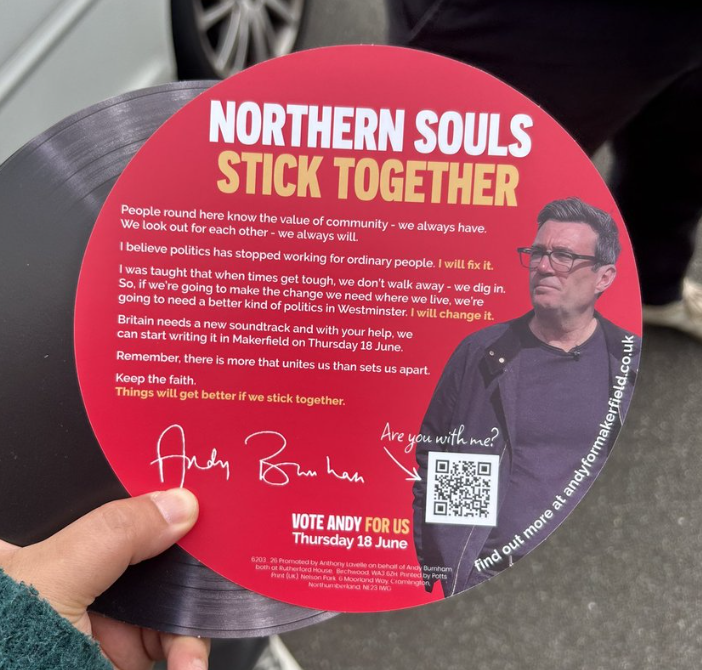
Perhaps the most revealing aspect of the Makerfield campaign is that it appears to have been designed not as a campaign for Labour, but as a campaign for Andy Burnham.
The distinction matters.
A political party is greater than any one individual. It is built upon collective endeavour, shared values and a common purpose. Yet much of the campaign literature and messaging has focused overwhelmingly upon the individual rather than the movement he seeks to represent.
One is therefore entitled to ask a simple question.
If Andy Burnham wishes ultimately to lead the Labour Party, why does so much of his campaign appear to place distance between himself and the Labour Party?
The impression created is not of a candidate seeking election as part of a wider Labour project, but of a politician cultivating a personal brand and inviting voters to support him directly.
That may be effective electoral strategy. It is a far less convincing argument for leadership.
What makes this even more curious is the speed with which sections of the media and certain Labour MPs have sought to elevate him into a potential successor to Sir Keir Starmer. At the time of writing, Andy Burnham has yet to return to Westminster. He has yet to make a contribution in Parliament as a newly elected MP. He has yet to demonstrate what role he intends to play in supporting the Labour government.
Yet already we are told he is a leader in waiting.
On what basis?
Leadership should be earned through service, achievement and contribution. It should not be bestowed merely because journalists find a story convenient or because a politician has become a familiar face on television.
The uncomfortable reality is that Andy Burnham's return to Westminster has generated more headlines than tangible achievements for the Labour Party itself. The principal beneficiary of the campaign thus far appears not to be Labour, but Andy Burnham.
That is why many Labour members are entitled to be sceptical. They have seen this pattern before. Personality driven politics, endless speculation and the elevation of individuals above the party have rarely served Labour well.
The real question is not whether Andy Burnham can win a safe Labour seat.
The real question is whether he has done anything to justify the assumption that he should one day lead the Labour Party and, by extension, the United Kingdom.
To date, the evidence remains remarkably thin.
Being ambitious is not an achievement.
Generating headlines is not an achievement.
Cultivating a personal following is not an achievement.
The burden rests upon Andy Burnham and his supporters to explain precisely what he has done that warrants such extraordinary expectations.
Until they can answer that question, Labour members would be wise to remain cautious about those seeking to place personal ambition ahead of party unity and effective government.
27
103
245
4,706
Jennifer Evans🇪🇺🏴🕷 retweeted

Jun 14
Carns is on manoeuvres.
He's shimmied his way into the Burnham takeover bid, both of whom are now proposing welfare cuts to fund more bombs.
A fairly shamless power grab and weaponising welfare, like the Tories and Reform love to do.

Carns is asked where the extra £ for defence should come from.
".. I think there are places, such as moving welfare from hand outs to hand ups"
Describing welfare as hand outs tells us all about Carns politics & who he wants to target - the sick, disabled, low paid, pensioners
14
34
114
3,833