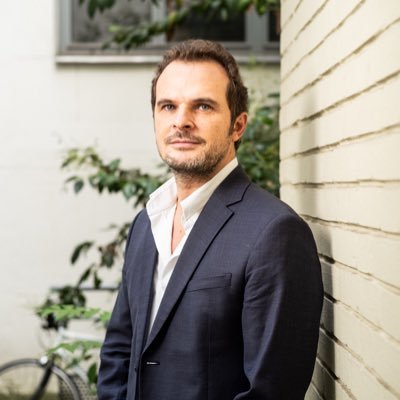
Co-Director, MENA Observatory @J_Jaures Foundation | Co-founder, Atlantic Middle East Forum | Contributor, leading French media, made in @sciencespo
Joined December 2010
- Tweets 4,234
- Following 2,331
- Followers 4,926
- Likes 4,174
142 Photos and videos




Pinned Tweet

Apr 27
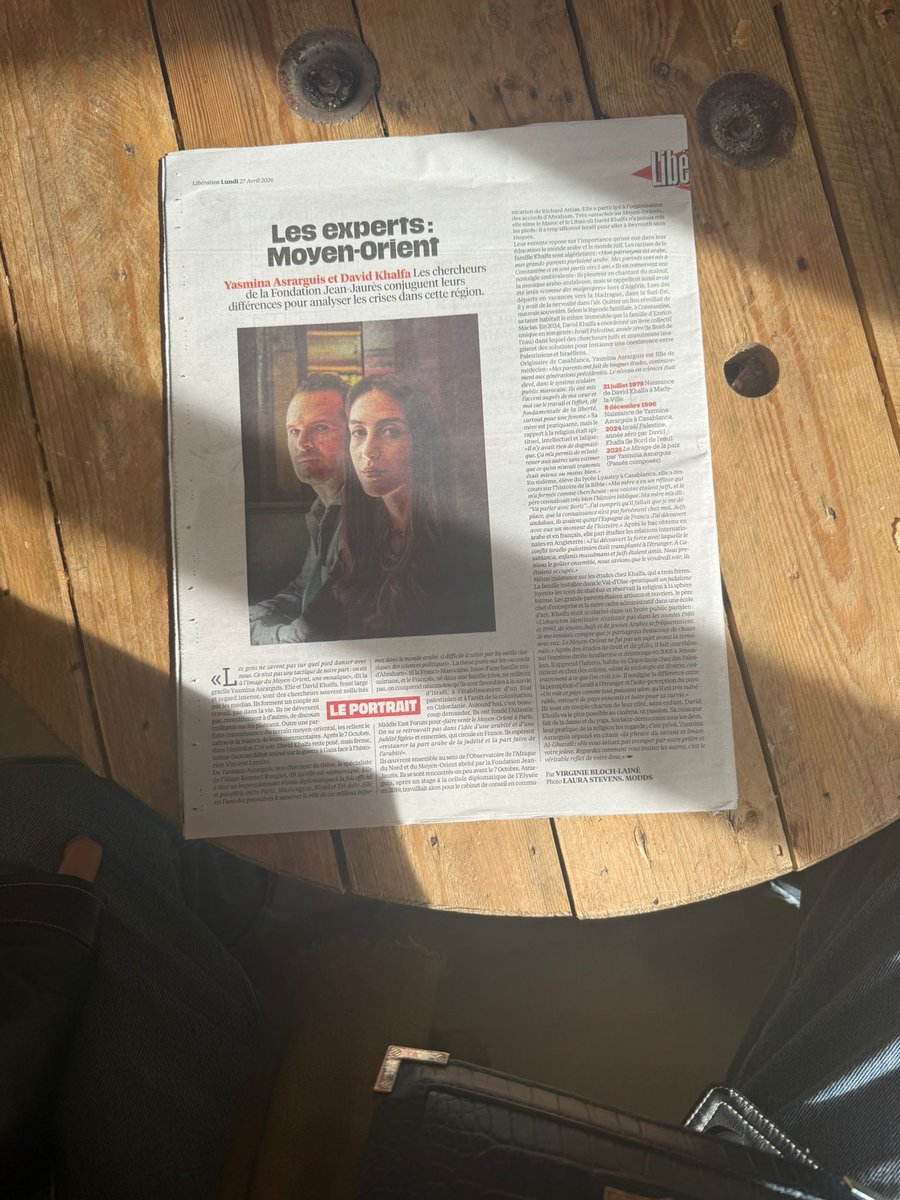
Portrait croisé dans @libe avec mon amie & collègue Yasmina Asrarguis. Deux parcours en miroir, deux regards croisés & une même volonté de ne pas céder aux simplifications & aux assignations en tout genre, même sur les sujets les plus inflammables. Merci @vblochlaine @j_jaures 🙏
2
11
46
5,653
David Khalfa retweeted

My oped today in Le Monde.
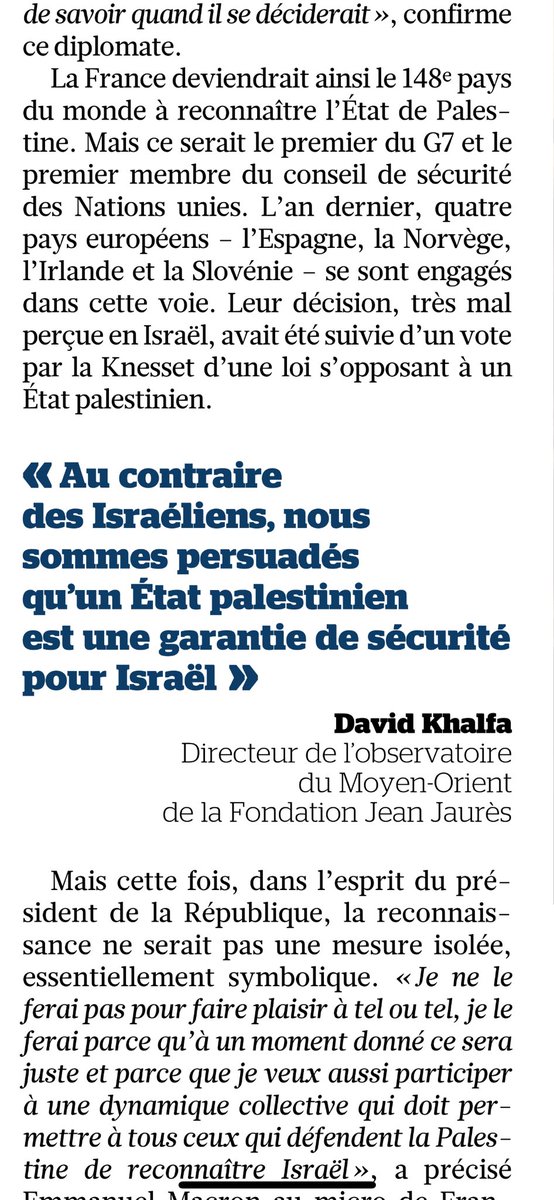
This month marks exactly one year since President Mahmoud Abbas formally committed to President Emmanuel Macron to hold Palestinian presidential and legislative elections within twelve months. On June 9, 2025, Abbas wrote to Macron and other international leaders promising a package of political reforms intended to restore legitimacy to Palestinian institutions. At the center of those commitments stood a simple and measurable pledge: Palestinians would elect a president and a parliament within one year. Several weeks later, in his response of July 24, President Macron specifically welcomed that commitment. For France, the promise of democratic renewal was not a marginal issue. It was presented as evidence that Palestinian institutions could be reformed, revitalized, and prepared for statehood.
Today, exactly one year later, there is no presidential election. There is no legislative election. There is not even a timetable. The question is no longer whether Mahmoud Abbas fulfilled his commitment. He did not. The question now is whether France intends to defend the commitment that it publicly welcomed.
When President Macron chose to deepen French support for Palestinian statehood, he did so while pointing to commitments made by the Palestinian leadership regarding reform, accountability, and democratic renewal. Those commitments were presented not only to Palestinians but also to the French public, to European partners, and to Israelis who continue to believe in a negotiated two-state solution. Many Israelis who were skeptical of recognition were told that Palestinian institutions would become more democratic, more accountable, and more legitimate. One year later, that argument is becoming increasingly difficult to sustain.
Instead of democratic renewal, Palestinians have witnessed the consolidation of an aging political system and the growing discussion of political succession. The recent Fatah Congress reinforced those concerns. Mahmoud Abbas faced no challenger. His son, Yasser Abbas, entered the movement's highest leadership body. Public debate increasingly focuses not on elections but on succession. The Palestinian people deserve better than succession politics.
Some now suggest that elections to the Palestinian National Council could satisfy international demands for reform. They cannot. The commitment made to President Macron was explicit. It referred to presidential and legislative elections. Those are the institutions through which Palestinians exercise democratic sovereignty. Replacing them with internal institutional arrangements would not constitute reform. It would constitute evasion. France should not accept such a substitution.
President Macron has shown on multiple occasions that he is prepared to use French influence when important principles are at stake. He has defended democracy around the world and consistently argued that legitimacy matters. The same principle should apply to Palestine. France does not need to choose between supporting Palestinian statehood and supporting Palestinian democracy. The two are inseparable. A Palestinian state without democratic legitimacy would be a fragile project built on increasingly weak foundations.
One year after the promise of June 9, 2025, President Macron faces a simple choice. He can continue applauding symbolic reforms while the central commitment remains unfulfilled. Or he can publicly state that enough is enough: that Palestinians deserve the right to elect their leaders, that presidential and legislative elections must take place, and that democratic legitimacy cannot be postponed indefinitely. The Palestinian people kept their side of the bargain. They waited. Now it is time for France to insist that the promise made to Palestinians, to Europe, and to supporters of peace on both sides be honored.
Anything less would represent not merely a failure of reform, but a failure of democratic principle itself. lemonde.fr/en/opinion/articl…
3
35
61
6,322
David Khalfa retweeted

Iran’s Foreign Minister Abbas Araghchi:
The winner of this war is the Islamic Republic of Iran, which has emerged stronger from this war.
A Memorandum of Understanding with the U.S. has yet to be signed, changes are still possible.
The agreement consists of two stages. The nuclear issue was not discussed in the first stage and we deferred it to the second stage.
If the provisions of the MoU are not met, the final agreement will not be signed.
The first thing mentioned in the agreement is that the US naval blockade be lifted.
We will never leave Hezbollah in Lebanon alone, and the end of the war in Lebanon will include all fronts.
The Strait of Hormuz is under the sovereignty of Iran and Oman. The future of the Strait of Hormuz will not be like the past, and our sword will always hang over the Strait.
Iran and Oman will soon issue a joint statement on the management of the Strait of Hormuz.
According to international law, it is not possible to collect tolls from the Strait of Hormuz, but service fees will be collected. Paying compensation to Iran is in plan.
233
168
403
129,448
David Khalfa retweeted

Jun 12
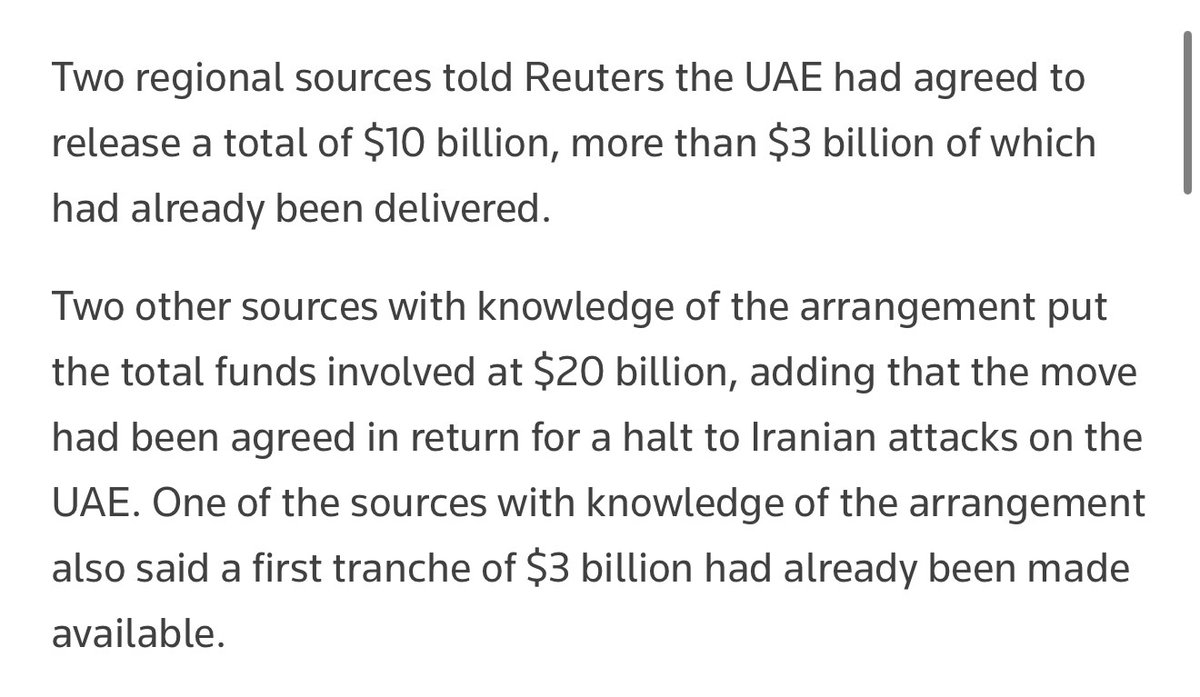
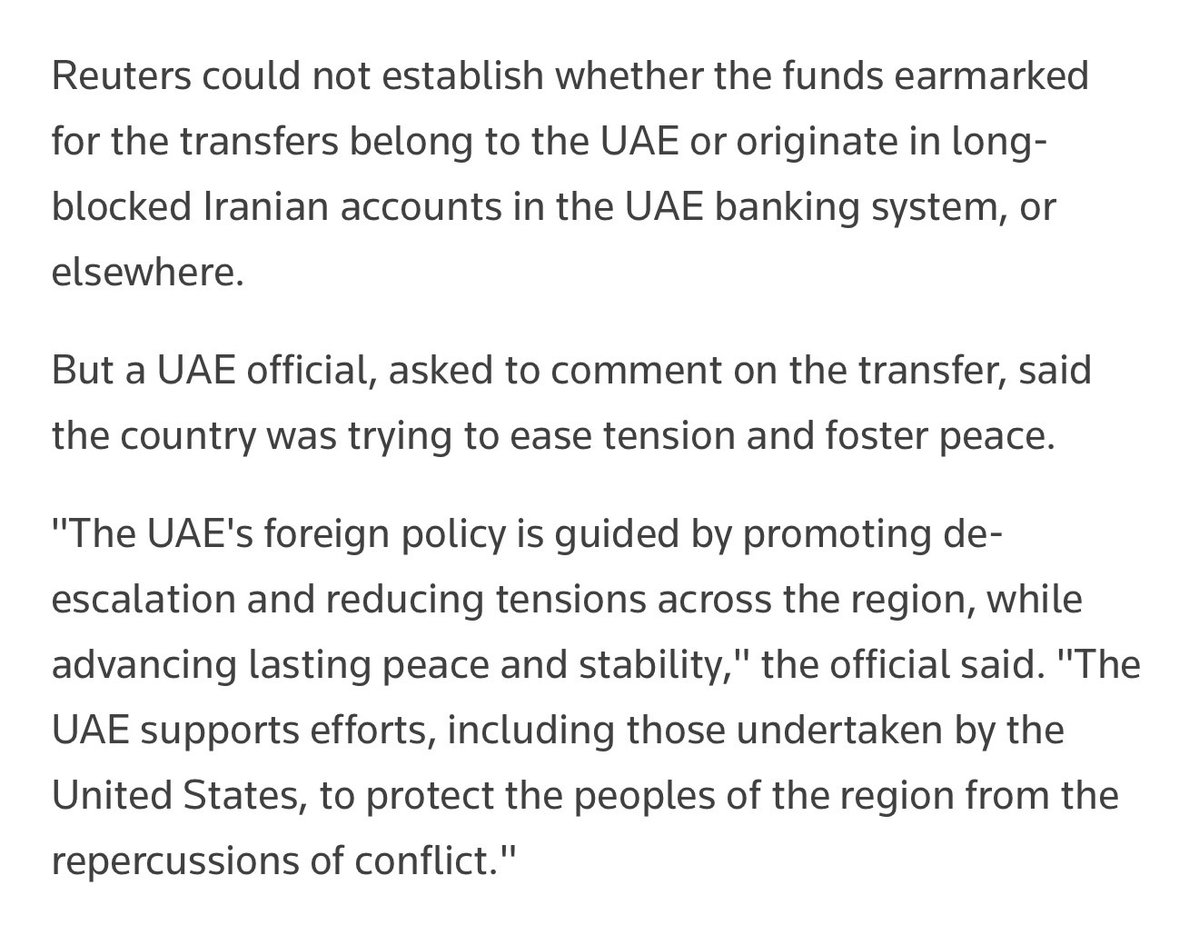
As per Reuters the UAE is either unlocking or paying billions of dollars to Iran, including transfers up to $20bn in an attempt to reset relations after the recent war. $3bn has reportedly already been paid.
66
612
1,937
362,236
David Khalfa retweeted

Jun 12
This was widely rumored during the war, but has now been publicly confirmed:
Qatar struck a deal with Iran, shutting down gas production, in exchange for an agreement that Iran would refrain from further strikes on Ras Laffan. washingtonpost.com/world/202…
25
450
1,080
269,112
Jun 12
« The breakthrough was achieved in a direct conversation between Trump and Araghchi, using the phone of the Qatari mediator. According to the sources, Iran folded and accepted the American condition: Only $12 billion would be unfrozen in two installments » israelhayom.com/2026/06/12/i…
108
David Khalfa retweeted

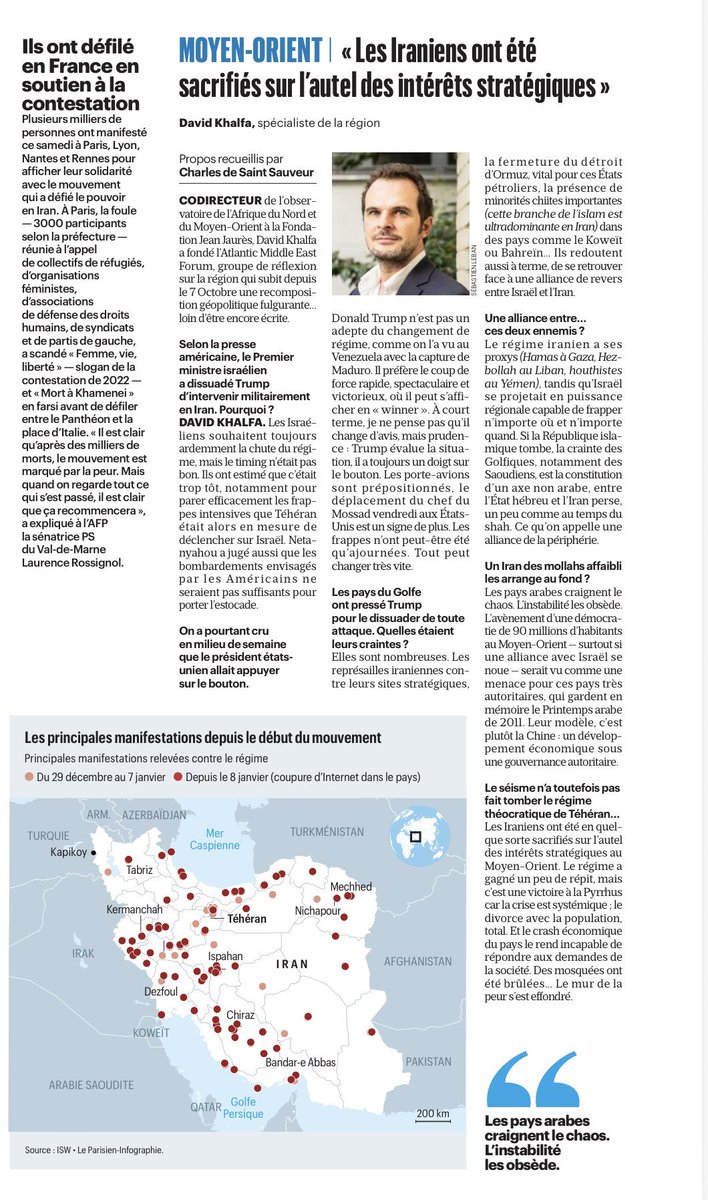
« Trump a sifflé la fin de la partie » : ce que révèle l’échange houleux entre le président américain et Netanyahou leparisien.fr/international/… cc @dkhalfa
1
2
3
761
Jun 1
Citer Cruyff & son « football total » mais aussi le 18 Brumaire de Marx dans l’excellente émission de @Myriamencaoua sur @franceinfo consacrée aux enjeux sportifs, communicationnels & géopolitiques du fantastique back to back réalisé par le #PSG en #champi̇onsleague: check🤗 !
1
3
423
May 15
RT @ekitbi: The article is intellectually bold and correctly identifies that the war with Iran accelerated a major strategic shift in the G…
14
1
David Khalfa retweeted

May 14
Hamas “is taxing people in the street who have nothing left to give,” said Nickolay Mladenov, a senior official of the Board of Peace.
He said Hamas was blocking workers from building temporary housing to help Gazans get out of rodent-infested tents.
nytimes.com/2026/05/13/world…
12
30
111
36,769
David Khalfa retweeted

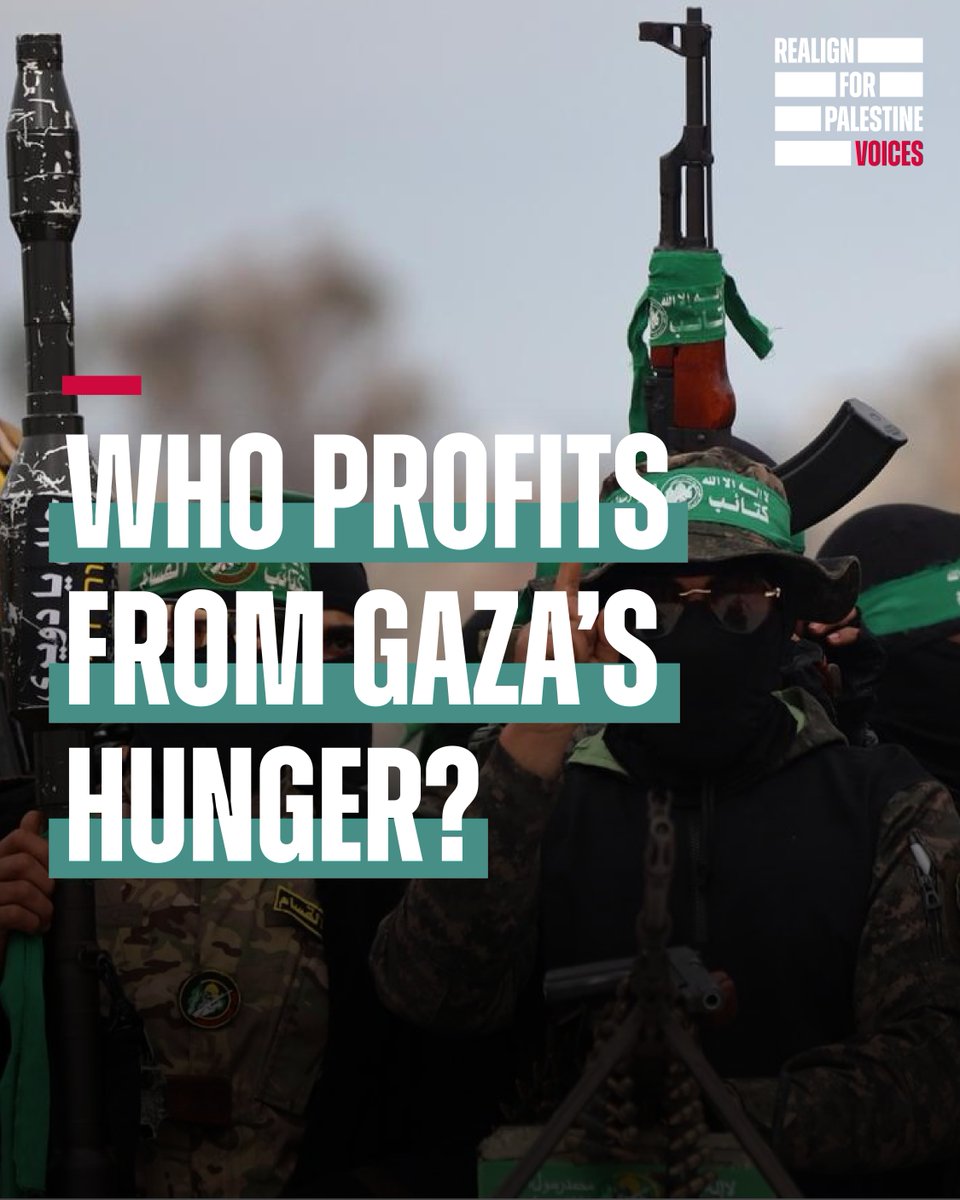
Who profits from Gaza’s hunger?
Inside the Hamas-run networks controlling goods, prices, and access
Anger is turning inward
Across Gaza, public discourse is shifting dramatically. While Israeli military pressure and externally imposed restrictions remain, many civilians are increasingly identifying Hamas-run institutions and affiliated networks as profiteering from scarcity and causing the suffering in Gaza.
Hardship is no longer understood only as a consequence of war, but of how goods, access, and resources are managed within Gaza.
Who gets to eat?
At the center of this anger is the tansiq system: a coordinated structure linked to Hamas officials. Imports are restricted to a narrow set of ‘approved’ traders, and access is filtered through coordinated networks.
Goods may exist in Gaza but remain out of reach for many civilians, filtered through those with the power to release or withhold them.
Profiteering off scarcity
Public conversations increasingly describe these market dynamics as intentionally engineered. Prices have surged dramatically, with basic goods rising far beyond prewar levels.
More than supply constraints, these increases are widely attributed to practices such as hoarding, restricted release, and layered fees that accumulate at every stage of distribution.
Anger is growing
This system is fraying Gaza’s social fabric, with a perception of ‘two Gazas’. One Gaza has plentiful access through Hamas-adjacent networks, traders, and coordination systems. The other is trapped in survival mode: displaced, dependent, and priced out of basic goods.
Resentment and anger is deepening among those struggling to meet basic needs, eroding the sense of collective endurance that once defined wartime conditions.
Zero trust
As prices rise and aid distribution remains opaque, trust in Hamas-run institutions is low. Civilians increasingly accuse these systems of protecting institutional survival over public welfare.
The Ministry of Economy and related networks are being scrutinized not simply for failing to relieve hardship, but for appearing to benefit from it.
Alternate measures
In response, civilians are turning toward alternative means of survival. Informal markets, digital finance, and decentralized money networks are expanding, offering new pathways to access goods and services. These channels can offer better ways to access food, cash, and services, but they also empower new unregulated actors.
Regardless, the focus is shifting away from formal authority toward those who can deliver tangible outcomes in real time.
Scepticism toward the ‘resistance’ narrative
Many Gazans are increasingly skeptical of the regional war being framed as a ‘theater of resistance.’ Hamas and its allies may present the confrontation with Israel, the United States, and Iran as part of a wider struggle, but civilians are judging it by outcomes.
So far, it has only worsened aid access, mobility, prices and humanitarian conditions on the ground.
What comes next
These trends matter for Gaza’s future. As Hamas-linked systems, monopolistic traders, and informal networks continue to shape access to goods, future governance will inherit a fractured society and depleted public trust.
Beyond diplomatic measures, stabilization will require fair, transparent, accountable systems that Gazans believe serve them rather than exploit them.
2
12
37
1,128
David Khalfa retweeted

May 14
🧵New: US thought Iran war would hasten Gaza’s demilitarization. Instead, Hamas is emboldened (1/14) timesofisrael.com/us-thought…
2
14
23
9,753
David Khalfa retweeted

May 14
🚨Bahrain, Saudi Arabia, the UAE, Kuwait, Qatar and Jordan sent a joint letter to the UN condemning Iran’s threats over the Strait of Hormuz and rejecting any attempt by Tehran to impose “new legal rules” or unilateral control over the strategic waterway.
The letter also condemned the alleged Iranian drone attack on an ADNOC tanker and called on the UN Security Council to force Iran to fully reopen the Strait and comply with UNSC Resolution 2817.
May 14

Bahrain, UAE, Saudi Arabia, Qatar, Kuwait, and Jordan condemn, reject Iranian claims regarding new "administration" or "legal rules" for Strait of Hormuz
tinyurl.com/5n62573r
18
41
11,874
David Khalfa retweeted
May 13
Reports like this emphasize the importance of humility.
A lot happened during the war that is not yet public (and may not become public for a while, if ever). reut.rs/4twfaO6
3
19
116
11,372
David Khalfa retweeted

May 13
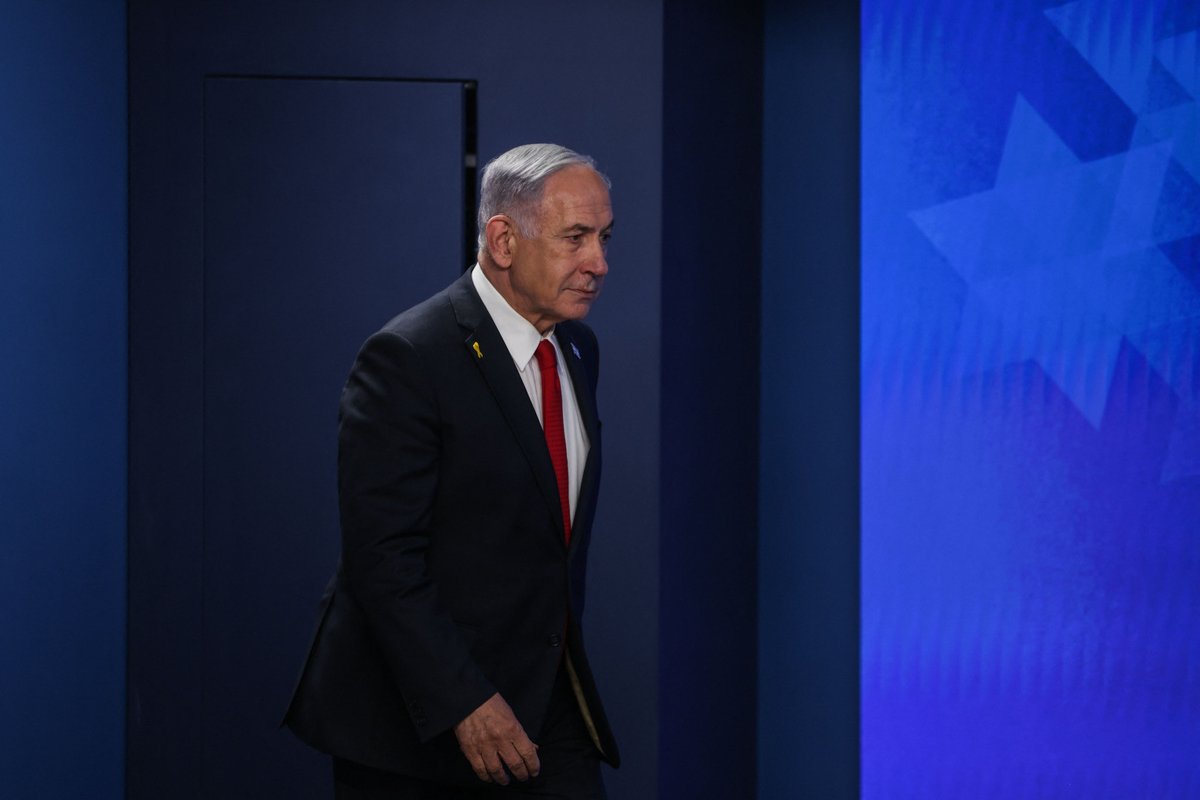
A few striking details regarding the new of Netanyahu’s visit to the UAE:
1. A covert flight reportedly took place while Israeli airspace was fully shut—without leaks or detection.
2. Sources suggest a deal was reached on an Iron Dome shipment.
3. UAE President Mohammed bin Zayed Al Nahyan has publicly hosted Israeli leaders like Naftali Bennett and Yair Lapid—but not Benjamin Netanyahu. Until now, their contacts stayed behind closed doors.
May 13

🚨 BREAKING: The Prime Minister’s Office confirms that, in the midst of Operation Roaring Lion, Benjamin Netanyahu made a secret trip to the UAE, where he met with President Mohammed bin Zayed Al Nahyan.
The covert visit reportedly led to a historic breakthrough in Israel–UAE relations.
20
177
996
297,003
David Khalfa retweeted

May 12
Breaking News: U.S. intelligence reports show that Iran retains substantial missile capacity, despite President Trump’s claims otherwise. nyti.ms/4dm0Lhw
487
1,845
4,398
762,463
David Khalfa retweeted

May 12
It takes immense courage to protest against Hamas inside Gaza, especially since the militia consolidated its control over the Strip since the start of the formal ceasefire. During the war, multiple protests erupted against Hamas' authoritarian and predatory rule over Gaza.
More on Gazans' anger toward Hamas for bringing ruin upon the Strip by launching the Oct 7 attack: regthink.org/in-the-region14…
Long but interesting interview with a former adviser to Ismail Haniyyeh lambasting the militia youtu.be/t5bAhKrvZLo
On the religious rulings of the Mufti of Gaza, Sheikh a-Dayah criticizing Hamas
citystgeorges.ac.uk/news-and…
May 12

Last night in northern Gaza, protesters took to the streets after Hamas militias murdered Palestinian civilian Momen Abu Morseh. During the protest, demonstrators chanted “Out, out” in reference to Hamas.
5
63
216
13,449

#BREAKING: Satellite images show that oil storage facilities on Kharg Island are nearing maximum capacity arab.news/rbqtg - Bloomberg
2
4
8
880
David Khalfa retweeted

May 12

#ولي_العهد يجري اتصالا هاتفيا برئيس الإمارات جرى خلاله بحث مجالات التعاون بين البلدين الشقيقين كما جرى استعراض المستجدات الإقليمية والجهود المبذولة لتعزيز الأمن والاستقرار في المنطقة.
3
4
898
May 12
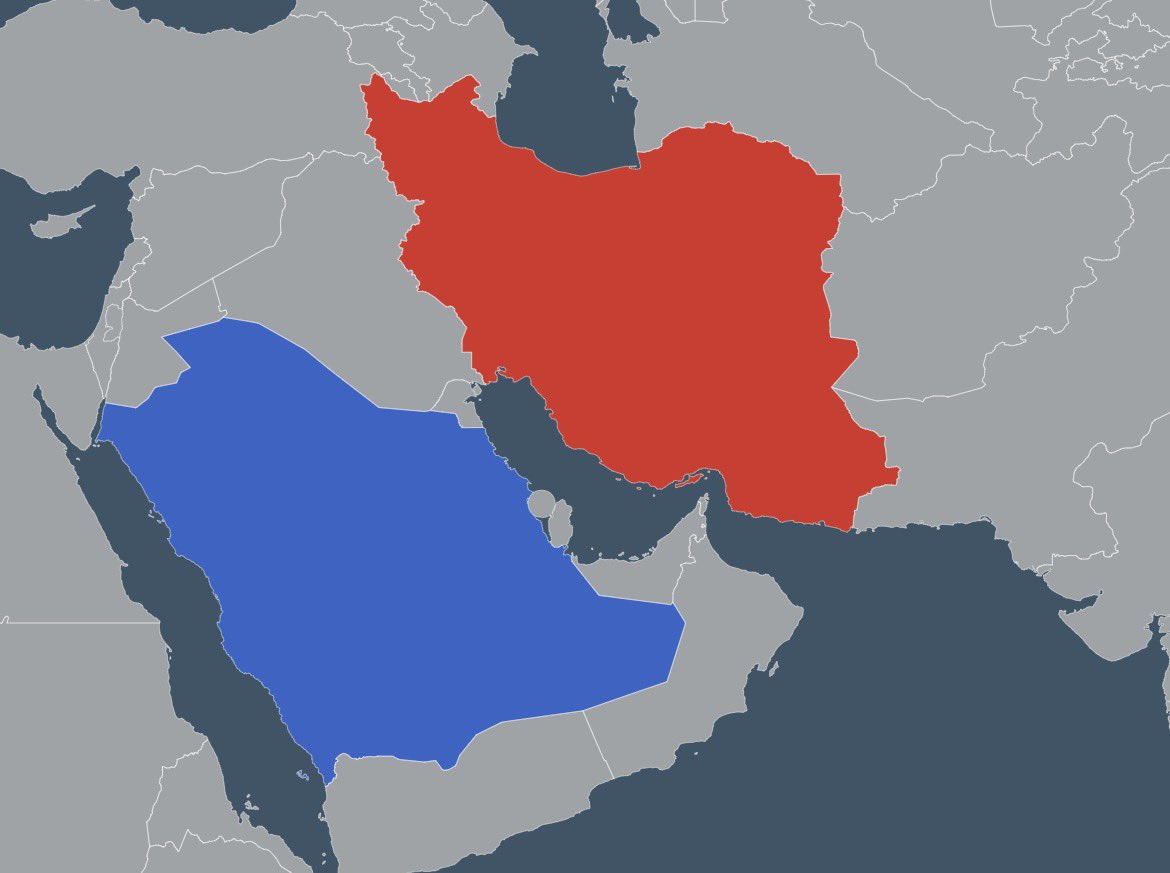
1. Les informations rapportées par @Reuters sur des frappes de représailles saoudiennes contre l’#Iran, après celles attribuées aux Émirats, marquent un tournant historique dans les équilibres stratégiques du Golfe.
May 12

According to Reuters, citing both Iranian and Western officials, the Saudi Arabian Air Force conducted retaliatory strikes on Iran, following Iranian strikes on their oil, civilian, and military infrastructure in late March. Per the report, citing a Western official, the strikes were characterized as “tit-for-tat strikes in retaliation for when Saudi [Arabia] was hit.” This follows recent revelations that the United Arab Emirates also carried out retaliatory strikes before and after the nominal ceasefire, following the vast majority of Iranian drone and missile strikes across the Gulf region being directed at them. This now makes two Gulf nations that have retaliated directly for Iranian strikes against the Gulf.
17
17
33
7,318
May 12
15. La polarisation Us-Israël vs Iran occulte une transformation profonde des équilibres stratégiques du Golfe : les monarchies arabes ne se contentent plus d’une posture défensive, mais réintroduisent la coercition militaire & la dissuasion directe ds leur doctrine régionale.
1
168
May 12
14. Ces divergences montrent qu’il n’existe pas de « bloc du Golfe » homogène. Si les golfiens convergent ds leur perception de la menace 🇮🇷, ils diffèrent ds approche tactique de cette menace qui est un enjeu central de sécu mais aussi de pérennité de leur modèle de prospérité.
144