
Joined December 2021
- Tweets 3,273
- Following 1,165
- Followers 510
- Likes 93,778
10 Photos and videos


Doovergp retweeted

2 Nov 2025
love it when someone with 100 followers retweets me. thanks for nothing, retard
492
614
3,951
257,484
Doovergp retweeted

9 May 2024

9 May 2024

Hearing any presidential candidate talk about crypto and Gensler. We’ve come a long way in 10 years. Wild
494
406
4,391
698,788
Doovergp retweeted

10 Mar 2024
2
7
429
Doovergp retweeted

17 Jan 2024
You are unsure how to feel about Laser Eye Ben? Just think instead of Ben wif hat
691
875
5,555
1,822,839
Doovergp retweeted

19 Dec 2023
You’ll fumble the bull market if you can’t manage your time.
Think about Olympic athletes. They have a small window of opportunity because of their athletic primes.
They're set for life if they can go all in & win a gold medal. But what’s preventing them from achieving their goals?
Distractions, lack of focus, and the inability to manage their time.
You also have a small window of time to make it in Crypto.
While there will be more bull cycles in the future, they’ll have fewer returns as the market becomes more efficient.
This upcoming cycle is “the big one.” You gotta do everything you can to make it - leave nothing on the playing field.
I’ve been thinking about time management and how I want to play the next two years.
Here are 3 principles I’m focused on:
1. ELIMINATE THE DEAD WEIGHT
"Humankind cannot gain anything without first giving something in return. To obtain, something of equal value must be lost." - Alphonse Elric
I remember watching an action movie once. They needed the airplane to take off, but it was too heavy.
So, they spent the next few minutes throwing out all the non-essentials (like airplane seats). Once the dead weight was off, the plane could finally take off.
That’s how your life is right now.
You need to focus on Crypto, but too much weight is holding you down.
What’s the dead weight?
• You’re saying “yes” to too many opportunities and people.
• Cheap dopamine: watching sports, Netflix, social playing, video games, or chasing tail.
Trying to pursue everything means you'll end up with nothing. Life is about making a series of conscious trade-offs.
I hear about the legendary stories of Kobe’s work ethic: practicing 6 months, 6 days a week, for 6 hours a day. I'm sure he was tempting to skip workouts and cheat on his diet.
But his discipline is why he's a legend.
I’m not telling you to give things up permanently. Life can’t always be perfectly balanced. Instead, it operates more like seasons.
This is the season to focus on Crypto. You’ll have plenty of time in the 2027 bear market to catch up on One Piece.
Action Steps:
1) Audit your time. You can use apps like Toggl or your calendar to see where your time is going.
2) Analyze. Decide which activities you want to cut or downsize.
3) Build rules. Not watching anything is a little unrealistic. You can set a rule that you can only play video games or watch movies on Saturdays. Or you’ll only go to the club max once a month.
2. DECIDE WHAT’S NON-NEGOTIABLE
One of my weaknesses is that I can become too obsessed to my detriment. In previous bull markets, there were days when I forgot to eat.
Neglecting some of my core habits held me back. You need to figure out what’s non-negotiable to you, and they’ll serve as your “guard rails.”
First, I always prioritize my sleep and my health. I know we glorify the “no sleep” culture, but it’s hustling backward.
You make money from your thinking and decisions. Making the best decisions is hard if you’re sleep-deprived and Cheetos and Mountain Dew fuel you.
You have to figure out what’s non-negotiable in your life. It could be your health, time spent with your family, or your relationship.
Here are some non-negotiables for me:
• 8 hours of sleep a night.
• Gym 3x a week at least (Hint: Having a kettlebell pullup bar at home is a solid workout if you’re short on time.)
• No work on Saturdays. One day off to completely relax.
• A weekend trip to the mountains/beach every quarter to recharge.
• I call my mom every Sunday.
Action Steps:
1) Create a list of activities that are non-negotiable for you.
2) Set them up as repeating events in your Calendar. For example, date nights could be essential if you’re in a relationship. So block off Saturday nights for them.
3) Follow the system.
3. BUYING BACK YOUR TIME
We all have the same 24 hours but not the same results. I’ve always wondered how some CEOs and celebrities can do so much.
One secret is they can buy back their time. Beyonce has an army of maids, nannies, and assistants helping her. Some CEOS have chefs, assistants, and private drivers.
Your time is worth something. Would you accept $1 to do a Crypto consulting call with someone for an hour? Probably not. Would you accept $10,000? Most of us would.
The good news is this has become more accessible than ever for everyday people. You can hire a private driver through Uber or someone to buy groceries through Instacart.
This whole system boils down to the difference between how much money you make and your cost of living.
Person A: Makes $10 an hour and lives in Singapore (high cost of living). It doesn’t make sense for them to start outsourcing yet.
Person B: Makes $50 an hour and lives in Bali, Indonesia (low cost of living). They should be outsourcing everything possible.
Here are some ways I’ve bought back my time:
• I have a full-time virtual personal assistant for $500 a month. I need a haircut or a restaurant reservation booked? I can send her a 20-second voice memo on Whatsapp, and it’s handled.
My assistant's value isn’t that she saves me time. She helps me think and find my blind spots.
I recently had her book a flight to a different country. I had completely forgotten that I needed a visa to enter it. She spotted this error and took care of it.
• I have a housekeeper who comes twice a week. I don’t do laundry, fold clothes, or do any heavy cleaning.
• I moved to a building with a real gym inside. Now, my commute is a 30-second elevator ride, compared to several hours a week stuck in traffic.
• I get the same groceries delivered every Sunday and Wednesday: eggs, steak, chicken thighs, bananas, bell peppers, etc. I also have a solid meal prep company I can order from if I don’t have time to cook.
The Cycle: Make money -> use money to buy back my time -> use the time to make more money.
I’m constantly building systems and leverage. This is how some people can seem as if they’re superhuman in their productivity.
Finally, this isn’t just about saving time. You’re also saving mental bandwidth. Making too many decisions is exhausting (This is why Steve Jobs wore the same outfit every day)
Each system I build is a way for my time to compound.
Action Steps:
1. Calculate how much your time is worth. Let’s say you make USD 100,000 a year at your job. You spend 60 hours a week working (Actual work commuting time).
Your time is roughly worth $32 an hour.
2. Write down all the activities/errands that you do weekly.
3. Research how much it’d cost to outsource them. See if it makes sense to start outsourcing or delegating.
4. Start outsourcing. Hiring and delegating well are skills that get better with practice.
For advanced study, read “Buyback Your Time” by Dan Martell, and listen to “Build with Rob” podcast by Robert Dyrdek.
GOING HARD
I have few regrets in life.
But if I had to name one, it’d be that I didn’t go harder on opportunities in the past.
The next two years will be some people’s best chance of making generational wealth. Don’t waste it.
If you enjoyed this or learned something, share it with others and follow me @thedefiedge.
96
322
1,225
175,803
Doovergp retweeted

30 Dec 2023
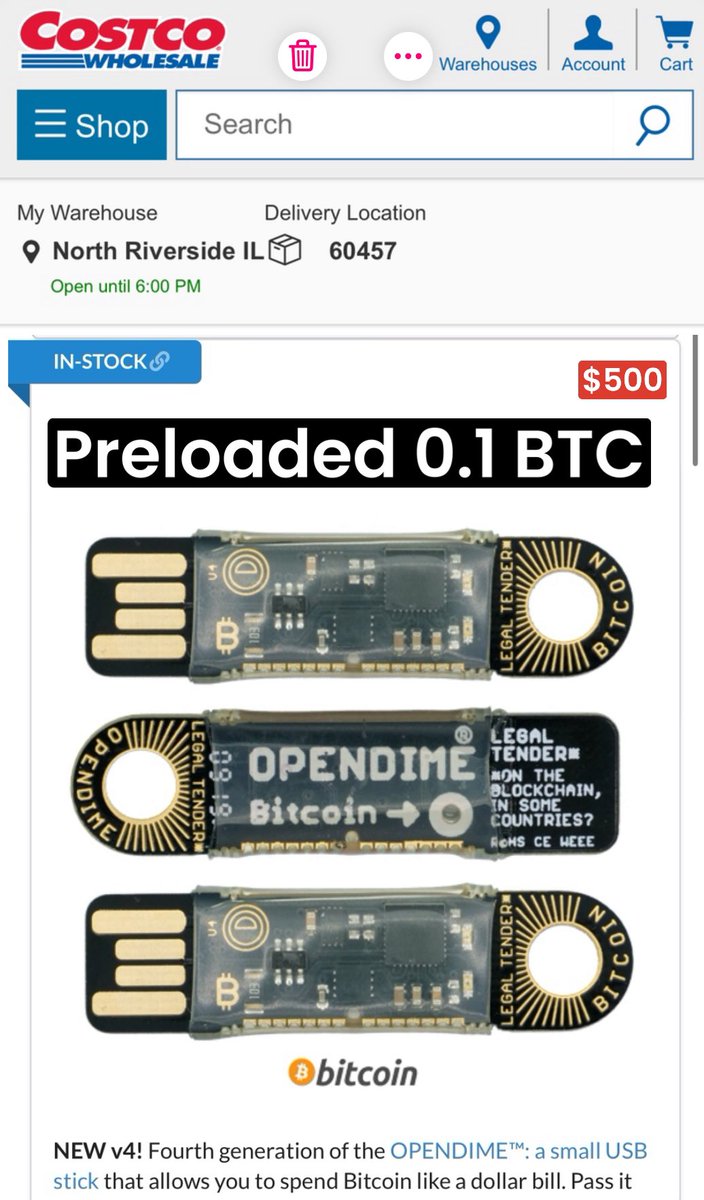
.@Costco You’re a great company. I buy 90% of my stuff from you.
You’ve recently made a bundle selling gold bars (yellow rocks). But it’s time to get on the right side of history. And you’ll make a killing in the process!
Bitcoiners — RT if you want to see this:
127
450
1,600
139,909
Doovergp retweeted

23 Dec 2023
GOOOWD MOWWURING TOOO ALL THE AUWTSITS IN THE WHOLE WORLDD
ALWAYS A GOOD DAY WHEN YOU"RE RETAWRED LIKE ME $AI
14
11
51
4,349

They don’t see the losses.
They don’t see the setbacks.
They don’t see the hours of research.
They don’t see the time you took to learn.
𝐓𝐡𝐞𝐲 𝐬𝐞𝐞 𝐲𝐨𝐮 𝐦𝐚𝐝𝐞 𝐦𝐨𝐧𝐞𝐲 𝐟𝐫𝐨𝐦 𝐜𝐫𝐲𝐩𝐭𝐨.
They don’t know what it took.
They call you lucky.
The sacrifice you put in is what got you to your bull-market riches.
The days you spent understanding, learning, and improving when everyone told you this space was worthless.
Don’t ever forget that.
Ever.
30
49
228
24,081
Doovergp retweeted

20 Oct 2023
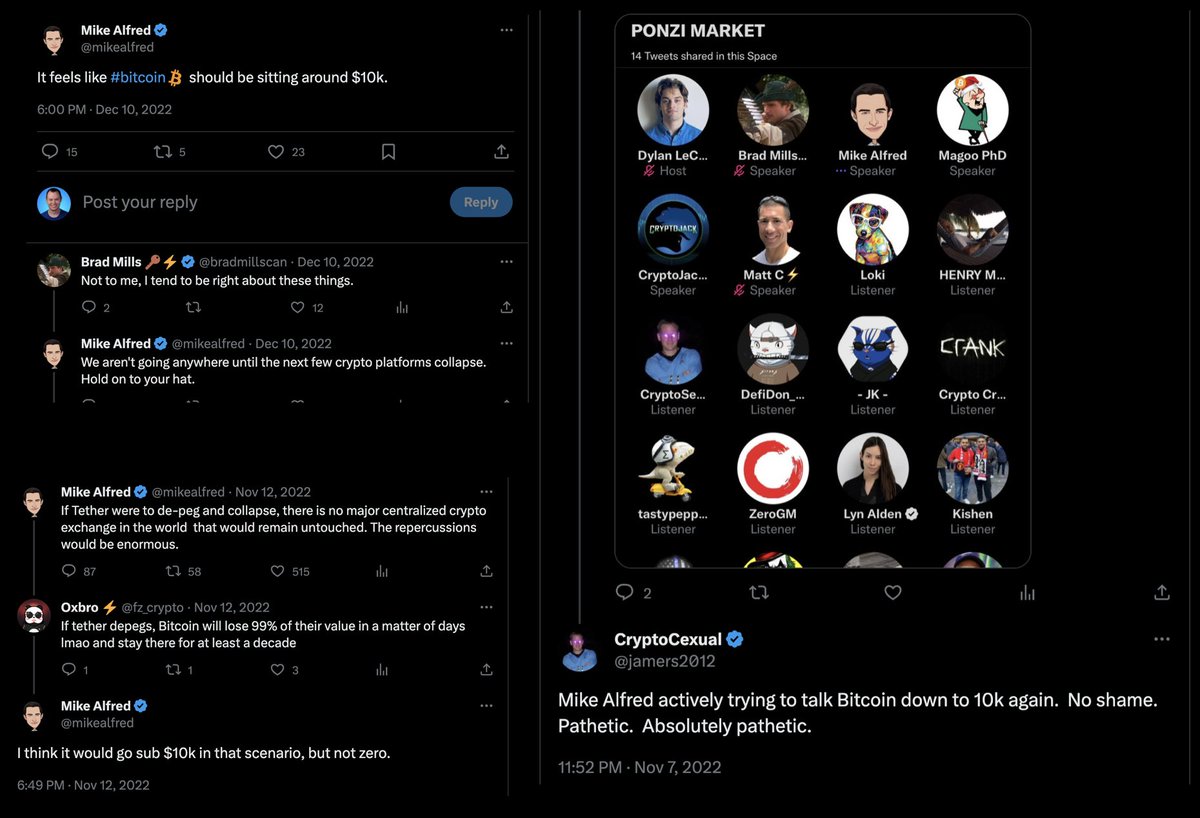
Hey Mike! Could you show evidence where I said BTC is going to $10k?
I was able to find plenty of evidence of you saying it though. I guess when you are wrong about something, you just pretend like someone else said it?
Also, I have said many times that crypto exposure should be limited to BTC in pre-halving years, as BTC dominance goes up.
68
43
1,770
118,006