
Building things for alternate realities. Former Staff Product Design Prototyper at Meta Reality Labs. Previously Amazon, Volkswagen Group & Intel.
Joined August 2011
- Tweets 900
- Following 883
- Followers 1,123
- Likes 1,756
203 Photos and videos


Pinned Tweet

Feb 11
I designed my home interior with Apple Vision Pro!
I recently bought a house and ran into a problem.
It was surprisingly hard to visualize the interior from 2D layouts and renders.
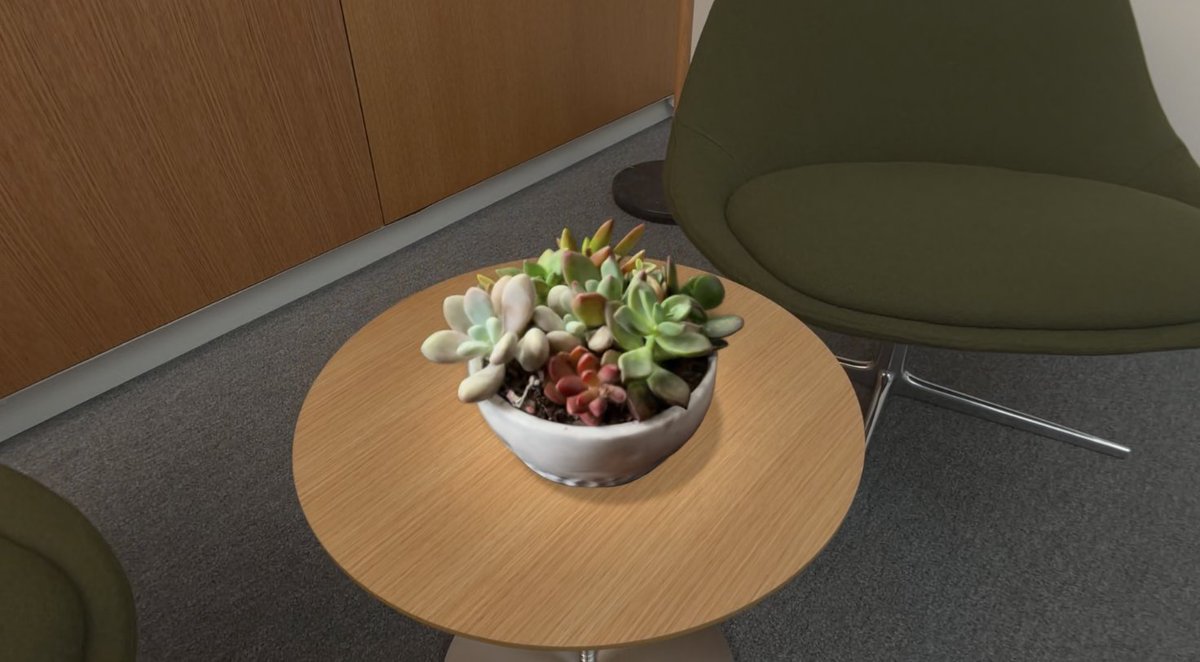
So I modeled the space in Blender and experienced it at full scale using Apple Vision Pro — aligned directly with my real, empty house.
Walking through the design made layout, scale, and lighting decisions obvious instantly.
Imagine what this could do for interior designers and real estate developers: fewer revisions, faster approvals, and no guesswork before construction.
I’ll be sharing more as this evolves. Feel free to connect if you are curious about the process or want to make something like this.
#AppleVisionPro #SpatialComputing
9
1
43
9,928
Jun 12
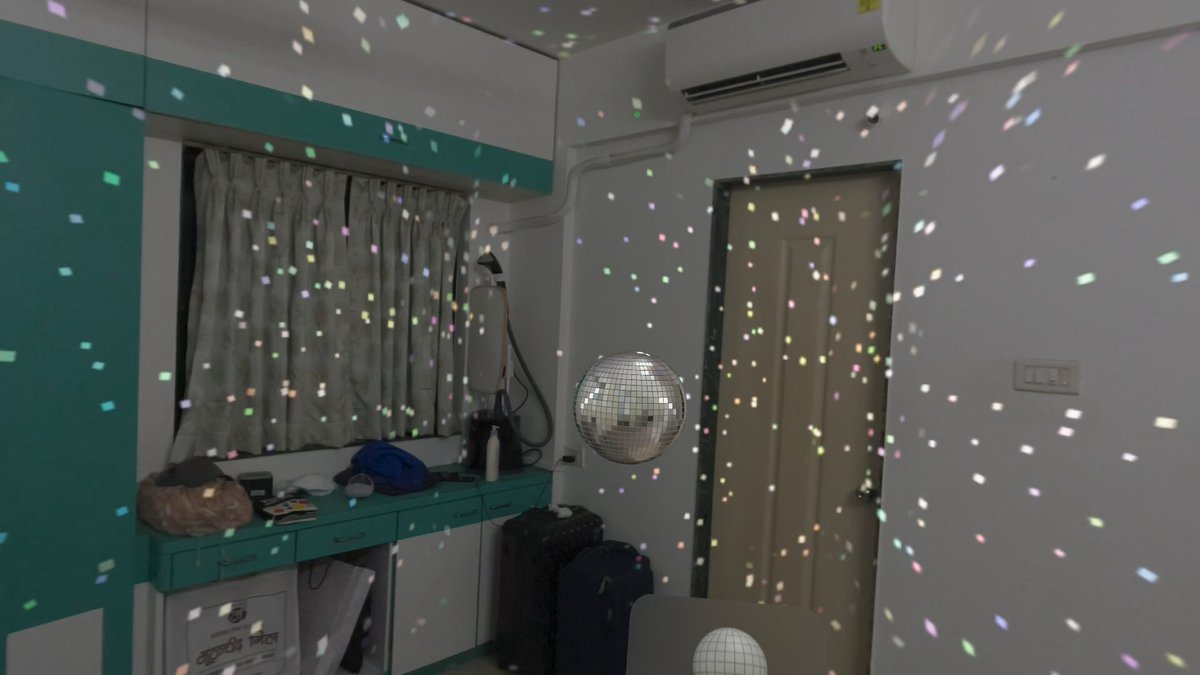
Created a fun discoball effect for Apple Vision Pro
The disco ball isn’t just rendered in the scene—the reflected light actually lands on your real walls and ceiling. As I move the disco ball closer to a wall or into a corner, the lighting changes to match the geometry of the room.
This kind of mixed-reality lighting is one of those details that makes virtual objects feel physically present.
Jun 12

The ProjectiveTexture and Physical Space Lighting in RealityKit APIs in VisionOS 27 are super awesome. Mind is blown. I once created a dense tutorial to make this effect in shader graph and I am amazed how easy it is to do now without event touching shader graph. The Projective Texture can also be animated.
1
1
40
3,375
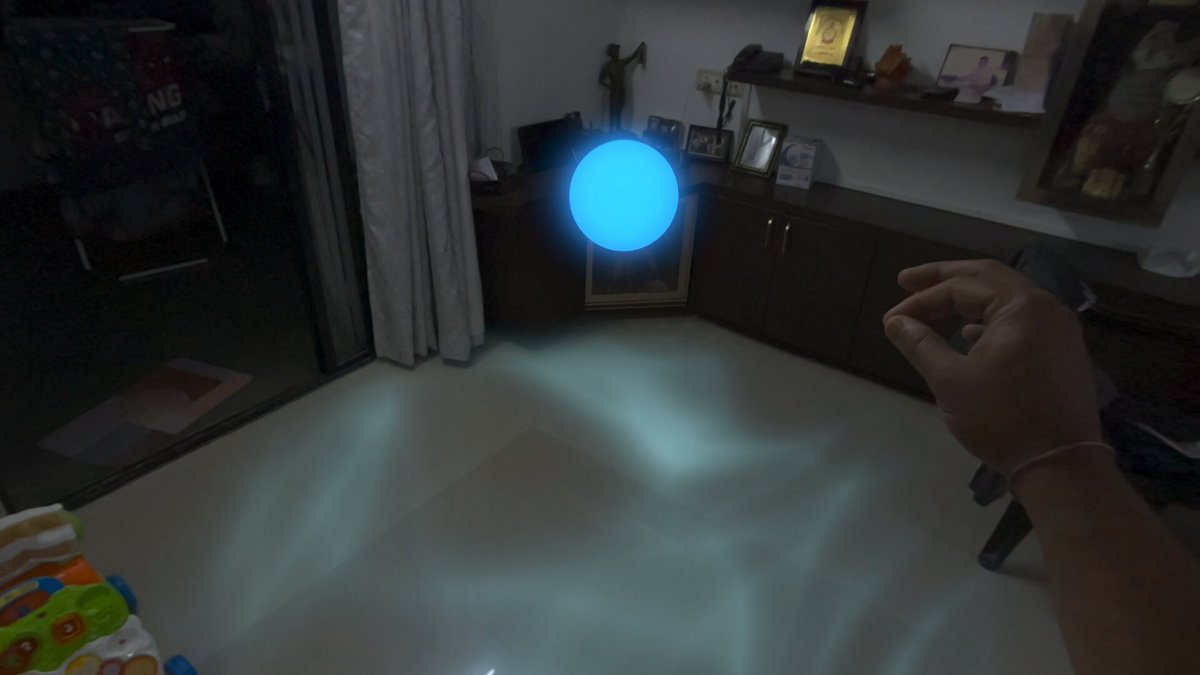
You can use Animated Texture resource with Projective Textures. Here I have created this caustics effect in my Apple Vision Pro app using a Low Level Texture API released last year on VisionOS. The Orb has a Bloom Component on it creating a beautiful glow.
1
213
Jun 12
The ProjectiveTexture and Physical Space Lighting in RealityKit APIs in VisionOS 27 are super awesome. Mind is blown. I once created a dense tutorial to make this effect in shader graph and I am amazed how easy it is to do now without event touching shader graph. The Projective Texture can also be animated.
6
12
147
13,992
You can use Animated Texture resource with Projective Textures. Here I have created this caustics effect in my Apple Vision Pro app using a Low Level Texture API released last year on VisionOS. The Orb has a Bloom Component on it creating a beautiful glow.
209
You can use Animated Texture resource with Projective Textures. Here I have created this caustics effect in my Apple Vision Pro app using a Low Level Texture API released last year on VisionOS. The Orb has a Bloom Component on it creating a beautiful glow.
10
23
248
12,752
Sarang Borude retweeted

Jun 12
Walt Disney World used Apple Vision Pros to streamline the live audio mixing process for the recently updated Soarin’ attraction at EPCOT
Normally they would have to build a bunch of scaffolding just to support all of the displays and mixing equipment for this use case
12
60
875
86,165
Jun 10
Anthropic has released claude support for Apple’s Foundation Models Framework
claude.com/blog/claude-for-f…
4
317
Jun 9
Ok, this is a very big change.
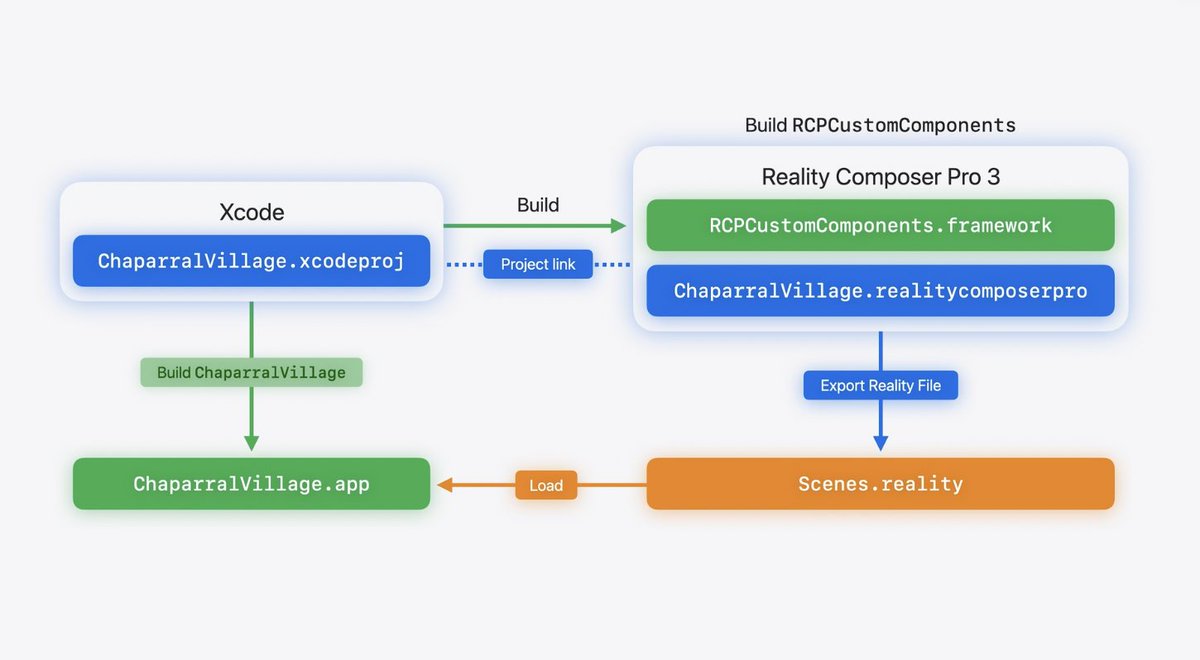
I can confirm that Reality Composer project and Xcode projects are very decoupled from Xcode 27 and VisionOS 27. When you create a new Xcode project with the VisionOS template you will not see the Reality Composer pro package in the project. It will be a completely separate thing you will have to add later. Previously they were kind of the same thing, the RCP stuff lived in your Xcode project as a package. Not any more. This also means if you create any custom components or systems and such that you want to use in RCP 3, you will have to build the project to make a plugin to extend your RCP 3. When RCP stuff changes, that gets exported as a .Reality File to be consumed by the Xcode project. This is a big change and I don't think there is a session I have found "yet" that covers how to create a new visionOS project from scratch. This has confused me so much and has broken my previous understanding of the relationship between an RCP and Xcode workflow.
6
36
4,381
Jun 10
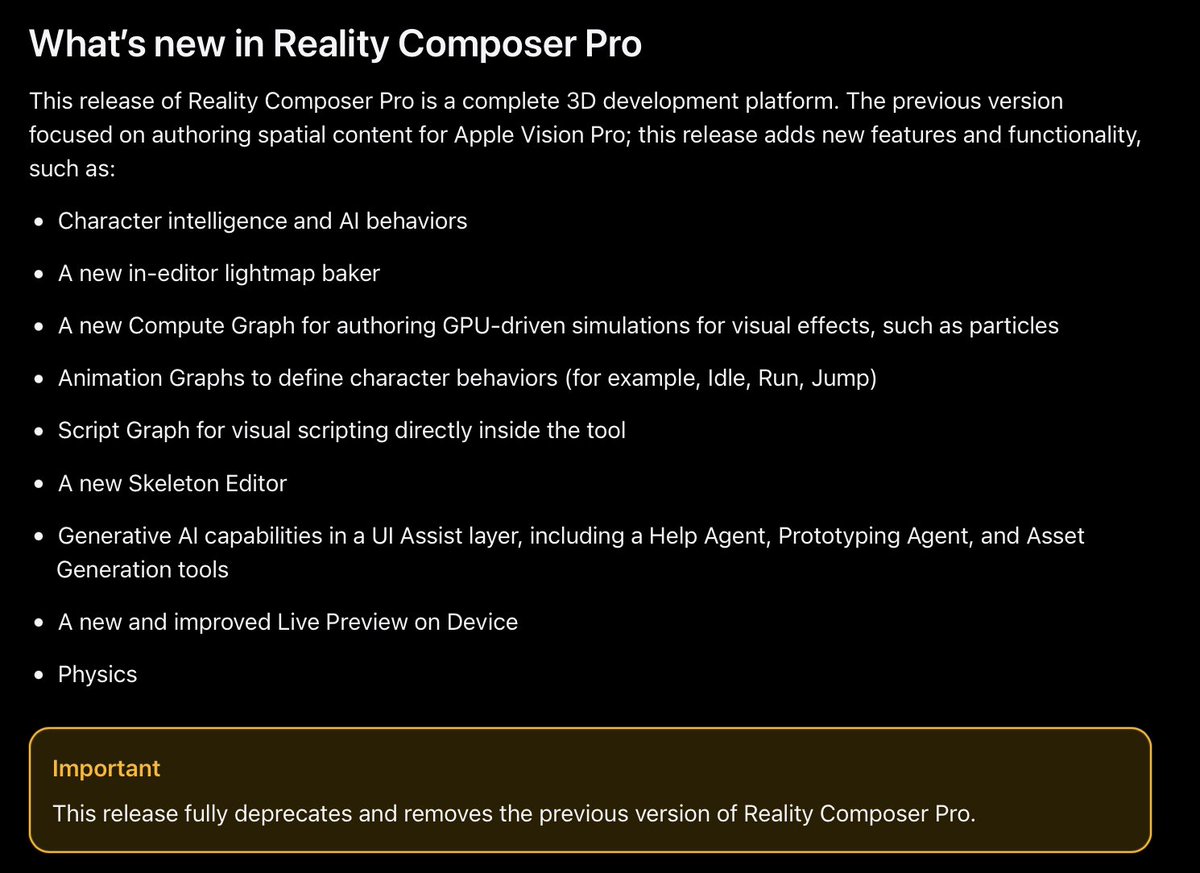
RCP 3 deprecates older versions of RCP so your older projects will need porting
97
Jun 10
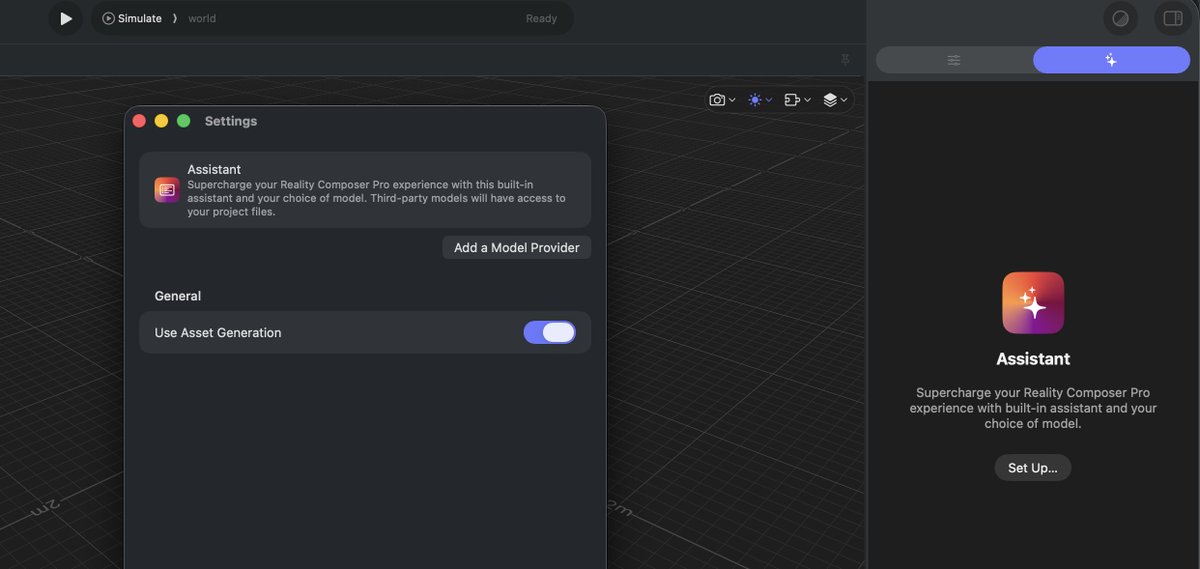
So I was a bit excited about using assistant in Reality Composer Pro 3, but seems like I cannot use my existing ChatGPT and claude subscriptions, will have to add a model using api key. So you can use your Ollama setup to run models locally or use your OpenAI or Claude API key.
2
188
Jun 10
I am so excited. I just discovered Assistant for ShaderGraph in Reality Composer Pro 3. So now you can just tell AI to assemble your nodes to achieve your shader effect.
2
1
19
979
Jun 10
There is a lot of new things in Reality Composer Pro 3, Thanks to @settern and @adarshpavani to point me to these docs. They are a must read if you work actively with RCP.
developer.apple.com/document…
Keep them handy as you watch the sessions
16
888
Jun 9
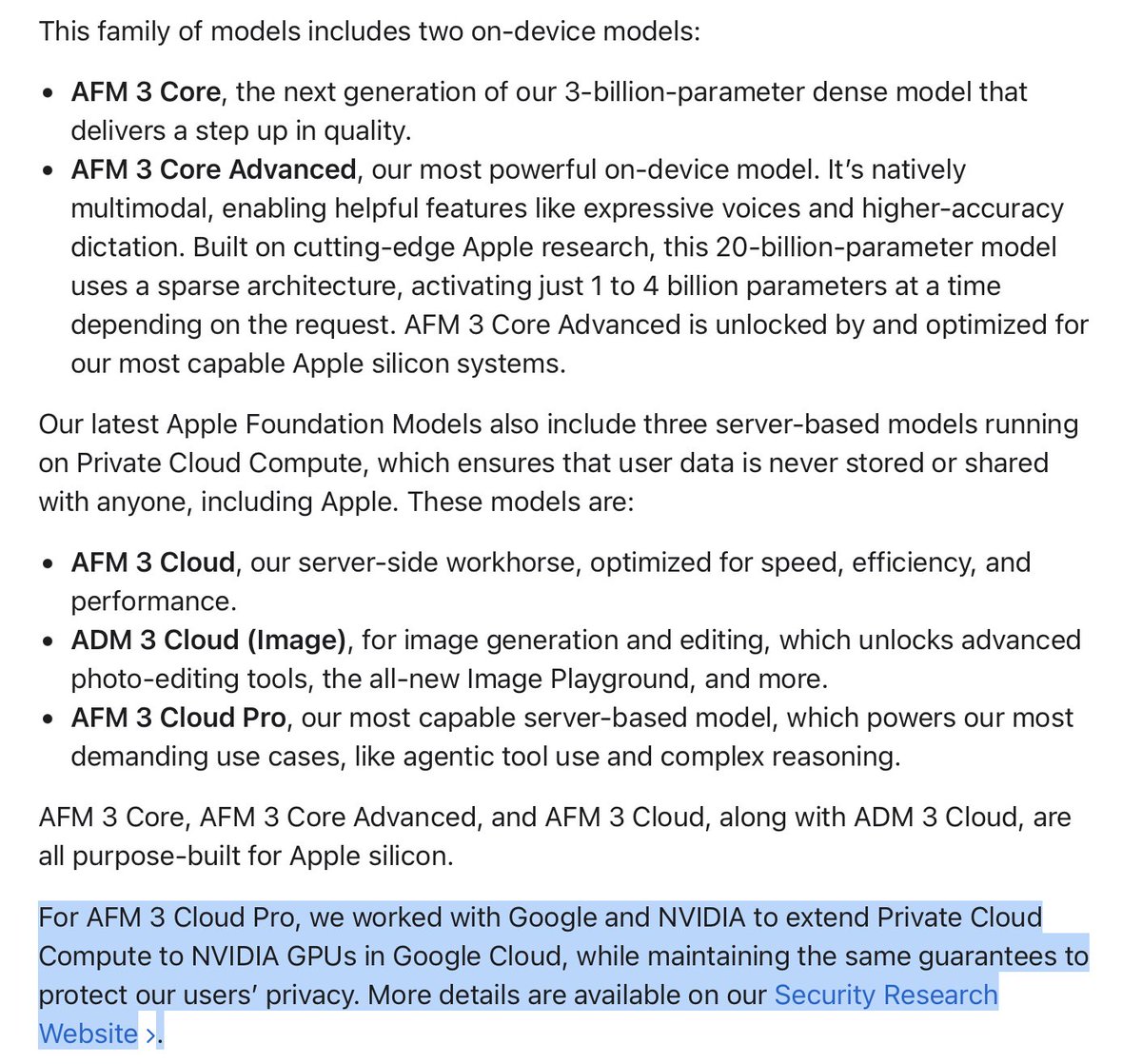
It is interesting this year with Foundation Models Frameworks that there are 5 models in total 2 run locally and 3 on Private Cloud Compute. One the AFM 3 Cloud Pro is made in collab with Google which basically means that they have used Nvidia GPUs in google cloud. Seems like they are not using Gemini models after all. I thought they might be using one of the Gemma models underneath on device which is not true. Seems like these are all Apple's own models so they didn't use google's data or base models here.
1
268
Jun 9
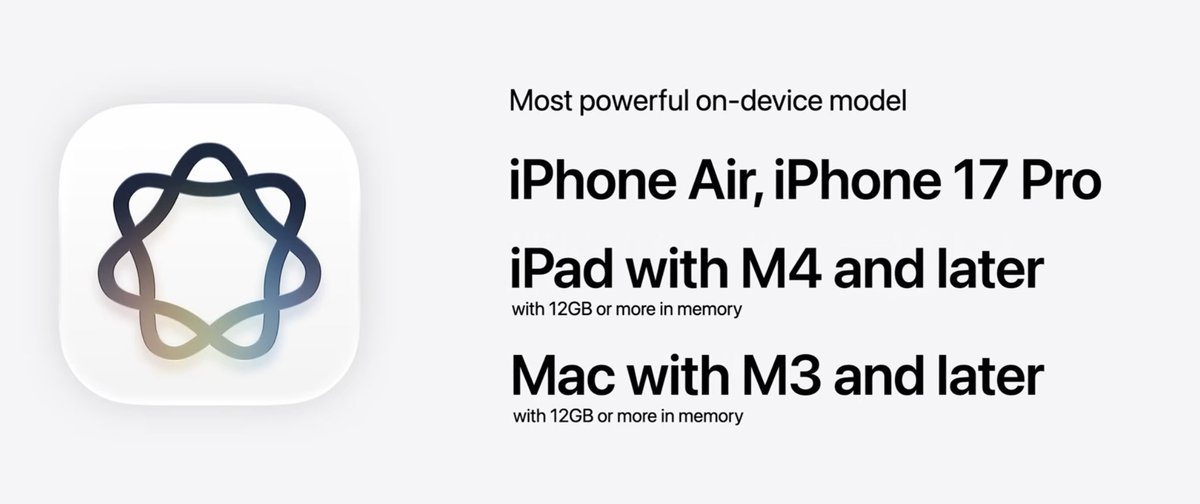
It now makes sense why the last year's 16 Pro is not supported as these on device models on which the new Siri depends on need 12 GB of RAM. I also curious now that if the models are loaded into memory how much memory is left for the actual app to utilize.
Below is a quote from apple that is very interesting
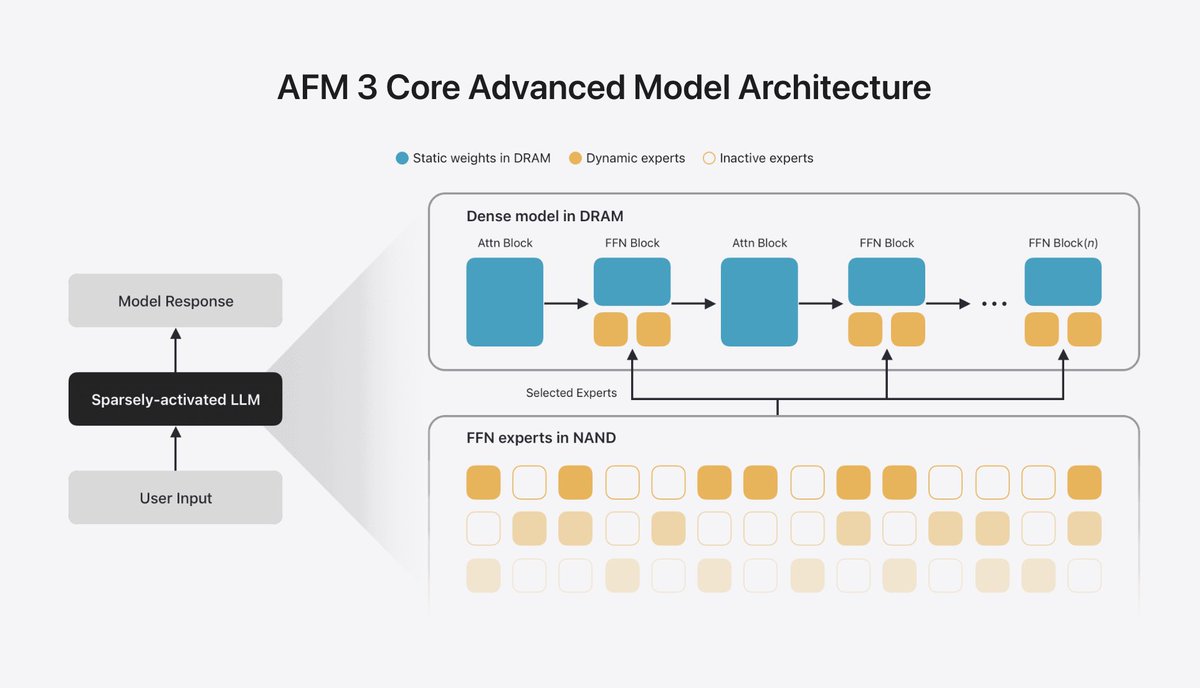
"AFM 3 Core Advanced introduces a novel sparsely activated architecture built on Instruction-Following Pruning (IFP), a technique developed by Apple researchers (see Figure 1).
Instead of forcing the entire model into DRAM, the full model is stored in flash memory (NAND). Because NAND-to-DRAM bandwidth is too slow to swap weights token by token, as standard MoE models require, AFM 3 Core Advanced makes routing decisions per prompt. A lightweight, dense block selects a fixed set of experts during initial processing, periodically reselecting them during generation. To minimize data movement, the model relies on a high percentage of always-active “shared experts” alongside input-dependent “routed experts” swapped into DRAM only when needed."
137
Sarang Borude retweeted

Jun 9
It's very cool that Apple shipped a 20B parameter on-device.
You can't put 20B parameters in RAM at any reasonable precision. To make it work they are using pretty exotic architecture by today's standards.
A small model predicts from the query (or prompt) which experts to load from Nand into RAM. The key distinction from a typical MoE is that you do this once per query and then generate all the tokens with the same experts (instead of switching the experts for every token).
77
297
3,197
225,297
Jun 9
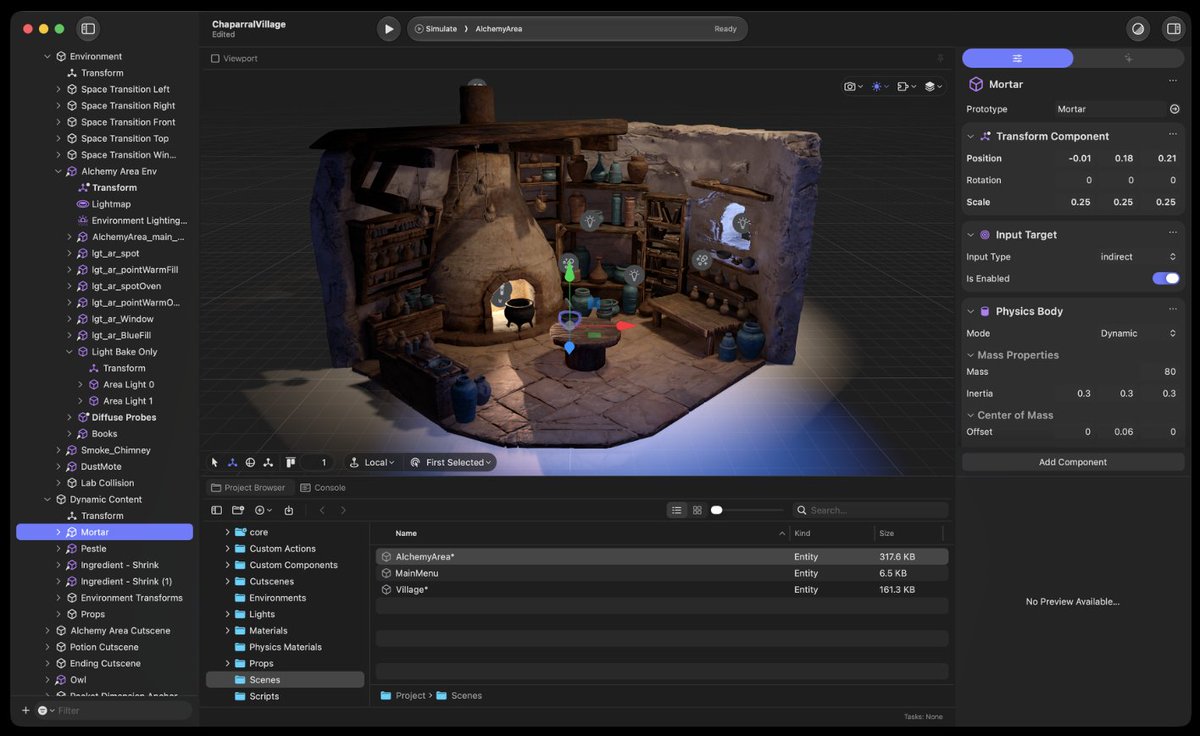
I just did my first pass over the Reality Composer Pro 3 sessions. There is a lot new there and there is so much emphasis on node based creation. You can do so much using connecting nodes. Which is interesting in the agentic age. There are just too many nodes to remember, make sure they are connected right, and you cannot simply point an agent to make a node graph for you. Shader, behaviors, scripts, etc. I will certainly have to watch these sessions and code samples multiple times. I am trying to make good sense of what got replaced. Seems like The Particle Emitter got replaced / augmented by compute graph.
I can also see the decisions being made which make RCP3 it's own standalone thing to author spatial content.
This is a major update.
2
1
26
1,797
Jun 8
Gaussian Splats in USDZ
One thing from WWDC that I haven't seen many people talking about:
Apple, Pixar, NVIDIA, and Adobe are working on bringing Gaussian Splats into OpenUSD through a new primitive called Particle Fields.
Maybe I'm reading too much into it, but this feels like a pretty big deal.
Up until now, splats have mostly lived in their own world with custom viewers and custom pipelines. Bringing them into USD means scanned environments, meshes, materials, lighting, and metadata can all exist in the same scene description.
As someone who has been experimenting with Gaussian Splats on Vision Pro, this feels like a glimpse of where things are headed.
Less:
"How do I get this splat renderer working?"
More:
"It's just another asset in my USD scene."
USD keeps getting closer to becoming the common language for spatial computing.
3
4
71
5,279