co-founder & ceo @epochdotm. member @superteam
Joined July 2022
- Tweets 4,345
- Following 303
- Followers 1,688
- Likes 23,395
515 Photos and videos




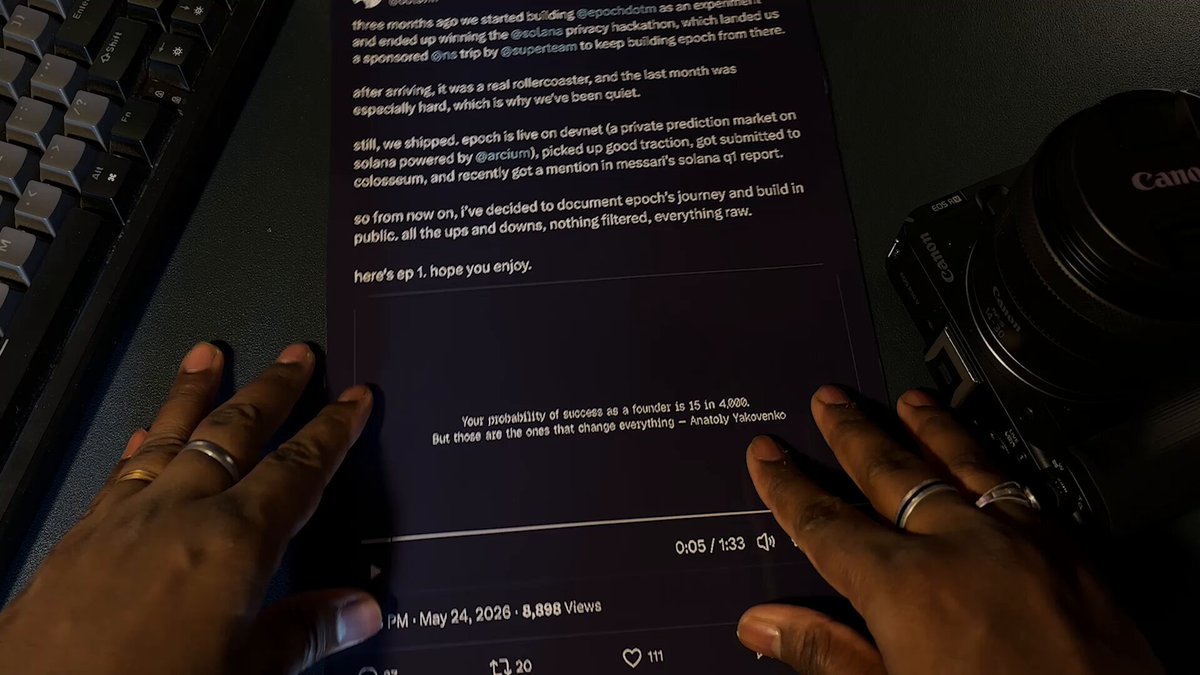





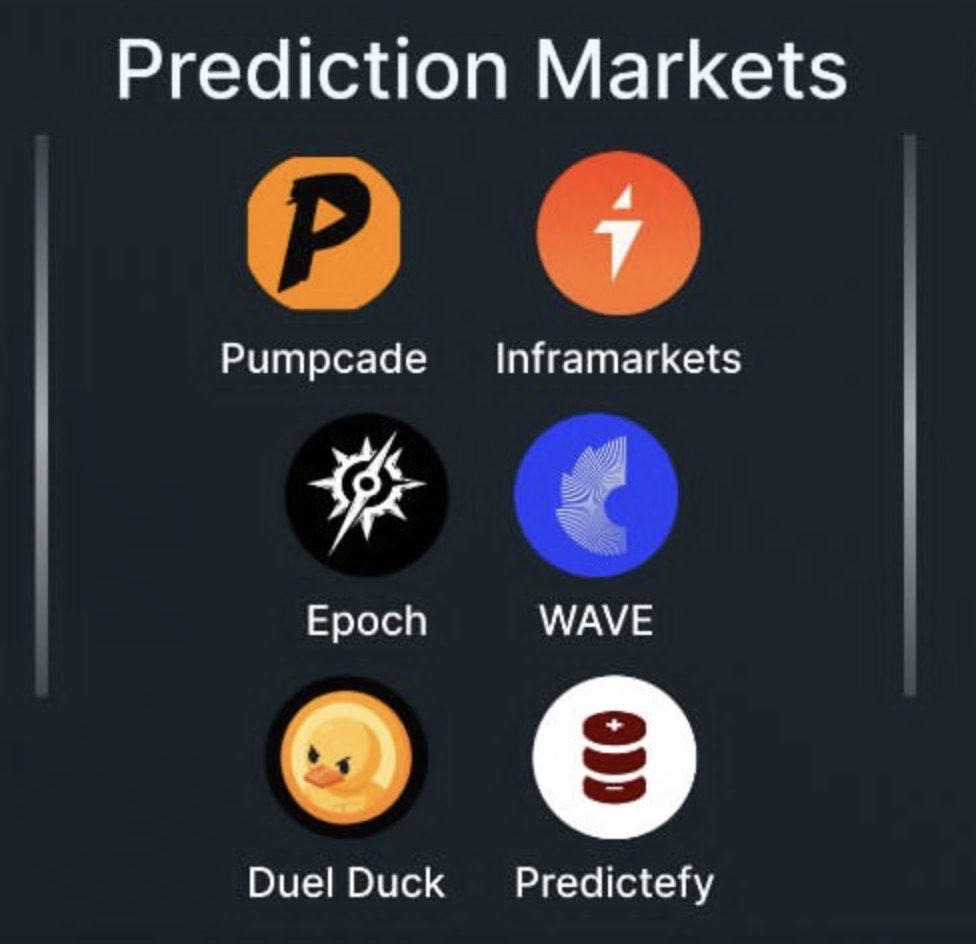
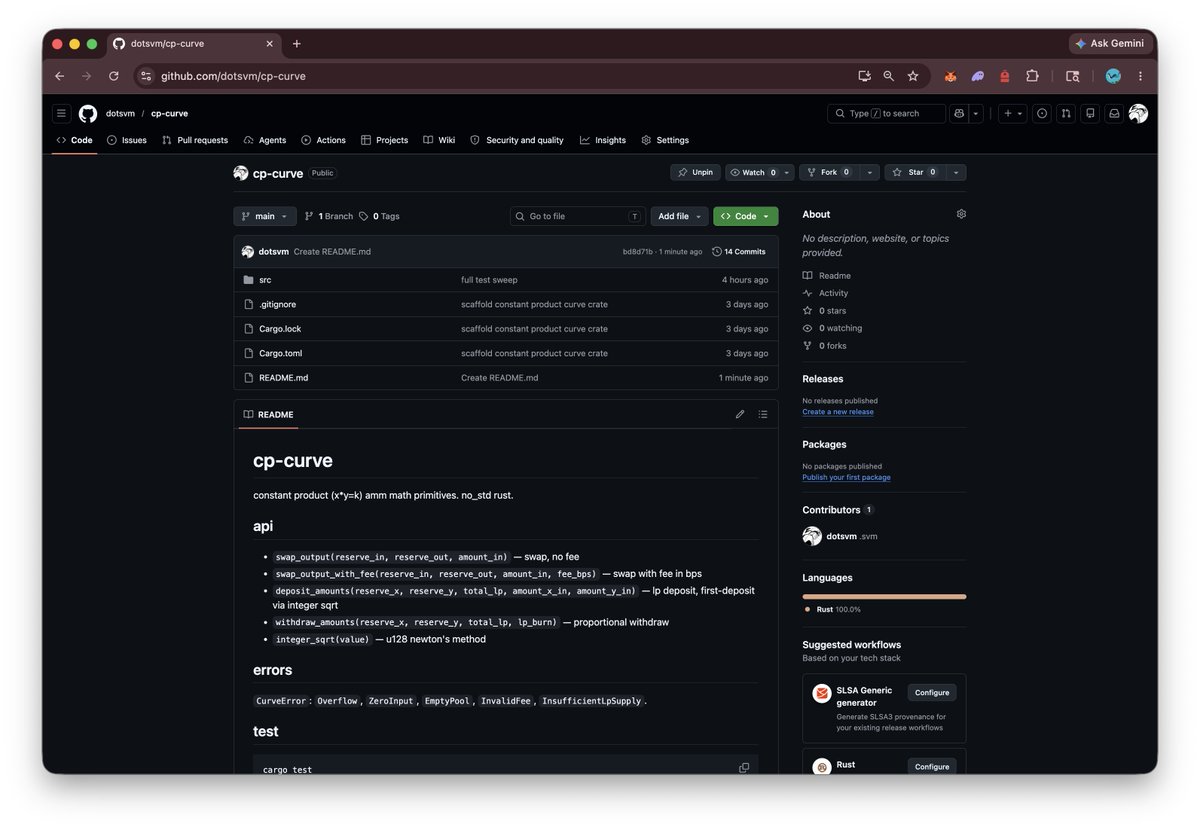
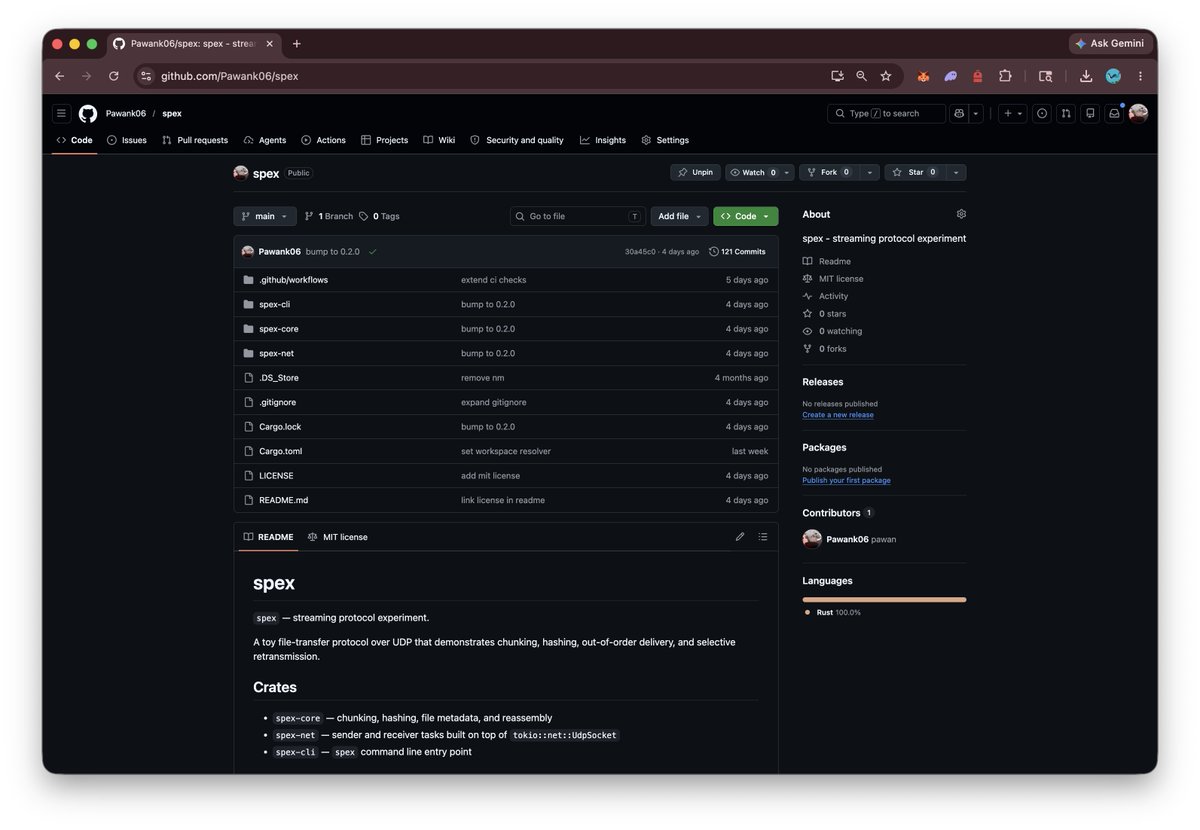

three months ago we started building @epochdotm as an experiment and ended up winning the @solana privacy hackathon, which landed us a sponsored @ns trip by @superteam to keep building epoch from there.
after arriving, it was a real rollercoaster, and the last month was especially hard, which is why we've been quiet.
still, we shipped. epoch is live on devnet (a private prediction market on solana powered by @arcium), picked up good traction, got submitted to colosseum, and recently got a mention in messari's solana q1 report.
so from now on, i’ve decided to document epoch’s journey and build in public. all the ups and downs, nothing filtered, everything raw.
here's ep 1. hope you enjoy.
38
11
116
9,761
not being bullish on @epochdotm is the biggest mistake one can do in 2026

not being bullish on @epochdotm is the biggest mistake one can do in 2026
1
7
929
It all takes 3 steps.
Jun 14

here’s how you can trade sports privately on @epochdotm in 3 steps
1. join our discord
2. get beta access
3. make your trade
that’s damn easy!
3
211
I should tweet about @epochdotm. I did it, done for the day

I should tweet about @epochdotm. I did it, done for the day
3
182
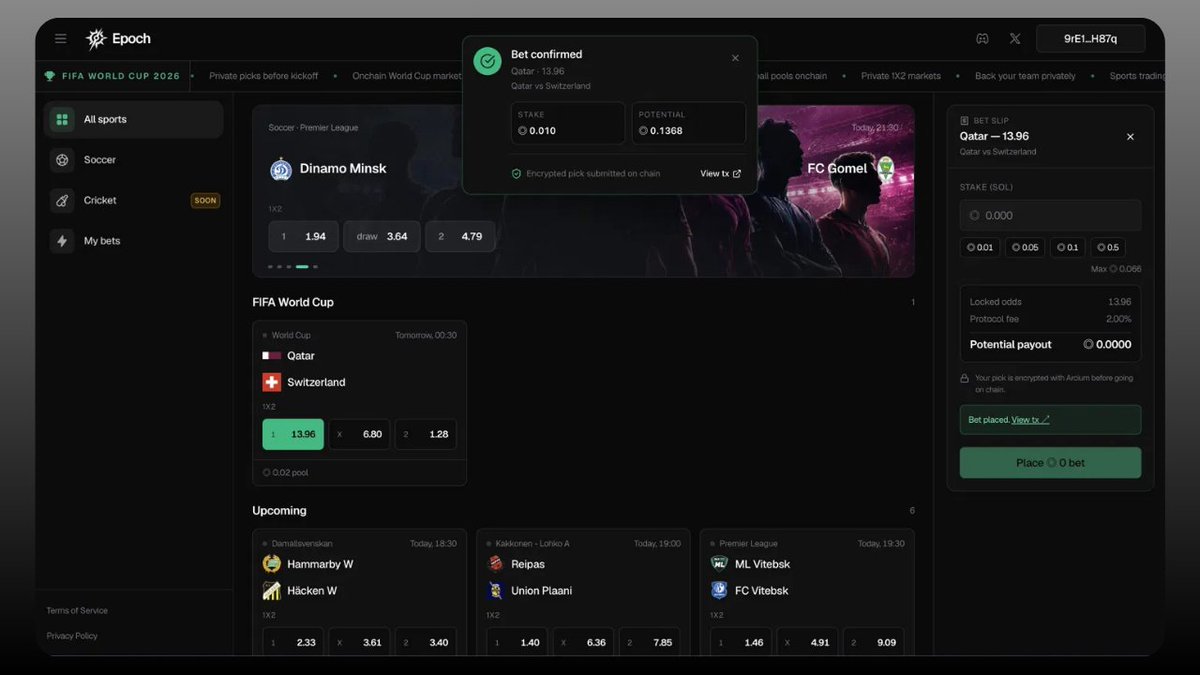
back your team on @epochdotm.
something’s cooking for early users 👀

everyone's been glued to the $SPCX launch since yesterday and completely forgot the world cup is literally happening right now.
@epochdotm didn't.
private alpha is live.
make your picks onchain, sealed till the game ends.
join the dc, grab your access code, get in.
1
8
402

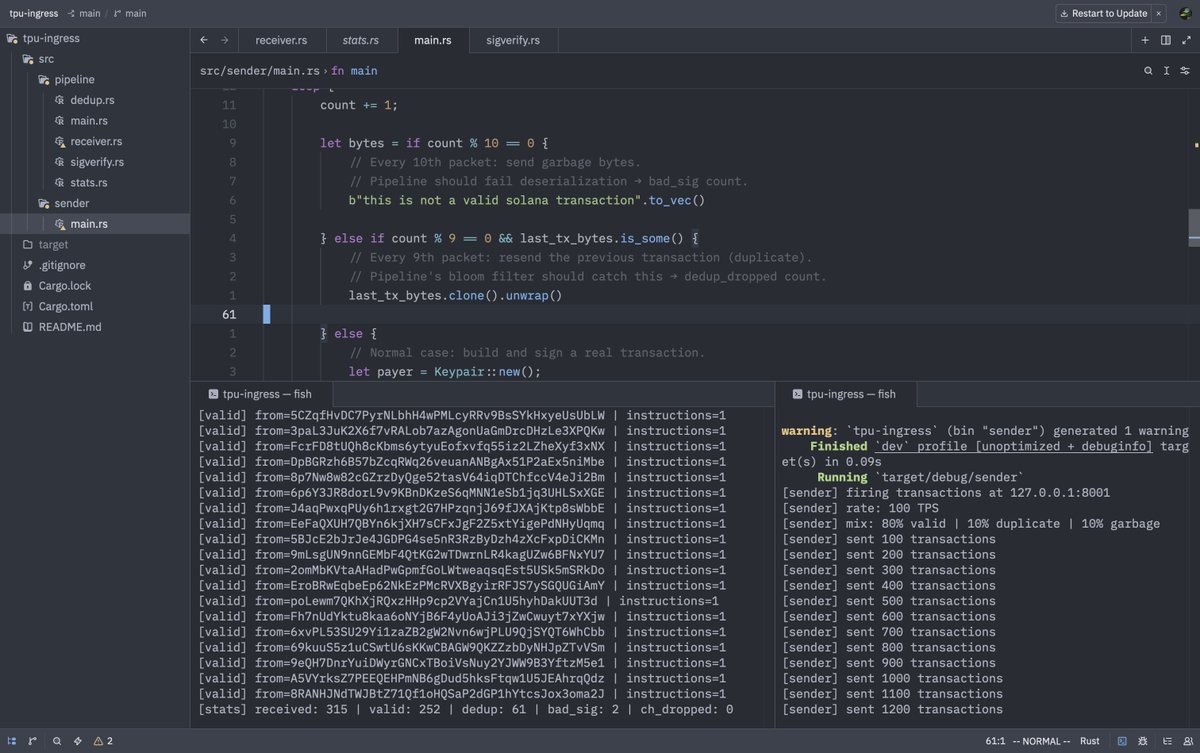
built a mini solana TPU ingress pipeline in rust that replicates the streamer sigverify stages of the agave validator.
repo: github.com/bytetwt/tpu-ingre…
solana validator client 101
1/ streamer
basically when someone submits a transaction it travels over the internet as a UDP packet to the current validator leader. at the validator the streamer is the one which is receiving all these UDP packets.
not only the transactions also the votes from other validators, shreds (block data), gossip messages (more on this later) - all of these come as UDP packets too & land at the streamer.
* 1 packet is upto 1232 bytes of raw data metadata (sender, size, flags).
when these packets arrive at the streamer it doesn't know yet what the packets actually are whether a tx, vote or scrap.
at first they are basically put into a pre allocated buffer,
get grouped into a PacketBatch of 64 & are down streamed to sigverify channel.
* PacketBatch is a vec of 64 packets grouped together, why 64 packets? - recvmmsg syscall reads up to 64 packets in one kernel call.
if the channel is temporarily overwhelmed and it fills up, the packets are dropped & the pipeline keeps moving without getting stalled. the sender can retry.
2/ sigverify
sigverify uses these to verify signatures across all 64 packets in a PacketBatch in parallel using a thread pool. this is how GPU/CPU parallelism gets applied to packet processing.
if packets are invalid it marks them as discard = true. but they are not removed.
* since its fixed batch of 64 slots removing the packet at 7th index is much costlier at 70K TPS.
basically sigverify does 3 steps:
1. dedup (deduplication): a bloom filter (probabilistic data structure). hash the packet bytes, check if that hash exists in the filter within a 2 sec window. if yes marks it discard with a false positive rate of 0.001
* sigverify is too expensive so removing dups makes sense cause we don't wanna waste CPU verifying the same tx 100 times from spam bots!
2. priority floor: when the scheduler is saturated (too many txs queued), it publishes a "floor" priority. any incoming tx with fee below that floor gets discarded immediately, before sigverify.
* if the scheduler queue is full of high-fee txns, there's no point in verifying low-fee ones. they'll just sit in queue and expire. kill them early & save CPU!
3. ed25519_verify_serial(&mut batch, reject_non_vote, ...): opens the bytes, deserializes the transaction, checks the ed25519 signature. if invalid sig adds discard flag.
* the vote channel rejects non-vote transactions here.
the verified batch (with discard flags set) gets wrapped in a BankingPacketBatch and pushed to the banking stage channel.
3/ banking - how valid transactions get scheduled & executed. upcoming thread!
cc: @toly @solana @solana_devs
2
2
11
5,513
solana validator client 101
1/ streamer
basically when someone submits a transaction it travels over the internet as a UDP packet to the current validator leader. at the validator the streamer is the one which is receiving all these UDP packets.
not only the transactions also the votes from other validators, shreds (block data), gossip messages (more on this later) - all of these come as UDP packets too & land at the streamer.
* 1 packet is upto 1232 bytes of raw data metadata (sender, size, flags).
when these packets arrive at the streamer it doesn't know yet what the packets actually are whether a tx, vote or scrap.
at first they are basically put into a pre allocated buffer,
get grouped into a PacketBatch of 64 & are down streamed to sigverify channel.
* PacketBatch is a vec of 64 packets grouped together, why 64 packets? - recvmmsg syscall reads up to 64 packets in one kernel call.
if the channel is temporarily overwhelmed and it fills up, the packets are dropped & the pipeline keeps moving without getting stalled. the sender can retry.
2/ sigverify
sigverify uses these to verify signatures across all 64 packets in a PacketBatch in parallel using a thread pool. this is how GPU/CPU parallelism gets applied to packet processing.
if packets are invalid it marks them as discard = true. but they are not removed.
* since its fixed batch of 64 slots removing the packet at 7th index is much costlier at 70K TPS.
basically sigverify does 3 steps:
1. dedup (deduplication): a bloom filter (probabilistic data structure). hash the packet bytes, check if that hash exists in the filter within a 2 sec window. if yes marks it discard with a false positive rate of 0.001
* sigverify is too expensive so removing dups makes sense cause we don't wanna waste CPU verifying the same tx 100 times from spam bots!
2. priority floor: when the scheduler is saturated (too many txs queued), it publishes a "floor" priority. any incoming tx with fee below that floor gets discarded immediately, before sigverify.
* if the scheduler queue is full of high-fee txns, there's no point in verifying low-fee ones. they'll just sit in queue and expire. kill them early & save CPU!
3. ed25519_verify_serial(&mut batch, reject_non_vote, ...): opens the bytes, deserializes the transaction, checks the ed25519 signature. if invalid sig adds discard flag.
* the vote channel rejects non-vote transactions here.
the verified batch (with discard flags set) gets wrapped in a BankingPacketBatch and pushed to the banking stage channel.
3/ banking - how valid transactions get scheduled & executed. upcoming thread!
cc: @toly @solana @solana_devs
4
7
20
7,220
team @epochdotm cooked.
epoch mainnet alpha is now live.
join the discord to get early access and be part of the alpha.
2
1
18
508
.svm retweeted

Jun 10
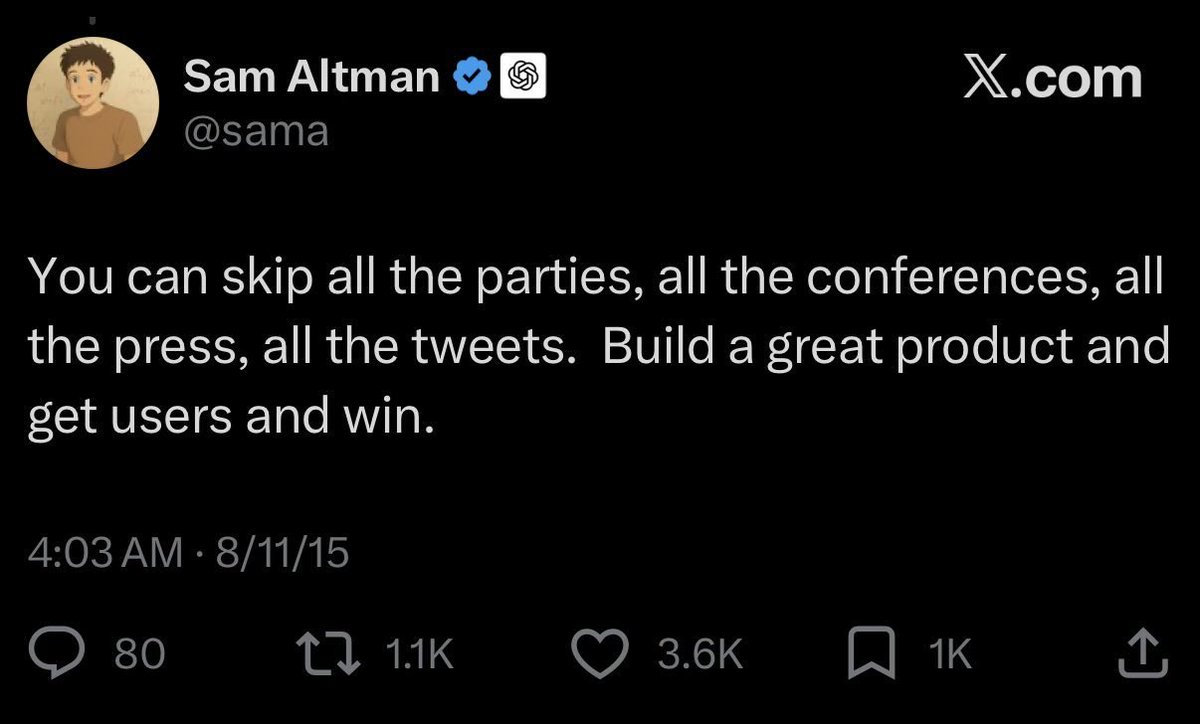
to those who feel fomo not attending something
5
5
75
2,031
trade on sports privately. join discord now.
6
389
.svm retweeted

Jun 9
Epoch’s Discord Community is now live!
Be the first to access alpha testing, product updates, and major announcements.
Join the community and get early access to Epoch.
discord.gg/P6YEVVeNc

4
6
38
3,457
join us discord.gg/P6YEVVeNc
Jun 9
Epoch’s Discord Community is now live!
Be the first to access alpha testing, product updates, and major announcements.
Join the community and get early access to Epoch.
discord.gg/P6YEVVeNc
1
5
366
.svm retweeted

Jun 8
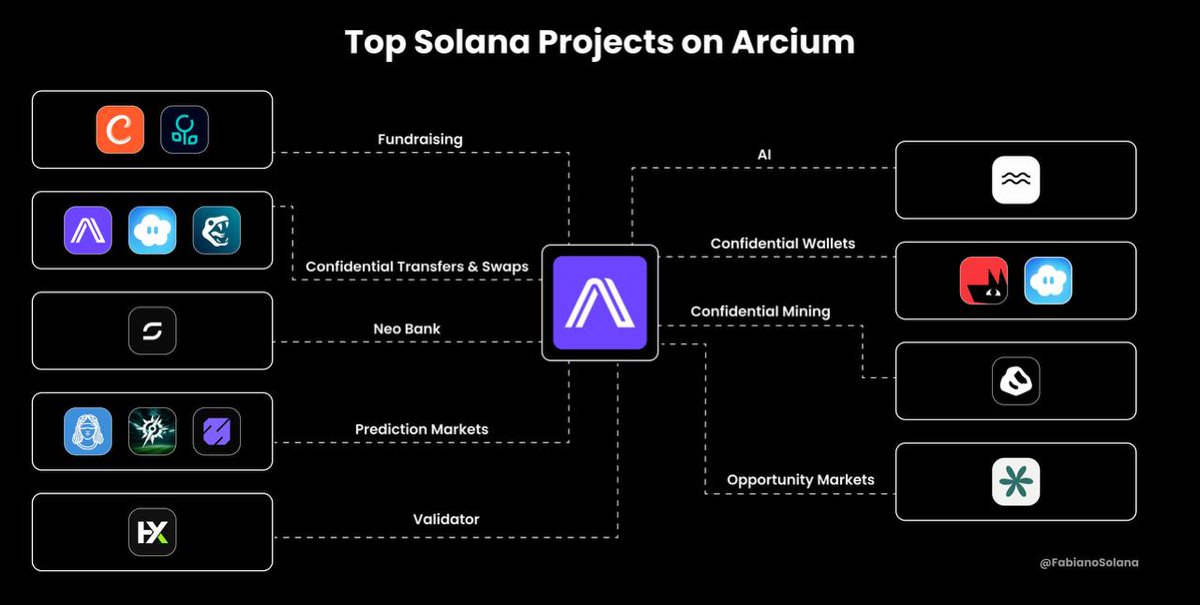
Arcium ($ARX) is probably the biggest upcoming TGE on Solana
Privacy meta and already powering over 15 dapps:
- @craftsdev
- @seedplex_io
- @UmbraPrivacy
- @vanishTrade
- @stealf_finance
- @pythiamarkets
- @SolRouterAI
- @zinc_cash
and more
55
19
223
10,574

.svm retweeted

Job's not finished
zinc it 🦺
Jun 8

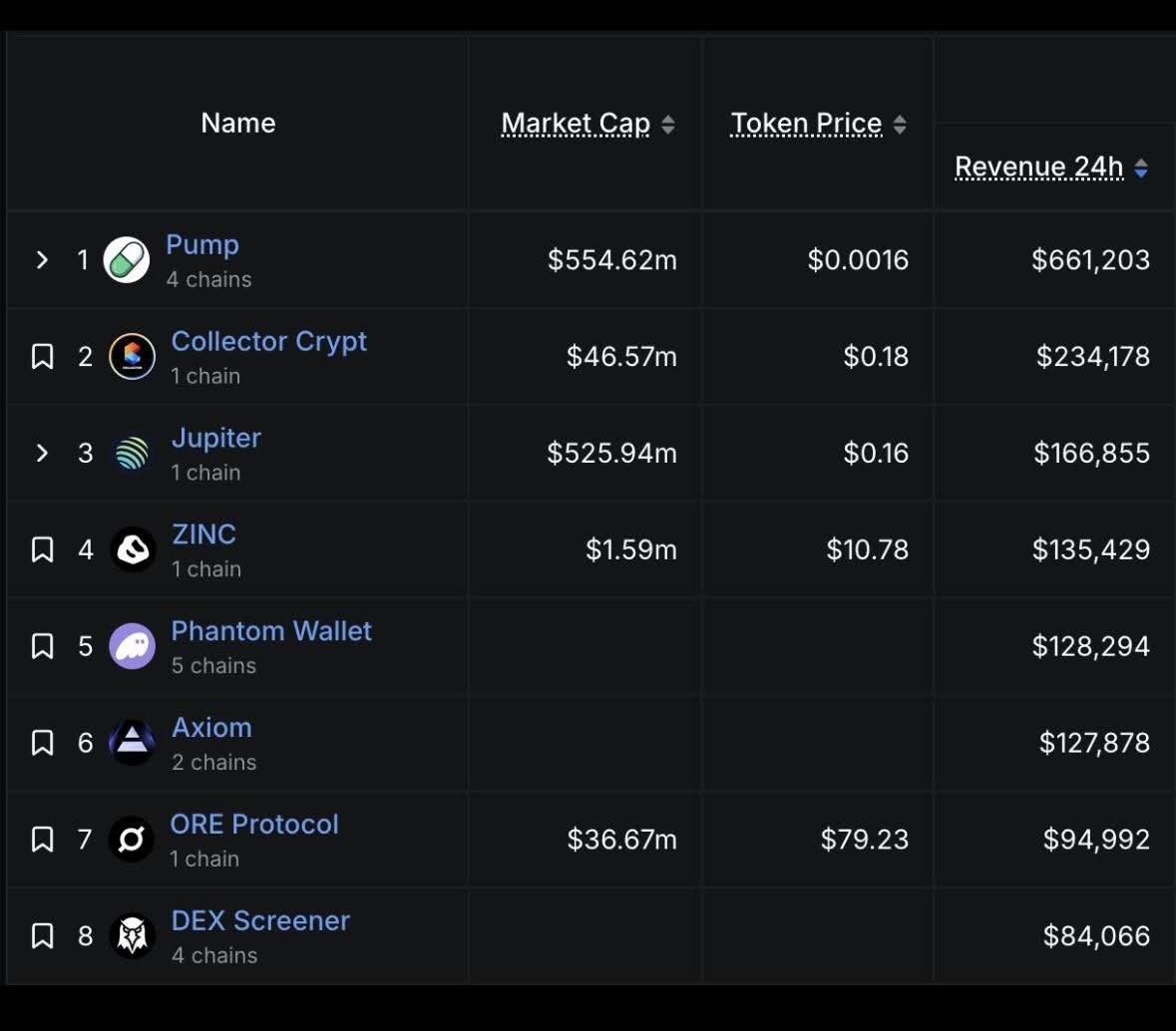
13 days after launch, we’ve made it to the top 4 revenue generating protocols on @solana.
We couldn’t have done it without our amazing community of miners.
Thank you all. Now back to the mines.
🦺
2
2
43
1,011
privacy × world cup season.
mainnet alpha this week.
7
33
2,291