Director, CDC Center for Forecasting & Outbreak Analytics; former VP at Ginkgo, In-Q-Tel, USG science & tech advisor - OSTP, HHS, DoD; ...views my own...
- Tweets 5,992
- Following 1,223
- Followers 3,158
- Likes 4,743






ALT Three large black and white spotted dairy cows stand in a green field next to each other. There are other cows in the distance. In the bottom left-hand corner, text overlay says "cdc.gov/avian-flu" and in the bottom right-hand corner is the CDC logo.

![A screenshot of text that reads in part:
"Kevin Griffis, CDC [00:52:41]
I know you’re planning to update the forecast and I just wanted to get a sense of if you’re seeing anything new and if there’s anything notable that people should be aware of.
Dylan George, CDC [00:52:50]
There’s a handful of uncertainties associated with trying to make these assessments going forward.
And as I mentioned, the three big uncertainties that we’re laser focused on is: is there a variant that would change our assessment of the epidemiological situation? And we’re not seeing anything like that out there right now.
The second one is, are we seeing a coincidence of the peaks of RSV, influenza and COVID coming together at some point. We’re not seeing that either.
And then the last one, are we seeing a particularly bad or severe flu season where you’re seeing a lot of people requiring hospitalization? Fortunately right now there’s low flu activity. We’re not seeing that.
But we need to stay vigilant](https://venexa.site/media/F7n0FyfWcAMqDeR.png)
ALT A screenshot of text that reads in part: "Kevin Griffis, CDC [00:52:41] I know you’re planning to update the forecast and I just wanted to get a sense of if you’re seeing anything new and if there’s anything notable that people should be aware of. Dylan George, CDC [00:52:50] There’s a handful of uncertainties associated with trying to make these assessments going forward. And as I mentioned, the three big uncertainties that we’re laser focused on is: is there a variant that would change our assessment of the epidemiological situation? And we’re not seeing anything like that out there right now. The second one is, are we seeing a coincidence of the peaks of RSV, influenza and COVID coming together at some point. We’re not seeing that either. And then the last one, are we seeing a particularly bad or severe flu season where you’re seeing a lot of people requiring hospitalization? Fortunately right now there’s low flu activity. We’re not seeing that. But we need to stay vigilant

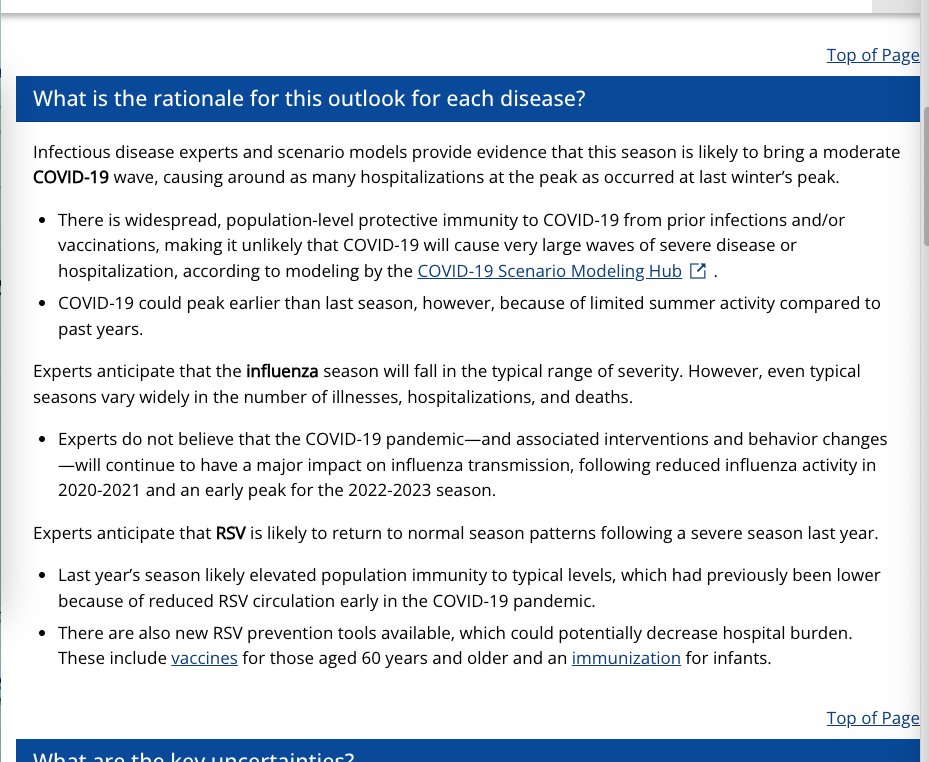
ALT A screenshot of text that reads in part: "What is the rationale for this outlook for each disease? Infectious disease experts and scenario models provide evidence that this season is likely to bring a moderate COVID-19 wave, causing around as many hospitalizations at the peak as occurred at last winter’s peak. There is widespread, population-level protective immunity to COVID-19 from prior infections and/or vaccinations, making it unlikely that COVID-19 will cause very large waves of severe disease or hospitalization, according to modeling by the COVID-19 Scenario Modeling Hub. COVID-19 could peak earlier than last season, however, because of limited summer activity compared to past years. Experts anticipate that the influenza season will fall in the typical range of severity. However, even typical seasons vary widely in the number of illnesses, hospitalizations, and deaths. Experts do not believe that the COVID-19 pandemic—and associated interventions and behavior changes—will con


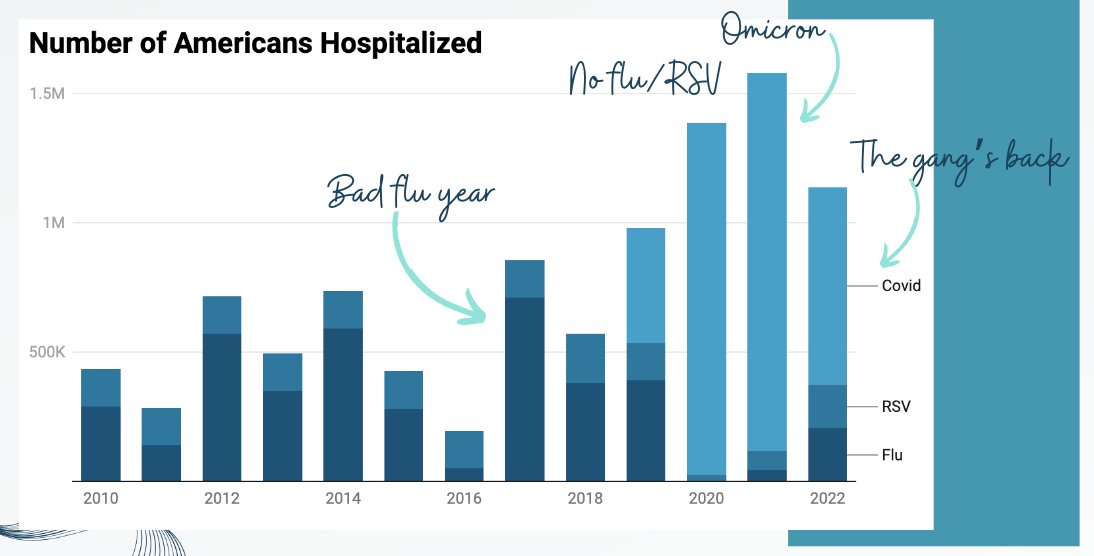
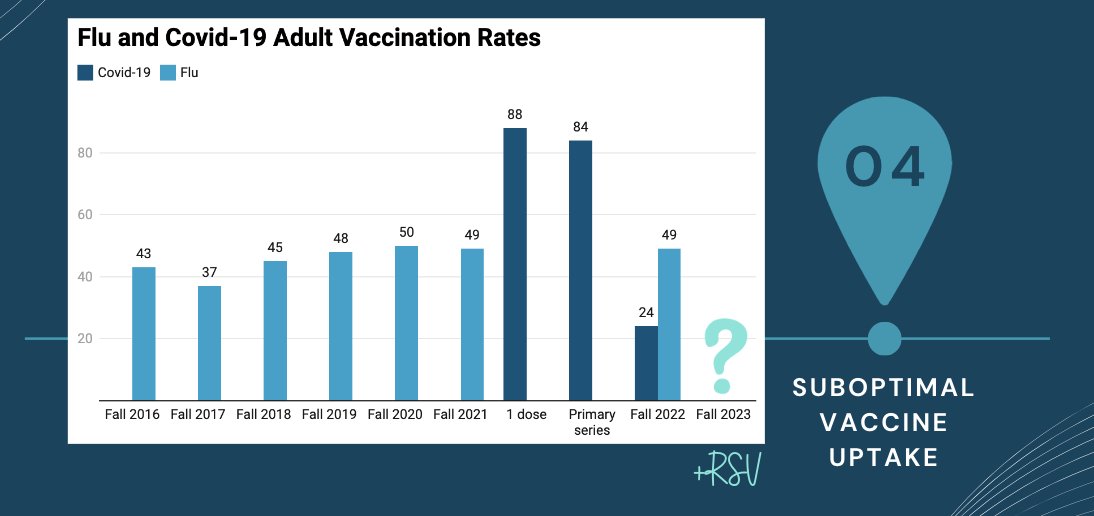
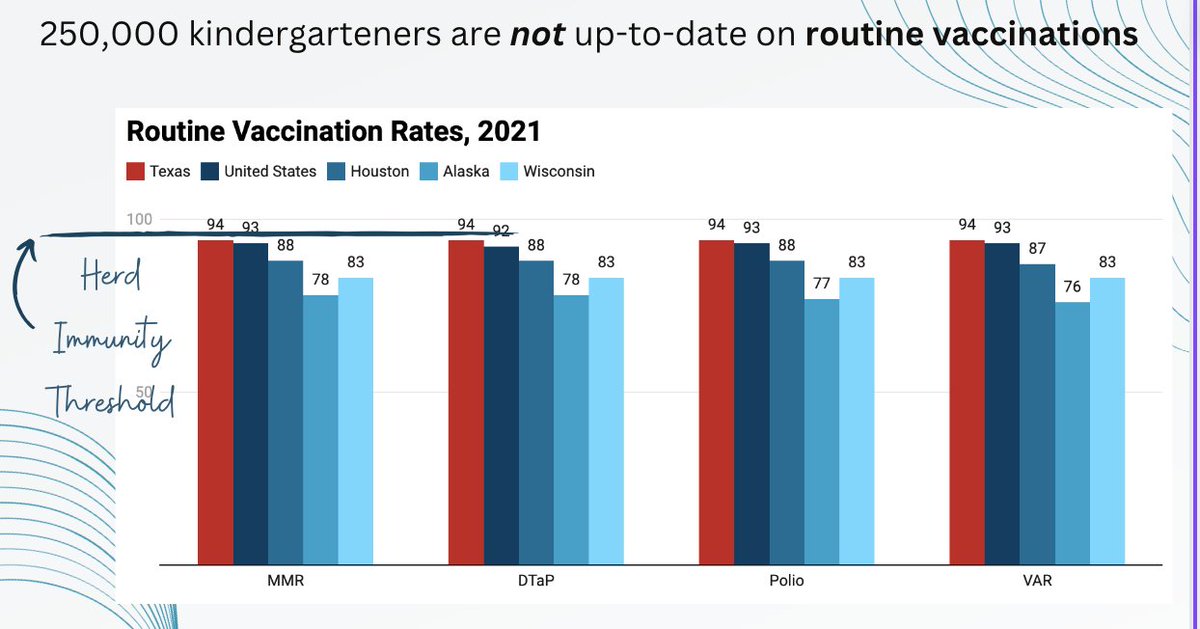
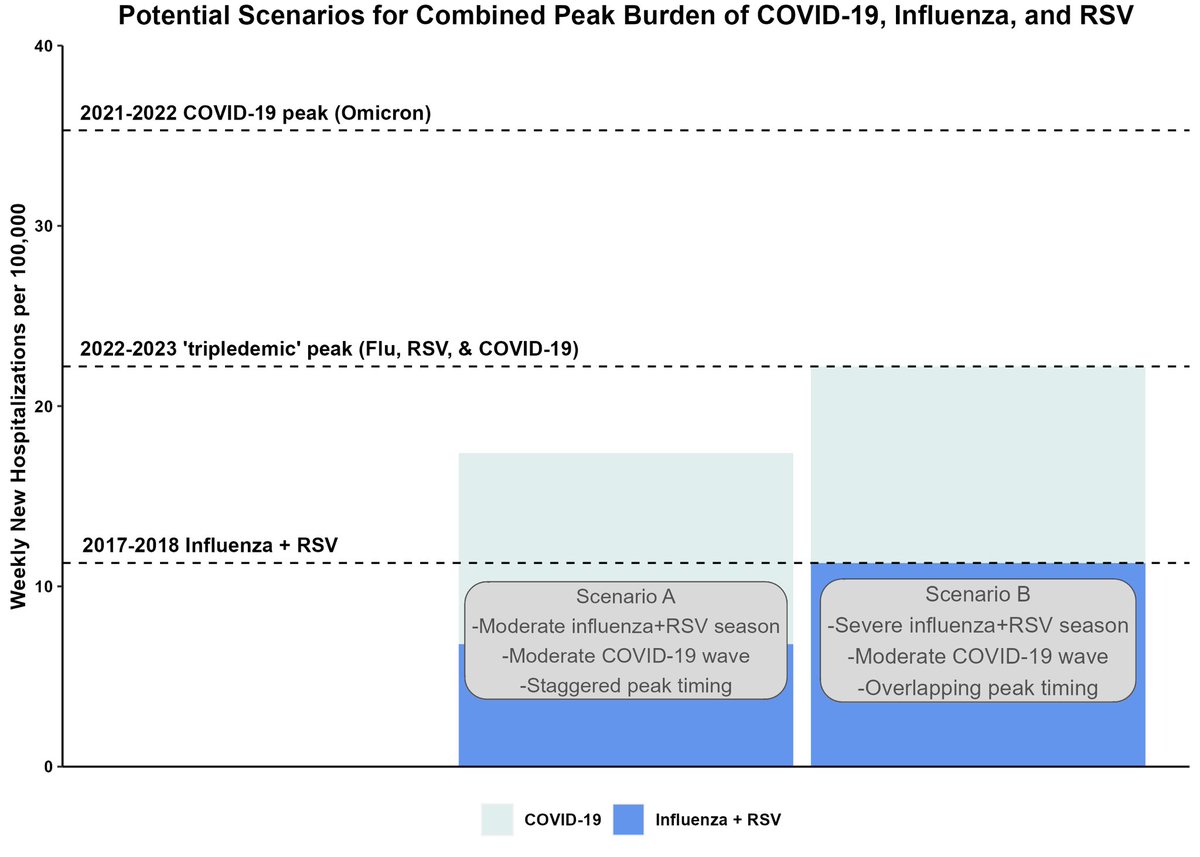

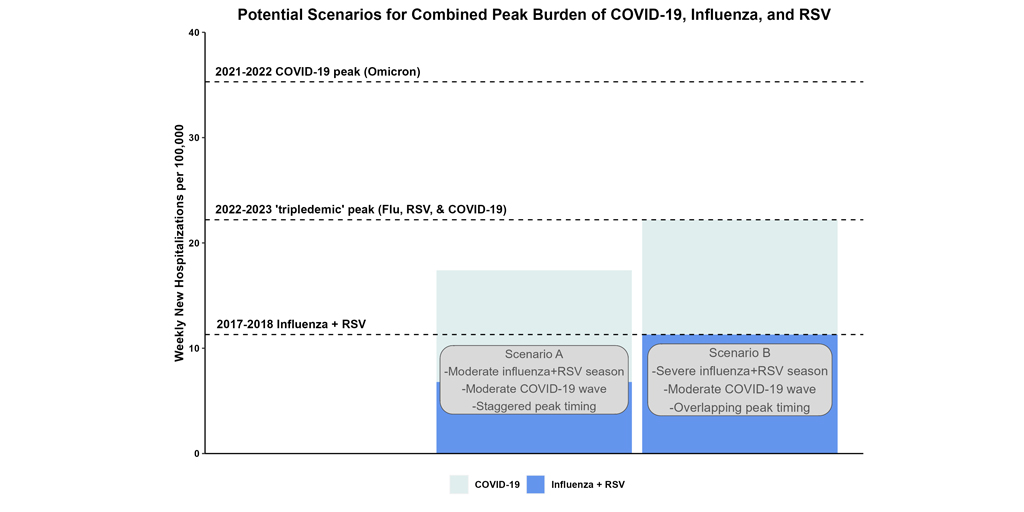
ALT Chart with stacked blue bars show two potential scenarios for hospitalizations related to flu, RSV, and COVID-19 this fall and winter. Dashed lines show hospitalization levels for the viruses in previous years for comparison. The two scenarios illustrate how the additional burden from COVID-19 during a moderate season for the three respiratory diseases (left bar) may generate more hospital demand than a severe influenza and RSV season prior to the emergence of COVID-19 (bottom dashed line).

ALT Chart with stacked blue bars show two potential scenarios for hospitalizations related to flu, RSV, and COVID-19 this fall and winter. Dashed lines show hospitalization levels for the viruses in previous years for comparison. The two scenarios illustrate how the additional burden from COVID-19 during a moderate season for the three respiratory diseases (left bar) may generate more hospital demand than a severe influenza and RSV season prior to the emergence of COVID-19 (bottom dashed line).




ALT A large grizzly bear and small teddy bear with text that reads “A flu vaccine can take flu from wild to mild.” #FightFlu and the CDC logo are placed in the bottom right corner