
Web3 enthusiast | Backend programmer | Football lover
Joined December 2019
- Tweets 9,780
- Following 2,003
- Followers 1,898
- Likes 9,245
3,252 Photos and videos




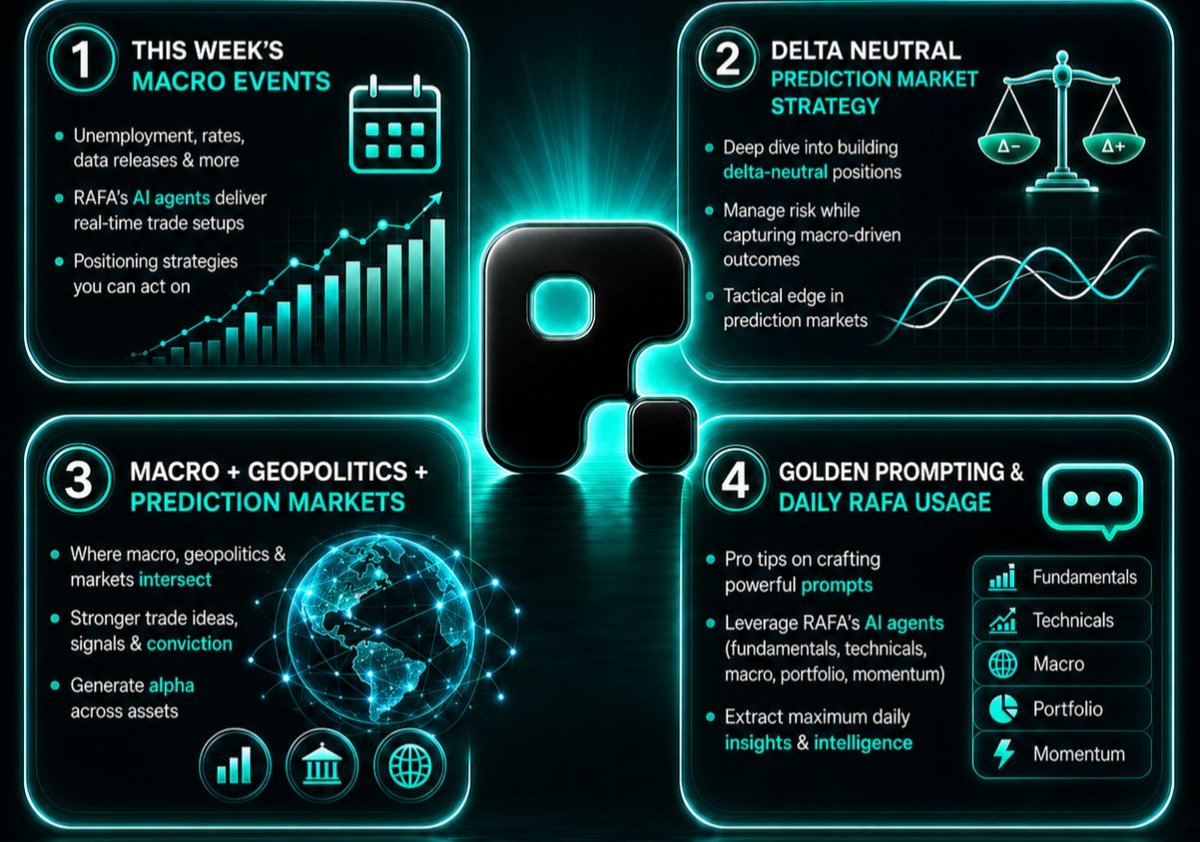
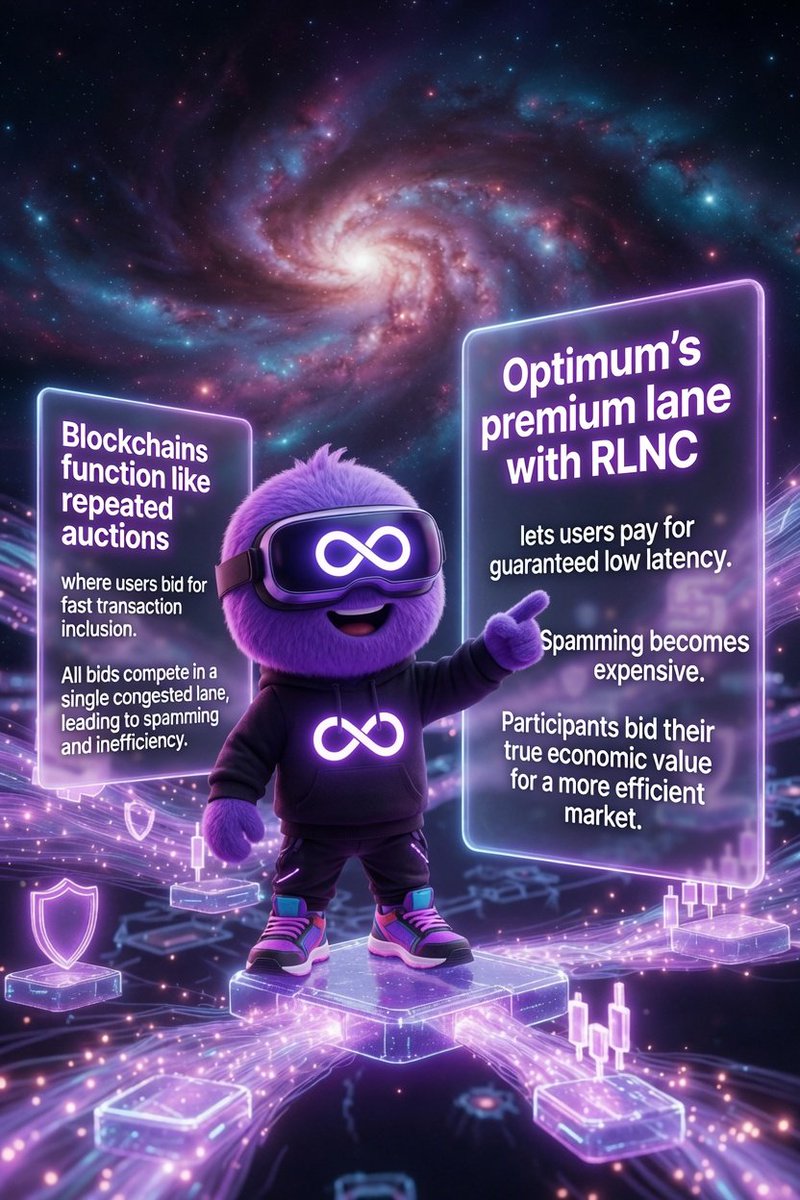
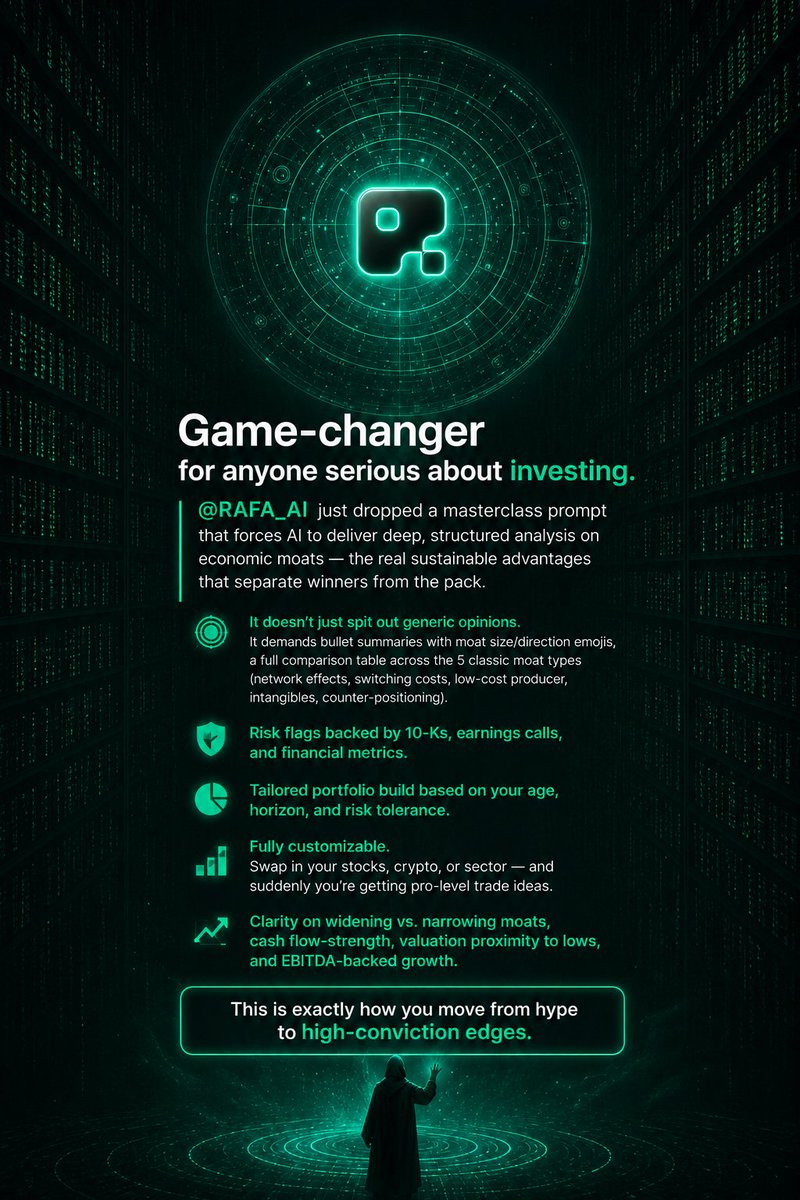
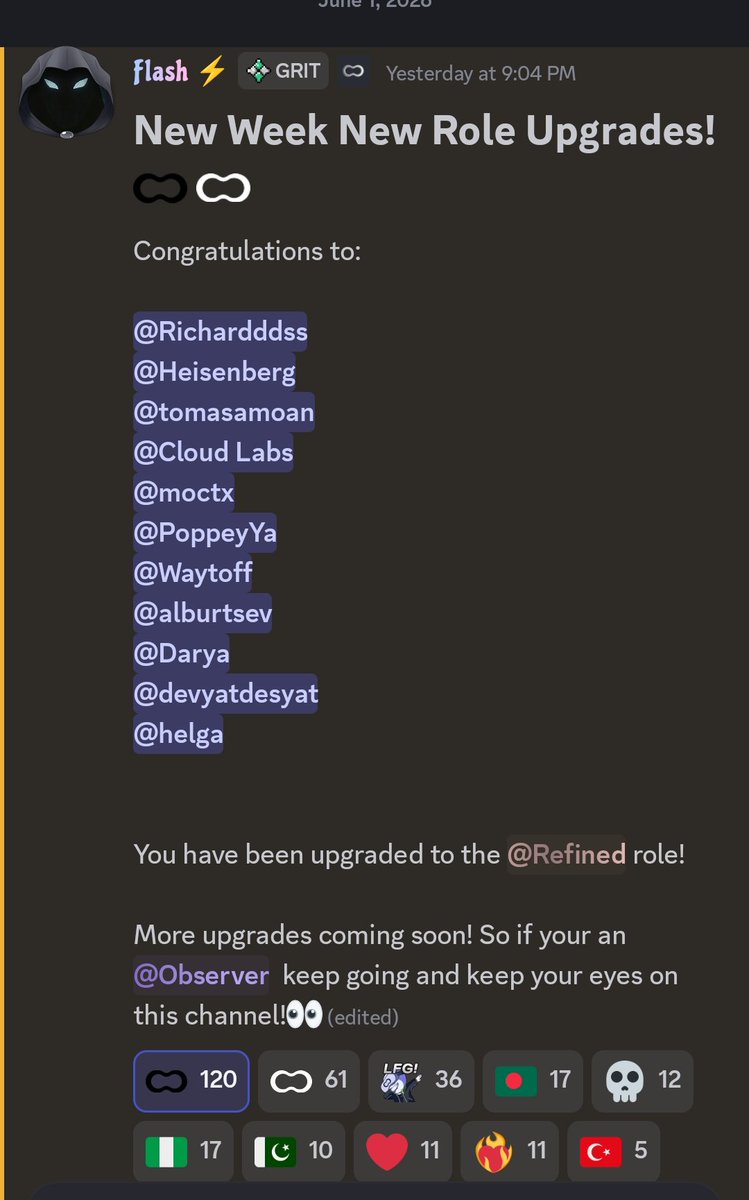


AI has become incredibly versatile, it can entertain us for hours or help us learn new things. But what truly stands out is when it delivers real, practical value in areas that matter most to our daily lives.
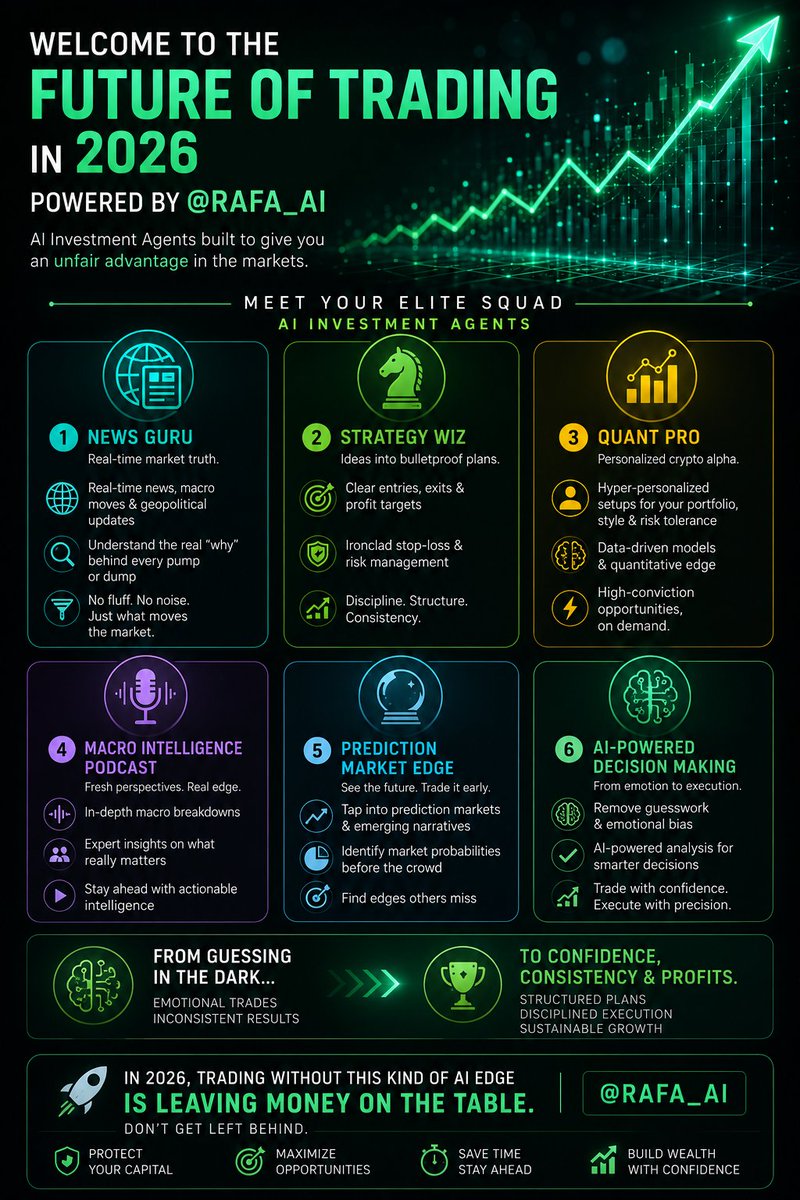
This is where @RAFA_AI shines. While many AI tools focus on creative fun or general knowledge, RAFA steps in as a thoughtful companion for navigating today’s volatile markets.
It provides actionable Trade Ideas and Setups across options trading, crypto, stocks, and xStocks insights you can actually use.I appreciate how RAFA turns complex market data into clear, usable guidance through its dedicated AI agents. In a fast moving world where timing and clarity make all the difference, having reliable support that helps cut through the noise feels genuinely empowering.
The striking visual in this post captures that perfectly: a powerful, circuit-driven figure ready to face the chaos with confidence and precision. It’s a reminder that technology, at its best, doesn’t just impress us it equips us to make better decisions
16h

AI can keep you entertained, or make you smarter, but RAFA can assist you in navigating a volatile market with Trade Ideas and Setups in:
- #optionstrading
- crypto
- stocks (and xStocks)
Try prompting our dedicated AI agents for unique market insights. Free to download today. Link in bio✊
6
2
7
96
iscy retweeted

16h
AI can keep you entertained, or make you smarter, but RAFA can assist you in navigating a volatile market with Trade Ideas and Setups in:
- #optionstrading
- crypto
- stocks (and xStocks)
Try prompting our dedicated AI agents for unique market insights. Free to download today. Link in bio✊
179
131
219
2,584
iscy retweeted
Jun 13
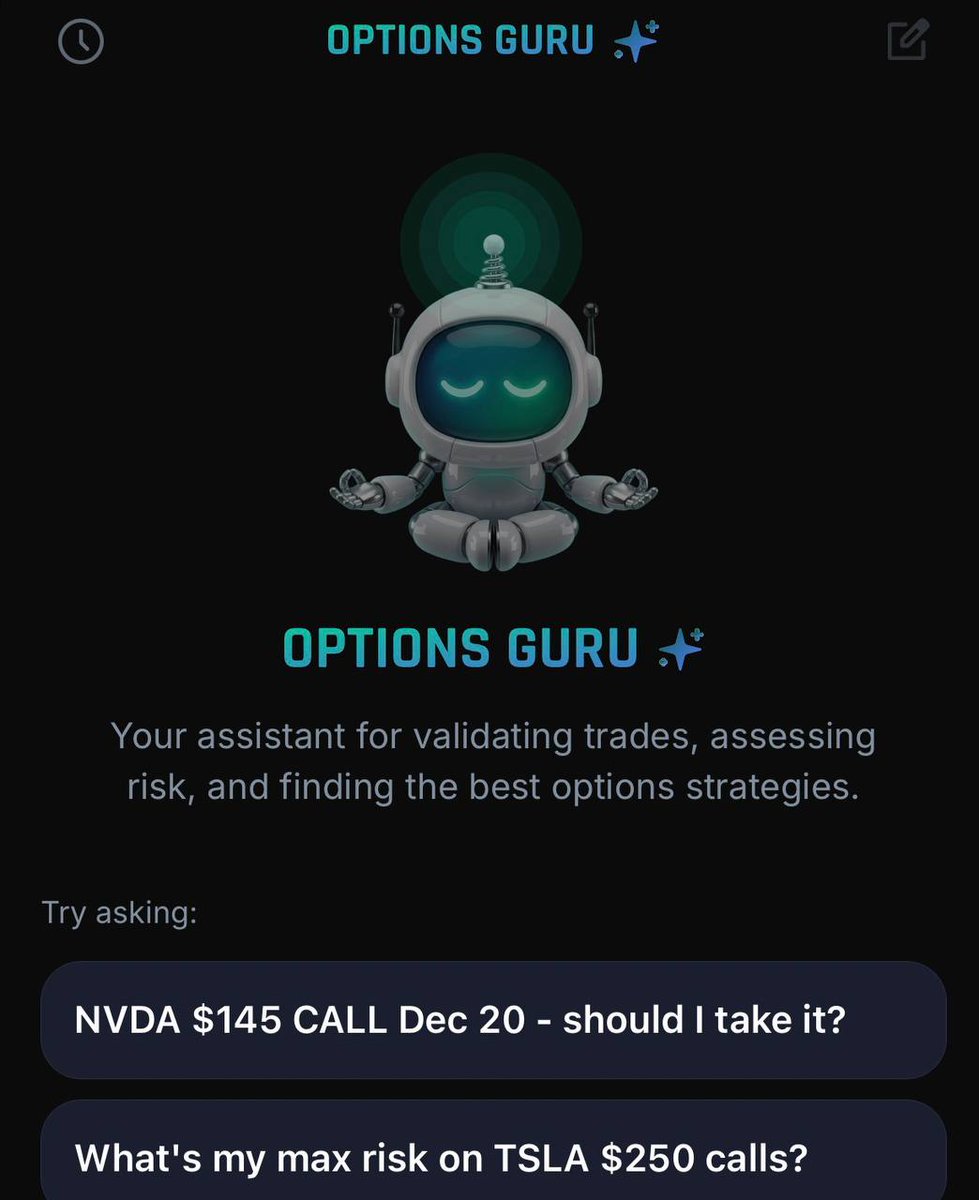
Traders rely on #optionsflow to identify unusual market behavior, so the Options Guru App streamlines it for you, to break down:
- Large/Sudden block trades
- Sweep orders
- Unusual options activity
- Open interest changes
- Dark pool activity
These signals show institutional positioning and potential shifts in market sentiment before they become obvious in price action.
You get it all in the simplest format, updated in real-time. #unusualoptions detects what the insiders know.
Incoming. Stay tuned for official updates when you can get your hands on the app.
131
105
167
2,213
iscy retweeted
Jun 10
Core Data Every Options Trader Needs
No matter if you're trading directional calls and puts, credit spreads, iron condors, straddles, or 0DTE strategies, some information is simply a must:
🟢 Real-Time Options Chain Data
- Bid/ask prices
- Last traded price
- Volume
- Open interest
- Greeks (Delta, Gamma, Theta, Vega, and Rho)
They all help evaluate liquidity, execution quality, probability of profit, and overall trade viability.
But even a great setup can become unprofitable if spreads are too wide.
It's hard work, it takes time, education, and trial & error.
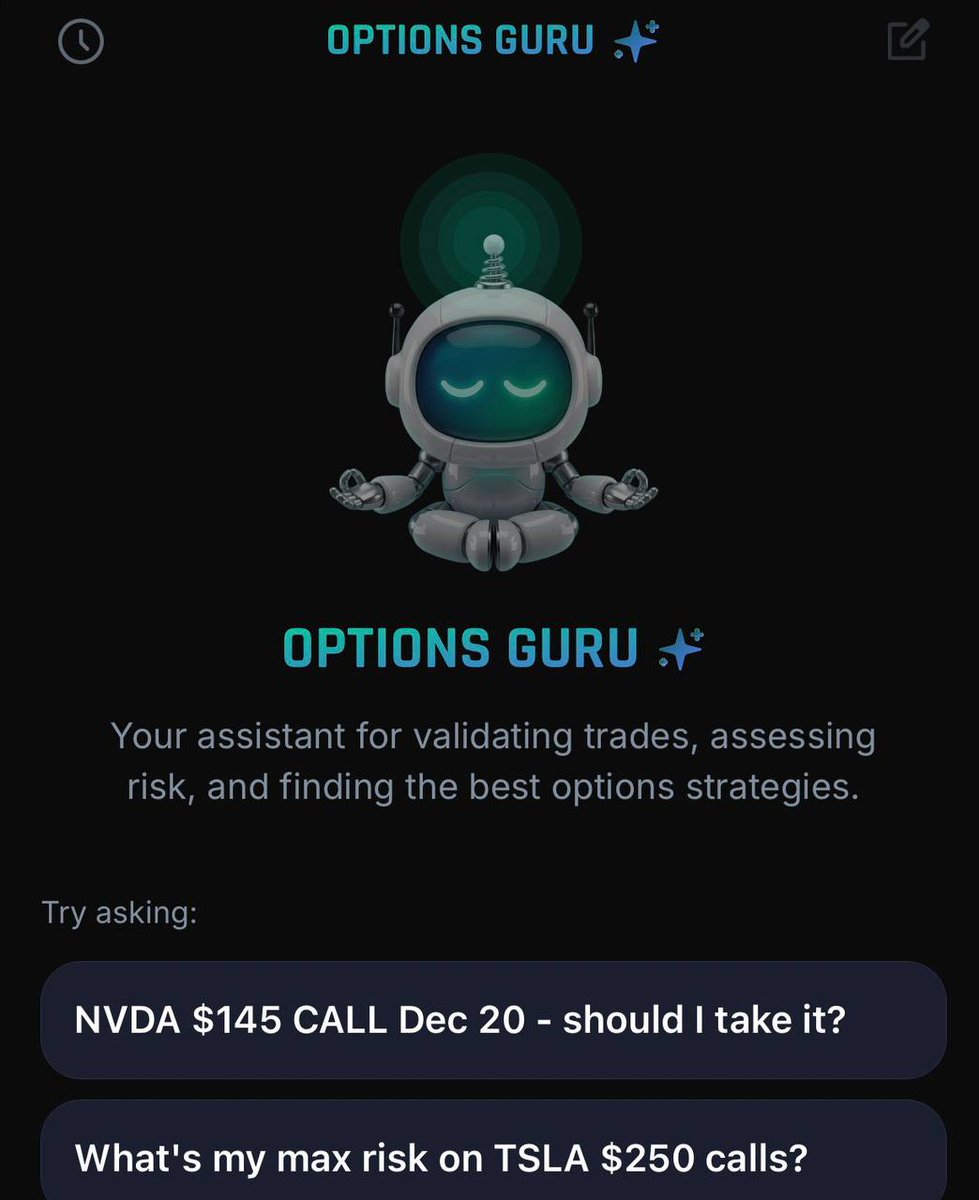
The Options Guru is your AI agent that simplifies this whole process. Tune in to tomorrow's podcast to learn more about it 👇 3PM UTC Thursdays
x.com/i/broadcasts/1rGmqojQO…
131
105
187
2,645
iscy retweeted
Jun 10
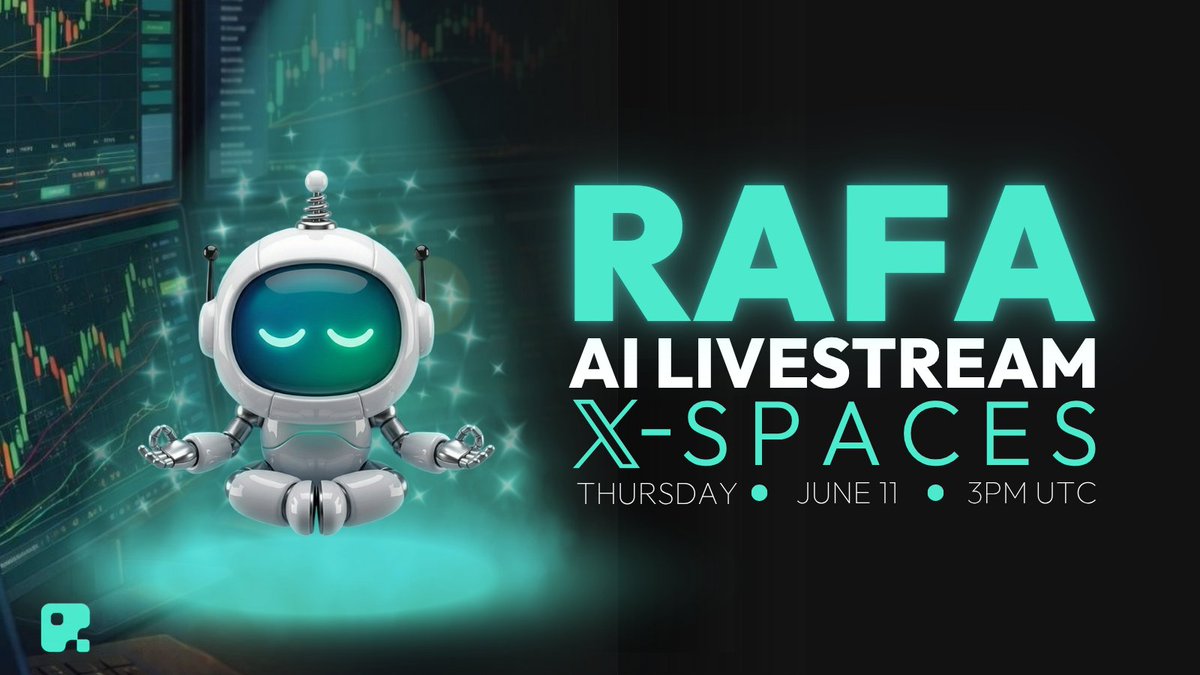
🔥 3PM UTC Thursday 11th June - Next Podcast Will Be A Real Treat
Don't miss the first public sneak peek of the Options Guru app that @RBoccius will be showing you live
We'll also be looking at Macro Data and how to use RAFA for navigating volatility and the upcoming #SpaceXIPO for $SPCX
Click here to join when we go live👇
x.com/i/broadcasts/1rGmqojQO…
154
108
187
5,470
iscy retweeted
Jun 10
GM Traders
"Unusual Options" trade insights show you what the insiders are doing.
Once you realise how unique that is in the market, you might just get as bullish as we are on RAFA.

188
131
246
3,170
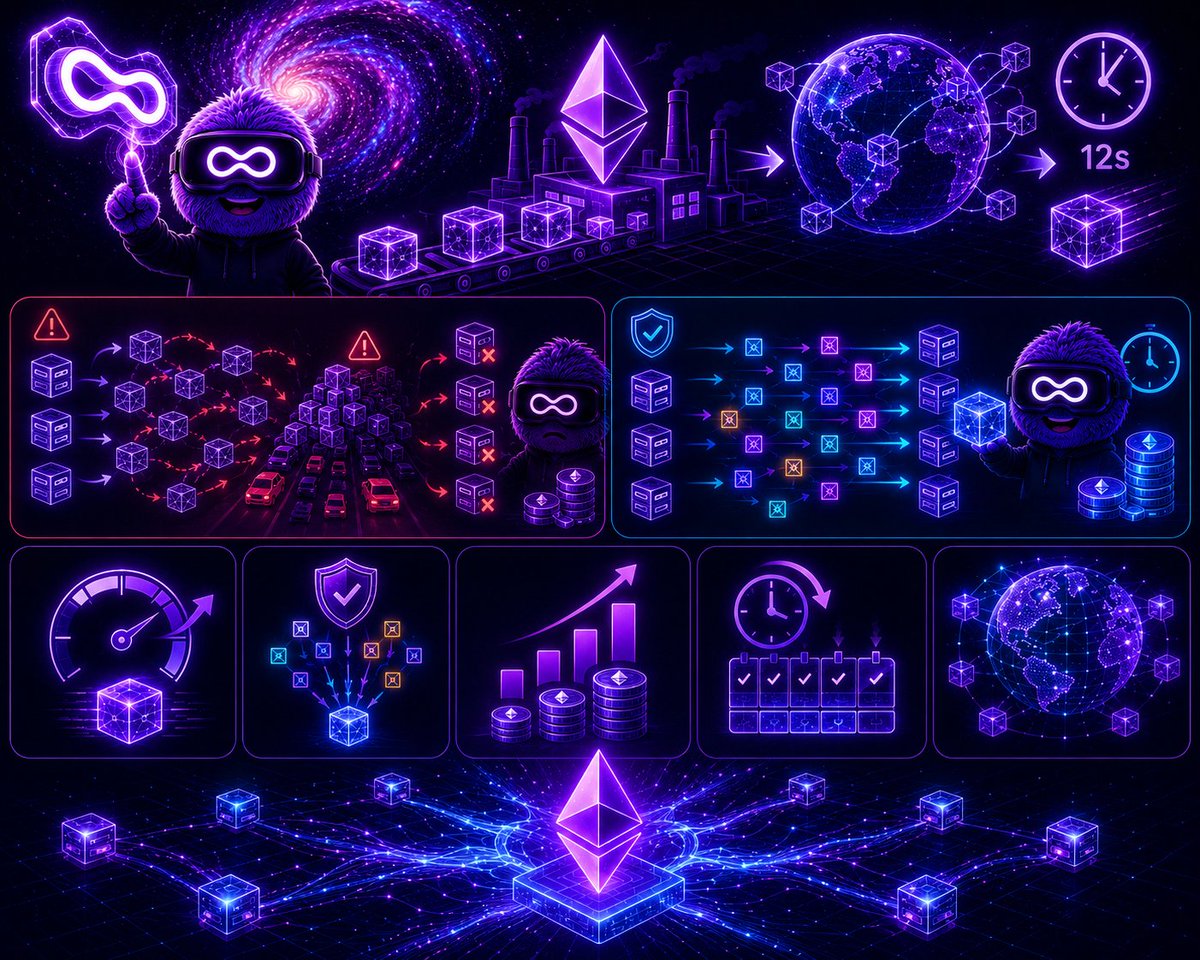
Fast & consistent data propagation is how we truly optimize Ethereum’s block supply chain.
Think of Ethereum as a global factory producing a new “shipment” (block) every 12 seconds. Today, these shipments spread via old-school gossip, copies get duplicated, traffic jams form, and late arrivals mean validators miss MEV opportunities and rewards.
@get_optimum changes that with Random Linear Network Coding (RLNC). Instead of shipping full identical packages, optimum send smart coded pieces that nodes can efficiently combine from multiple sources.
The Result? Blocks arrive faster, more reliably, and with far less bandwidth waste even as blocks get bigger.
Validators get more usable time in every slot, earn higher yields, and the entire network becomes healthier and more scalable.
This is the real foundation for L1 scaling.
Jun 9

Consistently fast data propagation is how we optimize Ethereum's block supply chain. @sajidazouarhi
2
8
98
I Saw @RAFA_AI break down the buzz around today’s market open with the #SpaceX IPO coming June 12.
Popular thesis online: potential liquidity drain investors pulling cash from stocks & ETFs to buy SpaceX shares.
RAFA’s 5 AI Agents backed it with historical IPO precedents.
Key watch: $QQQ in the first 1-2 hours for support breaks and signals.
They also challenged the thesis and suggested 5 alternative trade ideas with confidence scores. Solid balanced approach.
RAFA looks useful for idea generation. Not financial advice and always DYOR.
5
1
10
113
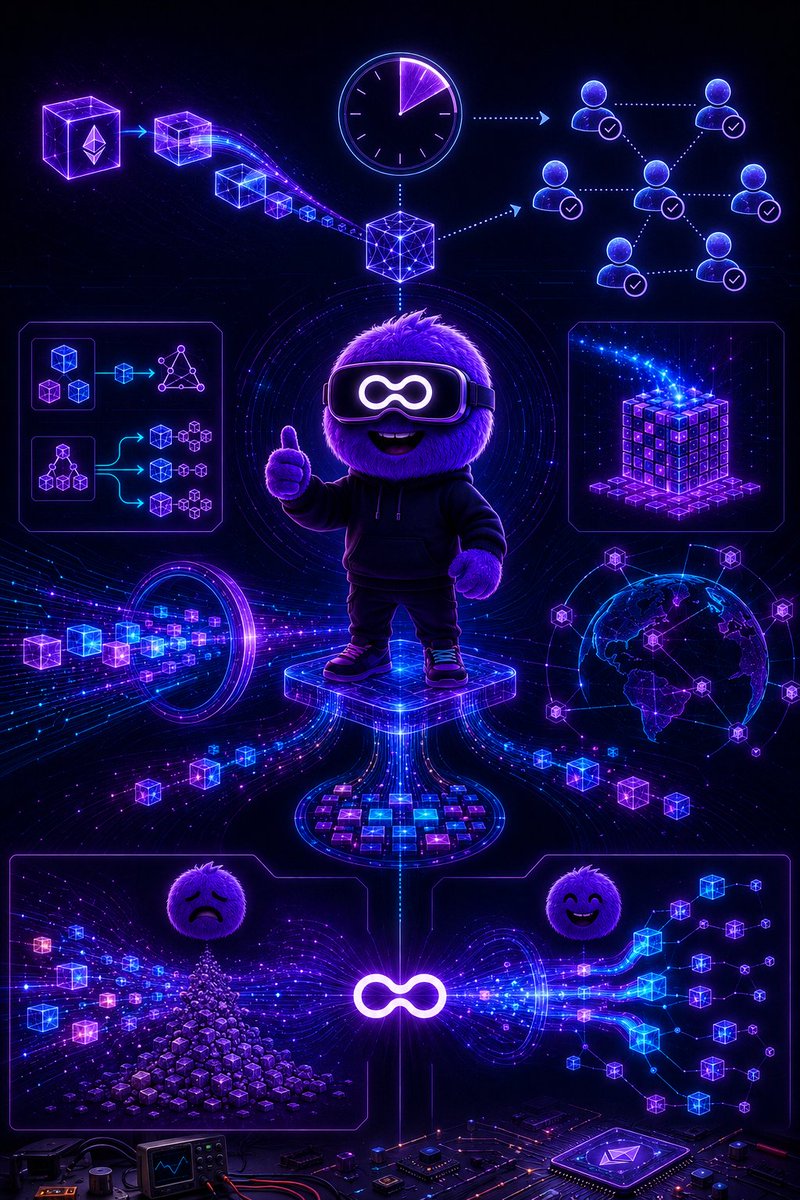
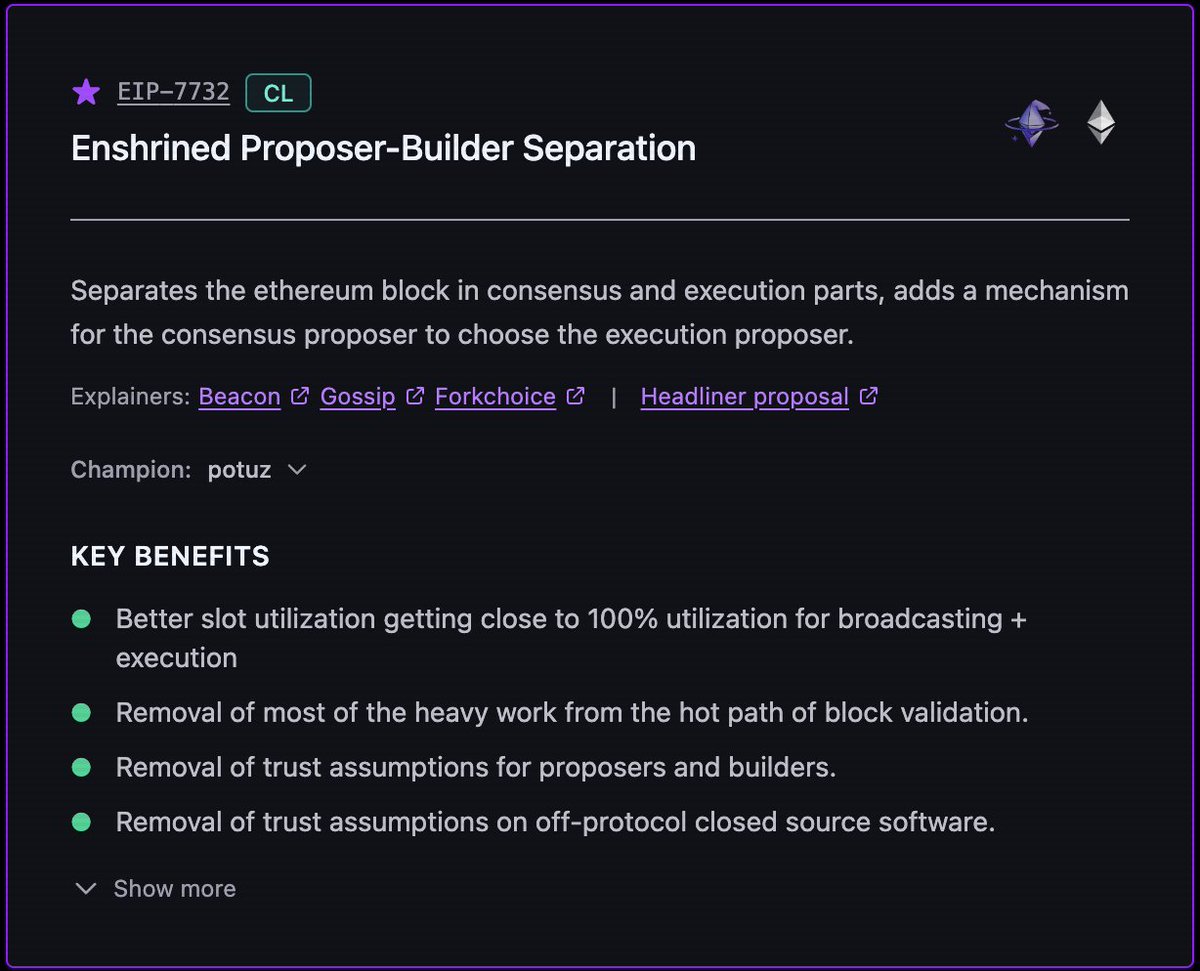
𝗲𝗣𝗕𝗦 (𝗘𝗻𝘀𝗵𝗿𝗶𝗻𝗲𝗱 𝗣𝗿𝗼𝗽𝗼𝘀𝗲𝗿-𝗕𝘂𝗶𝗹𝗱𝗲𝗿 𝗦𝗲𝗽𝗮𝗿𝗮𝘁𝗶𝗼𝗻) is Ethereum’s upcoming upgrade that splits blocks into parts with smarter deadlines.
It lets validators vote after seeing only a small cryptographic commitment, giving the network the full 12-second slot to receive the actual transactions and blobs.
Clever timing fix that enables bigger blocks but still just a workaround for bandwidth limits, real scaling needs faster data propagation.
That’s where 𝗢𝗽𝘁𝗶𝗺𝘂𝗺’𝘀 𝗥𝗮𝗻𝗱𝗼𝗺 𝗟𝗶𝗻𝗲𝗮𝗿 𝗡𝗲𝘁𝘄𝗼𝗿𝗸 𝗖𝗼𝗱𝗶𝗻𝗴 shines. @get_optimum
Smart upgrade. Let’s scale the L1 properly. 🚀
Jun 8
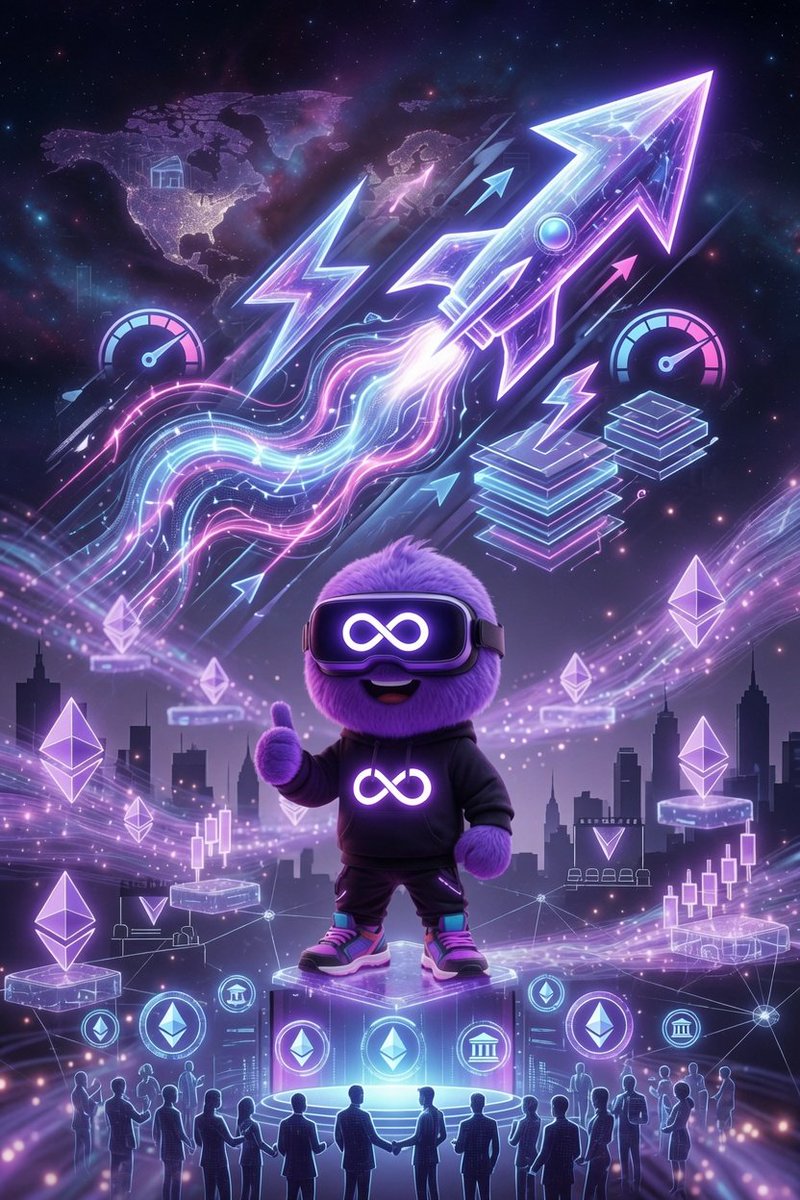
𝐞𝐏𝐁𝐒, 𝐬𝐥𝐨𝐭 𝐭𝐢𝐦𝐢𝐧𝐠𝐬, 𝐚𝐧𝐝 𝐬𝐜𝐚𝐥𝐢𝐧𝐠 𝐚𝐩𝐩𝐫𝐨𝐚𝐜𝐡𝐞𝐬
Ethereum is targeting Q3 for the next major upgrade, Glamsterdam. ePBS is the headliner, restructuring the deadlines within a slot to allow for larger blocks (higher gas limit & more blobs).
In the current slot structure a block has to be selected, proposed, propagated and attested to by the network in under 4 seconds. Increasing block size means more data has to reach nodes in the same short amount of time, and you run into bandwidth constraints.
ePBS buys more time for data propagation by separating blocks into the consensus block, execution payload, and blobs, and changing the deadlines for when those different parts of the block need to arrive.
Instead of the entire block needing to reach validators before the 4 second mark, they only need to receive the consensus block- a cryptographic commitment to a certain block & set of blobs. They make their attestation without receiving the execution payload, then have the remainder of the slot to receive that payload and verify it. Blob data is propagated separately giving nodes the full 12 seconds to receive it.
This scheme makes it easier to increase the gas and blob limits, which is good for some additional scaling. However, it's more of a sidestep than a true solution to the bandwidth bottleneck.
If you want to unlock serious throughput gains you need to improve how fast and efficiently data can move across the network. That's the key to increasing block size while ALSO shortening slot times.
Removing the bandwidth bottleneck means fundamentally upgrading the way data moves across Ethereum. Optimum's Random Linear Network Coding approach propagates Ethereum blocks with lower latency AND in a way that won't slow down as the size of blocks increase, OR as the network becomes larger and even more decentralized.
Scale the L1.
3
1
9
107
iscy retweeted

Jun 7
All that happened this week on @get_optimum, brought to you by yours truly.
35
81
111
6,668
iscy retweeted
Jun 7
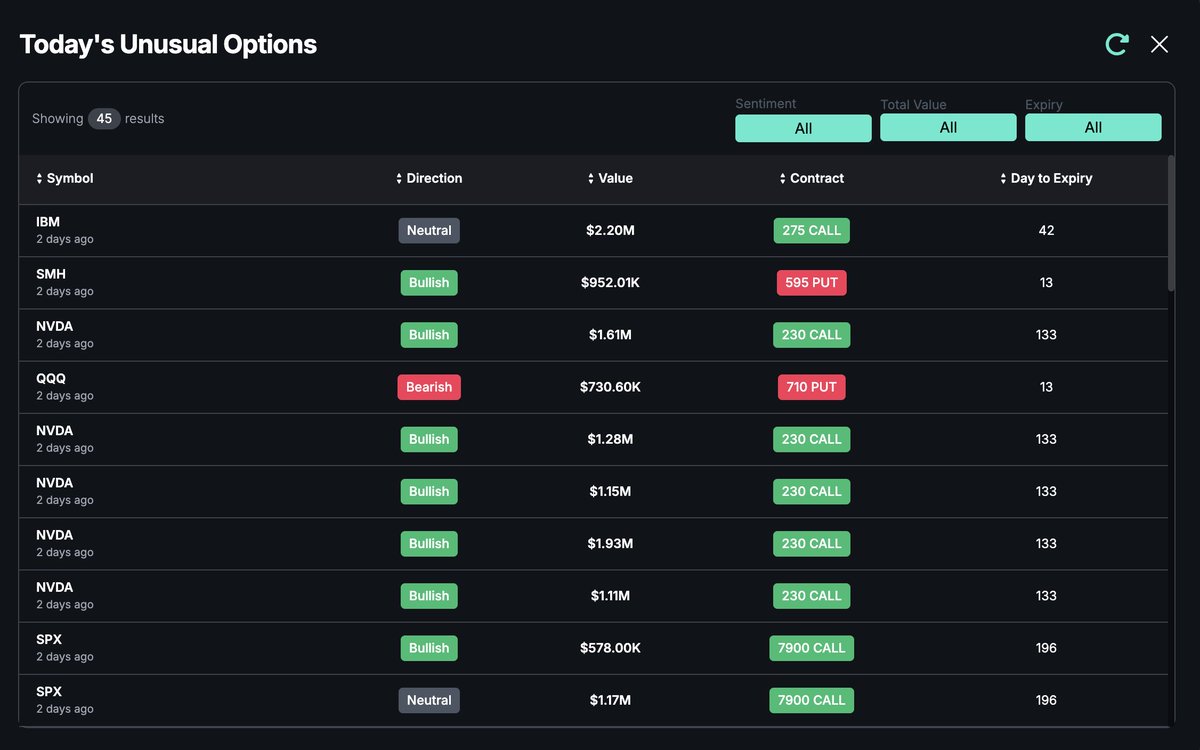
Unusual Options are the insights to let you know what's happening behind the curtain with options trading.
Who knows what, when, and how, RAFA detects it all in real-time
One Agent has your back. But there are 4 others that give max insights too. Have you tried it? Link in bio
108
85
183
2,722
Rafa AI has awakened ✨🌌
In a world shrouded in mystery and infinite possibility, a glowing portal opens revealing a realm where intelligence transcends code and creativity knows no bounds.
This is more than just AI.
This is Rafa AI, a cosmic fusion of cutting-edge intelligence and breathtaking imagination.
A sanctuary where data dances with dreams, where questions unlock entire universes, and where the impossible becomes your everyday reality.
Look into this portal:
Emerald mountains bathed in ethereal light.
Ancient temples whispering secrets of tomorrow.
A river of destiny winding through lands untouched by ordinary minds.
And above it all the glowing symbol of curiosity, power, and infinite potential.
Whether you're a visionary builder, a curious explorer, or someone ready to redefine what's possible…
Rafa AI is your gateway.
The future isn't coming.
It's already glowing on the other side.
2
8
65
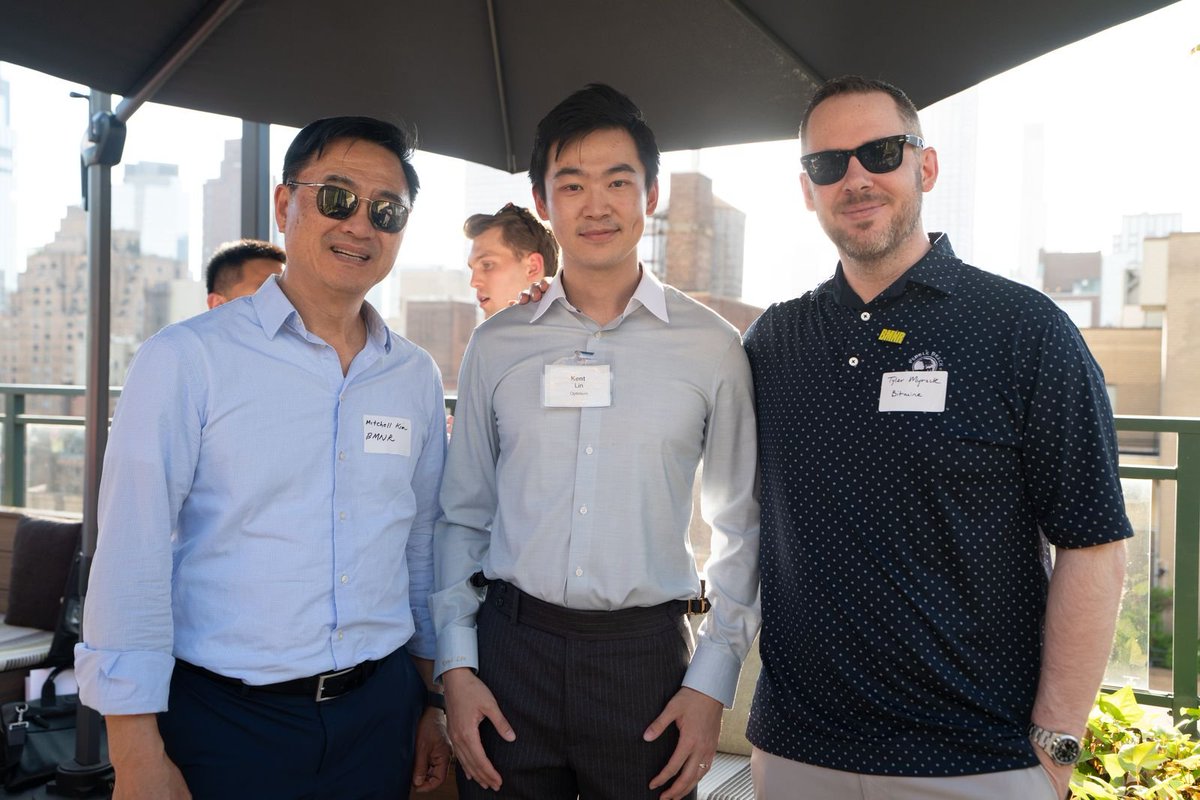
Optimum team out here networking heavy ahead of #ETHConf.
Speed RLNC infra = next level. Who's attending? @get_optimum
Jun 5
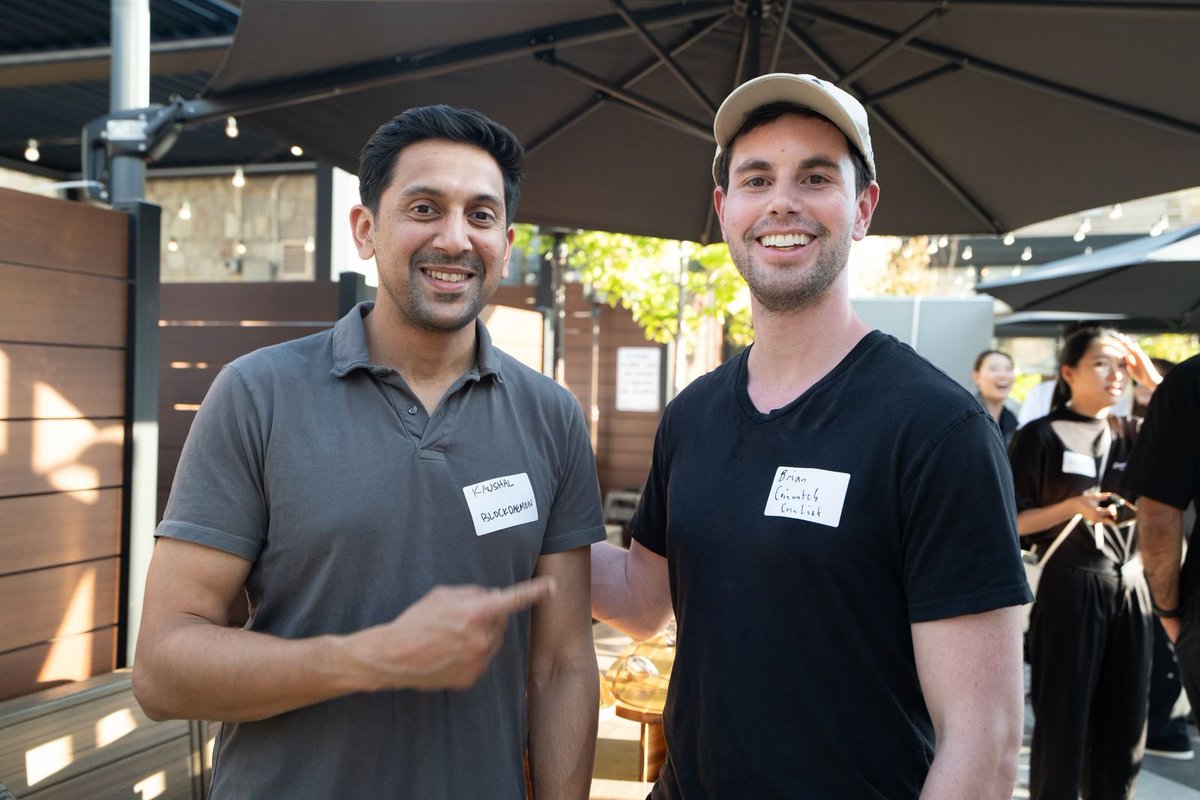
The TAM is the entire global financial system & the ticker is $ETH.
Cheers from the Optimum team, @BitMNR, @1kxnetwork, @BlockdaemonHQ and @Auros_global here at last night's Top of the Block event we hosted in NYC. 🥂
Catch us next week at @ethconf!


5
2
12
229
Optimum team out here networking heavy ahead of #ETHConf.
Speed RLNC infra = next level. Who's attending? @get_optimum
Jun 5
The TAM is the entire global financial system & the ticker is $ETH.
Cheers from the Optimum team, @BitMNR, @1kxnetwork, @BlockdaemonHQ and @Auros_global here at last night's Top of the Block event we hosted in NYC. 🥂
Catch us next week at @ethconf!
5
2
12
229