
Founder of Vlight AI- From idea to factory-ready hardware product in days. DM me for Beta Test.
Joined November 2019
- Tweets 230
- Following 62
- Followers 21
- Likes 97
67 Photos and videos
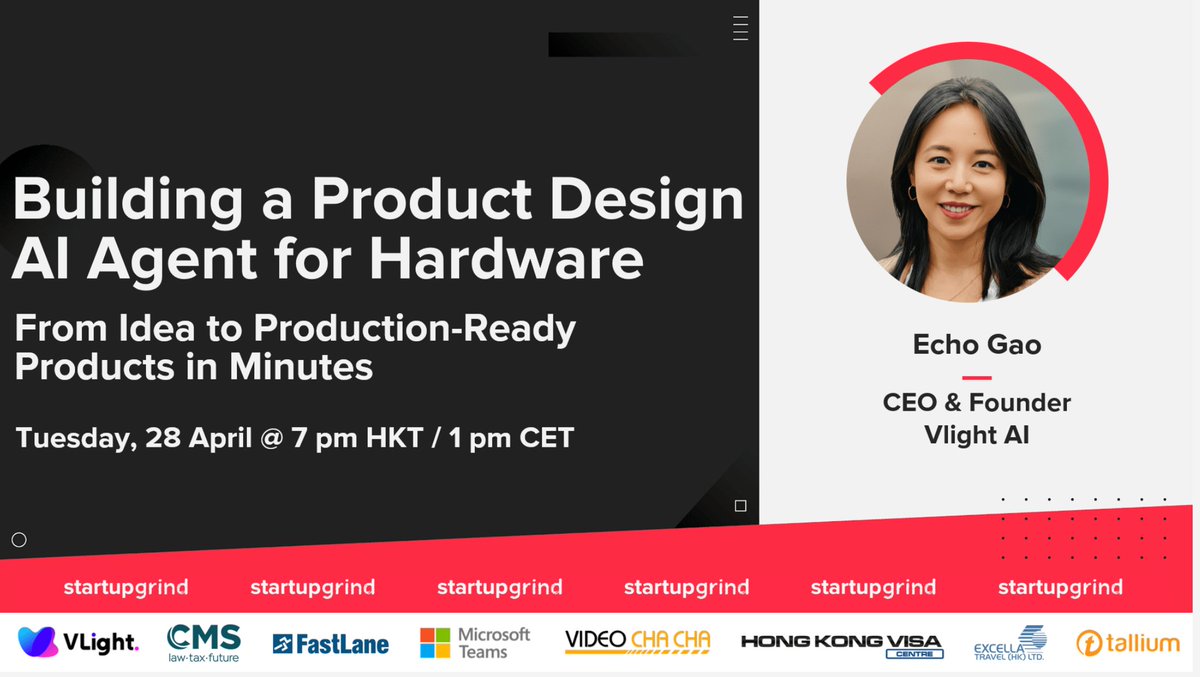


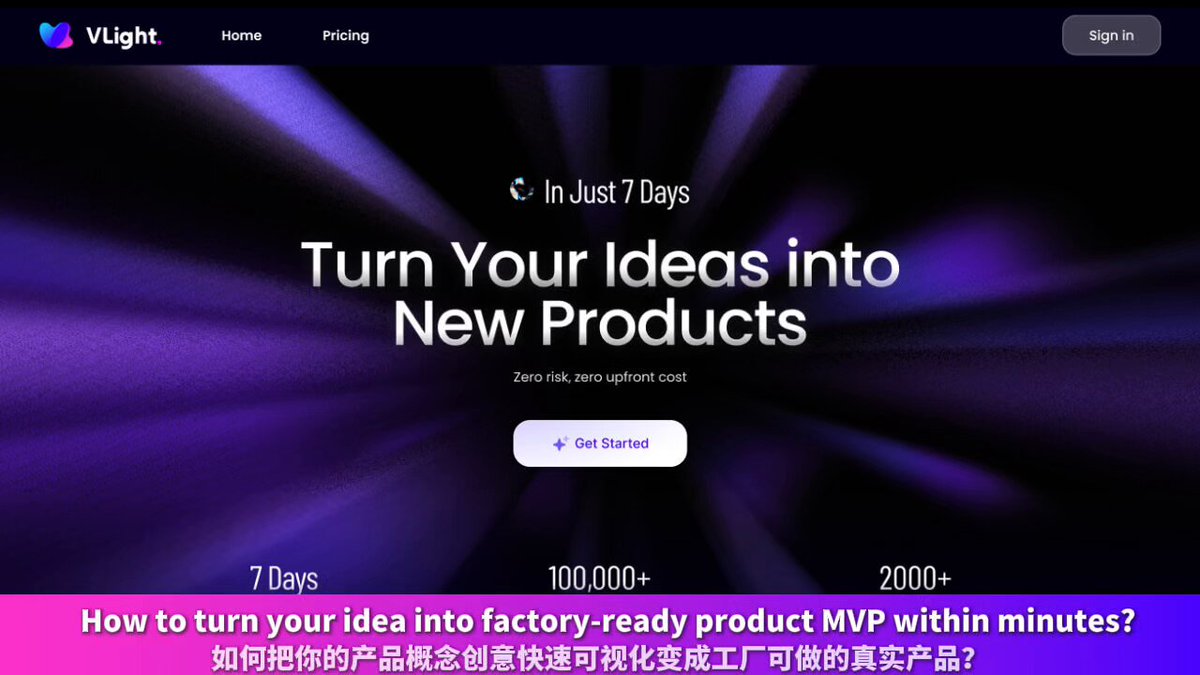
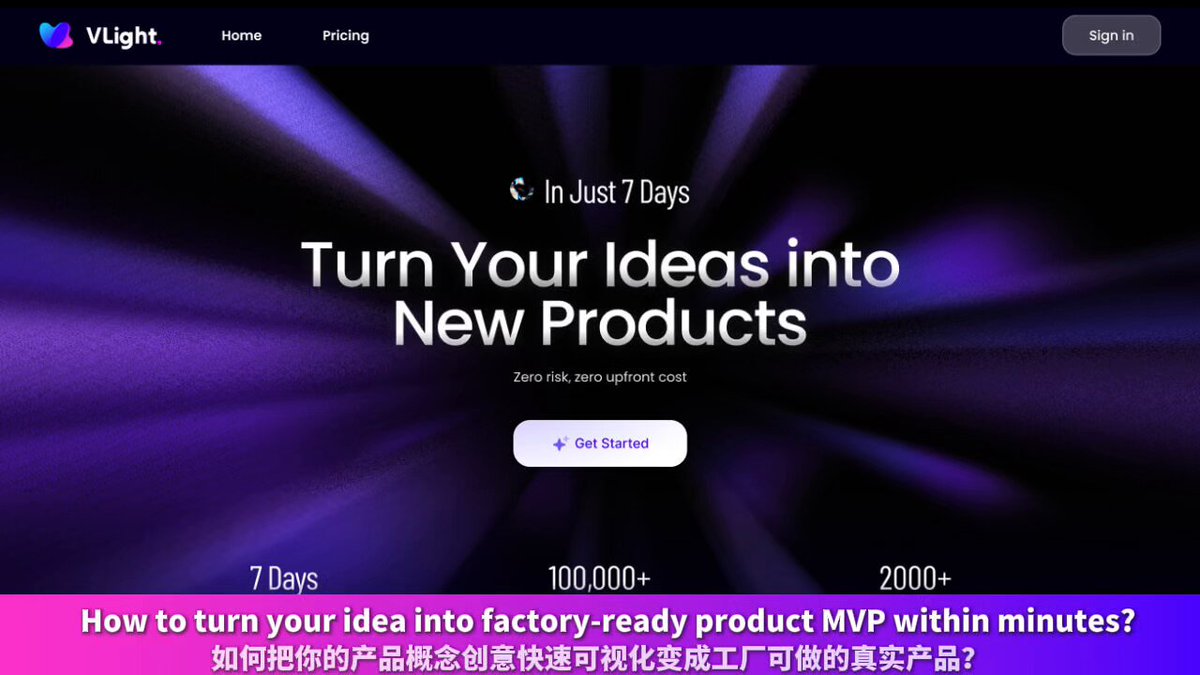
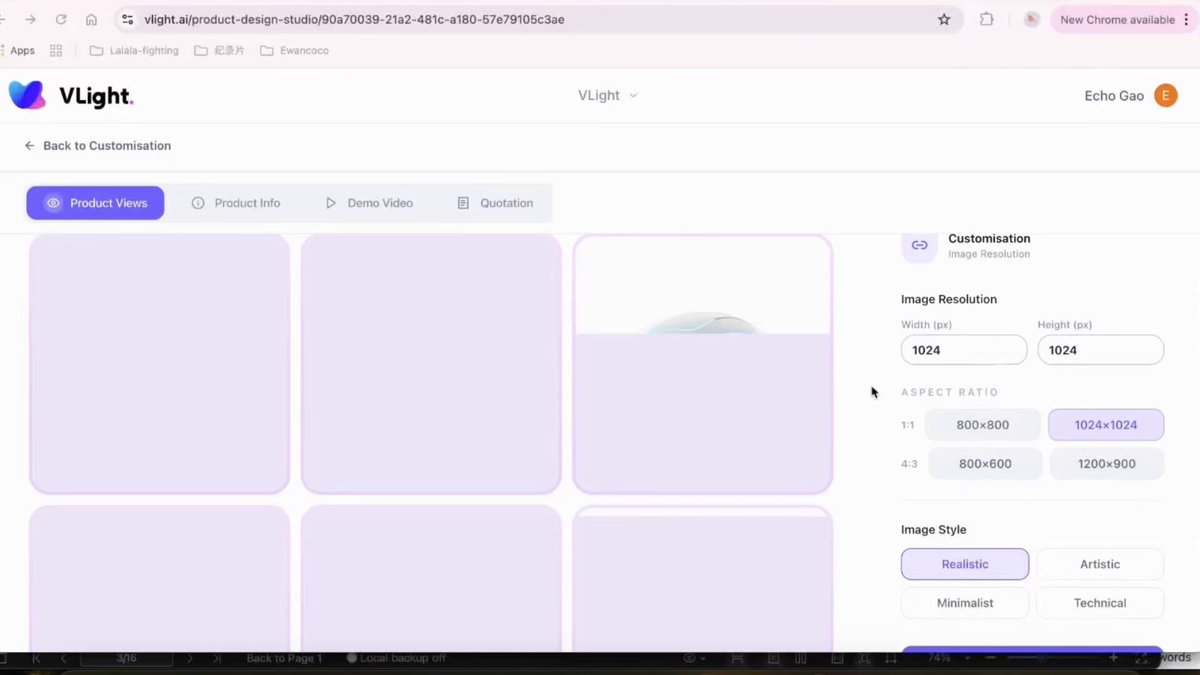
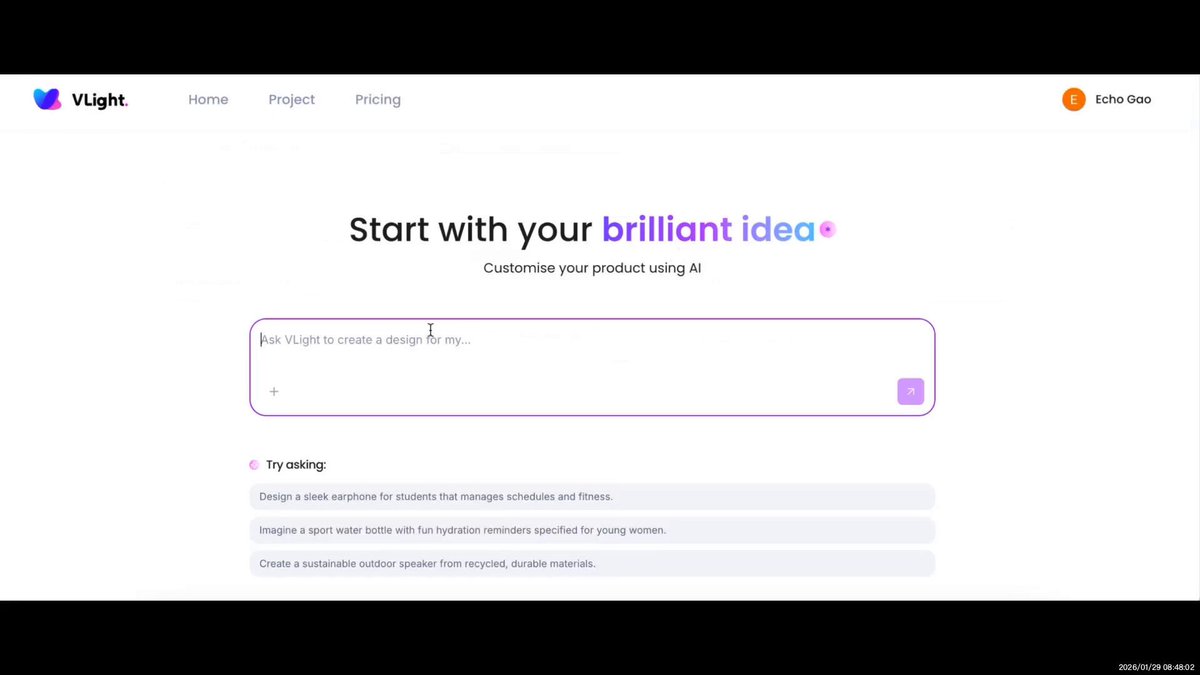
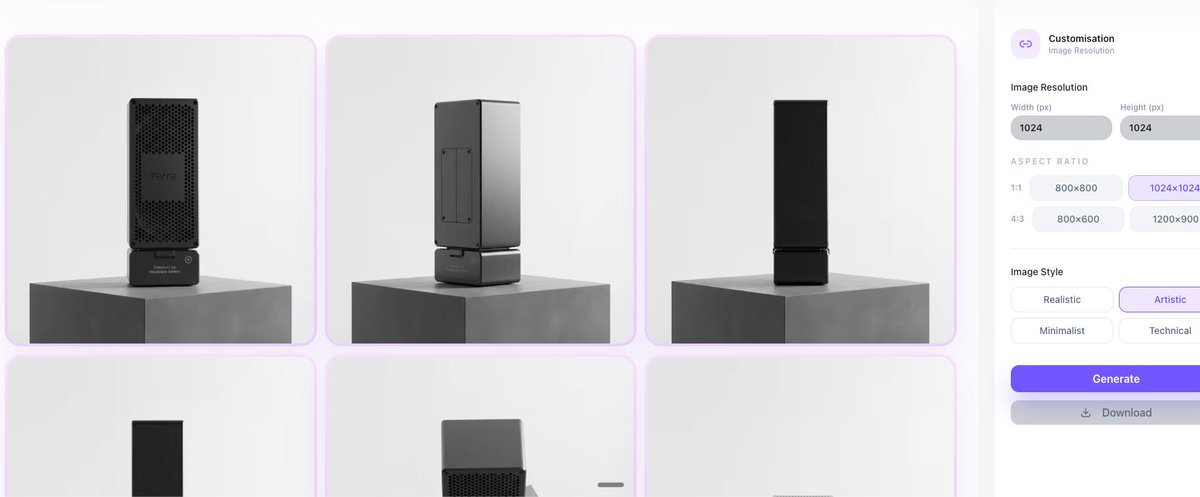

I will share my product - Vlight AI in Startup Grind today. If anyone want to know more about the jounery of building this AI agent, please join and I would like to meet new friends here.
For more details, pleaes check:
Building a Product Design AI Agent for Hardware startupgrind.com/events/deta…
1
5
56
Echo Gao retweeted

Apr 12
The most efficient way for humans to collaborate: do not collaborate
One person should own something end-to-end and work with agents
109
56
648
52,576
Have you noticed AI is becoming more human-like?
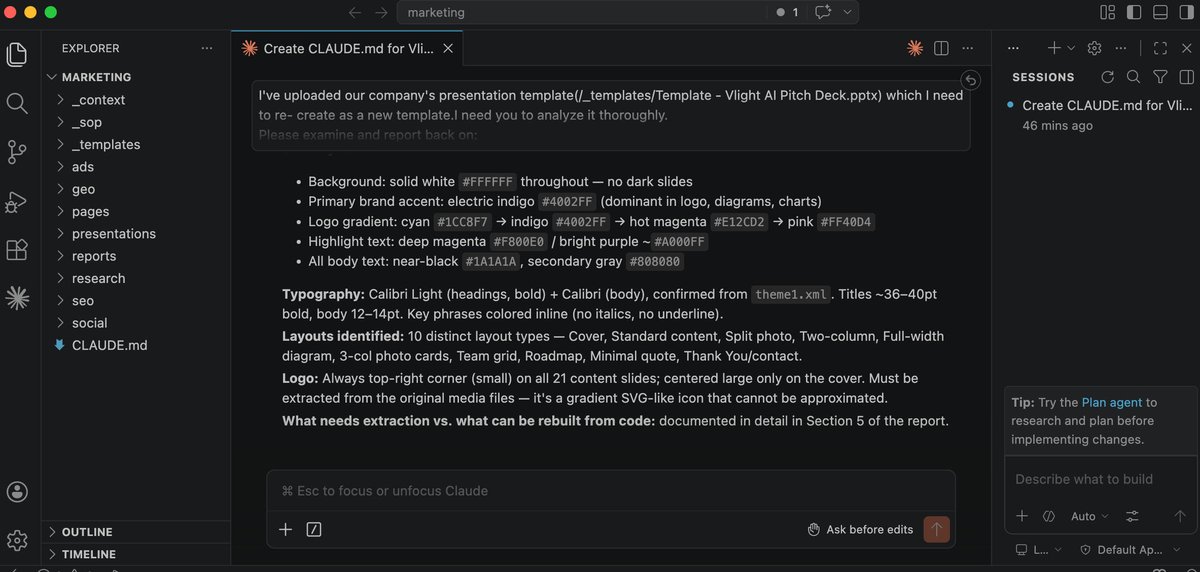
My new insight from using Claude Code today:
It's no longer just about writing perfect prompts or skills. What truly determines an Agent's ceiling isn't how clearly and specifically you list the steps, but how well you design its boundaries.
Just like a healthy, emotionally stable person who knows self-love and has strong boundaries, in the future AI era, to some extent, it's our own level of self-awareness that will play a decisive role in how we use AI.
What are your thoughts on AI boundaries? Share below! 👇
2
3
54
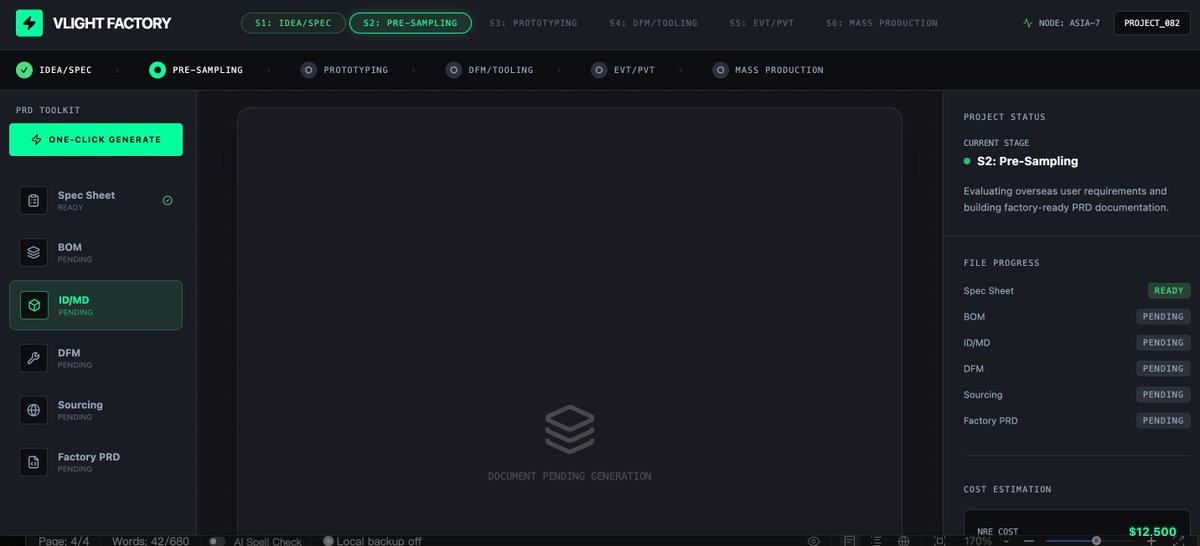
Just vibe-coded “What We’re Automating Next — Stage 2”
We’re tackling Pre-Sampling Documentation — the missing bridge between design approval → real production.
Think: a Cloud Design Factory Dashboard that forces clarity so factories can actually execute your vision.
👉Hot take: most hardware fails not at idea, but at spec definition.
Would this help you move faster from idea → prototype?
2
50
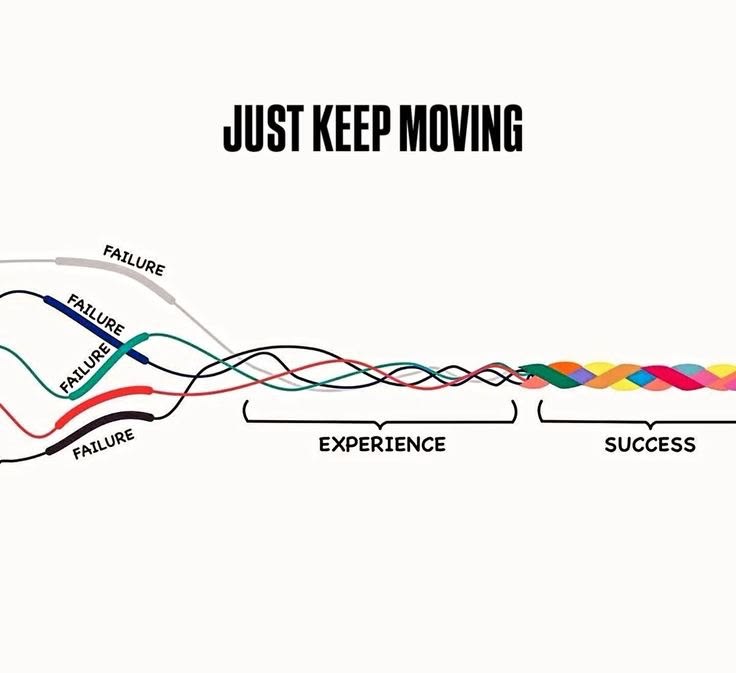
Startup truth: Having capital doesn’t save you from trouble. Being broke doesn’t define your limits either.
Every stage has its own unique set of difficulties.
It’s not about who has more problems. It’s accepting that problems are a constant feature, not a bug, of the journey.
The variable isn’t the difficulty; it’s your response to it.
Just Keep Moving!
Mar 17

2
6
118
Yesterday’s workshop was electric! ⚡️ 50 early-stage hardware founders joined to test our product live. The feedback was overwhelmingly insightful.
As our first #BuildInPublic & #LearnInPublic event of 2026, I’m walking away with 3 massive takeaways:
1. Decentralization is real.
In the AI era, founders are closer to users than ever. We don’t need focus groups; we have direct lines to real needs. The gap between “idea” and “market validation” has never been shorter.
2. Embrace imperfection.
Users are more accommodating than you think. Founders: stop fearing negative feedback. No one expects beta version to be perfect.
The magic wasn’t just the testing—it was 50 builders co-creating together.
That community energy > flawless code.
3. Personalization is the new moat.
When tech barriers disappear, personalization becomes the key to winning the market.
Once again I’m reminded: Everyone can be a builder.
👇🏻Below is the product video generated by our Vlight AI agent—one prompt made it all come true.
Our vision:
Empowering everyone to turn innovative ideas into best-sellers with an affordable, insightful platform.
Want to try it? Head straight to sign in → vlight.ai
Share your feedback with me—we’d love to build together with more founders.
1
1
6
77
Yesterday’s workshop was electric! ⚡️ 50 early-stage hardware founders joined to test our product live. The feedback was overwhelmingly insightful.
As our first #BuildInPublic & #LearnInPublic event of 2026, I’m walking away with 3 massive takeaways:
1. Decentralization is real.
In the AI era, founders are closer to users than ever. We don’t need focus groups; we have direct lines to real needs. The gap between “idea” and “market validation” has never been shorter.
2. Embrace imperfection.
Users are more accommodating than you think. Founders: stop fearing negative feedback. No one expects your beta version to be perfect. The magic wasn’t just the testing—it was 50 builders co-creating together.
3. Personalization is the new moat.
When tech barriers disappear, personalization becomes the key to winning the market.
Below is the product video generated by our Vlight AI agent—one prompt made it all come true.
Once again I’m reminded: Everyone can be a builder.
Our vision: Empowering everyone to turn innovative ideas into best-sellers with an affordable, insightful platform.
Want to try it? Head straight to sign in → vlight.ai Share your feedback with me — we’d love to build together with more founders.
2
64
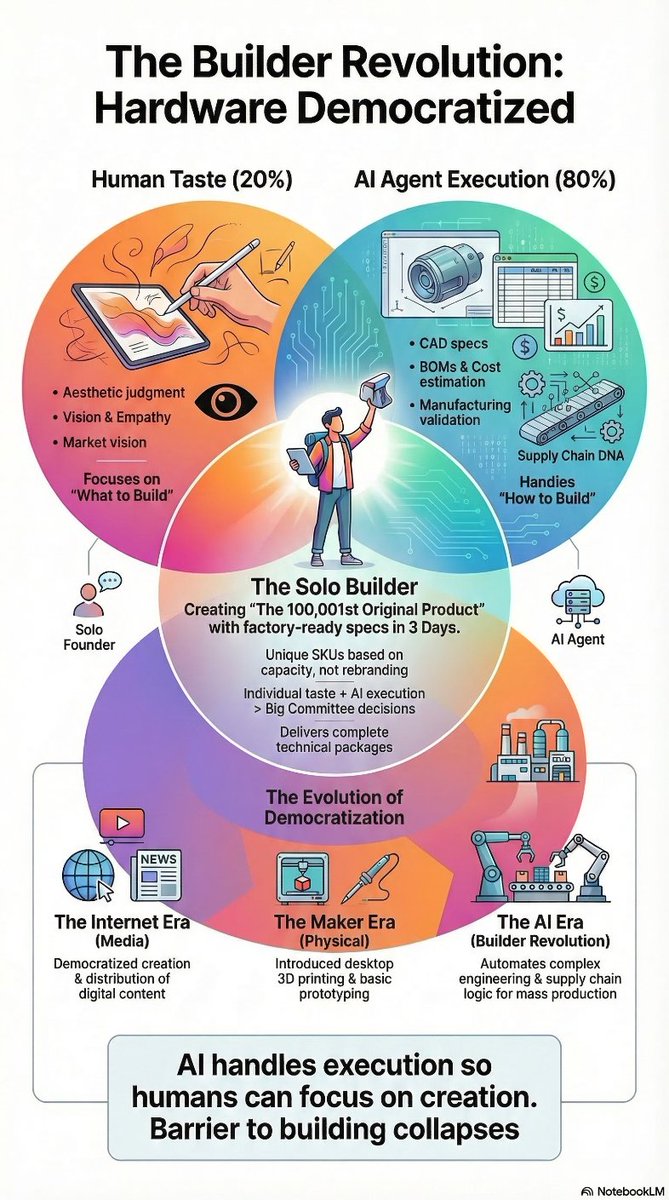
We're entering an unprecedented era of democratization—where users become creators and products get radically closer to the people who use them.
Had this conversation with a founder on yesterday's podcast: AI and the automation revolution (think OpenAI, Claude, etc.) are fundamentally reshaping who gets to build.
Here's the evolution:
🌐 Internet Era → Media DecentralizationPower shifted from official media channels to "we media" Everyone got a voice → Influencers & KOLs emerged This was the CREATOR age: traffic became king, monetization transformed, and marketing exploded
🔧 Maker Era → Hardcore CreationCreators → Makers More tangible, more manufacturing-focused But still limited by technical barriers
🤖 AI Era → The Builder RevolutionAI writes code for you Technical barriers drop to historic lows "Vibe coding" makes "builder" the new buzzword Non-technical people can now create software products
What this means:
AI handles execution. Humans are freed from tedious workflows to focus on what to build and who to build for.
Every industry gets redefined. Every person gains new possibilities.
The barrier to building products—both hardware and software—is collapsing. The media revolution that started online is now moving into real-world applications.
People won't just express themselves through words, images, and content anymore—they'll express through software and hardware products.
The new battleground?Attention. Online and offline.
In this "build in public, learn in public" era, products will be closer to users than ever before—not just functional tools, but social experiences.
Are you building close enough to your users?
1
2
52
Pitched 3 times this week. Same question every panel:
"How are you different from Alibaba?"
Think of it this way:
Alibaba = browsing 200k suppliers for existing products
Vlight AI = creating NEW products that don't exist yet
You can't find your unique vision in a catalog. You need someone to help you BUILD it first.
We're not competing with Alibaba—we're WHERE innovation starts, before sourcing begins.
Alibaba owns supplier data. We own build-ability data.
See the difference? 💡
1
5
54

Couldn't agree more! Yes, PRDs are dead.
This is exactly the direction we are striving for in hardware design: eliminating PRDs from the hardware realization process.
When a user has an idea, AI will instantly visualize the concept and translate it into factory-ready requirements.
This allows factories to evaluate ideas rapidly. As a result, neither founders nor product managers need to write PRDs—and factories won't need them either.
The future of hardware design is AI-driven, not PRD-driven. Do you agree?

1
3
123

Recently, some investors have asked questions like this:
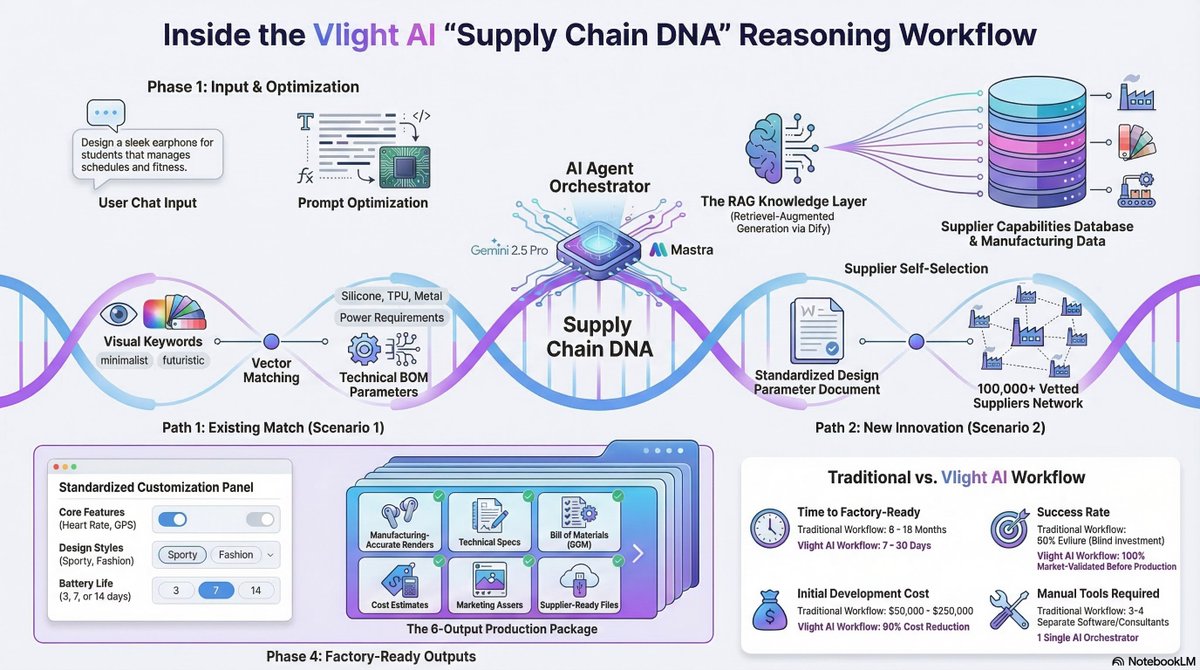
Does the RAG engine match prompts based on visual keyword tags (e.g., "minimalist"), or does it extract BOM parameters (material, power, dimensions) to find a precise fit?
First, to clarify: it is not a RAG engine.
When generating a customized product page, there are many possible options. If the AI generates them all freely, the output becomes excessive and unfocused.
Instead, the AI Agent actively calls the retrieval system at the right moment to fetch only the most relevant and recommended options for that specific product — keeping the output clean and precise. That is the current approach.
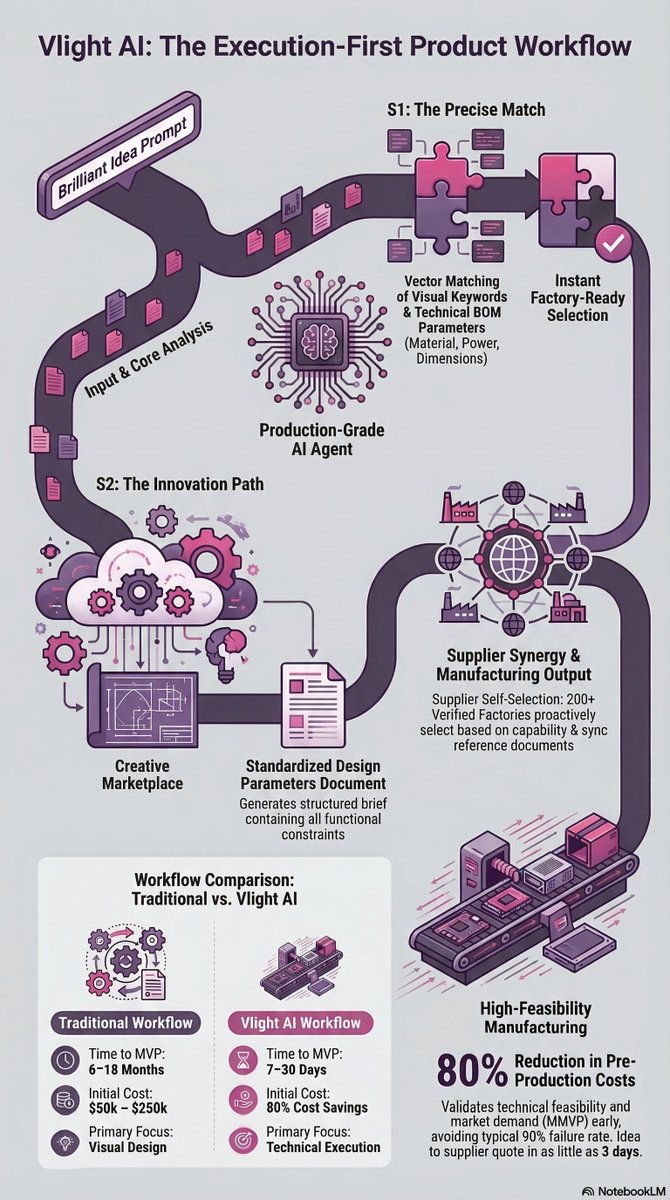
For products already in our database, we use keyword and BOM parameter vector matching to find the closest fit.
For products that do not yet exist in our database, we generate a general design parameter document and let supply chain partners self-select based on their manufacturing capabilities.
For example:
Scenario 1 — When we already have similar products in our database
The AI Agent combines visual style keywords (like "minimalist" or "industrial") AND technical parameters (material type, power specs, dimensions, cost range) to find the closest match.
Scenario 2 — When the product is completely new (no existing match)
Instead of guessing or hallucinating specifications, the AI Agent creates a standardized design parameters document — a structured brief listing what the product needs to do, how it should look, and what constraints it must meet.
The Agent then sends this directly to our supply chain partners, who self-select based on what they can produce.
This is a key advantage: rather than forcing a bad match, we let manufacturing capability drive the outcome, resulting in a much higher factory acceptance rate.
I used @NotebookLM to visualize these two scenarios — the output infographic looks amazing. Could you guys understand the workflow?
1
4
64
OpenClaw has sparked a new wave. Shenzhen’s adoption speed has been so rapid that it even fueled a surge in HK stocks today. 📈
Our team is currently debating whether to integrate OpenClaw’s API for full automation. But amidst the rush to embrace new tech, we need to think one layer deeper: 🤔 How do we truly ground AI applications? What about safety and privacy?
In the future, the scarce resource won’t be people who can write prompts; it will be systematic thinkers.
Even if every AI agent connects to OpenClaw, or everyone installs it, how many will truly understand how to leverage it deeply for real needs?
It reminds me of the early MacBook days: many bought it just to follow the trend, using it like a large phone. The actual development utilization rate was likely under 50%. 💻📱
This doesn’t stop people from buying MacBooks, just as it won’t stop everyone from installing OpenClaw. But the real question is: After installation, what will you actually do with it?
Will you use it to genuinely boost productivity and free up time for systematic thinking? Or will you just focus on the result of “automation” without creating more value for humanity?
#OpenClaw #AI #Agents
2
81
Everyone's sprinting in the AI era.Building. Failing. Pivoting. Repeating.
I've watched 30 founders burn out trying to keep up.
Here's what I learned about moving fast WITHOUT breaking:
1. Agility > Speed
Don't just iterate fast. Iterate SMART.
Bad: Ship 10 features/week, hope something sticks Good: Ship 1 feature, watch users, adjust in 24 hours
Speed without direction = chaos. Agility with focus = progress.
2. Embrace the fog
AI changes every week. Your roadmap will be wrong.
Most founders freeze when things get unclear.
The winners? They move forward anyway.
You don't need perfect clarity. You need courage to build with 60% information.
Waiting for certainty = waiting forever.
3. Sometimes slow is the biggest risk
Counterintuitive but true:
Moving carefully can be more dangerous than moving fast.
Why?
Because while you're "being strategic," someone else is learning from real users.
Their version 10 (with real feedback) > Your version 1 (perfectly planned).
The paradox:
To move sustainably fast in AI, you need:
1).Quick iterations (not rushed building)
2).Comfort with ambiguity (not reckless decisions)
3).Bias toward action (not paralysis analysis)
You don't win by running fastest.
You win by running consistently in the right direction.
2
1
3
85
AI agent product building is 10× harder than I thought.
We spent an entire month optimizing what I thought was "the simple part."
User flow:
→ Input prompt
→ Choose customization options
→ Generate full set of marketing materials
→ Generate cost breakdown
Sounds straightforward, right?
Wrong.
Here’s what actually happened:
→ Tested the flow 35 times
→ Found new bugs after every deployment
→ Backend worked perfectly… frontend broke
→ Fixed frontend… new edge case appeared
→ Fixed edge case… discovered UX issue
The cycle never ends.
This is our 36th round of testing. Most bugs are fixed, but new ones keep appearing.
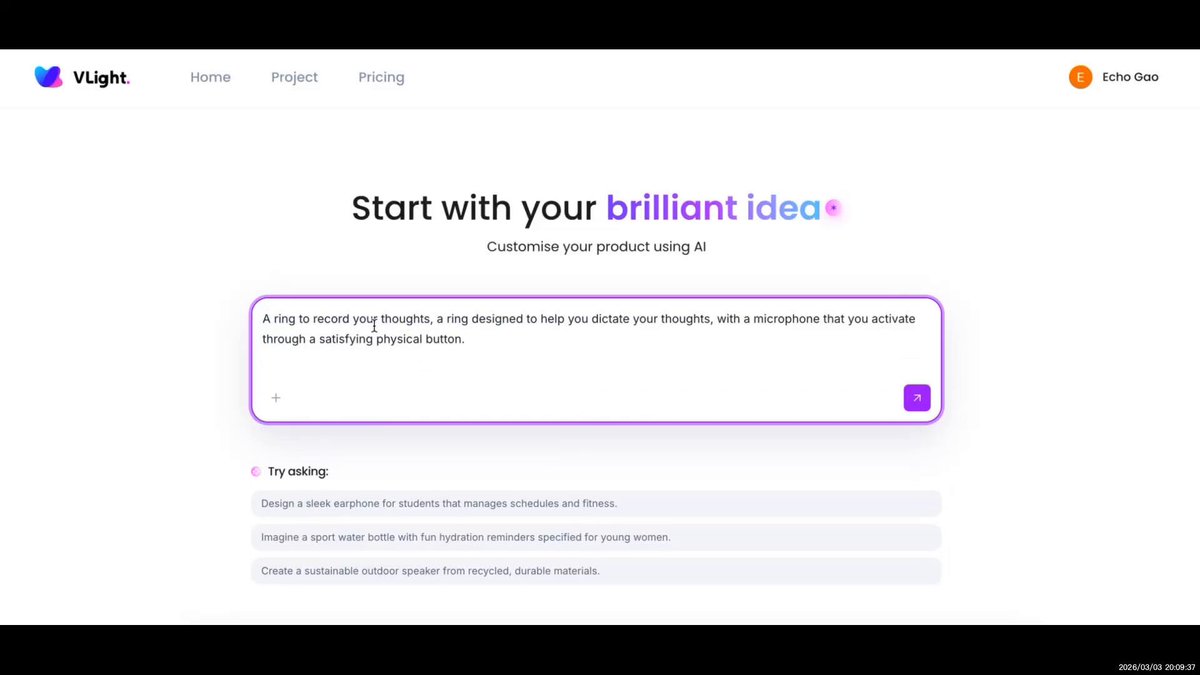
Prompt input:
A ring to record your thoughts, a ring designed to help you dictate your thoughts, with a microphone that you activate through a satisfying physical button.
Every test recording shared with the team brings surprise and upset, just like life—full of ups and downs.
Building products isn’t about having the best idea.
It’s about obsessing over details 99% of users will never notice—but 100% would complain about if they weren’t there.
If you’re building something and it feels impossible…
You’re not doing it wrong.
This is just what it takes.
1
1
4
110
This is the trend. In the future, the core competition will be how stable the agent ecosystem is.
Feb 19

Very interested in what the coming era of highly bespoke software might look like.
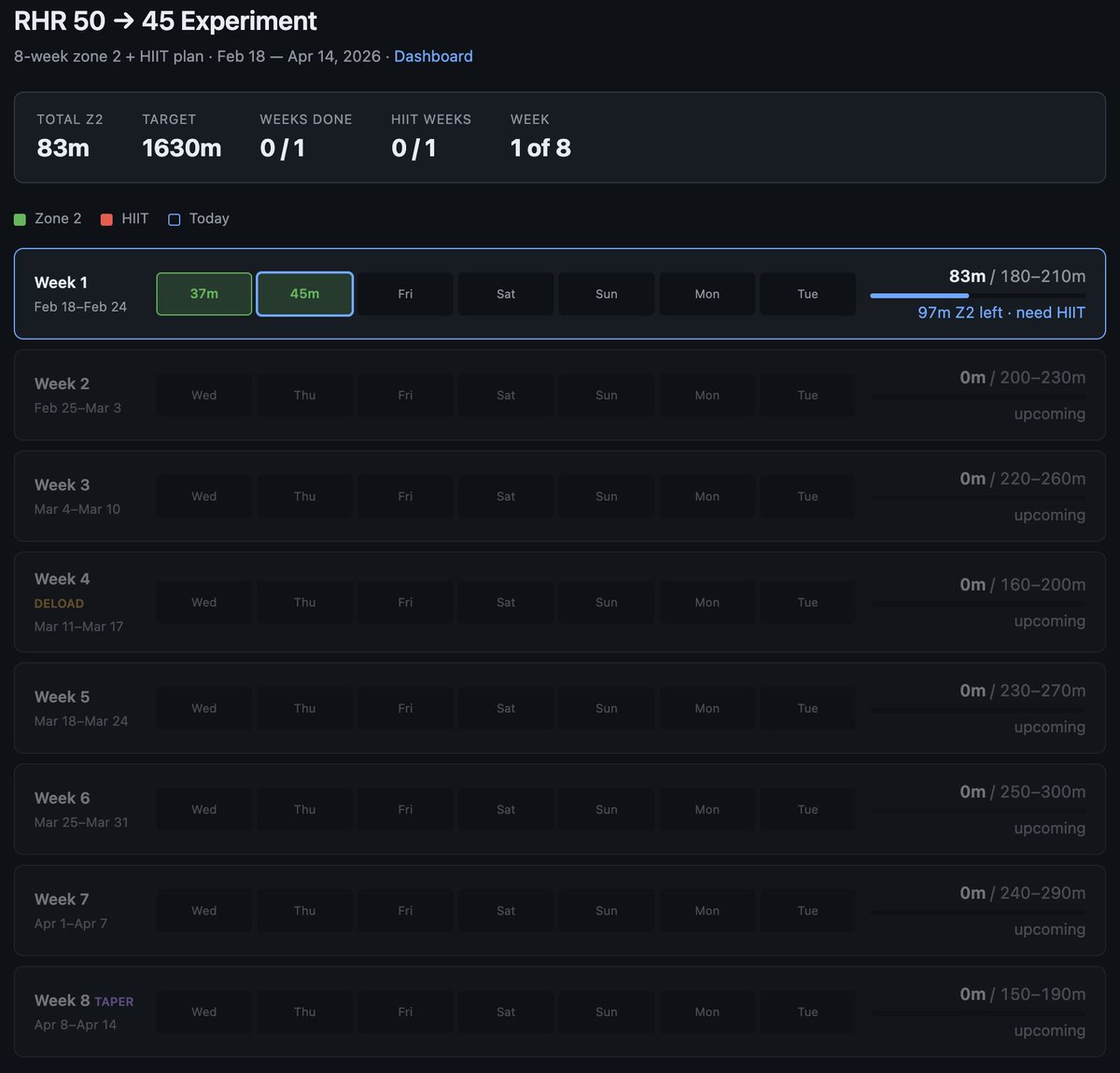
Example from this morning - I've become a bit loosy goosy with my cardio recently so I decided to do a more srs, regimented experiment to try to lower my Resting Heart Rate from 50 -> 45, over experiment duration of 8 weeks. The primary way to do this is to aspire to a certain sum total minute goals in Zone 2 cardio and 1 HIIT/week.
1 hour later I vibe coded this super custom dashboard for this very specific experiment that shows me how I'm tracking. Claude had to reverse engineer the Woodway treadmill cloud API to pull raw data, process, filter, debug it and create a web UI frontend to track the experiment. It wasn't a fully smooth experience and I had to notice and ask to fix bugs e.g. it screwed up metric vs. imperial system units and it screwed up on the calendar matching up days to dates etc.
But I still feel like the overall direction is clear:
1) There will never be (and shouldn't be) a specific app on the app store for this kind of thing. I shouldn't have to look for, download and use some kind of a "Cardio experiment tracker", when this thing is ~300 lines of code that an LLM agent will give you in seconds. The idea of an "app store" of a long tail of discrete set of apps you choose from feels somehow wrong and outdated when LLM agents can improvise the app on the spot and just for you.
2) Second, the industry has to reconfigure into a set of services of sensors and actuators with agent native ergonomics. My Woodway treadmill is a sensor - it turns physical state into digital knowledge. It shouldn't maintain some human-readable frontend and my LLM agent shouldn't have to reverse engineer it, it should be an API/CLI easily usable by my agent. I'm a little bit disappointed (and my timelines are correspondingly slower) with how slowly this progression is happening in the industry overall. 99% of products/services still don't have an AI-native CLI yet. 99% of products/services maintain .html/.css docs like I won't immediately look for how to copy paste the whole thing to my agent to get something done. They give you a list of instructions on a webpage to open this or that url and click here or there to do a thing. In 2026. What am I a computer? You do it. Or have my agent do it.
So anyway today I am impressed that this random thing took 1 hour (it would have been ~10 hours 2 years ago). But what excites me more is thinking through how this really should have been 1 minute tops. What has to be in place so that it would be 1 minute? So that I could simply say "Hi can you help me track my cardio over the next 8 weeks", and after a very brief Q&A the app would be up. The AI would already have a lot personal context, it would gather the extra needed data, it would reference and search related skill libraries, and maintain all my little apps/automations.
TLDR the "app store" of a set of discrete apps that you choose from is an increasingly outdated concept all by itself. The future are services of AI-native sensors & actuators orchestrated via LLM glue into highly custom, ephemeral apps. It's just not here yet.
1
4
94