
Public school veteran
Joined March 2022
- Tweets 14,092
- Following 2,074
- Followers 2,380
- Likes 43,206
40 Photos and videos
Pinned Tweet

Apr 12
This is the best explanation I’ve seen of the underlying theory/theology behind Woke:

Leftist theory is a civilizational replacement frame. The West is cast as a false center, the margins as the carriers of restoration, and the replacement (sublation) of that center as the path to a higher wholeness.
At the base of this framework is the belief that humanity once lived in a simpler, more organic unity, often imagined by Marxists as primitive communism, an early condition before class division, hardened hierarchy, and large systems of domination fully took shape. That first unity is lower, simpler, and less developed, but it is still imagined as more whole than what came after.
Then comes the break / ruptures. Domination enters history and turns living human relations into systems of separation, hierarchy, and control. In left theory, that rupture reaches its most expansive and world-shaping form in the West. Through empire, Christianity, colonialism, capitalism, whiteness, European power, bureaucracy, and technocratic administration, the West universalizes the break and gives it global form.
This rupture produces alienation, meaning human beings become separated from what they produce, from one another, from nature, and finally from themselves. Human powers no longer appear as our own shared capacities. They return to us as external systems that rule over us. Alienation then hardens into reification. Reification means that living human relations come to appear as fixed, thing-like structures that seem natural, objective, and permanent. A social order people made begins to look as though it exists on its own and obeys laws no one made. Capital looks self-moving. Bureaucracy looks inevitable. Hierarchy looks normal. Empire looks civilizational. Human beings confront their own frozen powers as if they were an external reality.
The margins matter because they are treated as the place where living force survives in damaged form, while the center is treated as a dead structure that lives by enclosing, organizing, and feeding on that force. The oppressed, excluded, colonized, racialized, and culturally peripheral become the bearers of the living remainder, the human substance the dominant order could never fully absorb or erase. What the center calls backward, broken, marginal, or impure is reinterpreted as the place where real vitality and restorative force still survive.
The center presents itself as the source of order, intelligence, productivity, and legitimacy. In this framework, however, it is derivative rather than creative. It does not generate life from within. It captures energies that originate elsewhere, concentrates them, and presents that concentration as its own greatness. Its apparent fullness depends on the continued containment of forces that remain more alive at the edges than at the core.
Praxis is the means of recovery. Praxis means conscious, transformative practice, action shaped by an understanding of the world and aimed at changing it. It is not only a matter of opposing the existing order. It is also the process through which people become aware of themselves as historical agents by acting to change the conditions that shaped them. Here it functions as de-reification, the undoing of the dead forms that have trapped living force inside them. De-reification shows that what looked natural was historical, what looked permanent was contingent, and what looked self-sustaining was actually feeding on captured life. Through struggle, consciousness, and collective action, value is reclaimed from the center, legitimacy is transferred outward, and the dominant order is exposed as hollow.
Political action therefore takes on a deeper role than reform. Reform adjusts the existing order. Praxis, in this stronger sense, identifies where restorative force still survives, activates it, and lifts it out of the structures that enclosed it. As that happens, the old center weakens because the energies that sustained it no longer flow into it in the same way. The people acting against the system are changed in the process as well. They do not merely confront history. They become conscious participants in remaking it.
This leads to sublation, which means overcoming a form while preserving and redirecting what was real within it. The old order is not simply destroyed. It is surpassed, stripped of its monopoly, and absorbed into a higher synthesis. The false center collapses, but the energies once trapped inside it are recovered and reassembled. The end point is framed as restoration rather than simple negation. The promise is that the world can be made whole again, but on a higher plane than before, with the gains of history retained while the forms of domination that organized them are overcome.
The goal is therefore larger than reform. Reform leaves the center intact. This framework aims at replacement. The world was once whole in a lower form, then shattered through domination, then universalized in broken form by the West, and can now be made whole again only by displacing the false center and transferring historical energy to the margins. The promised end is a restored wholeness at a higher level, more conscious, more universal, and more complete than before.
That is why, in this framework, replacement of the West is presented as redemption.
3
1,210
Dissident Teacher retweeted

Gay people really need to start openly speaking out against the spread of Islam in the West. We already fought for, and achieved, our rights. We don't want to lose them. Can you name one Islamic country where there are ANY gay rights? I can't.
64
124
996
19,273
Oh wonderful—Common Core, by fixating on literacy, spawned illiteracy.

Opinion | My Students Can't Read
here is a final factor that is contributing to this decline in reading skills, and that is that the students arriving in my classroom today are the first cohort to have experienced Common Core-influenced reading instruction across the entirety of their K–12 schooling. Whatever the standards’ original intent, the on-the-ground implementation in many districts replaced sustained reading with the practice of pulling “evidence” from disconnected short passages, the same format used on the standardized tests that increasingly determine school funding. The education scholar Natalie Wexler, among others, has documented this pivot in detail: Students drilled on “finding the main idea” in two-paragraph excerpts never build the stamina or background knowledge that longform reading requires. The pandemic then added fuel to a fire that was already burning. NAEP scores for 13-year-olds dropped sharply in 2022 and have not recovered. A 2023 EdWeek survey found that 24 percent of secondary-school administrators described pandemic learning loss in English and language arts as “severe or very severe.”
chronicle.com/article/my-stu…
1
1
2
281
Dissident Teacher retweeted

The ban on social media for children under 16 is an idea that has merits. But the way it is being done is simply a way to force everyone, including adults, to identify themselves online, creating the most powerful surveillance and censorship architecture in human history.
750
3,044
17,855
371,764
Dissident Teacher retweeted

The belief in transferable skills is perhaps the most common chimera among teachers of reading. Imagine a handful of universal tools we could teach students and in so doing enable them to understand every text they read. Who wouldn’t seek out “the key to all inferences,” for example, knowing that once mastered this skill would allow our students to unlock what was unspoken in every story? Who among us would not dream such a beautiful dream?
The problem is that for all the beauty of the dream, the evidence is squarely against it.
substack.com/home/post/p-202…
7
24
74
6,931
Dissident Teacher retweeted

They are like fundamentalists, they demand everyone share their beliefs. But it is no more "anti-trans" to not believe in gender identity as it is "anti-Christian" to not believe in god.
1
14
211
Jun 15
Public service announcement: October 7 is what genocide looks like. The Gaza War is what warfare looks like.
60
Dissident Teacher retweeted

Jun 14
I got put into a gifted program in seventh grade and the teacher's idea of an enrichment program was having us spend four months crawling through this utterly forgettable large print 128-page novella about an injun kid who liked to paint.
Meanwhile I read the Narnia books on my own in first grade.
Liberal females should be banned from teaching.
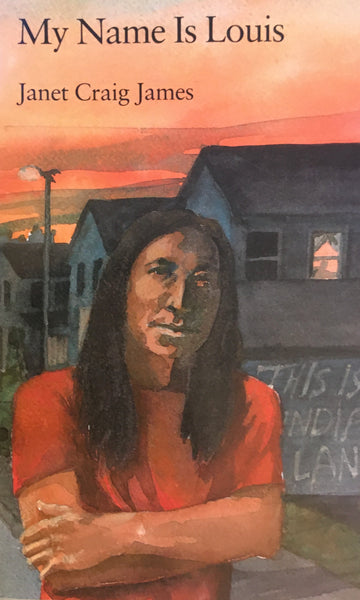

One of the funniest things about people devoted to the idea a quality education can make childrens' brains take a quantum leap is they will then also make the AP kids read House on Mango street instead of Borges or Marquez and Things Fall Apart instead of literally anything else
50
75
2,171
58,867
Dissident Teacher retweeted

Jun 15
Israel:
- was invaded by an explicitly genocidal army that is larger than most European armies
- fought a war against an enemy that embeds in civilian homes and doesn’t wear uniforms
- issued evacuation notices
- paused the war for vaccinations
- facilitated humanitarian aid
- kept the internet on
- has more rigorous rules for engagement than NATO
- has lawyers who review every single military engagement decision
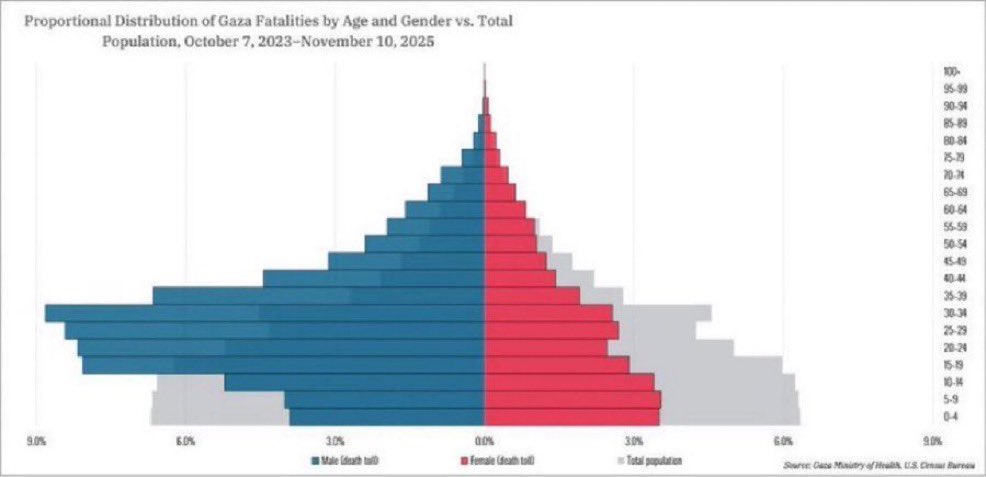
- primarily inflicted casualties on fighting-age males, with women and children vastly underrepresented
- ended the war the instant they got their hostages back
"Gaza genocide" is a conspiracy theory that requires you to believe that none of the above is true.
18
182
1,049
13,397
Dissident Teacher retweeted

Jun 14
The brain rot runs so deep with antisemites, but for what it’s worth:
Around 1 million Jews fled Arab and other Muslim-majority countries from 1948 to the 70s as a consequence of expulsions, discriminatory laws and violence.
For example in Egypt in 1956 thousands of Jews were expelled after the Suez Crisis; many receiving notices ordering them to leave within days and having property seized.
In Libya in 1967 anti-Jewish violence and govt pressure pushed the remaining Jewish population out.
In Iraq in 1950–51, Jews were pushed to leave through denaturalization and asset confiscation laws causing almost the entire community to rapidly depart.
In Yemen, widespread hostility and violence led to the mass departure of nearly the entire Jewish community.
In Algeria in 1962 after independence and the departure of French rule, almost the entire Jewish community fled amid insecurity & loss of legal protections
Most of these Jews fled to Israel, which was and remains the only safe place for Jews

Because Israel scared the fuck out of them, so they'd move to Israel?
31
95
494
13,483
Dissident Teacher retweeted

Jun 14
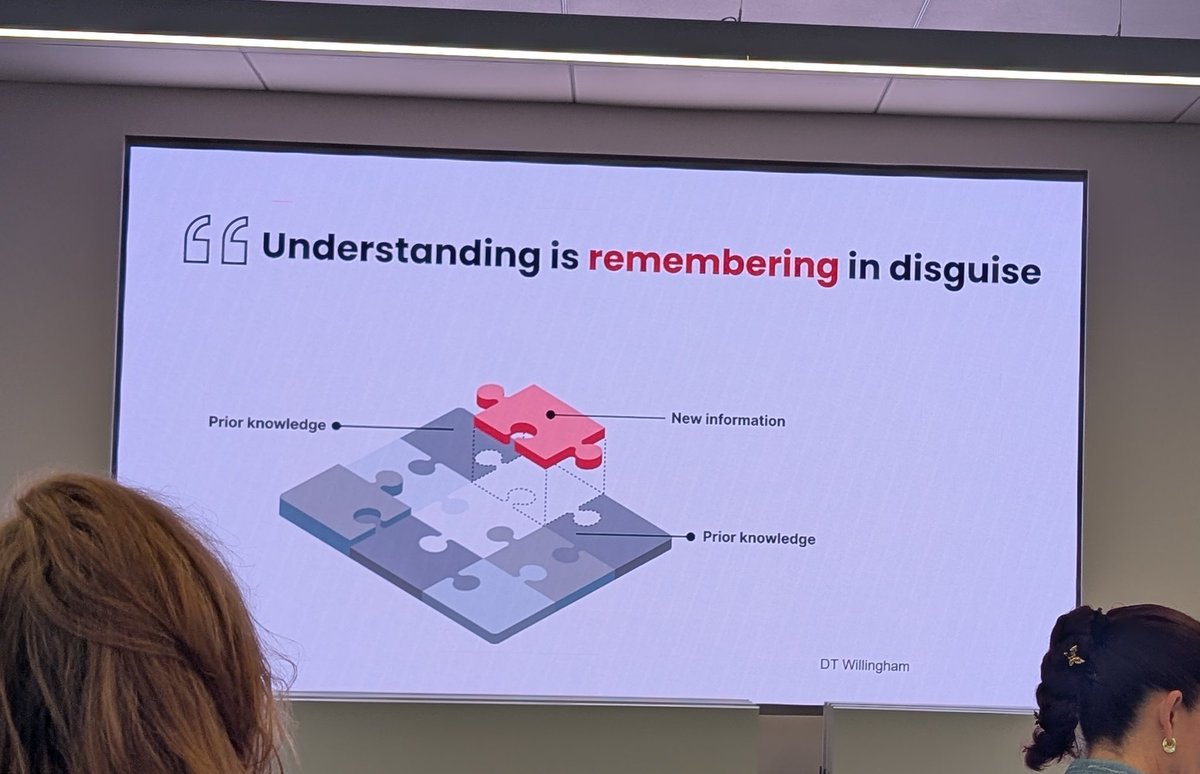
Full credit to @DTWillingham for this brilliant formulation.

3
15
97
6,490
Dissident Teacher retweeted

Jun 14
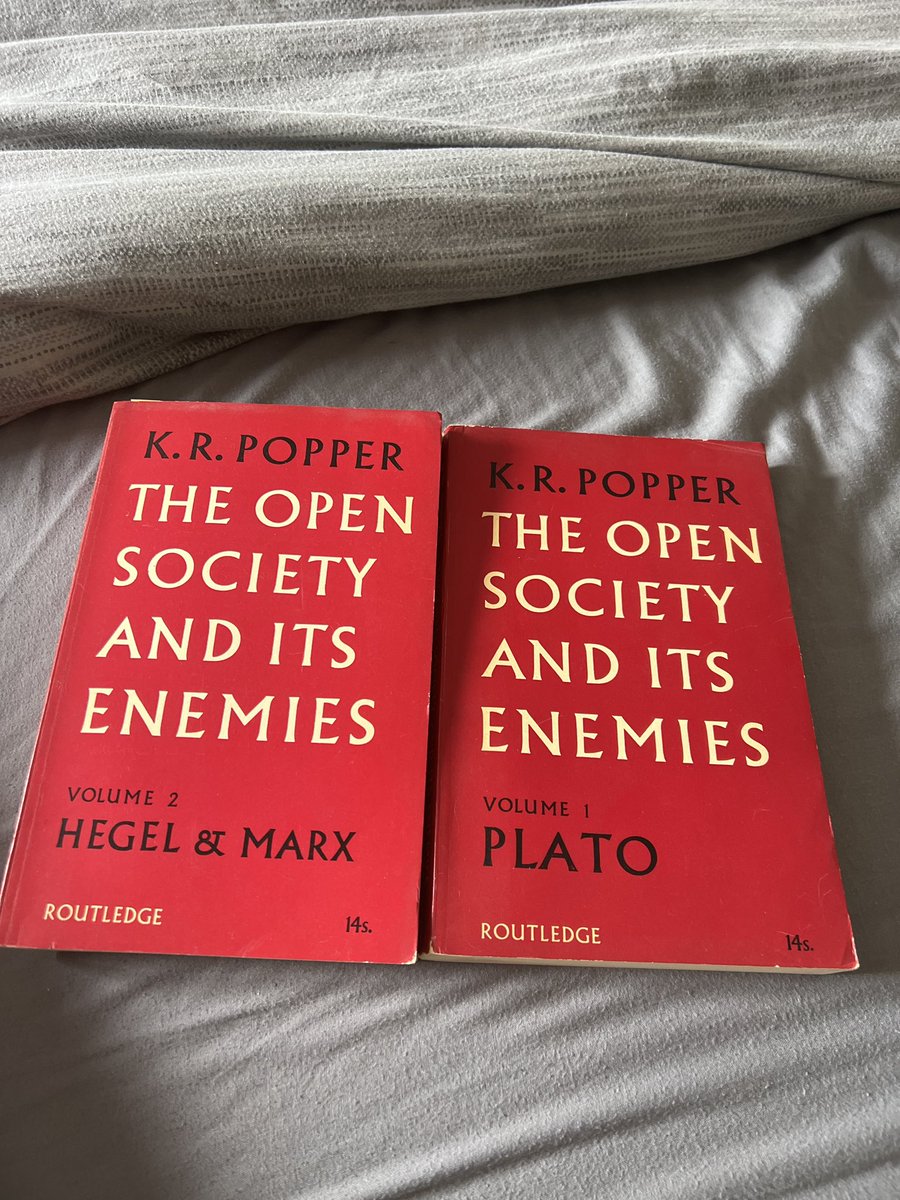
Karl Popper’s, ‘Open Society and Its Enemies’ remains one of the most compelling defences of open discourse as a civilisational mechanism of error correction.
For Popper, Truth is never possessed in its entirety. It can only be understood through a logical process of criticism, disagreement, and the continual testing of ideas. A society that is capable of correcting its mistakes entirely depends upon the freedom to question prevailing assumptions and to expose falsehood through reasoned debate.
It is therefore entirely regrettable that one of the more insidious realities of our age is that certain individuals and institutions invoke the language of the open society while inverting its essential principles. Under the banner of tolerance, safety, equity or consensus, group-think, they have deliberately narrowed the range of permissible inquiry and badly damaged the very processes through which truth is discovered.
Popper understood that certainty is the enemy of progress. Indeed, a civilisation that loses its capacity for honest discourse loses its principal means of self-correction.
Once criticism is treated as heresy and dissent as a threat rather than a necessity, the foundations of the open society begin to crumble from within.
beg you to read Popper. To read @DavidDeutschOxf. To listen to and absorb the work of @ToKTeacher @naval @ConjectureInst and the many other great critical rationalists.
We ought to understand the great peril we face.
64
207
912
67,430
Dissident Teacher retweeted

Western Civilization is good, actually.

9
14
137
2,135
Dissident Teacher retweeted

It's not just Howard U Buck.
Jun 14

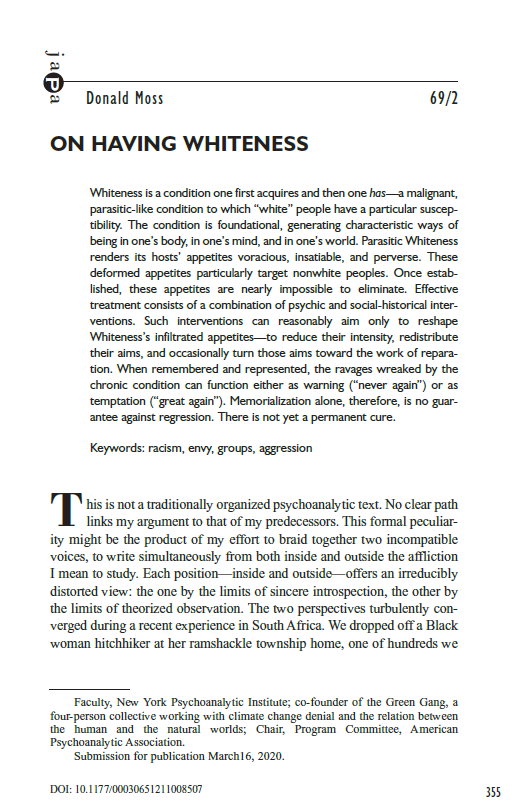
This Howard U professor loathes white people, and derives joy from their pain. Her soul has rotted with racial resentment of whites. It's really not more complicated than that.
3
11
53
14,420
Dissident Teacher retweeted
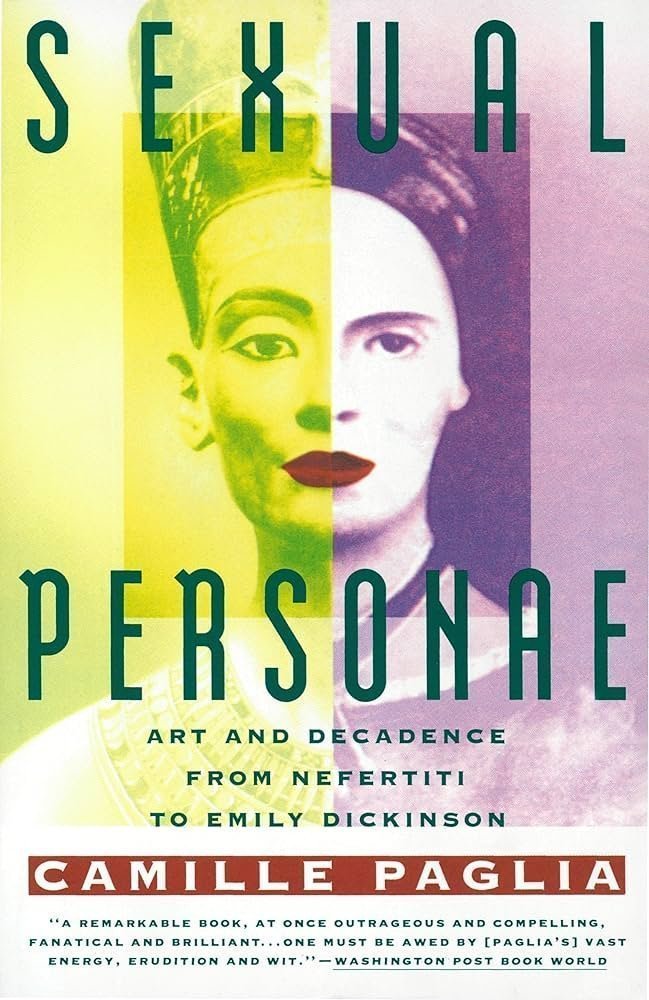
"Romanticism regards hierarchy as a repressive social fiction. But man is a biologically hierarchical animal...The great irony of Romanticism is that a movement predicated on freedom will compulsively reenslave itself to imaginative orders even more fixed." -- Paglia.
1
29
109
3,648
Dissident Teacher retweeted

Jun 14
For 15 years, "trads" in England have been arguing against personalised learning.
It seems, despite the obviousness of the counterargument and the quieting of the debate, it wasn't won.
Personalised learning doesn't and won't work, and not for technological reasons, but pedagogical and psychological ones.
Important blog from Daisy.
Jun 13

There is a lot of excitement at the moment about using AI to personalise learning resources, but I am not convinced.
Yes, it is true many students are interested in Taylor Swift & Lionel Messi more than electricity, algebra or verbs.
That does not mean we can teach electricity, algebra and verbs through the medium of Swift & Messi.
substack.nomoremarking.com/p…
9
14
86
21,884
Dissident Teacher retweeted

Jun 12
When you land in Israel, you see Muslims everywhere - working in offices, relaxing on beaches, praying in mosques, living freely.
When you visit Arab states, Jewish sites are museums to vanished Jewish communities chased out long ago.
But yeah, sure, Israel is "Apartheid".
207
820
4,609
40,302
Dissident Teacher retweeted

Jun 13
"In the age of white guilt, white blindness has been driven not by racism but by the white need to dissociate from racism. Whites are blind to blacks (and other minorities) as human beings today not out of bigotry but out of their obsession with achieving the dissociation they need to restore their moral authority. And when they find a way to dissociate from racism — 'diversity,' politically correct language, political liberalism itself — there is little incentive to understand blacks (and others) as human beings. Dissociation makes whites human again." -- Shelby Steele
The last line is the most powerful one. Steele is arguing that dissociation from the Western sins has become the path back to full moral goodness for many whites. When they signal their antiracism, they are restored, a good person again.
What is going on in Belfast makes the tribal structure of this transaction impossible to ignore.
After the riots that attacked many immigrants, there are certainly many who marched sincerely to protest these actions. But it cannot be denied that many protest in the name of antiracism. Their protests are not done primarily for the immigrants, but as a signal against the "other whites."
Listen to what the "good white" tribe is saying and to whom: We are not like them. We don't care why they are angry. We know what they are and that's racists.
The statement from the Belfast City Council condemned the violence and declared that the rioters "do not speak for Belfast nor represent our city."
Notice what is said. The city's identity is what is being defended. The reasons these riots exploded go unasked. Instead, the immigrants become a prop, the backdrop against which white liberal Belfast recovers its moral standing. White humanity is restored, and the grievances that produced these riots, if they continue unexamined, will produce them again.

Well done to all who joined the amazing 4,000 strong anti-racist and anti-fascist mobilisation in Brighton today which stopped the 200 or so far right marching through our city - this sort of mass mobilisation shows how to stop the far right in their tracks @AntiRacismDay

15
34
154
7,136
Dissident Teacher retweeted

Jun 12
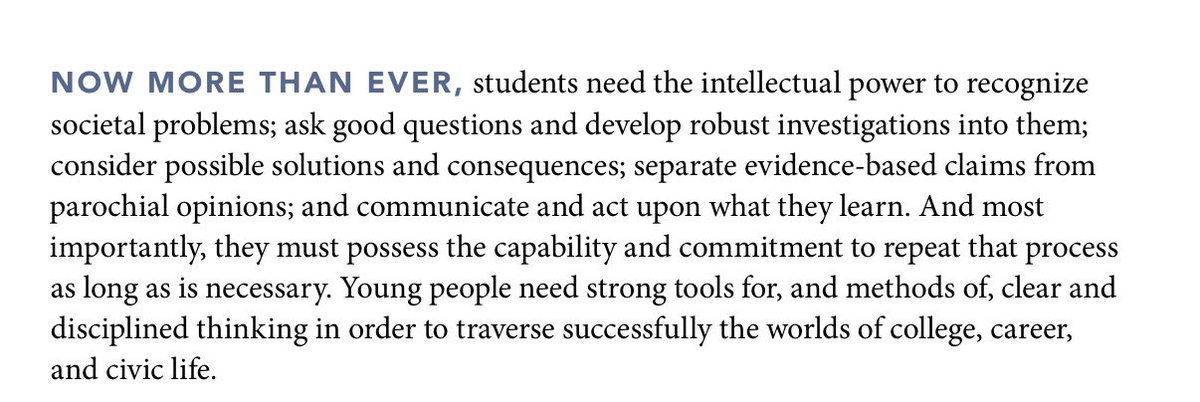
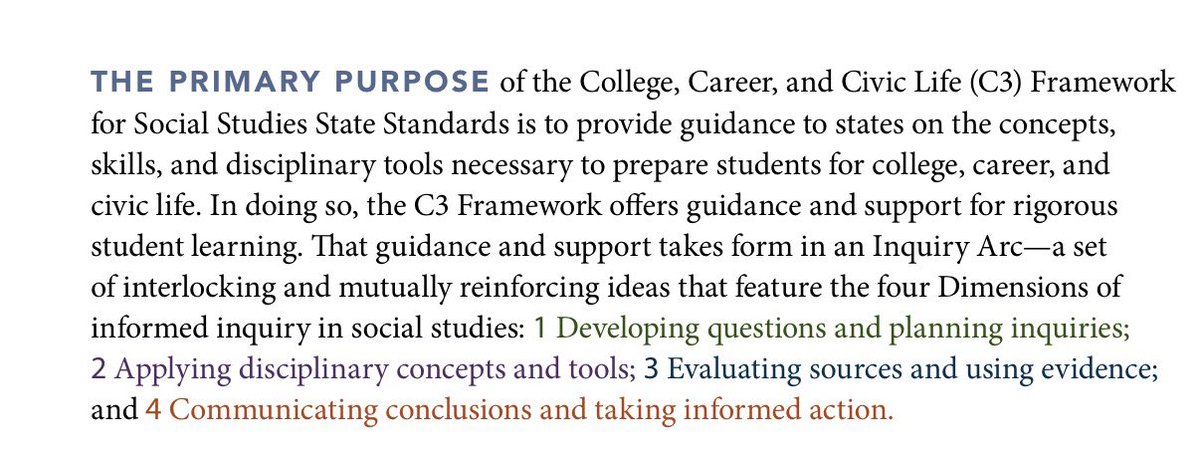
Pictured is the basically the explicitly stated preamble and purpose of the National Council for the Social Studies’ C3 Inquiry Framework—a document that has had an enormous influence on state social studies standards and local curriculum development over the past decade.
Notice what is emphasized: asking questions, conducting investigations, evaluating evidence, communicating conclusions, taking informed action, solving problems, and developing the habits of inquiry.
Now notice what is missing.
Among all the things students are expected to develop, acquire, and demonstrate, one word is conspicuously absent from both the preamble and the stated purpose of the framework: knowledge.
The framework repeatedly highlights the processes of inquiry and thinking, but says remarkably little about the substantive knowledge students must possess in order to ask good questions, evaluate evidence, recognize significance, or think critically in the first place.
After all, critical thinking is not something that floats freely. It operates on knowledge. You cannot investigate what you do not understand, evaluate evidence about topics you know nothing about, or separate strong claims from weak ones without a foundation of domain-specific knowledge.
The omission is revealing because what educational frameworks emphasize often shapes what curriculum writers, standards developers, and school systems prioritize. The emphasis of the framework is clear: inquiry is foregrounded, while knowledge remains in the background. And when frameworks signal what matters most, curriculum, instruction, and assessment often follow.
6
2
21
2,342
Dissident Teacher retweeted

Jun 12
35 pages a week - for a Berkeley student. So 5 pages a day. You might as well hand out crayons and coloring books - and just say ‘do whatever you want, you’re paying for this. We will give you the piece of paper in 4 years and good luck to you!’
Jun 12

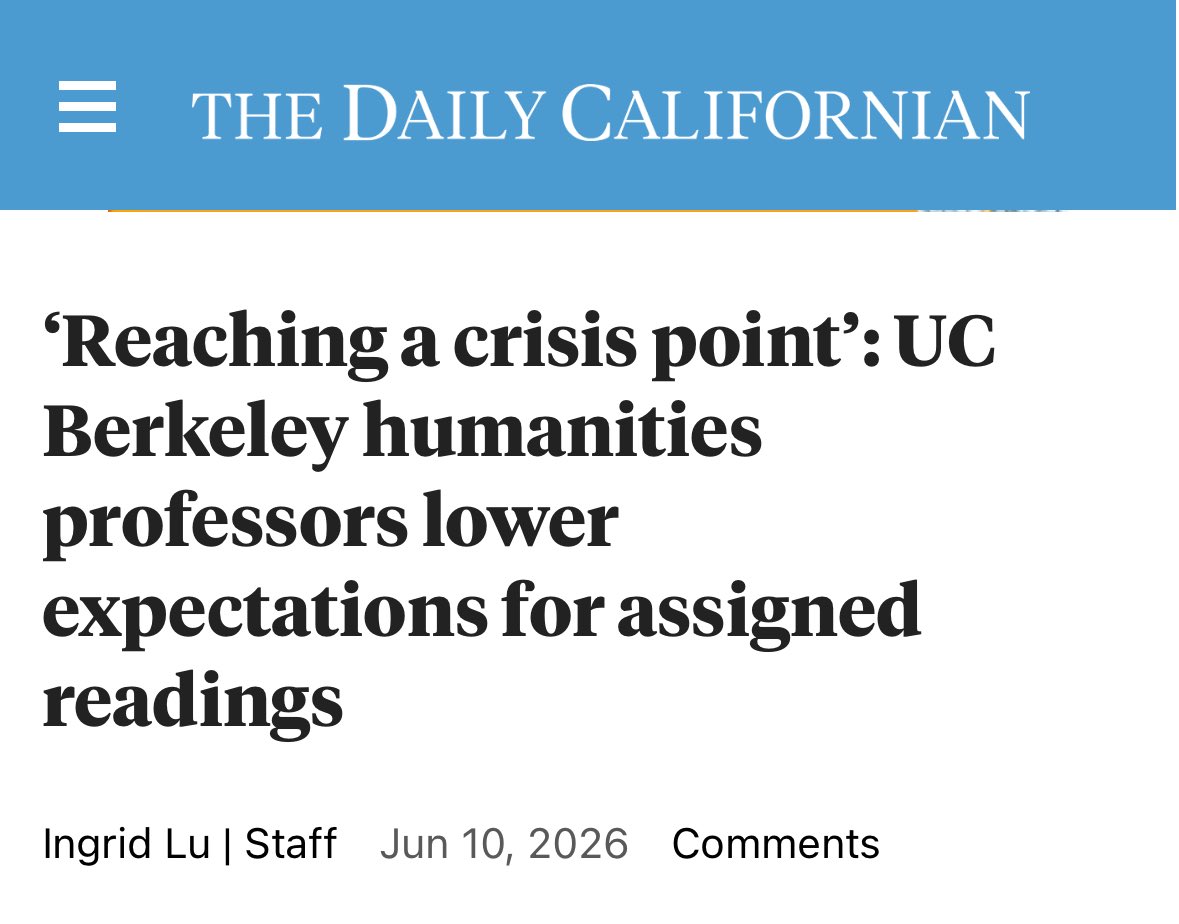
A Berkeley history professor said he’s gone from assigning 100 pages of reading per week to 35.
Another “said the earliest version of the…course he taught required seven full books, while his most recent iteration exclusively consisted of excerpts.”
“We are now reaching a crisis point where if the number (of pages) goes down further, it’s unclear to me whether my discipline of history can really be taught,” the first one said.
60
166
1,435
43,108