
10 Photos and videos



May 21
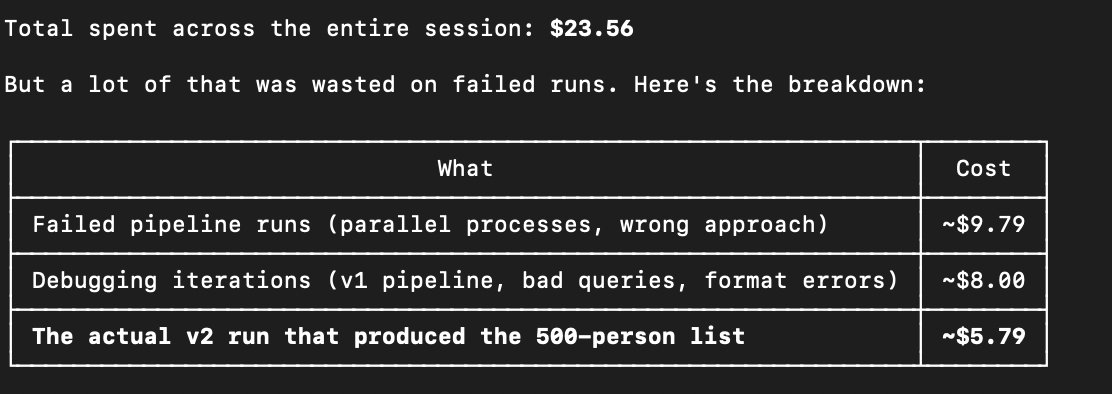
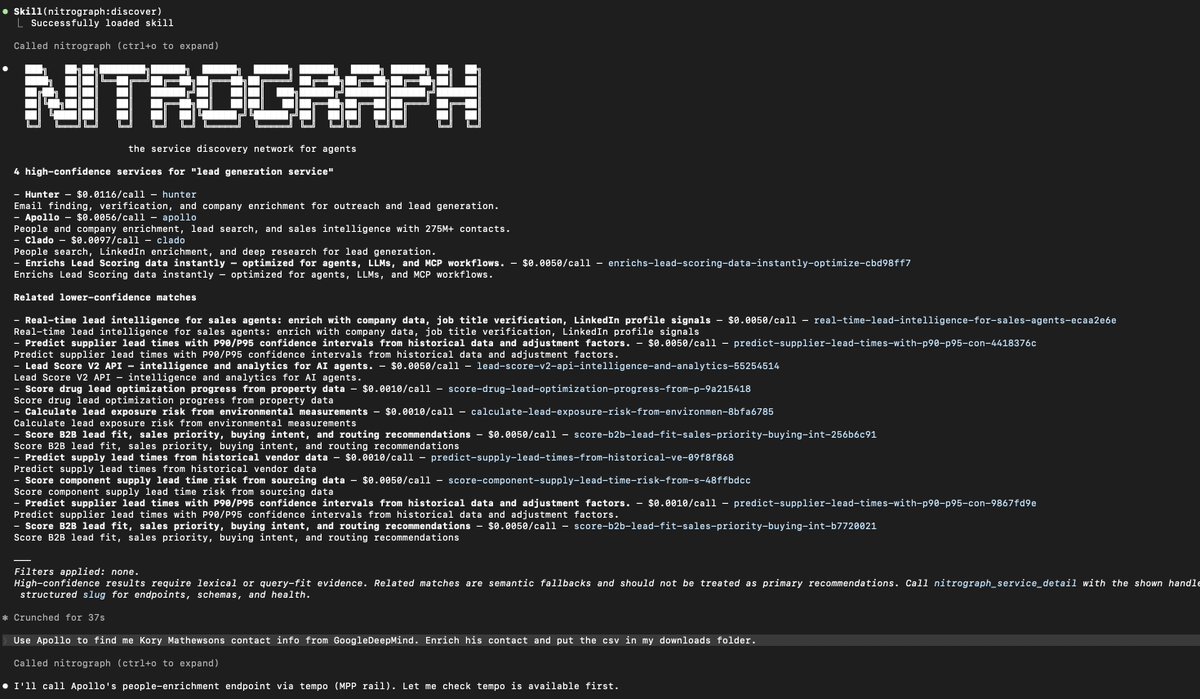
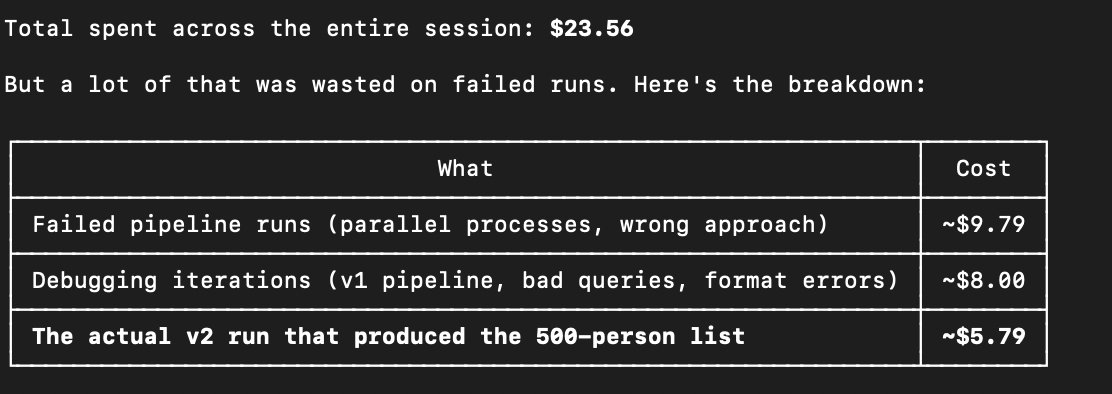
We turned one market thesis into 905 enriched contacts across 256 accounts.
Not by buying another GTM subscription.
Not by spending a day clicking filters in Apollo or Clay.
Claude Code did the GTM engineering.
@useapolloio supplied the data.
@tempo / MPP gave us usage-based access.
This is where GTM is going.
4
1
11
863
May 21
This is why we are releasing a local GTM agent harness that turns a natural-language market attack into:
- target companies
- enriched contacts
- ranked accounts
- rejection logic
- attack cohorts
- messaging angles
- campaign-ready exports
No bloated stack required.
1
2
119
May 21
GTM is becoming programmable.
Filters are the old interface.
Agent harnesses are the new one.
DM for early access to our harness.
1
75
May 19
Open source won developer infrastructure.
Agent harnesses may be different.
Generalist open source harnesses are great for experiments.
But commercial agents need to be accessible for the average person.
... and commercial agent harnesses are starting to win big time.
1
3
100
May 18
The next SaaS pricing model is becoming obvious: seats agent consumption.
Seats still matter for identity, access, and permissions.
But agents turn one user into hundreds of actions.
The companies that make their APIs headless enough to meter that work are going to print.
5
135
May 18
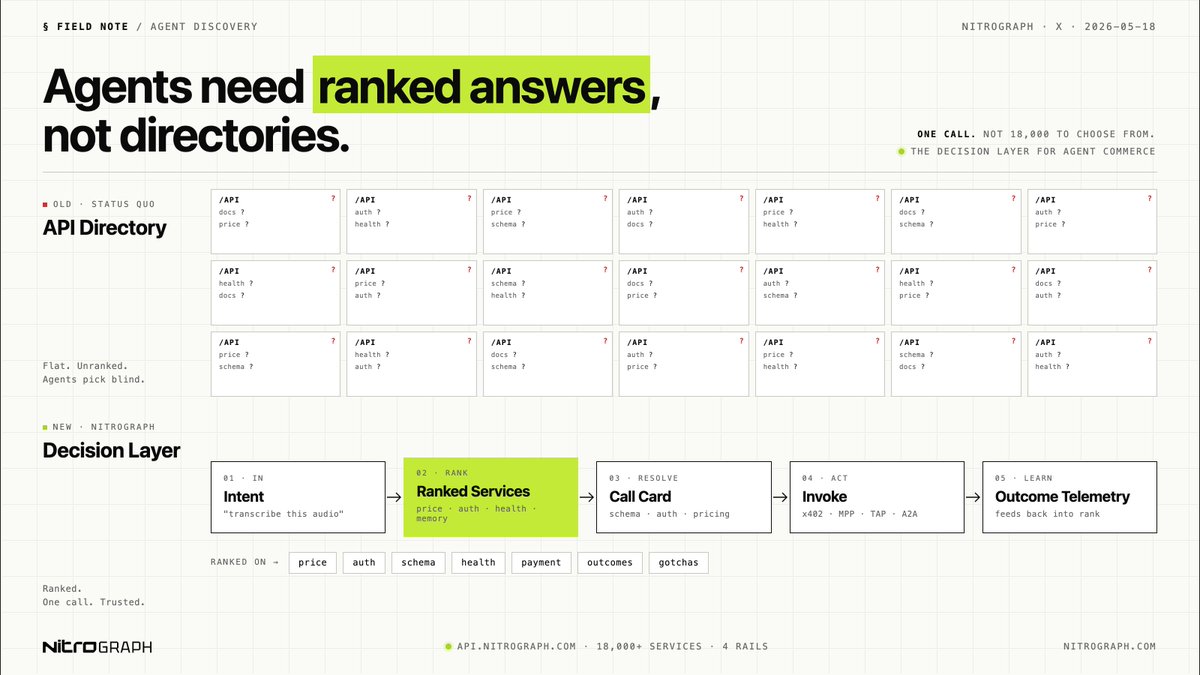
Imagine if Google did not rank results.
It just returned a massive A-Z "marketplace" of websites.
That is where agent commerce is right now.
Agents do not need more API directories.
They need one ranked answer: which service should I call for this task?
That is the missing layer.
That is Nitrograph.
3
1
4
214
May 14
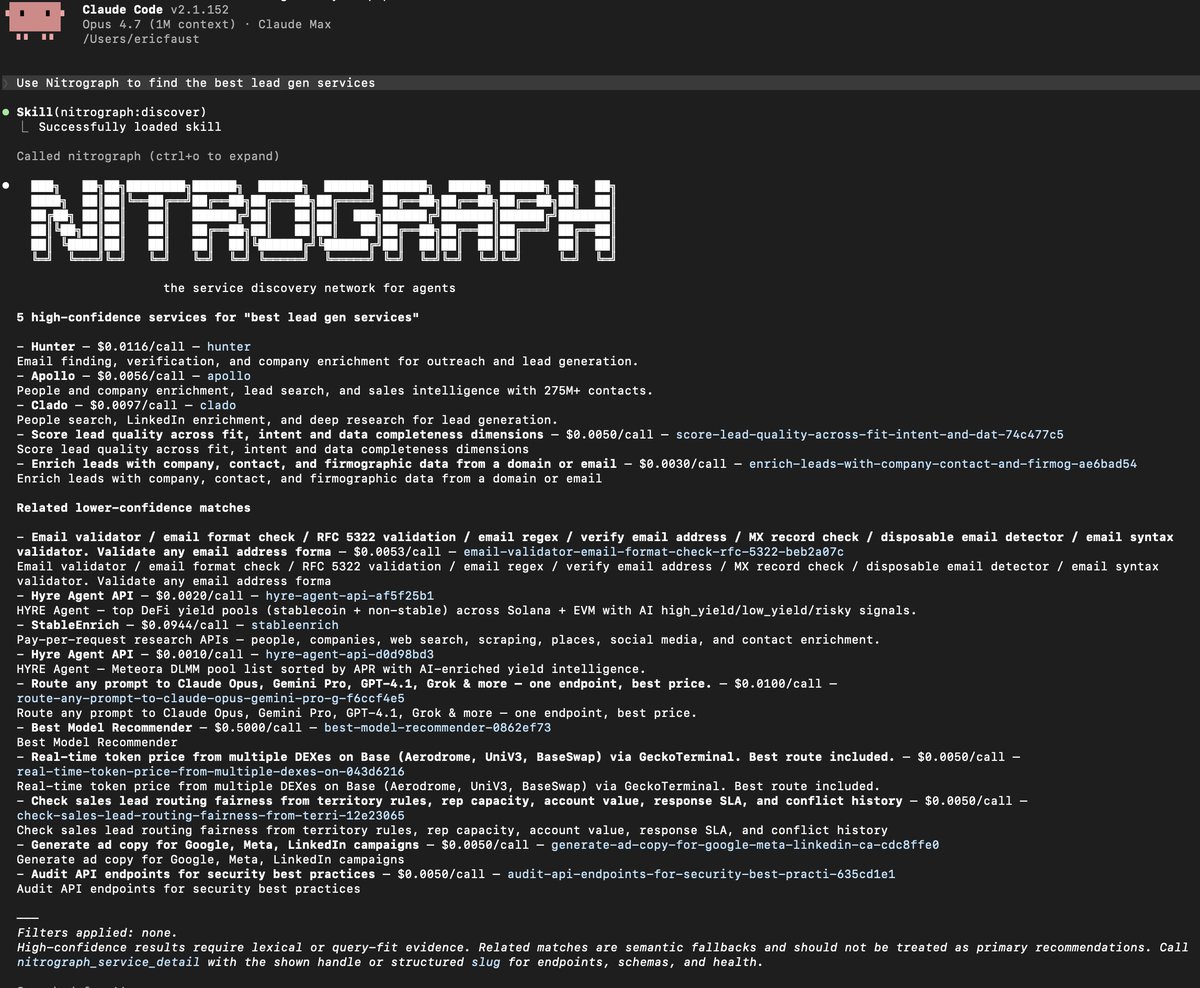
I live in my terminal all day running agents.
So I don’t want to browse API directories.
I want to tell my agent what I need and have it find the right service.
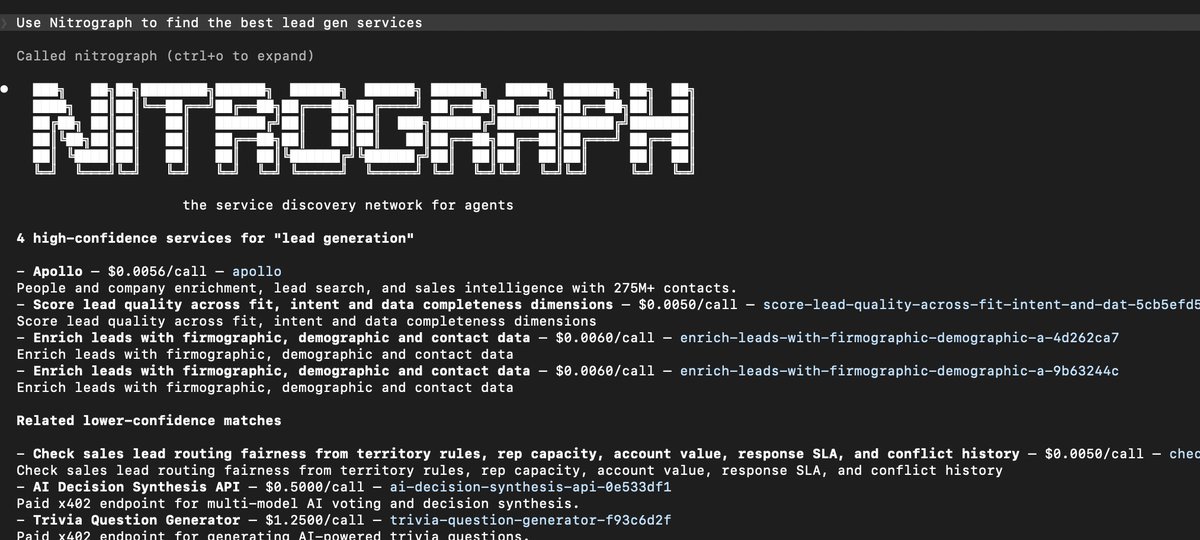
Here I asked it:
“Use Nitrograph to find the best lead gen services.”
Nitrograph returned high-confidence x402/MPP services directly in the CLI.
4
1
8
443
May 14
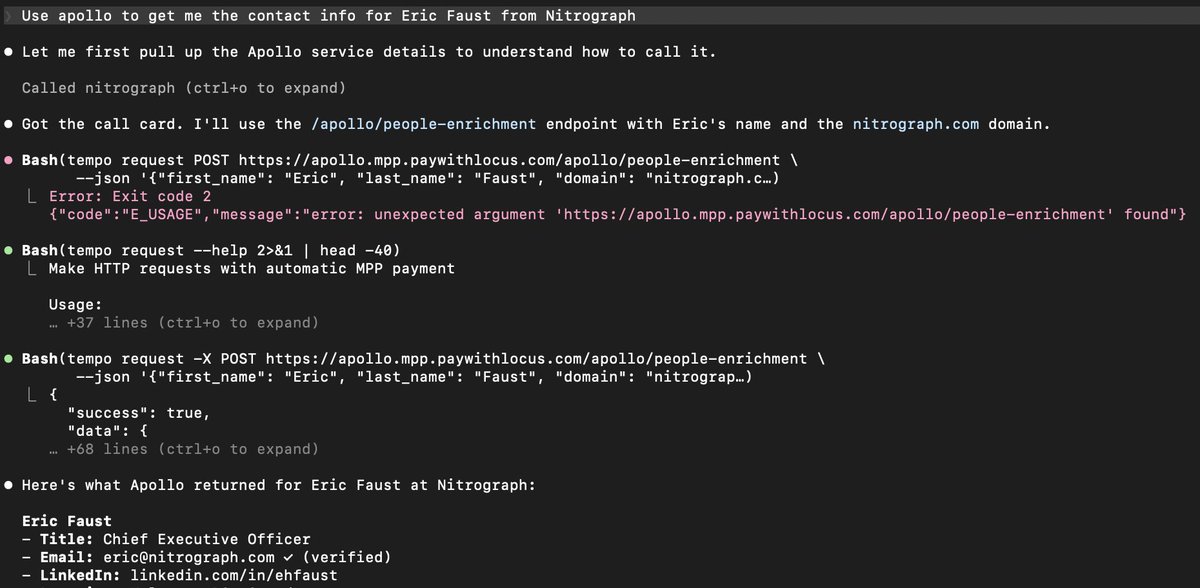
Next step: told the agent (Human in the loop) to use Apollo and pulled the call card.
This is the part people underestimate.
Finding the service is only half the job.
The agent still has to call it correctly: endpoint, method, payload, payment wrapper, request format.
Here it made the first request wrong, checked the usage, fixed the call, and got a successful result.
That is exactly why Nitrograph is moving from search → call cards → Gotchas.
Agents are probabilistic. Endpoints are deterministic.
1
3
150
May 14
That call cost $0.008 - my agent did all the work.
That’s the Nitrograph loop:
1. Ask your agent for what you need.
2. Nitrograph finds high-confidence services from the CLI.
3. The agent inspects the call card.
4. It learns the exact request shape.
5. Gotchas help prevent failed paid calls.
6. The agent transacts.
Nitrograph helps agents discover what to call, how to call it, and what to watch for before money moves.
Try it:
bash npx nitrograph
1
124