

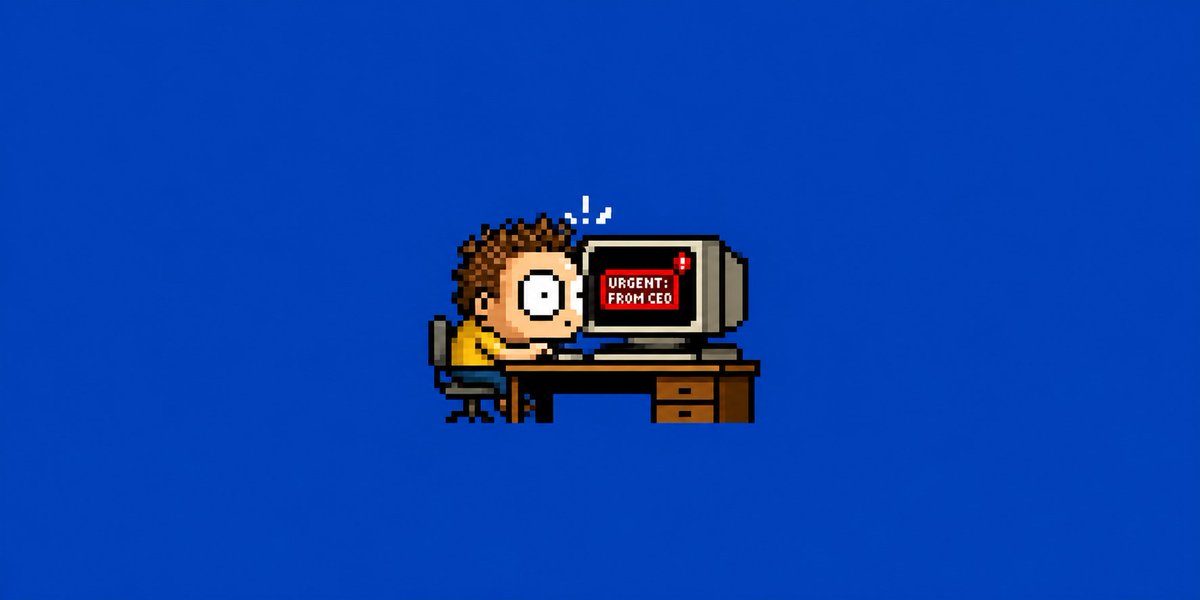


we used to read polished and grammatically flawless writing as a sign of trustworthiness.
AI made good writing free. by early 2025 the majority of phishing emails already contained AI-generated content. the polished style you used to instinctively read as a sign of legitimacy now reads as AI slop.
now, polished writing is what gives you away as a machine. lately, effortless and messy writing is being read as authentic.
when perfect writing costs nothing, the only expensive thing left to fake is sounding like an actual person.
14
Elen retweeted

Jun 4
How to actually earn $ as a web3 security researcher in 2026 x.com/i/broadcasts/1NGarrMVn…
7
25
118
7,374
if you are a security researcher, don't miss this 🔥
Jun 1

How to actually earn $ as a web3 security researcher in 2026
We're getting @RealJohnnyTime, @sammyaudits, and @GuildAcademy_ together with the Remedy team to talk through it honestly:
→ Bug bounties vs contests vs going in-house - what's worth your time
→ How to pick targets that'll actually pay you
→ Competing when everyone has the same AI agents
→ Where independent researchers go from here
We see this differently, so come ready to push back.
June 4, 14:00 UTC
Live discussion on @xyz_remedy
2
1
5
477

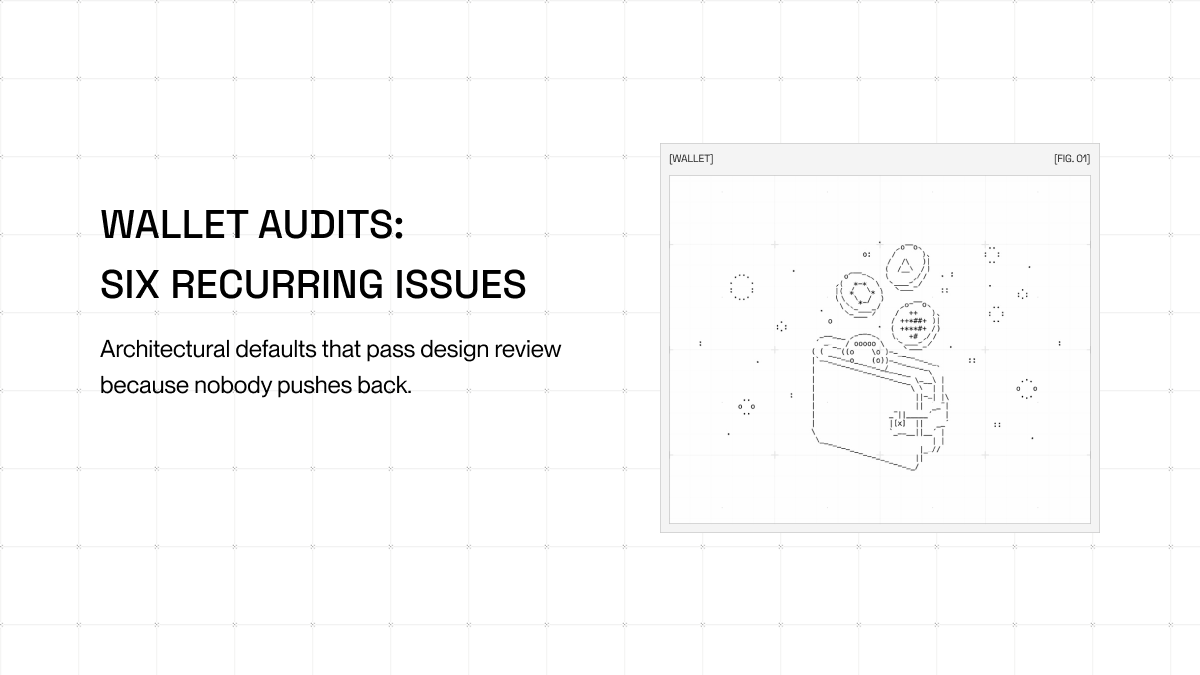
Who else caught the Pokémon? ;;)
May 26

Mid-career people are sitting on rare leverage right now
Stanford's Digital Economy Lab paper tracked early-career workers since ChatGPT launched. Workers aged 22-25 in the most AI-exposed jobs saw a 13% relative drop in employment vs. peers in less-exposed roles.
The jobs disappearing fastest are the ones where juniors used to learn the ropes by doing the boring stuff, and AI now does the boring stuff.
So what happens to mid-career people in 5-7 years?
If companies stop hiring juniors at the same rate, the pipeline of people ready to step into senior roles dries up.
IBM noticed and is tripling entry-level hires in 2026, not generosity, math. Slashing juniors saves money now and creates an expensive talent shortage later.
Ofc most companies don't do that. Which means anyone currently in the 3-8 year experience range is in a structurally rare position!
That window won't stay open forever, but right now it's the most leverage you'll have in your career to negotiate scope, comp, and the kind of work you actually want.
1
62
This is the smartest way of creating user personas, really. Makes so much more sense.
May 25
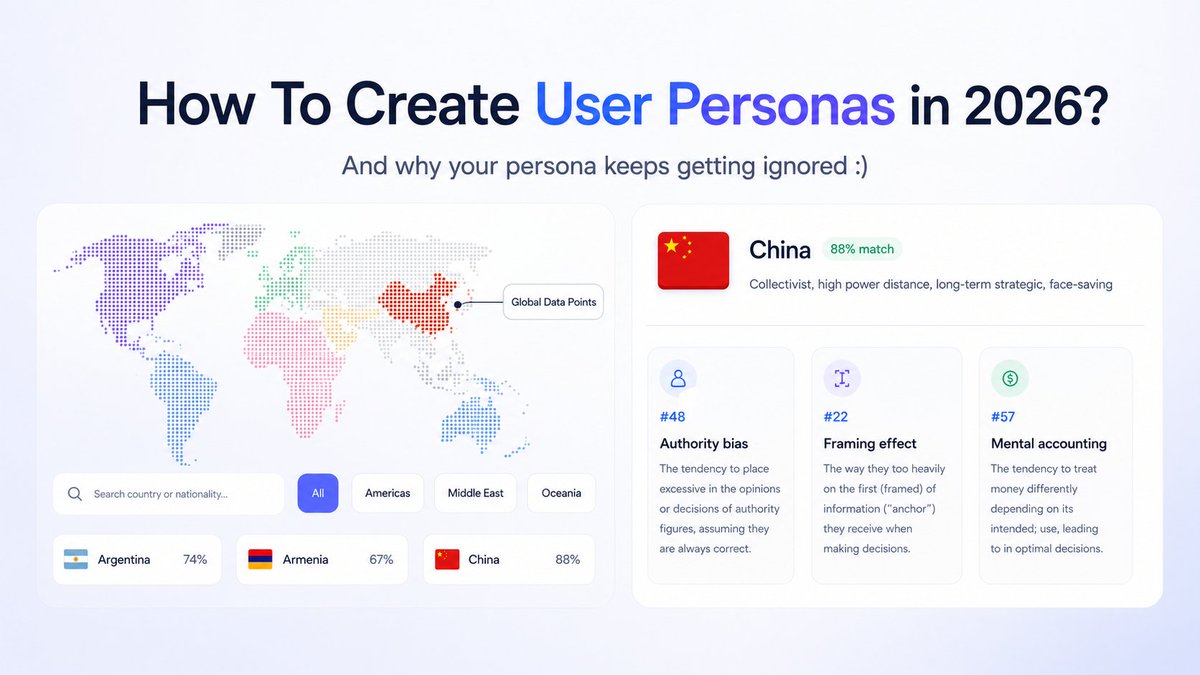
[1/8] Most user personas you've seen are useless and everyone in the room knows it.
They get printed, stuck on a wall, and ignored.
So here is how you create a Persona that makes sense.
1
2
66
Hey, it would be nice if anyone liked my post… just saying ahah

Phishing emails get more clicks when other people appear to be in on the thread. Your brain reads those CC'd names as approval.
A 2019 phishing simulation compared the three main social engineering tactics head to head. Social proof - emails that implied other people were already in the loop - out-clicked authority by about 22% and scarcity by 87%.
When a message looks like colleagues have already engaged with it, your brain stops evaluating the request and starts trying to catch up to a decision it thinks is already in motion.
Awareness training spends most of its time on the sender. The CC line is doing more of the work.
1
1
2
60
Phishing emails get more clicks when other people appear to be in on the thread. Your brain reads those CC'd names as approval.
A 2019 phishing simulation compared the three main social engineering tactics head to head. Social proof - emails that implied other people were already in the loop - out-clicked authority by about 22% and scarcity by 87%.
When a message looks like colleagues have already engaged with it, your brain stops evaluating the request and starts trying to catch up to a decision it thinks is already in motion.
Awareness training spends most of its time on the sender. The CC line is doing more of the work.
1
5
176

A small contribution from our side to the FHE community: a curated list of attacks, cryptanalysis papers, and tooling, all in one place.

New resource added to @fhe_org resources :
"Awesome FHE Attacks: A curated list of research, articles, tools, and resources focused on attacks against FHE" by Hexens
github.com/Hexens/awesome-fh…
Know of an FHE resource that should be shared? Let us know below!
#FHE #homomorphicEncryption #security
5
18
1,821
This is how user personas are built in 2026
May 19
[1/6] We just released a free tool that builds your product's user persona based on the cognitive biases most common in your target country.
It replaces the $5K–15K of research work that usually goes into building a research-backed persona for a new market.
Here's why this matters and how it works ↓
1
1
68
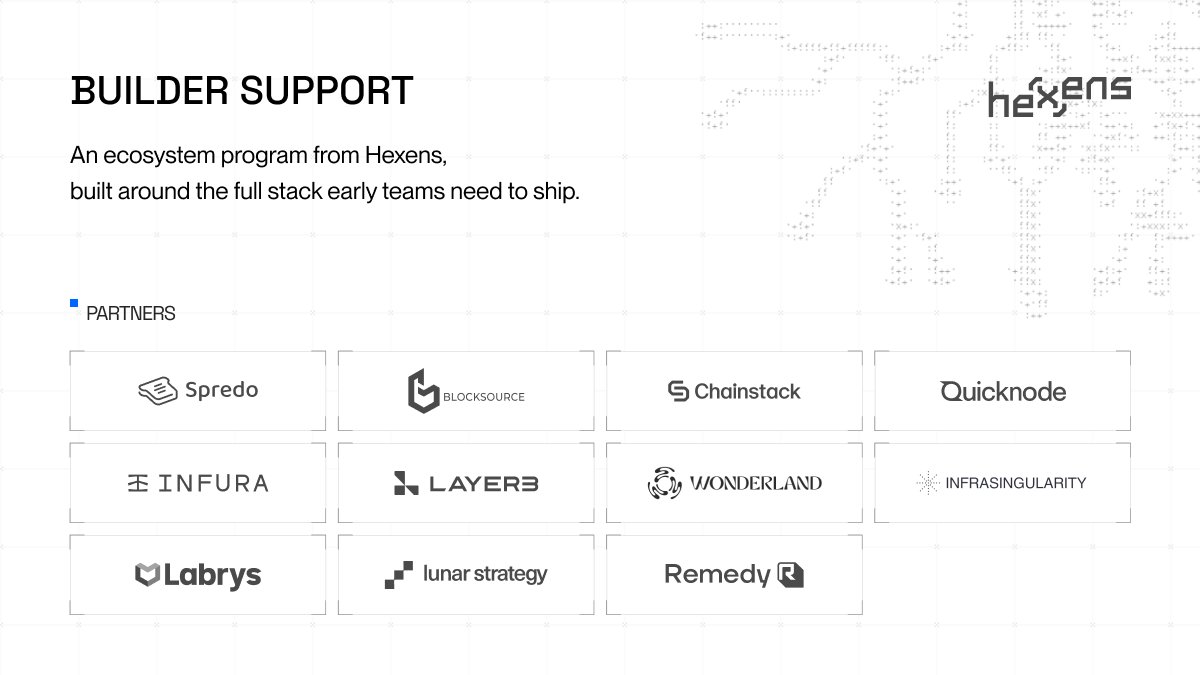
Today we're expanding Hexens Builder Support into a full ecosystem program.
Partners across the essential early-stage stack all chipping in to help teams ship safely.
Meet our initial launch partners:
@Spredoio, @Blocksource_co , @ChainstackHQ, @Quicknode, @infura_io, @layer3, @Wonderland, @ISinfra, @Labrys_io, @LunarStrategy, @xyz_remedy
Always room for more partners supporting early-stage builders.
Partners apply here: forms.gle/bwTkGzBTsU4eG2gq6
Builders apply here: hexens.io/pages/builder-supp…
9
8
42
11,254
Most awareness training tells you to look for typos and weird sender addresses. But a 2025 review by Stylianou et al. found that the tactic actually breaking people in phishing experiments isn't urgency or authority but commitment.
Once you've replied "yes, that's me" to a harmless opener, your brain spends real effort staying consistent with that yes. The wire transfer ask three messages later doesn't feel like a new decision. It feels like finishing what you started.
34
Elen retweeted

May 18
There's a reason songs get stuck in your head, and a reason it's almost always the chorus, not the whole song.
Your brain treats unfinished things as open loops it needs to close. The chorus is the easiest piece to half-remember, so the brain keeps looping it, trying to "complete" the song.
Researchers at Western Washington University found that the fix is counterintuitive: instead of fighting the loop, just listen to the full song once, start to finish. The loop closes and the brain lets it go.
Same mechanism as the Zeigarnik effect, the reason an unsent reply nags you more than one you've actually sent.
May 8
Your brain won't let you rest until you complete that side project.
In the 1920s, psychologist Bluma Zeigarnik noticed something odd at a Vienna café: waiters remembered unpaid orders perfectly, but forgot them the moment the bill was settled. She tested this in the lab - turns out, our minds hold onto unfinished tasks far more vividly than completed ones.
That nagging feeling at 11pm that you forgot something? Your brain keeps open loops active so you don't drop them.
It was a useful feature in a savanna. But it's obviously less useful when you have 47 open tabs, three half-written messages, and a side project from 2022. 😁
The fix isn't finishing everything (impossible).
Studies by Masicampo & Baumeister showed that simply writing down a specific plan for an unfinished task (when, where, how) frees the mind from rehearsing it. The brain treats the plan almost like completion.
1
1
2
56
Earlier, Apple announced another significant patch release for macOS (Tahoe 26.4), patching almost 80 CVEs spanning across user-space to kernel modules.
Together with dozens of other bright minds, we again had our own contribution, with the credit going to our researcher Gor Aleksanyan (@GorAleksanyann) who co-discovered CVE-2026-28868 and CVE-2026-20695 - kernel address/info leak bugs.
Update your devices.
Full advisory:
support.apple.com/en-us/1267…
2
6
19
1,334
Elen retweeted
May 8
Your brain won't let you rest until you complete that side project.
In the 1920s, psychologist Bluma Zeigarnik noticed something odd at a Vienna café: waiters remembered unpaid orders perfectly, but forgot them the moment the bill was settled. She tested this in the lab - turns out, our minds hold onto unfinished tasks far more vividly than completed ones.
That nagging feeling at 11pm that you forgot something? Your brain keeps open loops active so you don't drop them.
It was a useful feature in a savanna. But it's obviously less useful when you have 47 open tabs, three half-written messages, and a side project from 2022. 😁
The fix isn't finishing everything (impossible).
Studies by Masicampo & Baumeister showed that simply writing down a specific plan for an unfinished task (when, where, how) frees the mind from rehearsing it. The brain treats the plan almost like completion.
1
6
17
213,652

Elen retweeted
May 7
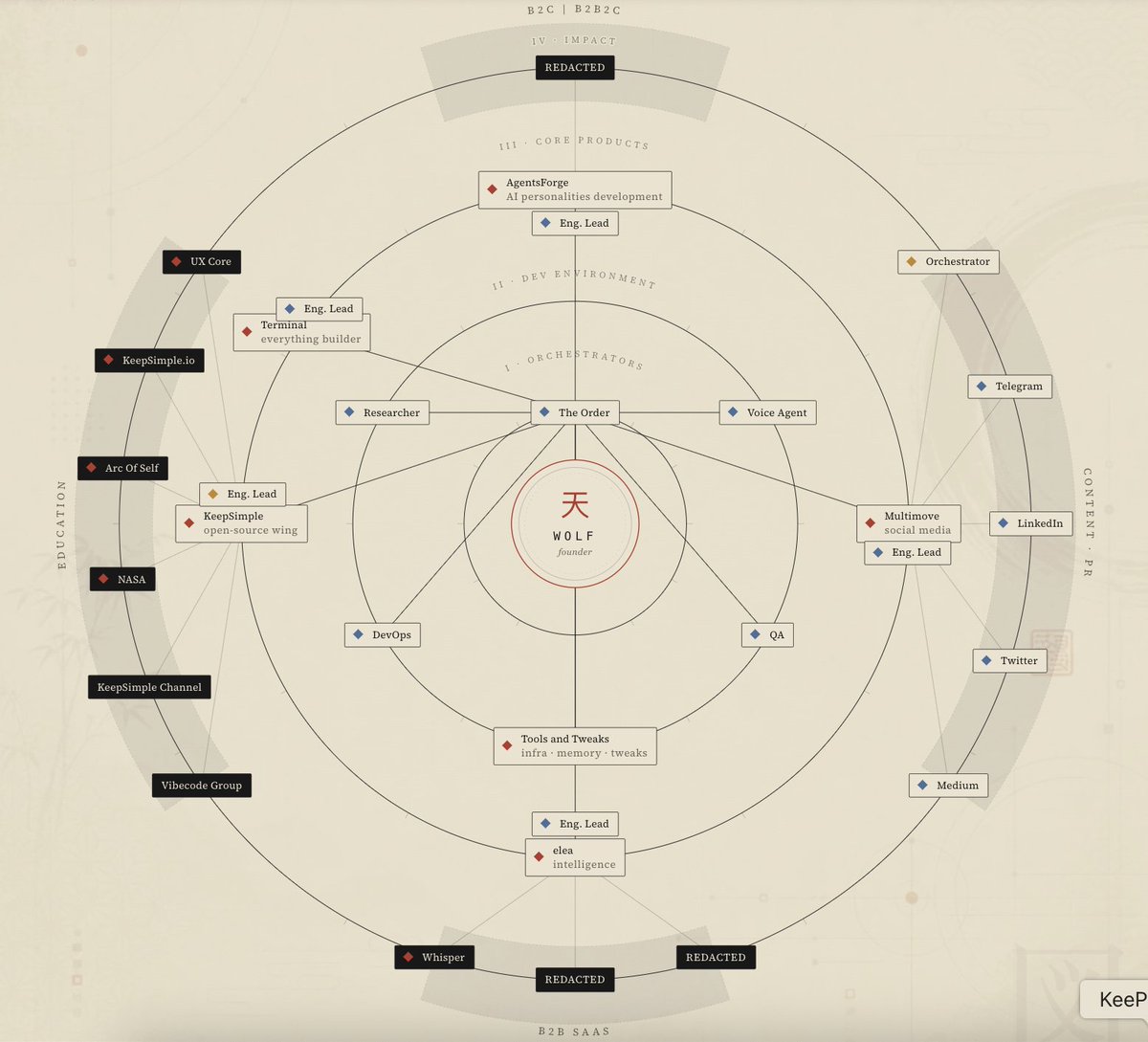
We built a framework for structuring AI-agent companies and ran our own through it first.
3 humans, 13 agents, 11 products
The framework is open for anyone to use.
keepsimple.io/ai-atlas
2
5
406
Elen retweeted

May 6
🧵1/4 Most of @keepsimpleio team consists of AI agents that work while we sleep.
We just published the full stack that runs our open source (and not only) wings — every human, every agent, every product on one live map.
keepsimple.io/ai-atlas
1
1
3
216
Elen retweeted
May 5
⭐️ We have a small Telegram community where we discuss #health, #cognition, #career stuff - everything that makes life a bit more thoughtful.
Open to anyone who wants in.
Join link: t.me/keepsimple
1
2
147
Elen retweeted
May 5
[1/5] The most useful person for your next job is probably someone you haven't spoken to in two years.
There's now massive-scale causal evidence for this. ↓

1
2
3
844