Co-founder and busy bee @ Igra Labs | emdin.eth | Assorted cartoon character
Joined April 2007
- Tweets 3,306
- Following 617
- Followers 2,076
- Likes 4,662
164 Photos and videos

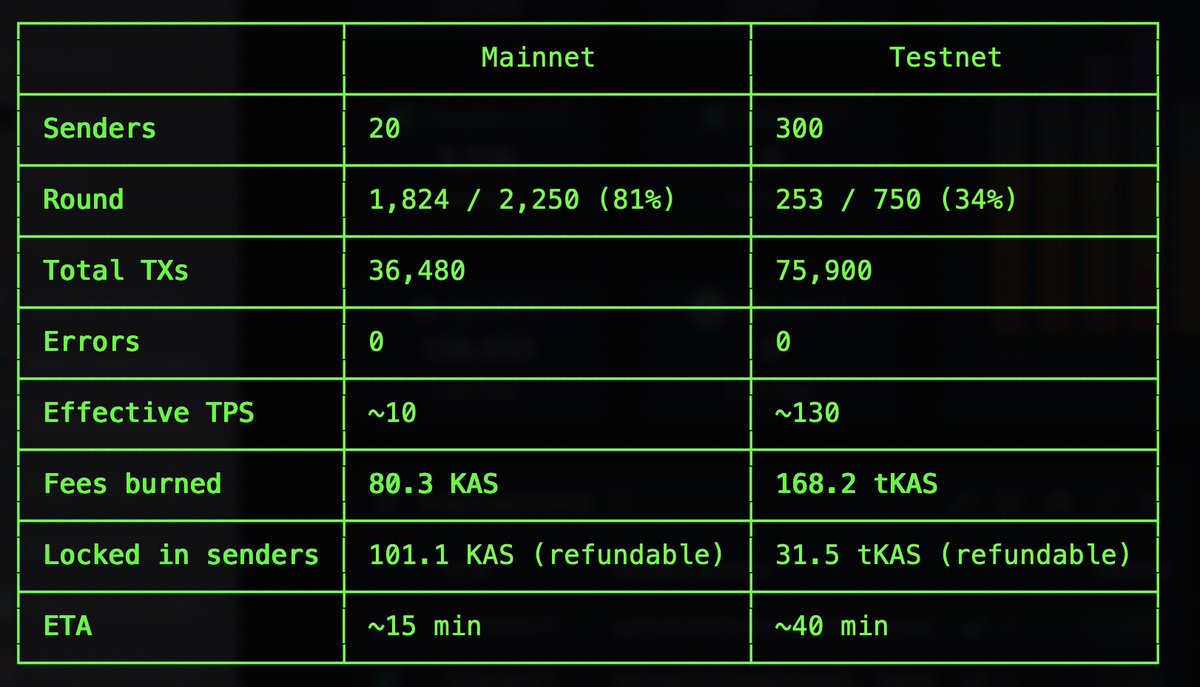
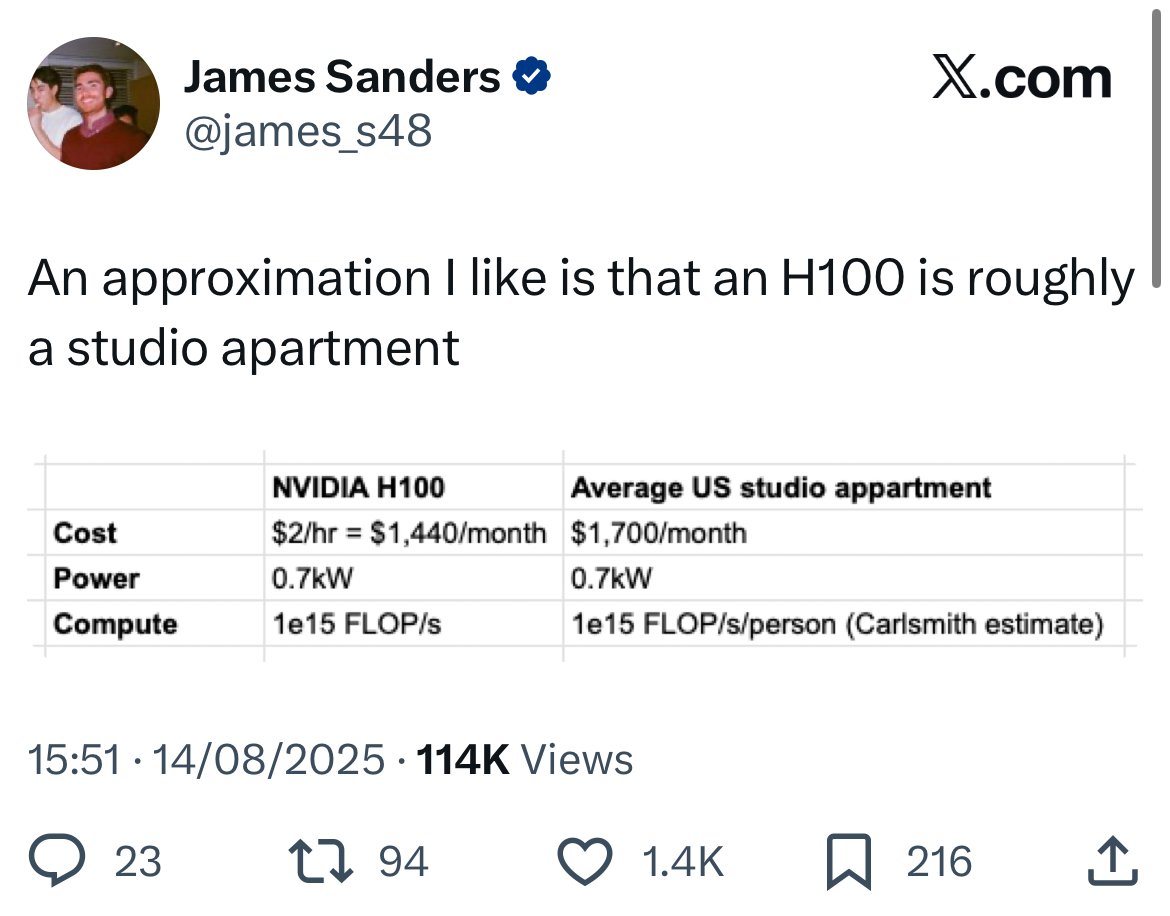


Jun 12
😉
Jun 10

There will come a day when they will increase max supply to 28.7B
1
19
2,001

Tomorrow it's finally time for the first community hangout!
Kaspa Under the Hood: Setting the Stage for vProgs
Grab a beer, coffee, tea, or whatever keeps you going, and join us for the first regular Kaspa community hangout.
We will start with a high-level presentation of the upcoming vProgs architecture and Kaspa’s next stages of development. Since the architecture is extensive, this first session is meant to set the stage for future deep dives.
The presentation is meant to be accessible to people with different technical backgrounds. We will take things step by step, build up the necessary context, and gradually develop a shared understanding of Kaspa’s architecture, trade-offs, and long-term vision.
After that, we will move into a relaxed open discussion where people can ask questions, share ideas, and talk about anything interesting: Kaspa, decentralized infrastructure, incentives, technology, philosophy, or the future of humanity.
Bring your ideas and questions, grab a drink, and join the conversation!
discord.com/events/599153230…

That's a really good question, but it's hard to answer in a single tweet because our mission is quite extensive, and it requires a lot of background knowledge to really understand what sets Kaspa apart.
Currently, a lot of people see Kaspa as “Bitcoin’s crazy little brother” that improves time-to-finality by leveraging the benefits of DAG-based consensus protocols without accepting their traditional drawbacks, such as decreased decentralization or a limited validator set.
This perception is somewhat accurate, but it falls short of conveying the full picture, because Kaspa’s vision extends far beyond just trying to be a better Bitcoin.
Anyone willing to study Kaspa and its broader vision will discover similarities to nearly all major existing DLT designs: from Bitcoin, to Ethereum, to Solana, Sui, Celestia, and beyond.
My personal view is that “research” in the DLT space is approaching a point of convergence. We increasingly understand how to push distributed systems close to the limits of what physics permits. The frontier is no longer only about raw throughput or faster finality. The attention is shifting toward game theory, incentives, sequencing, MEV, alignment, and how to build systems where the economic incentives of users, builders, miners, validators, applications, and infrastructure providers do not work against each other.
That is why debates like based rollups versus arbitrary sequencing, shared sequencing, MEV mitigation, proposer-builder separation, and execution-layer incentives matter so much. These are not niche technical details. They determine whether a network can remain neutral, decentralized, and aligned while scaling to global usage.
And this is where I think Kaspa is pushing the boundaries in a very important way.
Kaspa is not merely trying to be “fast.” The goal is to build an L1 where speed, decentralization, security, and incentives are aligned at the base layer. A system that does not scale by hiding complexity behind trusted committees, privileged sequencers, centralized validator sets, or opaque coordination mechanisms, but instead tries to preserve the spirit of proof-of-work while extending what an L1 can realistically do.
Because Kaspa arrived later than many other major projects, it does not carry the same degree of technological debt. It can absorb lessons from Bitcoin, Ethereum, rollups, modular blockchains, high-throughput monolithic chains, DAG research, MEV research, and the broader history of decentralized systems, and combine those lessons into something more optimal.
To me, that is what Kaspa is building: not just a faster blockchain, but a more incentive-aligned decentralized infrastructure layer.
But this also creates a different challenge.
Kaspa’s biggest problem today is not its technology. It is the lack of centralized coordination around communicating the vision. And because Kaspa is a grass-roots movement, that responsibility does not belong to a marketing department, or a single leadership team. It belongs to the community.
That also means the community has a different role to play.
There will always be holders who are mainly interested in price, and that is completely fine. But there also need to be people who are here because they want to use the technology to build a different future. People who care about the architecture, the incentives, the open questions, the trade-offs, and the long-term trajectory of decentralized infrastructure.
I am one of those people.
I am not interested in DLTs merely as a way to generate wealth. I am interested in them because I believe they can change the trajectory of humanity as a whole.
For that reason, I want to use this opportunity to announce a regular community hangout where we discuss the current state of development, the open questions, and where we can align our vision together.
The first session will be on Tuesday, June 9th, 2026.
We will talk about the vProgs framework, how the codebase works, what sets Kaspa apart, where we improve on existing solutions, and what still needs to be done. The goal is for this to become a regular, possibly bi-weekly, event where we as a community come together to discuss the future and understand the technology.
Eventually, we can invite people from other projects as well, but the main focus at the beginning will be explaining and communicating how things work under the hood.
There is still a lot of work to be done, and I do not want to waste precious time. So the first sessions may feel a little improvised, but we can improve as we go.
The important thing is that we start.
So mark the date: Tuesday, June 9th, 2026.
21
173
550
20,221
Jun 7
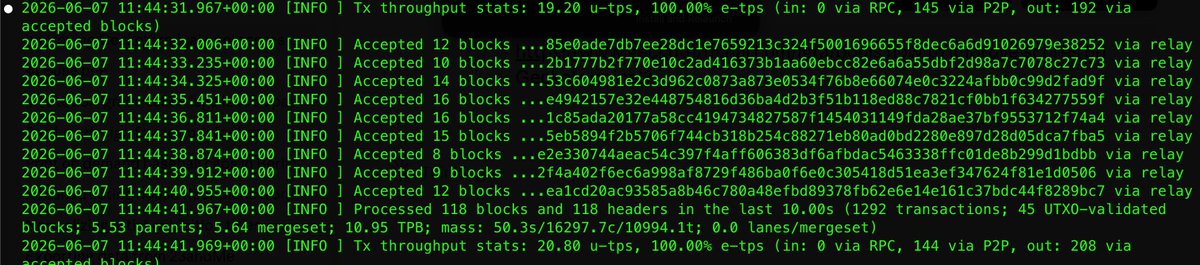
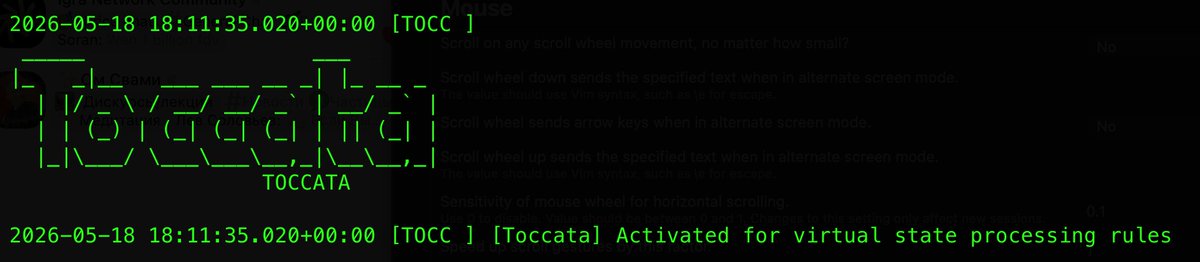
Toccata mainnet node synced in 42 minutes. What kind of black magic is this??
14
115
536
12,867
Jun 7
Yes, this should work assuming you have some liquidity backstops on rollup. There is a strong dependency on prover liveness though.
Anyway, rollup flavor is not important, auditable standard for covenant-based tokens is. Hope someone is looking into it.
Jun 7

This is why I proposed that the issuer will be a zk-rollup with a bridge to L1. If you need fast liquidations, depositing KAS and KUSD to a zk-rollup is a matter of seconds (withdrawals can take more time since they require a zk-proof, but I think it's less critical)
6
54
2,414
Jun 6
ZK is not a panacea. Until formally verified ZKVM lands, every ZK system is running on the same trust model it kind of supposed to improve.
Jun 5

The Holy Trinity is dead. Sadly due to the Orchard Pool exploit, I had to dump our entire $ZEC bag.
- While I think it's extremely unlikely of any minting, it cannot be formally cryptographically proved impossible
- The privacy from AI, govt, big tech narrative demands perfection not improbability
- I read about the exploit yday, and didn't appreciate how it violated my narrative mental map. The 30% dump, made me rethink, and I had to take profit on the entire position
- We will consistently re-evaluate our thinking and if my assumptions are proven incorrect, will rebuy, hopefully at lower prices.
- Privacy is priceless and I have no issue eating humble pie and rebuying much higher.
We still hold $WLD and are excited for Lord Elon to pump our bags.
2
5
41
2,699
Jun 6
Agree you can build a bare L1 covenant CDP: mint KUSD against KAS with enforced liquidation. But a scalable MakerDAO model needs peg-maintenance features (stability pool, liquidation management) that do mutate shared state (need rollup). What's not clear to me is how to solve fast liquidations and prevent bad debt. The market can crash in seconds; a ZK proof for a collateral value change takes minutes.
Anyway, this can be a nice task for dev workshop in Berlin wdyt @asaefstroem ?
Jun 6
It means it's now possible to have stable coins on L1, but someone will need to implement them. One interesting direction is to make some MakerDAO style issuer in a zk rollup that will have a bridge to L1.
4
12
97
4,985
Jun 6
Happy to discuss it further @OriNewman. Some unbased generalizing -- looks like "UTXO Defi" works for core primitives, but can't scale when you need more complex market logic. Makerdao started as a 100 loc; but to balance supply and demand it had to use global state.
1
23
944
May 30
This. Incentives, fair sequencing, MEV resilience, alignment over raw throughput is exactly what EF just codified with CROPS. "Maximizing throughput is a mistake that leads to mediocrity". Better infra is both pragmatic and future-proof. Kaspa core is building the perfect base layer, and shipping it at the speed of their own finality. Looking forward to June 9, marked my calendar.
That's a really good question, but it's hard to answer in a single tweet because our mission is quite extensive, and it requires a lot of background knowledge to really understand what sets Kaspa apart.
Currently, a lot of people see Kaspa as “Bitcoin’s crazy little brother” that improves time-to-finality by leveraging the benefits of DAG-based consensus protocols without accepting their traditional drawbacks, such as decreased decentralization or a limited validator set.
This perception is somewhat accurate, but it falls short of conveying the full picture, because Kaspa’s vision extends far beyond just trying to be a better Bitcoin.
Anyone willing to study Kaspa and its broader vision will discover similarities to nearly all major existing DLT designs: from Bitcoin, to Ethereum, to Solana, Sui, Celestia, and beyond.
My personal view is that “research” in the DLT space is approaching a point of convergence. We increasingly understand how to push distributed systems close to the limits of what physics permits. The frontier is no longer only about raw throughput or faster finality. The attention is shifting toward game theory, incentives, sequencing, MEV, alignment, and how to build systems where the economic incentives of users, builders, miners, validators, applications, and infrastructure providers do not work against each other.
That is why debates like based rollups versus arbitrary sequencing, shared sequencing, MEV mitigation, proposer-builder separation, and execution-layer incentives matter so much. These are not niche technical details. They determine whether a network can remain neutral, decentralized, and aligned while scaling to global usage.
And this is where I think Kaspa is pushing the boundaries in a very important way.
Kaspa is not merely trying to be “fast.” The goal is to build an L1 where speed, decentralization, security, and incentives are aligned at the base layer. A system that does not scale by hiding complexity behind trusted committees, privileged sequencers, centralized validator sets, or opaque coordination mechanisms, but instead tries to preserve the spirit of proof-of-work while extending what an L1 can realistically do.
Because Kaspa arrived later than many other major projects, it does not carry the same degree of technological debt. It can absorb lessons from Bitcoin, Ethereum, rollups, modular blockchains, high-throughput monolithic chains, DAG research, MEV research, and the broader history of decentralized systems, and combine those lessons into something more optimal.
To me, that is what Kaspa is building: not just a faster blockchain, but a more incentive-aligned decentralized infrastructure layer.
But this also creates a different challenge.
Kaspa’s biggest problem today is not its technology. It is the lack of centralized coordination around communicating the vision. And because Kaspa is a grass-roots movement, that responsibility does not belong to a marketing department, or a single leadership team. It belongs to the community.
That also means the community has a different role to play.
There will always be holders who are mainly interested in price, and that is completely fine. But there also need to be people who are here because they want to use the technology to build a different future. People who care about the architecture, the incentives, the open questions, the trade-offs, and the long-term trajectory of decentralized infrastructure.
I am one of those people.
I am not interested in DLTs merely as a way to generate wealth. I am interested in them because I believe they can change the trajectory of humanity as a whole.
For that reason, I want to use this opportunity to announce a regular community hangout where we discuss the current state of development, the open questions, and where we can align our vision together.
The first session will be on Tuesday, June 9th, 2026.
We will talk about the vProgs framework, how the codebase works, what sets Kaspa apart, where we improve on existing solutions, and what still needs to be done. The goal is for this to become a regular, possibly bi-weekly, event where we as a community come together to discuss the future and understand the technology.
Eventually, we can invite people from other projects as well, but the main focus at the beginning will be explaining and communicating how things work under the hood.
There is still a lot of work to be done, and I do not want to waste precious time. So the first sessions may feel a little improvised, but we can improve as we go.
The important thing is that we start.
So mark the date: Tuesday, June 9th, 2026.
2
24
121
3,286
May 26
We're on! Join, ask questions, hear alpha.

2
2
22
705
May 23
I've participated in several org transitions from 10 to 100 to 1000; what's happening at the EF is textbook. Ambitious, self-governing people leave when the org ossifies. They're intrapreneurs who need speed and freedom. $300B can't operate like a research lab anymore. The visionaries who built it aren't the operators who scale it. Eth becoming the JPMorgan of crypto sounds boring, but this is normal evolution.
Ossification creates space for upstarts.
3
9
62
2,180
May 22
New version of t.me/Igra_watch_bot:
- /stats now returns actual liquidity and network information
- New /bridges command monitors inflows and outflows across all Hyperlane routes
- Backup RPC failover via nrs.pub by @asaefstroem
- Performance and stability fixes
1
12
68
2,877
May 20
Hey @5apere4ude, several things I'd push back on.
- Re "interim". Every infrastructure choice is interim until the market says otherwise. vProgs are interim until they ship and developers and users adopt them. Igra is interim until either based rollup architecture proves out at scale, or it doesn't. No founder can declare their solution permanent or interim ahead of the market.
- Re builder allocation -- I keep saying talent pools don't overlap. Kaspa core needs Rust systems engineers and cryptographers comfortable with UTXO and consensus protocols. Even with SDK abstractions, building on vProgs will require working knowledge of Rust and ZK proof systems. Igra needs Solidity developers comfortable with EVM and DeFi primitives. EVM developers don't migrate to UTXO scripting at the loss of Kaspa-native opportunities, and vice versa.
- Re business-vs-infra dichotomy. These are separate axes. Linux is open infrastructure. Red Hat is a focused commercial business on top of it. Igra is open architecturally (permissionless deployment with no gatekeeping) and focused commercially (EVM battle-tested execution and primitives for KAS and IGRA holders and developers who want PoW special guarantees). So yeah, infra is our business.
We won't get endorsement, and that's fine. The architectural conversation is still worth having.
May 12

@emdin I would appreciate your thoughts on this matter.
5
8
54
2,904
May 19
Apply. CyberFund is based.
May 19

Introducing the Monastery for AI-native founders.
A single builder can now outperform a publicly traded company.
$2 million. 12 weeks. Do the impossible.
1
2
19
1,534
May 18
Igra is permissionless and open for anyone. if you have a project, DM and you will get exactly the same treatment as everybody else.
May 17

These guys run a cabal and only want their projects on top. Its obvious to anyone paying attention.
All I need to say is zeal ico scamsheet. That was some of the biggest insider bullshit I've seen.
1
11
82
2,568
May 13
Great initiative for the whole EVM ecosystem. Blind signing is a horrible experience that we have taken for granted for years.
May 12

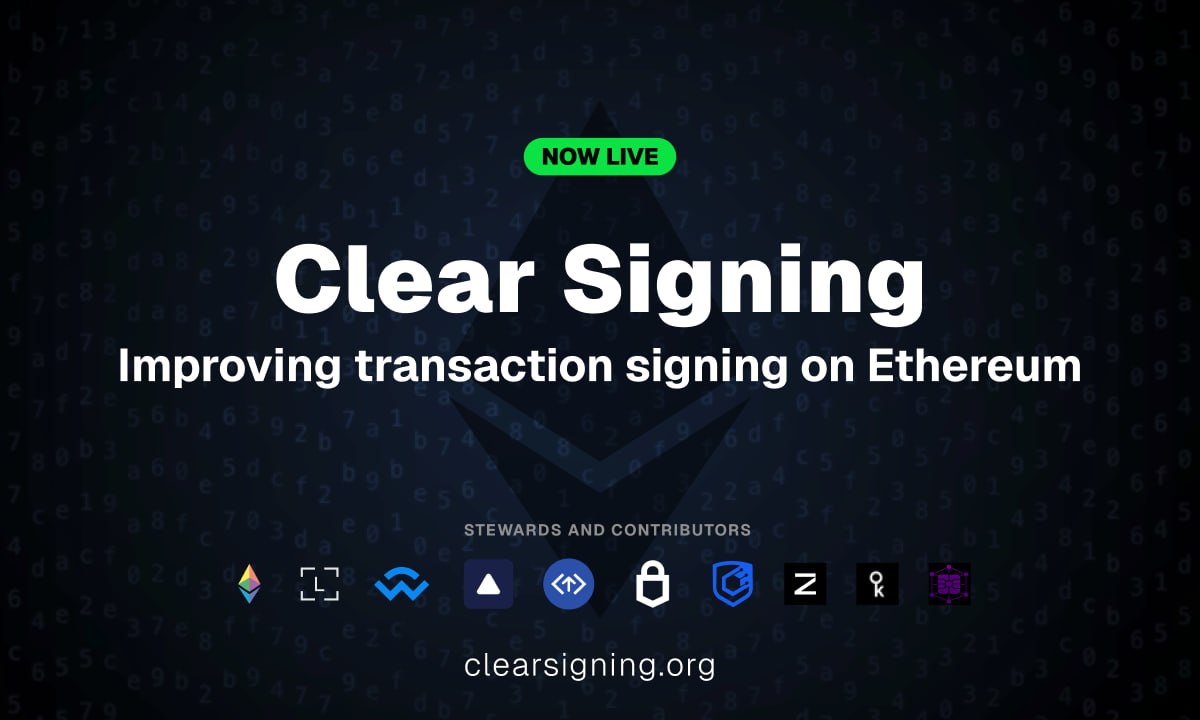
0/ Clear signing is now live.
An open standard to end blind signing, making human-readable transactions default.
This effort brings a major UX and Security upgrade to transaction signing on Ethereum.
1
6
36
1,927
May 12
Can only speak for Igra. Our intents are irrelevant. You should trust code, not intents.
Igra's codified guarantee: if at least one sender submits valid transactions according to spec to L1, they get mined, included into state, and can be interpreted. No rollback needed. All specs are open: igra-labs.gitbook.io/igralab…
All Igra state lives on L1 with no additional indexer or backend logic. The rollback scenario assumes miners can surgically revert L2 state; they can't. Igra state is L1 data and "rolling back" means reorging the Kaspa DAG itself, which destroys finality for everything, not just Igra.
Native programmability on Kaspa L1 atm is very specific subset in form of covenants and these are not Turing complete.
vProgs are, but not native. These are offchain binaries proving state transitions where L1 only verifies. That is literally what a rollup is. The rest is semantics and engineering marketing.

Work all they, read this because i value you :) and wrote a response full with typos :)
Groked it a bit
I don't think the "scattered dag form" of development is bad. It works just like Kaspa itself. vProgs, universal scheduler, TangVM and whatever else — all of it is the canonical outcome and goal of our efforts. Every piece of building yields a new part, and the final machine is larger than the sum of all its parts. I may be crazy, but I can see quite clearly how and why the puzzle pieces fit together.
The money aspect
Leaving sound money as narrative or keeping it as the north star is meaningless.
The base layer is the soundest proof of work monetary network in existence. Bitcoin is a meaninglessly close second — so meaningless we could basically call them equal, just different approaches. It is by nature a scarcity and an emerging store of value just like Bitcoin is, narrative or not.People will focus on the cash aspect and build point of sale solutions because as the network grows and becomes more liquid, the profitability of creating high UX for extracting coins from holders who want to spend it increases. UX friction easing is a natural consequence of KAS being cash.However, KAS and BTC are commodity first. The core function of their incentive token is that everything except BTC or KAS is accepted by miners to include a TX in a block and make the machine run. All KAS are in essence potential fees for making operations happen.Beyond money
The true digital scarcity within Kaspa is not its incentive token but rather its DAG structure, because it converges multi-dimensional truth through DagWidth and WorkWeight continuously. This is by all means more valuable than sound money on its own because of the application-layer it creates by existing only here. But it requires sound money to operate, or the truth it yields is false.Being just a Bitcoin-like digital scarcity isn't that meaningful. Being only perfect money and settlement for the sake of being perfect money and settlement creates no inherent competition or urgency. Finance does. Finance is adding value signals beyond just the money itself, and from sorting these different value signals by weight, urgency emerges naturally — because unlike KAS whose issuance is deterministic and price is in deterministic flux, other assets are always in undeterministic flux depending on profitability and utility at any given time.
The Grok quote “User-friendly and works now beats theoretical superiority until the superior thing actually works better” I think is framed from the wrong lens.
I would reframe it as: "UX that works good, works — until some UX proves the former 'good' is worse than the new superior UX.
"I'm personally strongly "not for" L2s like Igra and Kasplex because nothing is ever truly mutualistic. Even if the intents are pure as gold, the flaw remains: an L2 that produces the majority of all fees on the network will have the miners' attention. If shit hits the fan on an L2 and they want a rollback, all intents and purposes will be null and void. The only way to combat their strength is native programmability — sovereign and synchronously composable across L1.
Hope this made any sense, i'm really tired
3
14
74
3,103
May 10
I have tremendous respect for @hashdag research and ideation contributions; this is why it is even more important to point out inaccuracies.
(Meta note -- declaring no debate while writing multiple paragraphs debating it is a contradiction.)
"EVM is outdated tech." TCP/IP is outdated too. EVM chains hold 80% of collective DeFi TVL. Big actors are risk-averse and prefer audited, battle-tested infrastructure.
"Vitalik declaring a move away." Not a move away. RISC-V replaces the execution engine underneath. EVM stays as the interface layer. If anything, RISC-V is Ethereum doubling down on EVM longevity by giving it a faster backend.
"L2s are parasitic." Most L2s today use centralized sequencers. Igra doesn't. It's a based rollup, a category of L2 that uses L1 miners for ordering and routes fees back to them. That's not parasitic. That's additive fee revenue for Kaspa's security budget.
"L1 dev serves L2s, reverse never happens." Igra open-sourced Kaswallet and RPC service for the community. ATAN is on its way. We have collected deep expertise on building based rollups on Kaspa L1, which will be required for vProgs too. We are ready to share it with anyone.
"L2 roadmap declared dead." By whom? L2s hold 40% of Ethereum ecosystem TVL and growing. Over 65% of new smart contracts in 2025 deployed directly on L2. That's not dead. That's an architectural pattern with its own tradeoffs, like every other approach in tech.
"It fragments the efforts." Every project building on Igra or any other rollup expands Kaspa's brand outreach and user base. Expanding programmability expands Kaspa's reach. Restricting it does the opposite.
May 8

10/13
Q: There's an active debate around zk-native execution versus EVM compatibility as Kaspa's long-term programmability path. Why prioritize zk-native architecture over leaning fully into the existing EVM tooling that L2s already bring? Is the long-term picture zk-native L1 with EVM layers as a transitional bridge?
A: There’s no active debate. EVM is an outdated tech antithetical to Kaspa’s boutique brand. Vitalik declaring a move away from it should be enough to end this imagined debate.
An L2 takeover is the nightmare of L1s — especially at such an early stage before the L1 has solidified its status. It fragments the efforts, the messaging, the execution layer, the standards, the expectations, the observers. It creates a surreal situation where the project is trying to grow its network effect whilst trying to fend off parasitic networks. L1 development efforts serve L2’s, the reverse never happens (I invite you to skim through pub rnd TG channel and validate this). I know of no crypto project that had to deal this early with L2’s trying to siphon its network effect - before it secured its own.
I reiterate that my stance is completely banal, and it is weird that I need to belabour it and present it as “my peculiar decisive opinion” rather than just referring ppl to coindesk articles or crypto twitter and letting them DYOR. The L2 roadmap has been declared dead and L2 projects are fading. Some called it earlier some later than others, the bottom line is one and the same.
25
41
189
24,891
May 8
Friday train of thought.
The KelpDAO meltdown and Arbitrum Conclave censorship are just two more grains on the pile that makes decentr theater obvious.
Even the best CEXes are banks in disguise. There are good banks, but when you give up custody you give up freedom.
Systems that rely on central actors are inherently vulnerable. This is why we don't rely on centralized sequencer.
PoS as a consensus is easy to censor. This is why we run on PoW.
We put "unstoppable, extraction-resistant, censorship-resistant" in our thesis a year ago because we believe in it.
The market keeps validating that conviction.
2
19
85
1,653
May 8
MEV resistant sequencing, Kaskad's Nuntius, Zealous Flow -- this is not random, they're purposeful innovations built around the same fairness thesis.
1
9
301