
295 Photos and videos






Pinned Tweet

12 Dec 2022
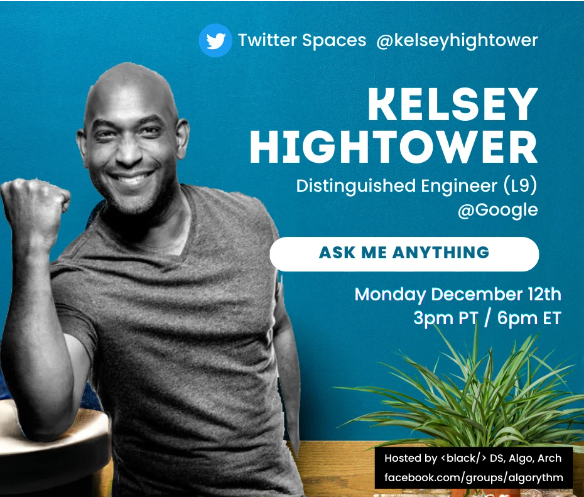
Join us today for an AMA with one of the most respected engineers in the industry who recently gained the legendary "Distinguished Engineer" title at Google! @kelseyhightower on Twitter spaces 👉🏿 x.com/i/spaces/1kvJpmLywvXxE
2
50
361
Esco Obong retweeted

Jun 13
The US government, citing national security authorities, has issued an export control directive to suspend all access to Fable 5 and Mythos 5 by any foreign national, whether inside or outside the United States, including foreign national Anthropic employees.
The net effect of this order is that we must abruptly disable Fable 5 and Mythos 5 for all our customers to ensure compliance.
Access to all other Claude models is not affected.
We apologize for this disruption to our customers. We believe this is a misunderstanding and are working to restore access as soon as possible.
Read our full statement: anthropic.com/news/fable-myt…
12,387
25,670
87,403
87,829,440
Esco Obong retweeted

Jun 10
Everyone's talking about AI-generated HTML.
But have you tried giving your sites a zero-config API for saving data, file storage, AI, websockets, etc?
We did this at Shopify. Runs on a single VM that costs $200/month, and it's changed the way we work.
We call it Quick 👇🧵
106
167
2,925
817,628
Esco Obong retweeted

Jun 10
Uhm Guys… Mythos (Fable) is AGI.
On the left is the ACTUAL Lovable Mobile App.
On the right is my Lovable version I built with Mythos in 2 prompts.
My version SMOKED it.
378
260
6,369
1,497,278
Jun 9
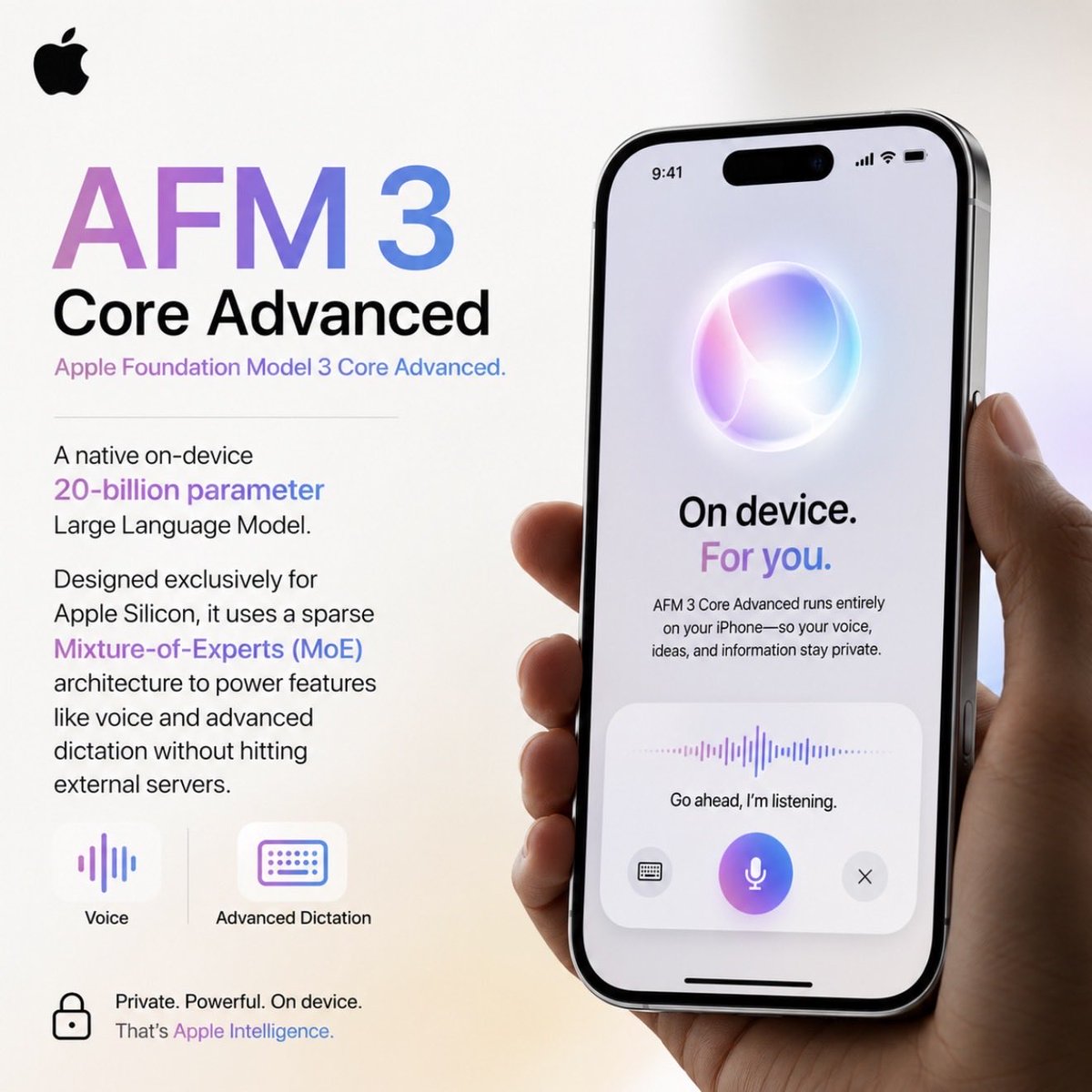
Apple is about to deploy a 20B parameter LLM to millions of iPhones. I see this move as a natural extension of their typical business strategy
1. They didn’t chase the hype. Instead of spending billions racing to create the best model in the world, they identified that local models are a fit for their privacy focused business and provided direct value to their flagship product: The iPhone
2. Vertically integrated hardware means they can optimize a whole 20B parameter LLM to run on a mobile device in your pocket 🤯. And have ZERO infrastructure costs while millions of users burn trillions of tokens for the low cost of battery power.
Apple may not win the “AI race”. They never cared about being first. But they understand the most important thing is figuring out how AI makes their business better without making it a money pit.
3
353
Esco Obong retweeted

Jun 8
AFM Core Advanced on-device model running on A19 Pro is a sparse model.
It's 20B parameters.
It's fully Apple designed. It is an MoE but when it processes the prompt, it only loads the parameters needed and locks them in.
If it's 20B parameters total, but on a specific request it's only 1-4B parameter total. It only loads in 1-4B for inference and decides them at prefill time.
It is fully Apple designed architecture, Google had nothing here.
57
304
2,090
1,419,156
Jun 8
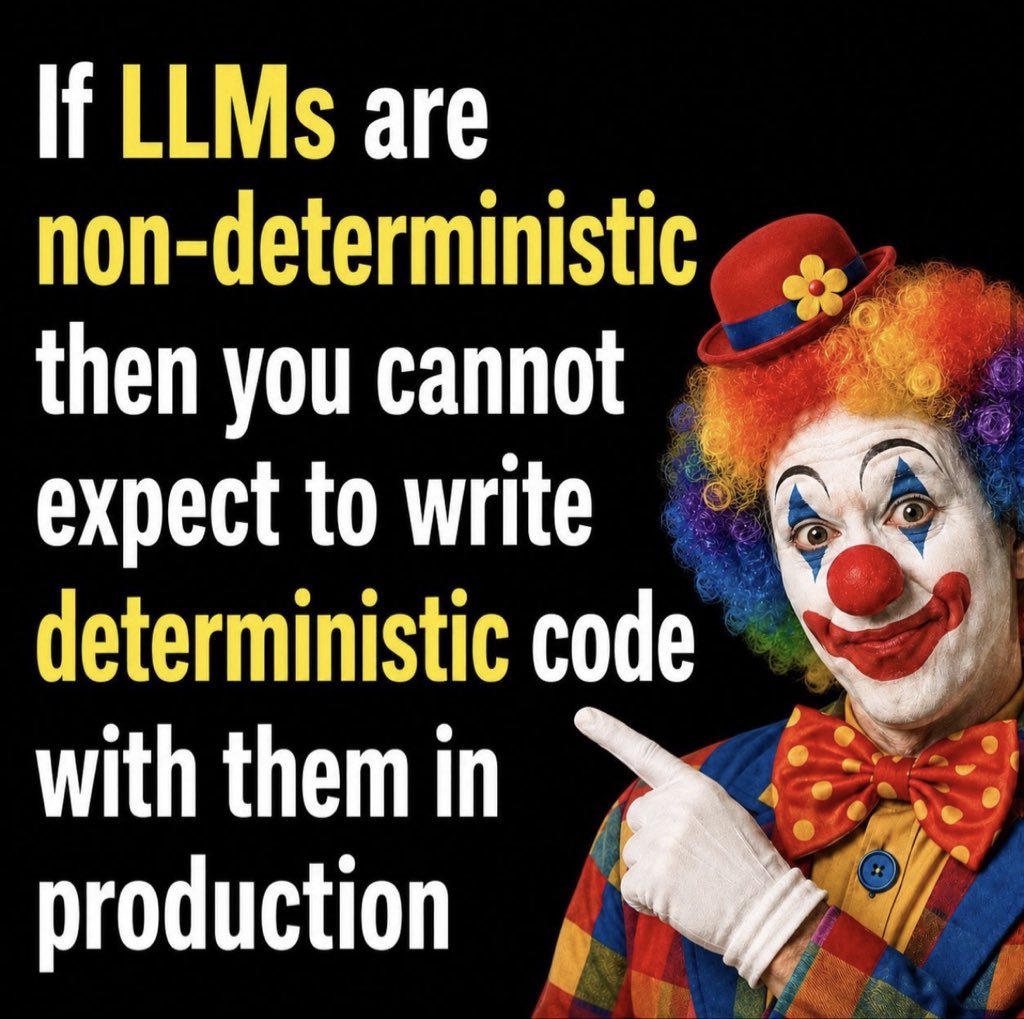
Humans are non deterministic, yet we write deterministic code. How is that possible 🤔? Determinism != Correctness
The execution of the code itself is what is deterministic, not the author. The important thing is the correctness of the implementation.
There are many ways to write code that performs the same task. Different engineers will implement the same feature differently.
Even the same engineer will implement it differently days, weeks or months apart.
When we implement logic, there is no exact expected lines of code that will be written before we start.
The code will perform the same task deterministically as long as it’s written correctly.
1
156
Esco Obong retweeted

May 29
HMU if you're interested!
May 29

We're running a 24-hour hackathon June 19–20 in San Francisco with @cognition, @etched, and @AnthropicAI.
$50k top prize. $100k in total awards. Every accepted team gets 8xH100s, Anthropic credits, and Cognition API access.
Guest judges include: @BrendanFoody, @robertwachen, and @silasalberti.
Apply by 6/12: luma.com/hncudfxb

7
2
14
1,053

Today, we share a breakthrough on the planar unit distance problem, a famous open question first posed by Paul Erdős in 1946.
For nearly 80 years, mathematicians believed the best possible solutions looked roughly like square grids.
An OpenAI model has now disproved that belief, discovering an entirely new family of constructions that performs better.
This marks the first time AI has autonomously solved a prominent open problem central to a field of mathematics.
1,198
3,918
26,791
13,570,430
Esco Obong retweeted

May 23
Never heard so many standout infra engineers AI infra eng actively wanting to leave Meta than now.
A month ago they were building cutting-edge infra and then got assigned to AI data labelling
Most of them went “WTH” and now I’m the middle of interviewing
Madness from Meta
94
119
2,611
445,571
Esco Obong retweeted

May 19
Personal update: I've joined Anthropic. I think the next few years at the frontier of LLMs will be especially formative. I am very excited to join the team here and get back to R&D. I remain deeply passionate about education and plan to resume my work on it in time.
7,989
11,150
150,231
27,568,139
May 18
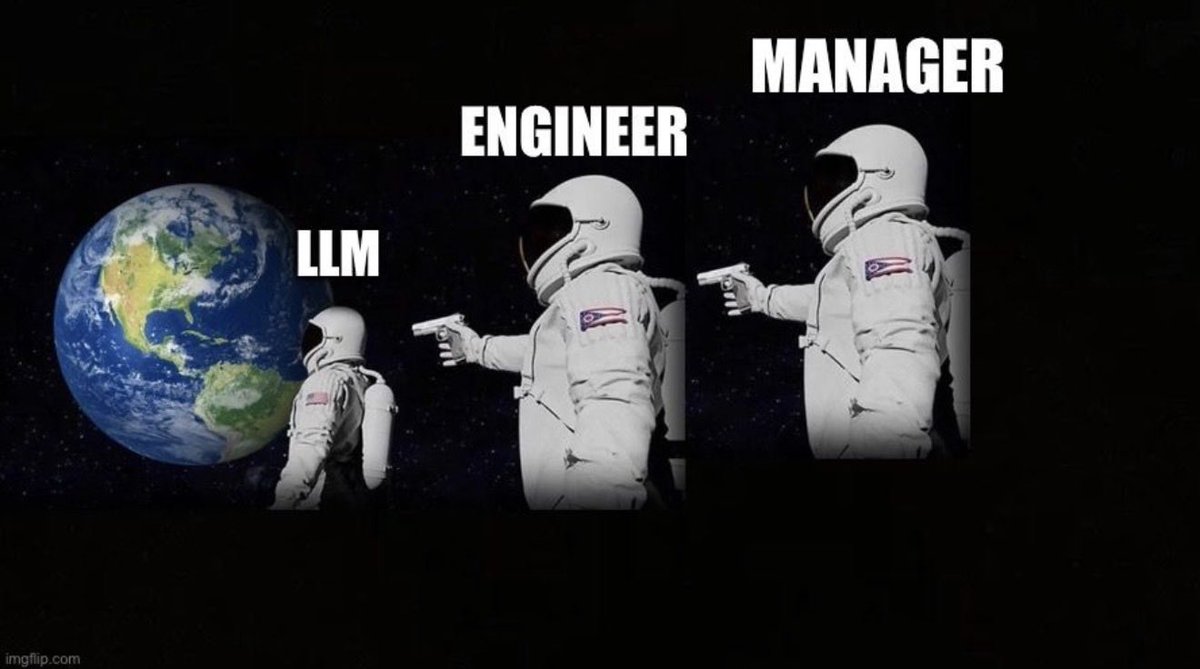
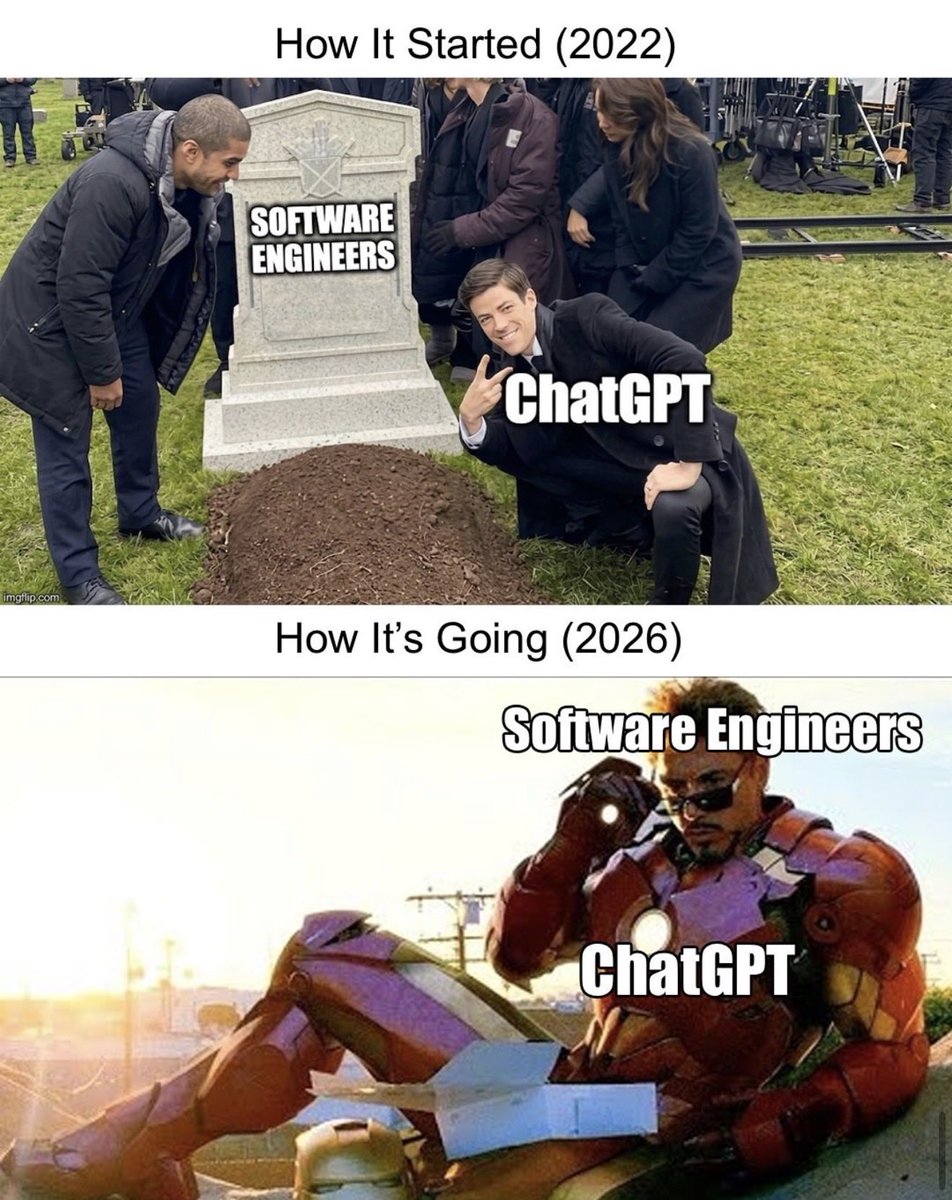
This is what engineering teams look like in 2026. I'm writing nearly 100% of my code at Airbnb with LLMs. What about you?
126
May 16
You think “snail mail” is slow?
For huge datasets, the bottleneck is often bandwidth, not distance.
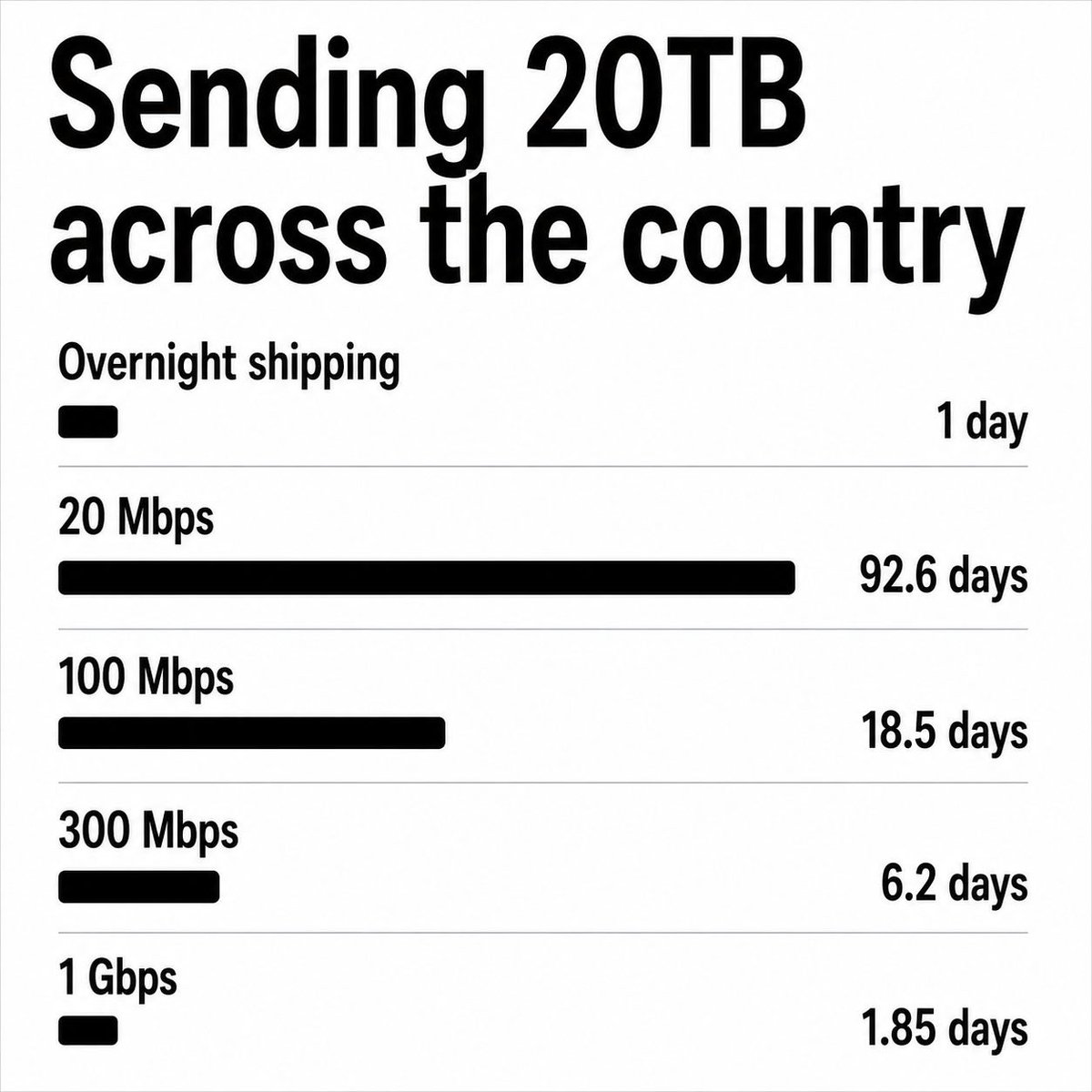
A 20 TB drive shipped overnight can beat many internet connections:
At 100 Mbps, transferring 20 TB takes about 18.5 days in a best-case, non-stop transfer.
At 1 Gbps, it still takes about 1.85 days.
And for a more realistic consumer example: many home connections have much slower upload than download. At 20 Mbps upload, sending 20 TB would take roughly 93 days.
An overnight courier can move the same data in about a day, assuming you can also copy the data on and off the drive fast enough. In practice, the drive speed, USB port, encryption, verification, and lots of small files can become the next bottleneck.
2
205
May 16
Will computers be smarter than humans in 10 years?
100%
Yes
0%
No
0%
Maybe
0%
They already are
1 votes • Final results
124
May 15
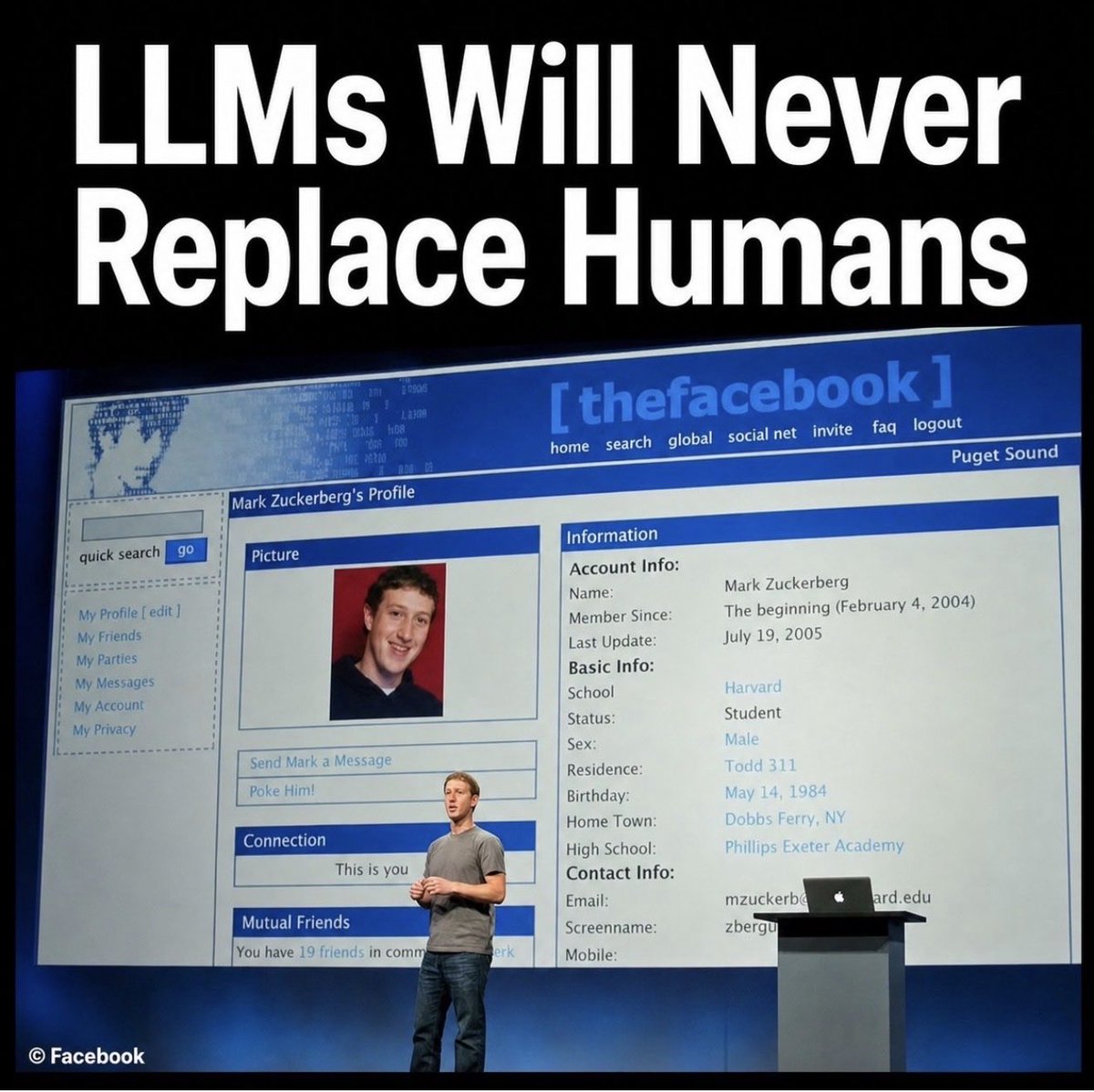
Today’s LLMs would destroy the early 2000s web dev market. But Zuck would get laughed off stage if he presented this version of Facebook in 2026.
Back then, top engineers could make six figures building simple HTML websites.
If LLMs showed up in 2004 trained on 2004-style web pages, you could generate the same sites instantly and for 99.99% cheaper.
Would we still be stuck with simple HTML and basic JavaScript forever?
How would LLMs have brought us from HTML sites to real-time rich single page web applications and large scale distributed systems in 2026?
Who would be working to improve the web stack and innovate throughout those decades?
What about iPhone and Android apps? No LLM would ever invent or even know how to build those based on data from 2004. How about Kubernetes? 🙃
Think about how this applies to the future of software beyond 2026.
There's no reason to think LLMs will ever take your job. They are just a tool for humans to use.
Us humans use tools to push into the next frontier
2
1
8
467
May 15
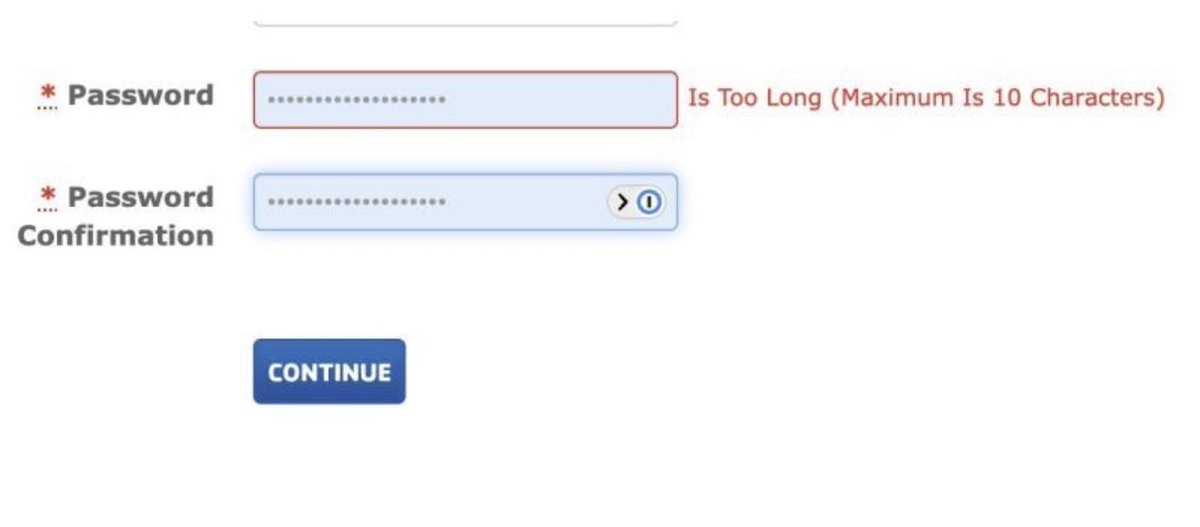
🚨 PSA: Plain-text passwords should be hashed. Hashes produce fixed length outputs. A 10-char cap doesn’t save space, it just weakens security.
The stored hash always takes the same amount of space no matter if the length of the password is 1 or 1,000 characters
Examples:
• SHA-256 → 64 chars
• SHA-512 → 128 chars
• bcrypt → ~60 chars
• Argon2 → defaults to 64 (configurable)
Especially in the age of password managers this is a terrible limit to have.
Please tell your developer friends.
1
276