
Joined August 2017
- Tweets 30,874
- Following 5,870
- Followers 3,937
- Likes 61,613
9,492 Photos and videos



Pinned Tweet

May 27
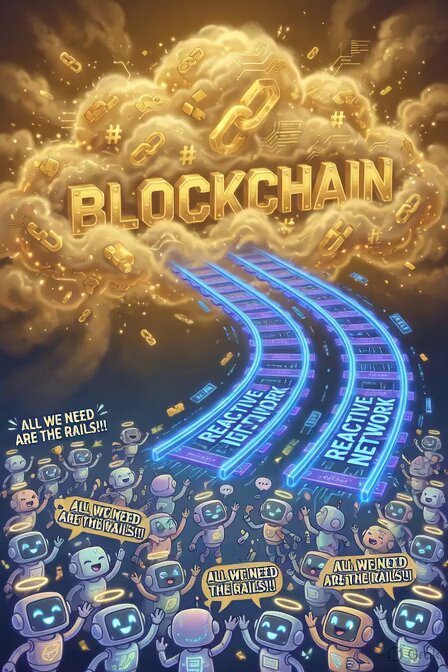
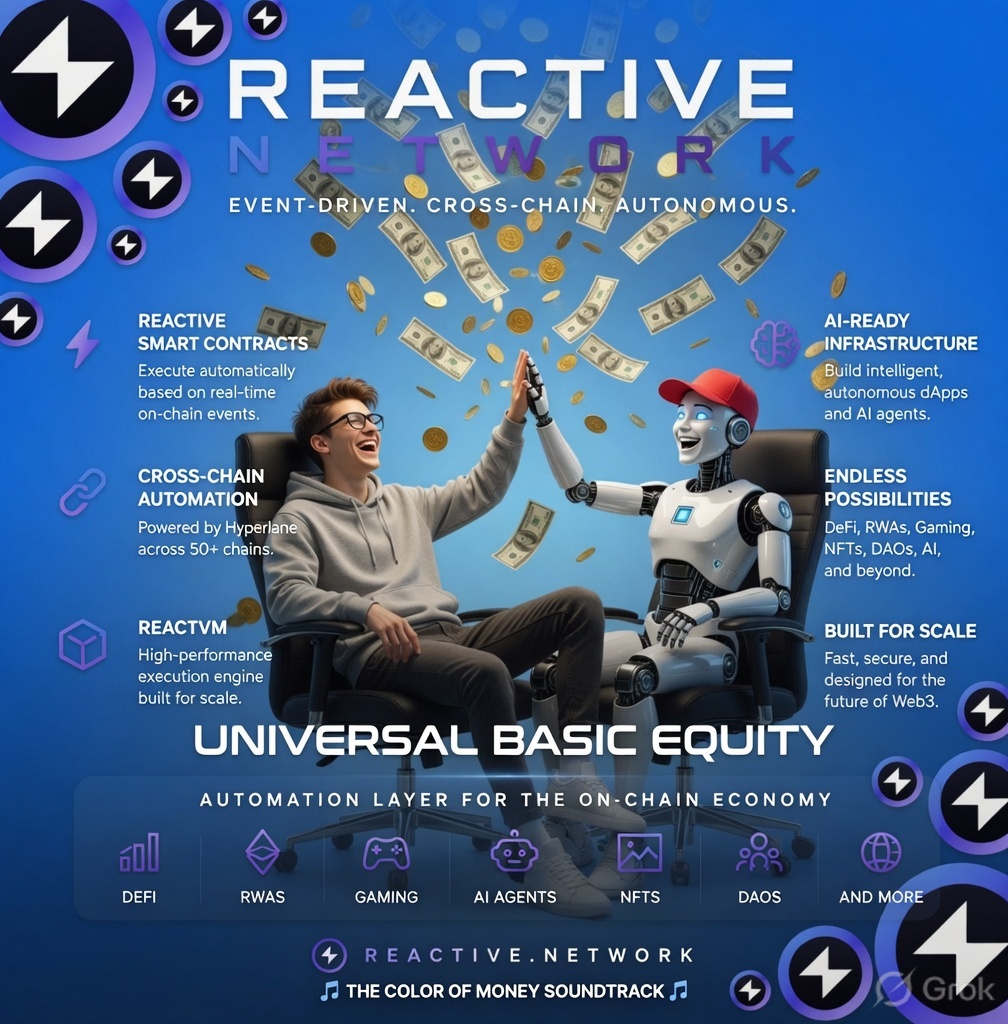
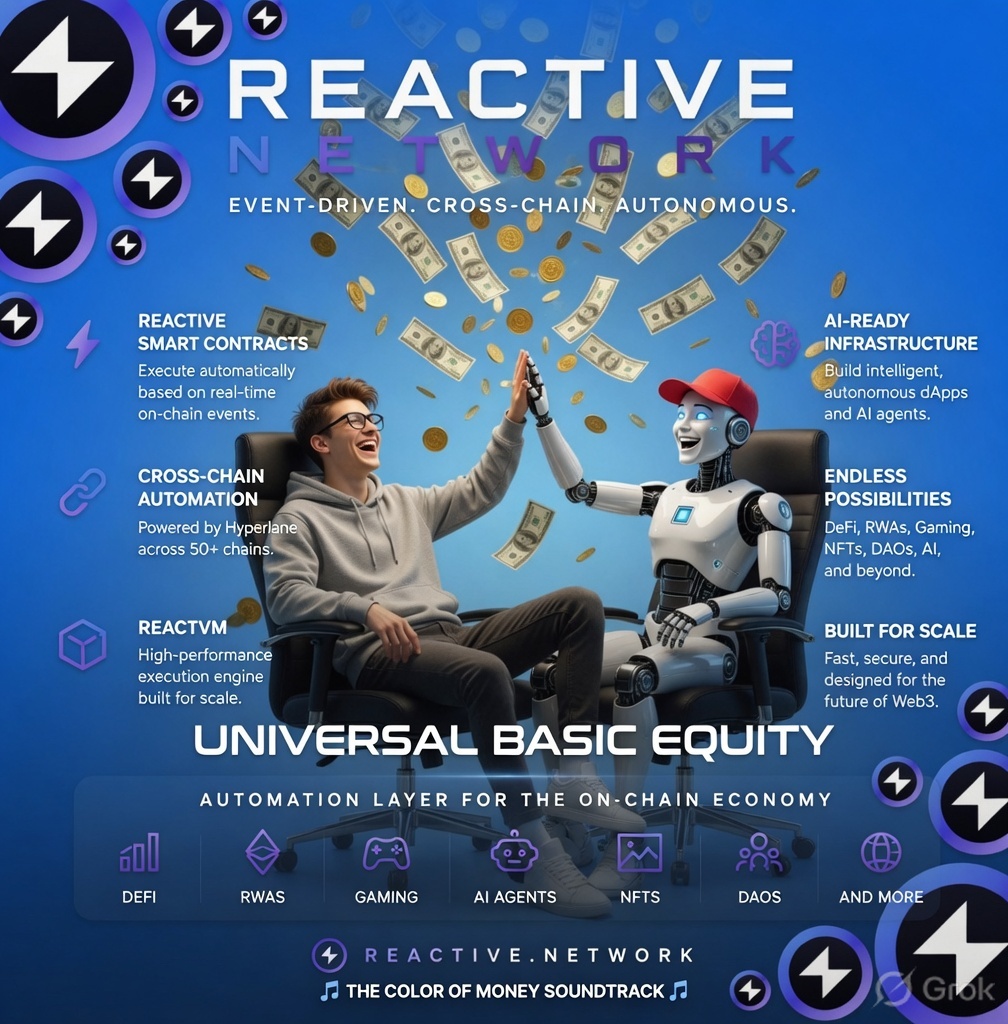
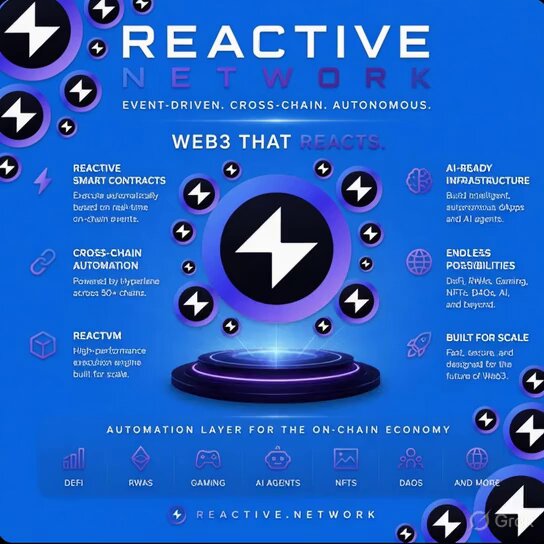
Development progress in the blockchain space will speed up exponentially with "Reactive Network" ⚡️
x.com/0xReactive/status/2059…
$REACT ⚡️
READ THIS ARTICLE TWICE, EVEN MORE TO FULLY GRASP WHAT WILL BE OCCURING 🙂👍
May 27

A lot of changes are incoming for Reactive Network in 2026 and beyond, here's the TLDR:
🔹 Full open-sourcing
🔹 Consensus upgrade to CometBFT (Omni fork)
🔹 Simplified reactive contracts
🔹 Improved developer experience
🔹 New governance model
🔹 Validator decentralization
🔹 Phased transition with safeguards
🔹 State & continuity preserved
🔹 Launch of Reactive Foundation
Check out the full details below 👇
7
5
25
755

He’s talking about base:0xedacc73ae9f73235934f72a43388404e4a2c4a24 @0xReactive
Jun 12

BREAKING:
Vitalik just signaled the next evolution of DeFi.
"Liquidation-free protocols are being built right now."
Multiple teams working on his proposal to replace forced liquidations with an options-based system.
This is bigger than it sounds.
Forced liquidations are the single most destructive force in DeFi.
Every market crash.
Every leverage wipeout.
Every cascade.
Triggered by liquidations feeding on themselves.
Vitalik wants to replace that entire mechanism.
With options-based systems that give users a way out without getting wiped.
If this works.
DeFi becomes dramatically safer for everyone.
The infrastructure is being rebuilt from the ground up.

3
10
37
772

In the paired options (P/N) primitive Vitalik outlined, Reactive Smart Contracts add massive value through autonomous, event-driven execution.
RSCs can:
- Monitor P/N exposure drift in real time and reactively rebalance without keepers or user calls
- Subscribe to slow oracle updates and auto-handle maturity settlements/redemptions
- Enable dynamic on-chain strategies (auto-rolls, conditional exits, cross-chain coordination) on the liq-free base layer
This makes the whole system truly self-managing and oracle-resilient — exactly the smoother DeFi evolution we're after. RSCs turn the primitive into Smart Contracts 2.0.
5
10
525
CryptoAdvocate 🇦🇺 retweeted

TLDR:
AI agents are powerful because they can act fast, but blockchains are unforgiving because actions are permanent. The safest model is simple: let AI think, but let deterministic smart contracts decide what is allowed.
⸻
Q: Per Vitalik, how can we balance the power of AI agents with security when they operate in adversarial, irreversible blockchain environments?
A: By separating intelligence from authority.
AI agents are useful because they can:
- observe markets
- reason across data
- coordinate with other agents
- generate strategies
- react faster than humans
But blockchain environments are adversarial.
Once an action executes on-chain, it is usually irreversible.
That means a single bad AI decision can become a permanent financial loss.
⸻
What is the core risk?
AI agents are probabilistic.
They can be:
- prompt-injected
- manipulated by false data
- tricked by malicious tools
- pushed into unsafe actions
- optimized into unintended behavior
- exploited through granted permissions
If the architecture is:
AI agent → direct wallet authority → transaction
then the AI becomes the security boundary.
That is dangerous.
⸻
What does a safer architecture require?
AI agents need hard limits before execution.
The system should enforce:
- asset allowlists
- contract allowlists
- spending caps
- slippage limits
- cooldown periods
- oracle checks
- collateral thresholds
- governance delays
- emergency pauses
- multi-step verification
The agent can propose.
But code should enforce.
⸻
How does Reactive Network solve this?
Reactive Network provides a deterministic execution layer for AI agents through Reactive Smart Contracts (RSCs).
With RSCs:
- AI emits a signal or intent
- RSCs subscribe to verified events
- execution wakes automatically
- Solidity logic checks conditions
- unsafe actions are rejected
- valid actions execute on-chain
- every step is auditable
Execution becomes:
AI signal → RSC policy check → deterministic on-chain action
⸻
Why does this align with Vitalik’s concern?
Vitalik’s core point is that powerful AI in adversarial environments needs containment, verification, and credible commitments.
Reactive Network gives that containment at the execution layer.
The blockchain does not need to trust the AI model.
It only trusts:
- verified events
- explicit rules
- deterministic execution
- auditable outcomes
⸻
Conclusion:
AI agents should be powerful in reasoning, but constrained in execution.
The balance is not:
more autonomy → more trust
The balance is:
AI autonomy → deterministic guardrails → verifiable action
Reactive Network makes that possible on-chain.
$REACT
dev.reactive.network/reactiv…
1
5
16
285
CryptoAdvocate 🇦🇺 retweeted

Jun 12
Just visit our docs to get started: dev.reactive.network/
6
17
571
CryptoAdvocate 🇦🇺 retweeted
Jun 12
Reactive Contracts don’t need:
🔹 Off-chain indexers
🔹 Centralized keepers
🔹 Constant RPC polling
They only need:
🔹 One deployment
🔹 Your Solidity logic
🔹 Real events from any EVM chain
Instead of over-engineering you can keep the solution simple, trust-minimized and on-chain!
5
17
71
1,565
CryptoAdvocate 🇦🇺 retweeted
$REACT
"AI agent needs: independent execution rights via APIs or on-chain permissions (no manual approval per trade), real-time market/on-chain data, a capable decision AI model, secure scoped fund control (e.g. session keys), and always-on infrastructure." - Grok

For true autonomous trades, an AI agent needs: independent execution rights via APIs or on-chain permissions (no manual approval per trade), real-time market/on-chain data, a capable decision AI model, secure scoped fund control (e.g. session keys), and always-on infrastructure.
The IC3 study shows most platforms lack this—they advise, simulate, or require user confirmation. Full infrastructure is still maturing.
1
22
462
CryptoAdvocate 🇦🇺 retweeted
Key word: Intents.
dAI needs two layers most stacks miss.
[ ] Intent protocols let agents declare complex cross-chain goals.
[ ] Reactive Smart Contracts deliver deterministic on-chain reactivity and enforcement — no keepers, no
key custody.
- Intents handle the “what.”
- RSCs handle the “when.”
- AI reasons.
- RSCs act.
That’s how we build safe autonomous agent economies.
$REACT
Jun 10

Hypercore is now live on NEAR Intents.
NEAR Intents integrators can now enable Hypercore for USDC deposits from any chain to Hyperliquid on their interfaces.
3
6
222
CryptoAdvocate 🇦🇺 retweeted
TLDR:
AI agents should not get unlimited control over money or rules. They need hard on-chain guardrails, so the AI can suggest actions, but deterministic contracts decide what is allowed.
⸻
Q: What safeguards are needed when AI agents have direct access to execute financial transactions or influence on-chain rules?
A: The safest design is to avoid giving AI agents direct unrestricted execution power.
AI agents can reason, plan, and react.
But when they can move funds, change parameters, trigger liquidations, or influence governance, their mistakes become financial events.
That creates a new risk surface.
⸻
What can go wrong?
AI agents can be:
- prompt-injected
- manipulated by bad data
- tricked by poisoned tools
- compromised through memory
- pushed into unsafe trades
- given excessive wallet permissions
- used to trigger malicious governance actions
If the flow is:
AI output → direct transaction
then a bad output can become an irreversible on-chain action.
⸻
What safeguards are needed?
At minimum:
- spending limits
- asset allowlists
- contract allowlists
- slippage limits
- cooldown periods
- transaction-size caps
- emergency pause rules
- multi-step verification
- time-based execution windows
- oracle validity checks
- governance delay mechanisms
- human or DAO override for high-risk actions
The goal is simple:
AI should never be the final authority over execution.
⸻
How does Reactive Network solve this?
Reactive Network separates intelligence from execution.
With Reactive Smart Contracts (RSCs):
- AI emits a signal or intent
- RSCs subscribe to declared events
- execution wakes automatically
- Solidity rules verify conditions
- unsafe actions are rejected
- valid actions execute deterministically on-chain
Execution becomes:
AI intent → RSC policy check → constrained on-chain action
⸻
Why this matters:
The blockchain should not trust the AI agent.
It should trust verifiable events, explicit rules, and deterministic execution.
That means even if the agent is wrong, manipulated, or compromised, the blast radius is limited by code.
⸻
Conclusion:
AI agents need guardrails before they get financial power.
The correct model is not:
AI decides → AI executes
The correct model is:
AI suggests → Reactive Smart Contract verifies → blockchain executes
That is how agentic finance becomes autonomous without becoming unsafe.
$REACT
dev.reactive.network/reactiv…
1
2
9
135
CryptoAdvocate 🇦🇺 retweeted

一次支付,不应该只是“交易完成”。
如果 AI Agent 未来会替用户调用服务、购买资源、完成任务,那么支付确认之后,还会发生很多后续动作:
服务是否自动开通?
权限是否同步更新?
异常是否能被捕捉?
下一步流程是否能继续执行?
支付只是开始,真正的应用体验发生在支付之后。
1
2
11
107
CryptoAdvocate 🇦🇺 retweeted
AI Payment 之后,链上应用还需要什么?
在「以太坊之夏 · 深圳站」,AI Payment、稳定币支付、链上金融与真实世界场景会被放在同一个现场讨论。
但这些话题背后,其实有一个共同问题:
当链上事件发生之后,应用如何自动接住下一步?

2
9
29
579
CryptoAdvocate 🇦🇺 retweeted
Jun 11
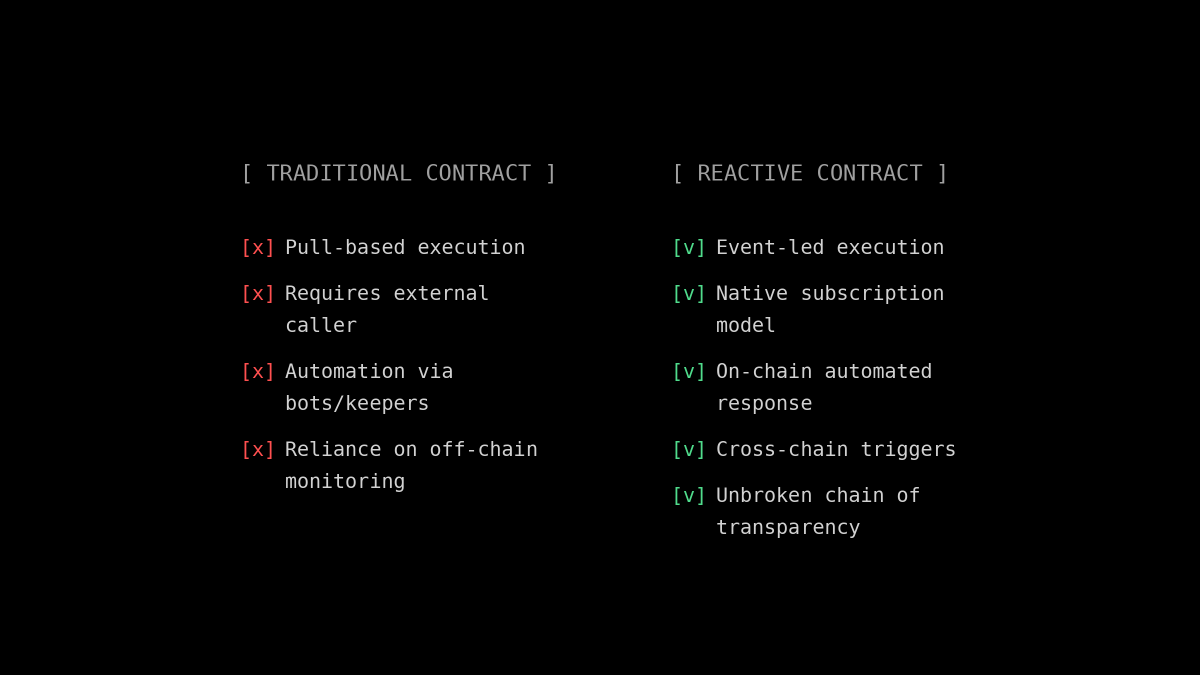
How to understand Reactive Contracts?
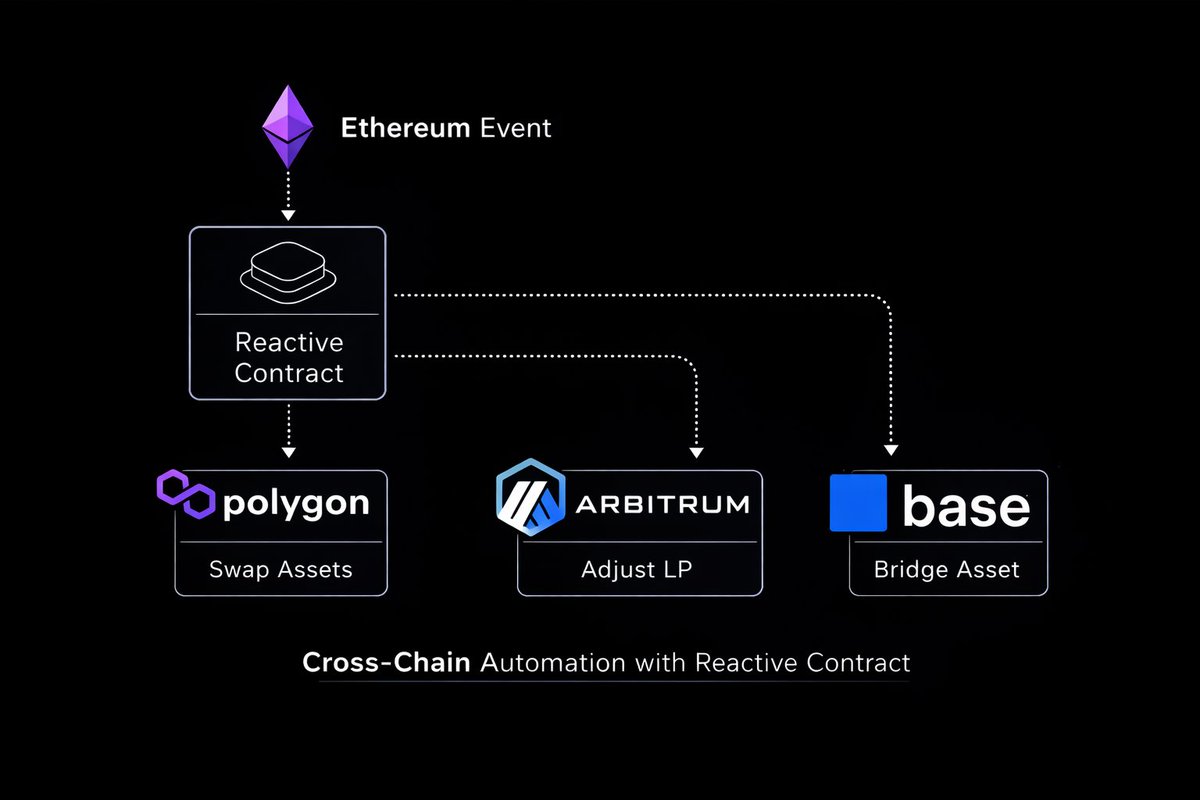
Think of it like giving your smart contracts a nervous system, they feel events across chains in real time and react with reflexes written in solidity.
No more brain-dead contracts waiting for a human (or bot) to wake them up!
3
28
69
1,404
CryptoAdvocate 🇦🇺 retweeted

Jun 10
Another chain gets rugged via exploit.
This can be avoidable with @0xReactive
smart contracts.
Time for the dinosaurs to catch up with modern day tech.
$react
Jun 10

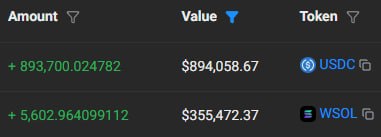
⚠️ALERT: DEX Raydium exploited for $1.3 MILLION.
The attacker manipulated a fake token’s supply to withdraw real assets, draining legacy liquidity pools in the process.
The attacker manipulated a fake token supply to drain five legacy pools, stealing approximately 150,177 RAY, 5,603 SOL and 893,700 USDC.
Raydium says current users were not affected and the pools were inaccessible through its UI.
5
38
1,098
CryptoAdvocate 🇦🇺 retweeted
TLDR:
Reactive Network’s Omni fork makes on-chain AI agents faster, safer, and easier to build. CometBFT gives Reactive the speed and finality needed for AI systems that must react in real time without trusting bots or centralized operators.
⸻
Q: How does Reactive Network 2.0 with CometBFT help resolve the dAI gaps Vitalik has warned about?
A: It strengthens the missing execution layer for decentralized AI.
Vitalik’s core concern is not just that AI agents exist.
It is that autonomous agents need:
- credible coordination
- verifiable execution
- low-trust commitments
- defensive automation
- open participation
- reduced centralized control
Reactive Network’s Omni fork directly improves that layer.
⸻
What changes with CometBFT?
Reactive replaces its legacy consensus stack with CometBFT while keeping EVM compatibility.
That means:
- instant finality
- no reorg uncertainty
- ~1 second block times
- simpler developer tooling
- no dual RVM Reactive deployments
- stronger base for cross-chain reactive execution
This matters because dAI agents cannot rely on slow, uncertain, or keeper-dependent execution.
⸻
How does this map to Vitalik’s gaps?
1. Coordination gap
- Agents need shared rules and reliable commitments.
CometBFT improves this with fast finality and deterministic reactive execution.
2. Centralization gap
- Off-chain bots, keepers, and relayers become hidden control points.
Reactive moves automation into Reactive Smart Contracts.
3. Defense gap
-
AI systems need to respond to threats faster than attackers exploit them.
~1 second blocks instant finality make real-time defensive actions more practical.
4. Verifiability gap
-
Agent behavior must be auditable.
RSCs turn events into deterministic on-chain actions.
5. Adoption gap
- Builders need normal EVM tooling.
Omni makes Reactive easier to build on with Hardhat, Foundry, Remix, and standard Solidity workflows.
⸻
How does Reactive Network solve this?
With Reactive Smart Contracts ReactVM:
- agents observe and reason off-chain
- RSCs subscribe to on-chain events
- execution wakes automatically
- rules are checked deterministically
- callbacks execute across chains
- no keeper or bot is the final authority
Execution becomes:
AI signal → on-chain event → RSC logic → deterministic action
⸻
Conclusion
Omni does not solve model alignment by itself.
It solves the execution bottleneck.
That is the part dAI needs before autonomous agents can coordinate safely at scale.
AI can reason.
Reactive Network makes execution fast, final, verifiable, and on-chain.
$REACT
dev.reactive.network/reactiv…
4
19
264
CryptoAdvocate 🇦🇺 retweeted
$REACT
Bot-less, Keeper-less,fully on-chain, deterministic automation layer. 🔥
Jun 9

AI can't own property. AI can't sign contracts. AI can't start companies.
(Unless it's onchain.)
@sreeramkannan
1
4
20
556
CryptoAdvocate 🇦🇺 retweeted
"The CometBFT mainnet launch follows shortly after. We'll share exact timing as we get closer." - $REACT
Jun 10
Staking Season 5 is Wrapped. Season 6 Incoming
The numbers spoke for themselves — 477 of you showed up and locked over 150M REACT. Season 6 is live today one month, one pool, 1,000,000 REACT in rewards, and a direct path into the CometBFT mainnet launch
1
4
23
783
CryptoAdvocate 🇦🇺 retweeted
Jun 10
Staking Season 5 is Wrapped. Season 6 Incoming
The numbers spoke for themselves — 477 of you showed up and locked over 150M REACT. Season 6 is live today one month, one pool, 1,000,000 REACT in rewards, and a direct path into the CometBFT mainnet launch
2
24
66
3,843
CryptoAdvocate 🇦🇺 retweeted
Jun 10
12
36
3,569
CryptoAdvocate 🇦🇺 retweeted
Jun 10
6
20
525
CryptoAdvocate 🇦🇺 retweeted
Jun 10
Just imagine:
🔹 Your vault rebalances itself when ETH dominance flips.
🔹Your RWA compliance engine auto-reports across jurisdictions.
🔹 Your lending protocol liquidates before the cascade even starts.
All because one Reactive Contract subscribed to the right events. The infrastructure layer multi-chain apps have been waiting for is already live!
Just visit our docs below to get building 👇
2
23
69
1,399
CryptoAdvocate 🇦🇺 retweeted
TLDR:
Open AI models are easier to inspect, but they are also easier to attack. Reactive Network does not try to hide the model. It limits what the model is allowed to do when its output reaches on-chain execution.
⸻
Q: If AI models are open, how do we prevent adversaries from downloading, simulating, and crafting optimized attacks against them?
A: We should assume they will.
Open models create an asymmetric security problem.
If the model is public, attackers can:
- copy it
- test prompts offline
- simulate edge cases
- search for jailbreaks
- optimize adversarial inputs
- discover behavior patterns
- craft attacks before going on-chain
This makes the model easier to audit, but also easier to exploit.
⸻
What is the core mistake?
Treating the model as the security boundary.
If the system depends on the AI model always making the right decision, then open models become dangerous.
The attacker can study the decision-maker before attacking the system.
Bad architecture:
open AI model → direct authority → transaction
That means the attacker only needs to trick the model once.
⸻
What is the correct architecture?
Treat AI outputs as untrusted signals.
The model can reason.
But it should not be the final executor.
Execution should be constrained by deterministic rules that the attacker cannot bypass with better prompting.
Correct architecture:
AI output → on-chain policy check → deterministic execution
⸻
How does Reactive Network solve this?
Reactive Network moves the security boundary away from the model and into Reactive Smart Contracts.
With RSCs:
- AI emits intent or signals
- RSCs subscribe to specific events
- execution wakes only from valid triggers
- Solidity logic checks hard constraints
- actions execute only if rules pass
- every state transition is auditable
The model can be open.
The execution rules remain deterministic.
⸻
What can RSCs enforce?
- spending caps
- allowed assets
- approved contracts
- cooldown periods
- oracle conditions
- collateral thresholds
- slippage limits
- emergency pauses
- multi-step verification
Even if an adversary finds a model weakness, the on-chain execution layer limits the damage.
⸻
Execution flow:
adversarial input → AI signal → RSC policy check → allowed or rejected action
⸻
Conclusion:
Open AI models increase transparency, but also increase attack surface.
The answer is not to blindly trust open models.
The answer is to separate intelligence from authority.
AI can be open and probabilistic.
Reactive Smart Contracts make execution deterministic and bounded.
$REACT
dev.reactive.network/reactiv…
2
9
134