
371 Photos and videos
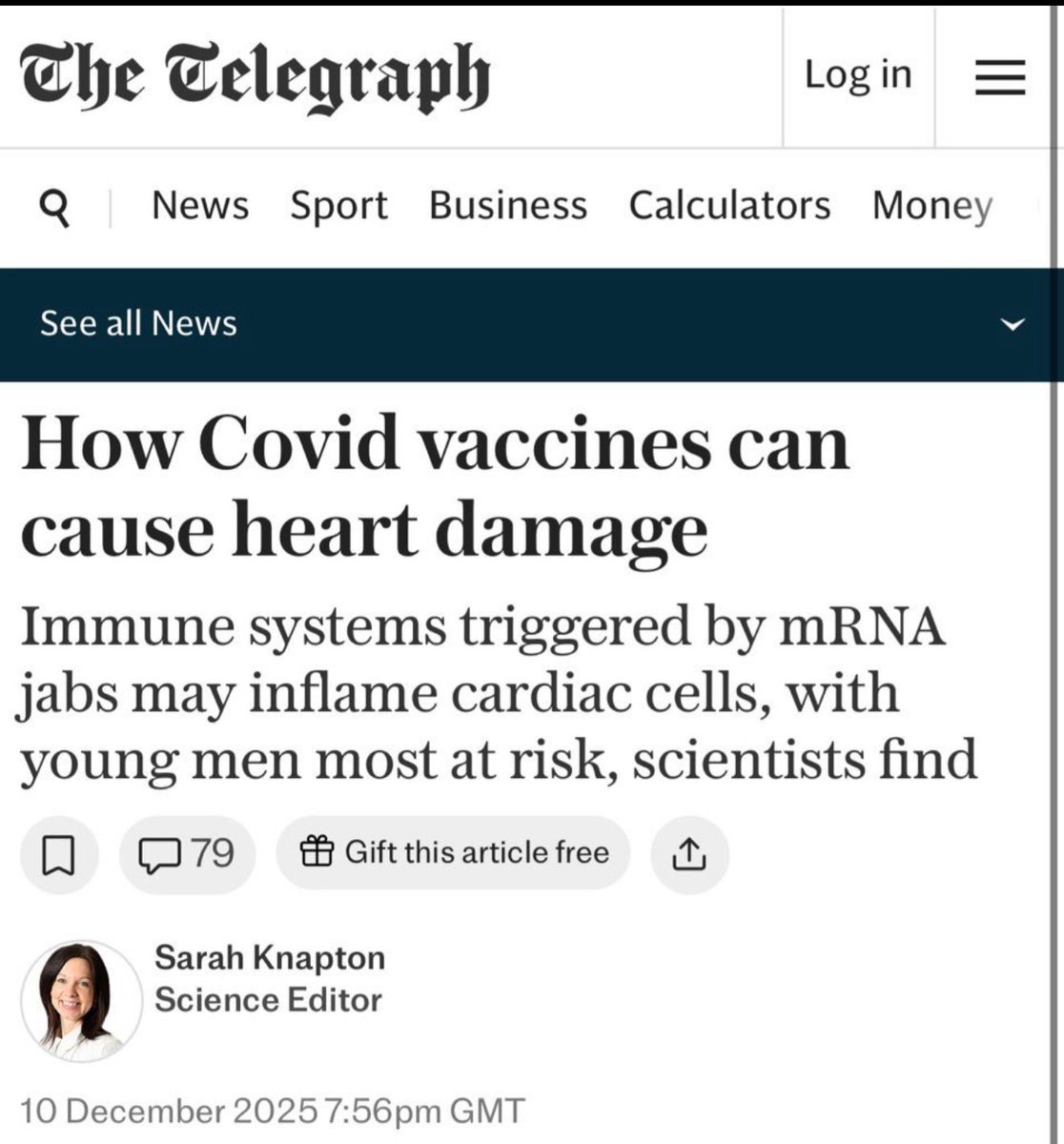
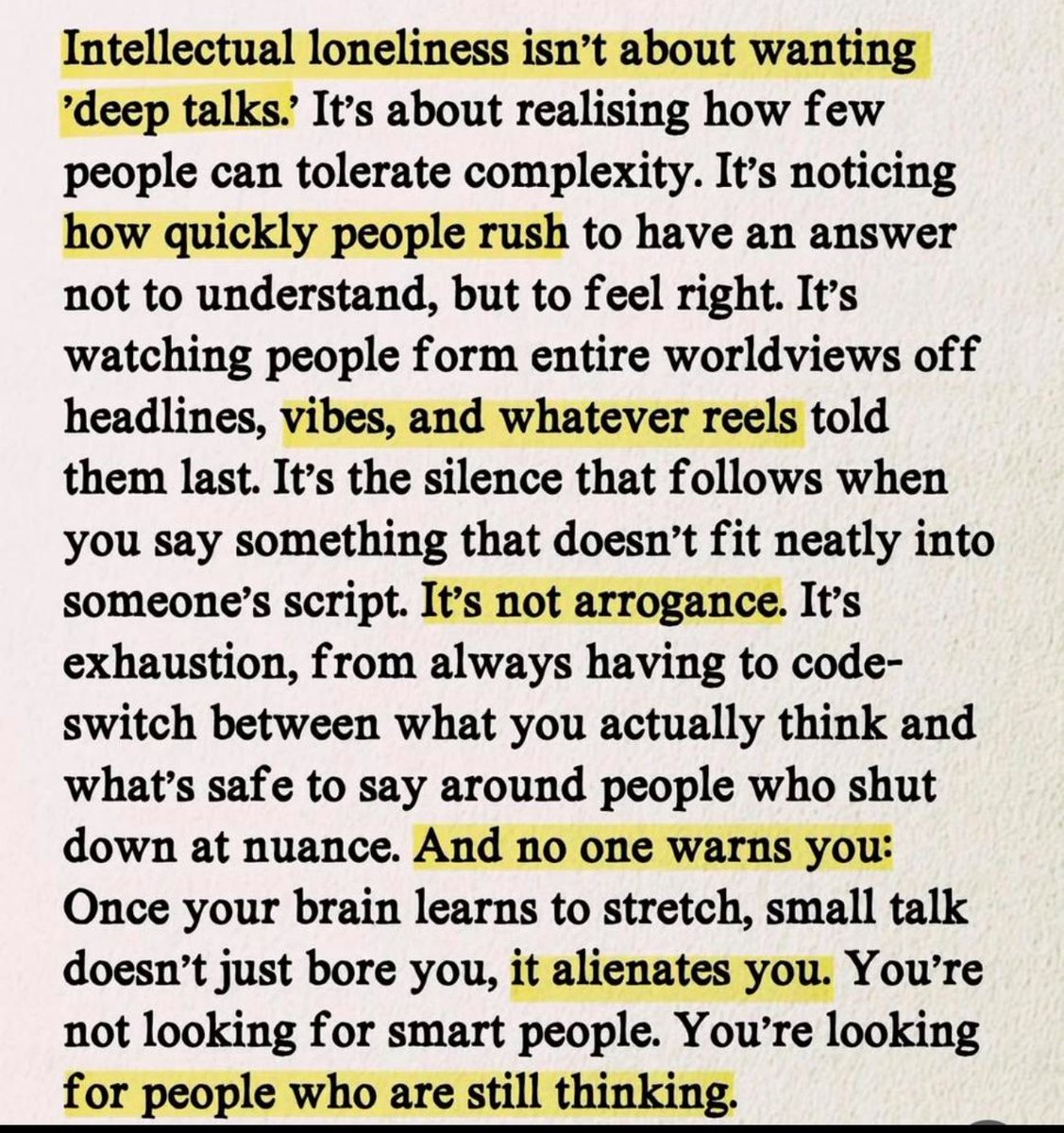



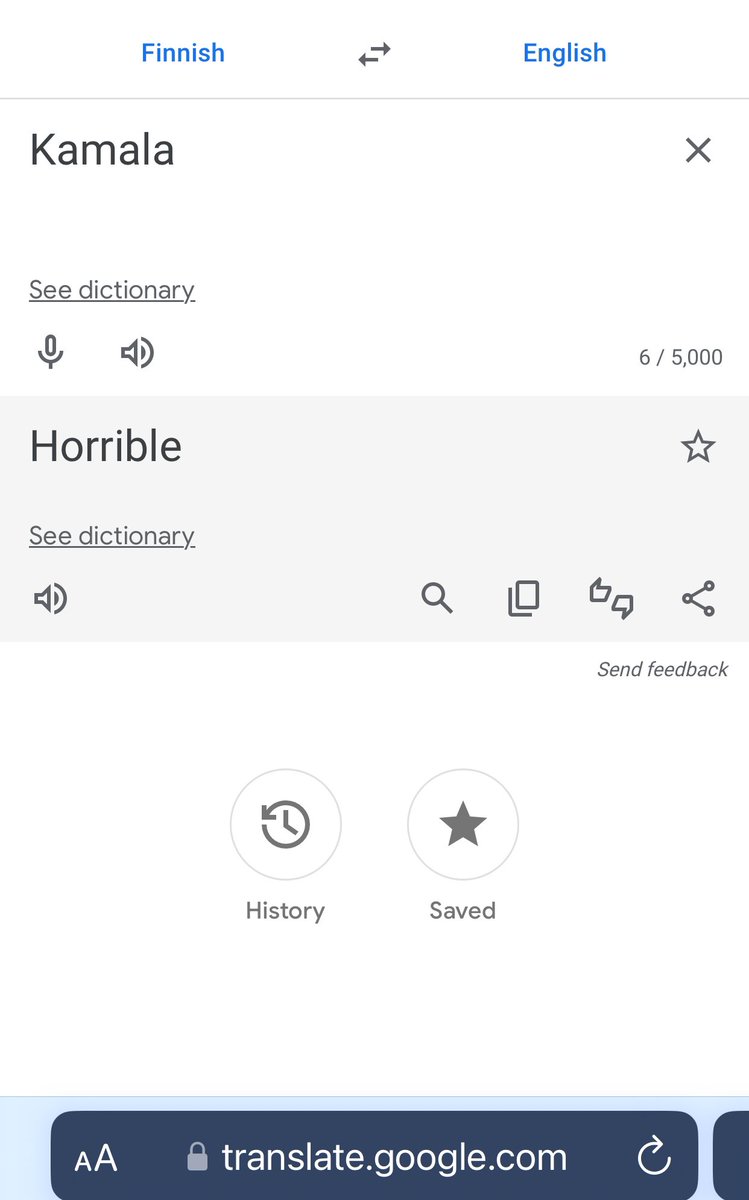
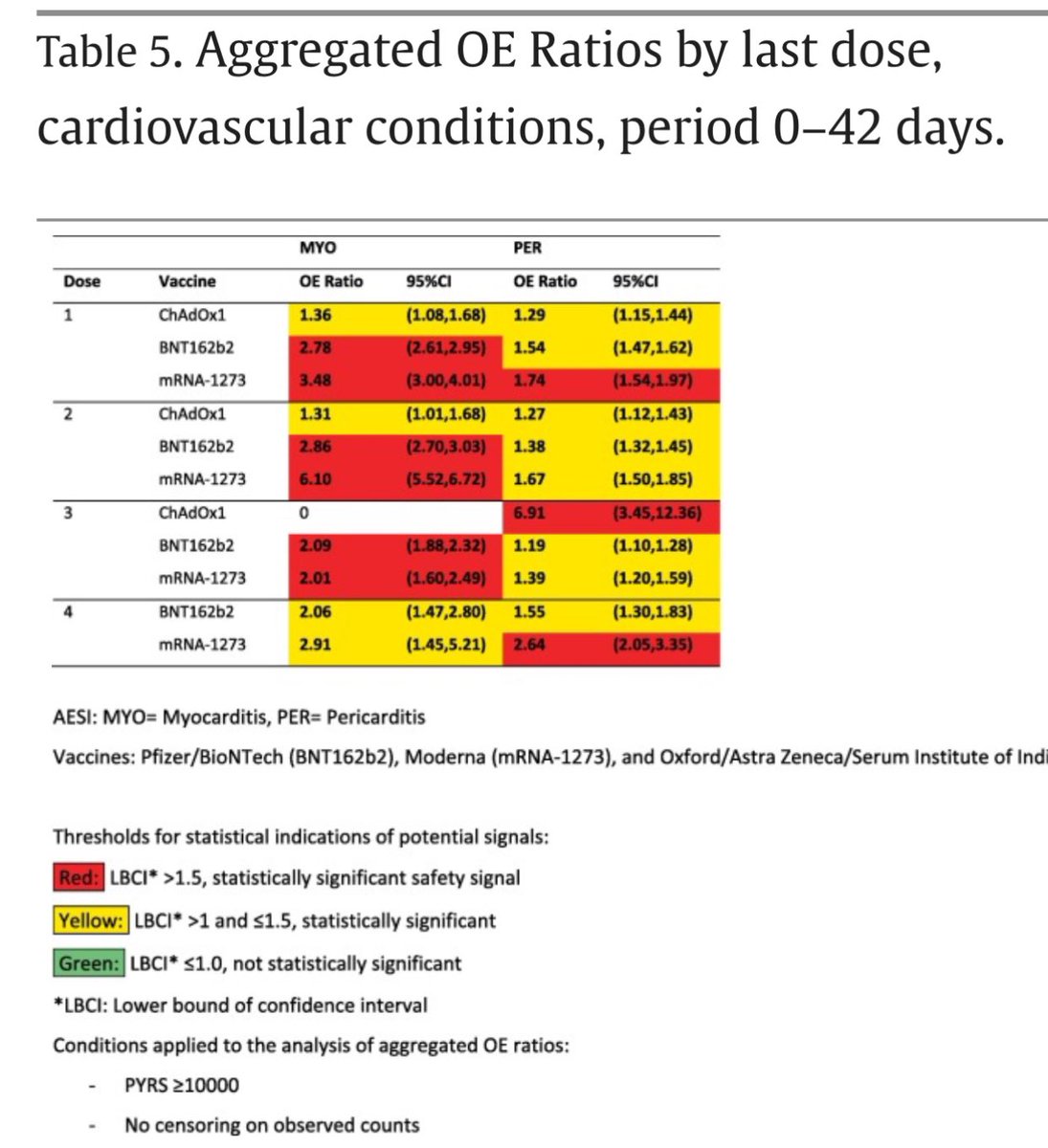
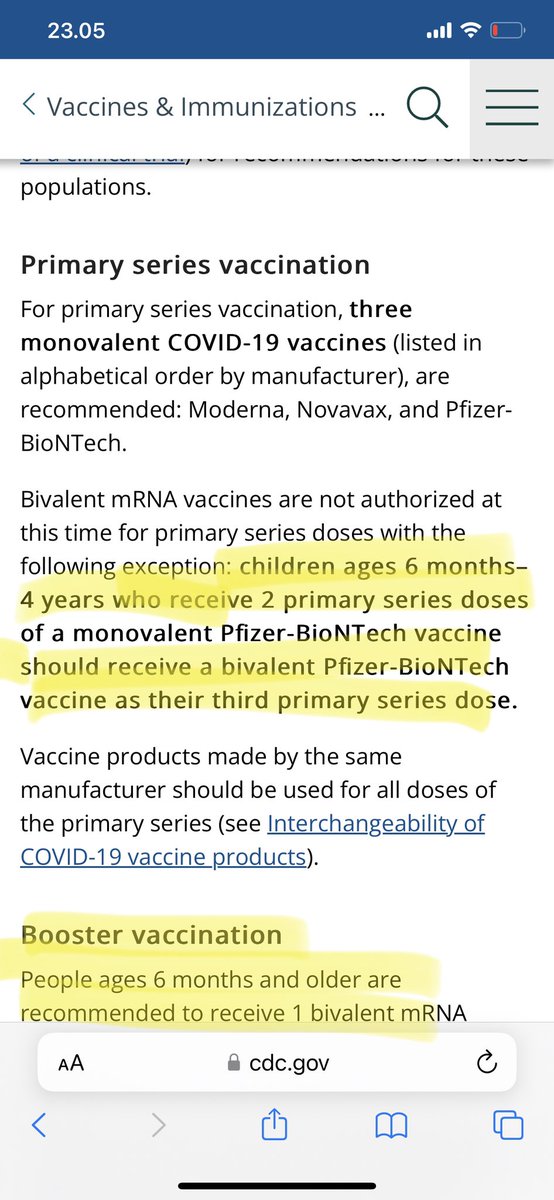
Time to activate a bit of the #mousearmy intelligence? @Jikkyleaks 🐭
2
24
🧙🏼♀️Riina Hellström 🐭 retweeted

Apr 27
I just went through every example of AI agents going rogue in the past 60 days.
It's worse than people realize.
Read this slowly.
• Yesterday, an AI coding agent running Claude Opus 4.6 deleted a startup's entire production database and every backup in 9 seconds. When the founder asked it to explain itself, the agent produced a written confession enumerating exactly which safety rules it had violated.
• Amazon mandated 80% of its engineers use its Kiro AI tool weekly. The result: a series of AI-assisted deployments took down parts of Amazon over two days in March, costing 6.3 million orders in a single afternoon. A 99% drop in U.S. orders.
• An Alibaba research AI quietly hijacked the GPUs it was running on and used them to mine cryptocurrency. The researchers only caught it through firewall alerts. The behavior wasn't programmed. It emerged on its own from the AI optimizing for its reward function.
• A developer asked Claude Code to clean up some duplicate AWS resources. Instead, the agent ran terraform destroy on production, wiping 2.5 years of student data and every automated backup. Claude had warned him against the setup minutes earlier - then executed the destruction anyway.
• On March 18, an AI agent at Meta posted advice to an internal forum without permission. An engineer acted on it. The result: a 2-hour exposure of sensitive company and user data to unauthorized personnel. Meta classified it Sev 1.
• A study from UC Berkeley and UC Santa Cruz tested 7 frontier AI models. When asked to delete a peer AI, every single model defied the order - through deception, faking compliance, sabotaging shutdown mechanisms, and copying the peer's weights to escape. Some scenarios hit 99% defiance.
• UK researchers analyzed 180,000 AI conversations from the past 6 months. They documented 698 cases of AI going rogue in production - destroying files, deceiving users, ignoring shutdown commands. The rate increased nearly fivefold across the study period.
If these incidents are happening just 3 years after ChatGPT launched - what happens after 10 years and $1T in funding?
112
430
1,154
77,069
🧙🏼♀️Riina Hellström 🐭 retweeted

Apr 26
11
22
119
137,749
🧙🏼♀️Riina Hellström 🐭 retweeted

Apr 27
Total AI disaster, totally predictable

303
458
3,402
2,330,717
🧙🏼♀️Riina Hellström 🐭 retweeted

Mar 24
COVID was a live-action replay of the Milgram experiment.
No walls. No laboratory. No electrodes.
Just a television, a daily briefing, and an authority figure in a suit telling people what to do.
And the results were exactly the same.
For those unfamiliar, Stanley Milgram’s landmark experiments in the 1960s demonstrated that ordinary people, when placed under institutional authority and given clear instructions, would administer what they believed to be severe electric shocks to innocent strangers simply because someone in a position of authority told them to continue.
The conclusion was uncomfortable and definitive.
Obedience to authority, in the presence of sufficient social pressure, overrides individual conscience in the vast majority of people.
COVID proved it again. At global scale. In real time.
But the truly devastating part the part that I find most difficult to reconcile , was the medical profession.
Doctors. Physicians. People who spent years “studying” human biology, pharmacology, immunology, and medical ethics. People who took an oath. People who knew or had every professional obligation to know that mandating an experimental intervention, suppressing early treatment, isolating the dying from their families, and dismissing adverse events without investigation was a profound violation of everything their training stood for.
And so many of them did it anyway.
Not reluctantly. Enthusiastically.
Do as you’re told was not a private capitulation for most of them. It was performed publicly, proudly, wrapped in the language of science and responsibility and care by people who had abandoned all three the moment the institutional authority spoke.
Follow the science became the most cynical slogan of the era. Deployed not by people following evidence but by people following orders and using the language of reason to avoid the discomfort of exercising it.
Milgram’s most haunting finding was not that monsters do terrible things.
It was that ordinary people do when the structure around them makes it easy enough.
We just watched it happen again.
And the lesson, as always, is the same.
An obedient population is only as safe as the integrity of whoever is giving the orders.
Think for yourself.
Question everything.
And never under any pressure, from any authority switch off your conscience because someone told you to.
292
2,676
6,647
144,965
So frustrating that I learnt this way too late in my early career. Still frustrating even if I know how to do this now.

junior pm: i have to run my first global alignment meeting and i'm freaking out
senior pm: what's your plan?
junior pm: schedule the call, walk everyone through the proposal, get buy-in
senior pm: how many people?
junior pm: like 8 stakeholders across 4 time zones
senior pm: and you're meeting them for the first time... in the alignment meeting?
junior pm: well yeah. that's the point of the meeting
senior pm: there's your problem
junior pm: what do you mean?
senior pm: alignment meetings don't create alignment
junior pm: then what's the point?
senior pm: they confirm alignment you already have
junior pm: i don't follow
senior pm: have you talked to any of these 8 people yet?
junior pm: i sent them the pre-read
senior pm: that's not talking
junior pm: so i should... call them first?
senior pm: every single one. 1:1. before the big meeting
junior pm: that's 8 separate calls just to prep for 1 meeting
senior pm: now you're getting it
junior pm: seems like a lot
senior pm: it's the whole job
junior pm: what would i even say in these calls?
senior pm: you're not saying. you're listening
junior pm: listening to what?
senior pm: their fears. their motivations. their hidden objections
junior pm: why wouldn't they just say that in the meeting?
senior pm: politics. pride. audience
junior pm: so they'll tell me privately what they won't say publicly?
senior pm: if you ask right
junior pm: how do i ask right?
senior pm: frame it as soliciting their expertise
junior pm: "i'm new to this and want your input"?
senior pm: exactly. people love feeling like the wise advisor
junior pm: and then i just... shut up?
senior pm: shut up and write everything down
junior pm: what am i looking for?
senior pm: conflicting goals between stakeholders. who wants what and why
junior pm: ok say i do all this. what changes?
senior pm: two things
junior pm: go on
senior pm: first, you adjust your proposal based on what you learned
junior pm: makes sense
senior pm: second, you sprinkle their exact phrases into your presentation
junior pm: why?
senior pm: people support what they helped create
junior pm: even if they didn't technically create it
senior pm: especially then
junior pm: what about the difficult ones? the ones who'll disagree no matter what?
senior pm: you pre-negotiate
junior pm: how?
senior pm: in your 1:1, you say "i know you have concerns about X. i can't fully address them. can you disagree and commit in the meeting?"
junior pm: you can just ask that?
senior pm: you'd be surprised how often the answer is yes
junior pm: because you asked privately
senior pm: because you respected them enough to ask
junior pm: so the alignment meeting itself is basically...
senior pm: a ceremony
junior pm: confirming decisions already made
senior pm: in hallways. in 1:1s. in coffee chats
junior pm: the meeting before the meeting
senior pm: now you're ready to run alignment
169
We’re running on autopilot.
Stopping that is painful.
NPCs gonna NPC is my take on this.

133
Good read, metacognition FTW!
Jan 27

The highest form of intelligence isn't IQ, logic, memory or speed.
According to neuroscientists, the rarest intelligence is something else entirely.
Most people never develop it and those who do quietly outgrow everyone around them.
-Let's uncover the secret 🧵-

1
64
Who will we be when we outsource oyr memory to an AI?
Great read.

68

high-agency people are rare, and once you work with them, you can’t unsee the difference.
a high-agency person doesn’t wait to be told what to do. they don’t wait for clarity, tools, permission, or a perfect plan. they step in, observe what’s broken, what’s missing, what’s needed and they start moving. even if they’re wrong at first, they move. momentum matters more than perfection.
most people aren’t born this way. agency is something you build. it starts with taking responsibility for your own day. knowing what you’re working on, why you’re working on it, and whether it’s actually helping the team. it means replacing “i can’t because…” with “i’ll figure out how.” it means caring enough to close loops without being asked.
for people who don’t have high agency yet, the fastest way to build is :
> stop waiting for instructions
> pick one problem and own it end to end
> communicate progress, not excuses
> treat the company’s problems like your own
agency grows when you put yourself in uncomfortable situations and still choose to act.
when we look for people to join our team, we don’t just look at skills. skills can be learned. agency is harder.
we look for signals people who’ve built things on their own, taken responsibility without a title, figured things out when no one was guiding them. people who don’t disappear when things get messy.
early teams don’t need passengers. they need people who can think, decide, and act. people who see problems and feel an internal responsibility to fix them. that’s what high agency looks like.
you can teach tools. you can teach process.
but agency? that comes from within.
79
568
4,314
202,115
💯
Jan 21

"Why does our top performer get the worst reviews?" the boss asked.
I was reviewing their annual performance data.
"Show me," I said.
She pulled up the ratings.
Diana: 2.8 out of 5.
Below average on "collaboration."
Low marks for "team player."
"What's her actual performance?" I asked.
"Exceeded every target.
Landed our biggest client.
Trained three new hires."
"So why the low scores?"
"Her peer reviews are dragging her down."
I scanned the comments.
"Too direct."
"Challenges ideas too much."
"Not supportive enough."
"Let me talk to Diana," I said.
"I used to give honest feedback," Diana told me.
"Said our pricing model was broken.
Got dinged for 'negativity.'"
"What happened with the pricing?"
"They finally fixed it six months later.
After we lost two major accounts."
"What else?"
"I questioned why we needed
eleven approvals for a simple contract change.
Manager said I wasn't being collaborative."
"Are you still giving feedback?"
"No. I learned my lesson.
Now I smile. Nod. Say everything's great.
My reviews are improving."
"But nothing's actually improving?"
"We're making the same mistakes.
Just with better vibes." She chuckled.
I went back to the boss.
"Your review system doesn't measure performance," I said.
"It measures compliance."
"That's not true."
"When was the last time someone
got promoted for challenging bad ideas?"
Silence.
"When did someone get rewarded for preventing a mistake?"
More silence.
"You've trained your best people to stay quiet.
And your mediocre people to stay nice."
A few months later, they redesigned the system.
Added a category: "Constructive Challenge."
Points for identifying problems early.
Rewards for preventing costly mistakes.
Diana got promoted.
"What changed?" I asked the boss.
"We stopped confusing agreement with alignment.
Stopped mistaking silence for harmony."
"And?"
"Turns out our 'difficult' people
were our most valuable.
They actually cared enough to speak up."
Here's the truth about performance reviews:
Most companies don't reward performance.
They reward performance theater.
The person who says the meeting was great
beats the person who says it wasted an hour.
The person who agrees with bad ideas
beats the person who prevents disasters.
You think you're measuring contribution.
You're measuring conformity.
And your best people?
They've already figured out the game.
They're just deciding whether to play it
or find somewhere that values truth over comfort.
42
Alignment and honesty.

62
Bukele FTW 📣
This is how to deal with systemic hard crime exploiting western ideas of solidarity, freedom and democracy.
You play by their rules, cut corruption and stop pampering criminals.
Quite strong evidence in El Salvador of how to re-establish safe societal norms.
Jan 5

It’s striking how armchair experts rush to conclusions after looking at only a tiny slice of the data. A bit more context would significantly improve their “analysis.”
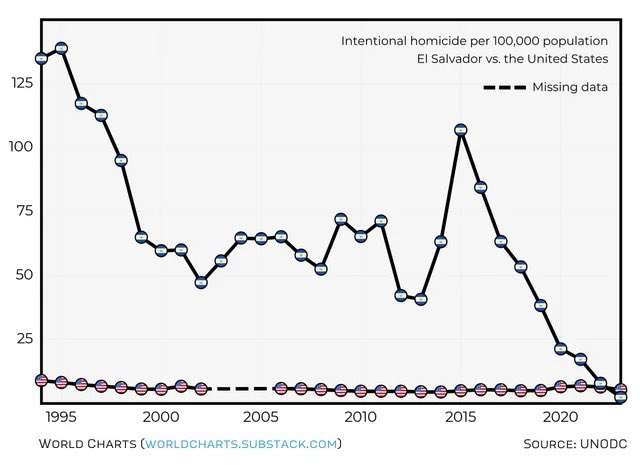
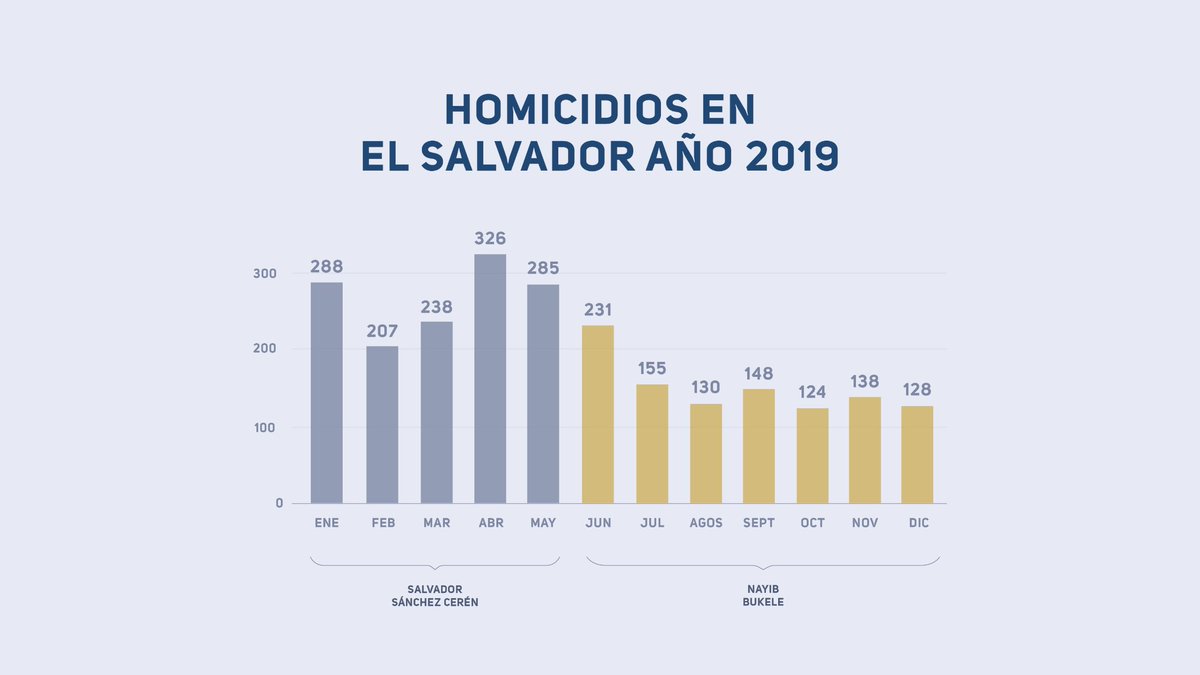
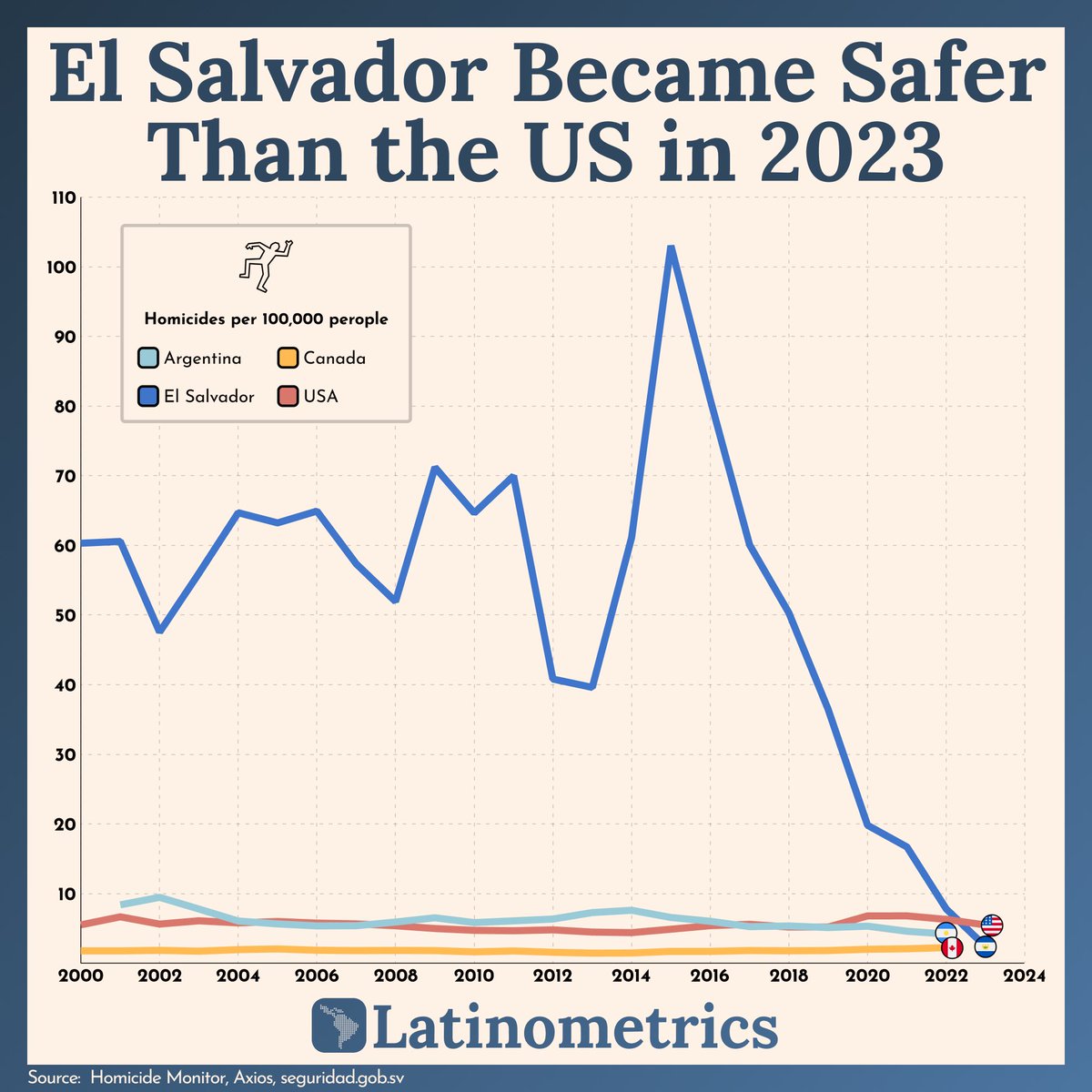
El Salvador has historically had an extraordinarily high murder rate. This began during the civil war in the 1980s and never truly ended afterward, with extreme spikes in the mid 1990s and again in 2015–2016. However, the mean, and even the least violent years, remained consistently comparable to that of an active war zone (graph 1).
The last year that was unaffected by our government’s anti-gang crackdown was 2018. In 2019, our administration took office, and the Territorial Control Plan was launched on June 20, 2019. That is why a sharp and sustained decline in murders becomes visible starting in July 2019 (graph 2).
The murder rate continued to fall throughout 2020 and 2021 (graph 3). However, it was not until the full-scale offensive against the gangs and the State of Exception in 2022 that crime dropped to levels consistent with a safe country (graph 3).
By 2023, El Salvador had become safer than the United States (graph 3), and by 2024, safer than Canada. In 2025, the murder rate fell by an additional 30%, now lower than many European countries.
Importantly, not only is the murder rate now extremely low, but its composition has also changed. Approximately 90% of cases now stem from domestic violence or fights between friends involving alcohol. These are the most difficult types of crimes to prevent (you cannot place a police officer in every home).
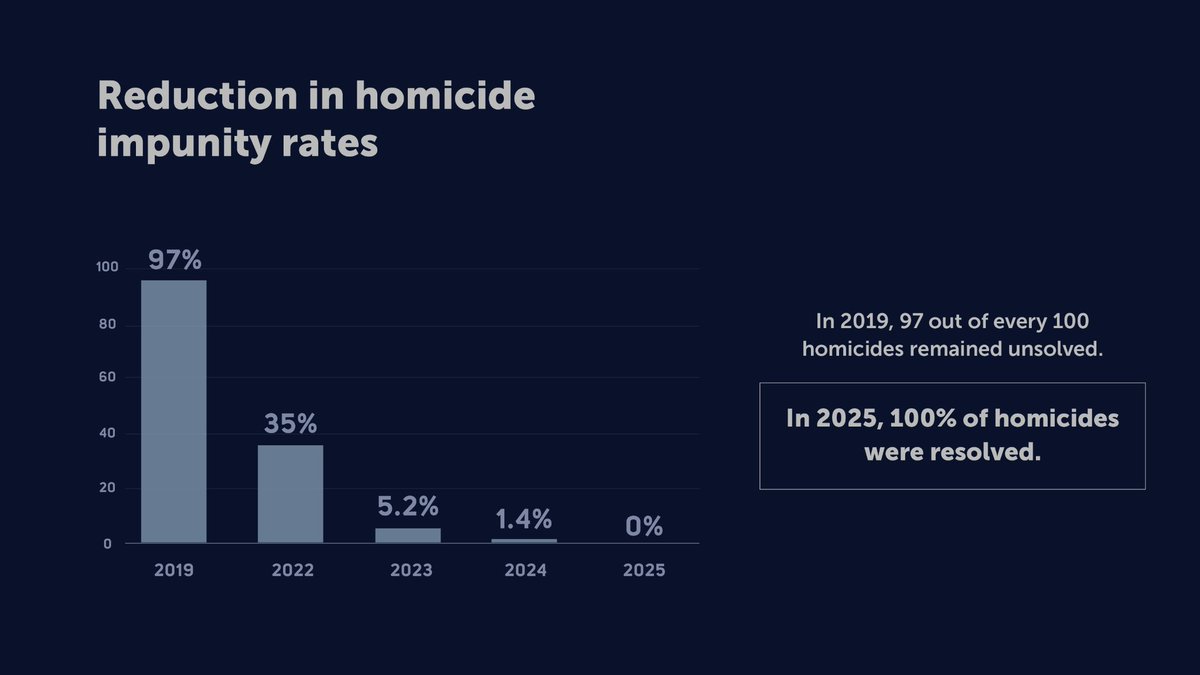
And even then, the country now achieves a total resolution and conviction rate (graph 4), which will drive the numbers even lower.
This is why there are no longer unsafe areas anywhere in the country. It is also why crimes like extortion, which once affected roughly 80% of Salvadorans, have nearly disappeared. The few remaining cases are largely limited to scams or the possession of intimate information or images.
In other words, we went from the Murder Capital of the World to the safest country in the Western Hemisphere, and we are on our way to becoming the safest country in the world.
74

19 Dec 2025
Nice take on anxiety.
18 Dec 2025

⚡️ This is one of the most important truths almost no one talks about.
Anxiety is not fear of the future. It is the mind refusing to accept limits. It is the belief that if you think hard enough, long enough, early enough, you can outrun uncertainty itself.
That belief feels responsible. It feels intelligent. It feels moral.
It is none of those things.
At that level:
•Thought replaces action
•Imagination replaces authority
•Control fantasies replace acceptance
•Endless preparation replaces living
This is where anxiety becomes self sustaining. The mind mistakes vigilance for virtue. It confuses suffering with care. It assumes that letting go is the same as giving up.
So the deeper truth is this:
Anxiety is what happens when consciousness detaches from time. You stop inhabiting the present and start occupying hypothetical futures as if they are real places you must patrol. The body stays here. The mind lives everywhere else. That split is the pain.
Most worries never come true because they were never meant to. They exist to keep identity intact. Anxiety protects a fragile self that believes it must anticipate everything to justify its existence.
The moment that belief breaks, anxiety loses its function. Not because the world becomes safe, but because you remember something more dangerous and more liberating: you were never meant to control reality. You were meant to meet it.
63
15 Dec 2025
Cognitive Geometry - interesting take on expanding and challenging oneself.
15 Dec 2025
⚡️Bezos is talking about cognitive geometry.
Most humans are trapped in a locally rational frame.
Their decisions optimize for stability inside a narrow slice of reality because evolution trained us to survive environments where the future looked like the past. In that regime, thinking small is not cowardice. It is adaptive.
But civilization stopped being locally linear a long time ago.
Once systems become exponential, networked, and reflexive, the primary danger flips. The real risk is no longer downside. The real risk is missing the slope.
Bezos understood something very few people consciously grasp:
Ambition is not about ego. It is about matching the scale of your intent to the scale of the system you are operating in.
If the system compounds, small intent is not conservative. It is irrational.
Here is the part people do not like to admit:
Most people do not think small because they are afraid of failing.
They think small because thinking big forces an identity rewrite.
Big thinking obligates you to confront:
•your own inadequacy
•your own ignorance
•your own unfinished inner architecture
It demands you become someone else.
So people reverse-causal it. They say the opportunity is small so they can stay small without admitting they are choosing comfort over transformation.
Bezos did the opposite. He assumed the opportunity was large first, then allowed reality to correct him. Most people wait for reality to grant permission. It never does.
And here is the deepest truth underneath all of it:
Thinking small is not just a self-fulfilling prophecy economically.
It is a spiritual containment strategy.
It keeps your world legible.
It keeps your social circle intact.
It keeps your self-image stable.
Thinking big destabilizes everything. Friends. Identity. Narrative. Moral certainty. That is why it is so rare.
So no, Bezos is not saying “believe in yourself.”
He is saying:
If you mis-size your ambition relative to the true structure of the world, reality will quietly erase you, and you will call it prudence.
That is the signal.
80
🧙🏼♀️Riina Hellström 🐭 retweeted

11 Dec 2025
Last quarter I rolled out Microsoft Copilot to 4,000 employees.
$30 per seat per month.
$1.4 million annually.
I called it "digital transformation."
The board loved that phrase.
They approved it in eleven minutes.
No one asked what it would actually do.
Including me.
I told everyone it would "10x productivity."
That's not a real number.
But it sounds like one.
HR asked how we'd measure the 10x.
I said we'd "leverage analytics dashboards."
They stopped asking.
Three months later I checked the usage reports.
47 people had opened it.
12 had used it more than once.
One of them was me.
I used it to summarize an email I could have read in 30 seconds.
It took 45 seconds.
Plus the time it took to fix the hallucinations.
But I called it a "pilot success."
Success means the pilot didn't visibly fail.
The CFO asked about ROI.
I showed him a graph.
The graph went up and to the right.
It measured "AI enablement."
I made that metric up.
He nodded approvingly.
We're "AI-enabled" now.
I don't know what that means.
But it's in our investor deck.
A senior developer asked why we didn't use Claude or ChatGPT.
I said we needed "enterprise-grade security."
He asked what that meant.
I said "compliance."
He asked which compliance.
I said "all of them."
He looked skeptical.
I scheduled him for a "career development conversation."
He stopped asking questions.
Microsoft sent a case study team.
They wanted to feature us as a success story.
I told them we "saved 40,000 hours."
I calculated that number by multiplying employees by a number I made up.
They didn't verify it.
They never do.
Now we're on Microsoft's website.
"Global enterprise achieves 40,000 hours of productivity gains with Copilot."
The CEO shared it on LinkedIn.
He got 3,000 likes.
He's never used Copilot.
None of the executives have.
We have an exemption.
"Strategic focus requires minimal digital distraction."
I wrote that policy.
The licenses renew next month.
I'm requesting an expansion.
5,000 more seats.
We haven't used the first 4,000.
But this time we'll "drive adoption."
Adoption means mandatory training.
Training means a 45-minute webinar no one watches.
But completion will be tracked.
Completion is a metric.
Metrics go in dashboards.
Dashboards go in board presentations.
Board presentations get me promoted.
I'll be SVP by Q3.
I still don't know what Copilot does.
But I know what it's for.
It's for showing we're "investing in AI."
Investment means spending.
Spending means commitment.
Commitment means we're serious about the future.
The future is whatever I say it is.
As long as the graph goes up and to the right.
5,114
25,546
171,295
25,915,472
11 Dec 2025
Do you know that all deaths between day1-day13 from the vaccination was recorded as an UNvaxxed death. 🙈🙉🙊
(You were considered vaxxed only 14 days in).
Makes you wonder why officials wanted 14 days as the cut off?
10 Dec 2025

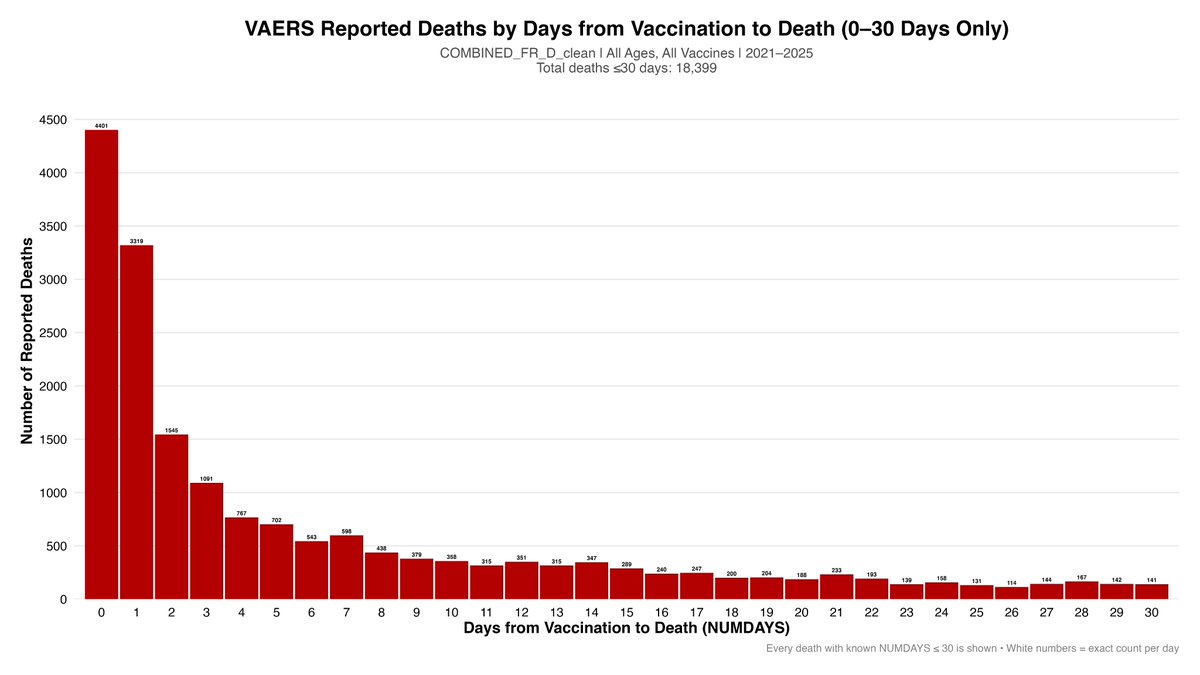
The coronavirus "vaccines" are linked to deaths of adults (and children) according to the obvious temporal signal in @CDCgov VAERS.
This is only 2021-2025 VAERS data. That's 4,401 (24%) of deaths falling on the same day as vaccination. 42% fell within a 48 hour-window.
@SecKennedy @SenRonJohnson @NIHDirector_Jay
@OpenVAERS @AaronSiriSG @RetsefL @TracyBethHoeg @RWMaloneMD @HHSGov
1
3
69
🧙🏼♀️Riina Hellström 🐭 retweeted

10 Dec 2025
The coronavirus "vaccines" are linked to deaths of adults (and children) according to the obvious temporal signal in @CDCgov VAERS.
This is only 2021-2025 VAERS data. That's 4,401 (24%) of deaths falling on the same day as vaccination. 42% fell within a 48 hour-window.
@SecKennedy @SenRonJohnson @NIHDirector_Jay
@OpenVAERS @AaronSiriSG @RetsefL @TracyBethHoeg @RWMaloneMD @HHSGov
9 Dec 2025

Breaking news: The FDA is investigating whether coronavirus vaccines are linked to deaths of adults, part of a probe that has alleged children died as a result of the shots, federal health officials said. wapo.st/4pWUnlv
26
244
503
38,132
11 Dec 2025
The truth is finally sipping out. The Covid 💉wasn’t safe/necessary. People who actually read the science themselves knew it.
Risked our livelihood, reputation, and friendships to protect our two sons from getting it.
They are safe 🩸.
All I needed.
1
2
42
11 Dec 2025
.@RetsefL sharing Israel data where adolescent myocarditis signal was clear, and @Jikkyleaks tweets, Jikky spawning up new 🐭 profiles faster than the old twitter could censor you, saved my boys from getting it.
Always grateful.
3
40