
astrophotographer, astronomy @ UofA, 3D artist
- Tweets 18,507
- Following 697
- Followers 769
- Likes 157,241




























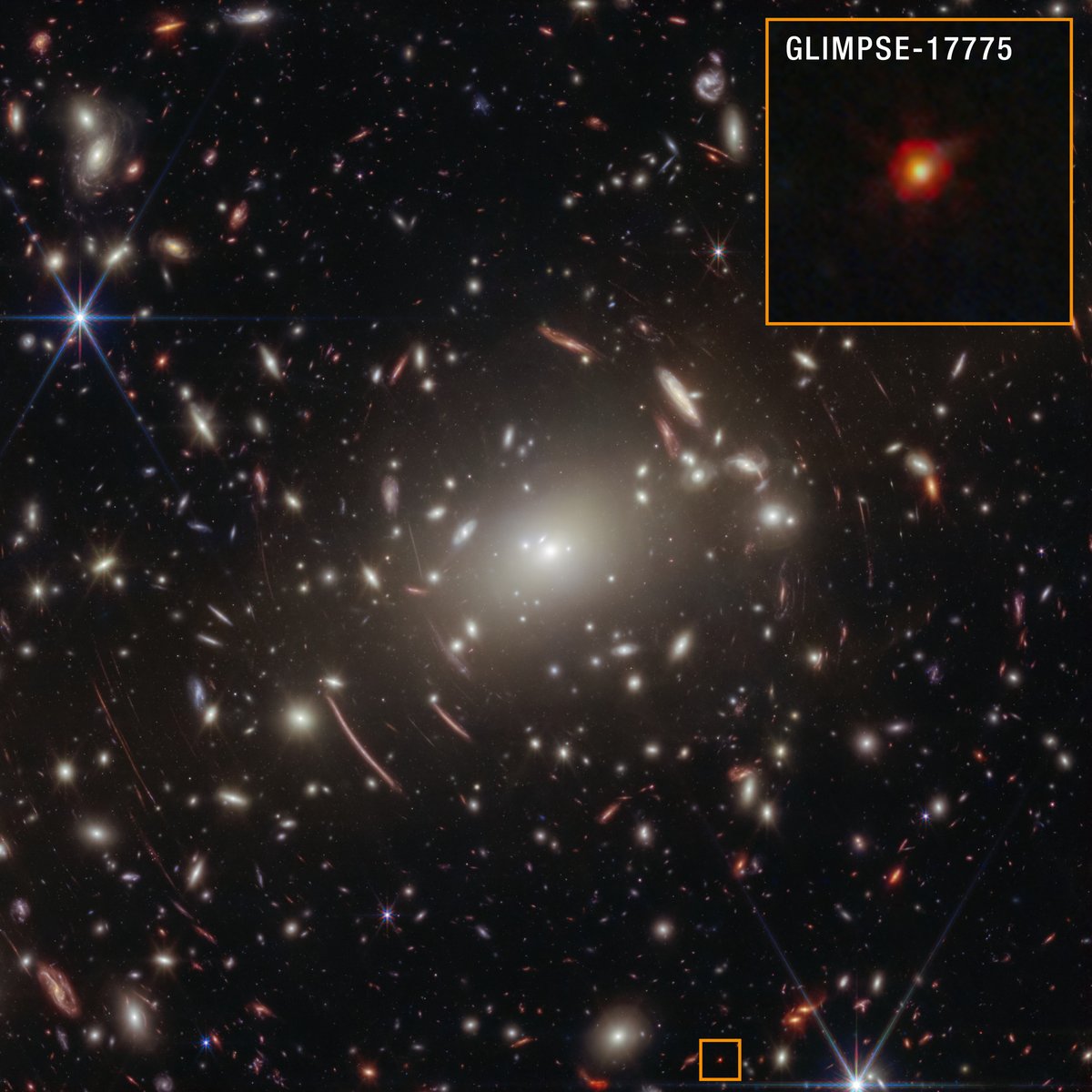
ALT A field of galaxies against the black background of space. In the center is a bright-white elliptical galaxy that is the core of the Abell S1063 galaxy cluster. Around the core are short, curved red lines, which are distant background galaxies magnified and warped by gravitational lensing. A couple of foreground stars appear large and bright with Webb’s signature eight-point diffraction spike pattern. Toward the very bottom, slightly off center toward the right, is a small red dot that is highlighted by an orange square outline. A larger orange square in the top right corner shows the object in more detail. The object, labeled “GLIMPSE-17775” looks like a fuzzy red dot with a yellow core.


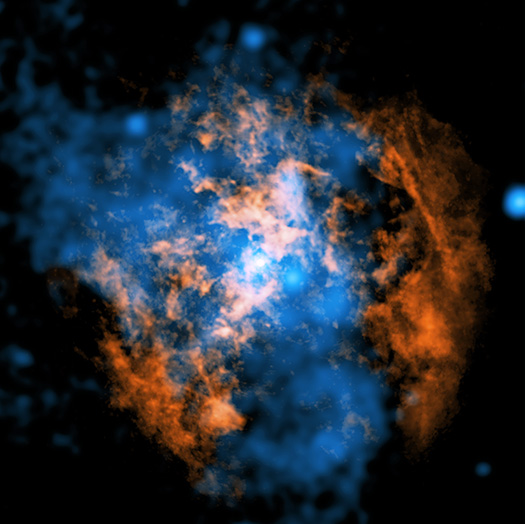
ALT This image centers on a bright, pinpoint white glow marking Sagittarius A* (Sgr A*), the supermassive black hole at the heart of the Milky Way, surrounded by a turbulent, cloud-like environment. Radiating outward from the center is a luminous swirl of blue X-ray emission from NASA's Chandra X-ray Observatory, forming a soft, irregular halo that is brightest near the core and fades into darker shades toward the edges. Interwoven with this blue glow are thick, patchy structures in orange, tracing colder gas mapped by radio observations from ALMA. These orange regions form a partial ring and clumpy arcs around the center, but notably break open to reveal a wide, cone-shaped cavity where little to no orange emission appears. This hollowed-out region is instead filled with the blue X-ray glow, emphasizing the contrast between hot and cold material. The scene feels dynamic and layered, with the interplay of blue and orange just a few light-years from the galaxy’s core.