
Everything Hedera, Web3 and crypto markets.
Joined June 2023
- Tweets 3,006
- Following 1,078
- Followers 845
- Likes 31,250
144 Photos and videos












ꜱᴏℏᴀᴍ ꜱᴀℏᴀ retweeted

Jun 13
OFFICIAL: $6,500,000,000 Financial Giant Shifts Base Protocol to Hedera!
On June 3rd, global finance shifted quietly when the Aceto platform officially deployed on the Hedera public ledger. This modular software architecture bridges private banking systems directly onto a public consensus layer, introducing the deterministic finality and strict compliance frameworks required to securely move multi-billion dollar money market funds on chain.
By keeping transaction details behind a private firewall while sending cryptographic proofs to the public ledger, this technology overcomes traditional financial barriers like network congestion and variable fees. As institutional migration accelerates, understanding the intersection of permissioned banking rails and public networks becomes critical. Subscribe for more in-depth crypto breakdowns as we track these real-world utility shifts.
#Hedera #HBAR #CryptoNews
3
28
142
4,704





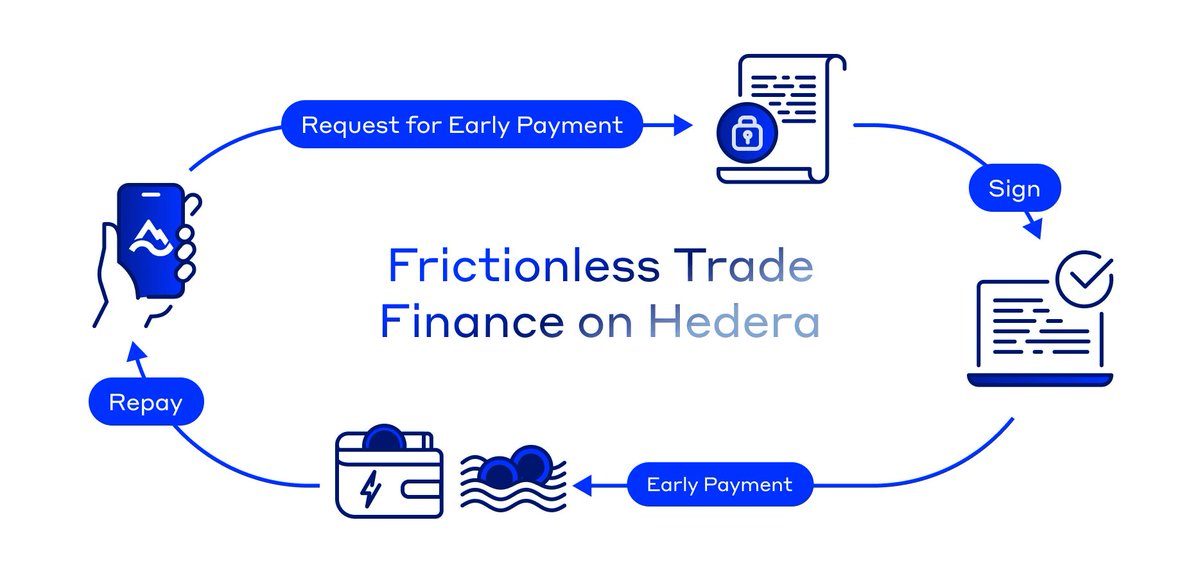
Tokenized securities just got more dynamic.
@ArchaxEx has launched real-time streaming cash flows on Hedera, enabling interest payments to update directly in investors' wallets on a near second-by-second basis using @USDC.
As tokenized securities are traded, payments automatically follow the asset. As ownership changes, cash flows continuously adjust. And because securities can be fractionalized, payments can be too.
This is another step toward more efficient capital markets.
hedera.com/blog/archax-and-h…
21
163
652
28,175
ꜱᴏℏᴀᴍ ꜱᴀℏᴀ retweeted

Jun 11
India does 5 lakh TRANSACTIONS per minute on UPI.
29
121
1,023
13,676
ꜱᴏℏᴀᴍ ꜱᴀℏᴀ retweeted

Jun 11
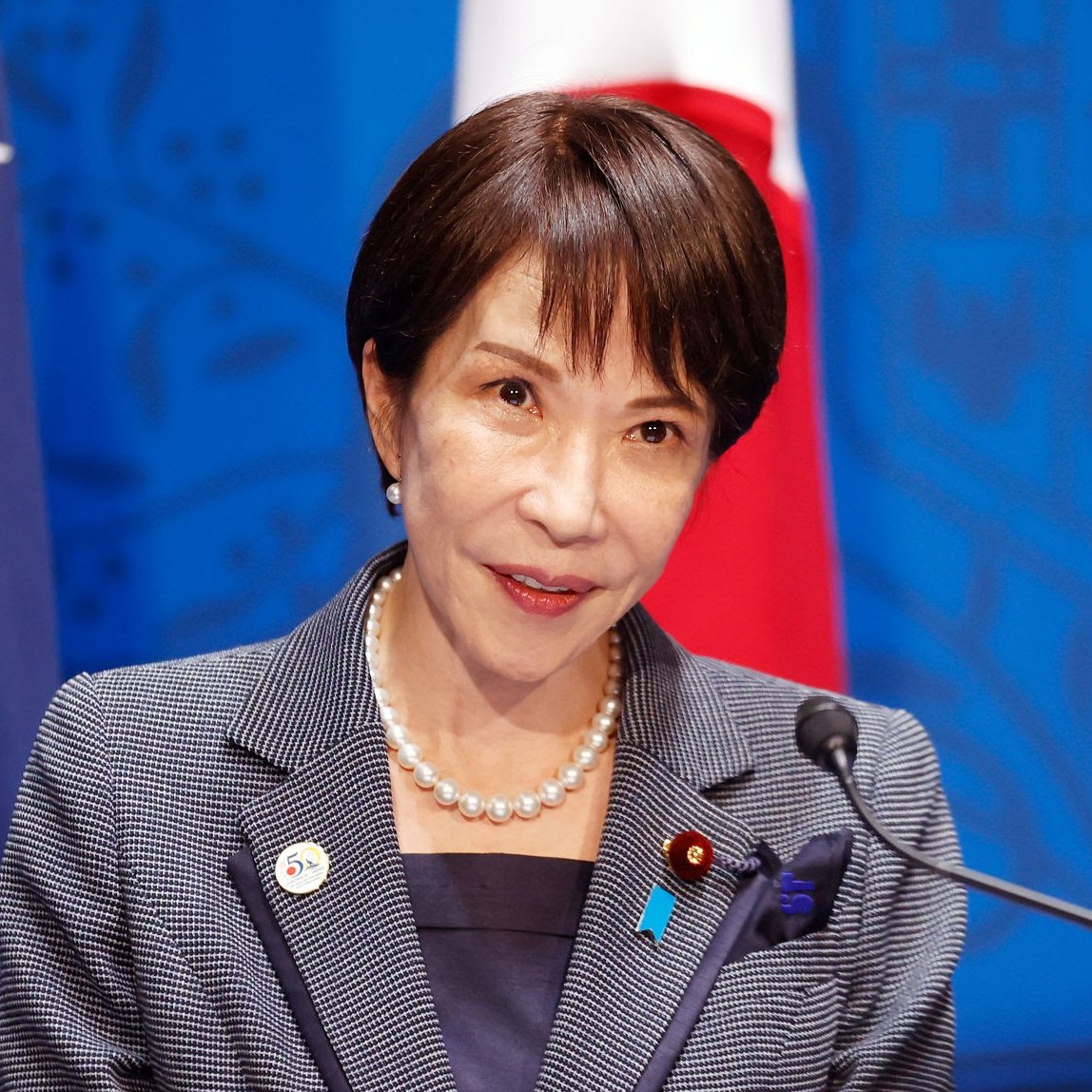
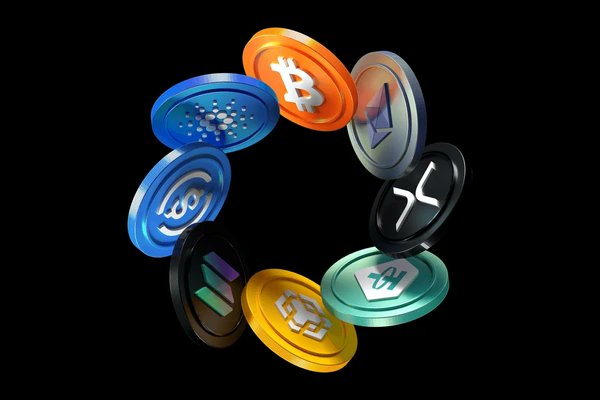
🚨JAPAN JUST OFFICIALLY ACCEPTED CRYPTO AS A MAINSTREAM FINANCIAL ASSET
The world’s 4th largest economy will treat crypto like stocks, with taxes on assets like BTC and ETH to fall from 55% to 20% by 2028.
211
660
3,724
145,157

The world's most valuable telecom brand, @deutschetelekom, is currently trialling a verified caller identity solution built on @Hedera.
Verified Telco ID, built on @hashgraphgroup's IDTrust, cryptographically proves the organisation behind a call and its purpose before you answer.
With telecom fraud costing $41B annually and AI voice cloning accelerating, digital trust at the network layer is becoming essential infrastructure.
11
96
399
13,239
ꜱᴏℏᴀᴍ ꜱᴀℏᴀ retweeted

NEW: The @Hedera Council has welcomed The Institutes RiskStream Collaborative as a Strategic Partner.
RiskStream is a leading insurance technology consortium with members including @StateFarm, @GEICO, @Nationwide, and @WRBerkleyCorp.
Adding even more enterprise expertise to the @Hedera ecosystem.
#Hedera #HBAR #StrategicPartner $HBAR
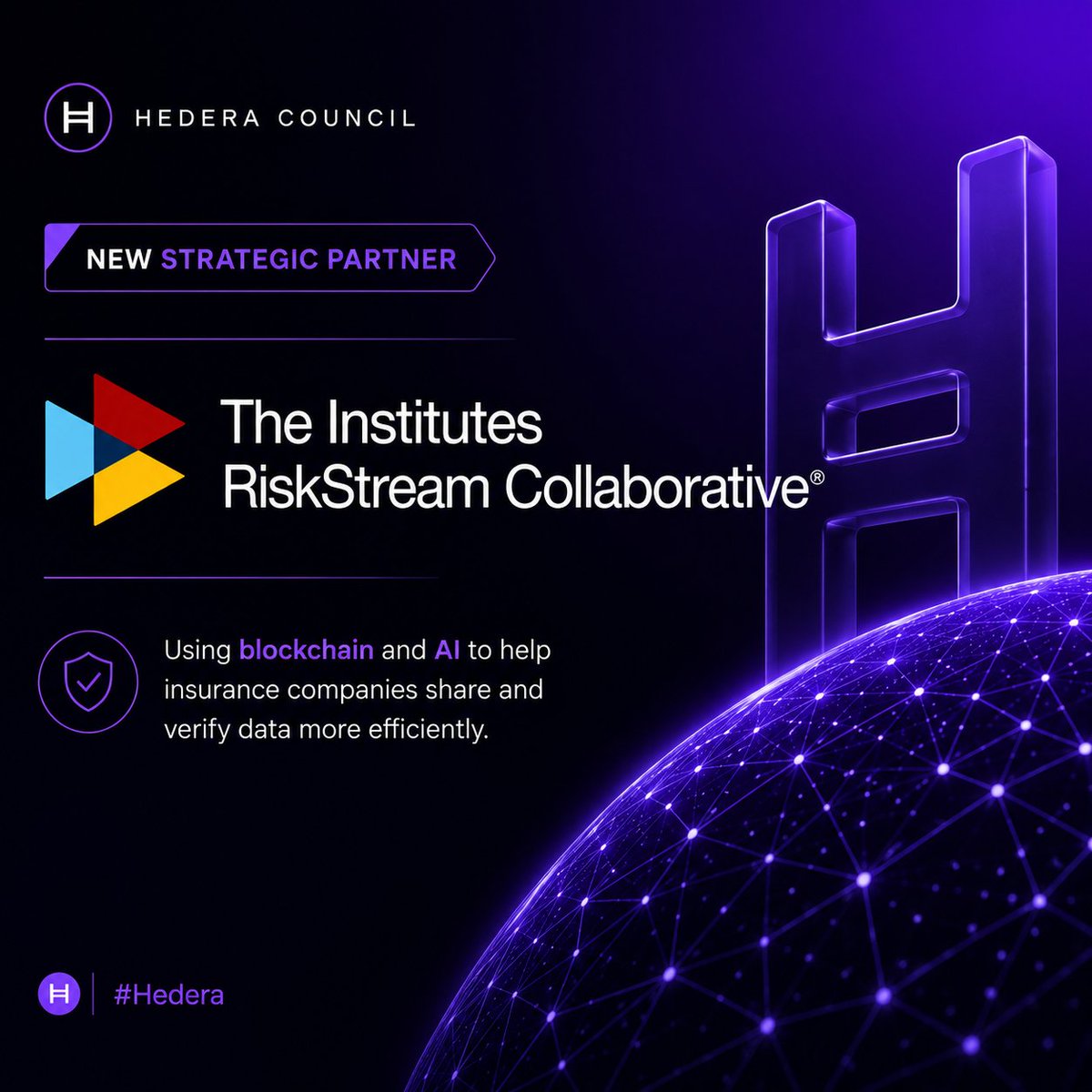

Hedera Council welcomes The Institutes RiskStream Collaborative as a Strategic Partner, alongside new Community Partners @EQTYLab, @hgraph, @KabilaApp, and @xenitravel.
These organizations bring expertise across insurance, Web3 data infrastructure, AI governance, tokenized creator communities, and decentralized travel to Hedera Council.
hedera.com/blog/hedera-counc…
29
121
3,235
.@merckgroup's Life Science division alone offers more than 300,000 products and serves millions of customers globally.
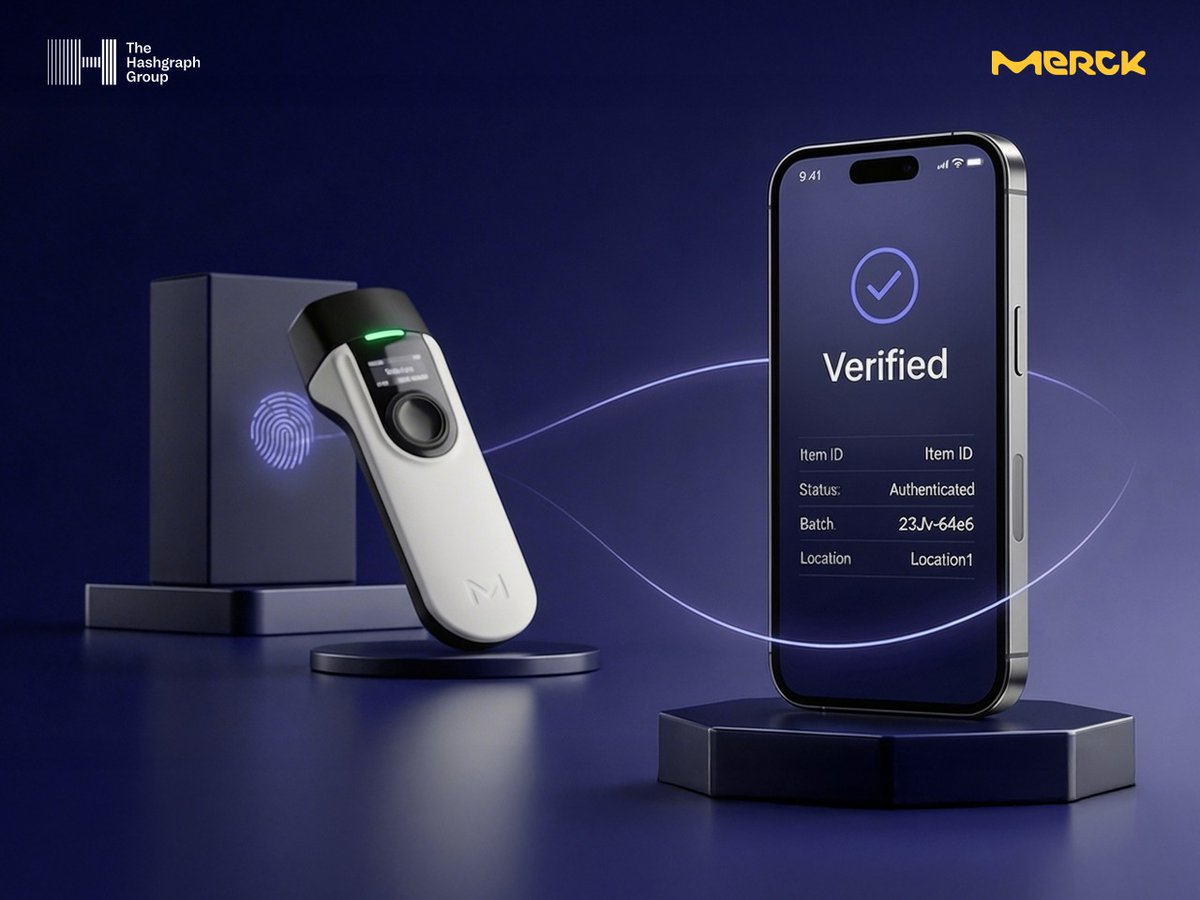
In collaboration with @hashgraphgroup, DPPs, product authentication, and supply chain traceability are being anchored on @hedera.
mtrust.io/

The Hashgraph Group and @merckgroup are extending TrackTrace, our Hedera-based Digital Product Passport platform, with Merck's M-Trust™ authentication technology.
As the EU introduces Digital Product Passports from 2026, companies must prove where a product comes from, and that it is genuine.
Products are scanned and their authenticity is confirmed, signed, and recorded on @hedera. Already demonstrated in a supply chain pilot, and built to work across foods, pharmaceuticals, luxury goods, and beyond.
Read the full announcement: hashgraph-group.com/news
#Hedera #DigitalProductPassport #SupplyChain #Sustainability
4
34
128
5,334
ꜱᴏℏᴀᴍ ꜱᴀℏᴀ retweeted

Jun 9
🇮🇳 TCS AI revenue grew 22% CQGR, reaching $2.5 billion annualised.
"TCS is building many AI agents. The time is not far when TCS will have equal number of AI agents and human employees" 🤖
- TCS Chairman N Chandrasekaran

16
18
157
5,442
ꜱᴏℏᴀᴍ ꜱᴀℏᴀ retweeted

Jun 8
America’s biggest banks are reportedly building a tokenised deposit network.
Could $HBAR be in the conversation?
Nilmini Rubin @hedera's head of policy is says here they are already speaking with policymakers and big banks!
And they are all impressed by the hashgraph tech..
9
46
312
10,096
ꜱᴏℏᴀᴍ ꜱᴀℏᴀ retweeted
Dr. Leemon Baird (@LeemonBaird) says the vision behind @Hedera, first outlined more than a decade ago, is finally becoming reality.
"The vision hasn't changed. Now it's happening."
Mance Harmon (@ManceHarmon) added:
"I think that Clipper (CLPR) is as important as Hashgraph."
Clipper is designed to connect @Hedera, HashSphere and other blockchain networks like @Ethereum, @Avax and many more, breaking down the walls between ecosystems.
6
39
217
5,228
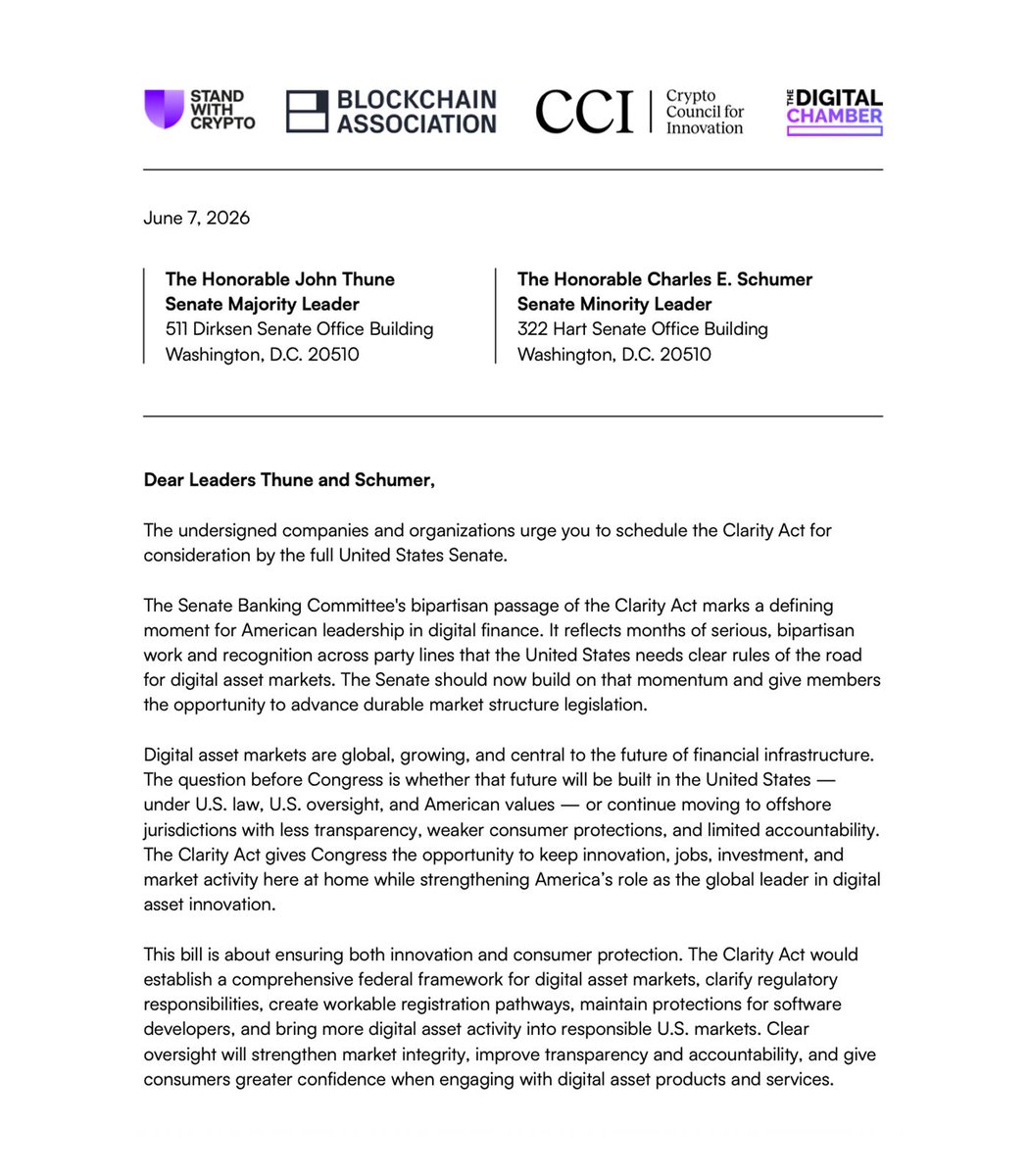
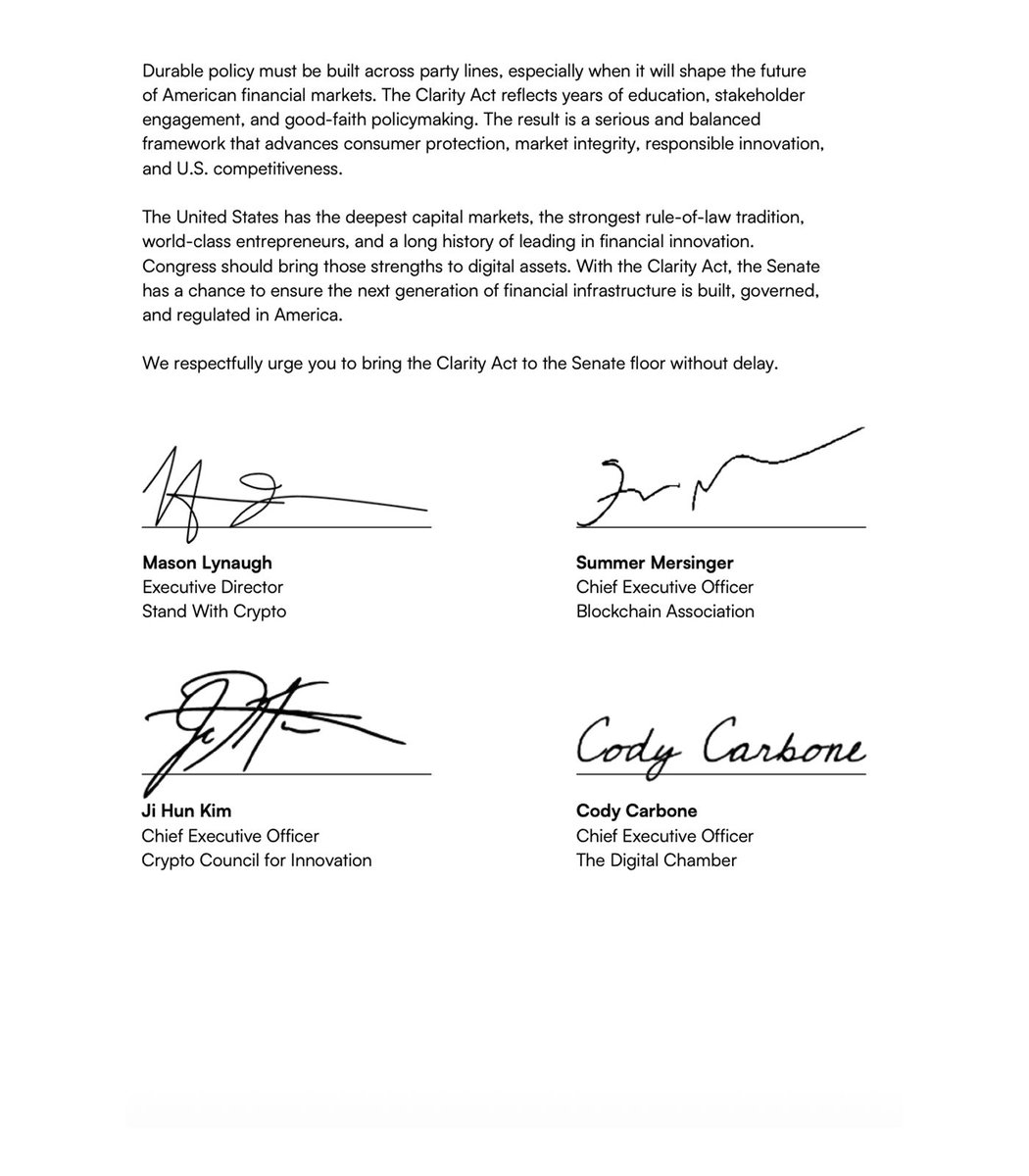
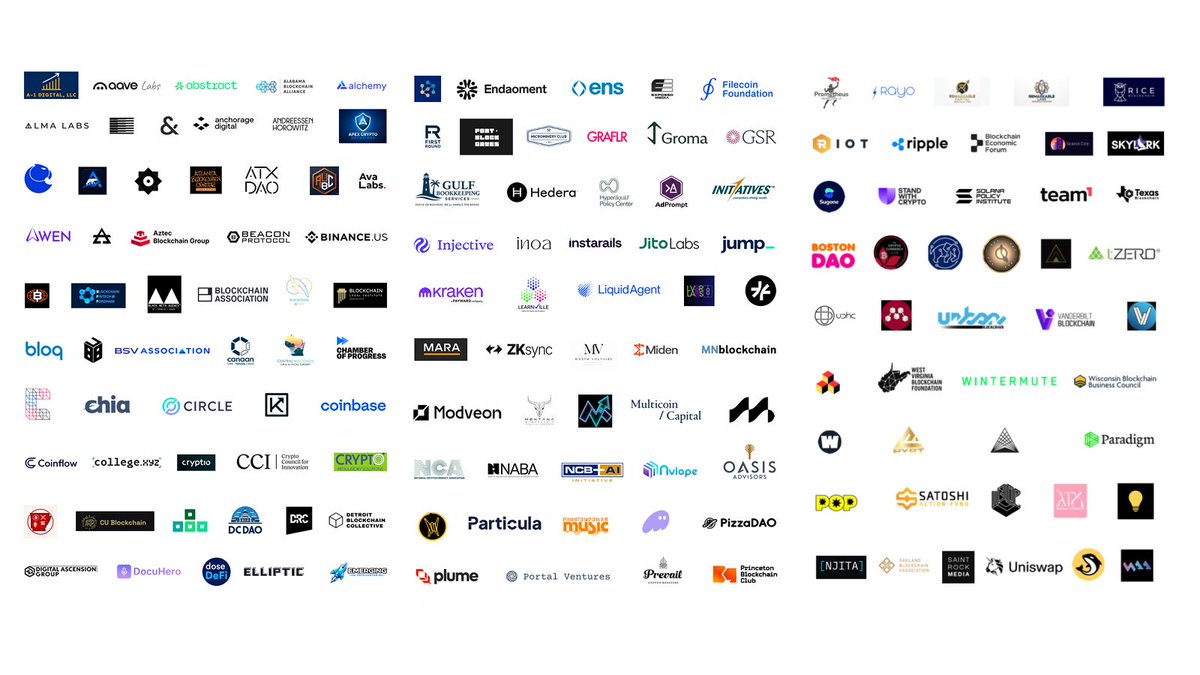
Today, @hedera joined a coalition of over 200 organizations urging Senate leadership to bring the Clarity Act to the floor without delay.
The bill passed the Banking Committee with bipartisan backing and would establish clear rules for digital asset markets, strengthen consumer protections, and ensure American competitiveness.
It’s time for Clarity.

Stand With Crypto and over 200 organizations sent a simple message to Senate leadership: it's time for the Clarity Act.
The community is unified — large companies, startups, associations, and grassroots groups across the country are counting on their lawmakers to deliver rules of the road for crypto in America.
The Clarity Act passed the Senate Banking Committee with bipartisan support.
Now it needs to cross the finish line. Tell your Senators you want Clarity 👇
38
505
2,383
91,331
ꜱᴏℏᴀᴍ ꜱᴀℏᴀ retweeted

🇮🇳’s growth journey continues.
Despite global shocks and uncertainties, India’s economic engine delivers GDP growth rate of 7.7% in FY 2025-26 and 7.8% in Q4 of FY 2025-26.
A testament to taking forward the reform agenda.
286
634
4,115
69,434
ꜱᴏℏᴀᴍ ꜱᴀℏᴀ retweeted

Jun 5
An asset that follows a four year cycle is not a bad asset to own.
The asset is not responsible for human psychology.
Don't let the permabulls gaslight you into believing its a bad thing.
In a few months, they will become the biggest cheerleaders of the four year cycle.
122
110
2,917
115,541
ꜱᴏℏᴀᴍ ꜱᴀℏᴀ retweeted

$HBAR
The EU recently confirmed that by 2027, every battery, textile, and electronic device sold in Europe will need a verifiable Digital Product Passport.
In February 2026, The Hashgraph Group (a Swiss Web3/AI company in the Hedera ecosystem) launched TrackTrace, a platform built on Hedera specifically for DPP compliance, supply-chain transparency, carbon/emissions tracking, and verifiable credentials across regulated sectors like batteries, textiles, electronics, and more.
It positions @Hedera as quantum-resistant infrastructure for the exact same regulatory requirement
prnewswire.com/news-releases…
2
32
138
3,004
"The smart contract knows the guardrails."
- Dr. @leemonbaird
The future of agentic payments relies on trusted rails. As AI agents begin transacting autonomously, programmable guardrails, verifiable execution, and transparent governance become essential for building trust at scale.
That’s where Hedera comes in.
18
113
515
19,036
ꜱᴏℏᴀᴍ ꜱᴀℏᴀ retweeted

May 30
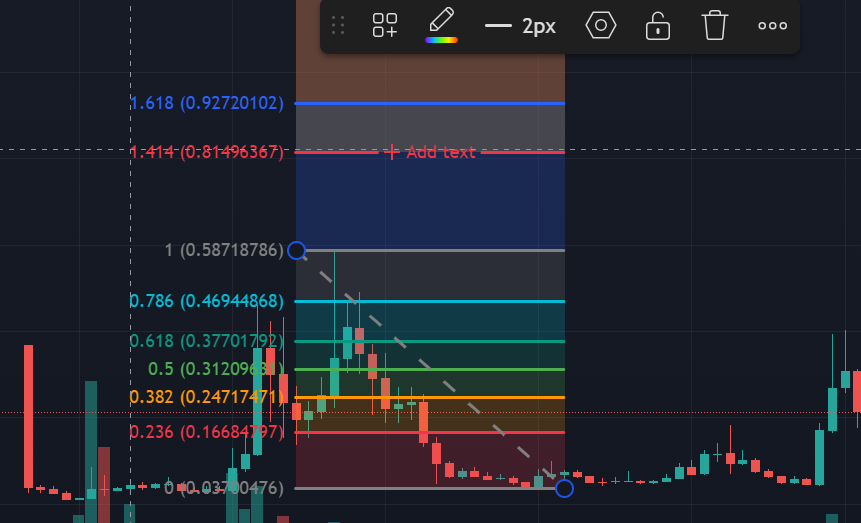
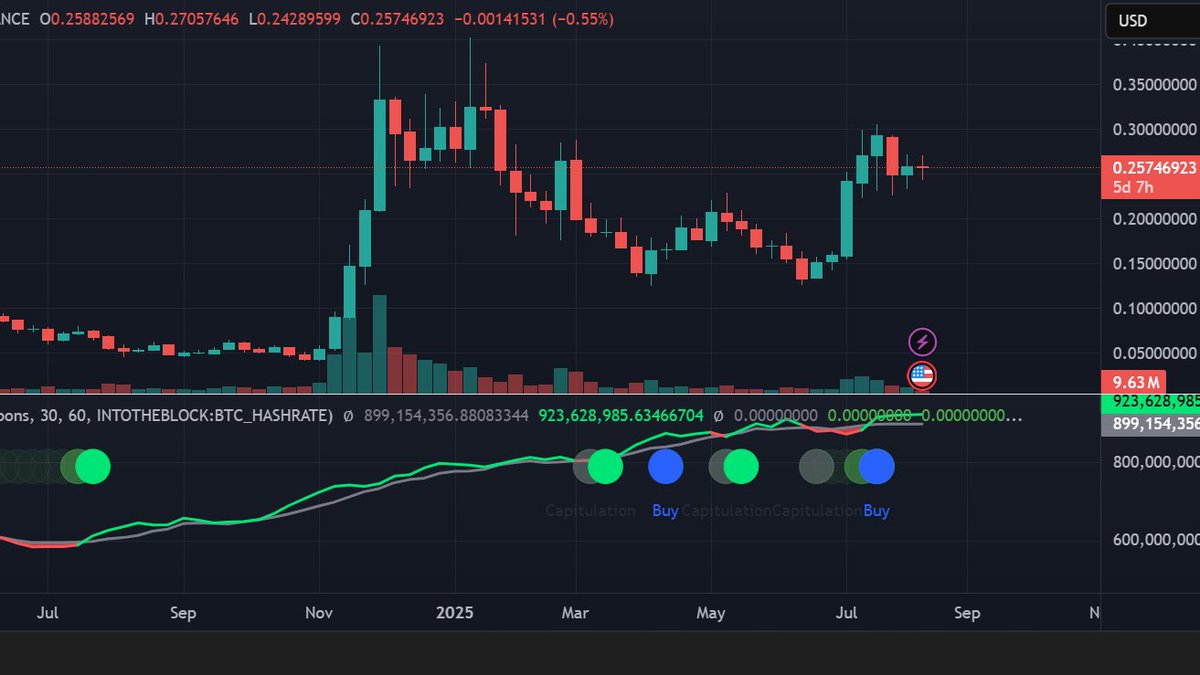
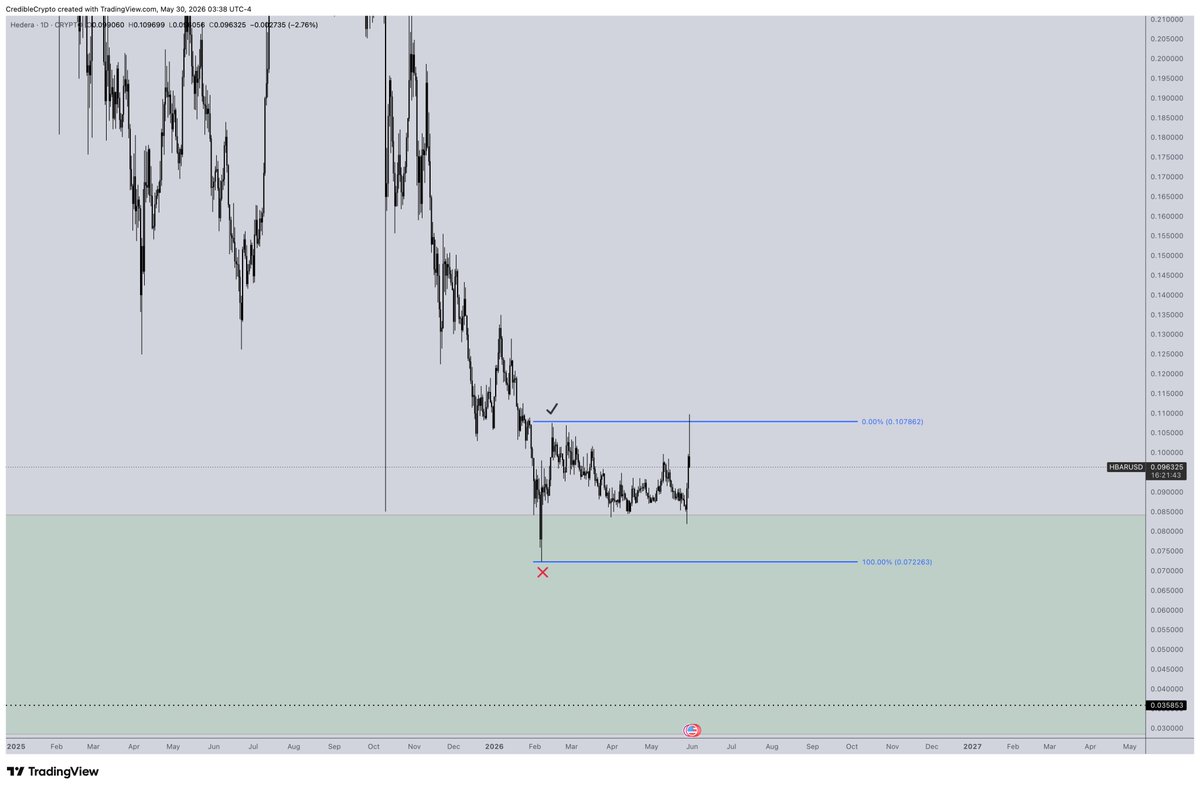
$HBAR saw a nice spike into our local range highs today, HBAR/BTC still hasn't hit my ideal entry zone so think it's quite logical that we get a move down to our local range lows from here.
Keep in mind, this is all in the context of LTF's, on HTF, we are essentially AT the buy zone, so this is the time to be accumulating, especially if we manage to get a final visit to the local range lows from here.
It's almost time $HBAR-barians!
May 13

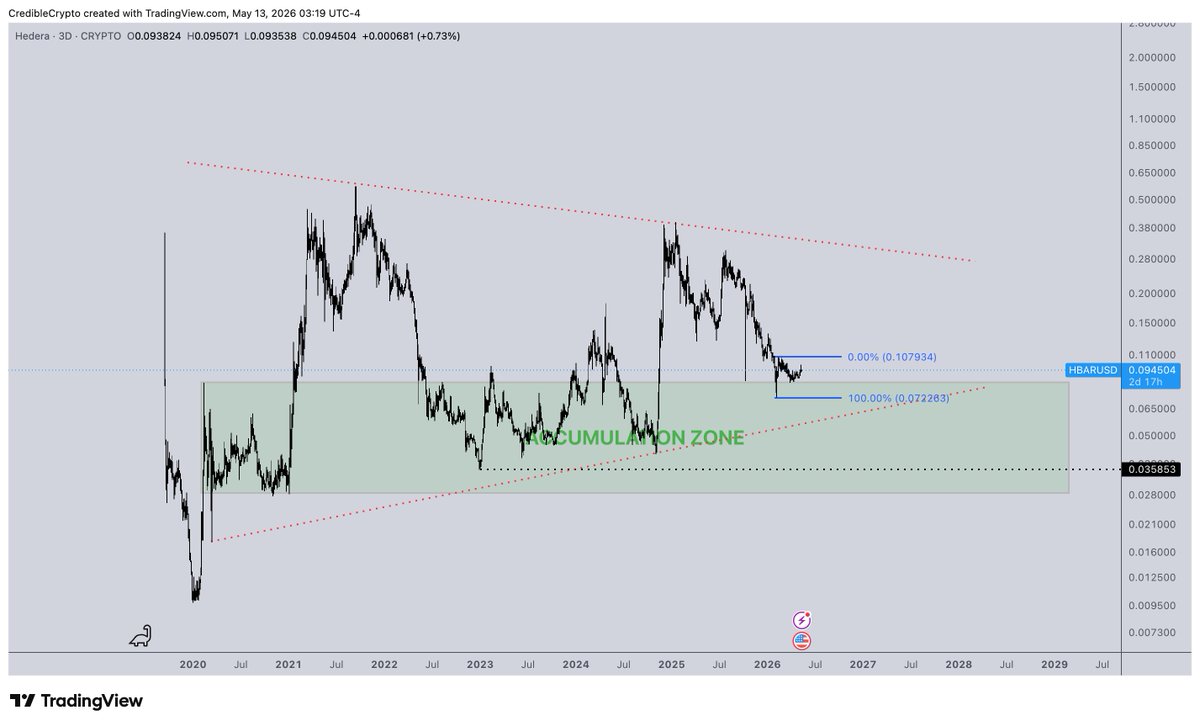
I haven't posted an update on $HBAR in a while because I covered it in my last Youtube vid on alts and nothing has changed- we are still about 20% above the area of interest on the HBAR/BTC chart which is when I think the $HBAR USD pairing will be ready for liftoff.
With that being said, we can see that on the USD pairing we are technically re-testing our HTF accumulation zone.
I am currently watching a potential lower TF range (in blue) and I think that before we see the next expansion phase we are likely to see those range lows again.
That level is currently about ~23% below where we are today and considering the HBAR/BTC pairing area of interest is also ~20% lower than we are today- it seems quite likely that this zone will be met at some point or another.
A 10% $BTC pullback from our HTF supply zone (which we are still battling) would almost guarantee this zone is met imo.
48
81
649
83,467
🏎️ @zbrownCEO, CEO of McLaren Racing, on innovation, partnerships, and McLaren Racing’s role as a Hedera Council member. 👇
10
112
481
16,872
Major news coming out of Vietnam for @hedera.
VNG IRONMAN Da Nang just became the testing ground for Vietnam's first real-world Blockchain-based cross-border payment pilot.
Architected by @var_meta, the pilot used Hedera @hashpack infrastructure to process international payment flows during an event with 4,700 athletes from 90 countries.
This was a live, real-world environment:
- Cross-border transactions
- KYC/AML compliance
- Banking integration
- Direct settlement into the organiser's bank
Vietnam is also actively building a regulatory sandbox for Fintech, Blockchain, and digital assets as part of its International Financial Center ambitions.
Future pilots are expected to expand into more international events and industries, accelerating Blockchain-based payment infrastructure nationwide.

5
74
272
5,917
ꜱᴏℏᴀᴍ ꜱᴀℏᴀ retweeted

Switzerland’s first municipal blockchain initiative is now live on @hedera.
The municipality of Muri bei Bern has launched BIDI, a digital biodiversity voucher system built on Hedera
The project shows how tokenization can move beyond financial markets and become part of public administration.
BIDI rewards citizens for concrete environmental work, such as maintaining meadows, removing invasive plants and protecting wetlands.
For every verified contribution, participants receive digital vouchers.
Each BIDI voucher represents the value of 1 Swiss franc and can be redeemed at participating local businesses.
This creates a practical model in which environmental protection, local economic activity and administrative efficiency support each other.
Citizens are rewarded for helping protect biodiversity, local businesses benefit from voucher redemption, and the municipality replaces manual paper-based processes with a digital and verifiable system.
BIDI modernizes a voucher program that has already existed in Muri bei Bern for eight years.
Instead of continuing with paper vouchers, the municipality now uses an on-chain system that can improve transparency, simplify reconciliation and make environmental contributions easier to verify.
The technology stack behind the project is also important.
Hedera provides the distributed ledger infrastructure.
Swisscoast AG supplies the payment layer through HCHF, a Swiss franc-pegged stablecoin.
@hashgraphgroup and Apps with Love developed and integrated the platform.
The initiative was supported by The Hashgraph Association through its Enterprise Accelerator Program.
The choice of @HederaFndn fits the nature of the project.
Public-sector applications require infrastructure with low and predictable fees, fast settlement and reliable performance.
For a biodiversity initiative, sustainability is also important, and Hedera’s energy-efficient and carbon-negative network aligns well with the environmental purpose of BIDI.
At first glance, BIDI may appear to be a small local project.
In reality, it offers a useful template for how municipalities can digitize public incentives without abandoning familiar community mechanisms.
The same model could be applied to municipal vouchers, environmental incentive programs, subsidies, claims, reporting tokens and other community reward systems.
This is why the project matters beyond Muri bei Bern.
It shows how public services can use verifiable digital infrastructure in a practical and citizen-facing way.
Tokenization is no longer only a topic for banks, exchanges and financial markets.
With BIDI, it is entering municipal administration.
A Swiss municipality is replacing paper vouchers with a trusted digital system built on Hedera.
That is a quiet but meaningful step toward the tokenization of public services.
Tokenization is leaving Wall Street and entering City Hall.
👉🏻 mexc.com/news/1086052

2
39
147
2,602