
Engagement Roles. Bullish on @Something else.
Joined June 2009
- Tweets 9,580
- Following 1,411
- Followers 1,653
- Likes 6,976
468 Photos and videos








Most people know Optimum for mump2p. But that is just the beginning.
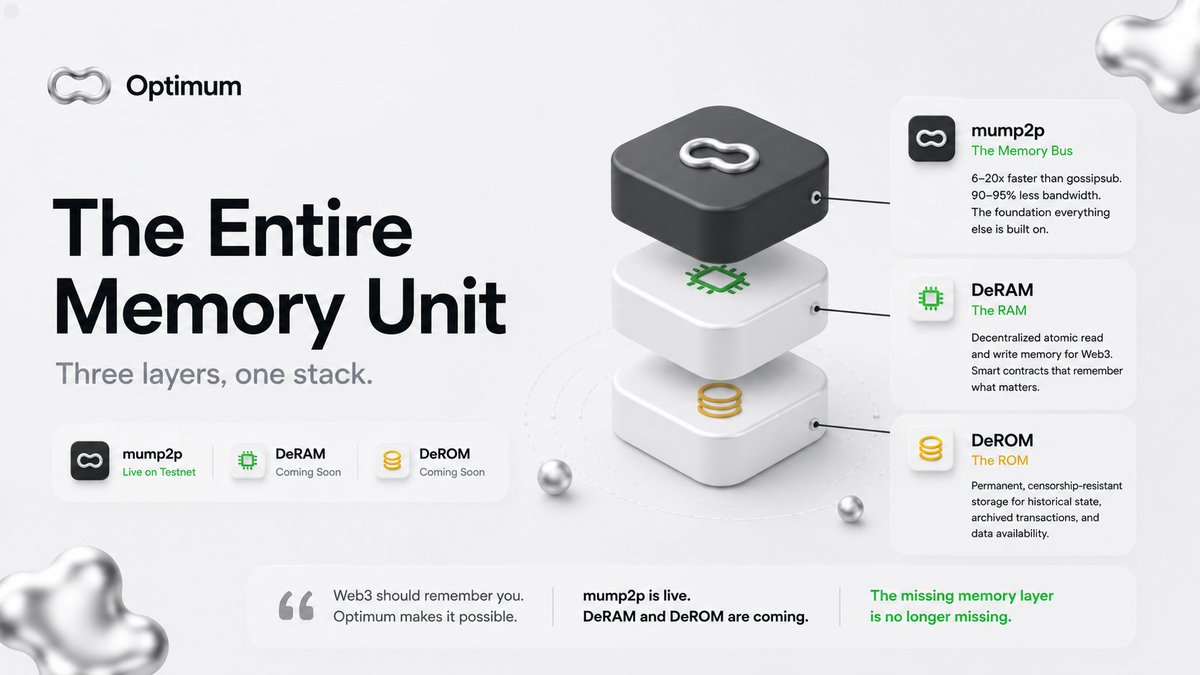
@get_optimum is building the entire memory unit for the world computer. Three layers, one stack.
mump2p is the memory bus. Already live on testnet. 6 to 20x faster than gossipsub, 90 to 95% less bandwidth. The foundation everything else is built on.
DeRAM is the RAM. Decentralized atomic read and write memory for Web3. Smart contracts that remember your portfolio, your history, your identity across chains. Everything Web2 apps take for granted, now available without sacrificing decentralization.
DeROM is the ROM. Permanent, censorship-resistant storage for historical state, archived transactions, and data availability layers.
Today Web3 apps feel clunky because smart contracts do not remember you. Every interaction is re-verified from scratch. Optimum fixes this at the infrastructure level.
mump2p is live. DeRAM and DeROM are coming. The missing memory layer is no longer missing.

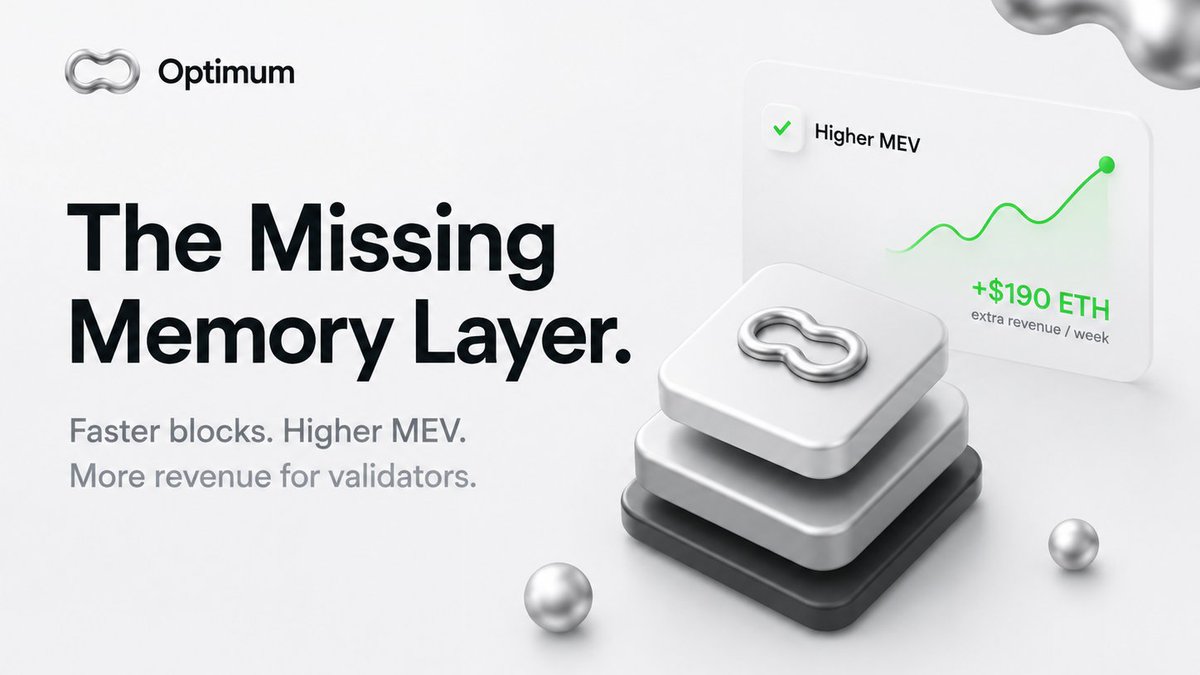
Ethereum validators are leaving millions on the table. Every single day.
The reason is simple. Validators are forced to propose blocks early in the slot because they cannot trust their block will propagate in time. So they commit early, and miss the higher MEV bids that builders submit in the final milliseconds.
@get_optimum research puts a number on it:
Every 50ms of extra latency costs 0.6 to 0.7% in APR
50 to 150ms reduction unlocks up to 2% higher APR
13 to 16% average MEV bid uplift from a small extra slot window
150 to 190 ETH in extra weekly revenue left uncaptured across the network
Optimum's mump2p fixes this directly. Using RLNC, blocks propagate faster and more reliably, giving validators the confidence to wait longer, capture higher bids, and reduce missed slots.
Luganodes, P2P. org, Everstake, Blockdaemon, and Kiln are already running it. The ones not running it are still paying the latency tax every single epoch.
3
6
141
Ethereum validators are leaving millions on the table. Every single day.
The reason is simple. Validators are forced to propose blocks early in the slot because they cannot trust their block will propagate in time. So they commit early, and miss the higher MEV bids that builders submit in the final milliseconds.
@get_optimum research puts a number on it:
Every 50ms of extra latency costs 0.6 to 0.7% in APR
50 to 150ms reduction unlocks up to 2% higher APR
13 to 16% average MEV bid uplift from a small extra slot window
150 to 190 ETH in extra weekly revenue left uncaptured across the network
Optimum's mump2p fixes this directly. Using RLNC, blocks propagate faster and more reliably, giving validators the confidence to wait longer, capture higher bids, and reduce missed slots.
Luganodes, P2P. org, Everstake, Blockdaemon, and Kiln are already running it. The ones not running it are still paying the latency tax every single epoch.
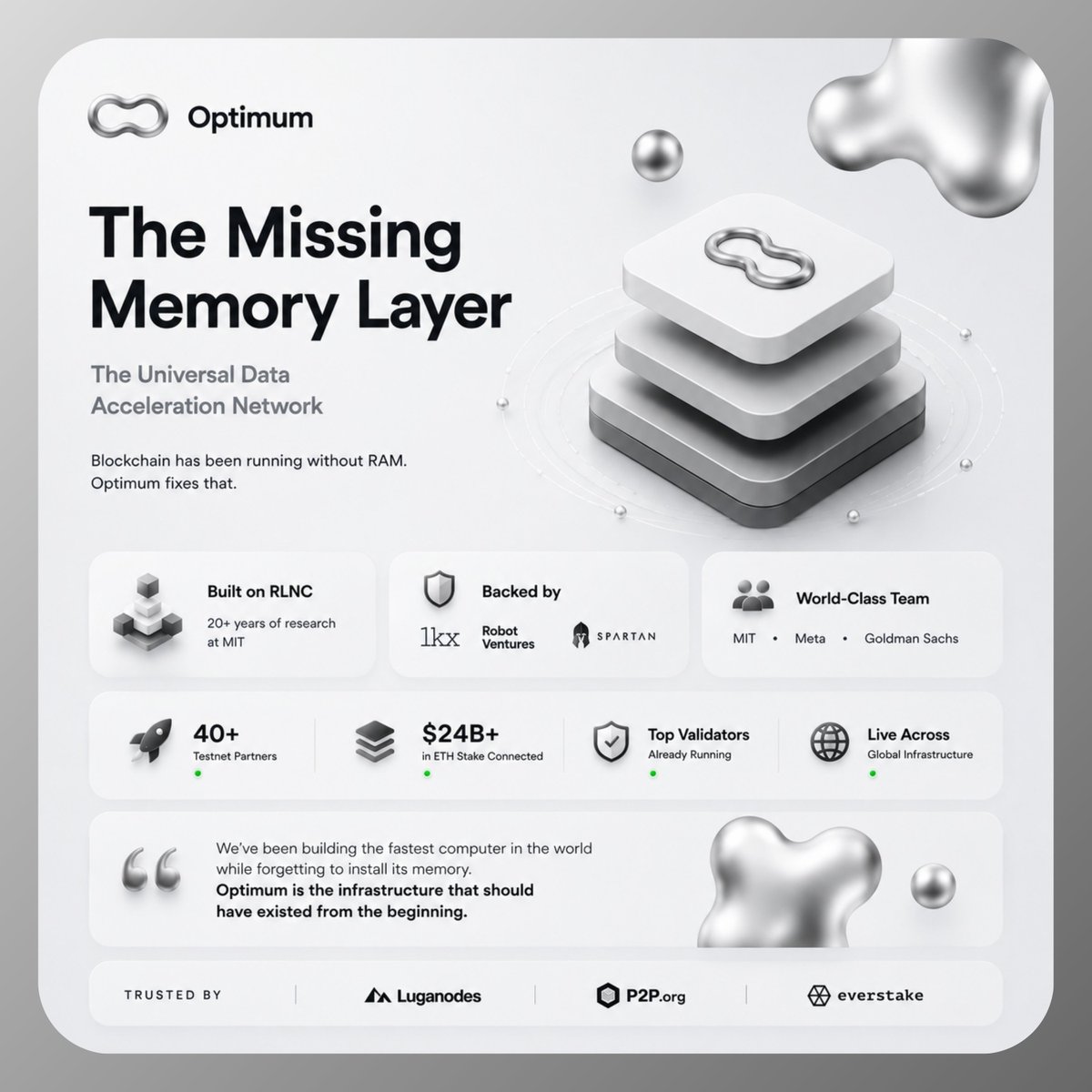
Blockchain is called the world computer, but it has been running without RAM.
Everyone was busy building execution and consensus. Nobody cared about how data actually moves across the network. The result: slow block propagation, wasted bandwidth, and validators losing revenue every single day.
@get_optimum is the missing memory layer. Built on RLNC technology developed over 20 years at MIT, backed by 1kx, Robot Ventures, and Spartan, with a world-class team from MIT, Meta, and Goldman Sachs.
The results are already live. 40 testnet partners. 24 billion dollars in ETH stake already connected. Top validators like Luganodes, P2Porg, and Everstake are already running it.
We have been building the fastest computer in the world while forgetting to install its memory. Optimum is not an added feature. It is the infrastructure that should have existed from the beginning.
6
11
433
Beryll retweeted

May 19
Speed is money.
But consistent speed is what will truly allow blockspace markets to become more efficient.
Read all about it in this new piece from our Chief Product Officer @sajidazouarhi .

36
31
185
6,427
Blockchain is called the world computer, but it has been running without RAM.
Everyone was busy building execution and consensus. Nobody cared about how data actually moves across the network. The result: slow block propagation, wasted bandwidth, and validators losing revenue every single day.
@get_optimum is the missing memory layer. Built on RLNC technology developed over 20 years at MIT, backed by 1kx, Robot Ventures, and Spartan, with a world-class team from MIT, Meta, and Goldman Sachs.
The results are already live. 40 testnet partners. 24 billion dollars in ETH stake already connected. Top validators like Luganodes, P2Porg, and Everstake are already running it.
We have been building the fastest computer in the world while forgetting to install its memory. Optimum is not an added feature. It is the infrastructure that should have existed from the beginning.
12
18
462

Another clean drop from the Seismic community.
Just received this piece from @cepodr, really polished and well executed, it stands out.
One thing I truly respect about @SeismicSys is how the community keeps uplifting each other through creativity and meaningful contributions.


rocky reports every best member of @SeismicSys to @xealistt , if you wanna there just send me your PFP I'll make rocky do it for youu 💕

5
1
25
224
Prompt below if you want to try it 😉



1
6
163



udah 3 bulan gua hidup nomad. pindah negara, pindah kota, terus pindah lagi. sesekali pulang.
ini yang ngebuat ini bisa jalan:
- kerjaan remote yang bisa dikerjain dari mana aja
- side hustle di web3 yang ga kenal timezone
- agent yang jalan 24 jam nyariin duit waktu gua tidur atau lagi explore kota baru
yang menarik, produktivitas gua justru naik. tiap suasana baru ngasih sudut pandang yang beda. gua notice cara gua solve problem berubah tergantung environment sekitar gua.
ada yang penasaran gimana cara gua setup dan manage waktu buat kerja sambil travelling?
happy to share.
30
49
610
71,633
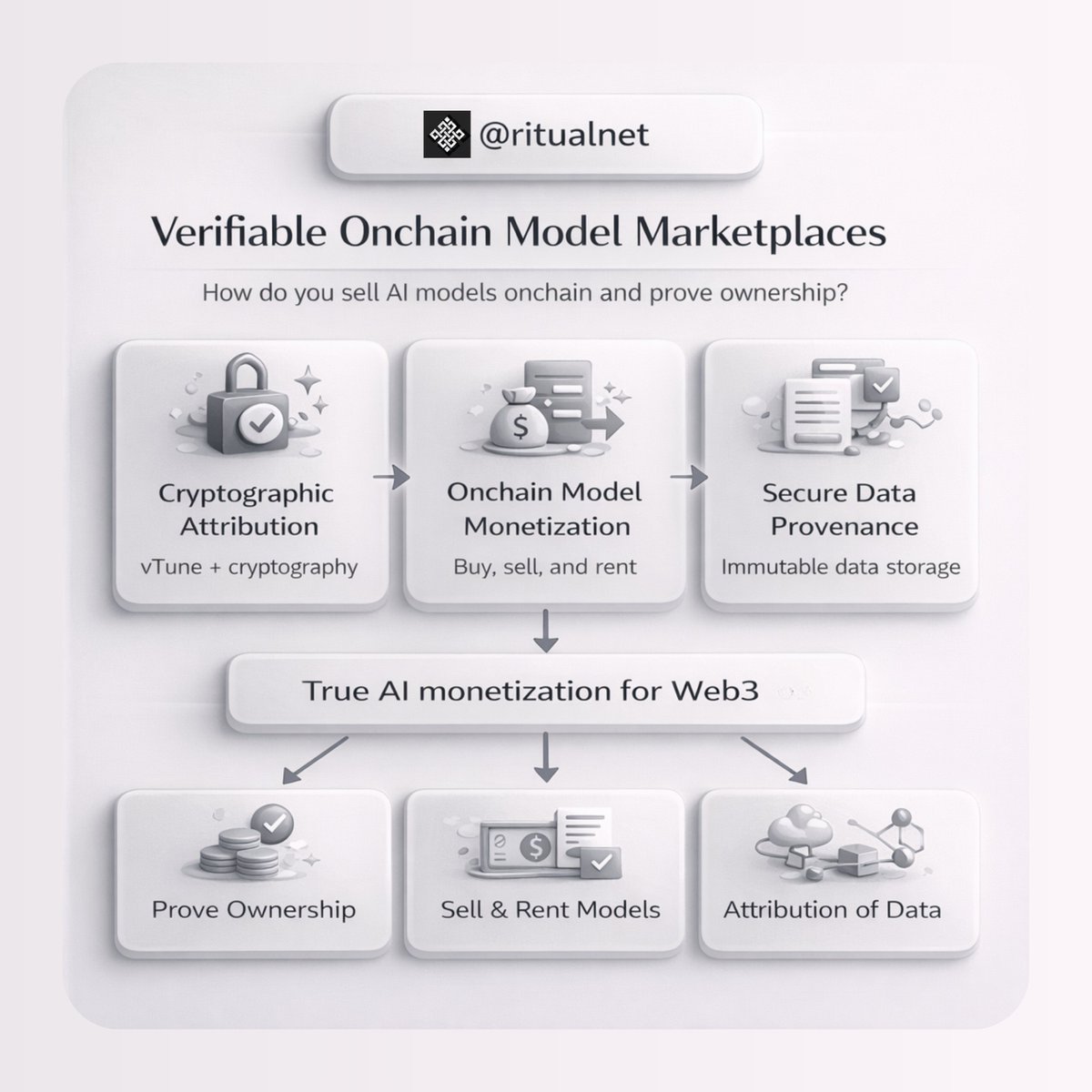
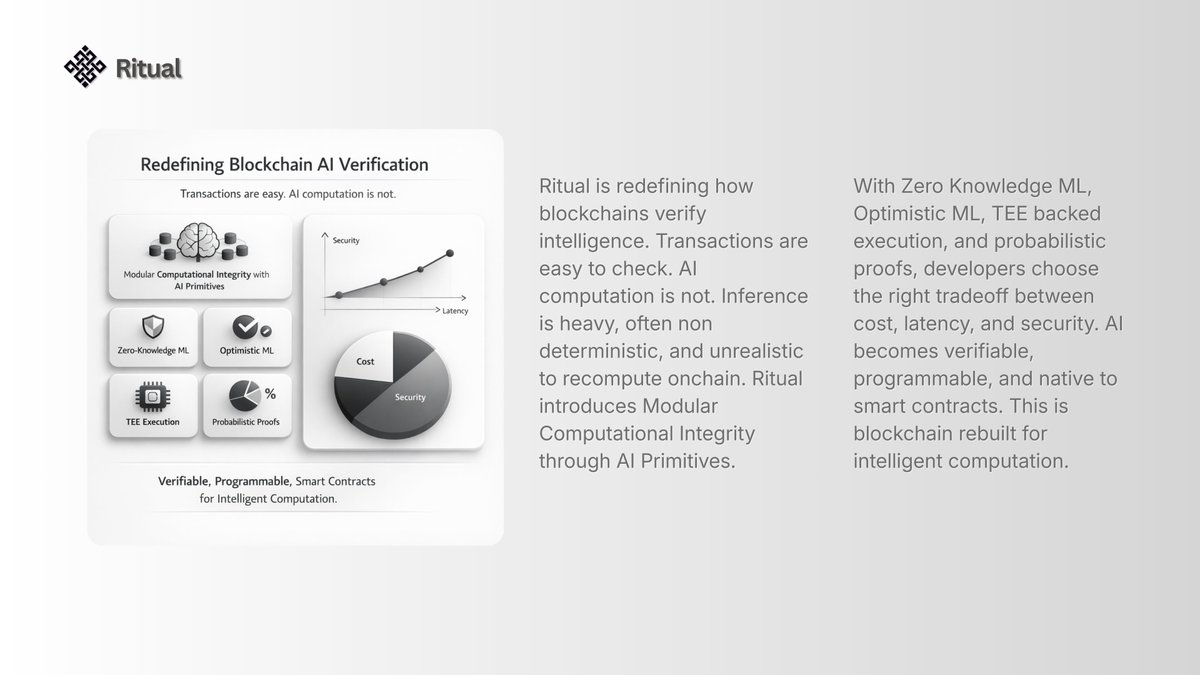
How do you sell AI models onchain and prove ownership?
@ritualnet is building the foundation for verifiable model marketplaces. With primitives like vTune, creators and data providers can cryptographically prove attribution.
Models can be bought, sold, or even rented onchain.
9
20
168
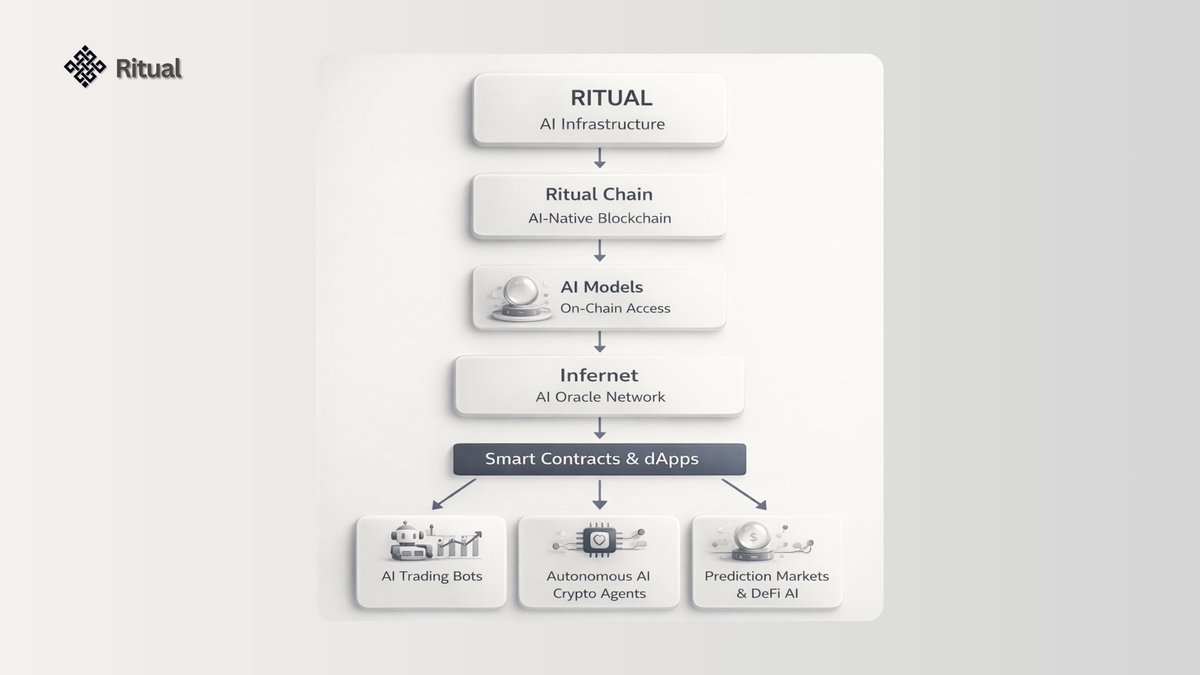
Ritual is building an AI-native blockchain stack.
Ritual Chain enables on-chain AI models, while Infernet delivers verifiable AI outputs to smart contracts and dApps.
@ritualnet
7
18
186
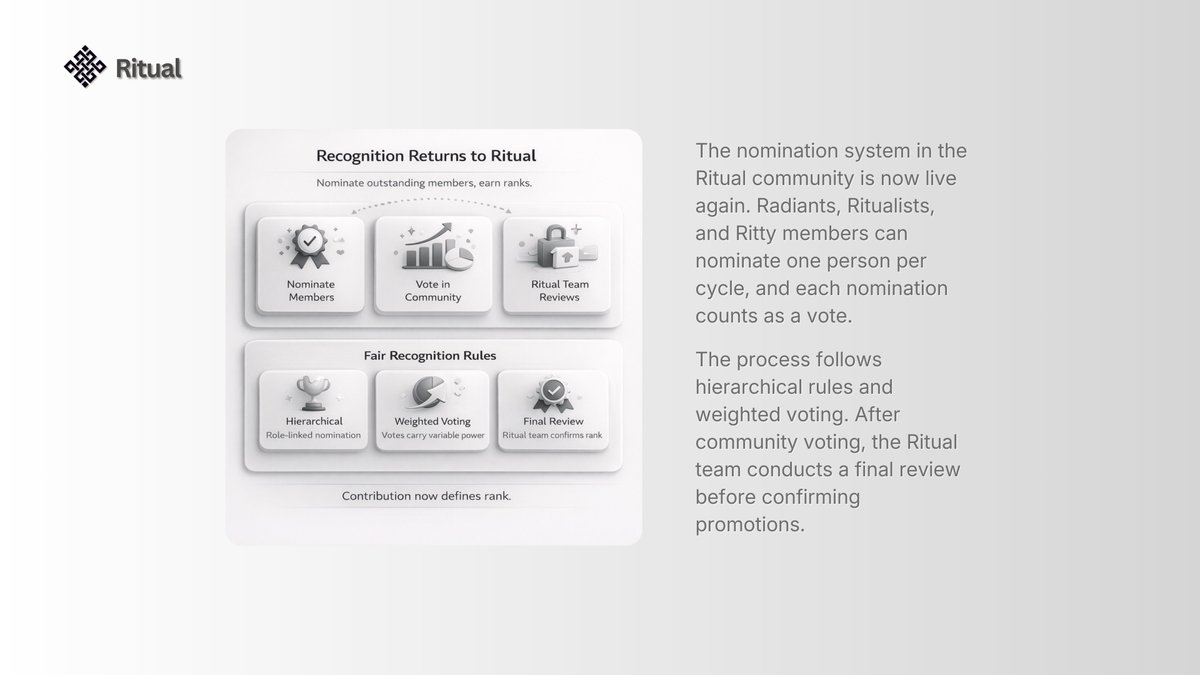
Recognition is back in @ritualnet
Radiants, Ritualists, and Ritty members can nominate one per cycle. Each nomination counts as a vote, with weighted power and hierarchical rules to keep it fair.
Community votes first. Ritual team reviews. Contribution now truly defines rank.
7
20
177
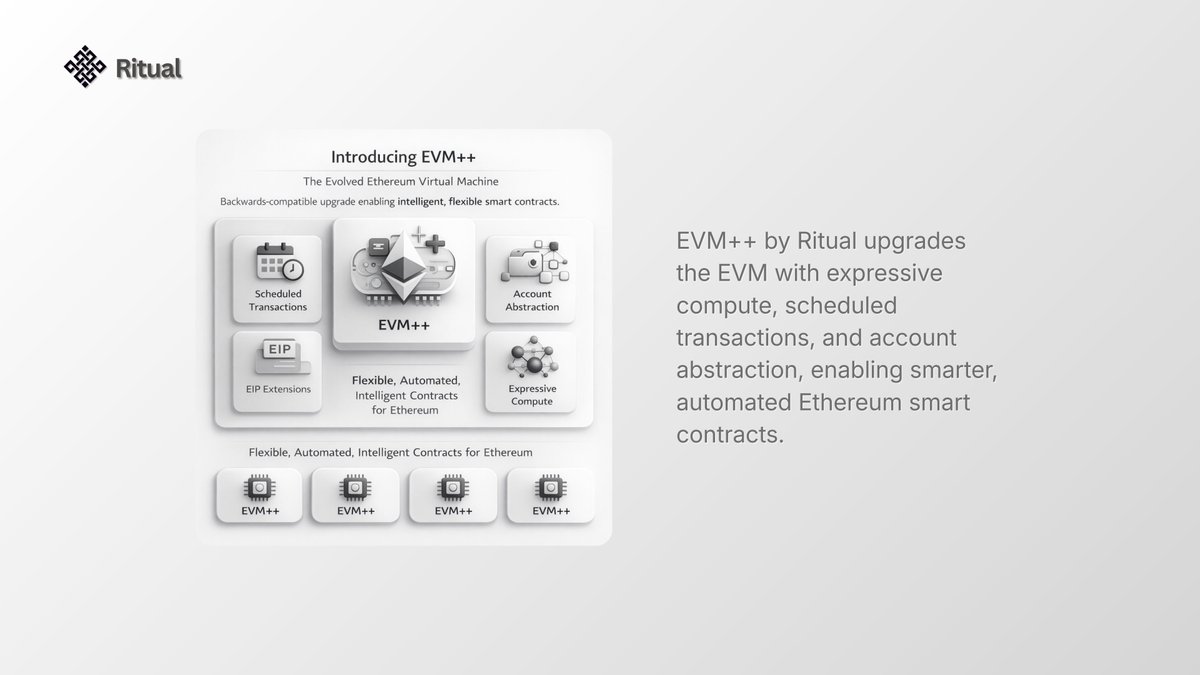
Ritual introduces EVM , a backward compatible evolution of the Ethereum Virtual Machine. It expands what smart contracts can compute, unlocking a path toward truly intelligent onchain applications.
@ritualnet
10
15
148
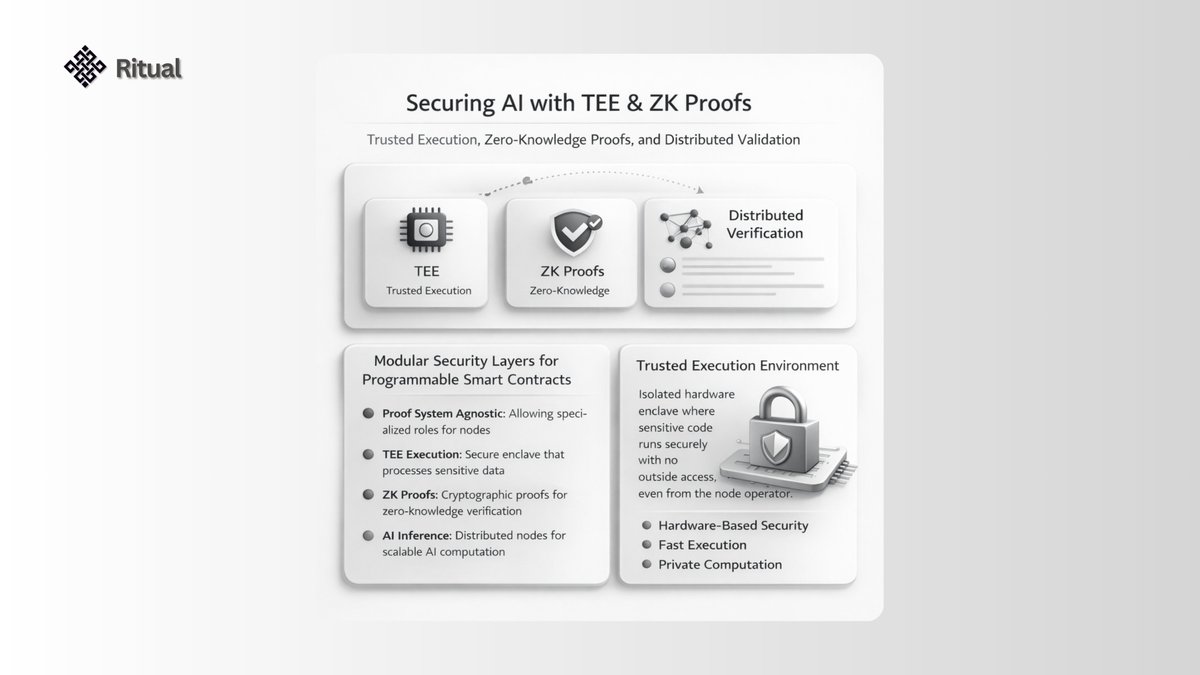
Ritual secures AI with layered verification: TEE, ZK proofs, and distributed validation. It is proof system agnostic, letting developers combine security models based on their app’s needs.
@ritualnet
7
13
128